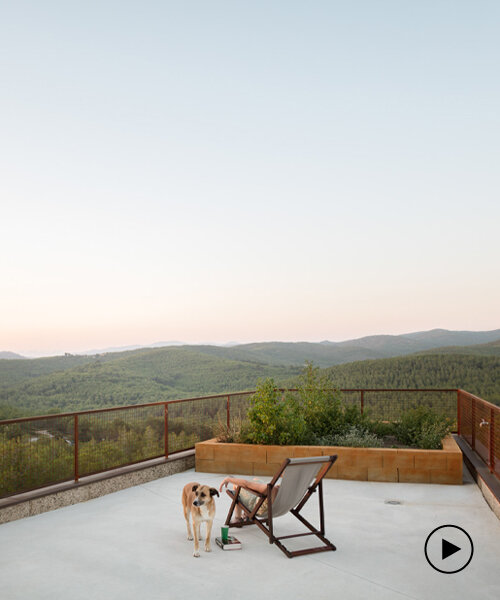
natural cork panels and bioclimatic strategies build a house in a barcelona forest
designed by elisabetta quarta colosso of el fil verd, 'house in the forest' was conceived as a passive building that gently blends into its surroundings.
prefer designboom on google[FEATURED]
architect elisabetta quarta colosso of el fil verd has realized a single family home on the edge of barcelona‘s garraf natural park. the project was commissioned for a retired couple who dreamt of living in the middle of nature in a dwelling with low energy consumption. in response, the aptly named ‘house in the forest’ was conceived as a passive building that gently blends into its surroundings.
images by milena villalba | @milena_archphoto
constraints on the design process included the steeply sloping, north-facing plot, and the client’s limited budget. with the latter in mind, elisabetta quarta colosso saw the project as an opportunity to demonstrate that it is possible to construct passive, bioclimatically-designed buildings at an affordable cost.

the house was conceived as a passive building that respectfully integrates with its natural context
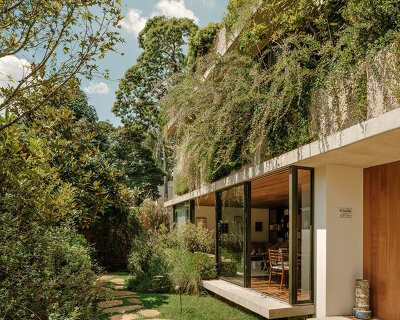
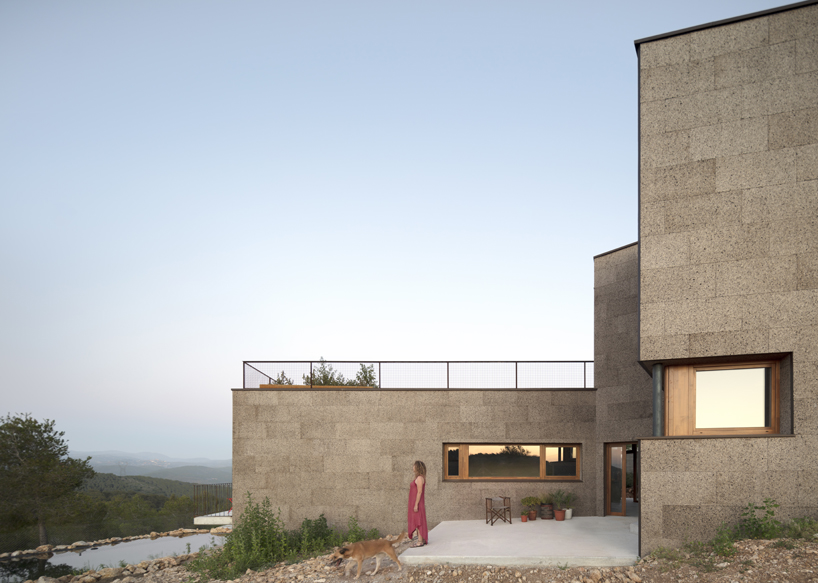
urban planning regulations permitted the development to be built up to three levels. instead, the architect decided to shape the house as one volume over two storys in order to better integrate it into its context. the dwelling follows the slope of the land by stepping down into the site. it opens up to the north, the mountain of montserrat, and the immensity of the natural park. in contrast, the elevations facing the street and towards the neighbors are intentionally devoid of openings, giving inhabitants privacy.
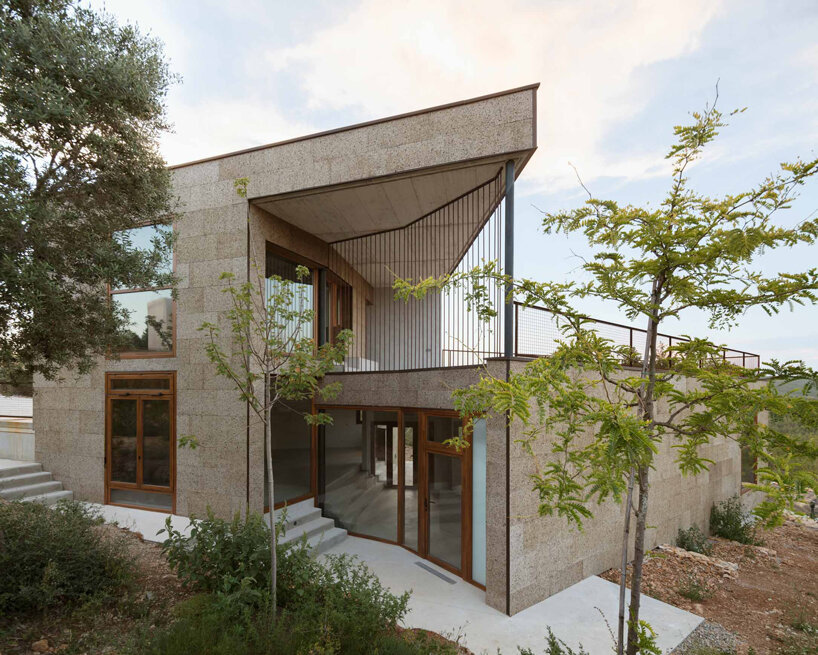
the geometry of the house is shaped to leave nature as the protagonist
the day area and one bedroom are located on the first floor; on the second floor there is a second bedroom and a large terrace with solarium and garden. each room in the house allows the contemplation of the forest from a different perspective.

the house is organized as a single volume over two floors
elisabetta quarta colosso selected materials for the wellbeing of inhabitants, respect for the environment, and constructive and economic efficiency. for the exterior walls, aerated concrete blocks were used due to their lightness and high insulating power. thermo-treated natural cork panels were chosen for the exterior finish of the façades for their insulation properties and muted color, which helps blend the structure into the natural environment. for interior finishes, lime and silicate paints were applied. the upper face of the floor slab, finished with quartz crystals, has been used as flooring. solid pine wood treated with natural stains has been used for the exterior carpentry.

natural cork panels provide insulation on the exterior walls
to achieve an ultra energy efficient building, the architect carried out a detailed study of the local climate and site topography, and employed a number of bioclimatic design strategies that cater to both cold winters and hot summers. one of these strategies include how the building is orientated; it’s positioned along the north-south axis to maximize solar radiation in winter and promote effective natural ventilation in summer.
to heat the house, the south façade, in its glazed part, works as a solar heater due to the greenhouse effect. solar radiation, which during these months has a reduced angle, penetrates the interior and is transformed into heat, increasing the temperature of the dwelling. trombe-mitchell walls located on the south-facing elevation function as hot chambers that reach high temperatures during the day and transfer it by convection and radiation to the interior. on the north face, the openings have been minimized to not influence negatively on the thermal balance. on the coldest days, on the north side, a high-efficiency stove can be lit.

the upper face of the floor slab, finished with quartz crystals, has been used as flooring
to cool the building during warmer weather, the façade openings have been calculated so that they can safely ventilate during the night. natural cross ventilation is enhanced by the difference in temperature that exists between the colder north façade and the warmer south façade. trombe-mitchell walls work as ‘solar chimneys’; by heating up more than the house’s interior spaces, they extract the hot air from the inside, causing the entry of fresh air from the outside.

for the interior finishes, lime and silicate paints have been applied
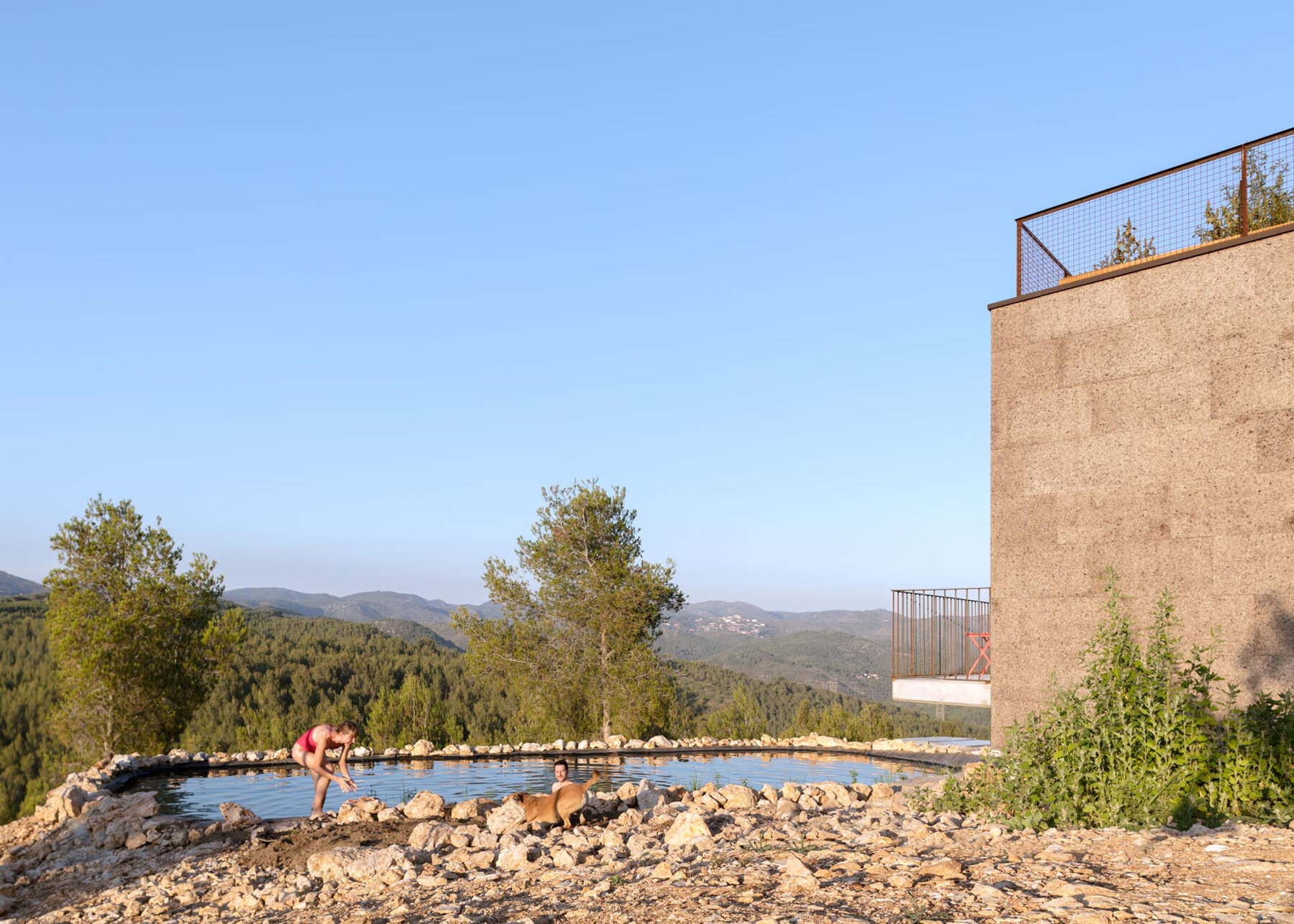
the deciduous trees planted in front of the south elevation protect it from intense summer solar radiation. the eaves of the south façade prevent the solar rays from heating up the glass. the natural pond located below the building favors the air cooling and the creation of a humid microclimate. throughout the year, the high insulation of the entire enclosure, the high-quality carpentry and the elimination of air infiltrations manage to keep the temperature inside the house stable.
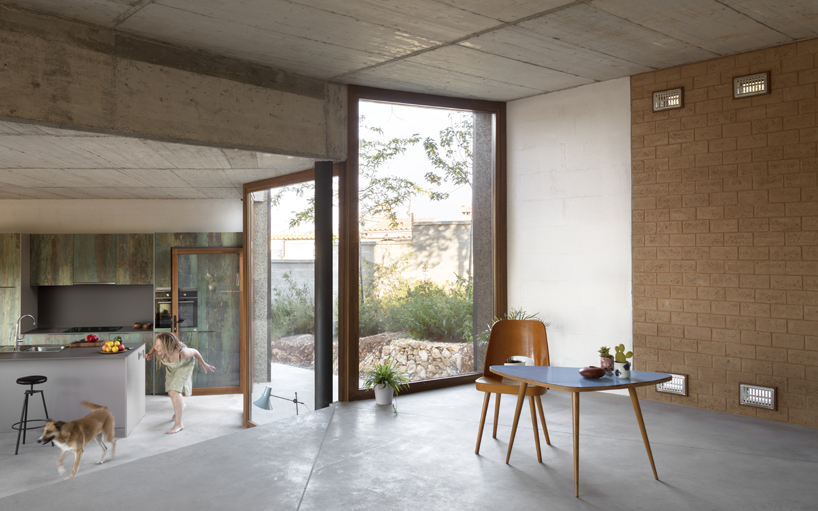
solid pine wood treated with natural stains has been used for the exterior carpentry
green spaces and grey and rainwater treatment are integrated into the project as part of the same bioclimatic strategy. in the southern area of the plot, the autochthonous mediterranean vegetation is preserved by implementing it with the planting of deciduous tree species. the aim is to protect the building and the trombe walls from solar radiation during summer and allow the radiation to pass through during winter. rainwater from the roofs is collected in a tank located below the parking space and is used for watering the garden and for the natural pond at the lower end of the site. the natural pond contains a plant filter that acts as a photo-purifier and promotes biodiversity in the local fauna. greywater is separated from wastewater for later recycling and recovery.
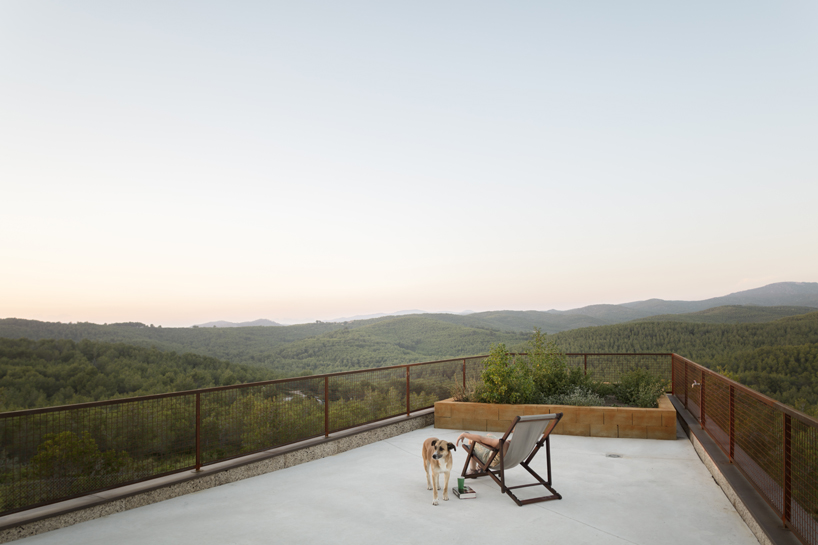
view of the forest from the rooftop terrace
overall, the heating demand for the building is 5.4 kWh/m2 year and the cooling demand 14.5 kWh/m2 year. no active air conditioning system is used, except for the wood-burning stove. photovoltaic panels have been installed on the roof to cover internal electrical needs.
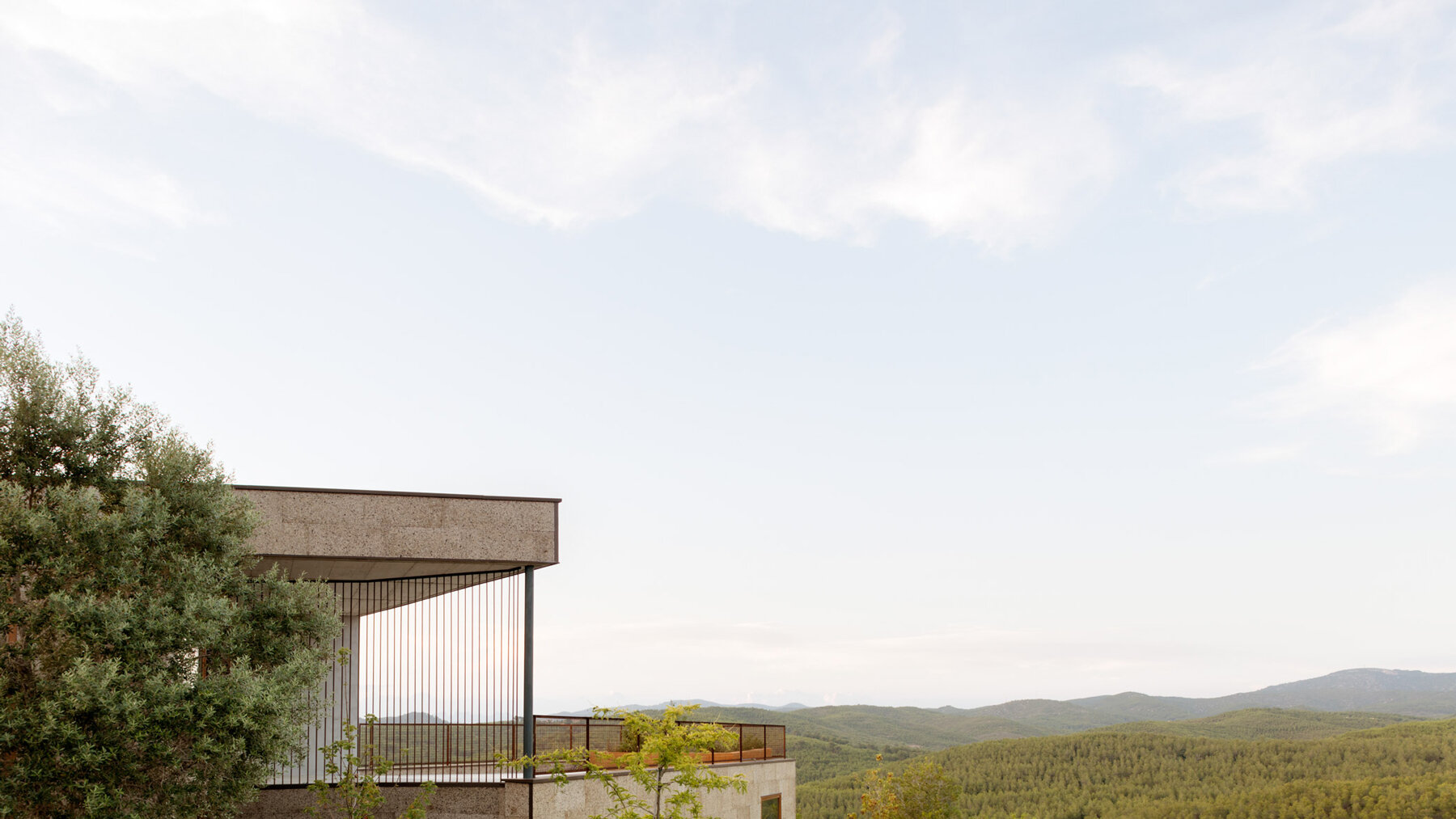

the architecture is designed to integrate into the topography of the site and the surrounding nature
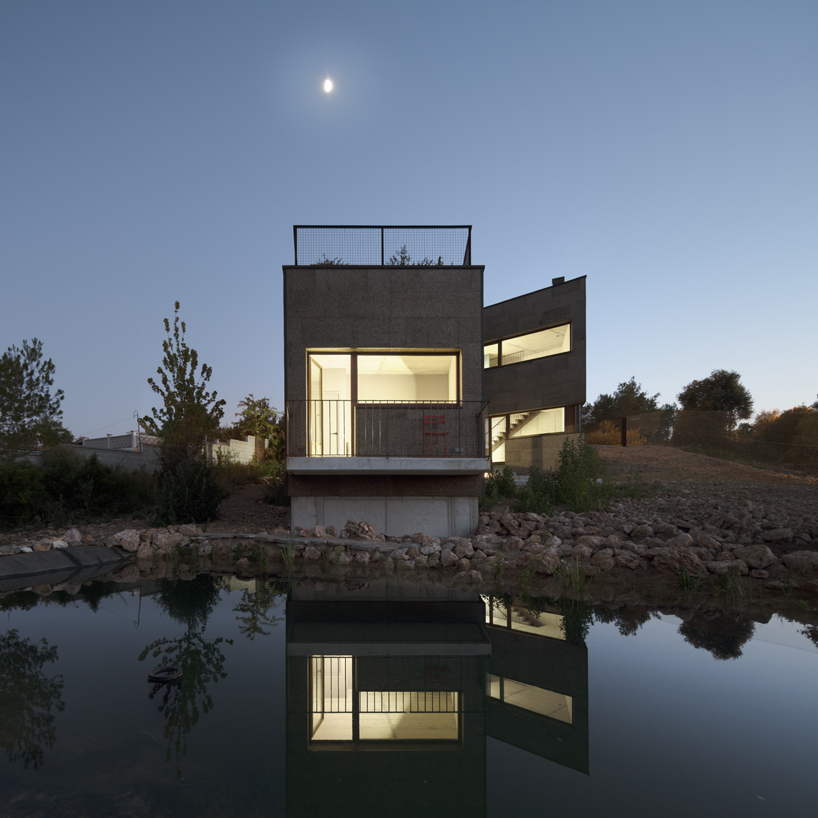
the dwelling at night
project info:
name: the house in the forest
location: garraf forest, barcelona, spain
architect: el fil verd (elisabetta quarta colosso) | @elfilverd
engineer: bernuz fernández arquitectes
construction: alfibiocons s.l. | @alfibiocons
furniture: nolek design
artworks: nelo vinuesa | @nelovinuesa
site area: 914 sqm (9838.21 sqft)
building area: 180 sqm (1937.50 sqft)
energy label: A (heating demand: 5.4 kWh/sqm year, cooling demand: 14.5 kWh/sqm year)
year: 2020
photography: milena villalba | @milena_archphoto
designboom has received this project from our ‘DIY submissions‘ feature, where we welcome our readers to submit their own work for publication. see more project submissions from our readers here.
shop
your own online design shop — no sales commission collected