eraclis papachristou architects unveils ceremonial winery in cyprus
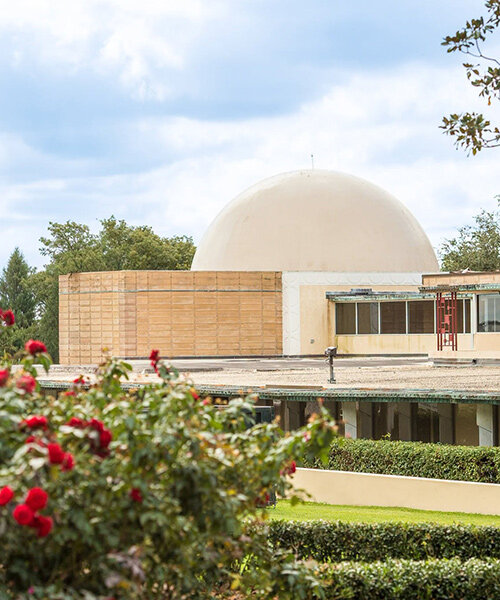
through a play of geometry and scale, the lampadistis wine distillery is characterized by its three noteworthy cylinders, each housing a different wine production phase.
prefer designboom on google[FEATURED]
eraclis papachristou architects unearths the lampadistis winery
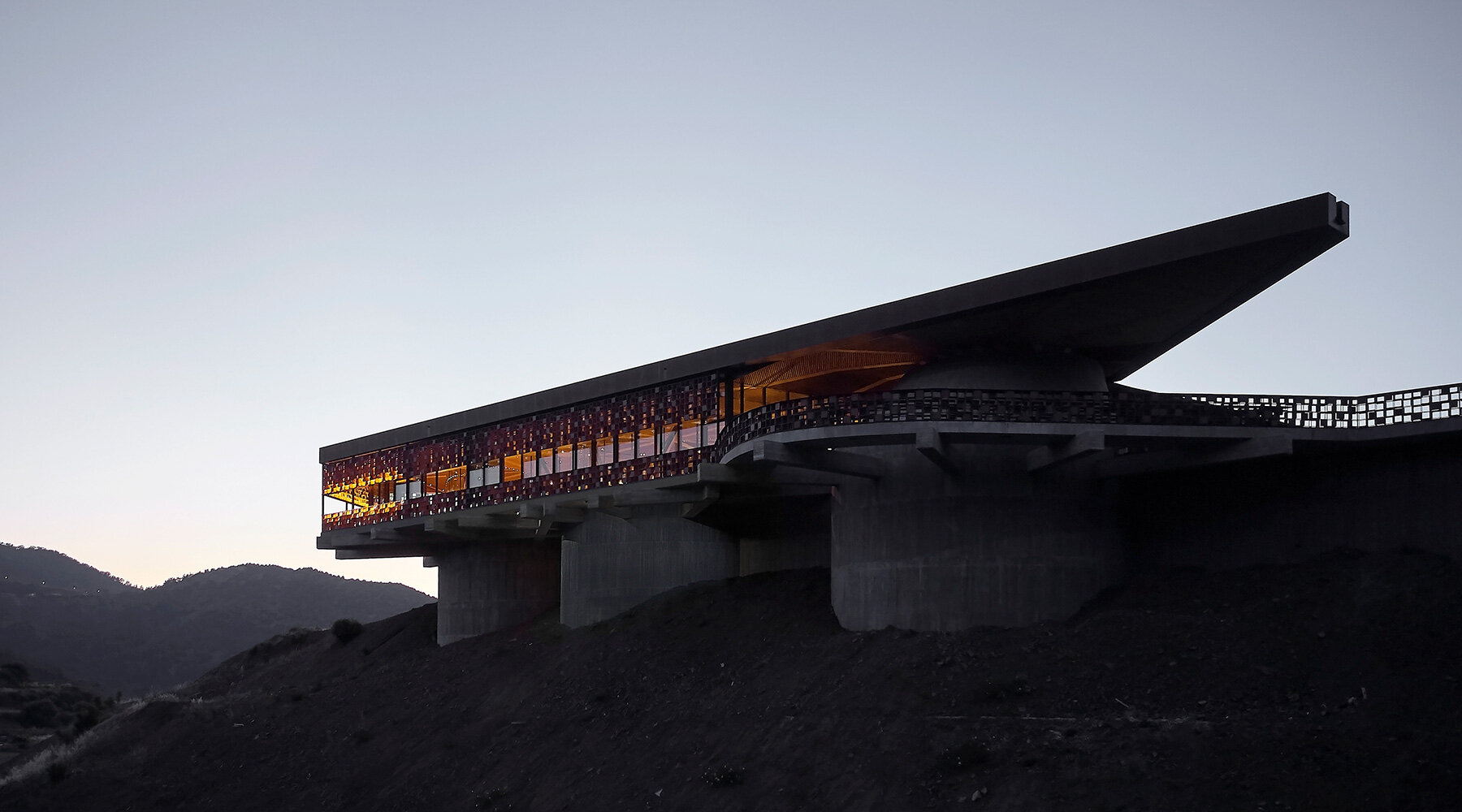
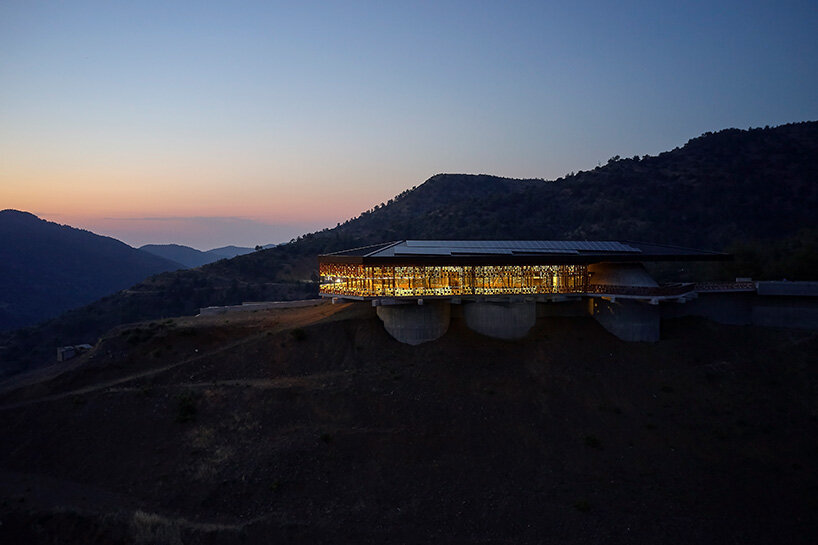
Tradition climbs the mountaintops as Eraclis Papachristou Architects perches the Lampadistis Wine Distillery into the rugged landscape of Cyprus. Set above the picturesque Kalopanayiotis village, the ceremonial-looking project speaks volumes of the significance of wine for the Mediterranean island. The three massive cylinders housing the different production stages along with the weighty roof create a noteworthy play of geometry that exposes itself against and around nature. In solid forms and voids, height changes and refined textures, the building provides a rich and tactile experience.
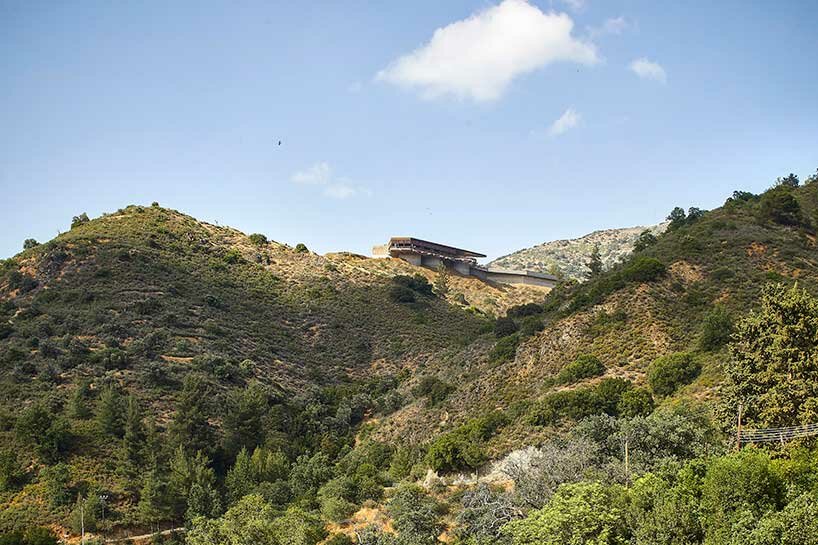
all images courtesy of Eraclis Papachristou Architects | ©Hufton+Crow
To pay tribute to a long-established tradition of wine making on the island of Cyprus, design office Eraclis Papachristou Architects graces the slopes with the V&V Lampadistis Winery. It was inspiration at first sight as the architect was immediately drawn to the churches of St. John the Baptist monastery – also named Lampadistis. Allocated one next to the other, the three churches are characterized by their noteworthy cylinders protruding from its rough, stone walls, while the tiled roof seems to float above the main body of the structures. Utilizing both the name and design language, the Winery transports the language to its new context.
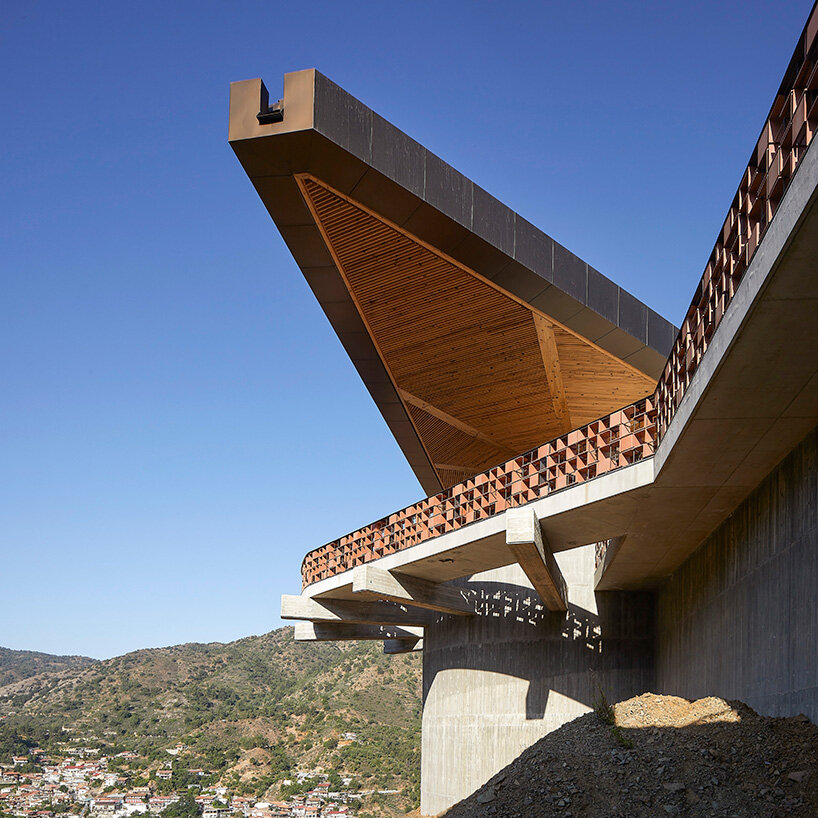
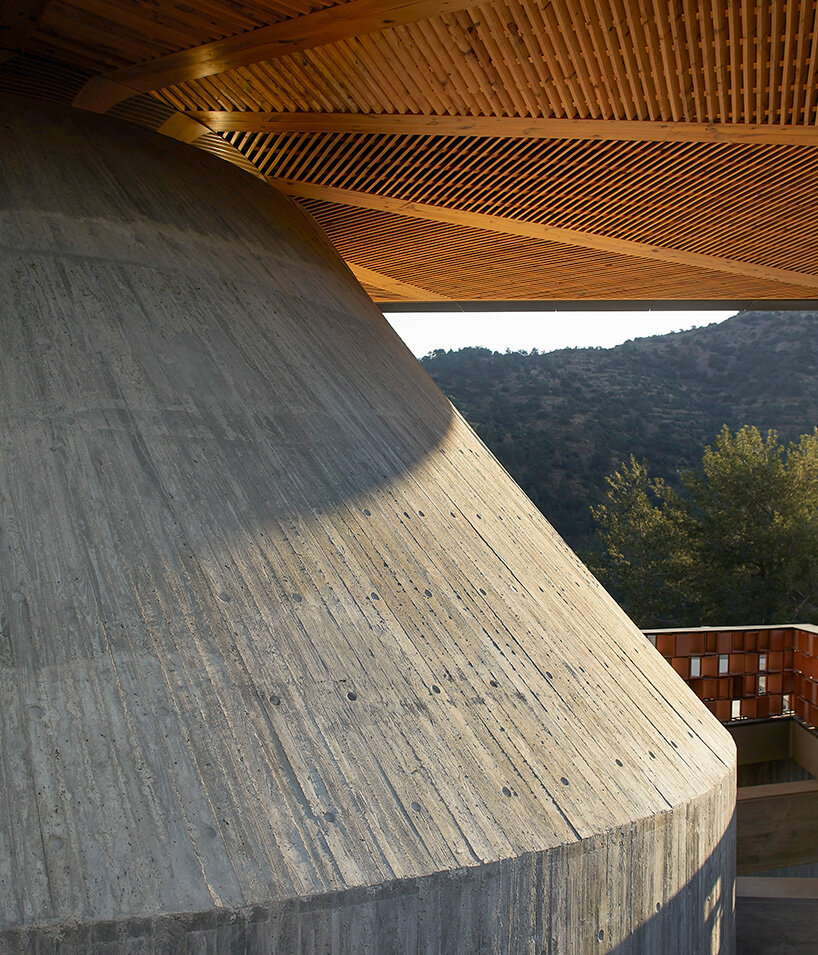
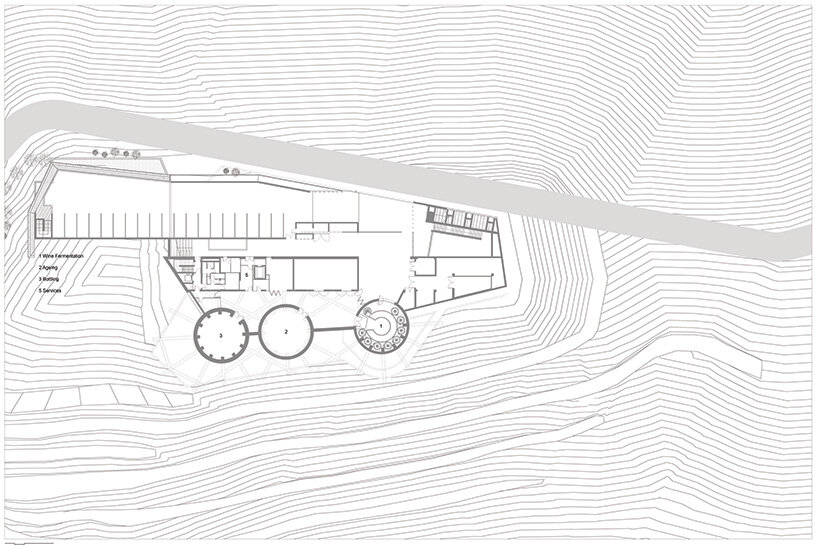
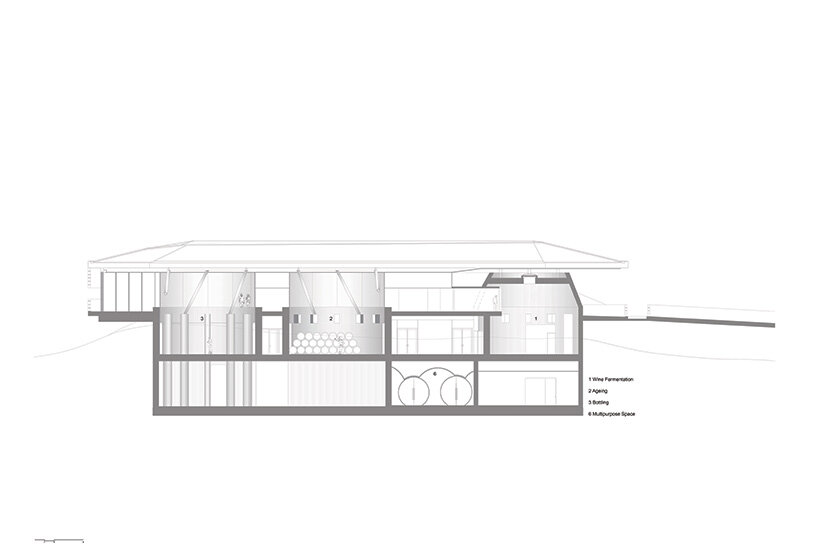
each cylinder houses a different phase of wine production
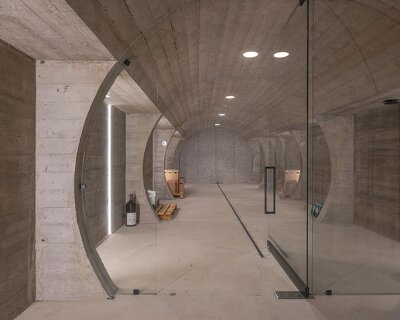
In the case of the project, the three cylinders become the three phases of wine production. The volume above them is placed to hover, despite its apparent weight, in a similar fashion to the medieval original. Geometry, scale, and materials interplay throughout as the béton brut of the exoskeleton meets the shimmering surfaces that lead the visitor in. The industrial language is accentuated, sheathed in solid, thick, textured walls that add to the ‘attention to detail’ that the design entails.
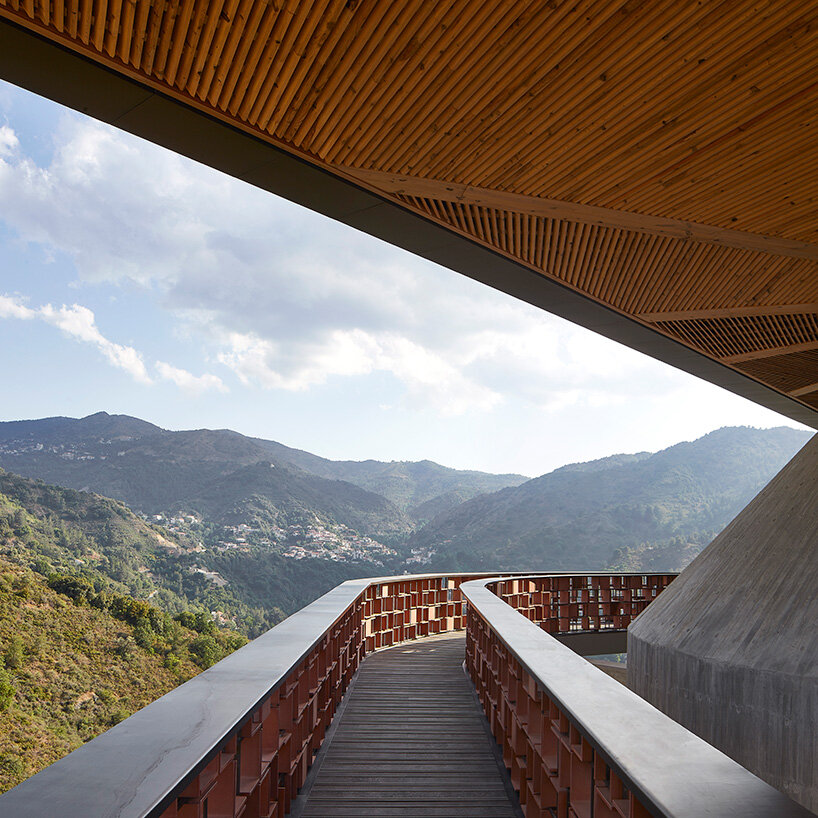
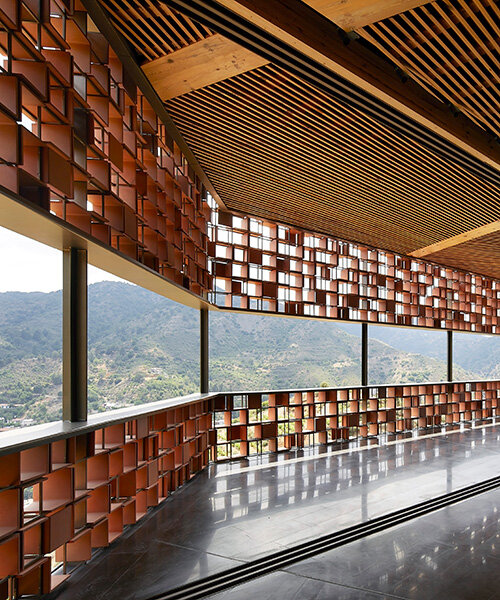
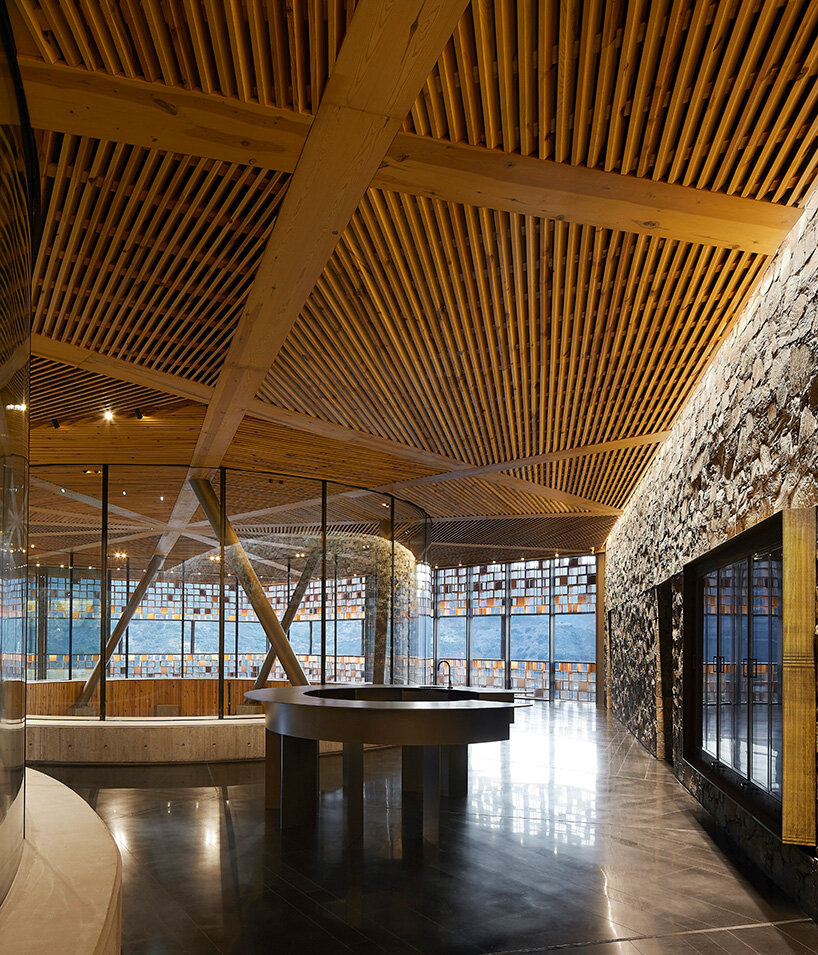
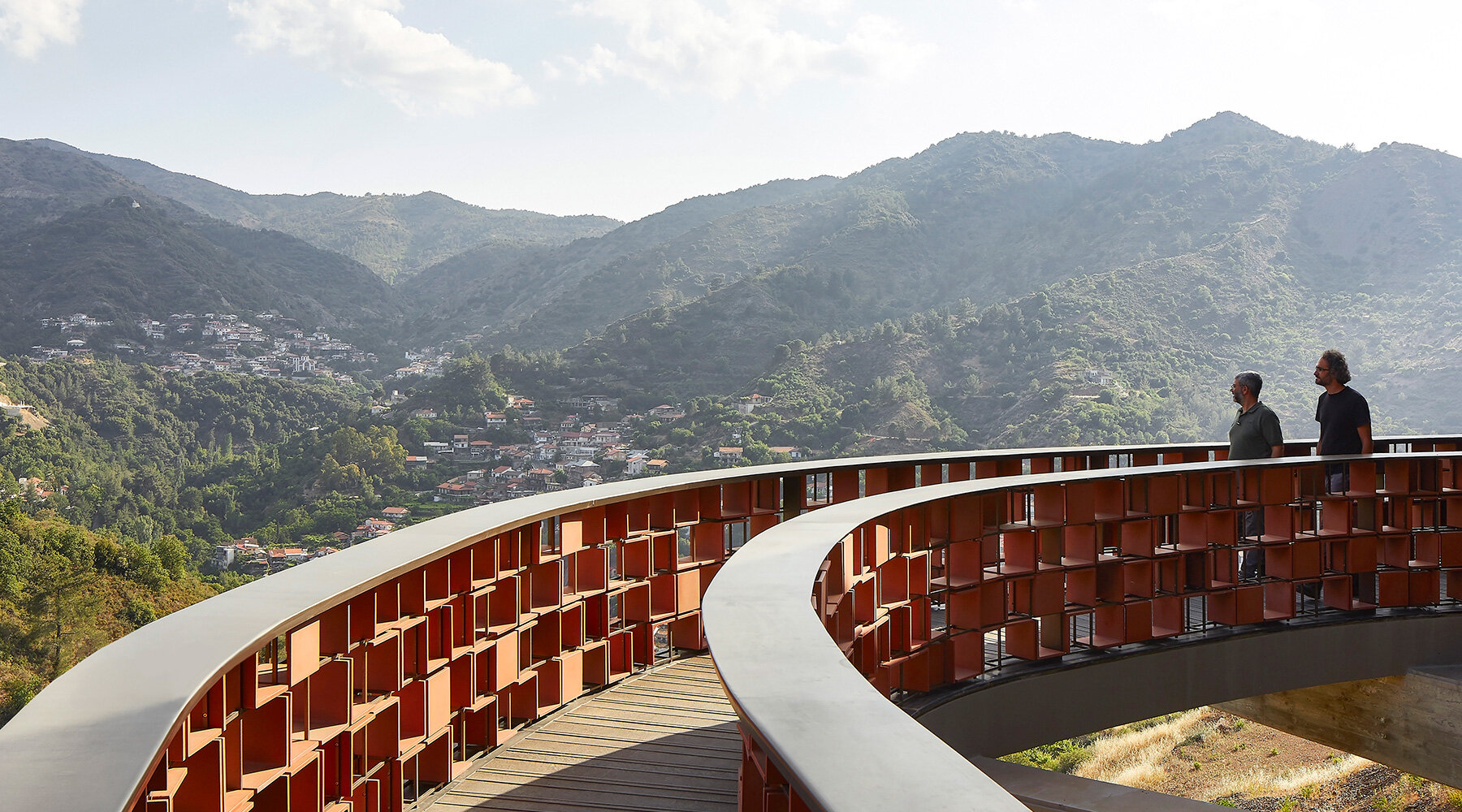
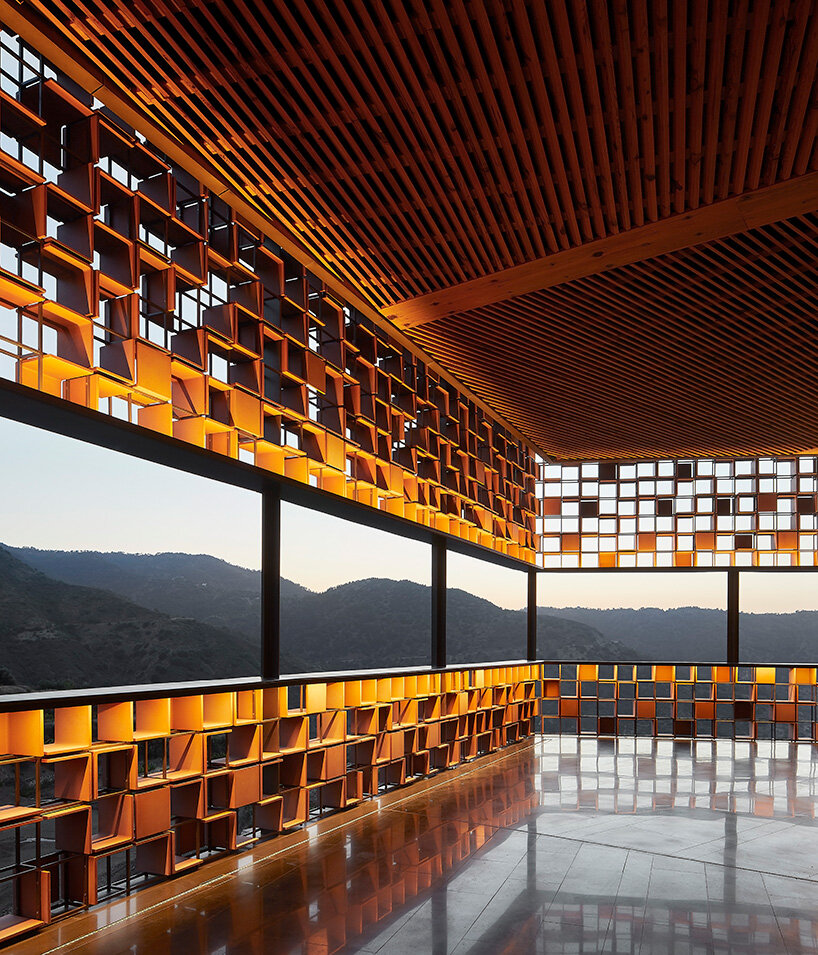
The elaborate balustrade and shading layer that defines much of the main level is derived from the stonework traditionally employed in the village below. The tile wedges used between the granite stones have been reinvented. Their open geometry allows for the development of an interweaving pattern which is set within an open metal framework. All these elements have been aligned, in effect along a linear path that leads from the mountain side to the very heart of the process. A first plateau narrows to a bridge that hangs awkwardly above the considerable drop, before turning sharply to find itself within the building.
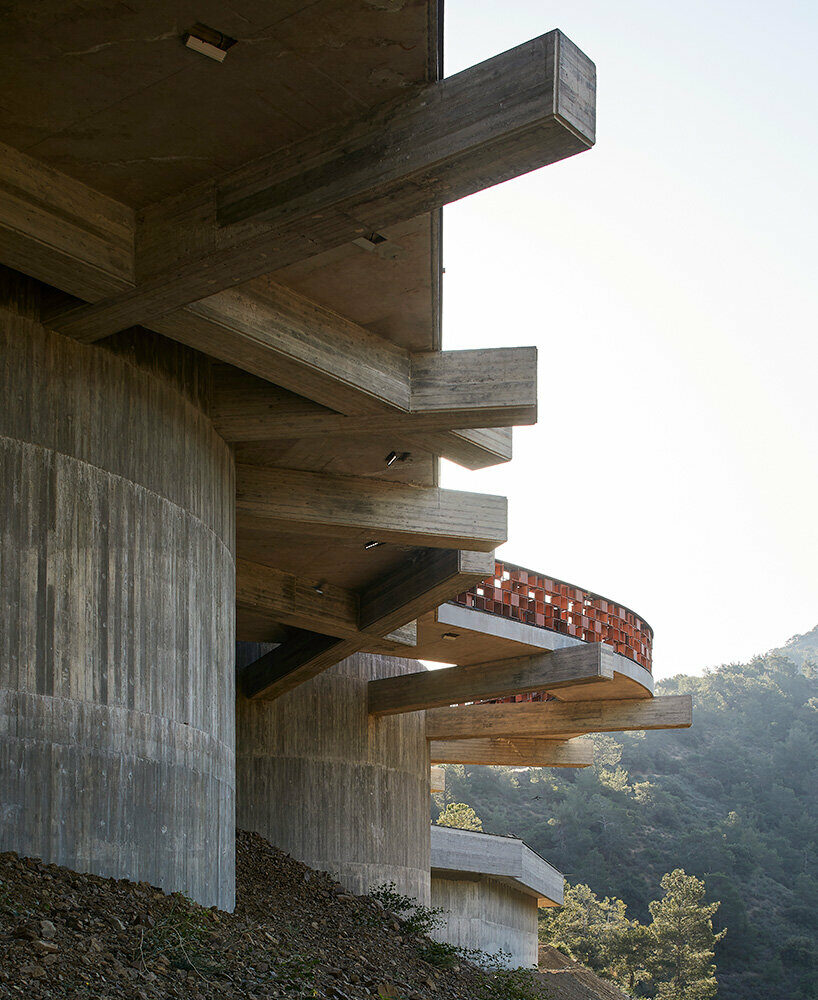
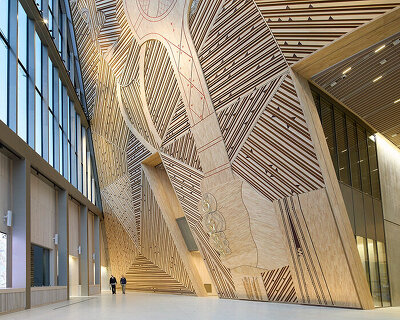
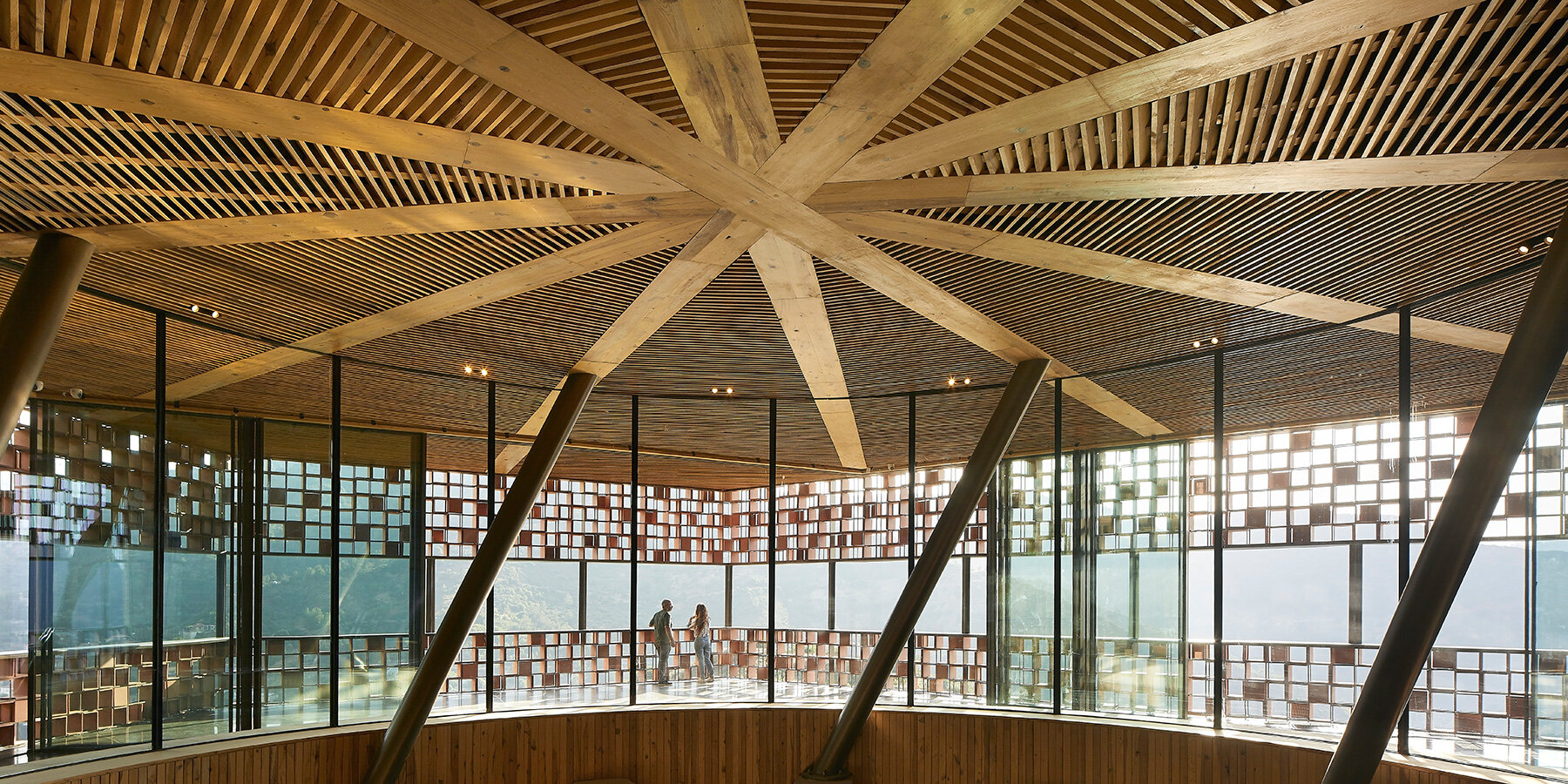
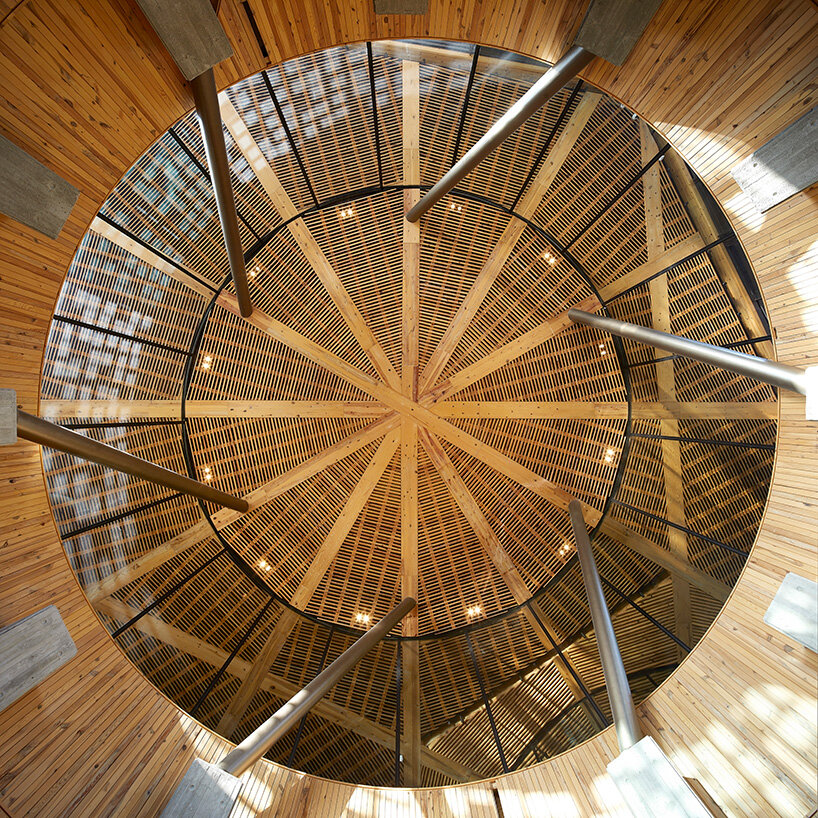
the ceiling pattern rotates about the three core drums
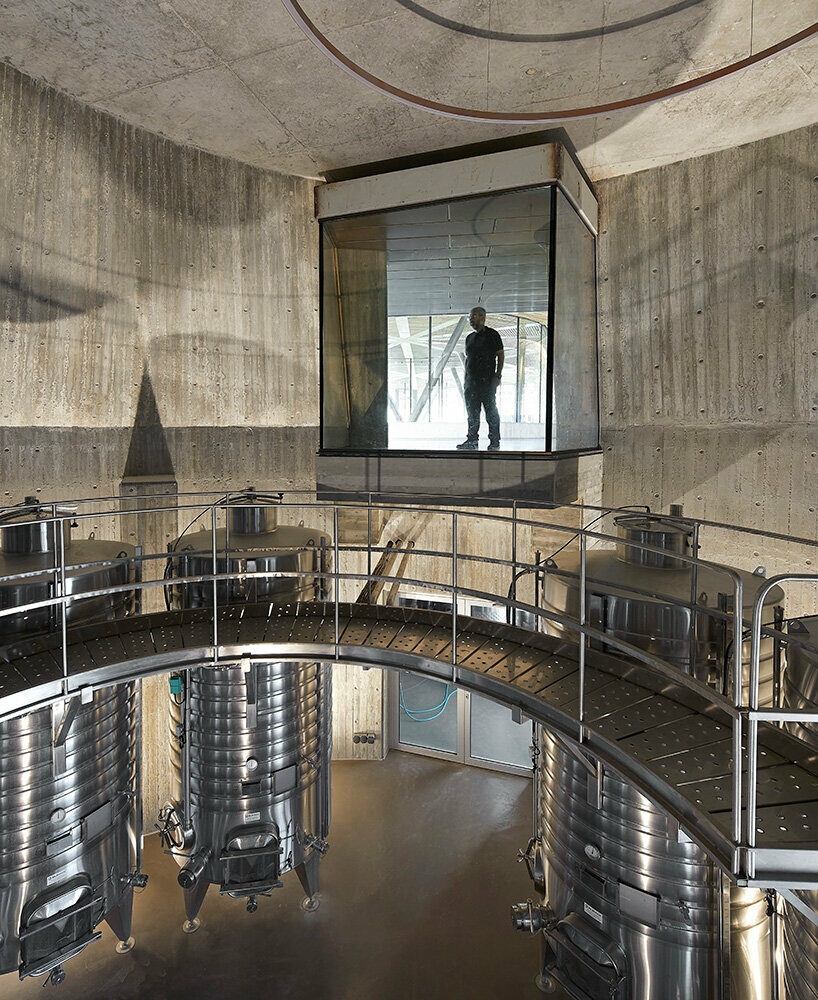
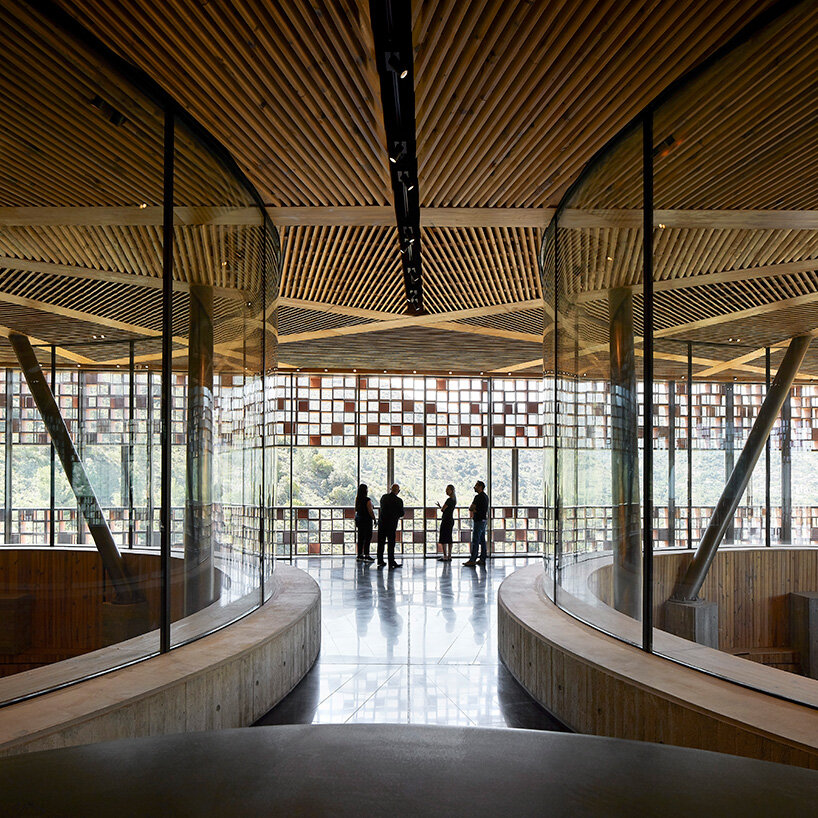
As opposed to the outside, the interior is a much warmer and more intricate event. The massive ceiling, defined by strong geometries that rotate about the three core drums are in reclaimed timber, collected from a recent forest fire that struck the island several years ago. The weight of the ceiling is exaggerated through angled posts and three glass cylinders, light elements that would seem incapable of dealing with the volume above. The expanse of the main floor, dark and reflective, is then punctured by the wells of the drums, which house the preparation, the maturing and the consuming of the wine.
One looks down upon the impressive, industrial machinery and the scale, the proportions of everything change. What was solid and sure is now alive and humming, at least so the image suggests. The unexpected drop into this level charges the experience with a modern magic.

1/3
project info:
architect: Eraclis Papachristou Architects /@eraclispapachristou
client: V&V Lampadistis Wineries LTD
photography: Hufton+Crow
shop
your own online design shop — no sales commission collected