ETH zurich 3D prints recycled plastic for digitally fabricated gelateria in switzerland
ETH zurich and origen unveil an ice cream shop in switzerland with a structure of digitally fabricated timber and recycled plastic.
prefer designboom on google[FEATURED]
A New Landmark in small-town switzerland
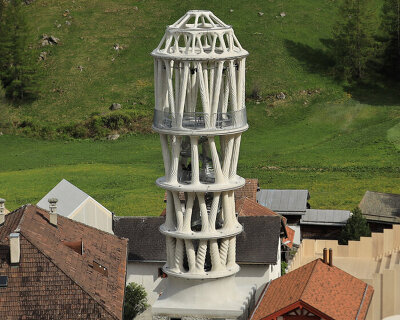
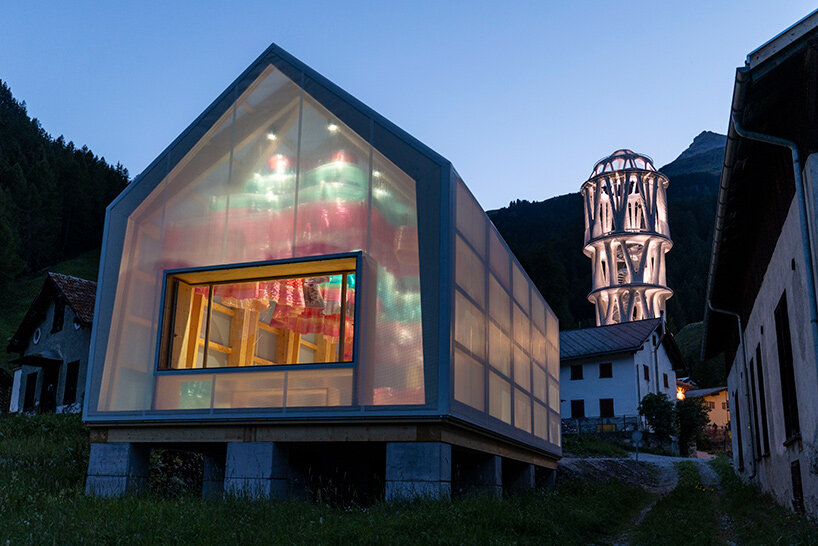
In the Alpine village of Mulegns, Switzerland, a 3D-printed ice cream shop, the Gelateria, stands as an architectural experiment by Origen and ETH Zurich. Neighboring the team’s recently completed White Tower, the project is conceived to revive the region with an approach that merges digital fabrication and material reuse.
Designed and built by students from ETH Zurich’s Master of Advanced Studies in Architecture and Digital Fabrication (MAS ETH DFAB), Gelateria serves as both an ice cream shop and a prototype for contemporary construction. The project combines a reclaimed timber structure with a 3D-printed interior, revealing how computational design can expand architectural possibilities.
eth zurich brings Robotic Craft to alpine Architecture
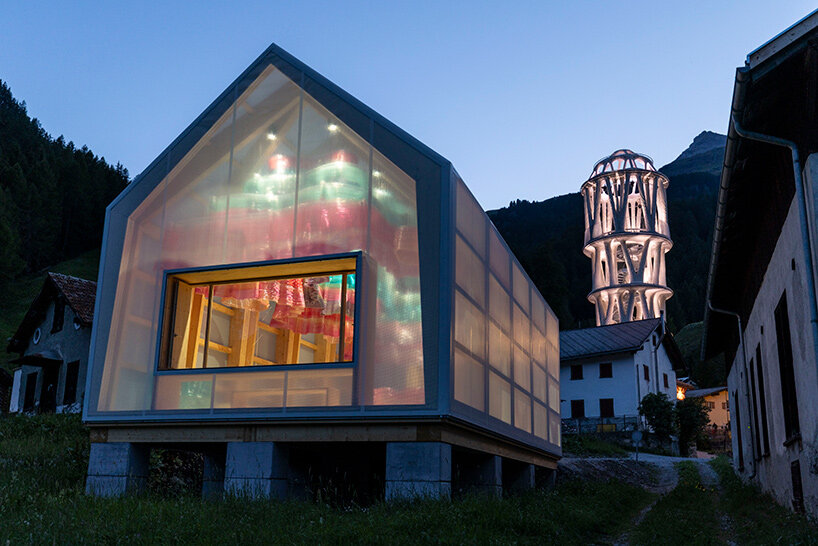
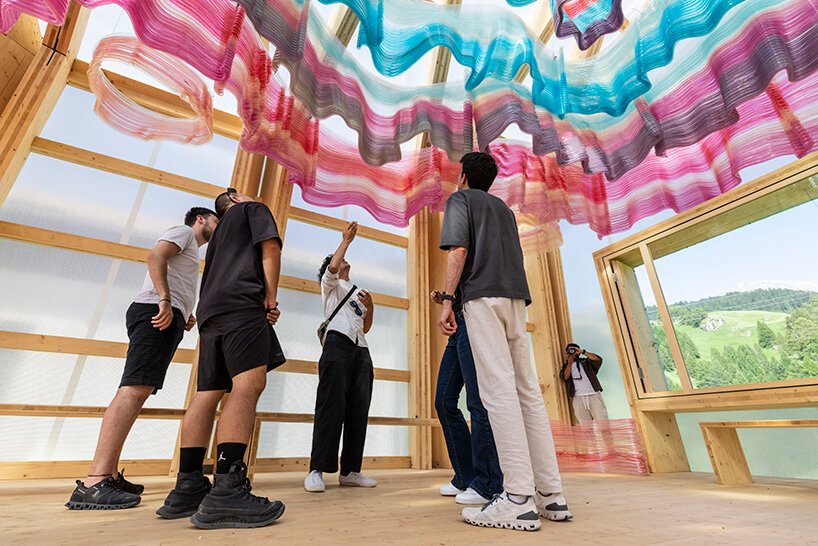
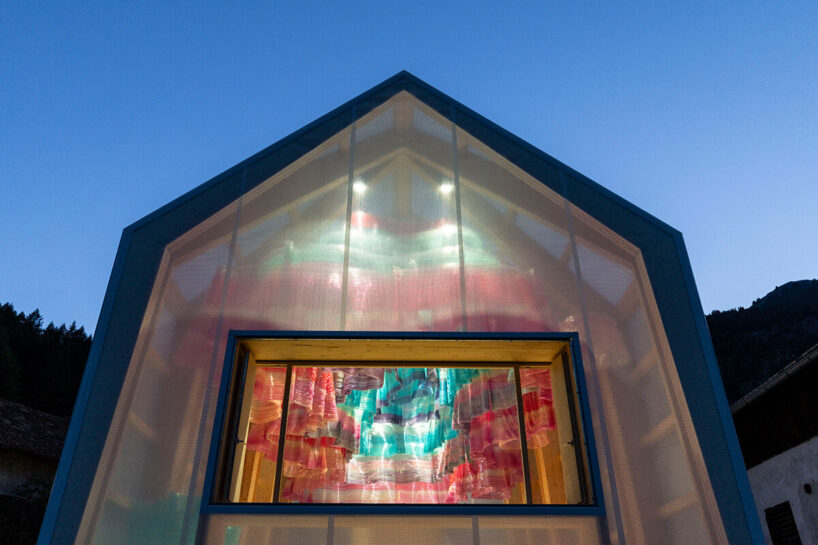
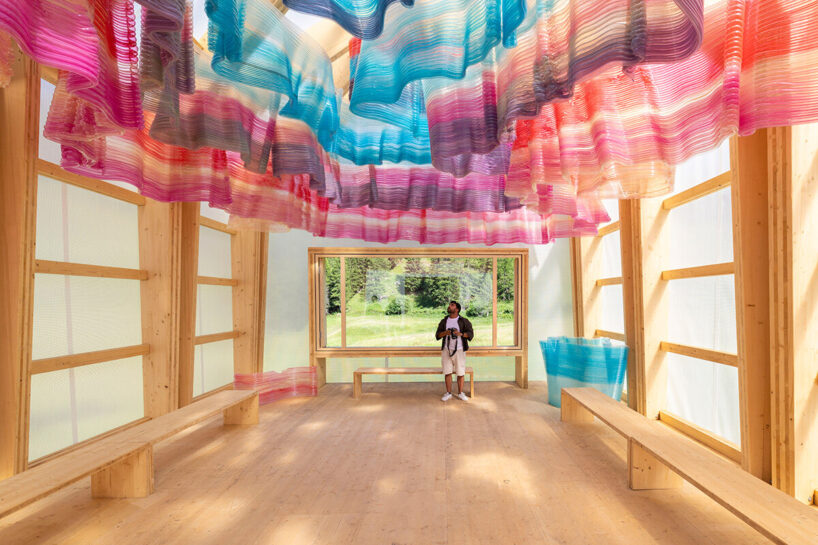
From the exterior, the structure of ETH Zurich’s Gelateria recalls the familiar silhouette of the barn that previously occupied the site. The team at employs locally-sourced mass timber elements, which were prefabricated nearby and assembled into a faceted geometry that suggests folded paper. The timber shell is clad in a translucent membrane, filtering daylight and exposing the vibrant interior to passersby.
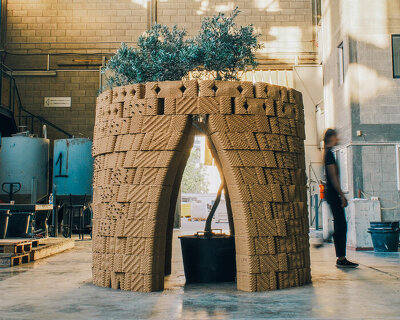
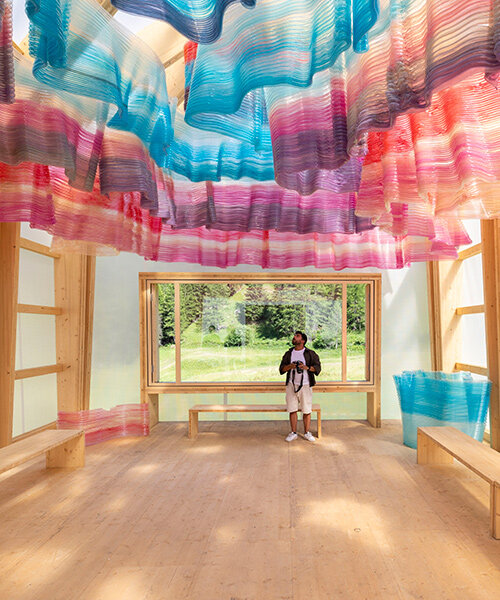
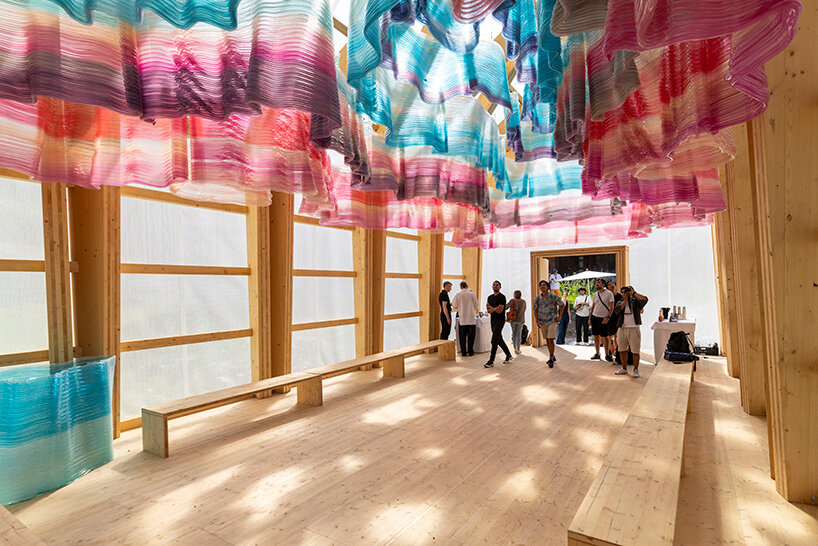
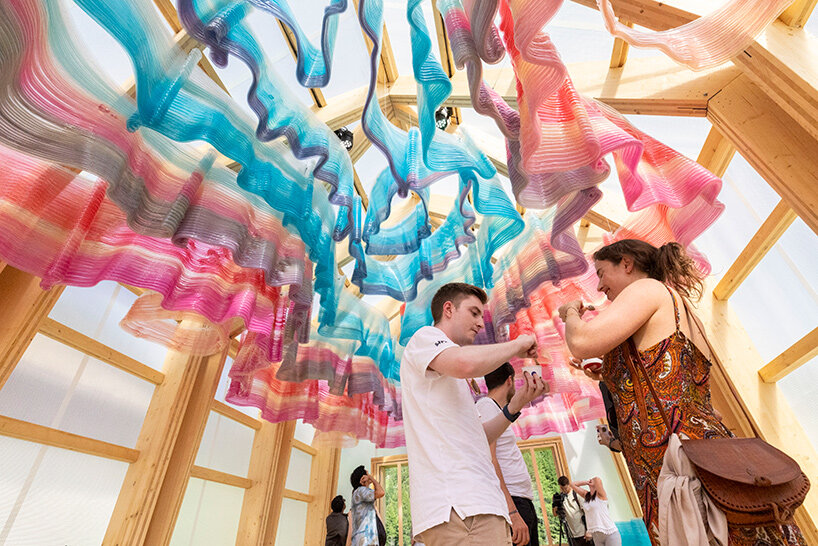
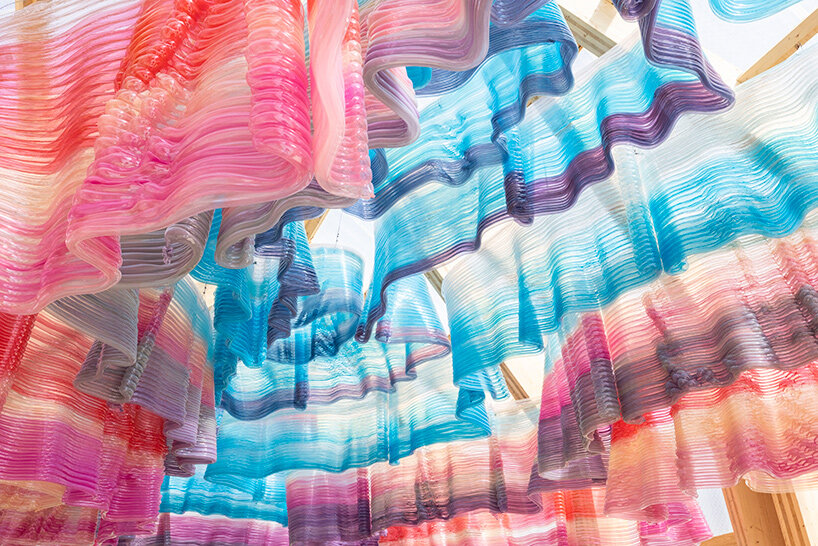
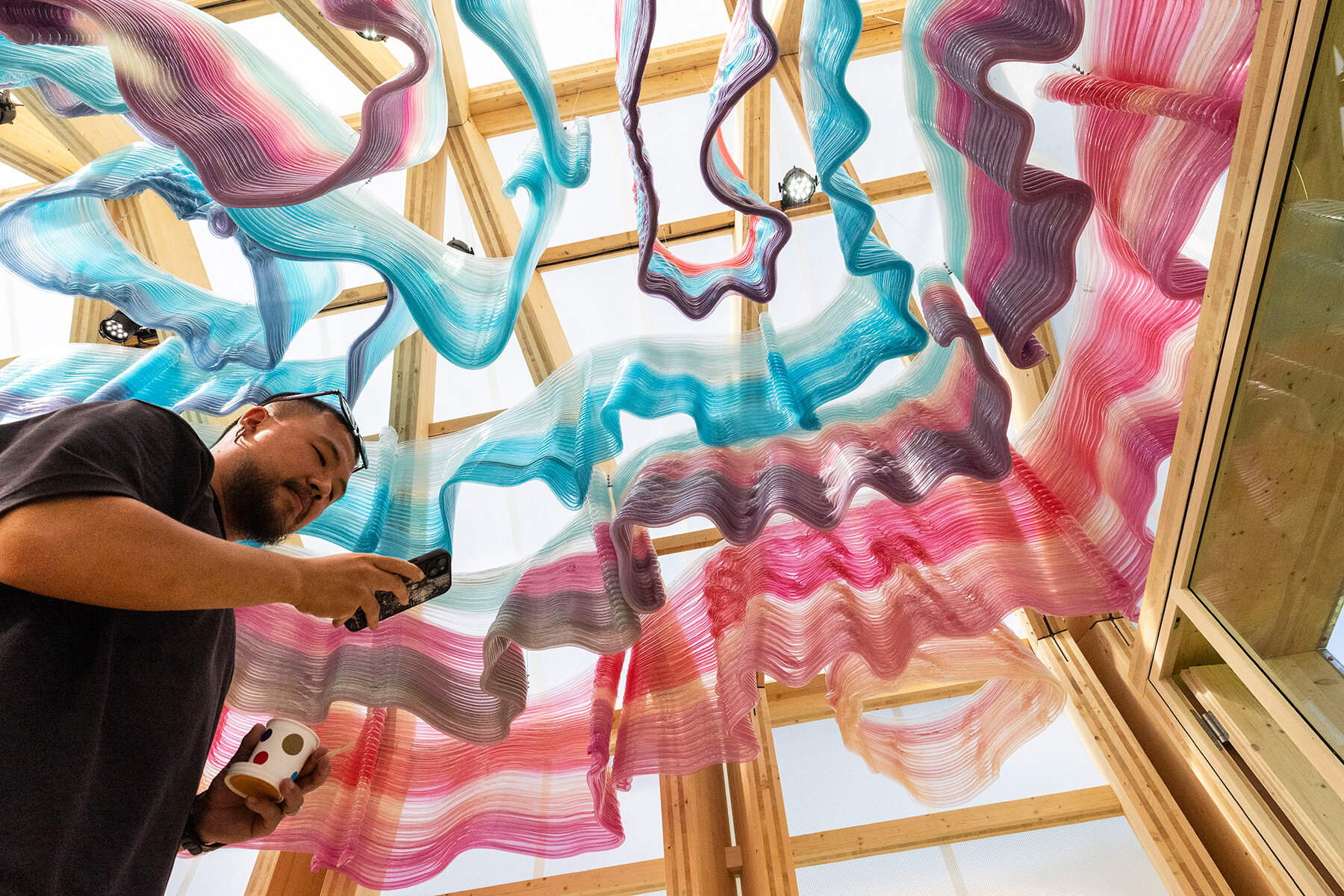
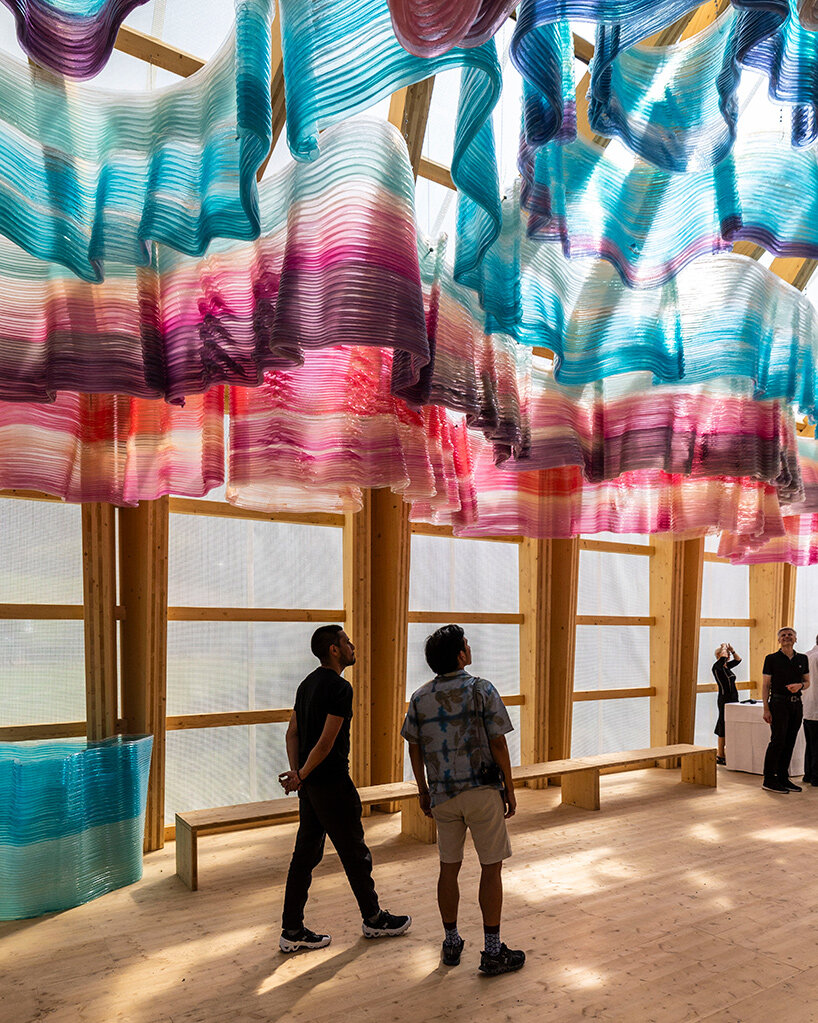
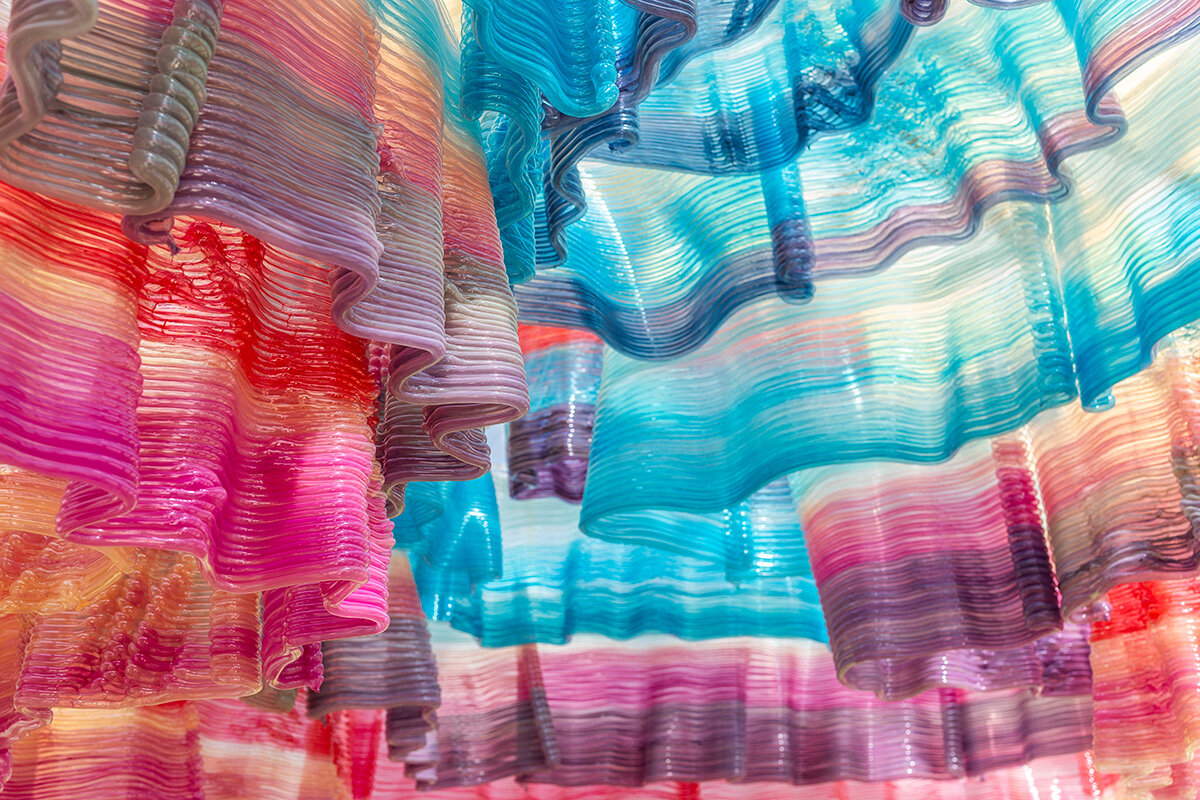
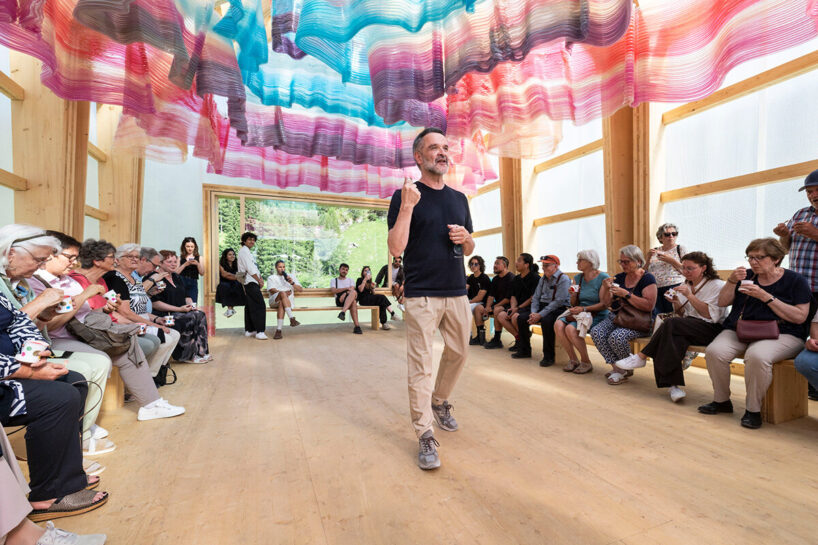
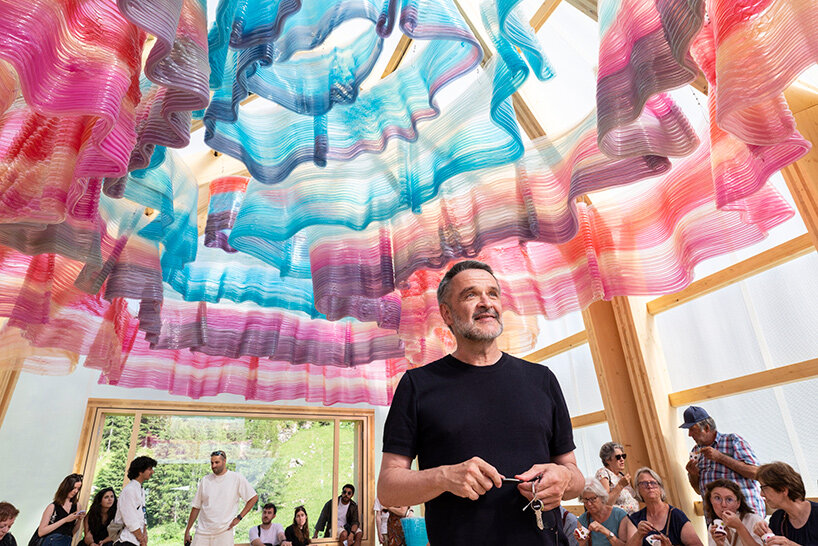
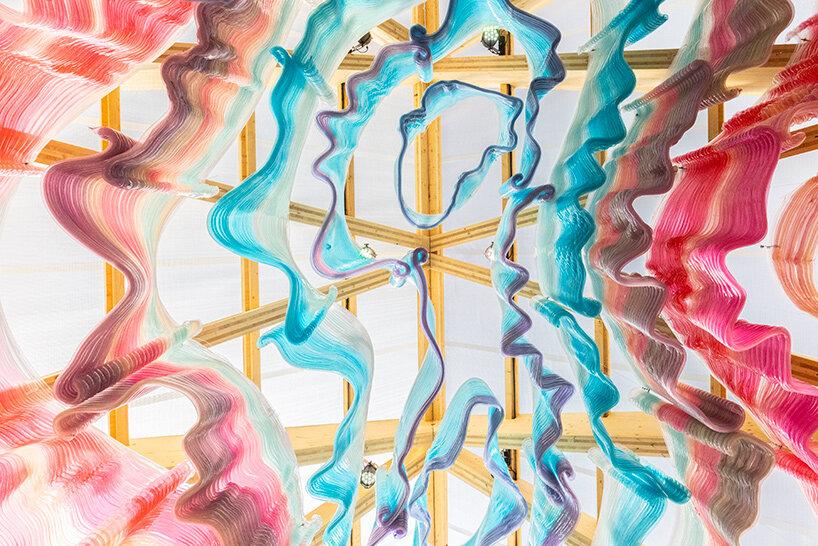
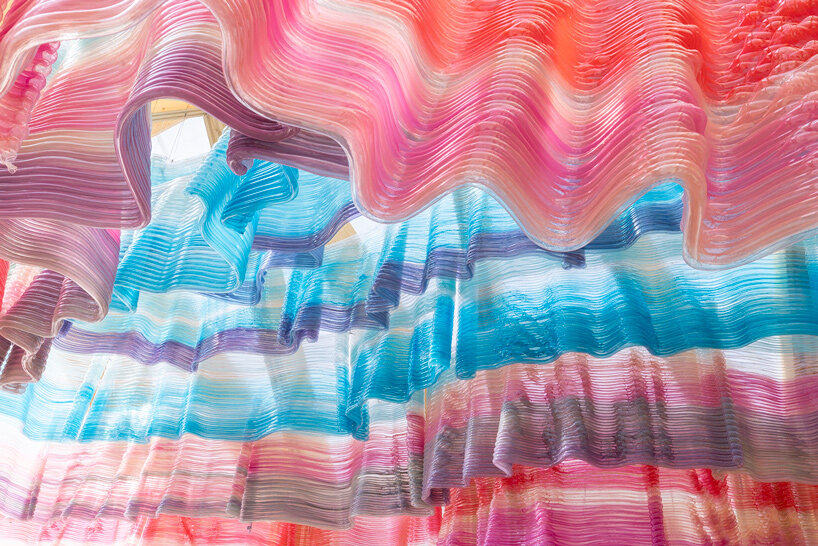
Inside, a colorful cupola becomes the project’s focal point. The vaulted form was fabricated at ETH Zurich’s Robotic Fabrication Lab using an experimental extrusion technique known as Hollow-Core. Originally developed for facade panels, the process was adapted to create a large-scale enclosure. The result is an ultra-lightweight structure covering over 250 square meters but weighing less than one metric ton.
gelateria A Cultural Catalyst for the Alps
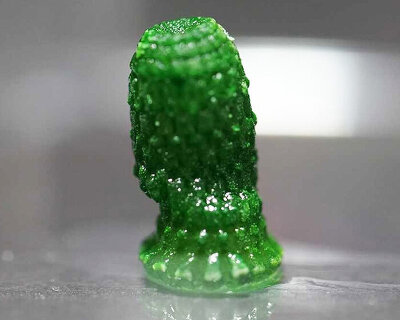
The Gelateria’s interior, Origen and ETH Zurich use recycled PETG, a thermoplastic common in food packaging, demonstrating how plastic waste can acquire new expressive roles in architecture. By reducing the geometric resolution of the digital model, the team accelerated production while emphasizing the layered texture of extrusion.
This commitment to material circularity extends to the building as a whole. The timber structure can be disassembled and reassembled, while the plastic elements can be shredded and reprinted. The project’s design language draws on Belle Époque ornament and Baroque exuberance, reinterpreted through computational workflows and contemporary ecological values.
Gelateria forms part of Nova Fundaziun Origen’s broader vision for Mulegns, positioning architectural innovation as a catalyst for cultural and economic renewal in the region. By coupling reclaimed wood and recycled polymers with advanced robotic processes, the project demonstrates a pathway toward more sustainable and adaptive building practices.


1/10
project info:
name: The Gelateria
architect: ETH Zurich | @ethzurich, Origen | @origenfestivalcultural
location: Mulegns, Switzerland
photography: © ETH Zurich
shop
your own online design shop — no sales commission collected