ETH zurich’s light and reusable formwork system reduces concrete and steel in construction
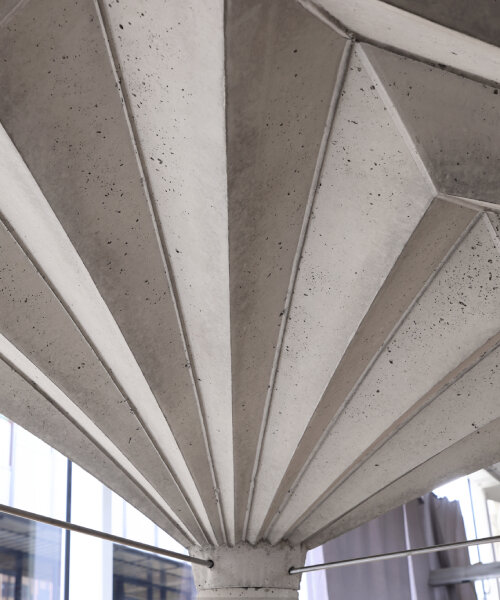
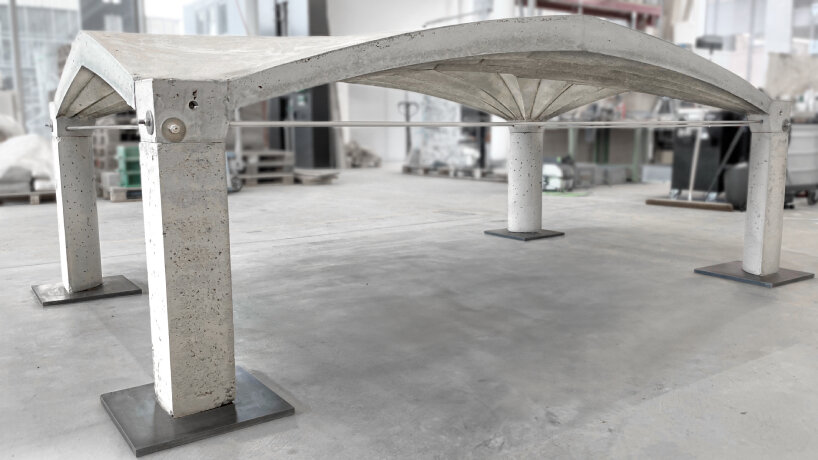
called unfold form, the fan-shaped structure uses up to 60 percent less concrete and 90 percent less steel than the conventional reinforced concrete floor slab.
prefer designboom on googlereusable formwork with less concrete and steel in construction
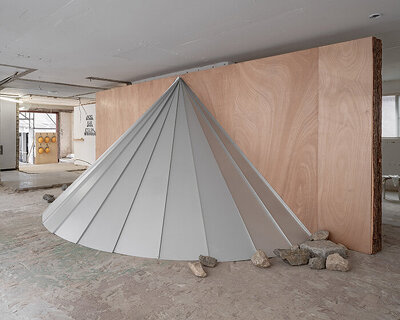
The Block Research Group at ETH Zurich develops a lightweight and reusable formwork system that reduces the use of concrete and steel in construction. Called Unfold Form, the fan-shaped structure led by student and researcher Lotte Scheder-Bieschin uses up to 60 percent less concrete and 90 percent less steel. This is compared to the conventional reinforced concrete floor slab. In this case, the reusable formwork system can reduce carbon emissions and material waste that leave environmental footprints.
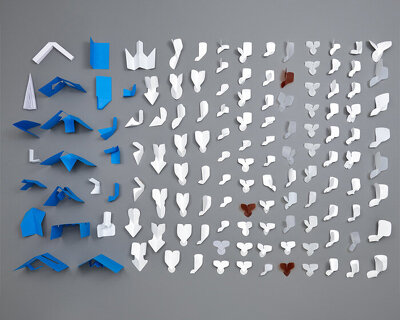
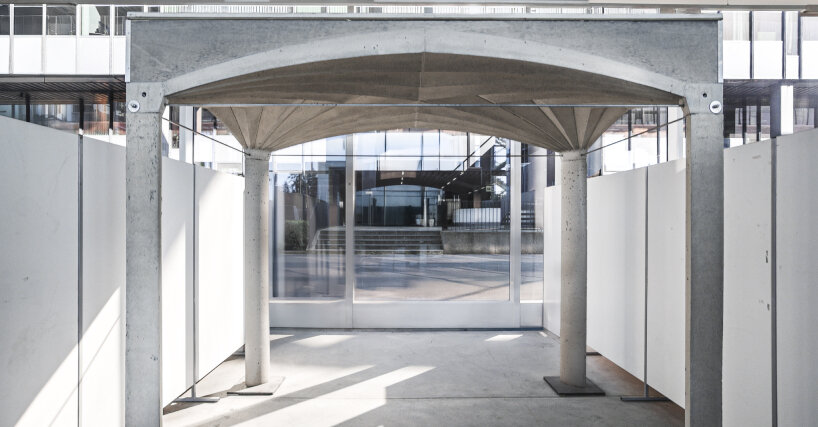
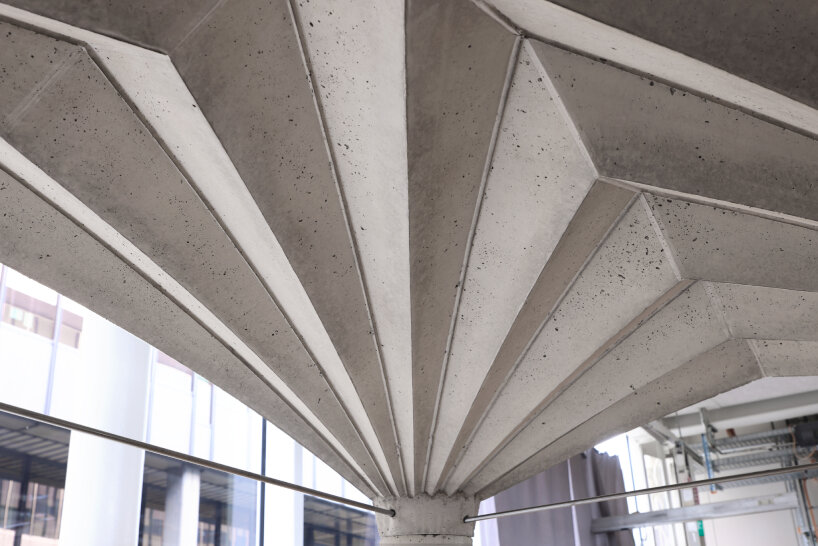
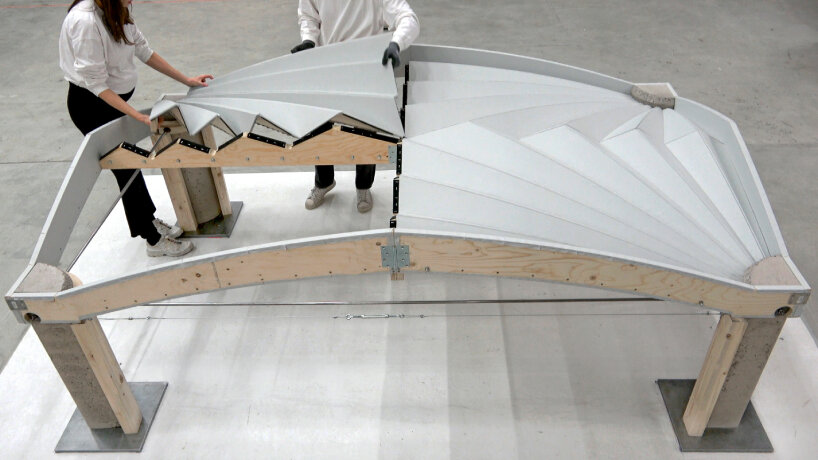
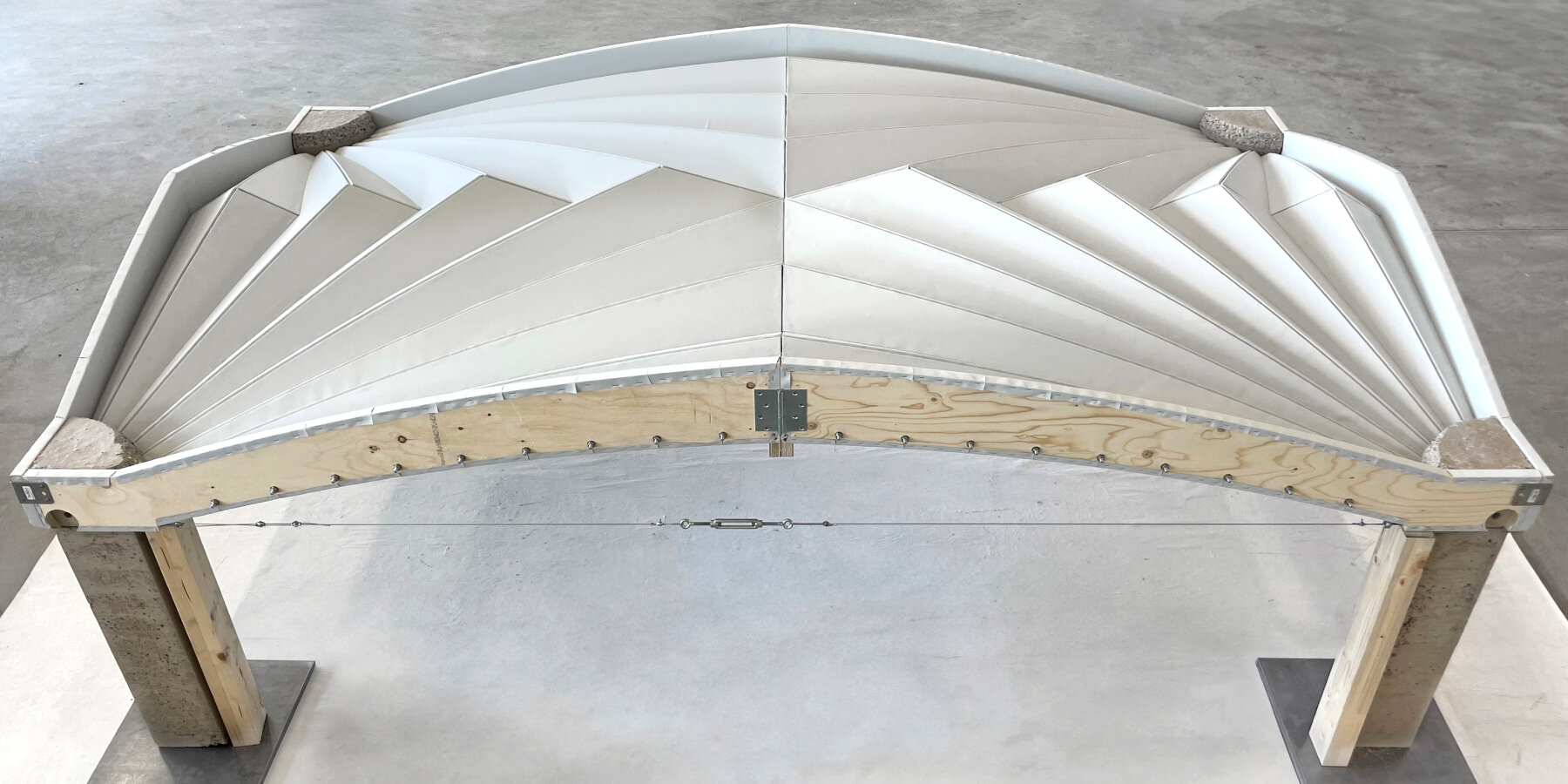
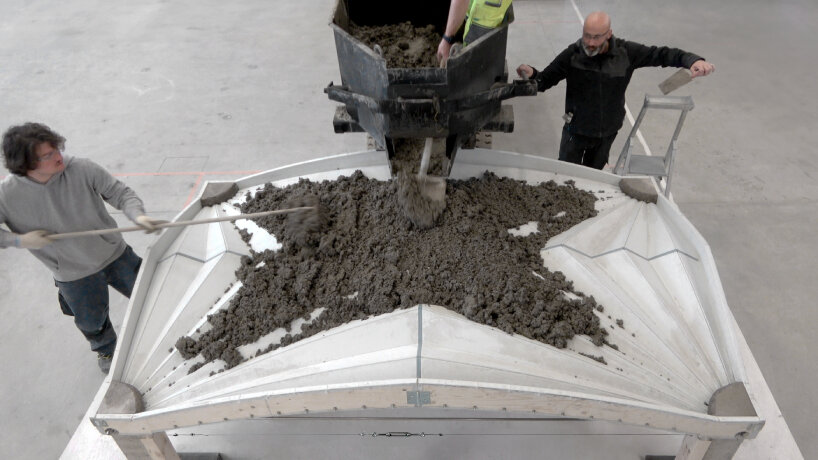
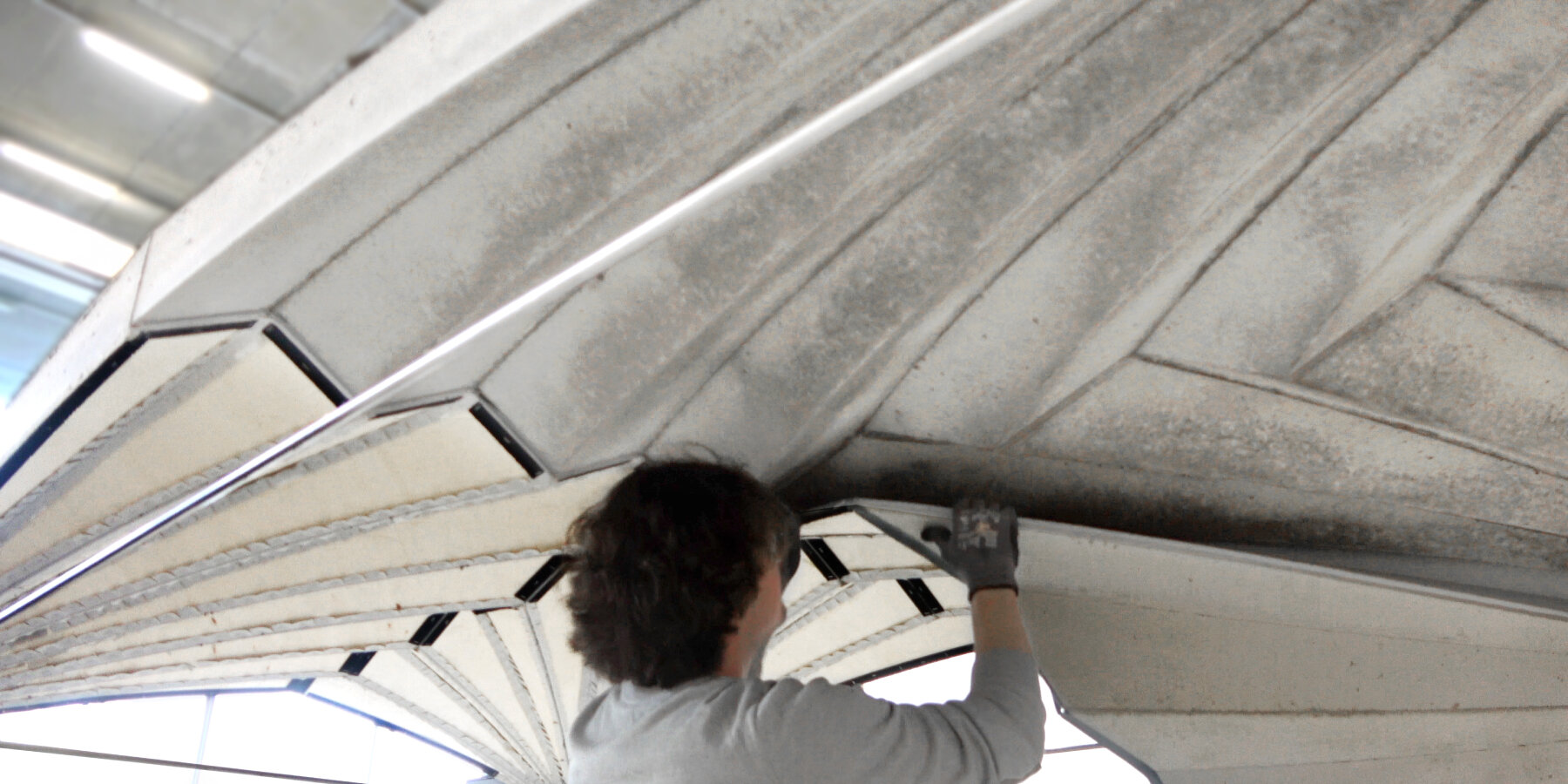
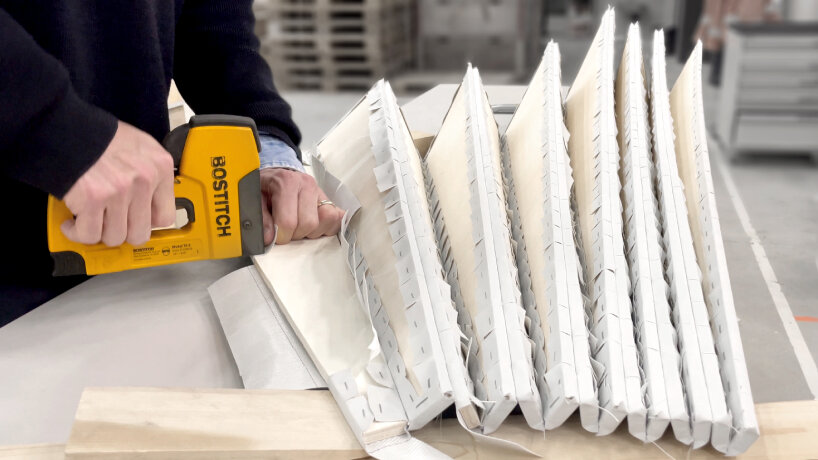
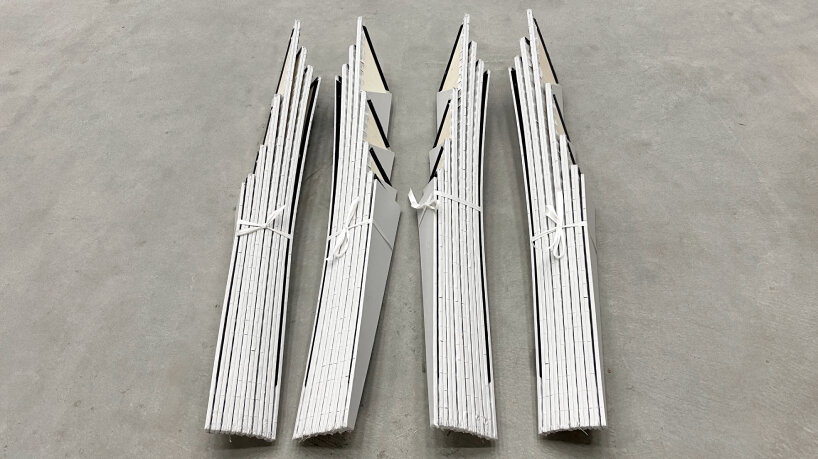
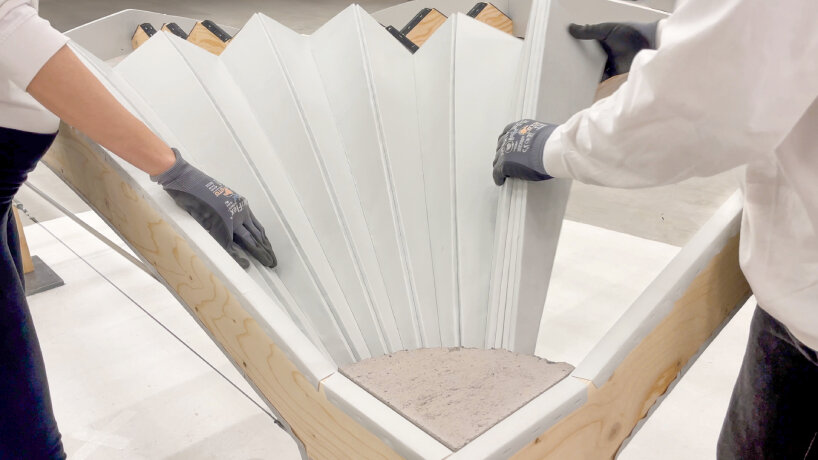
The Unfold Form is a new method for constructing reusable vaulted concrete floors in unreinforced concrete using less steel in construction. The mold is made of lightweight plates connected by textile hinges. These plates are folded flat for transport and then unfolded like a fan into a self-supporting shape at the construction site. Once unfolded, the formwork can hold 1,000 kg of concrete. So, instead of using reinforcement steel, the reusable formwork system is robust because of its specific curved shape. This is a case of the ETH Zurich team’s reusable formwork system reducing concrete and steel in construction.
ETH zurich’s Unfold Form relies on geometry-based principles
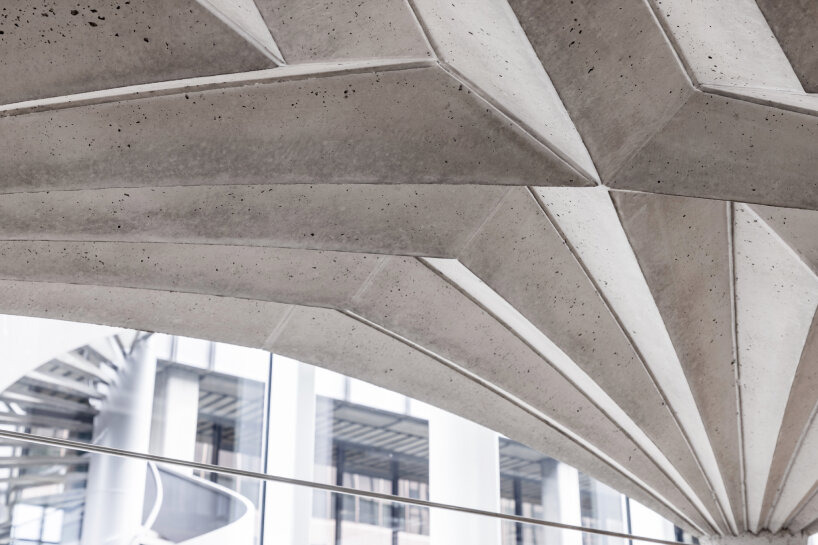
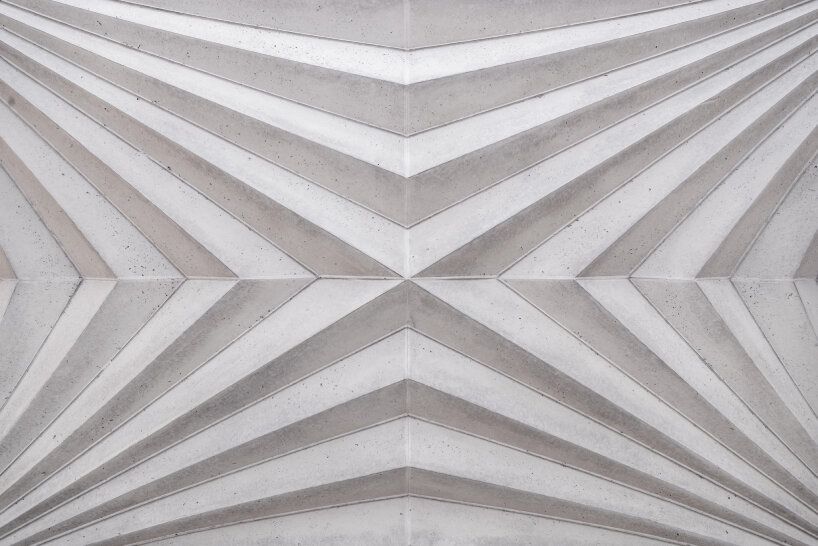
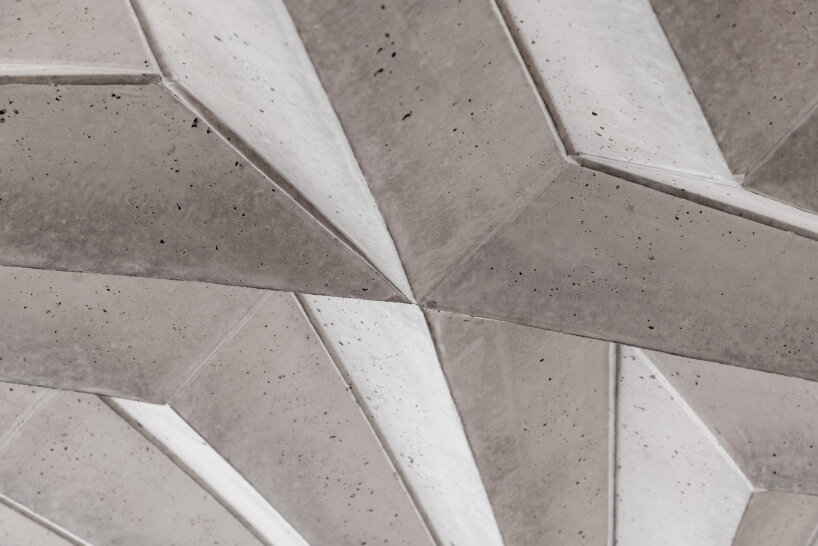
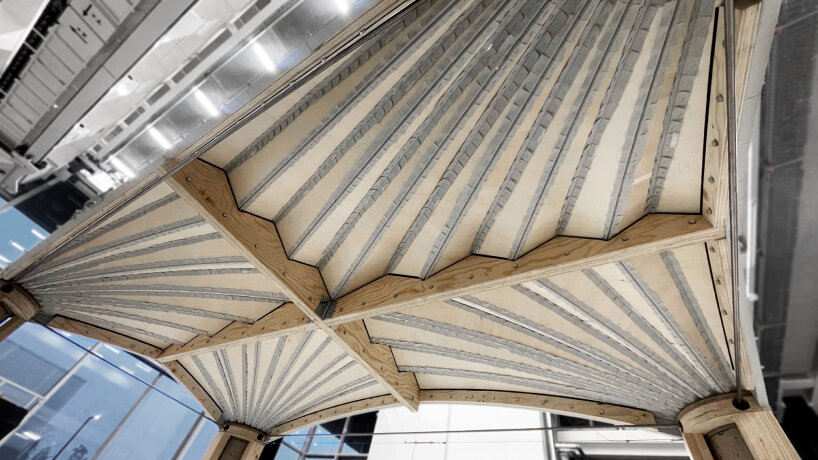
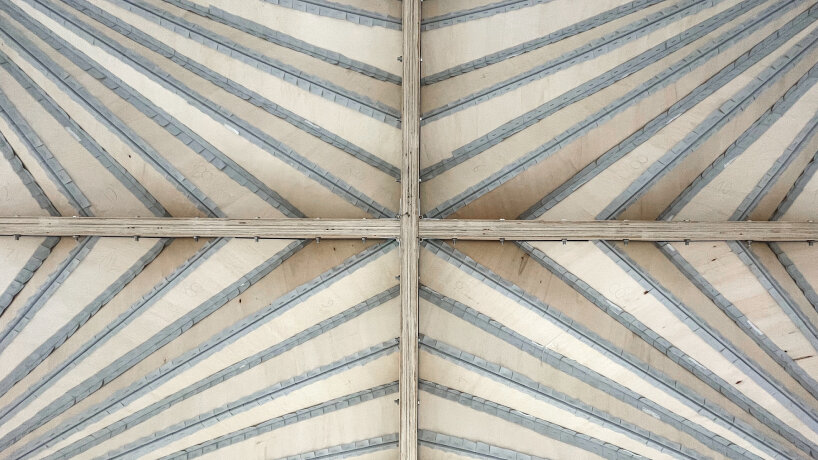
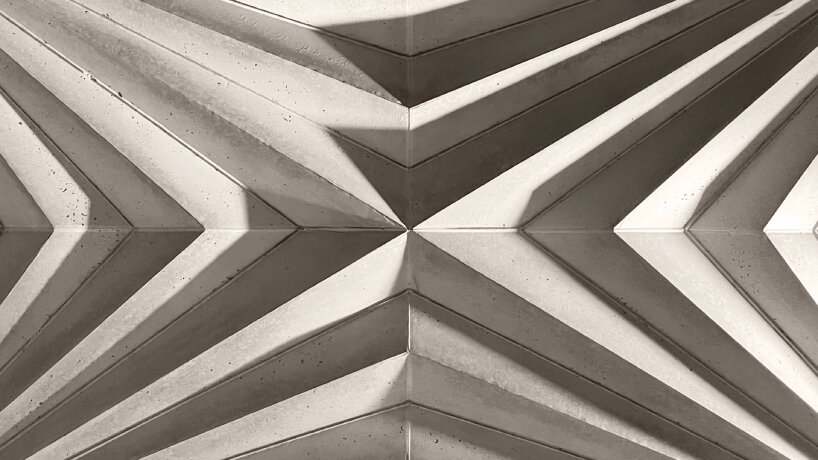
The reusable Unfold Form by The Block Research Group at ETH Zurich relies on geometry-based principles rather than traditional materials like concrete and steel in construction. Its fan-shaped, curved, and foldable creases made of bending-active plates allow for a self-supporting, corrugated structure. In return, these ridges make the structure stiff enough to keep it from bending or collapsing and let the system distribute weight evenly.
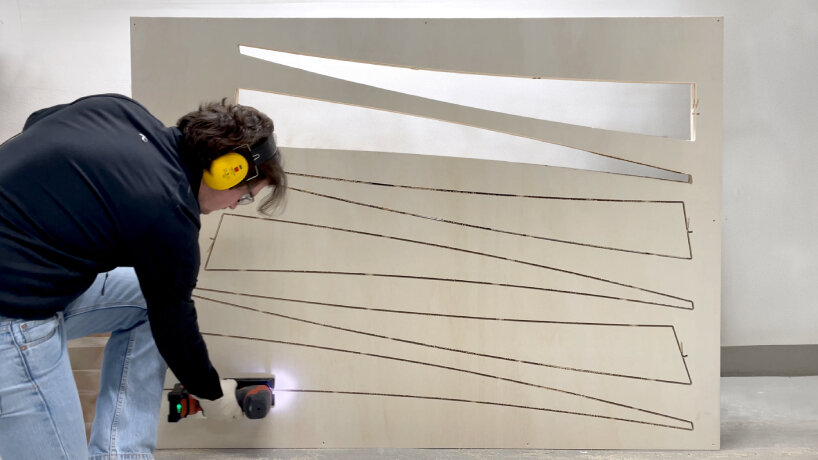
Design-wise, the team – which comprises Lotte Scheder-Bieschin, Mark Hellrich, Dr. Tom Van Mele, and Dr. Philippe Block – uses computational co-design to devise the formwork and shell structure. The materials they work with to create the reusable formwork system with less concrete and steel in construction include PVC-coated polyester textile and 8 mm-thick plywood plates. The system is delivered as a kit that can be assembled on-site in just 30 minutes without any special skills or tools needed since it opens like a fan.
Testing the system in Zurich and Cape Town
The research team has already put their reusable formwork system in place: one in Zurich and another in Cape Town. In both areas, the system results in just 24 kilos and measures 160 x 40 x 25 cm. They’re able to transport the compact, flat-packed formwork as checked luggage by plane from Switzerland to South Africa. On top of that, they’re able to reuse the same mold across multiple casting cycles, all the while not losing the structure’s quality.
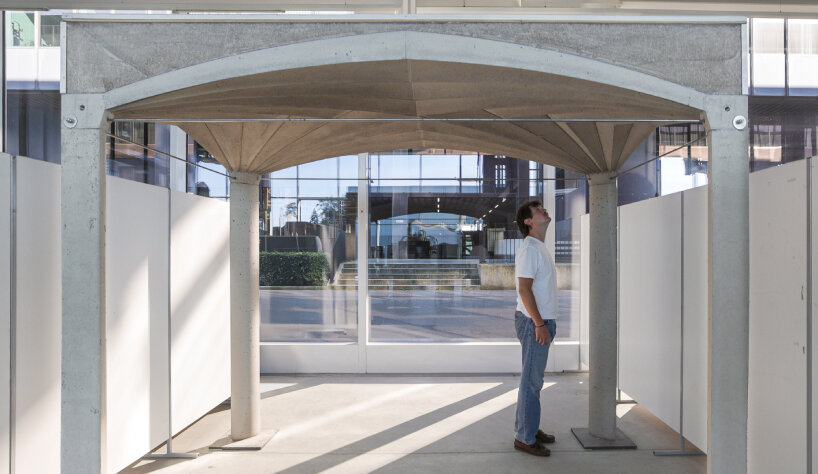
The test gives them a concrete shell, spanning 3 meters by 1.8 meters, weighing 1,000 kilos in total, is 5 centimeters at its thinnest, and 13 centimeters at its thickest. They use a circular fill to complete the floor system, and the corrugations provide structural height for live loads. Moving forward, the team collaborates with NonCrete, who has developed a bio-concrete based on chipped alien invasive vegetation. They’re also looking into consistently using the formwork system as well as the resulting shell floor to combat wasteful molds and inefficient slabs.
1/7
project info:
name: Unfold Form
institution: ETH Zurich | @ethzurich
team: Block Research Group | @blockresearchgroup
researchers: Lotte Scheder-Bieschin, Mark Hellrich, Dr. Tom Van Mele, Dr. Philippe Block
photography: Andrei Jipa, Lotte Scheder-Bieschin
shop
your own online design shop — no sales commission collected