‘fast complexity’ project employs 3D printing to make concrete use more efficient
a team from ETH zürich has proposed an automated solution that combines the fabrication speed of concrete 3D printing with the geometric precision of reusable 3D printed formwork.
prefer designboom on googlewith concrete responsible for 8% of our global carbon footprint, it is more important than ever to use the material more efficiently. although optimization algorithms can significantly reduce the amount of concrete used on complex buildings, the construction industry remains limited by the available fabrication technologies. to tackle this problem, digital building technologies, ETH zürich has proposed an automated solution that combines the fabrication speed of concrete 3D printing with the geometric precision of reusable 3D printed formwork.
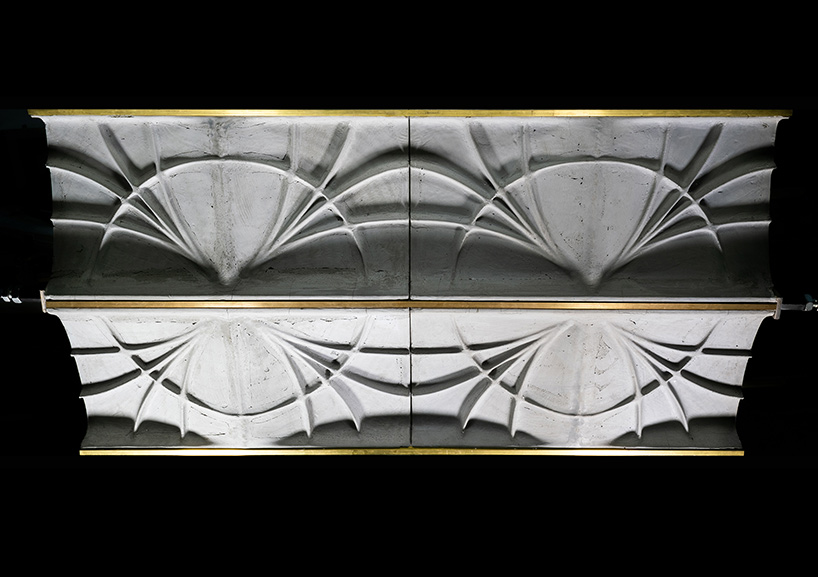
the two square meters slab prototype is assembled using post-tensioning tendons | image by axel crettenand, all images and video courtesy of digital building technologies, ETH zürich
the project, titled ‘fast complexity’, has been demonstrated with a highly optimized post-tensioned structural slab prototype. ‘to make this possible, we developed an innovative process that allows us to dynamically control the setting rate of the 3D printed concrete,’ explains digital building technologies. ‘this digital control over material properties means that we can extrude a fluid concrete that emulates the complex surface of the formwork perfectly, as well as a fast-setting concrete that does not need any additional formwork for the upper structure.’
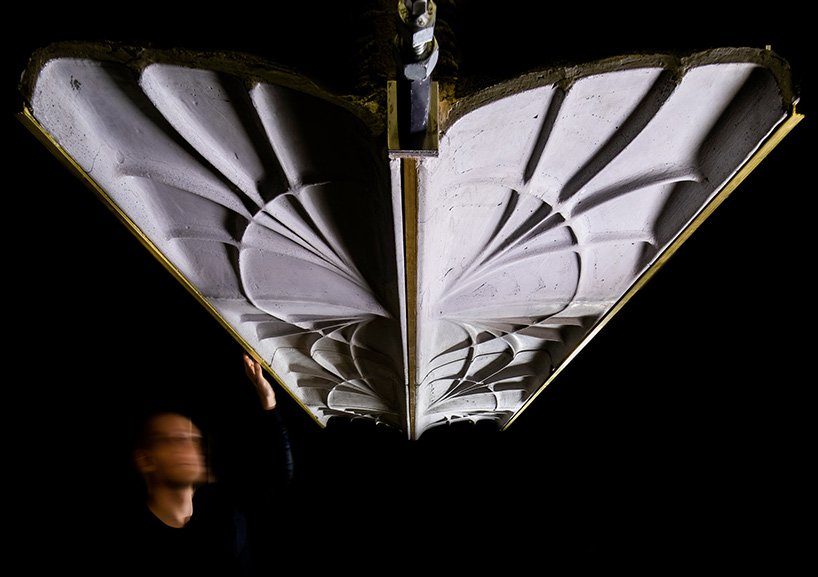
the proposed technology allows for the fabrication of double-curved concrete reinforced surfaces as thin as 20 mm | image by andrei jipa
‘the proposed method allows the implementation of radically new aesthetics in slabs with functional features on both sides,’ continues the team. ‘moreover, the method involves less digital fabrication processes, requires less manual labor, and is more resource-efficient in comparison to the state of the art fabrication alternatives for bespoke slabs. based on these considerations, the method aims to facilitate a more diverse repertoire of contextualized design solutions in real buildings.’
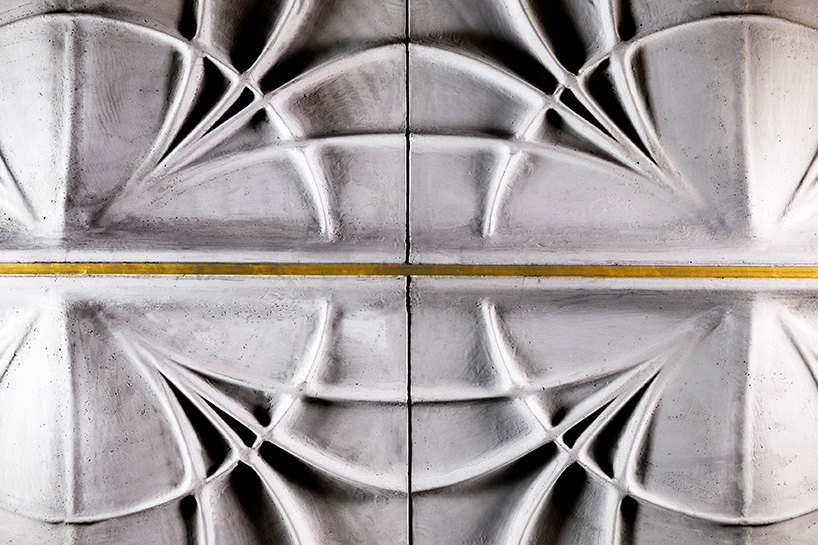
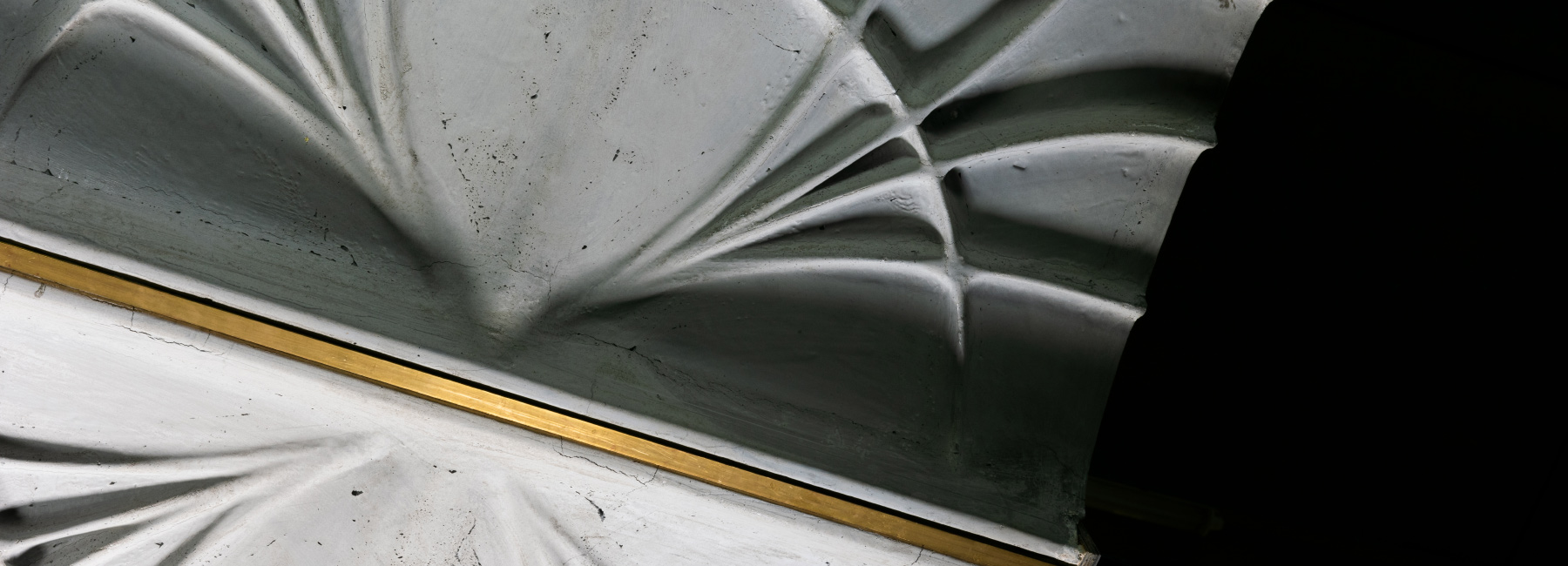
the ornamented soffit inherits the precise geometry of the binderjeted formwork, thus providing an apparent concrete soffit in a robust and durable material | image by andrei jipa
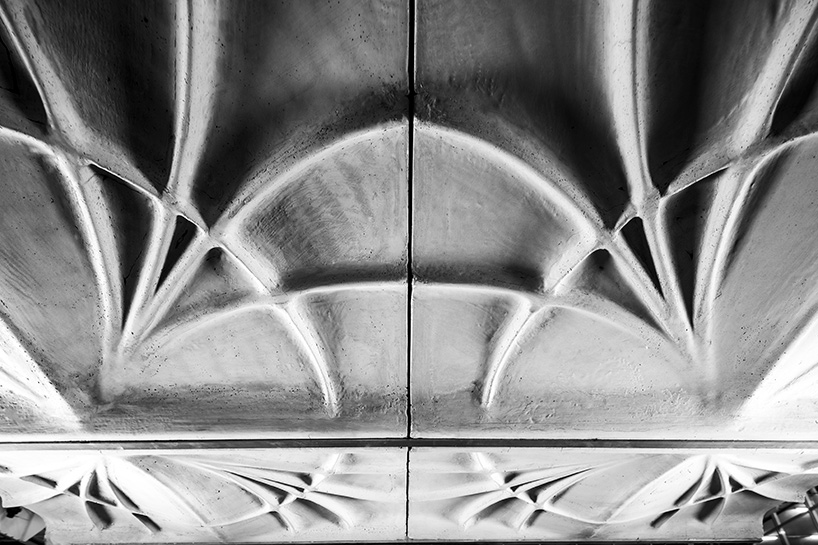
soffit detail | image by andrei jipa
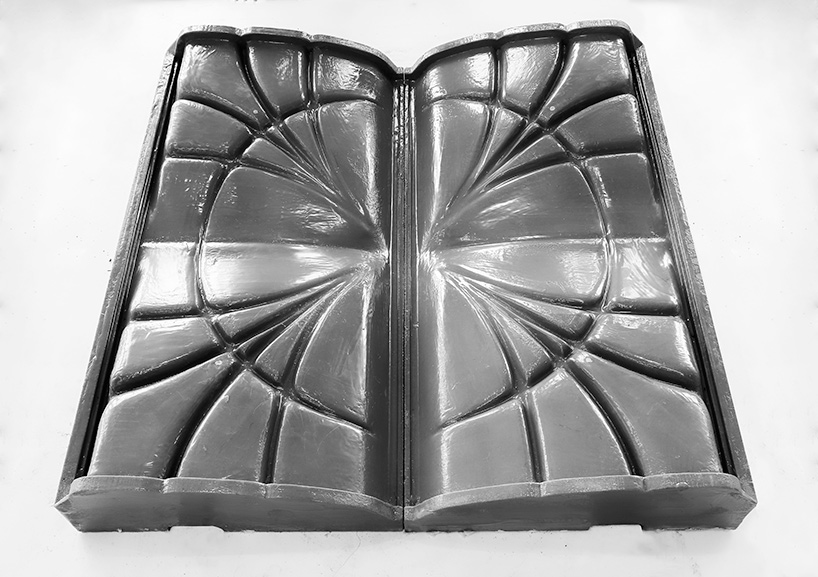
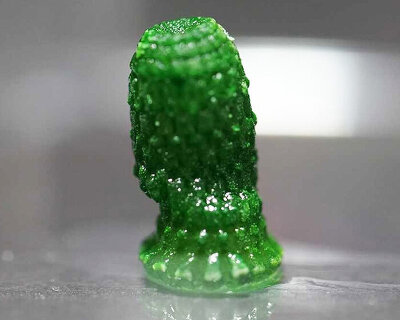
reusable binderjeted formwork | image by andrei jipa
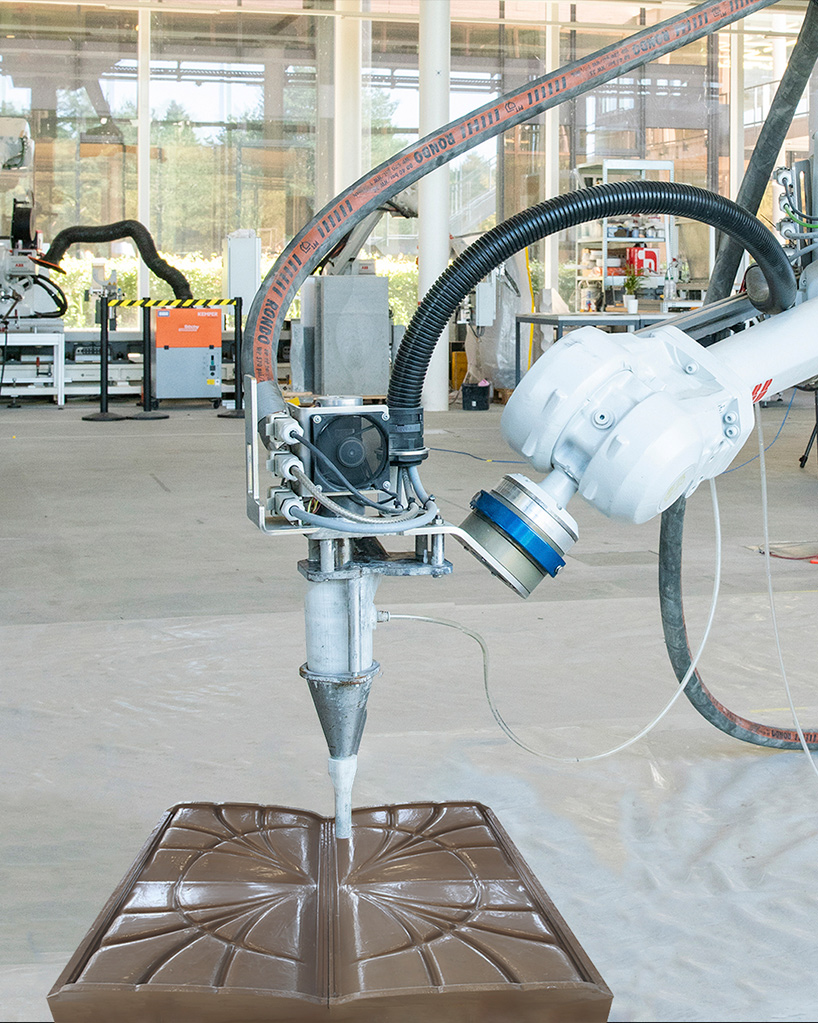
fabrication setup in the robotic fabrication laboratory of ETH züirch | image by ana anton
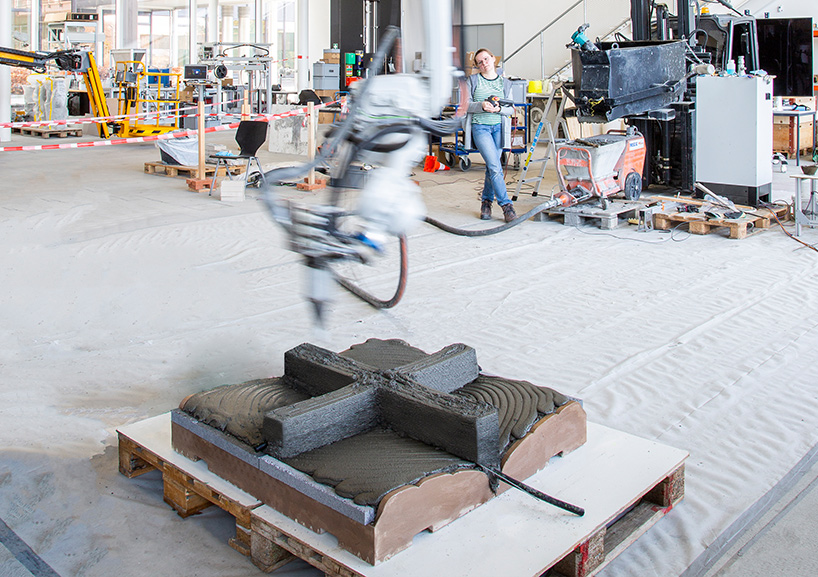
fabrication sequence: filling the main ribs, inserting the post-tensioning tube for the main beam, adding the CFRP mesh after the first layer and printing the main ribs | image by andrei jipa
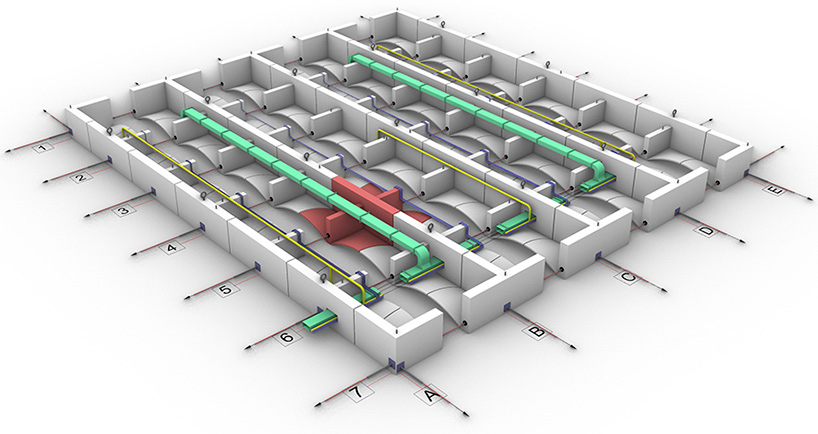
assembly diagram: the proposed modular system can be adapted for custom slab dimensions and post-tensioned on both directions | image by andrei jipa
project info:
name: fast complexity
team: ana anton, andrei jipa, prof. benjamin dillenburger (digital building technologies); lex reiter (physical chemistry of building materials)
technical support: eleni skevaki, yoana taseva, tobias hartmann, matthias bernhard, pietro odaglia (digital building technologies); philippe fleischmann, andreas reusser, achilleas xydis (ETH zürich); stefan miesel (BASF master builders solutions)
this research was supported by the NCCR digital fabrication, funded by the swiss national science foundation (NCCR digital fabrication agreement #51NF40-141853).
shop
your own online design shop — no sales commission collected