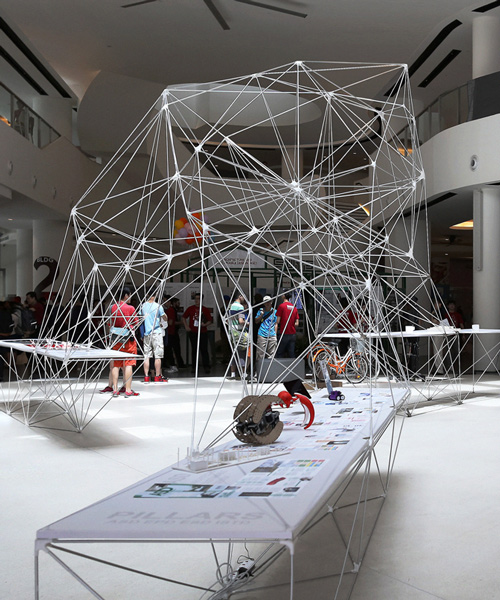
felix raspall + carlos bañón installs 3D-printed fibrous pavilion at SUTD singapore
for the occasion of singapore university of technology and design's open house event, the two professors form a 14.5 meters free-form mesh structure situated in the atrium.
prefer designboom on google[FEATURED]
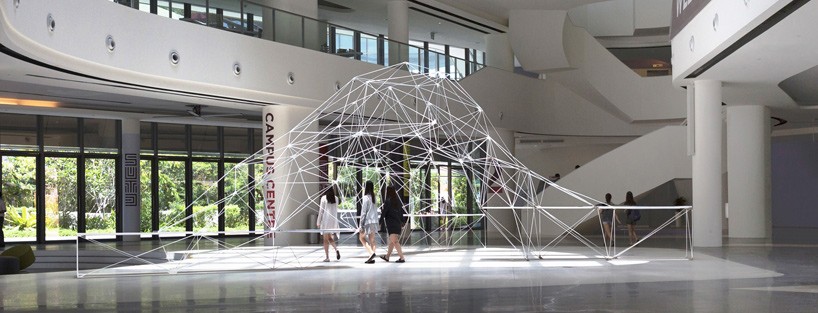
felix raspall + carlos bañón installs 3D-printed fibrous mesh pavilion at SUTD singapore
for the occasion of singapore’s university of technology and design (SUTD) open house event, two professors -felix raspall and carlos bañón- have explored the mechanical properties of 3D-printed parts to form a 14.5 meters fibrous architectural mesh structure situated in the atrium of the university.
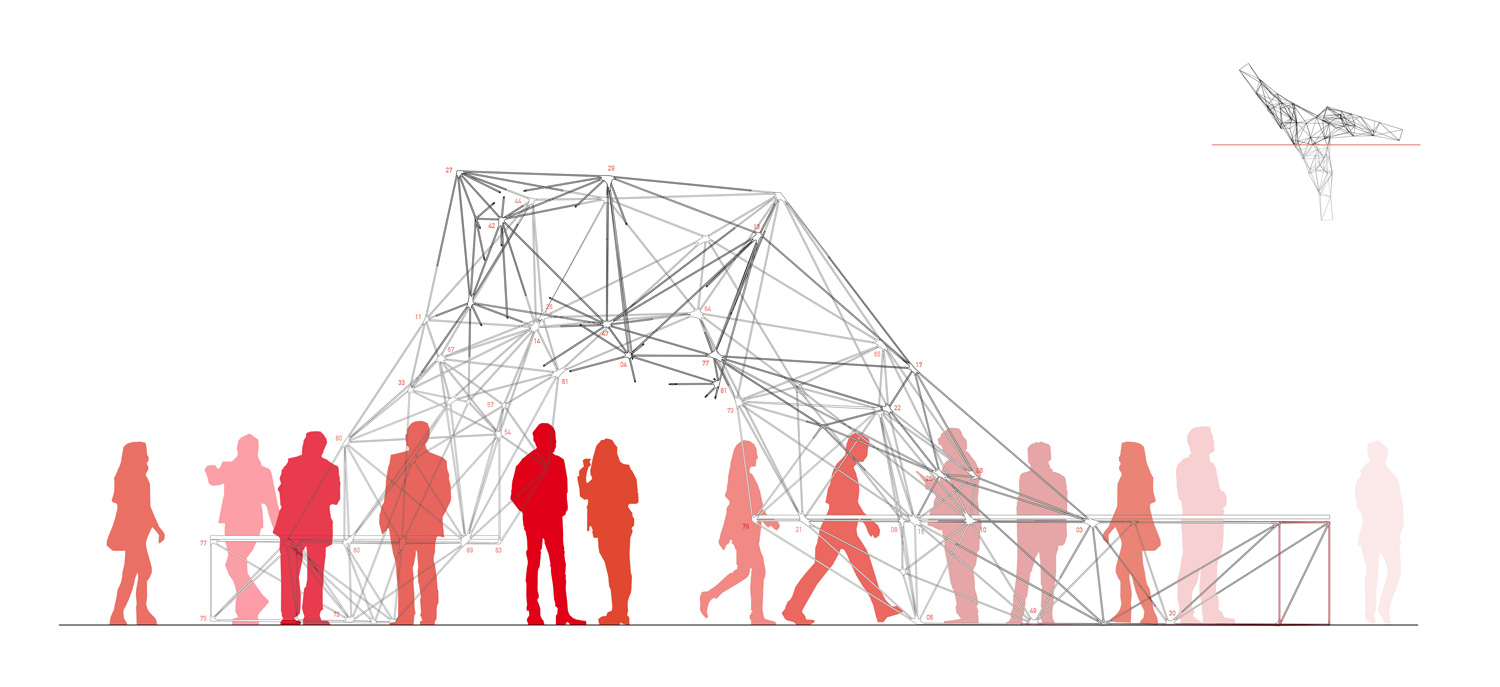
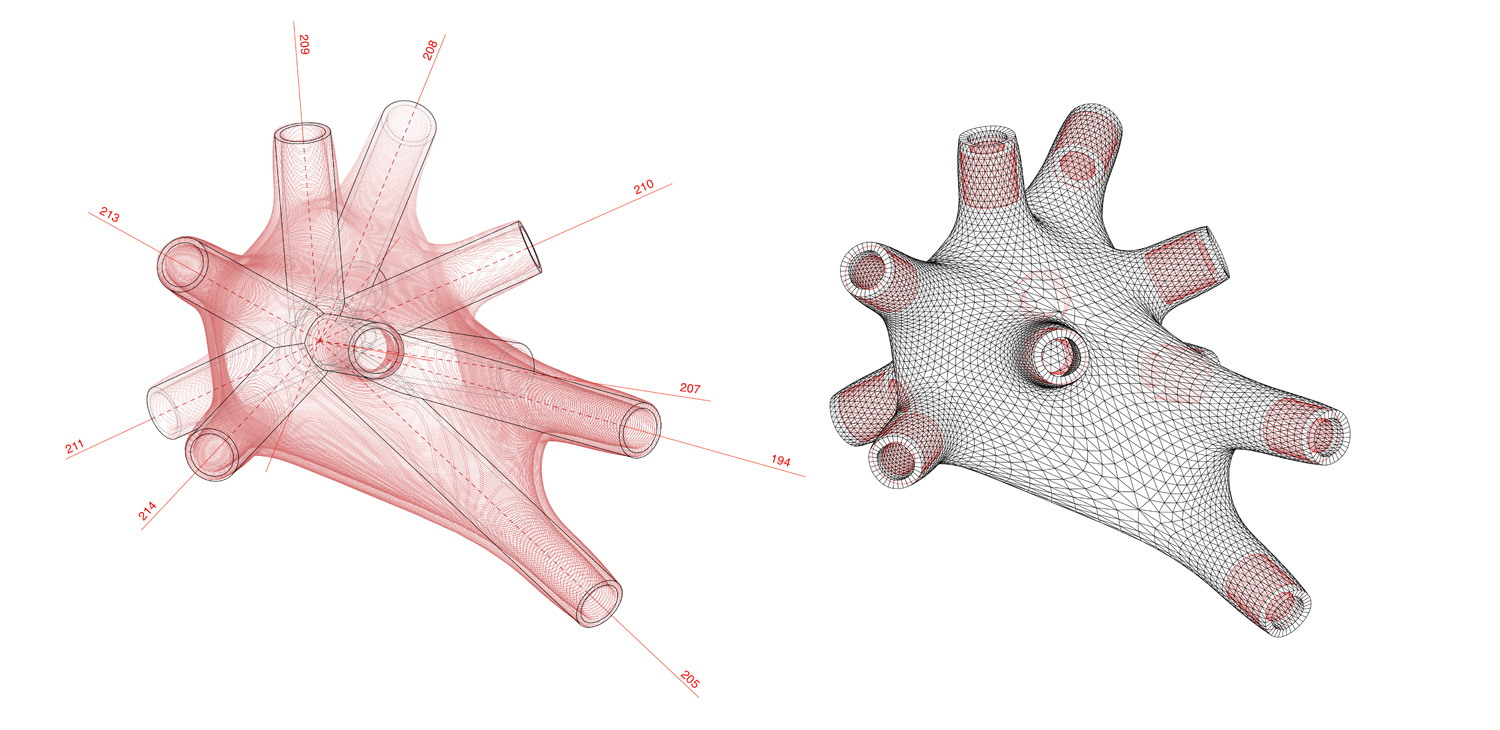
working together with a student team, the thin structural system ‘vMESH’ is made of 91 3D-printed nodes with the joints parametrically tailored specifically for each geometric module. as a result, the pavilion visualizes as a free-form shape where its connections are optimized, flushed with the section of the bars and each piece shaped in a specific thickness according to its dimensions. the pavilion follows a tetrahedral geometry as a strategy to add stability and give the whole frame robustness.
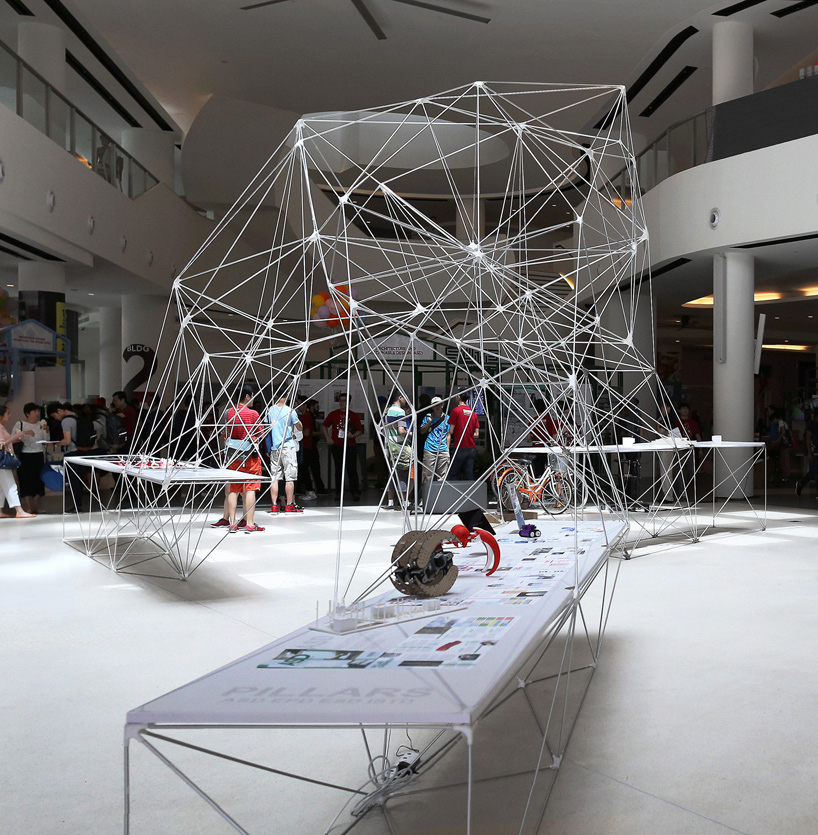
three five meter long platforms set at different heights and showcasing a selection of students’ works
all images © felix raspall + carlos bañón
in addition, the lightweight structure serves also as a support for three five meter long platforms set at different heights and showcasing a selection of students’ works. the pavilion becomes a core hub for congregation and a distinctive addition to the lobby space; ultimately bringing a subtle local change in density, light and matter to an otherwise neutral and boundless space in the core of the SUTD‘s new campus.
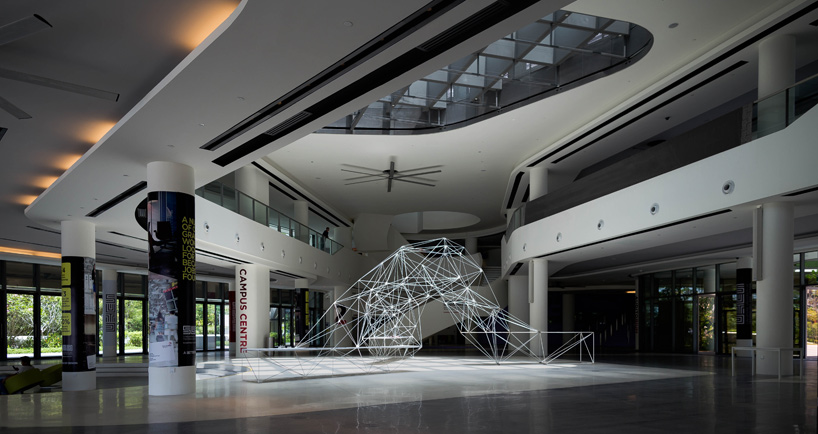
the mesh pavilion is a based in the atrium of the university’s new campus
‘the early use of 3D printing in architectural research, education and practice has been almost exclusively destined to produce physical representations – scaled models— of designed building. but with the recent advances in additive manufacturing have exponentially increased the mechanical properties of 3D printed parts, opening new opportunities for this technology to be directly applied to functional architectural components at an increasingly larger scale.’
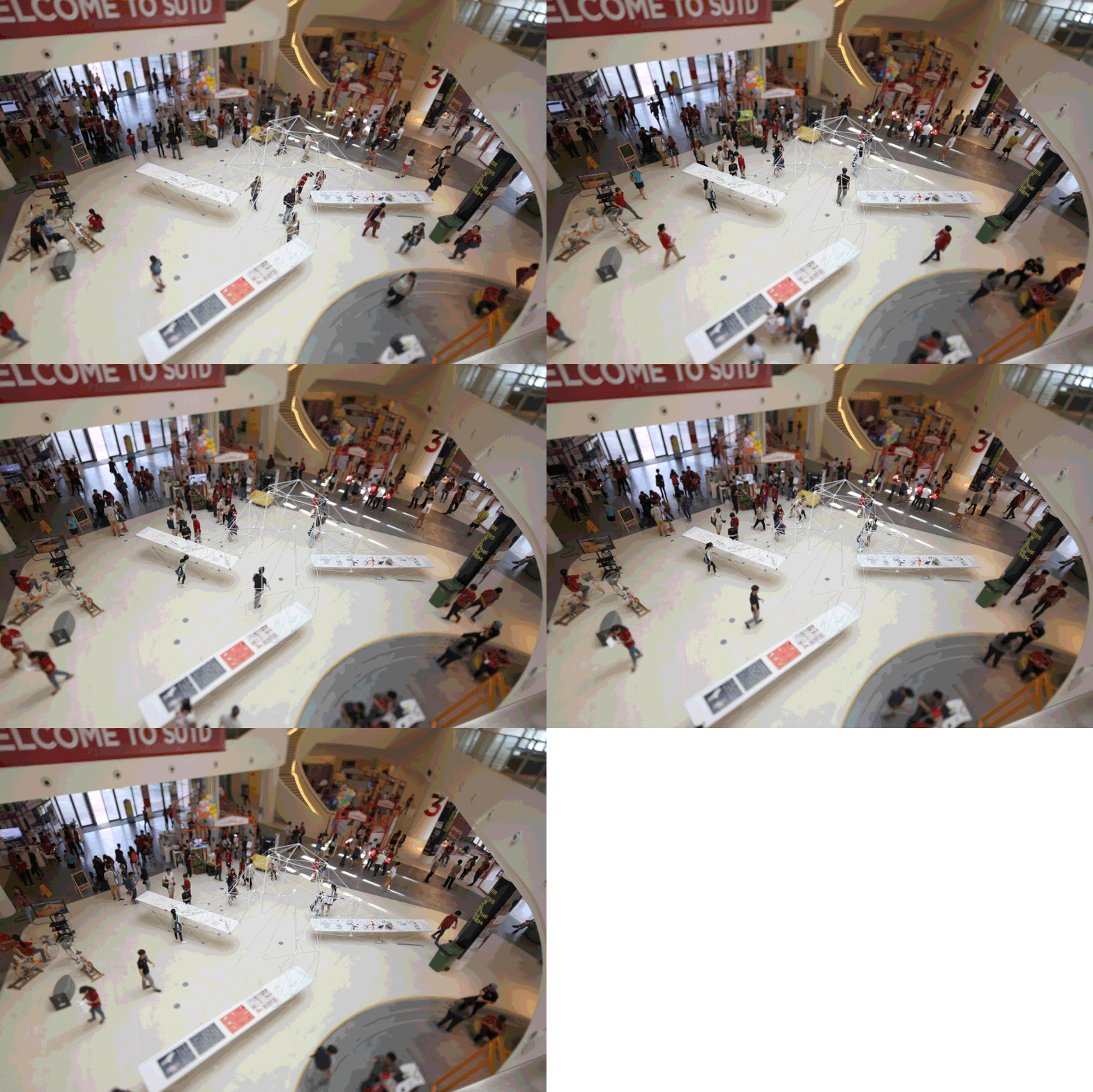
the vMESH pavilion inside SUTD’s atrium
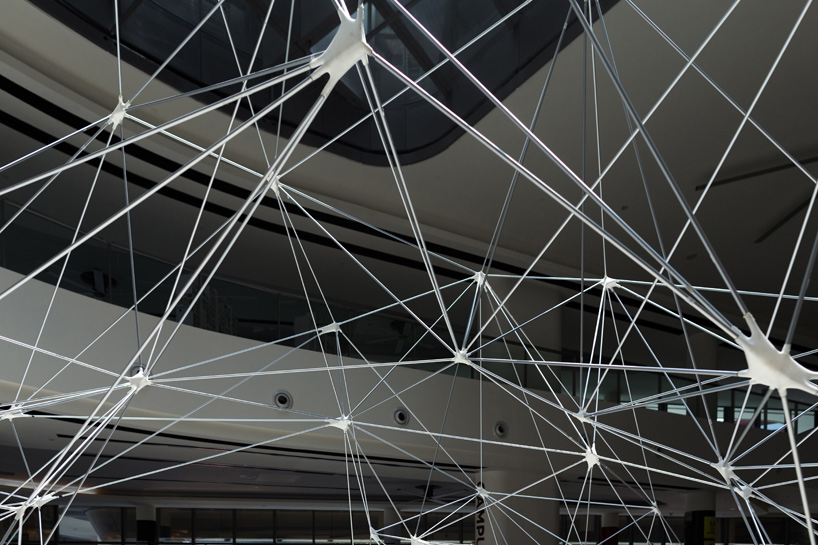
the structure is made of 91 3D-printed nodes: 19 metal and 72 out of nylon- and 369 10mm diameter aluminum bars
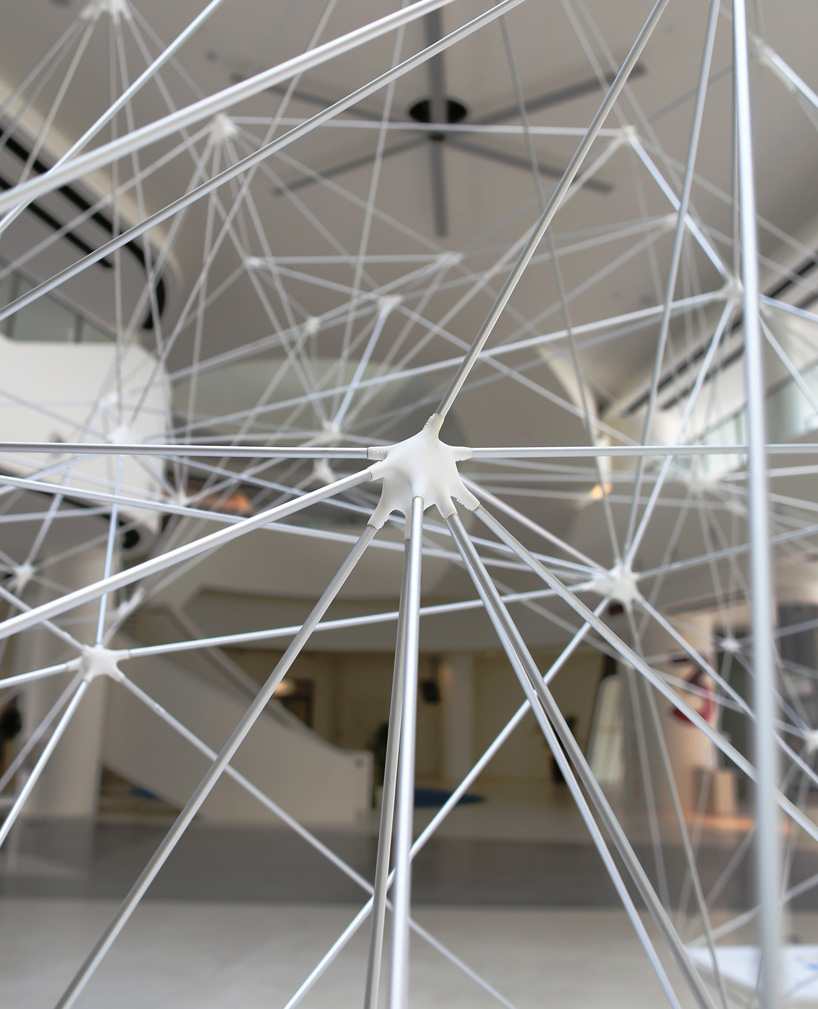
a tetrahedral geometry is embedded in the structure, as a strategy to confer stability and robustness to the whole
system
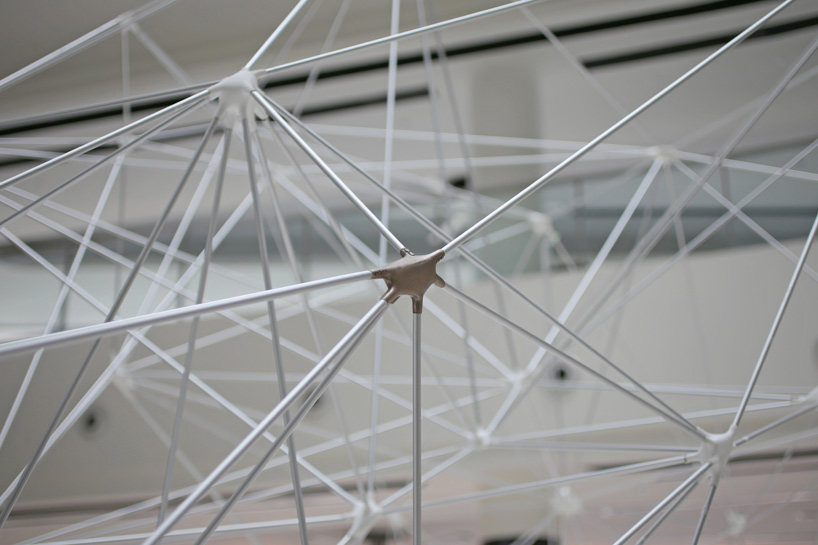
close-up of the joints
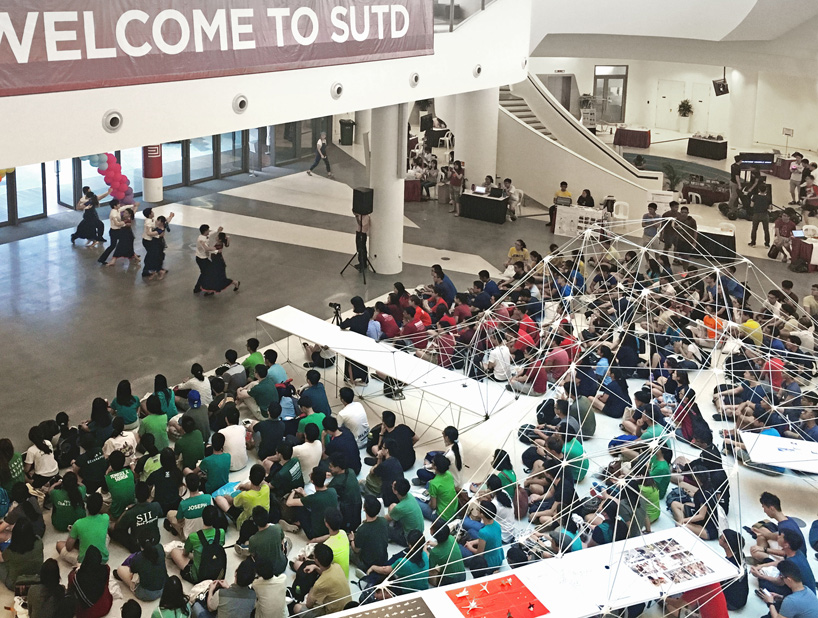
the pavilion serves as an unobtrusive place for congregation
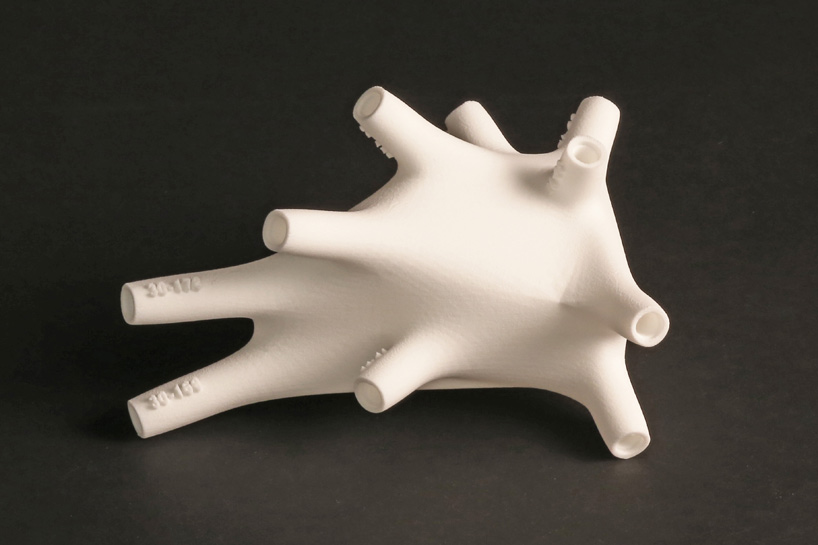
the pavilion further explores the potential of 3D printing
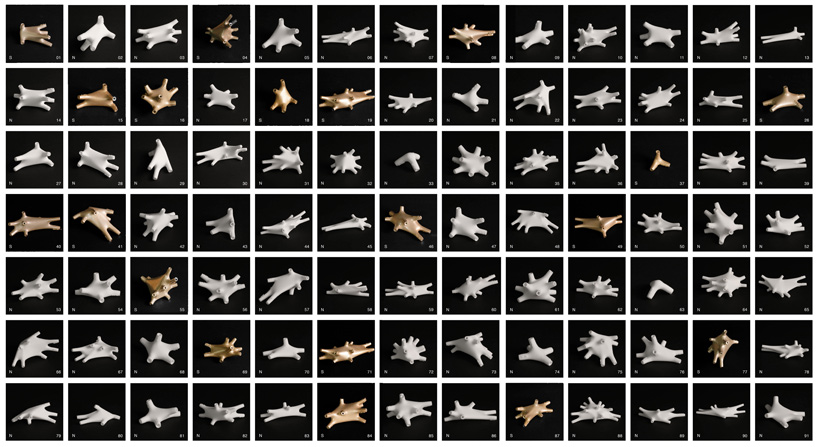
using programs such as grasshopper and c#, each piece is three-dimensionally shaped in an specific thickness
according to its dimensions


1/4
project info:
design: carlos bañón + felix raspall
research team: mohair arora, ryan chee, wei shen
student team:
gammy chua, tracy chow, ao chinwen, pauline siew, lisa koswara, endy fitri bin saifuldin, loi jun
kai, tan jun kai, tan yu jie, caroline, lim wan rong, willa trixie ponimin, rebecca ong, liaw su
xin, teo yu en dionne, zhang ke er, shobhaa narendran, bryan lim wei guo, goh wei hern, liew
sheng wei ethan, tee yong kiat.
shop
your own online design shop — no sales commission collected