mad’s Ma Yansong on the opening of Fenix museum in rotterdam
On May 16, 2025, Rotterdam officially opens Fenix, a museum dedicated to the art and stories of migration, marking MAD’s first cultural building in Europe. Ahead of the public opening, designboom attends the preview of the museum, experiencing the space firsthand and speaking with architect Ma Yansong on site. Set within a 1923 port warehouse in the historic Katendrecht district of the city, Fenix is the result of architectural ambition and emotional gravity (find designboom’s previous coverage here). For MAD, the building is not just a container but a living environment shaped by movement, reflection, and encounter. ‘When you see the light and the people in the building, it really makes a difference,’ Ma Yansong tells us. ‘Before, that was only in the imagination. Now I realize this is a device for people’s movement and for meeting each other.’
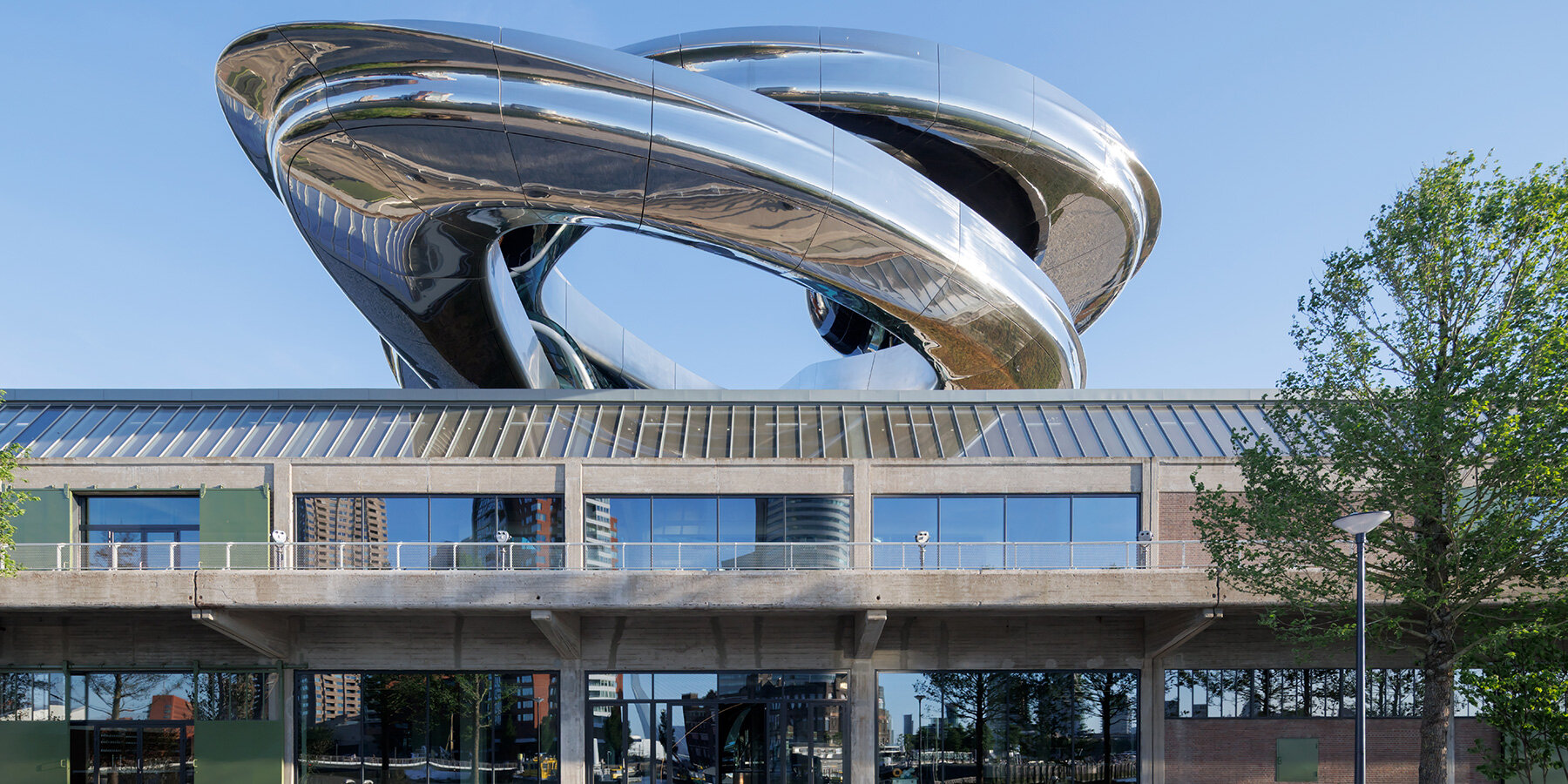
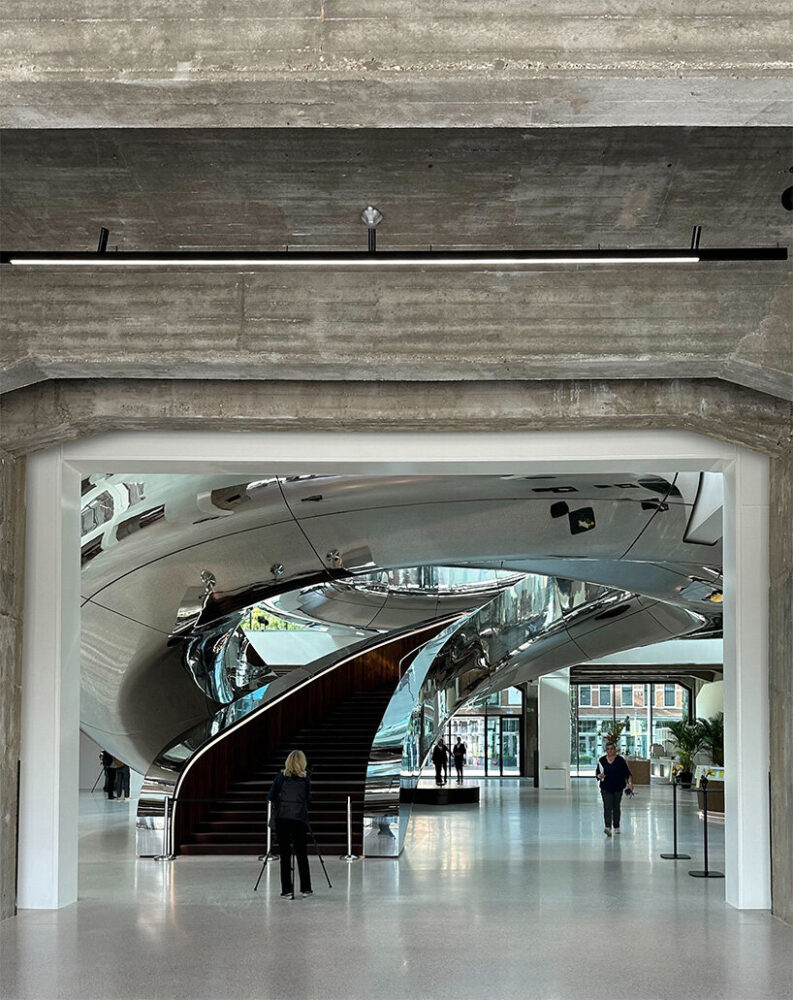
The project is a milestone in the regeneration of Rotterdam’s waterfront and reflects the layered history of the site, once the departure point for millions of emigrants crossing the Atlantic. During his visit to the neighborhood, Ma sensed a deeper yearning from the community. ‘In people’s hearts, they wanted a lighthouse,’ he says. ‘They need a spiritual space, a symbol of their generation, or the older generation, or their next generation.’ For him, Fenix is ‘half architecture, half art.’ The Tornado, a dramatic double-helix staircase, crowns the Fenix museum. This centerpiece pierces through the old warehouse and flows upward, culminating in a rooftop platform, offering views of the River Maas and Hotel New York—the former headquarters of the Holland America Line. It’s a sculptural expression of movement and transformation, anchoring the museum in both a physical and symbolic manner. ‘The people’s behavior and reactions complete the work,’ he adds during our walkthrough. ‘Otherwise, it’s just a staircase.’
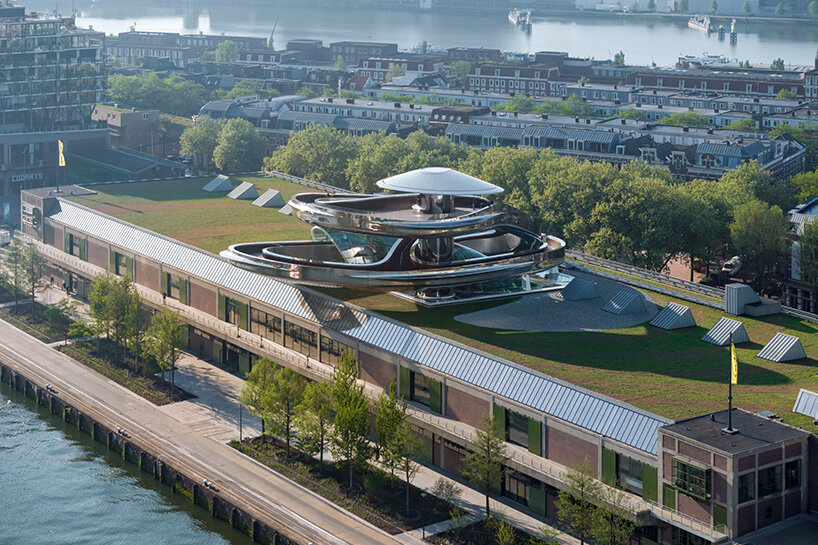
Rotterdam officially opens Fenix | image by Iwan Baan
a double spiral staircase tops the 1923 port warehouse
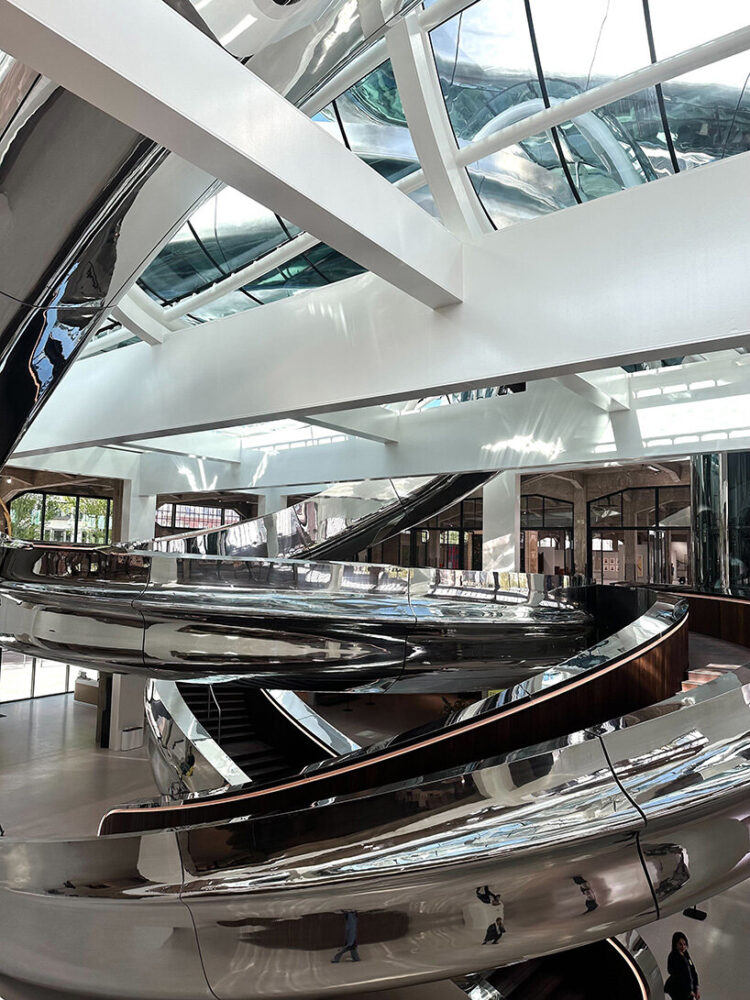
‘I saw this really big, heavy concrete building,’ Ma Yansong, founder of international architecture firm MAD, shares with designboom, referring to the original structure. ‘It’s monumental, and from the outside it’s really long and horizontal. My first instinct was to do something vertical, so you can recognize this is something different.’ He explains that the spiraling form of the staircase that tops the museum was essential. ‘There are two connected spirals, so the structure becomes self-supporting. This was essential to avoid columns in the middle. And then it becomes an experience.’ As visitors ascend the Tornado, it becomes a narrative, reflecting their own journeys. ‘You almost see your reflection as yourself traveling through time, always reflecting, borrowing the color, the light from the surroundings,’ he says.
As public and cultural buildings evolve, he comments, ‘public buildings, cultural buildings, will be spaces that bring more people together—not just one’s self.’ That principle shapes every part of Fenix, from its freely accessible ground floor to its soaring Tornado staircase.
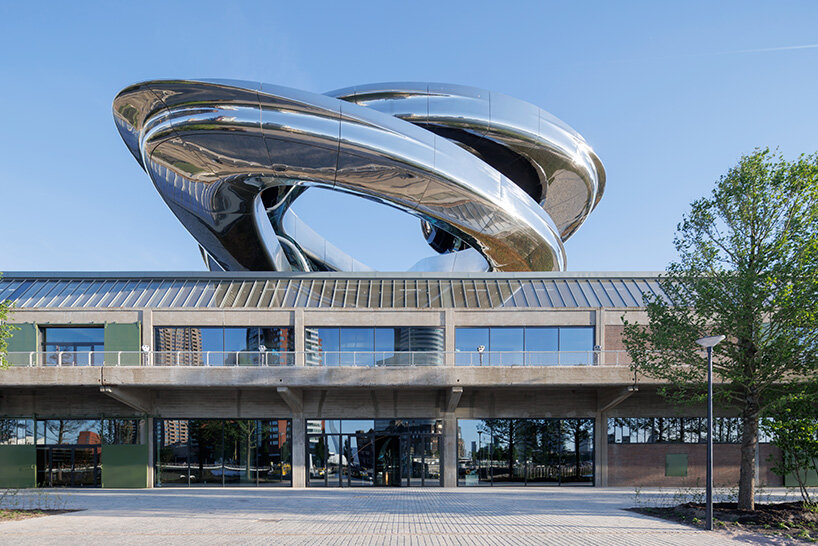
the museum is dedicated to the art and stories of migration | image by Iwan Baan
three major inaugural exhibitions explore migration
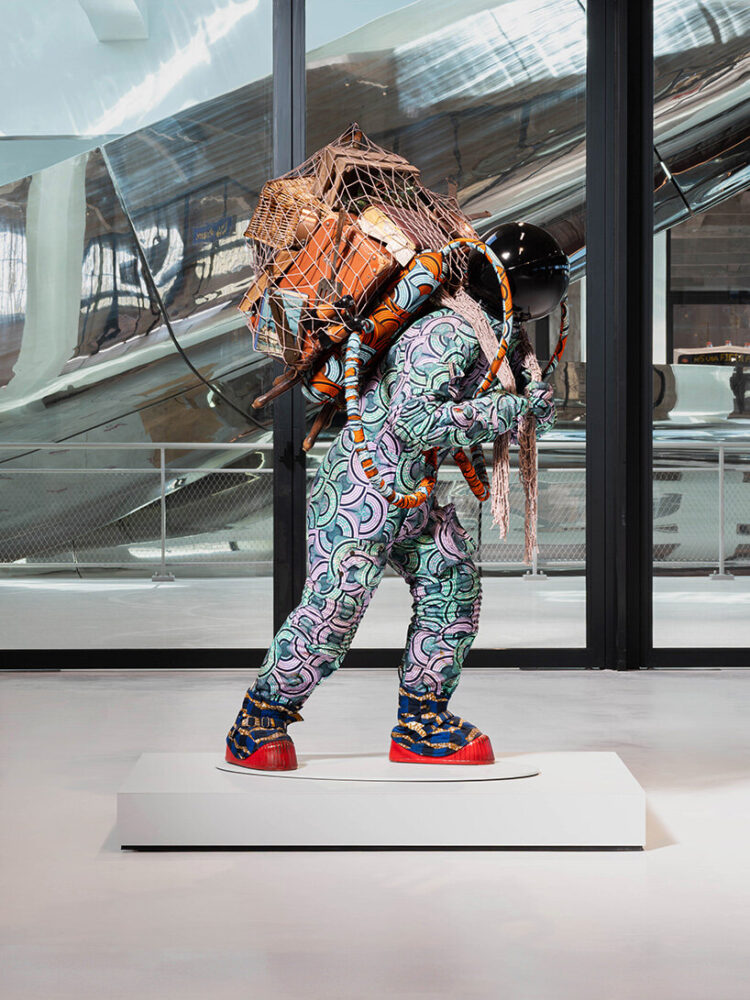
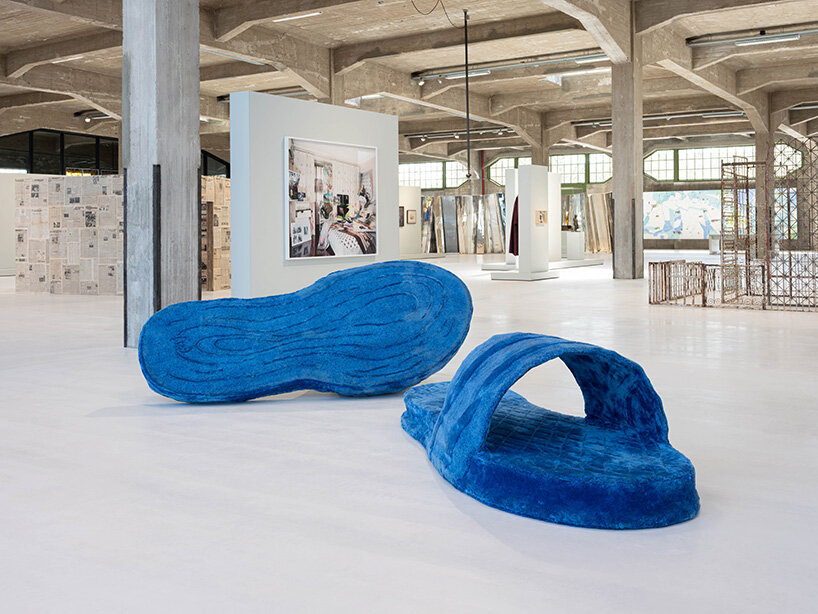
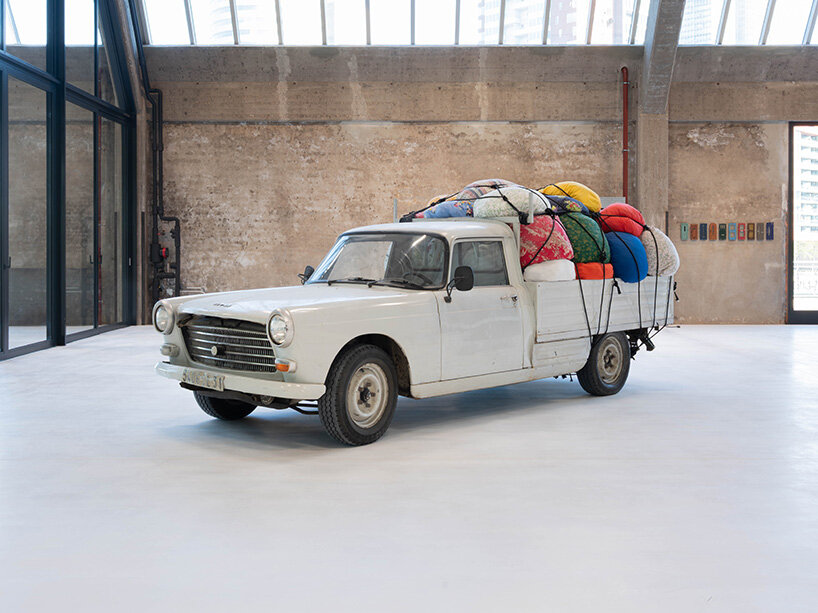
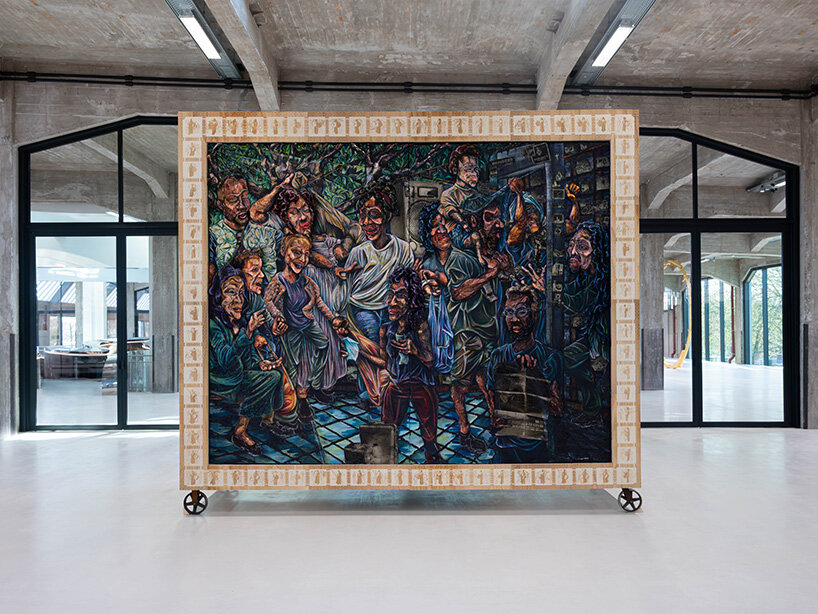
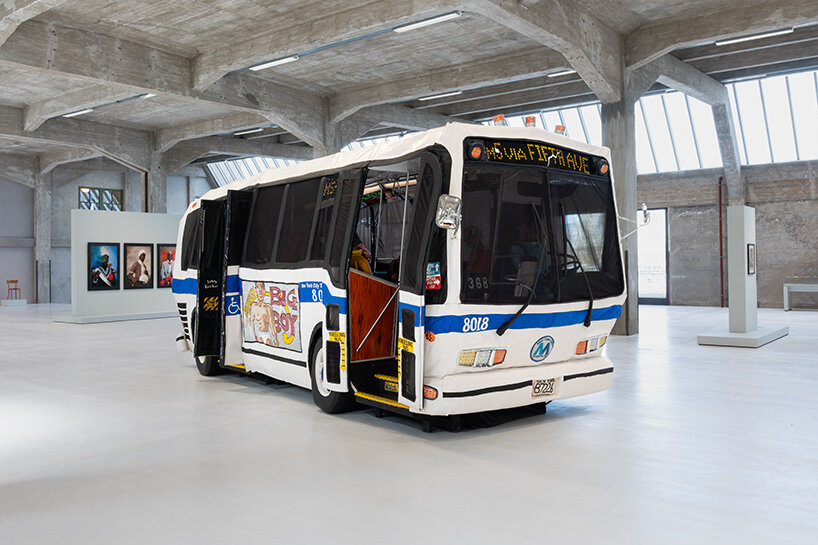
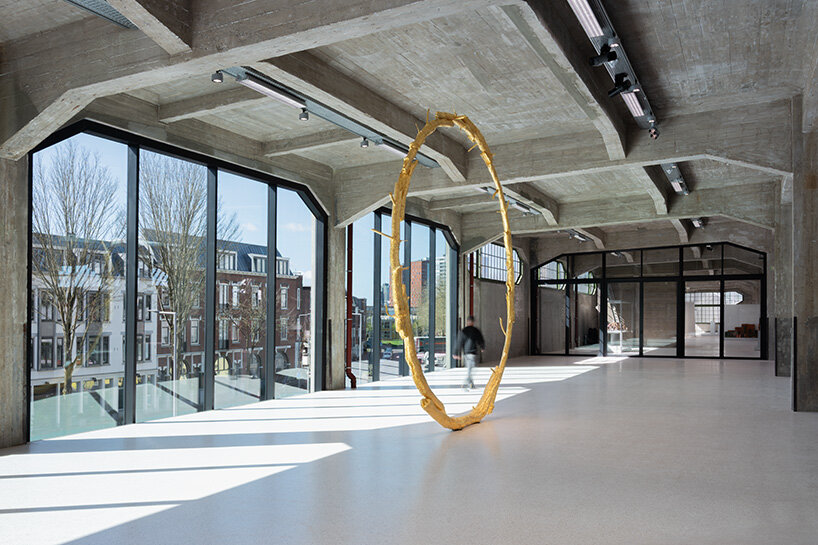
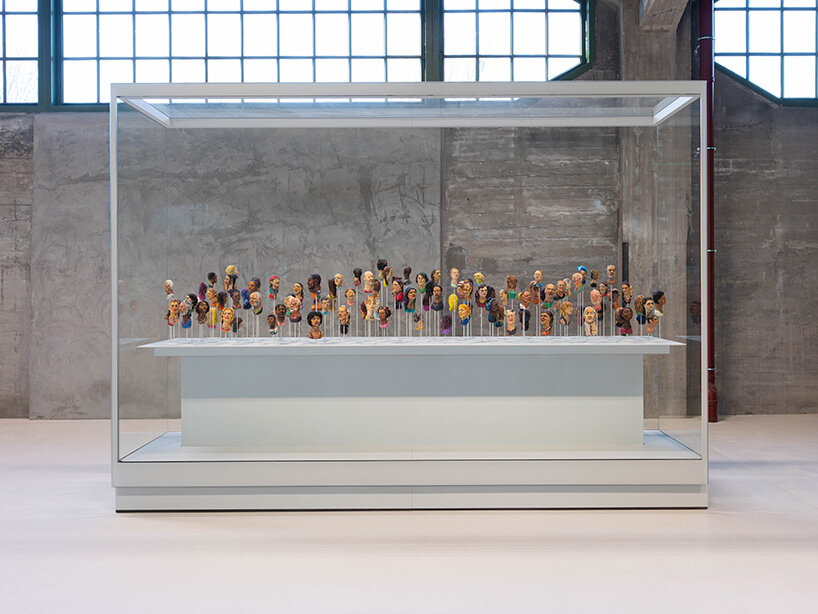
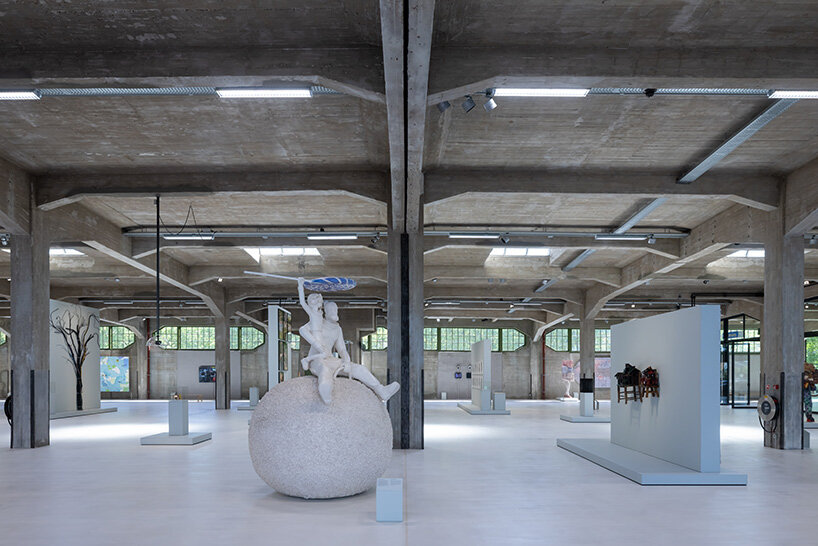
Three major exhibitions that reflect on migration through contemporary art, photography, and personal testimony mark the museum’s opening. All Directions brings together over 150 works from global artists, including Bill Viola, Yinka Shonibare, Rineke Dijkstra, and Steve McQueen, alongside newly commissioned pieces by Beya Gille Gacha, Hugo McCloud, and others that explore migration as a personal, lived experience. These works are not displayed in isolation, they’re meant to be experienced, moved through, and reflected in. That principle is embedded in the curatorial approach, as personal stories are intertwined with historical objects. A fragment of the Berlin Wall, a Lampedusa migrant boat, and a 1923 Nansen passport bridge individual journeys with collective memory. The Family of Migrants, inspired by Edward Steichen’s iconic The Family of Man, presents 194 photographs by 136 photographers from 55 countries. Finally, The Suitcase Labyrinth is an immersive installation built from 2,000 donated suitcases—some century-old heirlooms, others recently packed for new lives abroad. As visitors navigate the maze, an audio tour reveals intimate migration stories layered between the luggage.

this centerpiece is clad in 297 polished stainless-steel panels | image © designboom
a cultural landmark rooted in community
Beyond its galleries, Fenix functions as a cultural hub. The 2,275-square-meter Plein on the ground floor acts as a free, indoor city square, hosting performances, community gatherings, and global food explorations. Culinary highlights include a bakery by Michelin-starred Turkish chef Maksut Aşkar and a waterfront gelateria by the Granucci family, a nod to Rotterdam’s multicultural makeup.
Funded by the Droom en Daad Foundation, Fenix is a future-forward institution rooted in a city shaped by migration. ‘Migraton stories are the heartbeat of Fenix. We’ve woven them into every element – whether it’s the magic of Ma Yansong’s architecture, the memories evoked by the artworks on display, the freely accessible Plein, or the gelateria by the Granucci family,’ highlights Fenix director Anne Kremers. ‘We want everyone to feel welcome.’
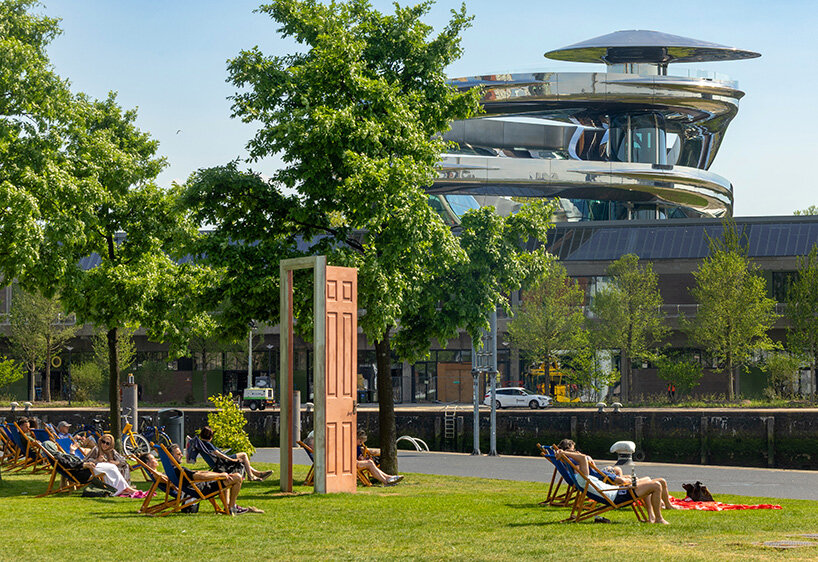
Fenix Rotterdam and Rijnhaven with L’Áge d’Or by Gavin Turk | image by Iris van den Broek
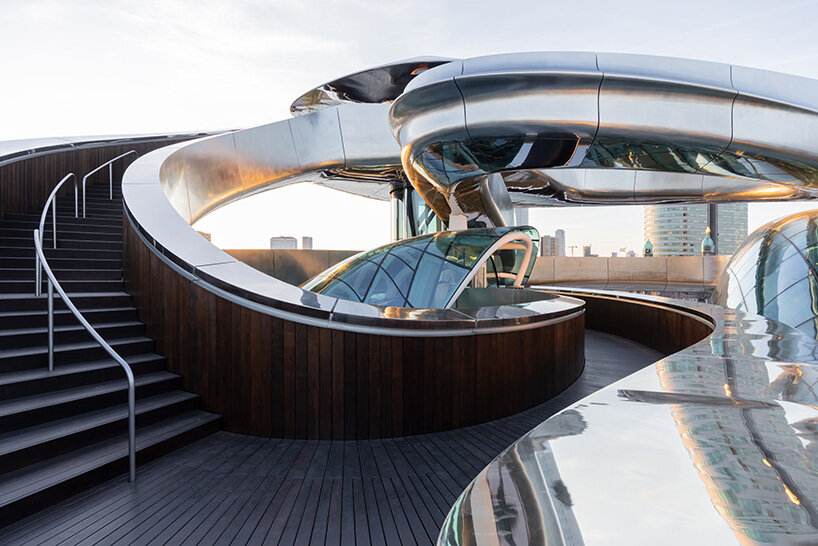
the Tornado, a dramatic double-helix staircase, crowns the museum | image by Iwan Baan
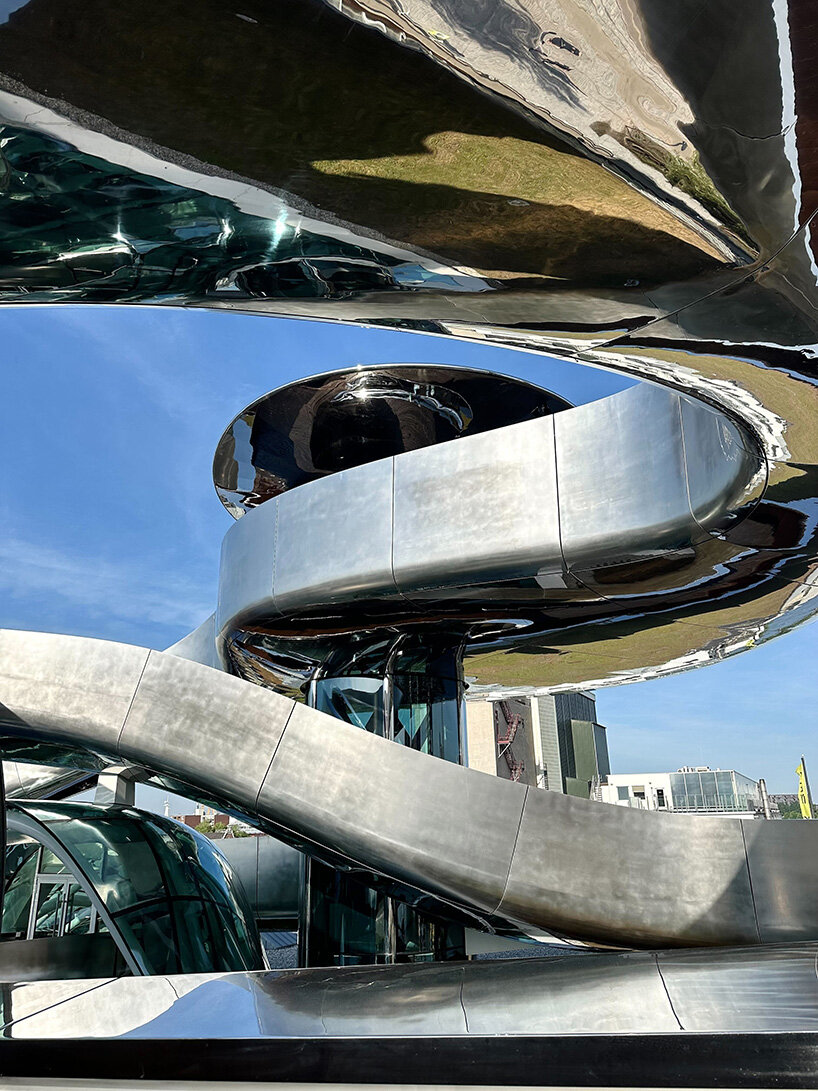
anchoring the museum in both a physical and symbolic manner | image © designboom
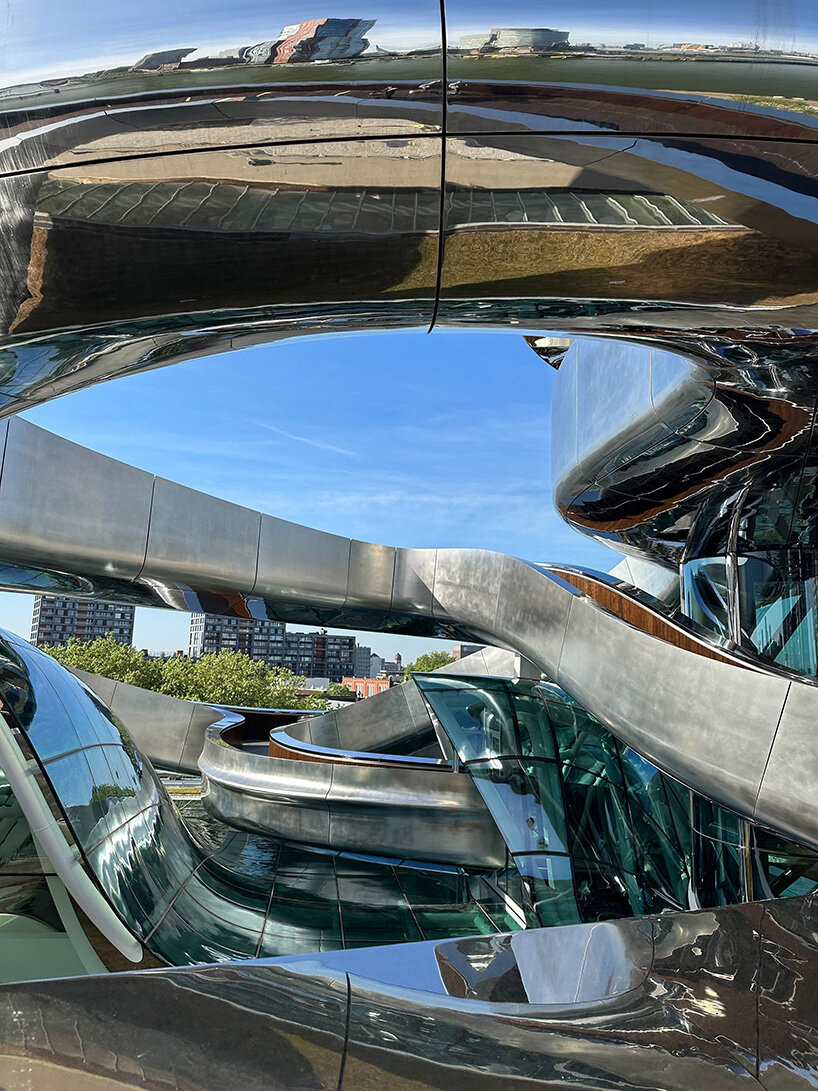
its twisting shape echoes the flow of migration | image © designboom
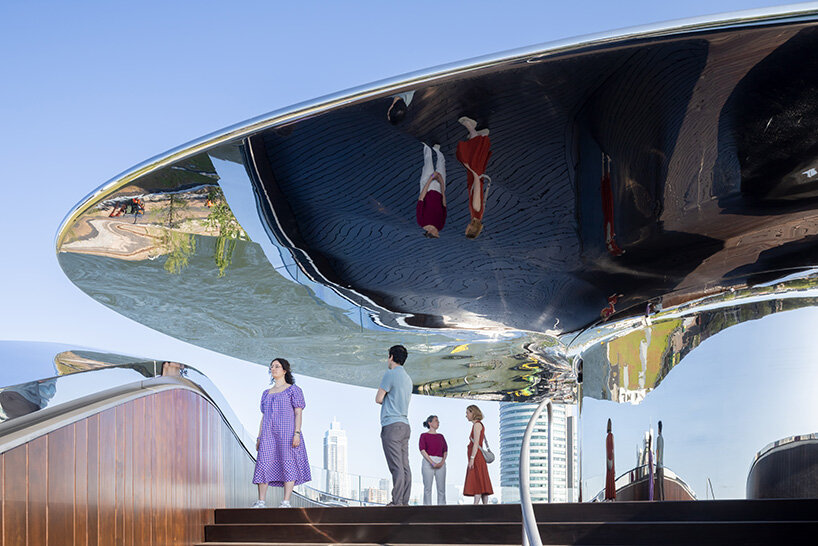
a rooftop platform offers views of the River Maas and Hotel New York | image by Iwan Baan
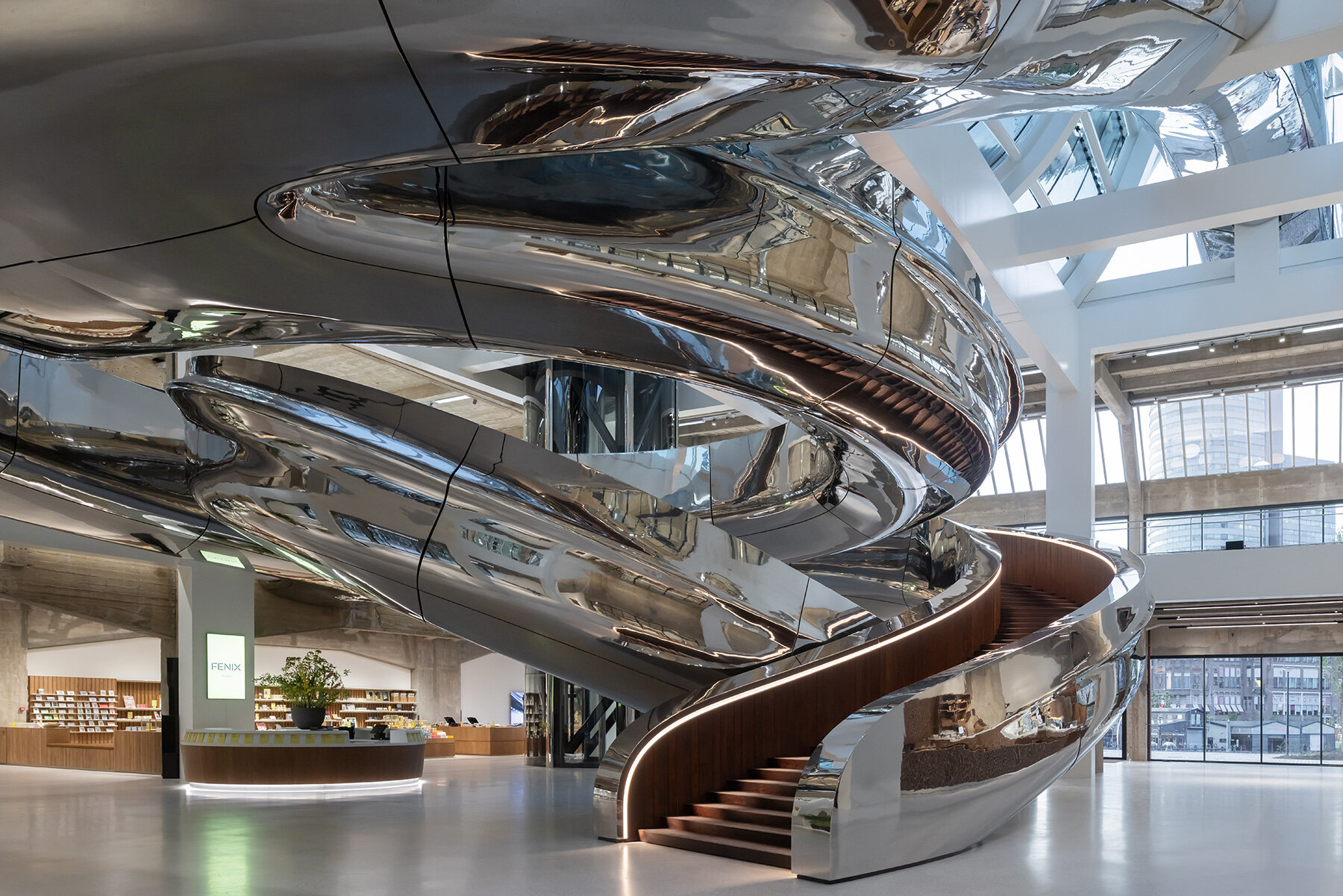
a sculptural expression of movement and transformation | image by Iwan Baan
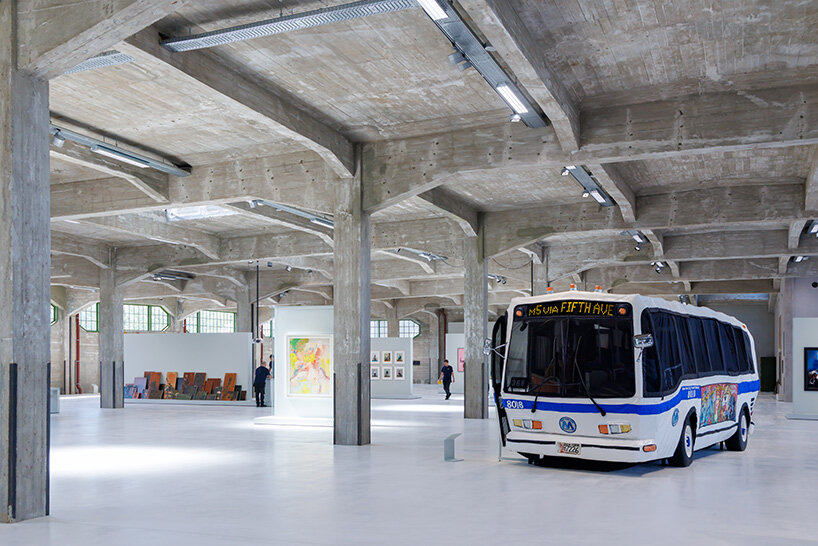
Fenix opens with three major exhibitions
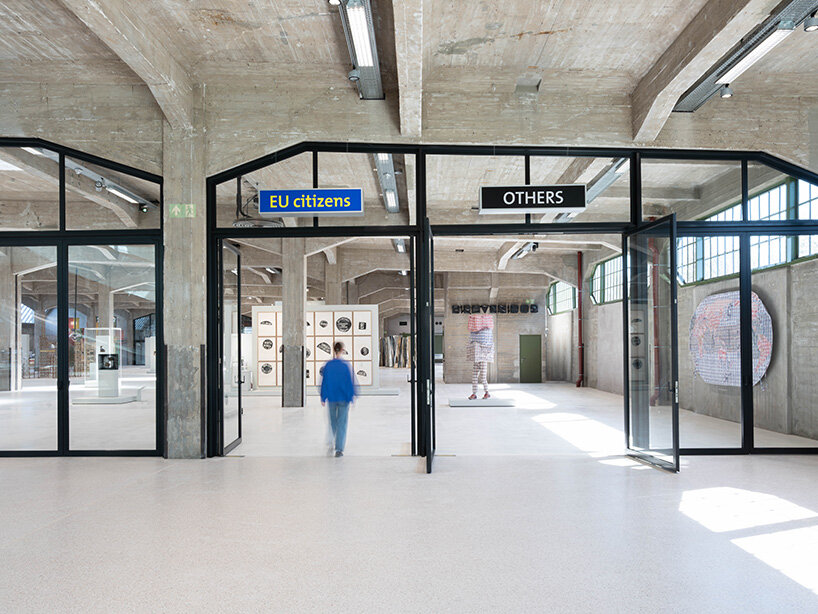
reflecting on migration through contemporary art, photography, and personal testimony | image © Titia Hahne
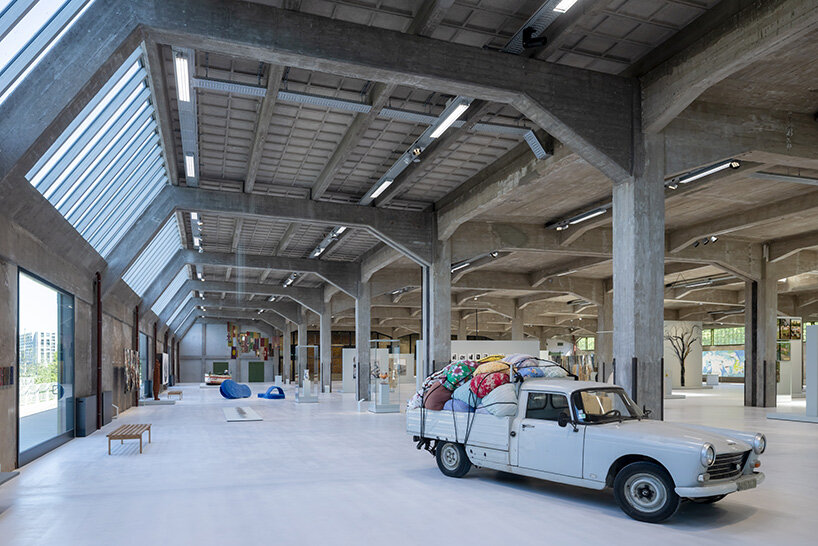
these artworks are interwoven with objects of memory | image by Iwan Baan
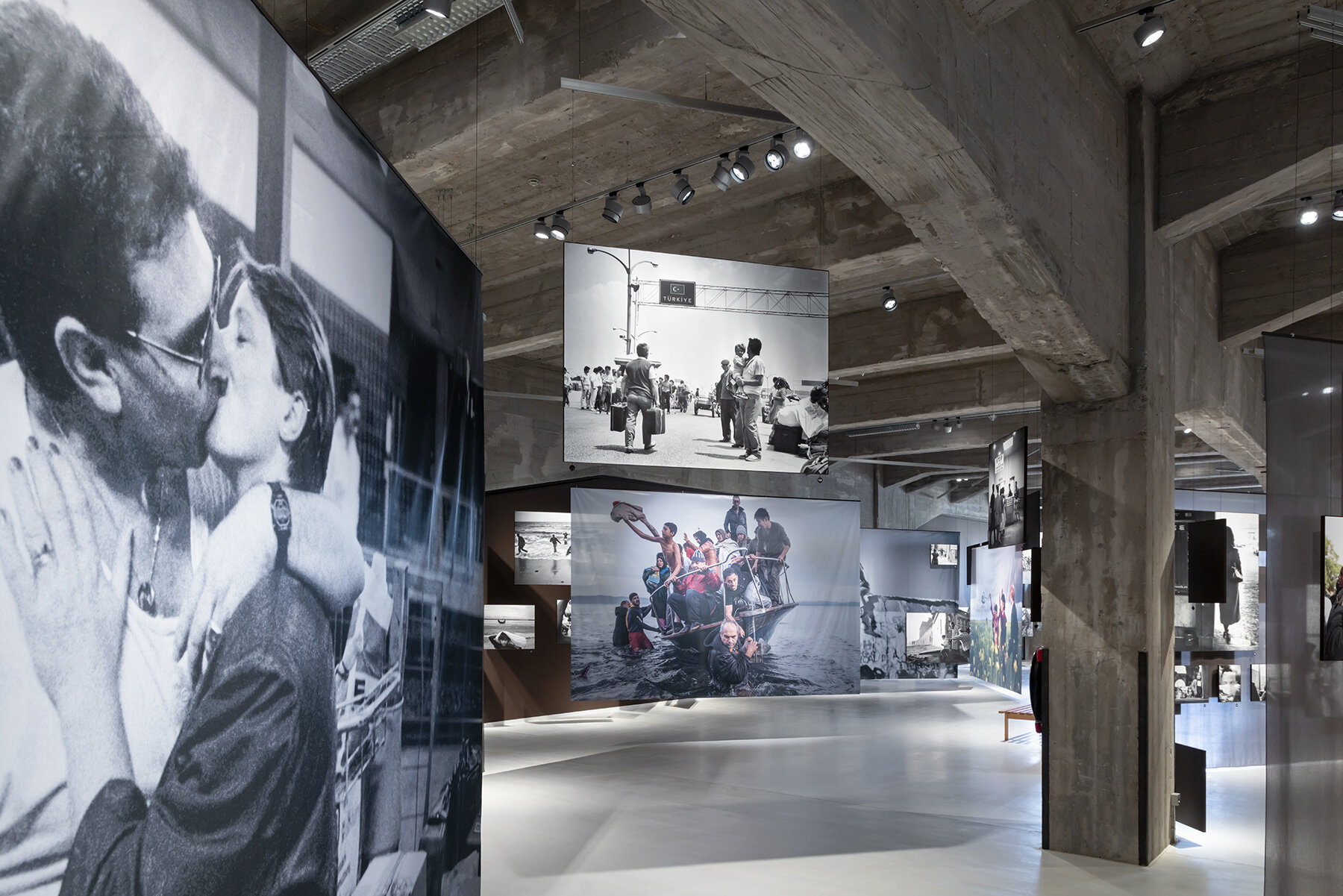
The Family of Migrants is inspired by Edward Steichen’s The Family of Man | image by Iwan Baan


project info:
name: Fenix Museum of Migration | @Fenix
architect: MAD | @madarchitects
collaborators: Bureau Polderman, Droom en Daad Foundation
location: Rotterdam, Netherlands
previous coverage: November 2023, October 2024, January 2025
photographers: Iwan Baan | @iwanbaan, Iris van den Broek | @eyerisshots, Titia Hahne | @titiahahnephoto
architecture in the netherlands (403)
 Feb 27, 2026
 Feb 18, 2026
 Feb 10, 2026
 Feb 07, 2026
architecture interviews (316)
 Dec 23, 2025
 Dec 09, 2025
 Dec 07, 2025
 Oct 17, 2025
MAD architects (176)
 Feb 10, 2026
 Nov 13, 2025
 Oct 03, 2025
 Aug 22, 2025
 Aug 20, 2025
museums and galleries (863)
 Mar 11, 2026
 Mar 09, 2026
 Mar 04, 2026
 Mar 04, 2026
 Mar 04, 2026
spiral staircases (26)
 Sep 28, 2025 Aug 22, 2025
 Jul 10, 2025
 May 20, 2025
 Apr 19, 2025
 Mar 11, 2026
 Feb 24, 2026
 Feb 19, 2026