five design firms build rio perdido hotel near 150-foot canyon in costa rica
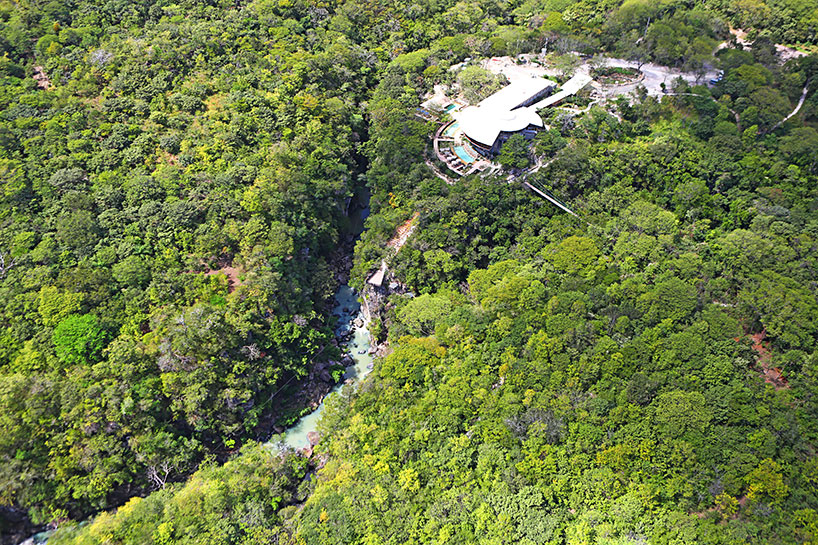
the architecture of the 600-acre complex highlights the one-of-a-kind hot river that flows at the base of the deep thermo-mineral gorge.
prefer designboom on google[FEATURED]
five design firms build rio perdido hotel near 150-foot canyon in costa rica
all images courtesy of rio perdido
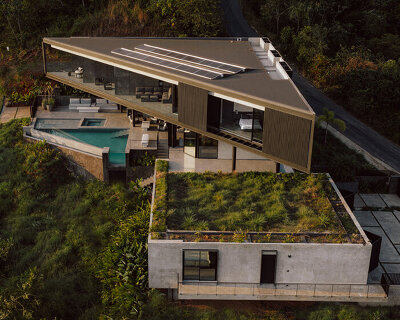
five design firms — C2 arquitectura, vida design studio, project CR+d, garnier arquitectos, and ousia design — worked on distinct areas of costa rica to forge what has harmoniously come together as a hospitality concept called ‘rio perdido‘. costaplan, the developer, established a ‘respect policy’ that sought to treat the setting as the live being that it is, therefore allowing the hotel to be built with virtually no land movement.
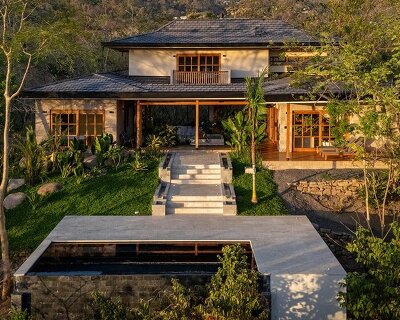
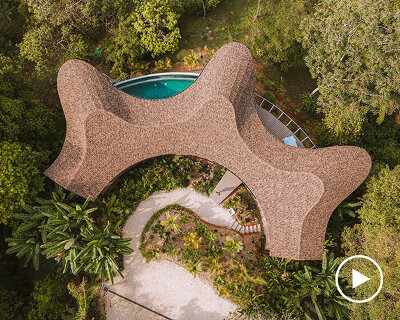
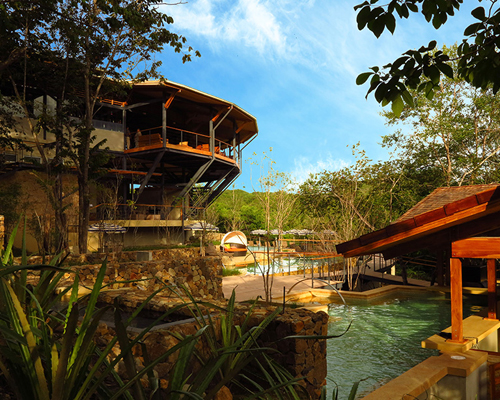
restaurant, reception, and mineral pools, from the southeast
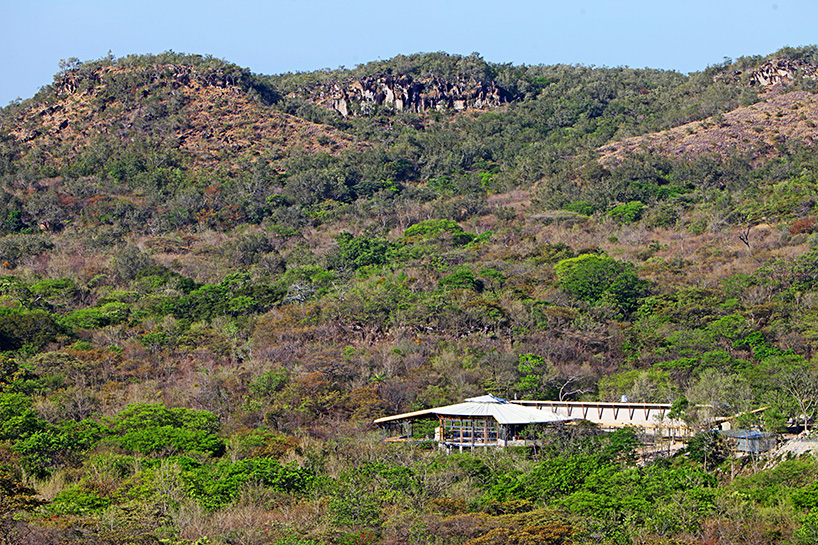
restaurant and reception as seen from the eastern part of the 600-acre reserve
in response to the policy, the work operates in respect to the existing natural world of 600-acres that it occupies. located at the base of a 150-foot, thermo-mineral gorge, the facility includes eight registered springs, multiple pools, and two ecosystems. with the juxtaposition of these functions and organic characteristics, each pool provides its own distinct temperature and allows occupants to jump from hot to cold mineral water.
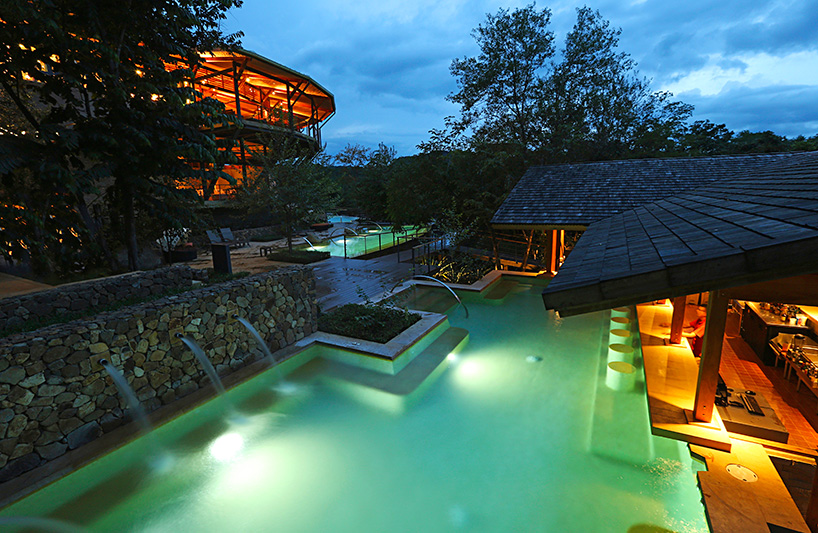
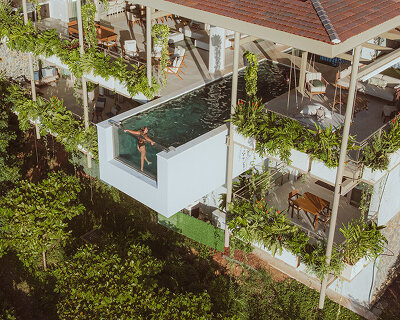
pool view from the canyon bar, early eve
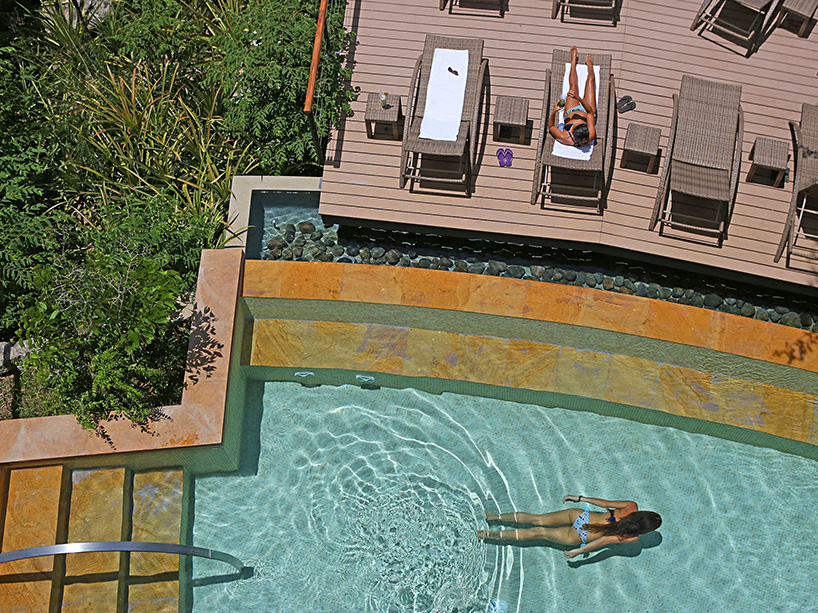
pool water is drawn from 3 wells with distinct source temperatures
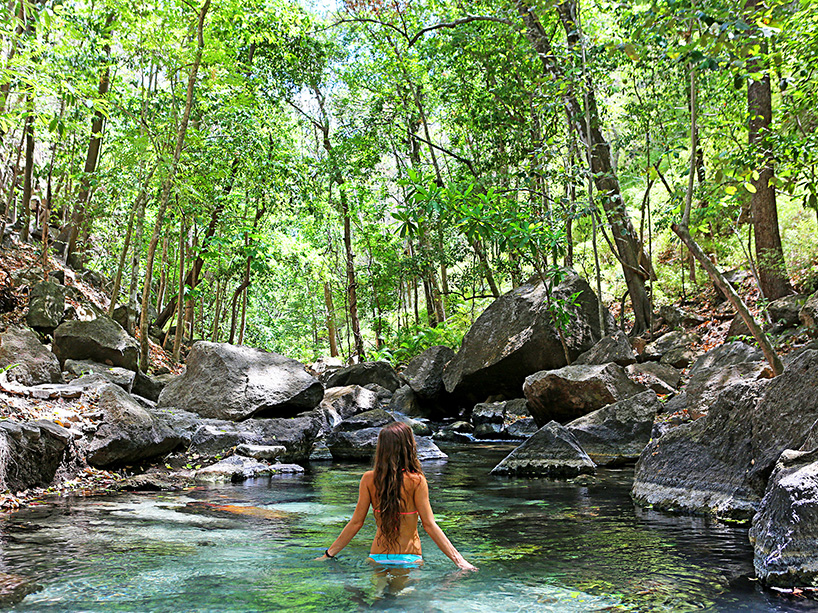
the river is the centerpiece and soul of the reserve
local materials and construction techniques have been used in various ways throughout the barrack-like bungalows. the 20 modules are elevated above the original topography via 7-pylon structural system that holds the steel cage with its plycem shell, a material selected for its for durability and workability. meanwhile, the roofs above are formed by steel panels with a foam interior. these features simultanouesly prevent the spaces from being viewed from above and below, using the surrounding vegetation as a means of camouflage.
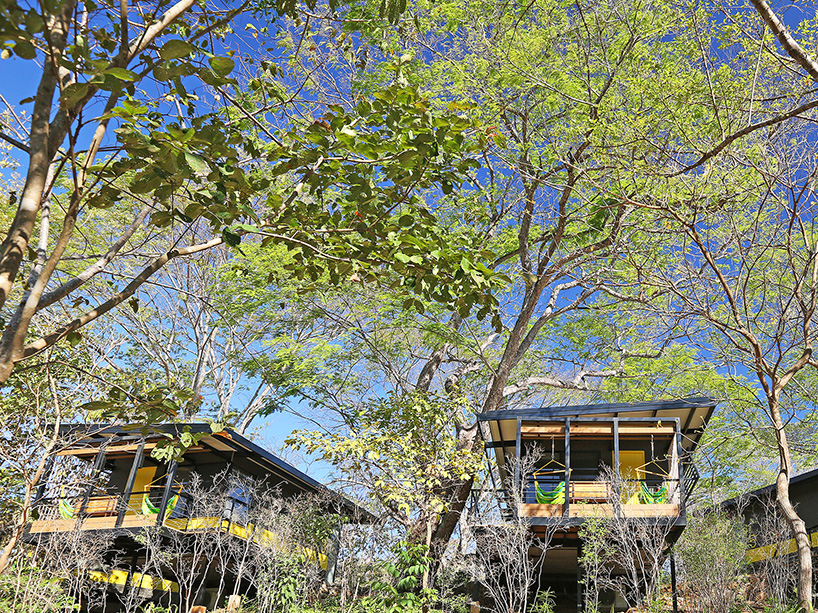
the barrack-like exterior of the bungalows, which are raised over the original topography
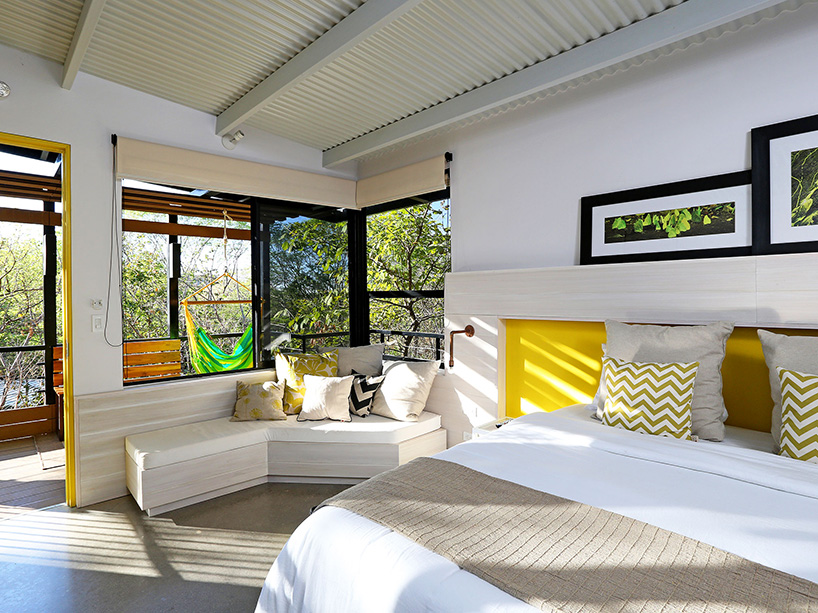
a highly efficient space that also gives respite from the tropical dry forest
in the larger, common building, reverse tension allows for an ample roof span with a minimal use of internal columns. from here, ways to explore landmarks of the surrounding environment (such as yurro waterfall, mesa norte, and las tumbas) are provided by a series of bridges.
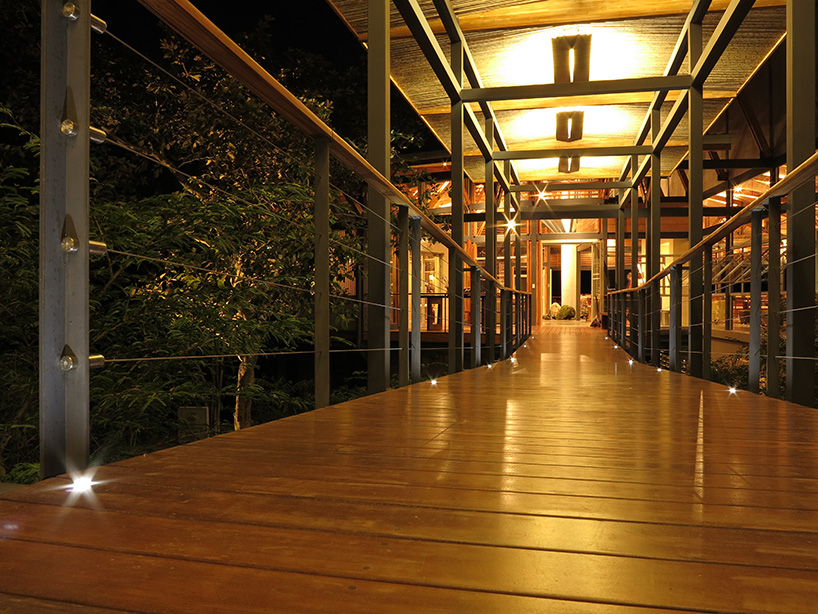
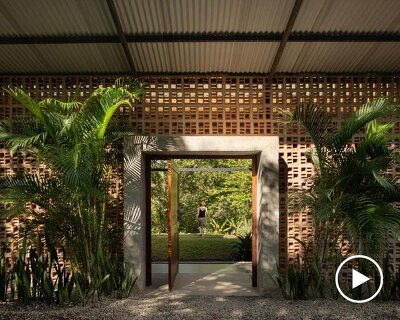
the elevated entrance bridge is one of the elements that allowed for the minimal land movement concept
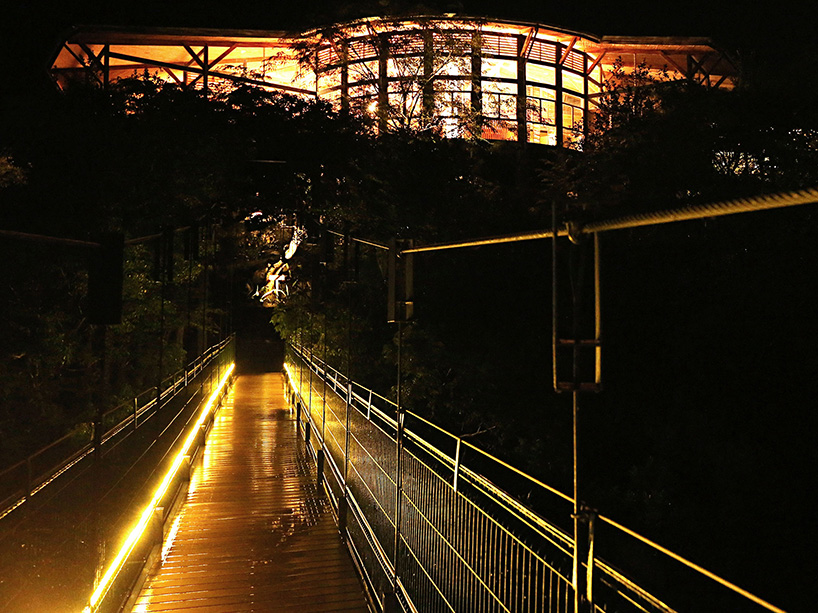
restaurant terrace, as soon from the hanging bridge
passive cooling techniques have been applied throughout the facility, as was the use of inert components, that require little or no maintenance. ‘aerodynamic architecture has proven to be very effective in properly channeling currents during the 4 months of heavy winds that this area experiences every year,’ says owner gabriel saragovia. as a result, water use has been wisely considered. as part of the reforestation effort for native species, treated water is directed towards the irrigation of thousands of plants.
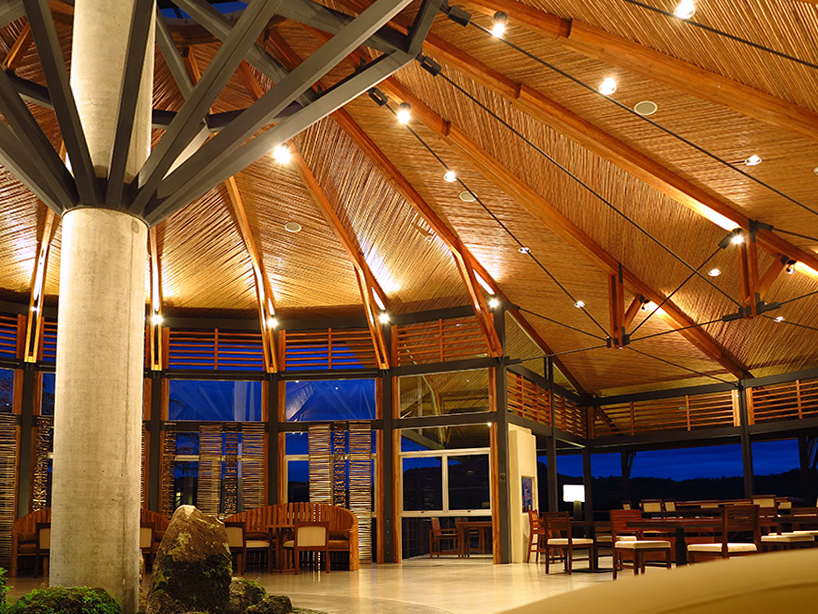
ceiling in wild cane helps to insulate from the sun
designboom has received this project from our ‘DIY submissions‘ feature, where we welcome our readers to submit their own work for publication. see more project submissions from our readers here.
shop
your own online design shop — no sales commission collected