foldable origami structure made of fiberboards can become bridges, moon habitats, and more
engineers at the university of michigan have developed a foldable origami using laser-cut, load-bearing fiberboards that can be used as movable structures.
prefer designboom on google[FEATURED]
University of Michigan’s foldable origami structure
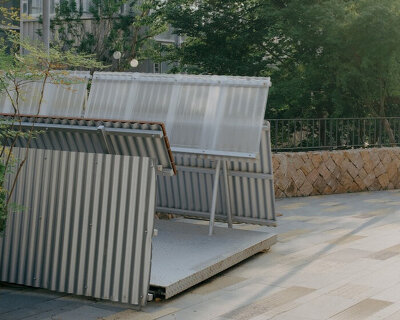
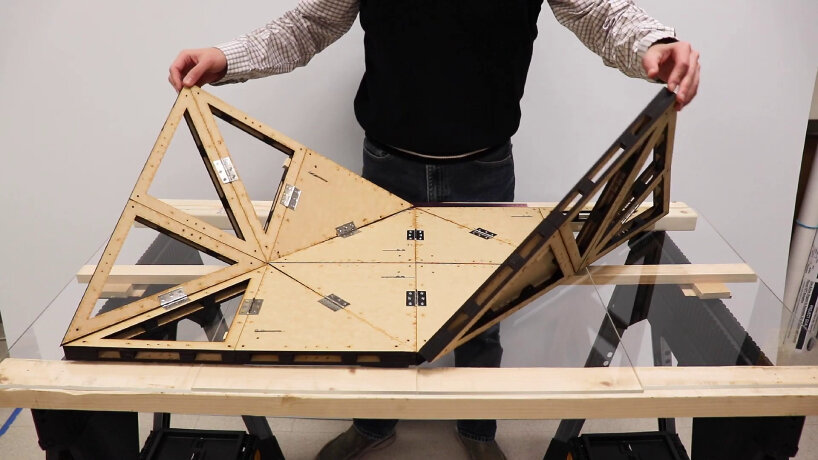
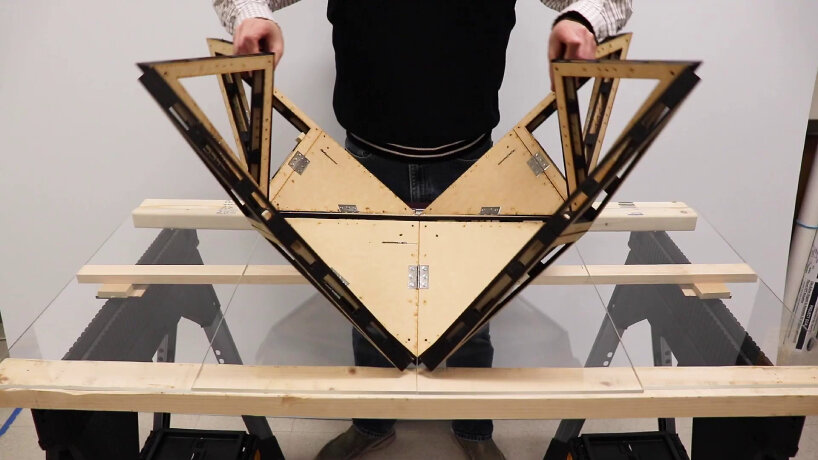
Engineers Evgueni T. Filipov and Yi Zhu of the University of Michigan have developed a modular and foldable origami structure composed of load-bearing fiberboards that can be transformed into bridges, moon habitats, emergency shelters, walls, floors, columns, and more. The engineers have already demonstrated the results of their research, showcasing the potential of using mid-density fiberboards to create modular and foldable origami structures that can fold compactly, adapt into different shapes, and be used in various situations.
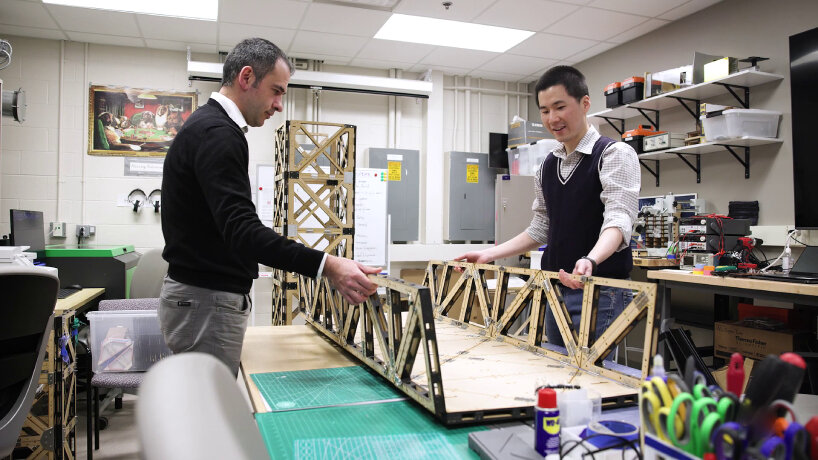
laser-cut mid-density fiberboards
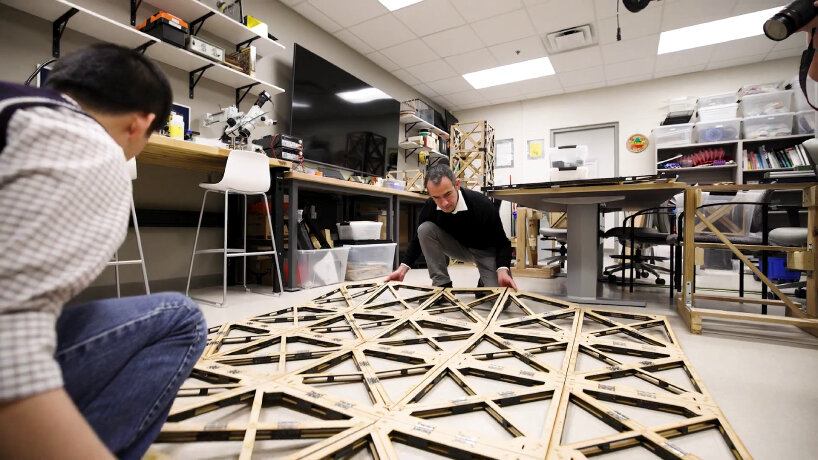
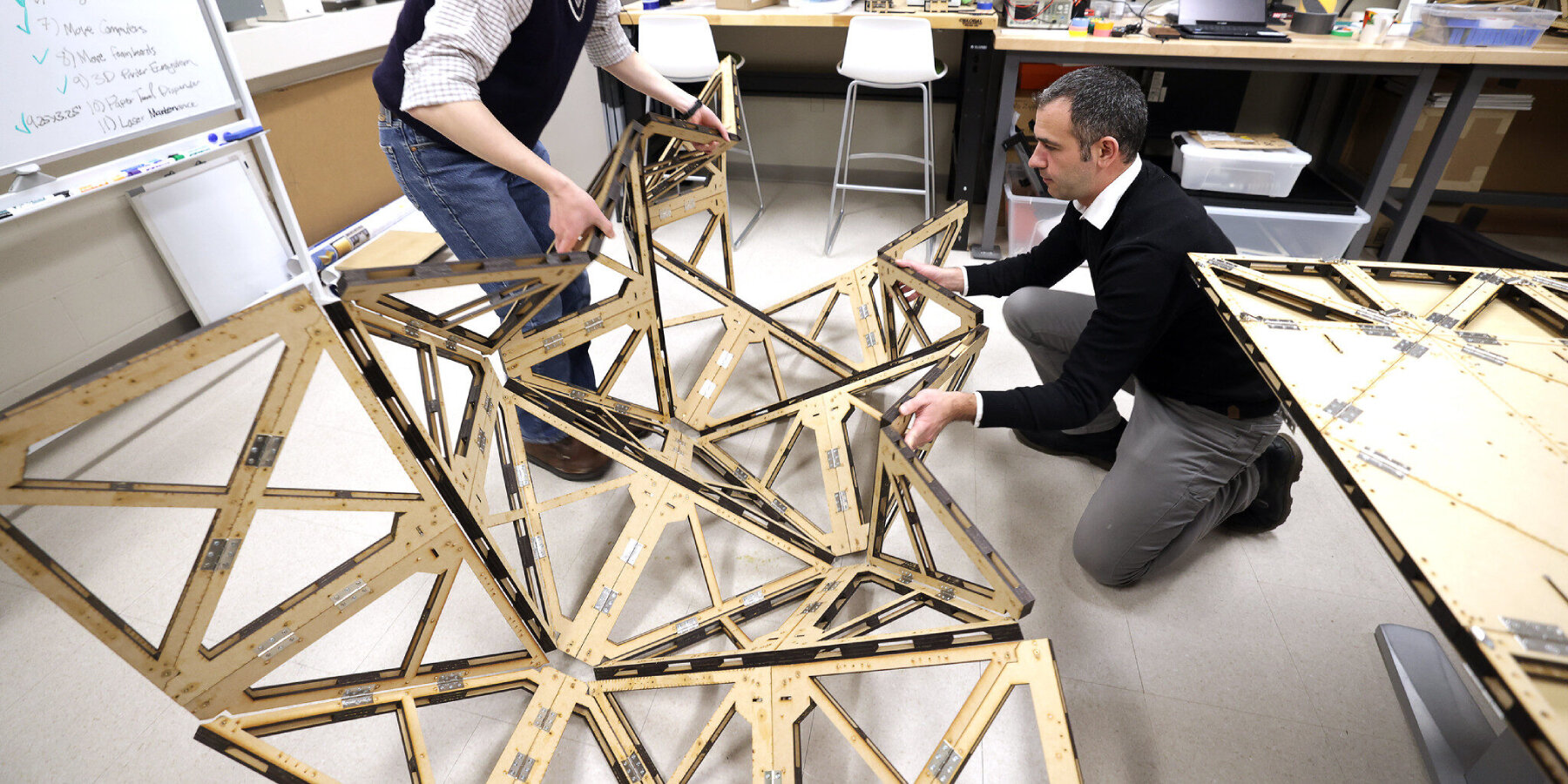
For their foldable origami structure with load-bearing fiberboards, engineers Evgueni T. Filipov and Yi Zhu of the University of Michigan used a laser cutter to shape multiple layers of mid-density fiberboards. They generated a series of panels, both in continuous and truss-like forms. After gathering all the pieces, they connected the individual panels using aluminum hinges and locking devices. These two components help the mid-density fiberboards become a foldable origami structure, and the engineers say that the triangular panels are not subject to handedness and can be installed in any matching orientation when fabricated with symmetric connection holes on both sides.
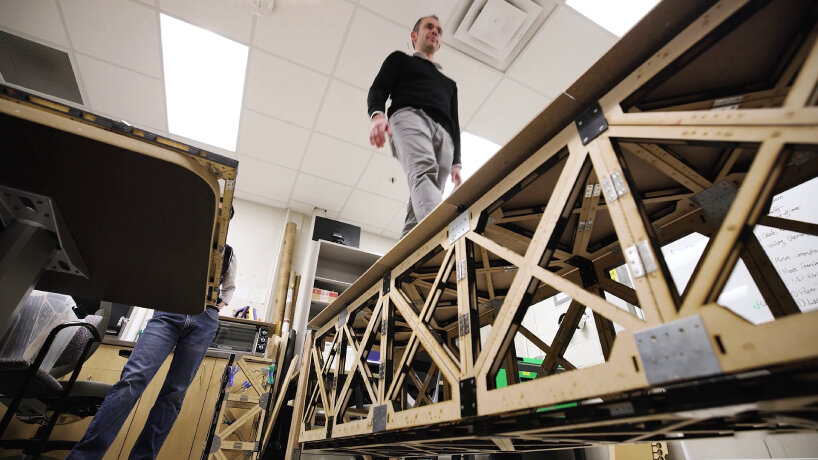
Uniformity is key to load-bearing origami structure
Engineer Yi Zhu says that to build common structures like bridges and bus stops using origami, mathematical tools that can directly consider thickness are needed during the initial design phase. The researchers then discovered that uniformity in the foldable origami structure is key to making the fiberboards support the weight load. ‘What happens is you add one level of thickness here, and a different level of thickness there, and it becomes mismatched. So, when the load is carried through these components, it starts to cause bending,’ says Evgueni T. Filipov.
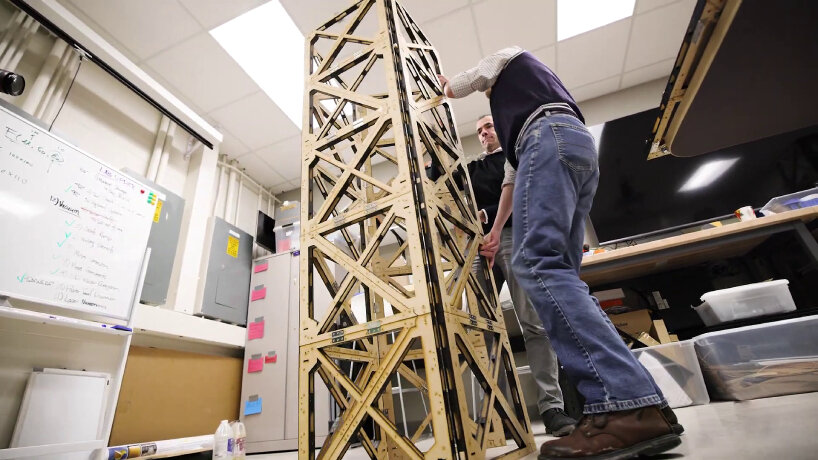
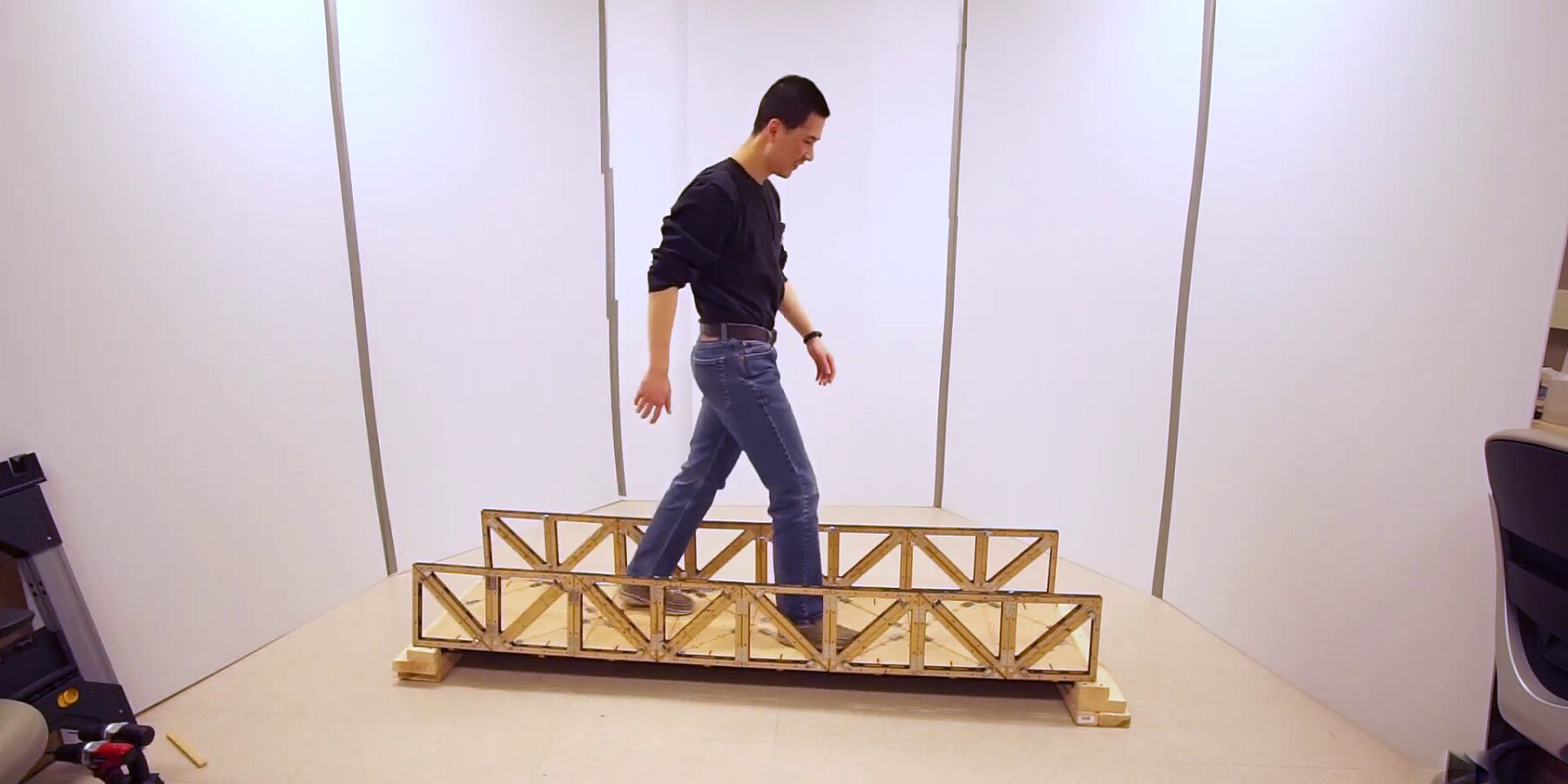
Engineer Evgueni T. Filipov adds that uniformity of thickness is missing from many current origami systems. ‘When you have that, together with appropriate locking devices, the weight placed upon a structure can be evenly transferred throughout,’ he says. In their published study, the engineers explain further how they managed to transform the load-bearing fiberboards into bridges, walls, floors, columns, and many other structures. The study allows engineers to deliver kits of foldable origami structures using load-bearing and laser-cut fiberboards. They can see them being used to quickly rebuild facilities and systems damaged or destroyed during natural disasters.
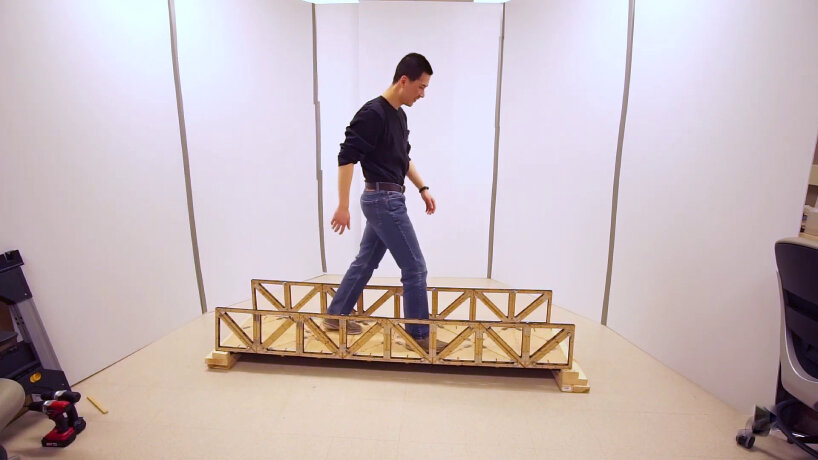
The technology can also be set up in places that were previously considered impractical, including outer space or the moon. They could also be used for structures that need to be built and then disassembled quickly, such as concert venues and event stages. So far, some of the potential outcomes of the foldable origami structures with load-bearing fiberboards include a 13-foot-long walking bridge, a 6.5-foot-tall bus stop, and a 13-foot-tall column.
project info:
name: Foldable origami structure
institution: University of Michigan
engineers: Evgueni T. Filipov, Yi Zhu
shop
your own online design shop — no sales commission collected