luxerivers café mediates between urban systems and nature
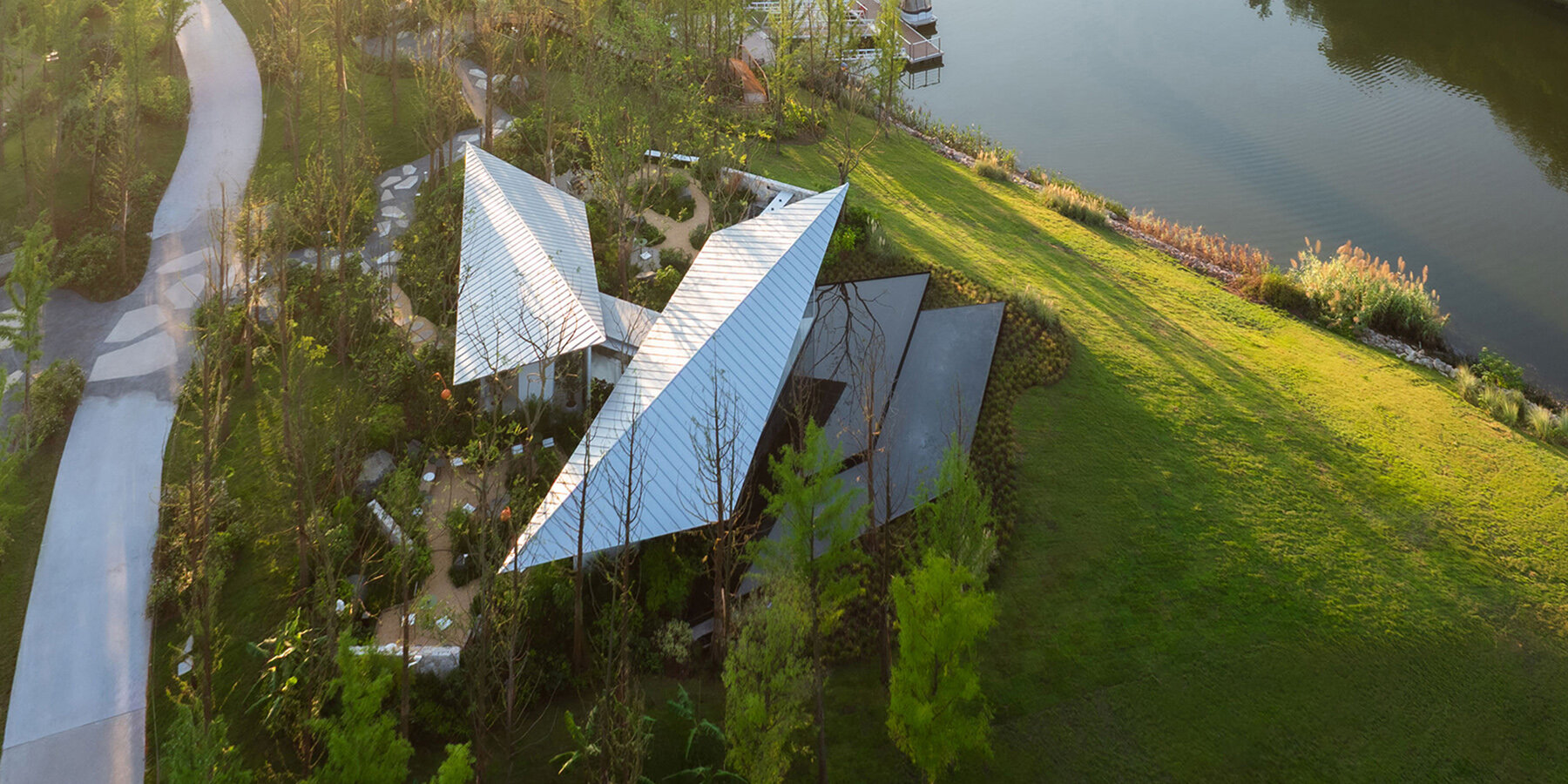
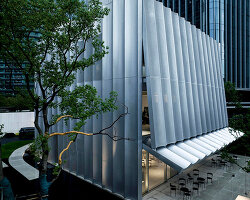
The LuxeRivers café sits at the intersection of mountainous terrain, waterfront edges, and elevated urban infrastructure in Chongqing, China. The project by Wide Horizon + Epiphany Architects inserts a small, carefully calibrated building into a highly charged urban landscape shaped by the constant interplay of mountains and water. The building responds to these conditions by mediating between urban systems, natural geography, and everyday public life through a light and restrained spatial intervention. LuxeRivers café takes shape through two folded triangular roof planes. Set at an angle of approximately thirty degrees, the roofs face one another while remaining formally independent, creating a clear and concise silhouette. On the park-facing side, the roof slopes down toward the ground, adopting a low, inward posture that echoes the scale and direction of the surrounding metasequoia trees. On the lakeside, the roof opens outward toward the birdwatching tower and river, engaging a broader and more expansive landscape view including a water curtain integrated into the southern facade.
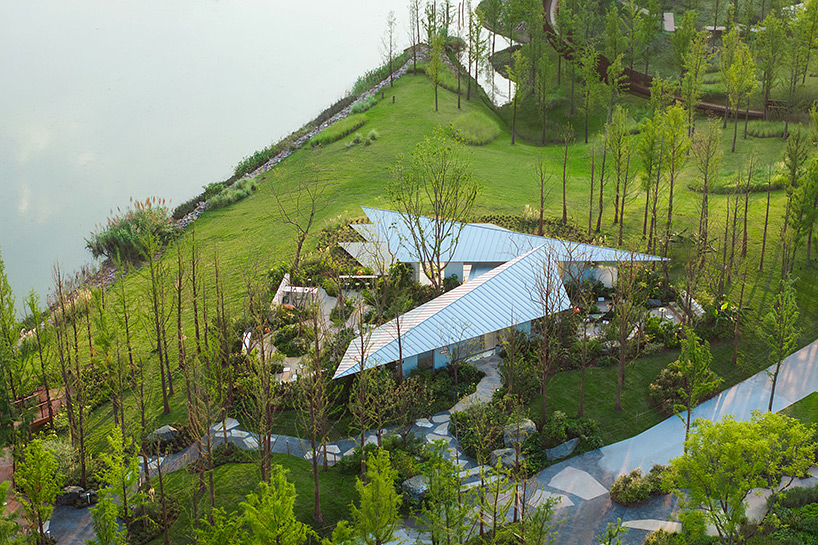
an aerial shot shows the main entrance and its relationship to the architectural composition | all images by Arch-Exist
Wide Horizon + Epiphany Architects showcase folded roof planes
Between the two roof planes, a semi-outdoor transitional space emerges, functioning as a threshold between interior and exterior while offering multiple possibilities for sitting, pausing, and viewing the surroundings. Through the most fundamental geometric operations, Wide Horizon + Epiphany Architects generates layered and dynamic spatial relationships. The interior continues its lightweight architectural logic. By organizing the enclosure through perimeter walls, the architects minimize the presence of interior columns, allowing the space to remain continuous and visually uncluttered. A combination of glass and solid walls provides the necessary enclosure while softening the boundary between inside and outside.
The surrounding landscape within the LuxeRivers mixed-use development permeates the interior naturally, enabling light and views to flow freely and establishing a direct connection between everyday activities and the natural environment. The interior is organized into two primary zones. Along the road-facing side is the reception and service counter, arranged parallel to the street. On the riverside, the seating area runs parallel to the water, accommodating a variety of seating configurations. These two zones are connected by a central glazed corridor that links them while maintaining a subtle spatial separation. From this corridor, access is provided to outdoor spaces formed between the two building volumes, allowing interior and exterior spaces to extend seamlessly into one another.
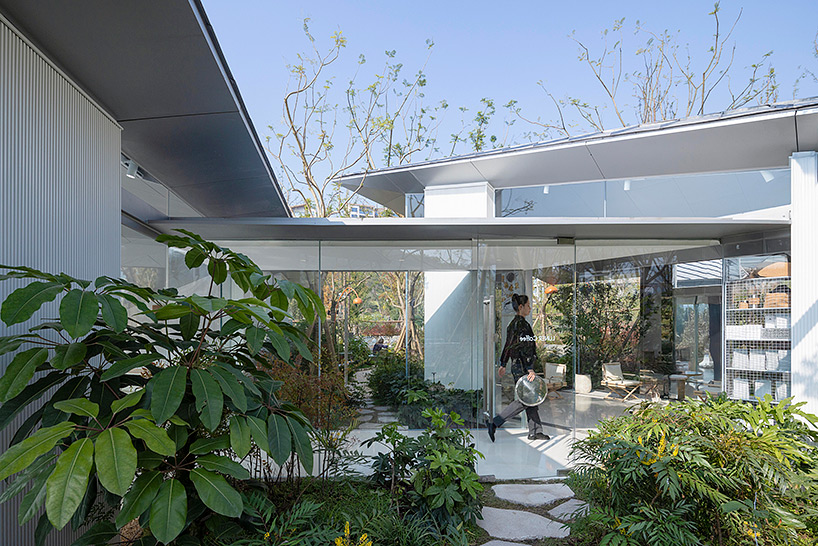
a glass corridor connects different spaces, maintaining visual continuity with the exterior environment
water curtain design responds to surrounding river context
Through the building’s volumetric response to its surroundings, a rich spatial sequence emerges naturally. Material choices further reinforce the project’s restrained and lightweight expression. The structure is composed of steel, with a standing-seam aluminum-magnesium-manganese roof system and an ultra-clear glass curtain wall enclosure. The interior floor is finished in white terrazzo, while walls are clad in vertical white panels. The ceiling is treated with silver aluminum panels that echo the geometry of the folded roof, extending its structural tension into the interior. A water curtain integrated into the southern facade provides passive cooling when in operation and introduces a dynamic surface layer across the glass, allowing the space to shift between transparency and translucency.
Despite its modest scale, LuxeRivers café seeks to achieve a broader architectural resonance. It functions both as a complementary node within the public life of Luyue Jiangcheng and as a quiet response to Chongqing’s distinctive mountain-and-water urban context. Through a light yet precise architectural language, the building establishes both contrast and dialogue with the surrounding rugged terrain and infrastructural systems, offering a place where people can pause and experience the relationship between the city and nature in everyday life.
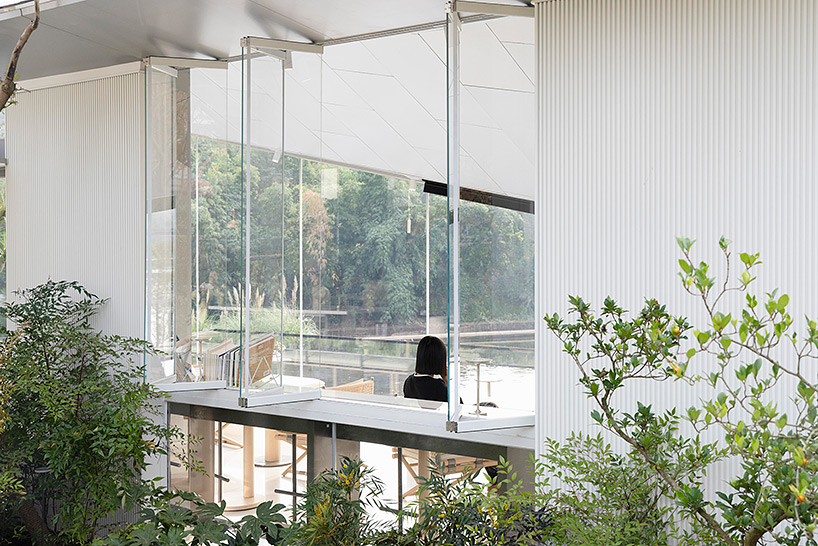
the interplay between openings and solid walls defines the architectural rhythm and spatial enclosure
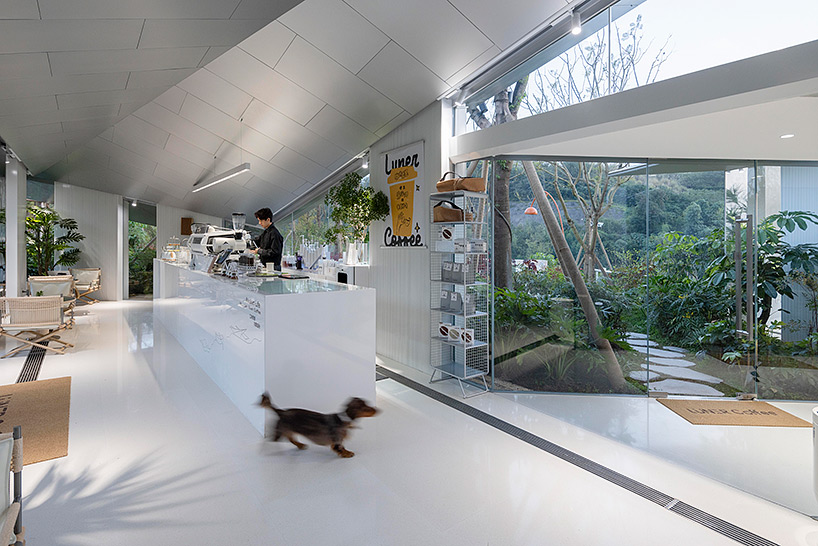
the coffee-making area is designed as a functional and transparent workspace
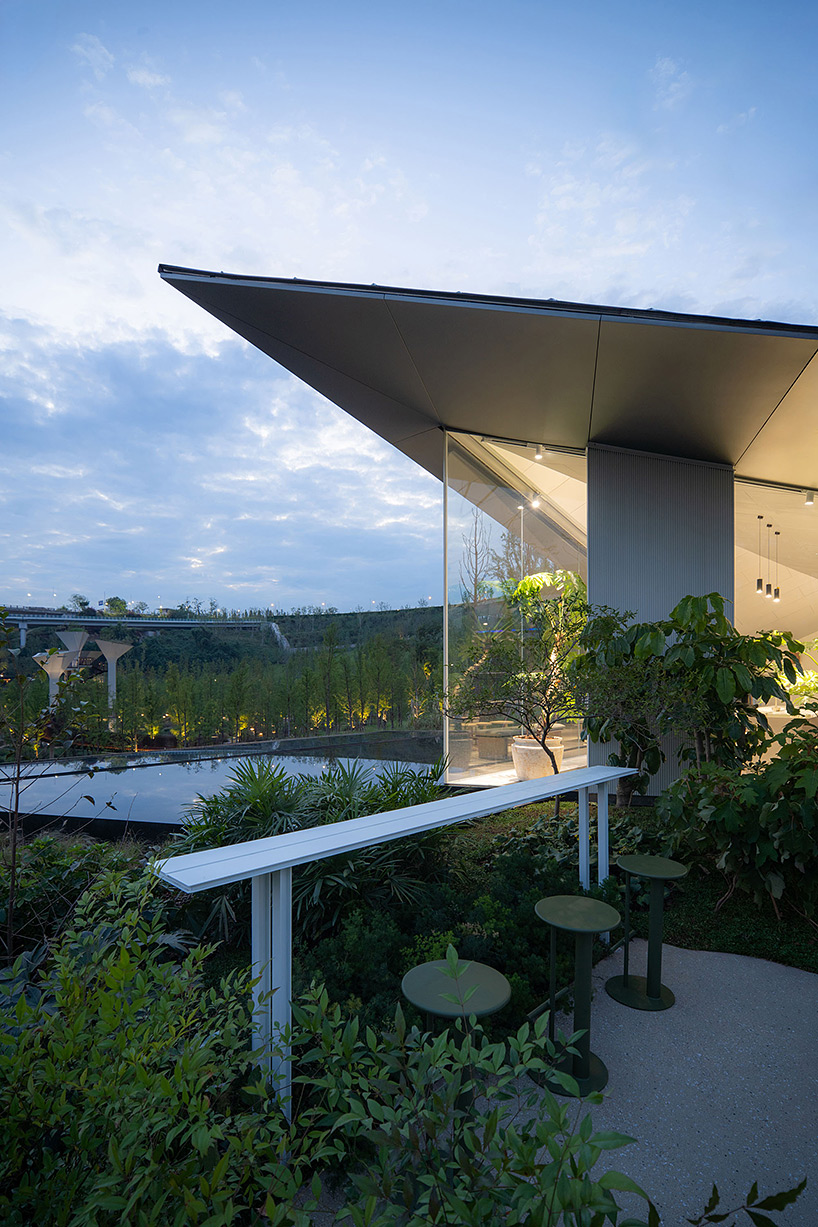
the café roof extends to shelter an outdoor seating area, offering shade while framing views of the river
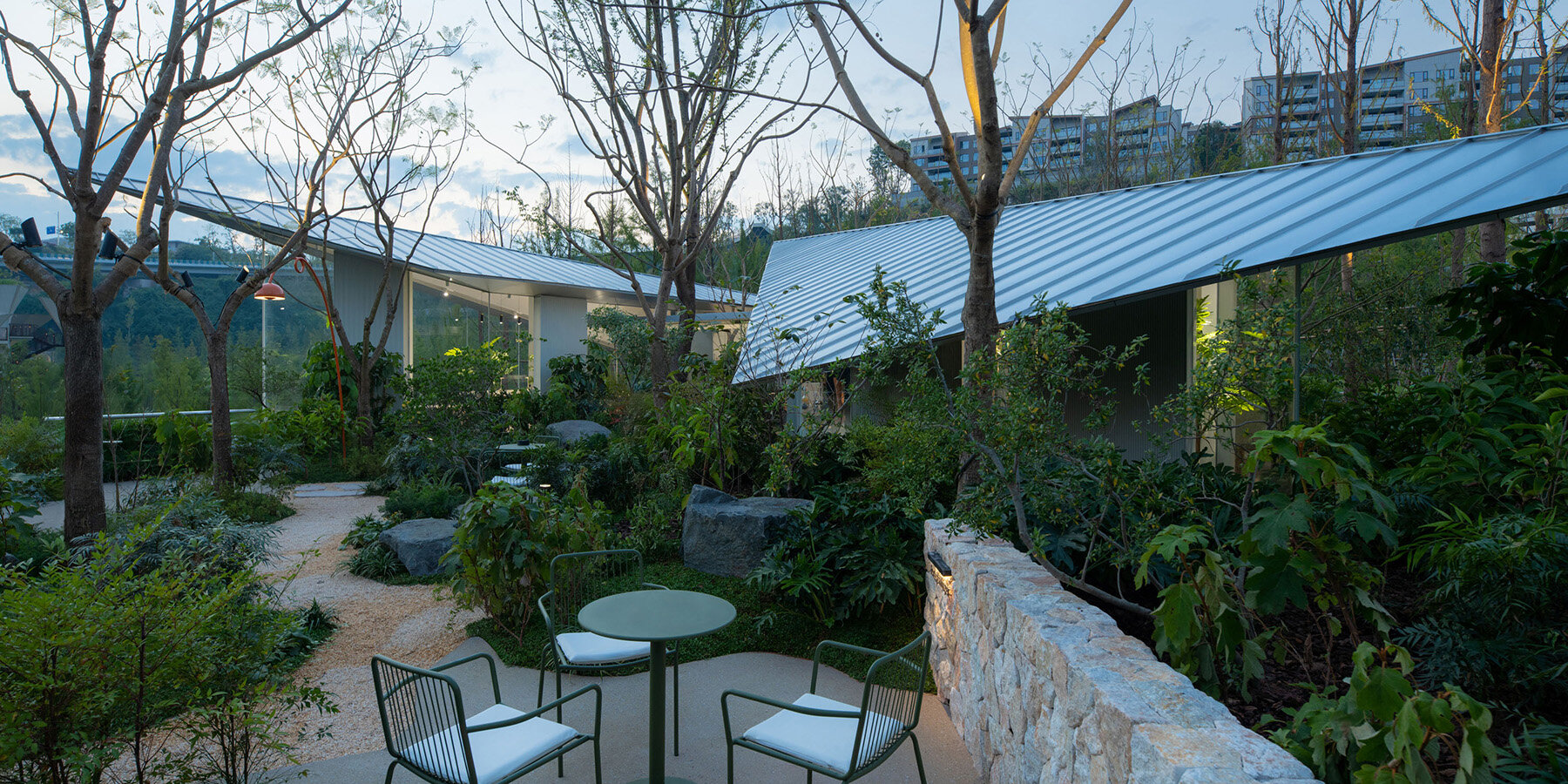
the outdoor space is shaped by the architecture, creating a fluid transition between built form and nature
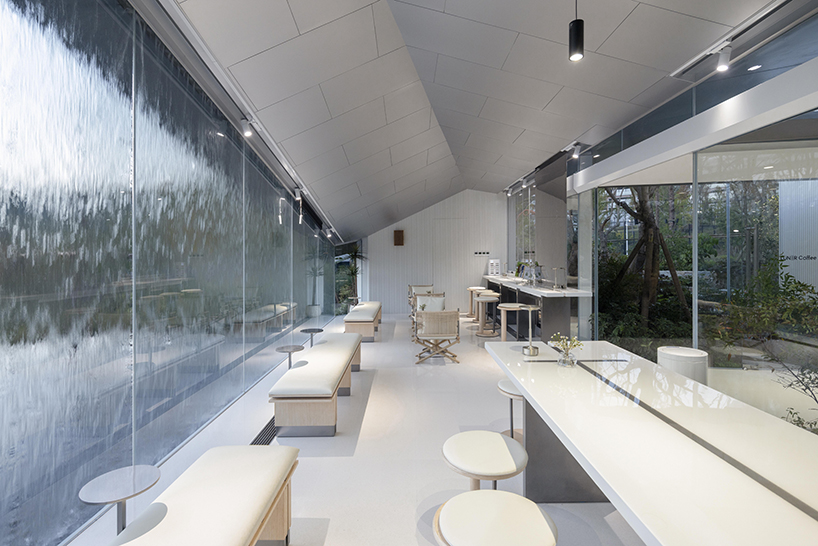
the indoor relaxation area offers a calm and immersive atmosphere
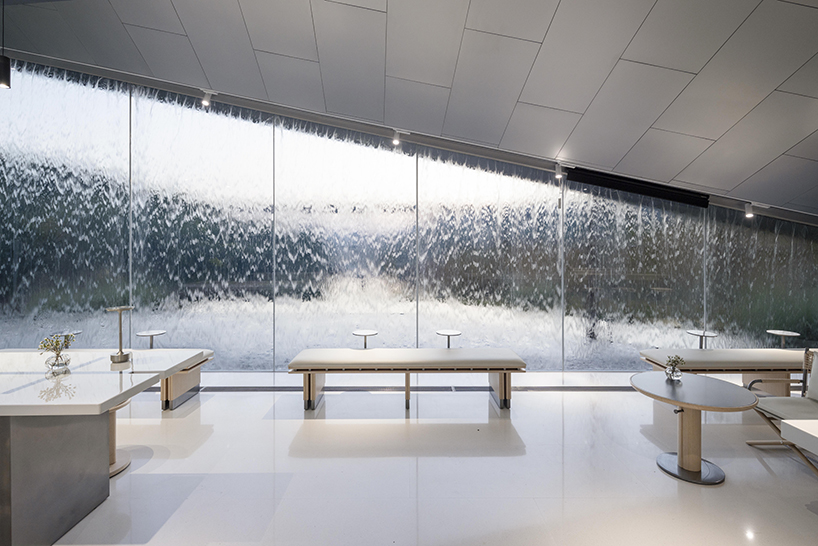
a water curtain is integrated into the southern facade, adding both climatic function and visual identity
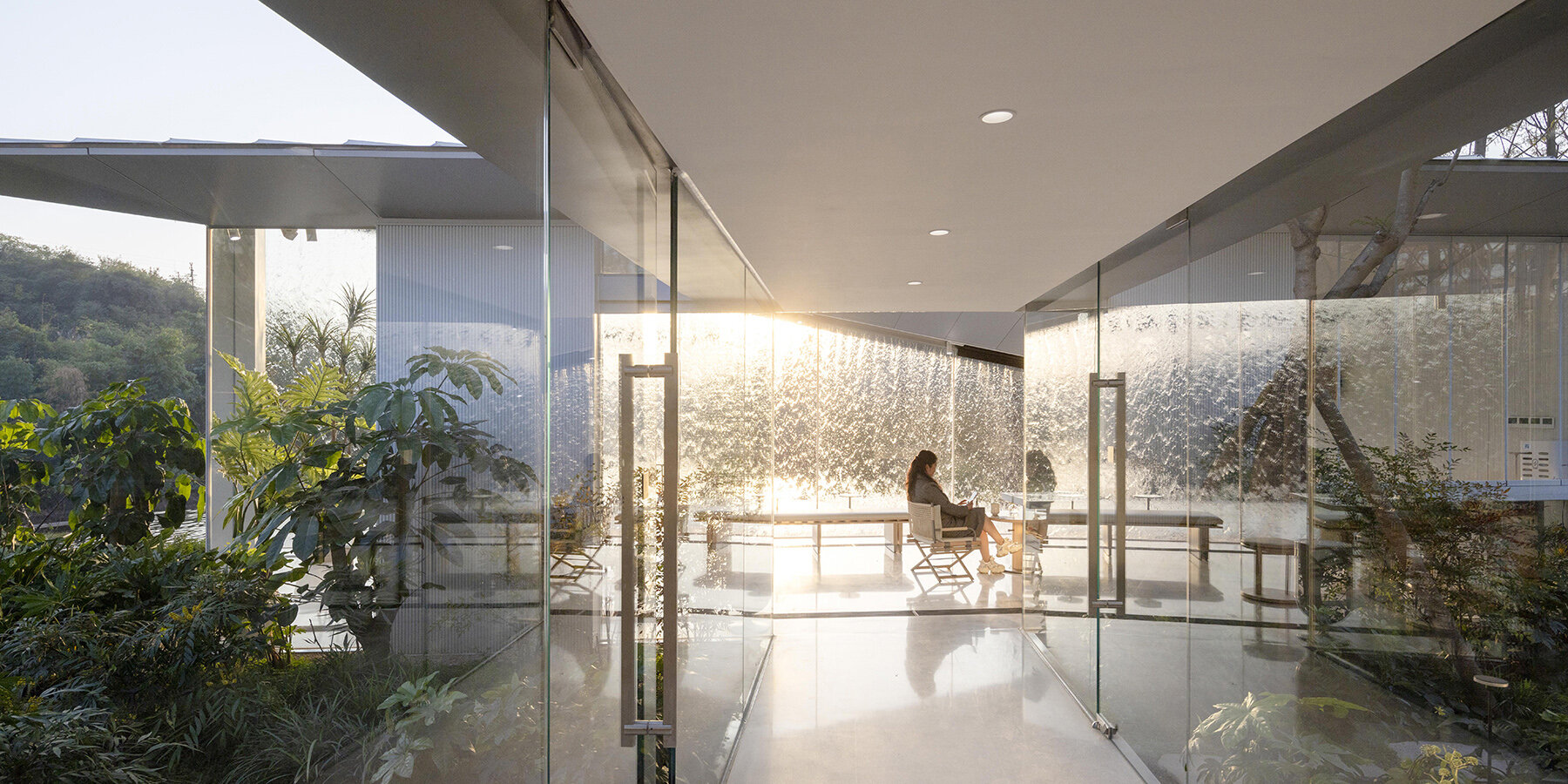
the water curtain provides passive cooling when in operation and introduces a dynamic surface layer across the glass
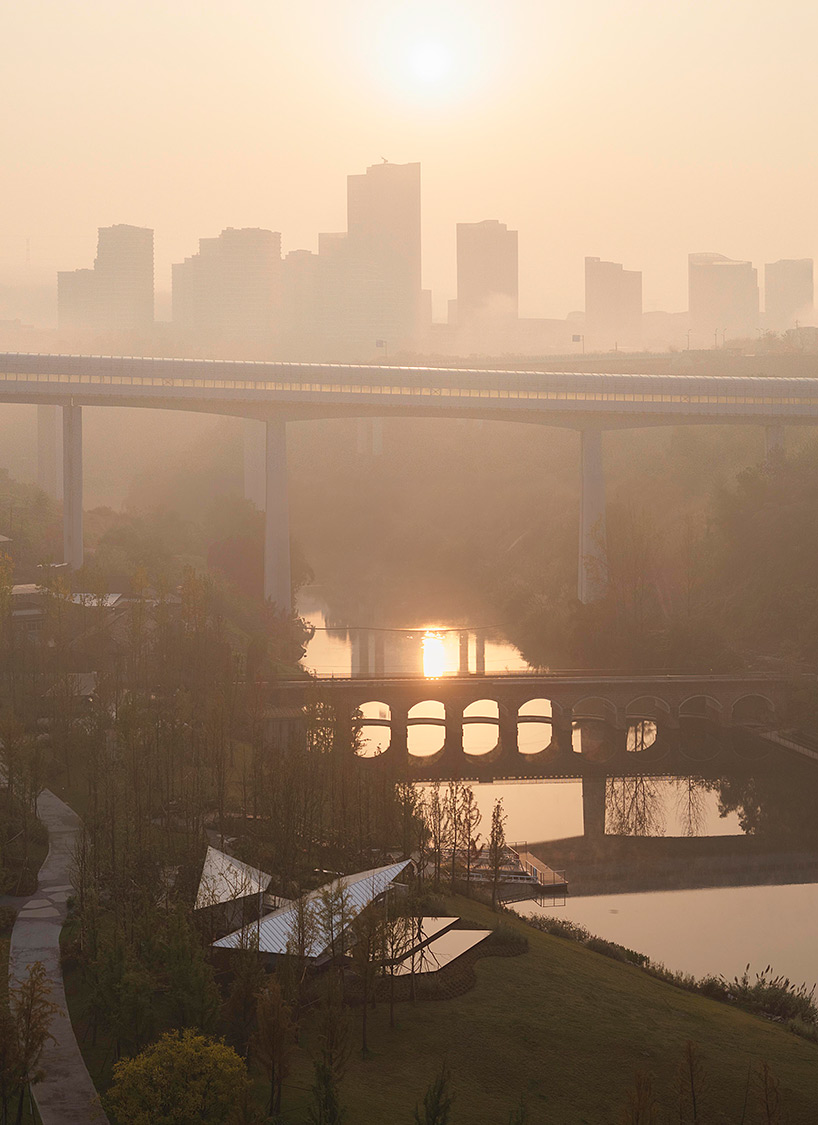
the café sits between the city, a surrounding mega-structure, and the natural river landscape
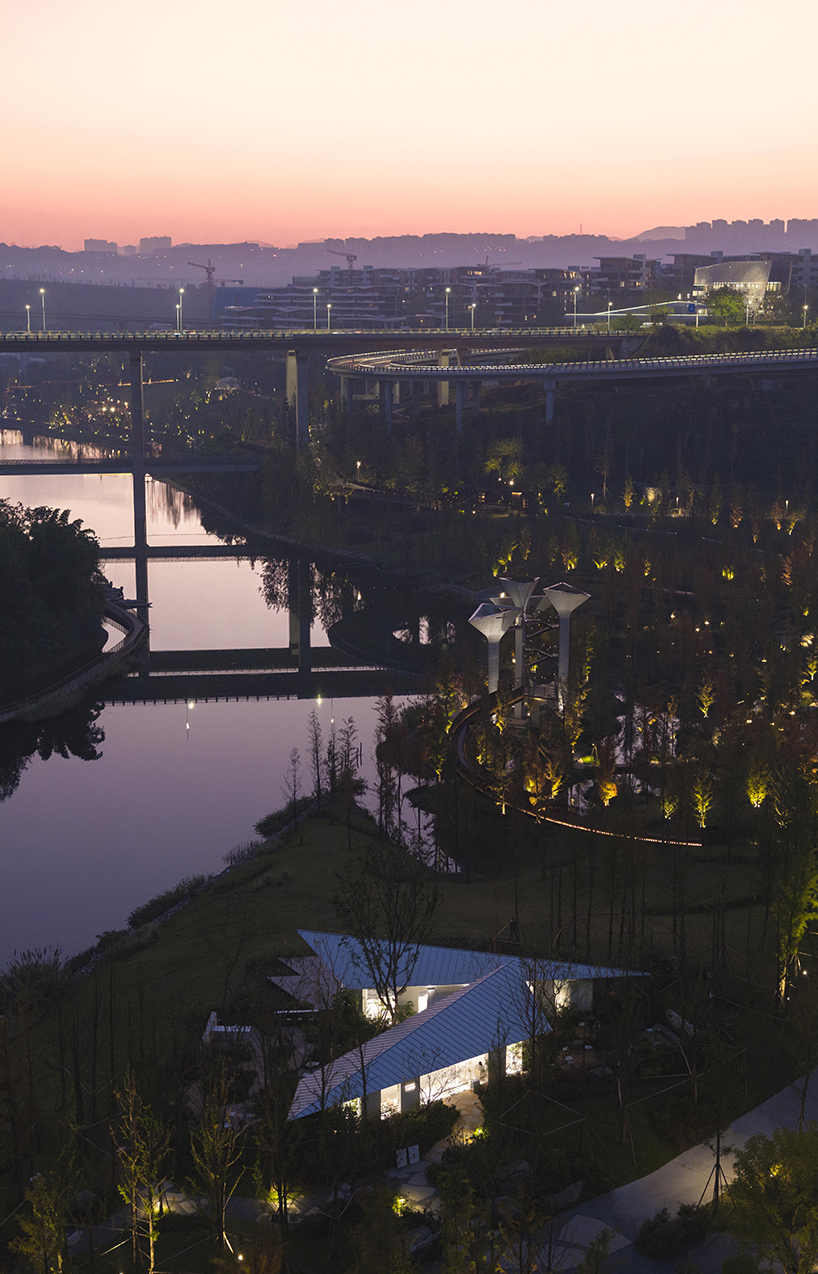
an evening aerial view captures the entire site as architecture, landscape, and light merge together
project info:
name: LuxeRivers Café
architects: Wide Horizon + Epiphany Architects
location: Chongqing, China
photography: Arch-Exist | @archexist
designboom has received this project from our DIY submissions feature, where we welcome our readers to submit their own work for publication. see more project submissions from our readers here.
edited by: claire brodka | designboom
architecture in china (2056)
 Feb 17, 2026
 Feb 16, 2026
 Feb 16, 2026
 Feb 10, 2026
 Feb 10, 2026
facades (462)
 Feb 20, 2026
 Feb 20, 2026
 Feb 13, 2026
 Feb 11, 2026 Feb 10, 2026
restaurant and café design (938)
 Feb 13, 2026
 Feb 12, 2026
 Feb 06, 2026
 Jan 30, 2026
 Jan 30, 2026
rooftop architecture and design (212)
Feb 20, 2026 Feb 13, 2026
 Feb 06, 2026
 Feb 04, 2026
 Feb 03, 2026
 Feb 10, 2026
 Feb 04, 2026
 Jan 20, 2026