Fran Silvestre Arquitectos assembles NIU N230 in valencia, spain
In Campolivar, Valencia, Fran Silvestre Arquitectos develops NIU N230 as part of a broader construction ecosystem that treats housing as an assembly process. Conceived to increase precision and cost control while improving environmental performance, the compact dwelling aims to become a prototype for systematized, circular architecture. Instead of demolition at the end of its life, the house is designed to be dismantled and reused, reducing the carbon footprint associated with its full lifecycle.
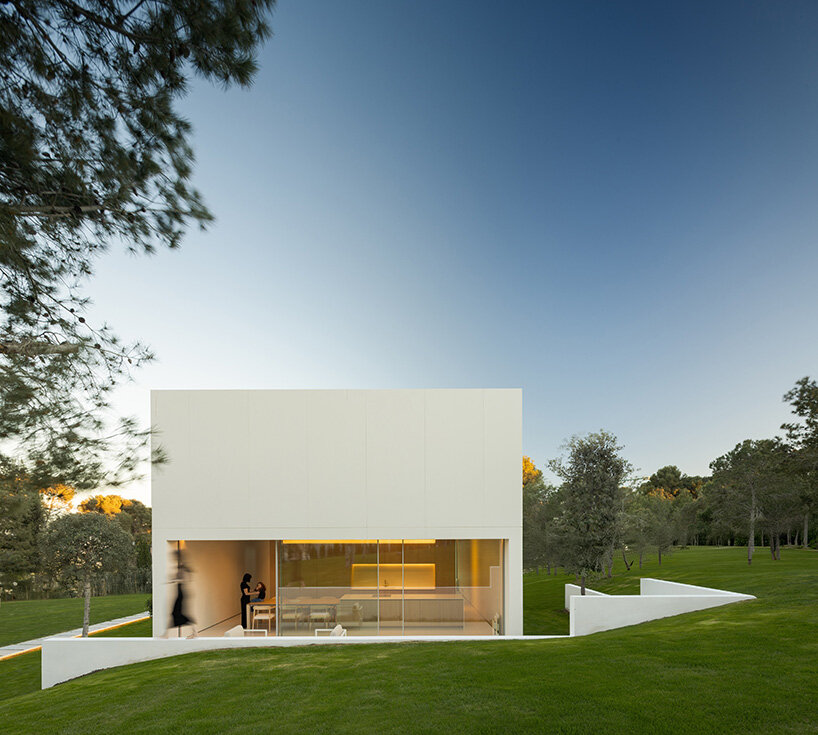
all images by Fernando Guerra, unless stated otherwise
two axes, clear thresholds
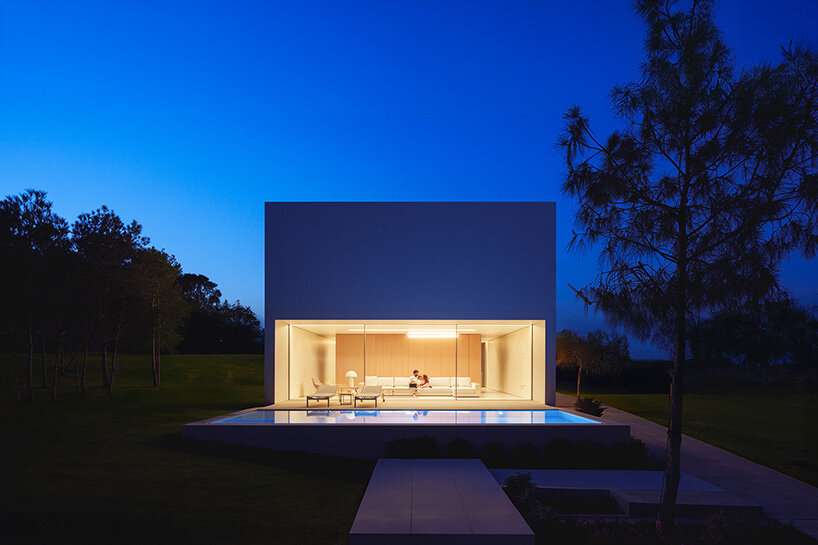
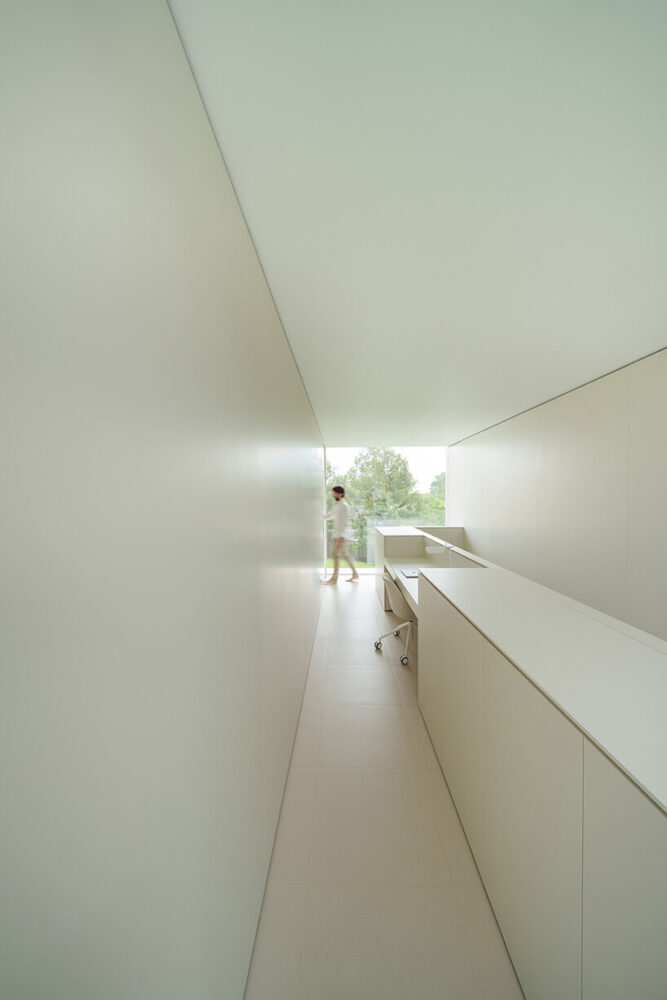
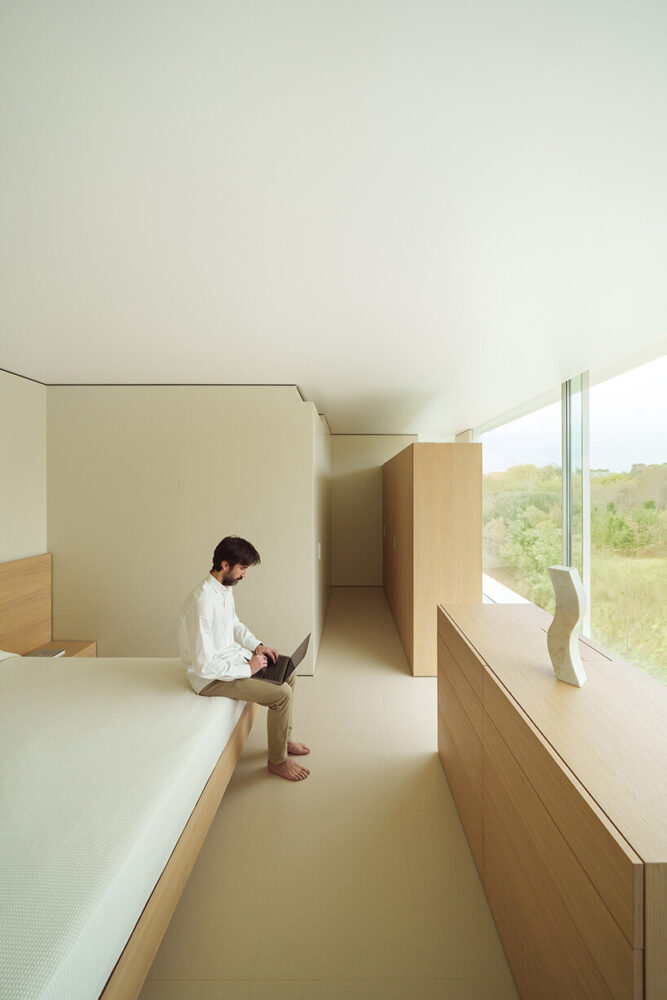
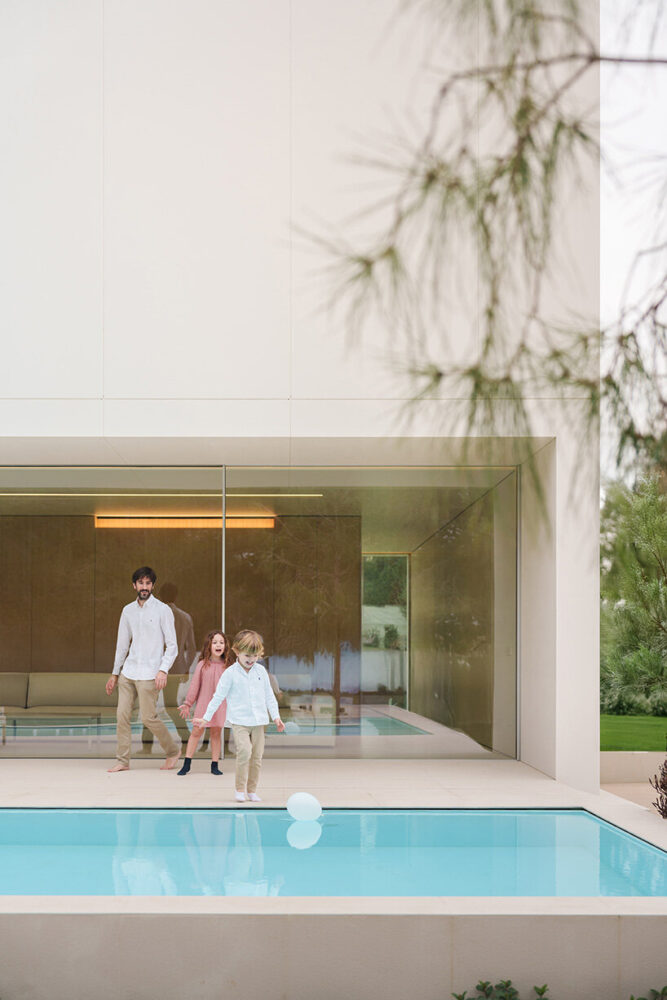
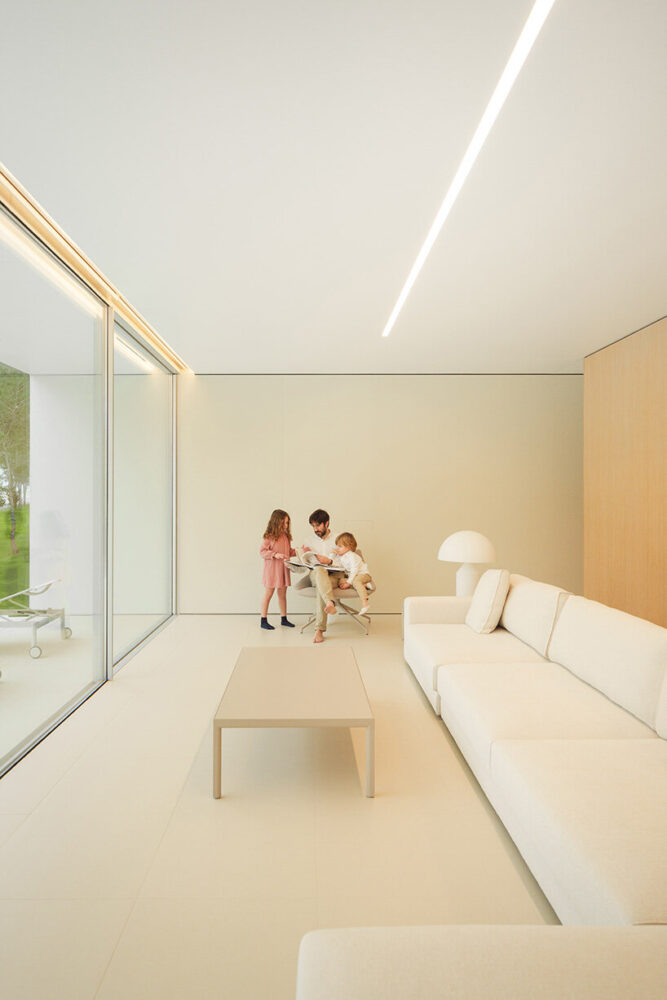
The N230 typology is organized around two through spaces arranged perpendicularly. This cross-geometry structures the ground floor into two distinct daytime atmospheres, articulated by a compact circulation core and the wet areas. The plan separates uses without resorting to excess partitioning. Social life concentrates on the lower level, while the upper floor contains four rooms and a fifth space that operates as a distributor and study area at the same time.
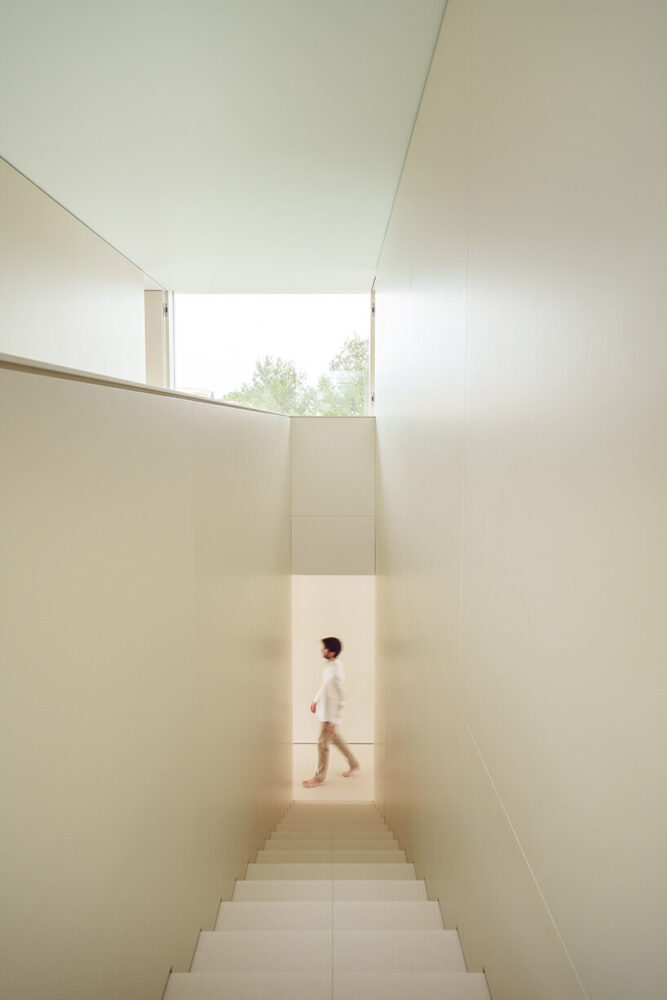
As the staircase rises, it opens toward the exterior, incorporating framed views into the domestic sequence. Movement is choreographed as spatial experience, reinforcing the ongoing interest of the Valencia-based team at Fran Silvestre Arquitectos in continuity between interior and landscape.
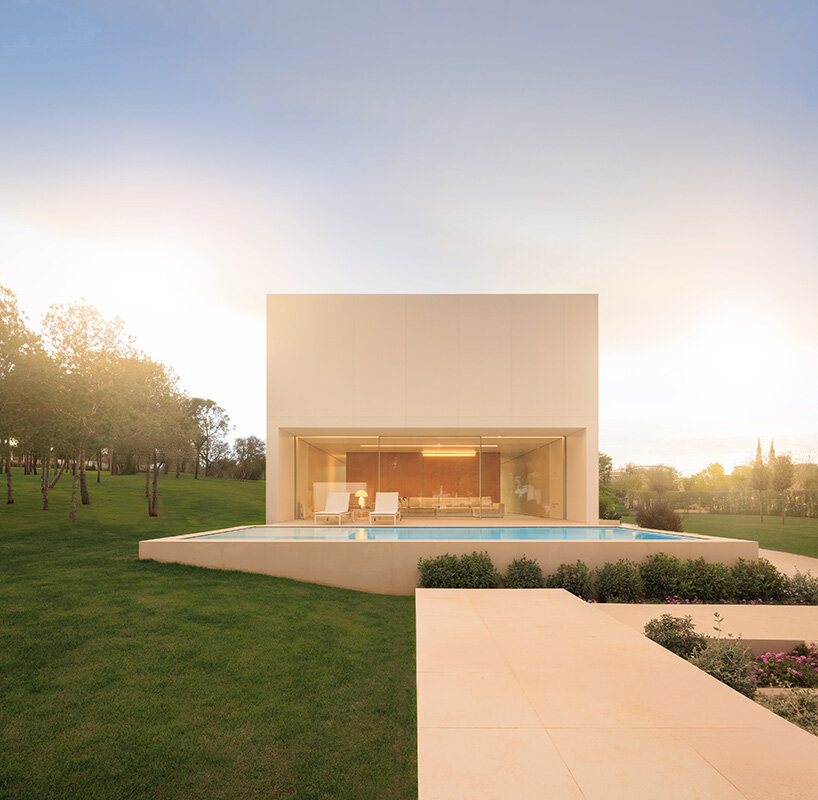
Fran Silvestre Arquitectos develops NIU N230
material coherence as system
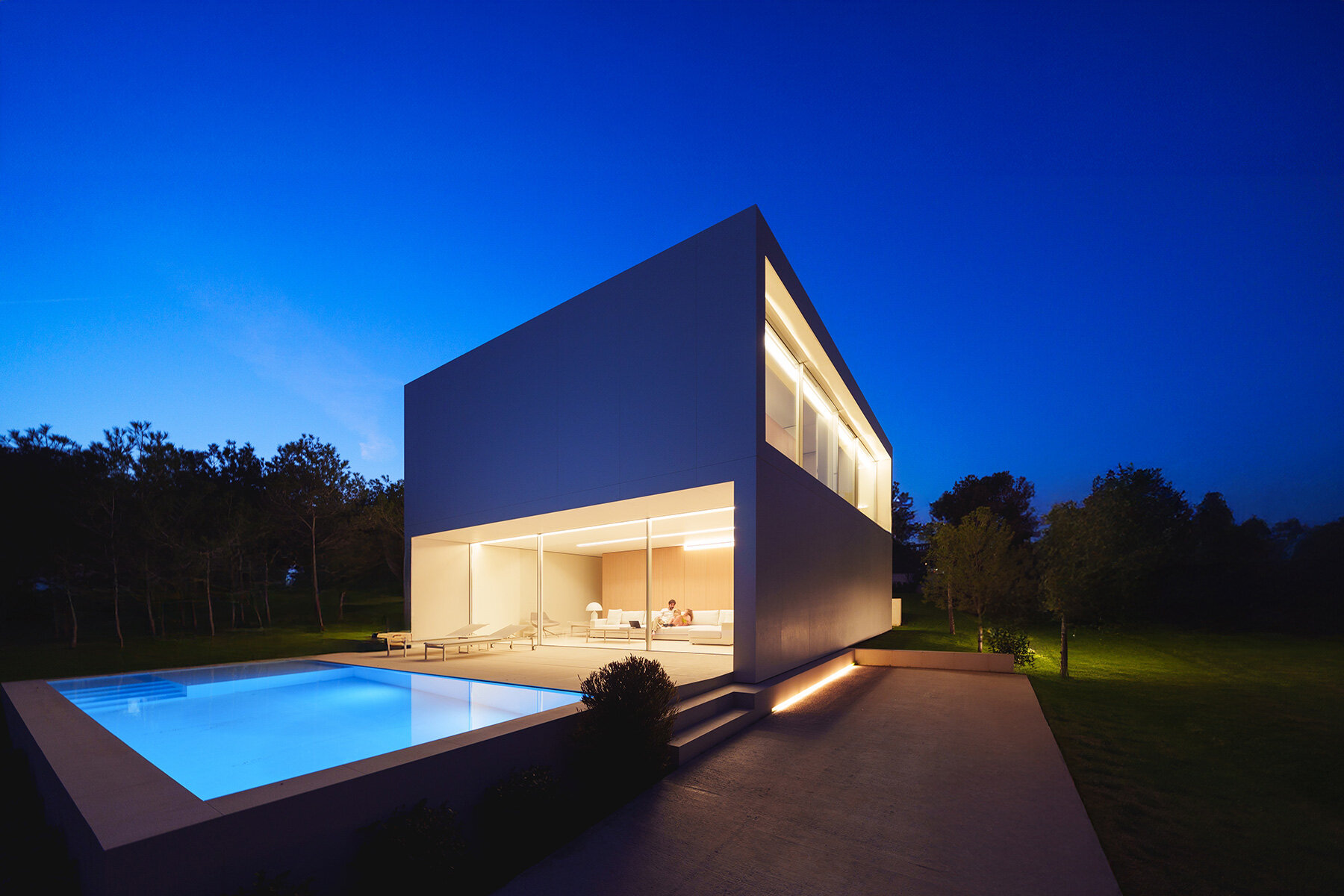
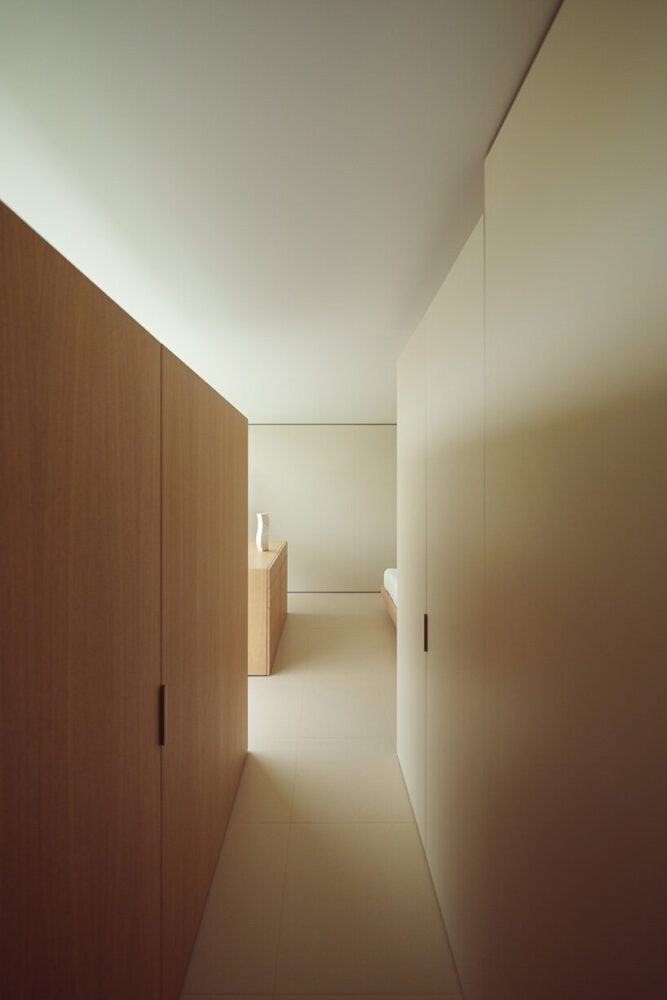
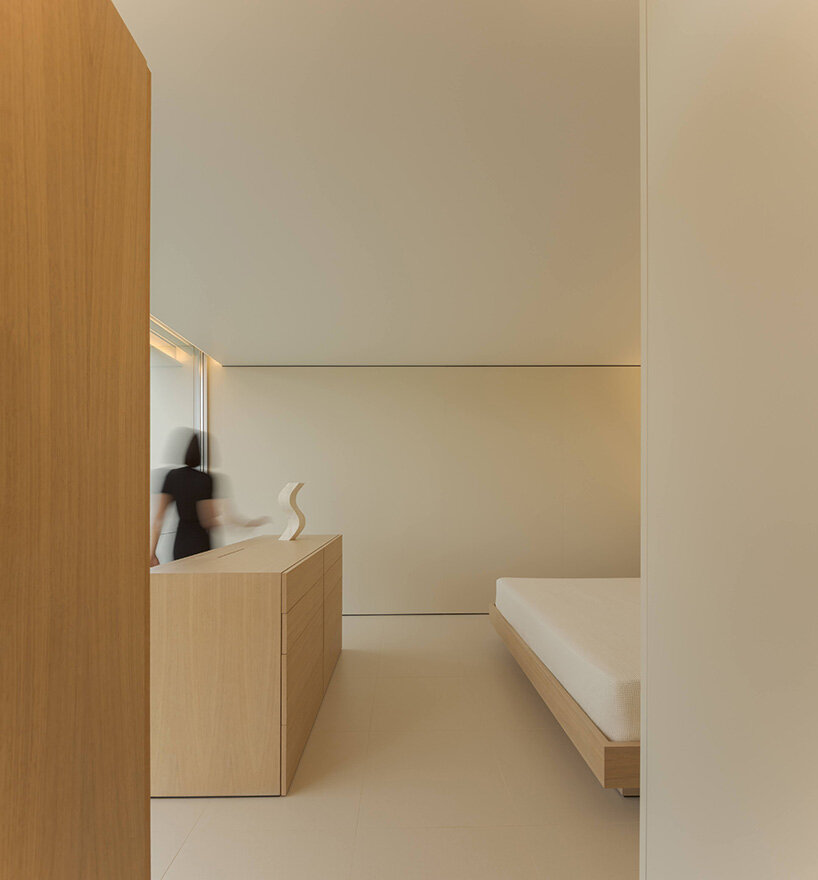
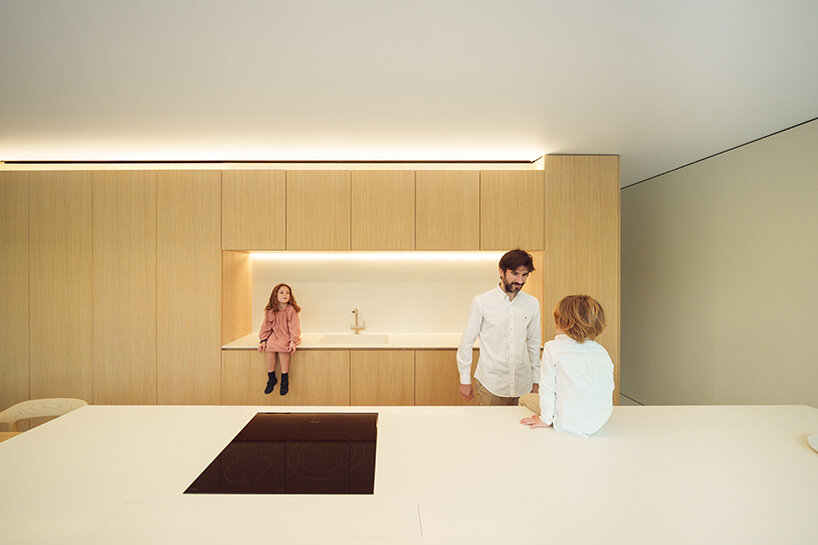
RAL 9016 white dominates walls and surfaces, while central elements and built-in furniture are resolved in light oak paneling. Doors, wardrobes, kitchens, and partitions share the same constructive logic, simplifying execution and maintaining visual coherence. Structural components that require higher resistance are executed in steel, while the remaining interior is built entirely in wood.
Above, a stretched textile ceiling conceals installations while allowing easy maintenance access. Where required, the membrane can be backlit, contributing to a controlled and diffuse interior illumination. On the exterior, a ventilated solid-surface facade reduces maintenance demands and reinforces the logic of standardized assembly.
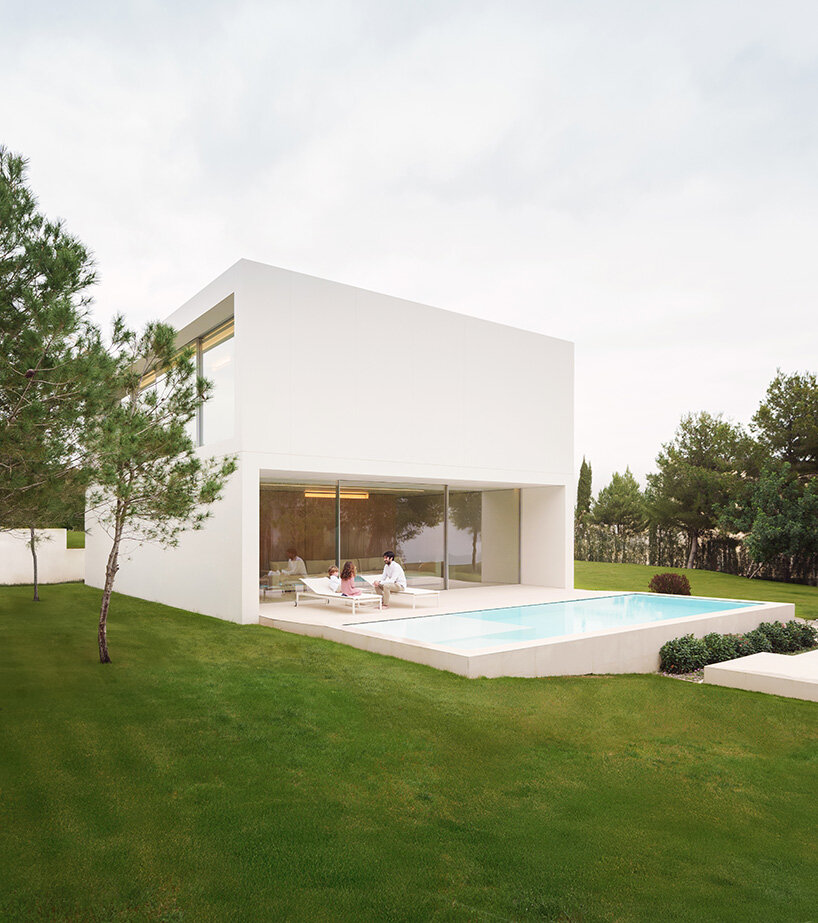
part of a broader construction ecosystem | image by Jesús Orrico
architecture that is assembled
Components are dry-fitted and coordinated to enable disassembly. In practical terms, this allows reconfiguration over time or complete dismantling without waste-intensive demolition. The strategy aligns precision construction with circular economy principles, positioning adaptability as a structural condition rather than an afterthought.
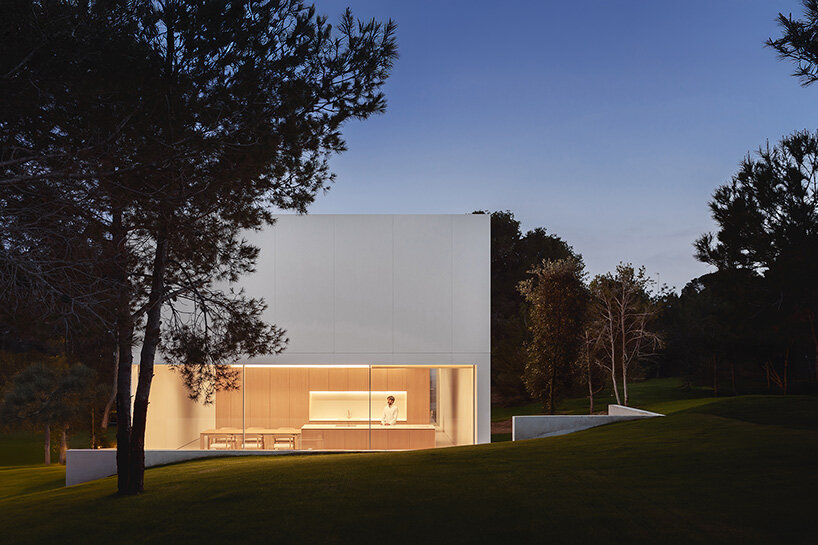
The placement of the dwelling responds to minor level changes in the site while preserving existing vegetation. Its light system and shallow foundation minimize ground intervention, allowing the house to sit within the landscape. A complementary system of objects accompanies daily life, reinforcing the identity of the project and extending its logic beyond pure construction.
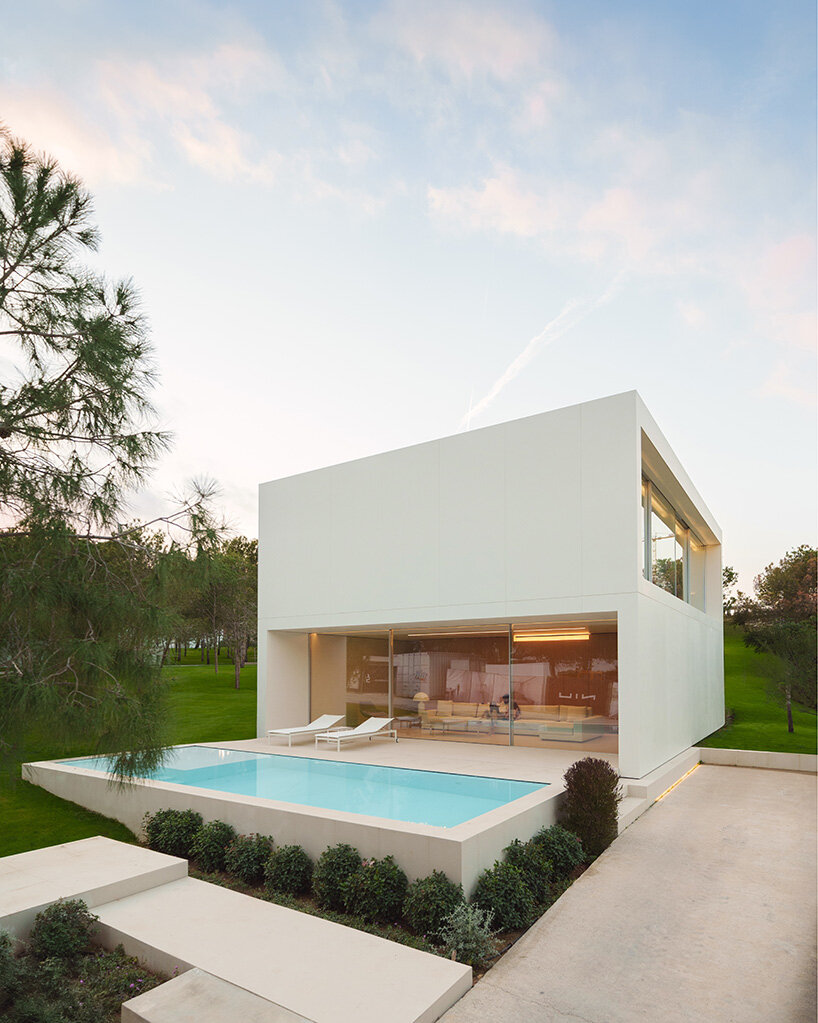
treating housing as an assembly process | image by Jesús Orrico
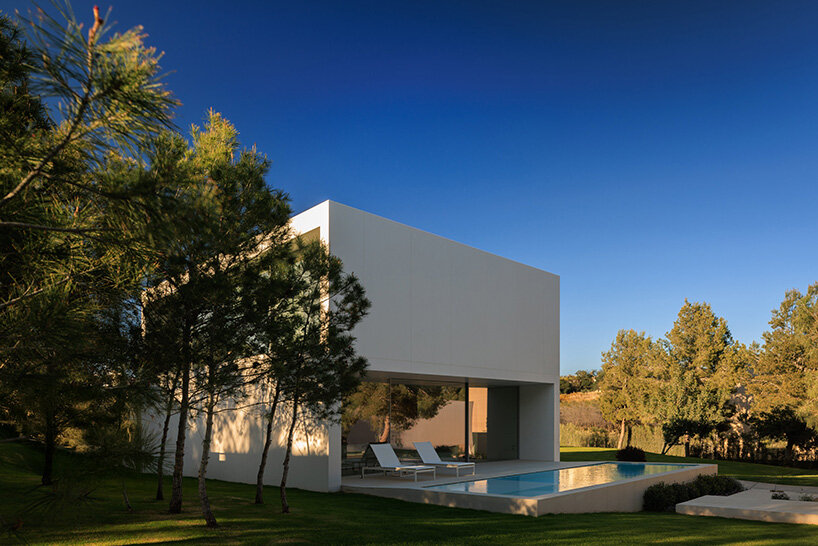
conceived to increase precision and cost control while improving environmental performance
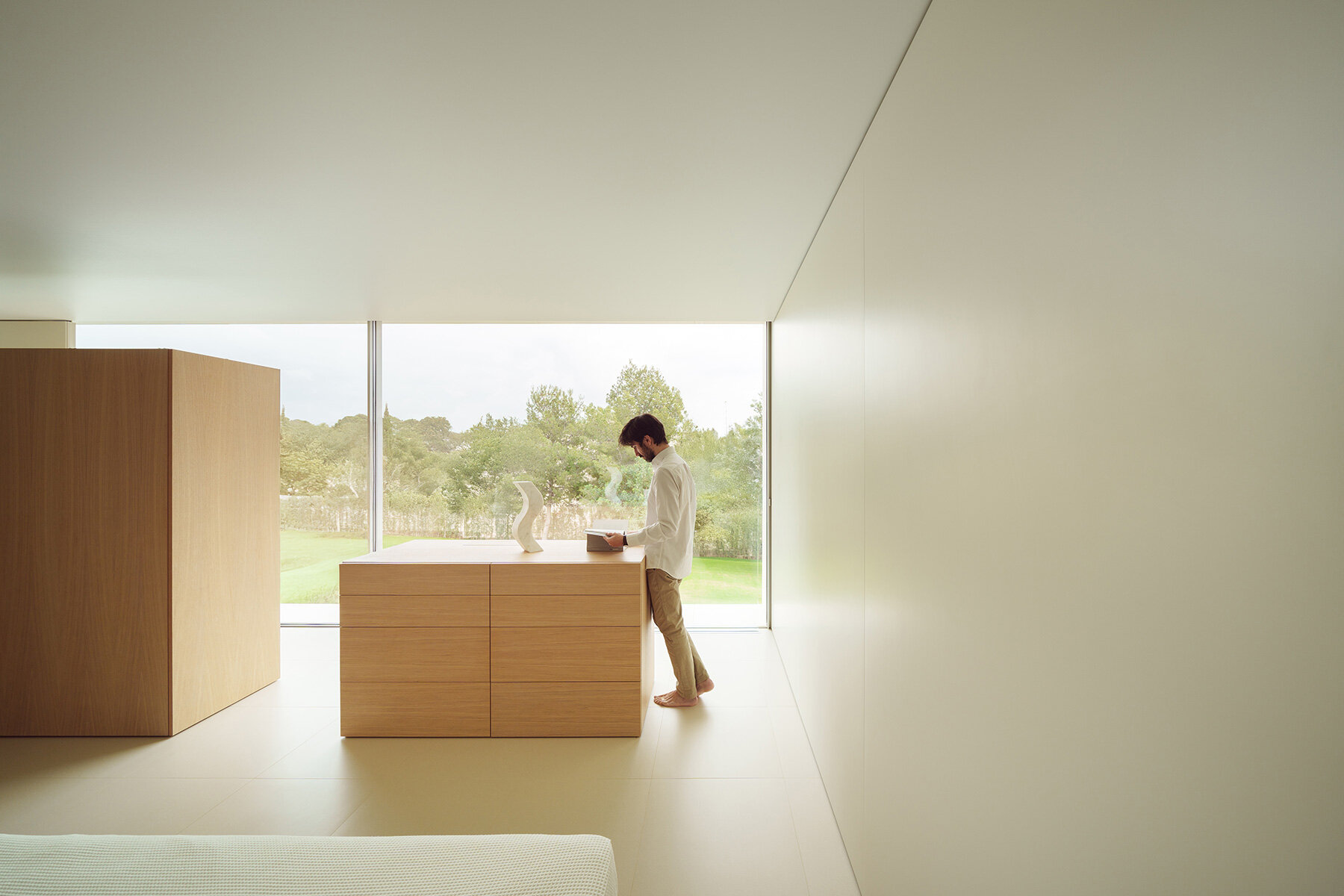
a prototype for systematized, circular architecture | image by Jesús Orrico
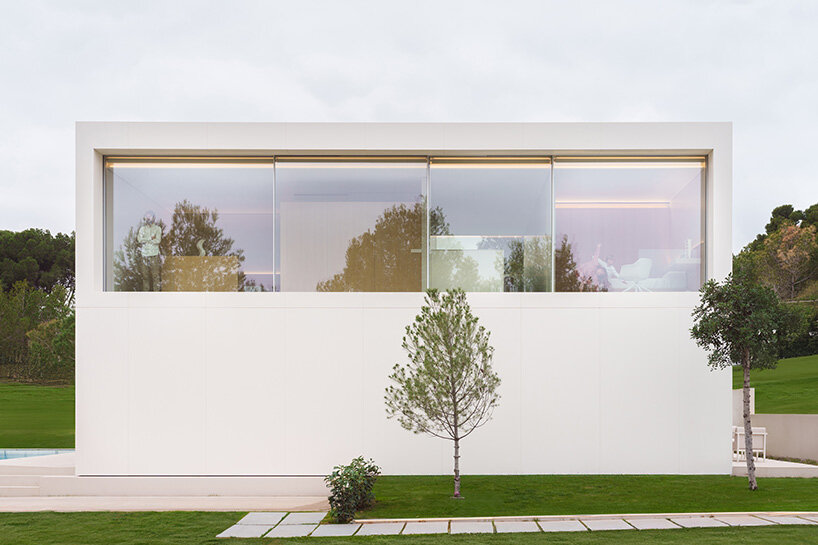
the house is designed to be dismantled and reused | image by Jesús Orrico
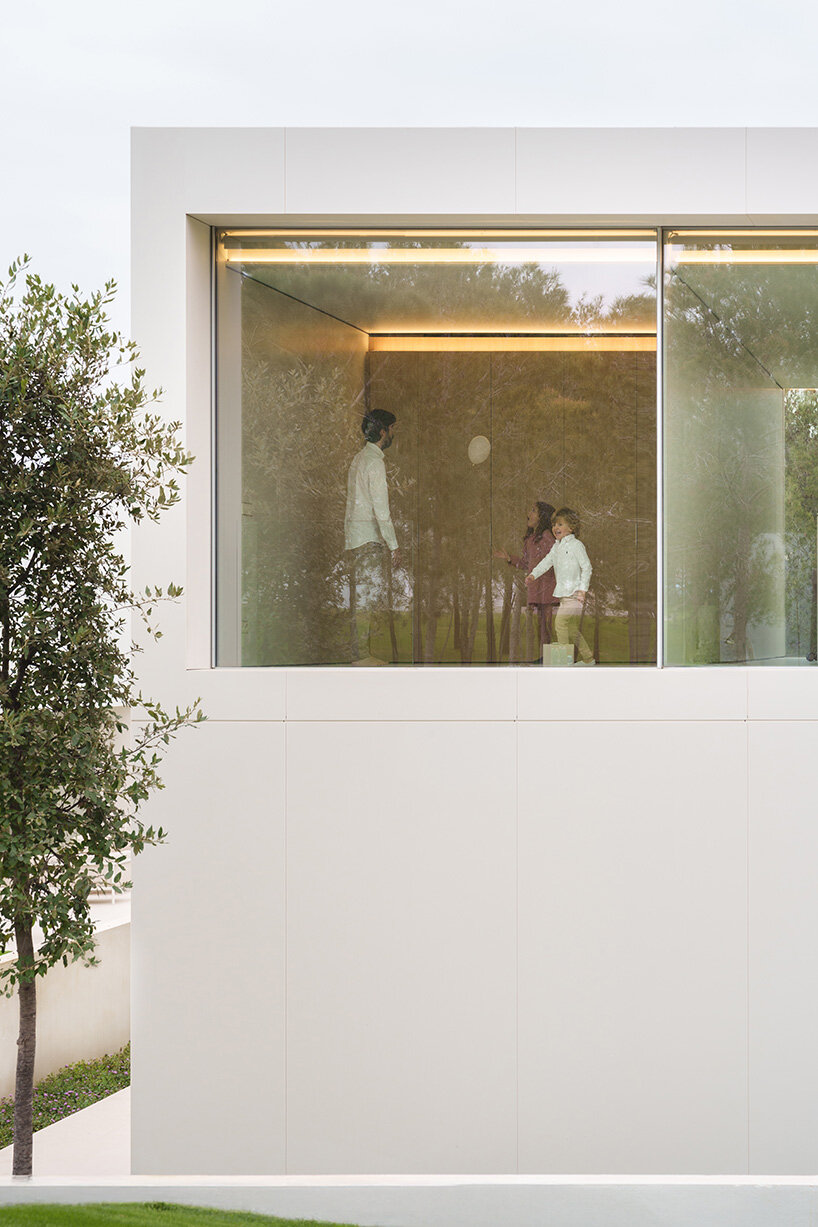
reducing the carbon footprint associated with its full lifecycle | image by Jesús Orrico
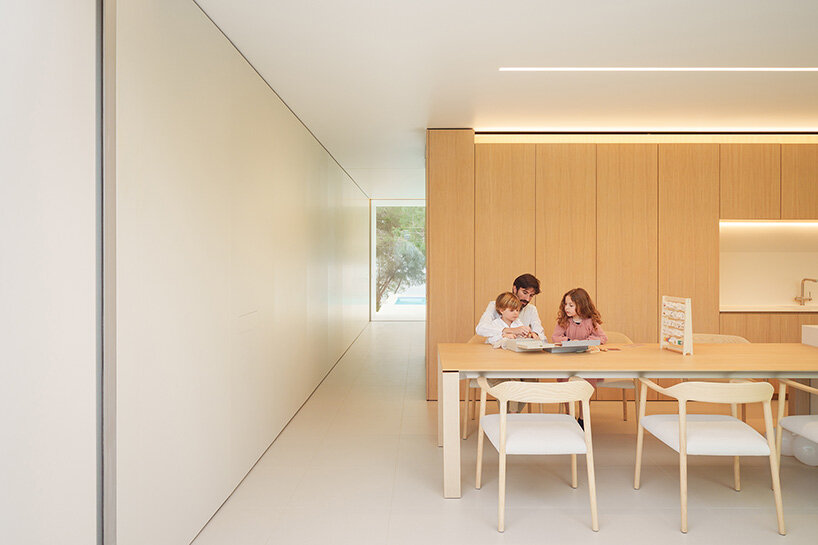
the N230 typology is organized around two through spaces arranged perpendicularly | image by Jesús Orrico
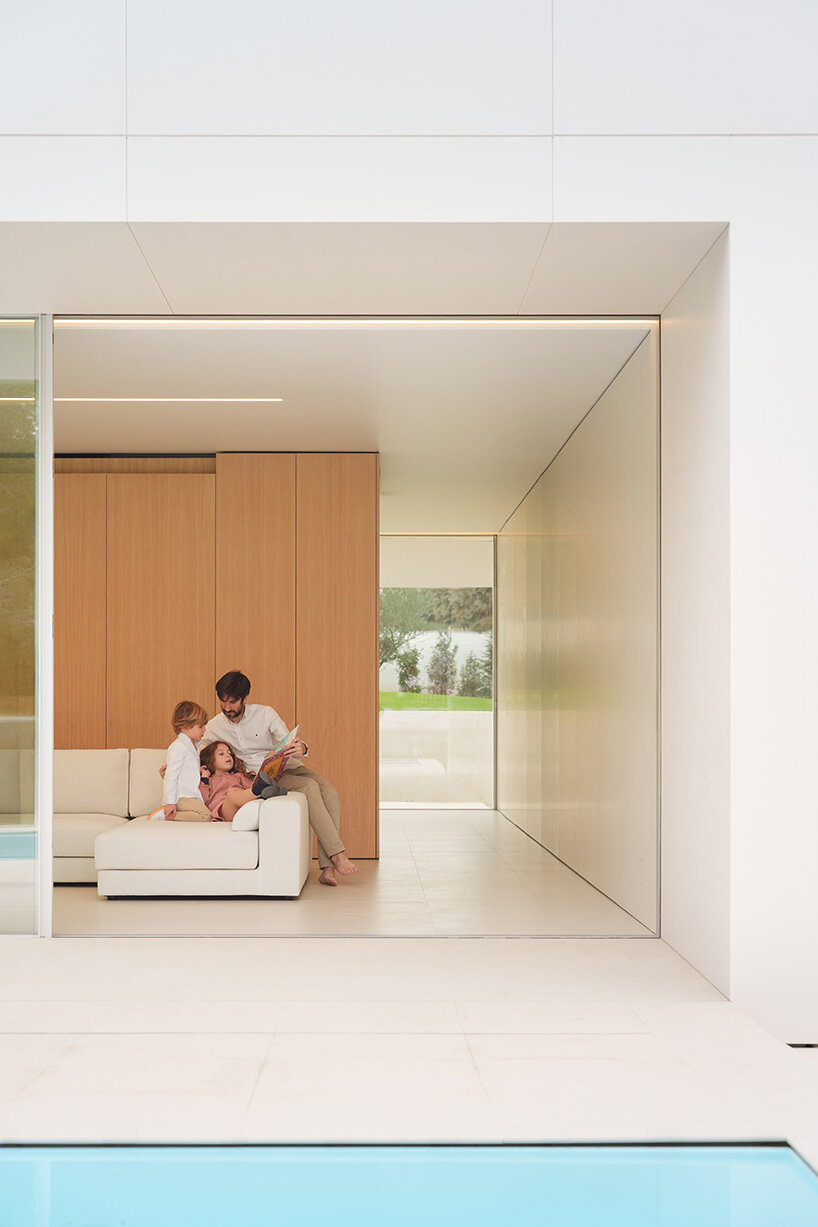
social life concentrates on the lower level | image by Jesús Orrico
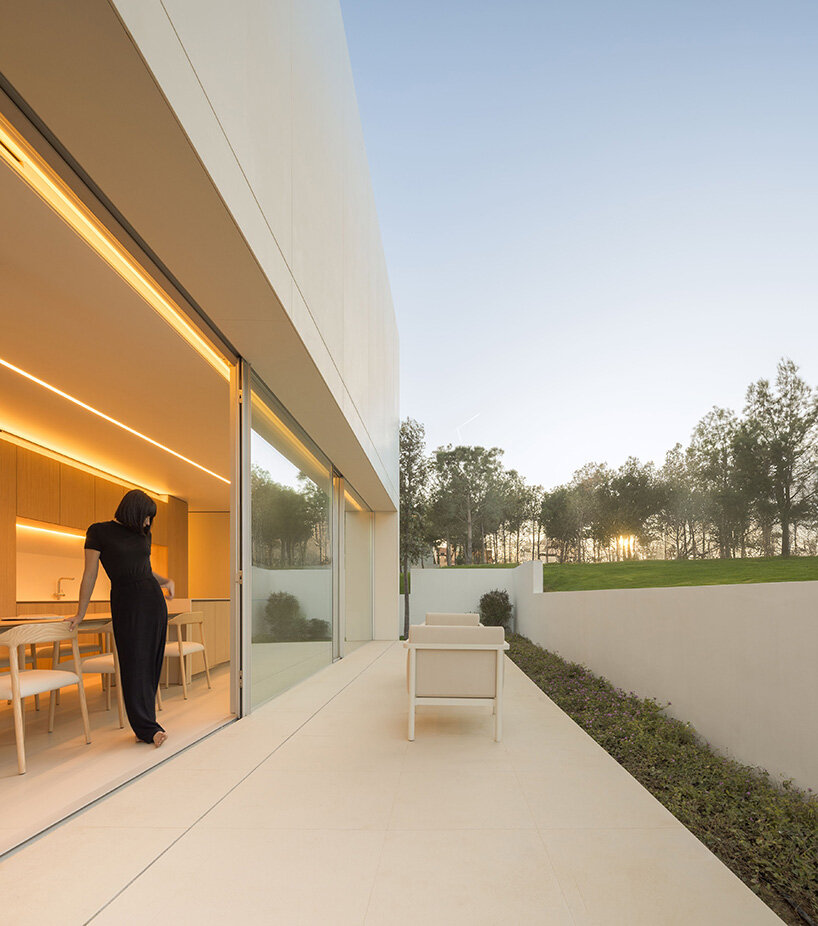
RAL 9016 white dominates walls and surfaces
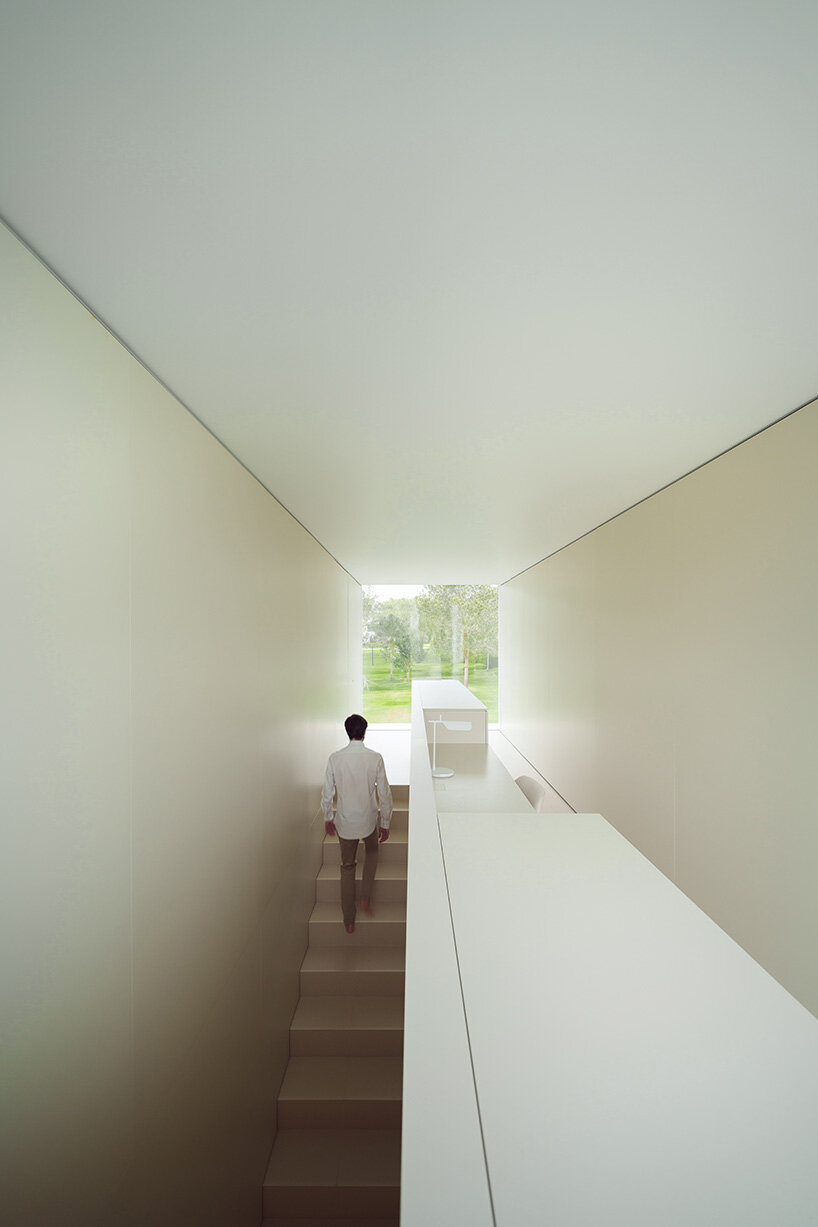
as the staircase rises, it opens toward the exterior | image by Jesús Orrico
positioning adaptability as a structural condition rather than an afterthought | image by Jesús Orrico
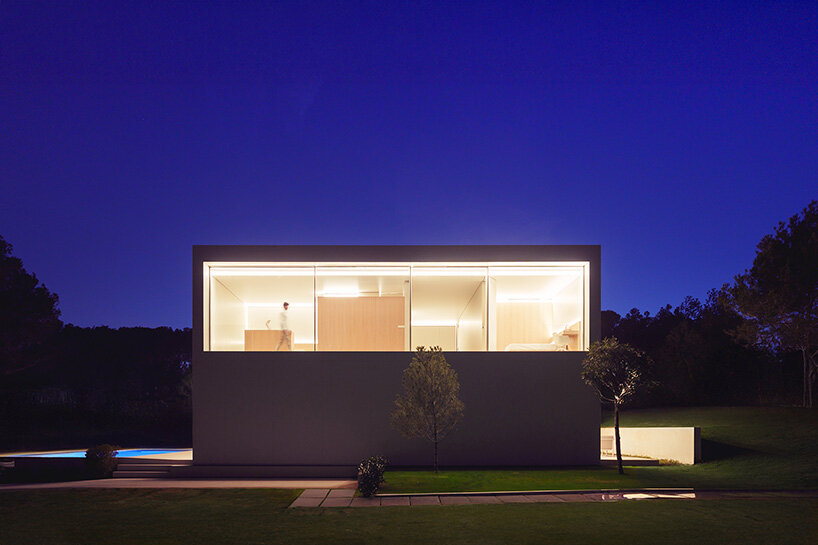
the placement of the dwelling responds to minor level changes in the site | image by Jesús Orrico
a complementary system of objects accompanies daily life | image by Jesús Orrico
project info:
name: NIU N230
architect: Fran Silvestre Arquitectos | @fransilvestrearquitectos
location: Campolivar, Valencia, Spain
project team: Fran Silvestre, Susana León, Laura Bueno, Gemma Aparicio
interior design: Alfaro Hofmann
technical architect: Enrique Alario
collaborators: María Masià, Pablo Camarasa, Ricardo Candela, Estefania Soriano, Carlos Lucas, Sevak Asatrián, Javi Herrero, Facundo Castro, Anna Alfanjarín, Toni Cremades, David Cirocchi, Neus Roso, Nuria Doménech, Andrea Raga, Olga Martín, Víctor González, Pepe Llop, Alberto Bianchi, Andrea Blasco, Laura Palacio, Carlos Perez, Jovita Cortijo, Claudia Escorcia, Diana Murcia, Olga Fernández, Alejandra Pla, Daniel Fenollosa, Andrés Marín, Álvaro Navarro, Diana Chilingaryan, Maria Barberá, Roberto Marañón, Martina Tomás
financial & business team: Ana de Pablo, Sara Atienza, Valeria Fernandini, José María Ibañez, Andrea Álvarez
constructor / promoter: NIU Architectural
photographer: Jesús Orrico | @jesusorrico, Fernando Guerra | @fernandogguerra
video: Jesús Orrico
carbon neutrality? (184)
 Jan 25, 2026
 Jan 17, 2026
 Jan 16, 2026
 Jan 12, 2026
 Dec 07, 2025
fran silvestre arquitectos (44)
 Jan 13, 2026
 Dec 12, 2025
 Nov 08, 2025
 Jul 17, 2025
 May 22, 2025
residential architecture and interiors (4756)
 Feb 20, 2026
 Feb 20, 2026
 Feb 19, 2026
 Feb 19, 2026
 Feb 19, 2026
 Feb 10, 2026
 Feb 04, 2026
 Jan 20, 2026