gmp shares construction progress of real madrid’s revamped santiago bernabéu stadium
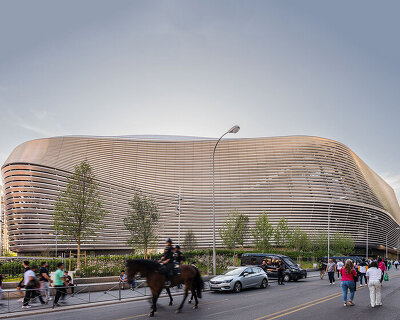
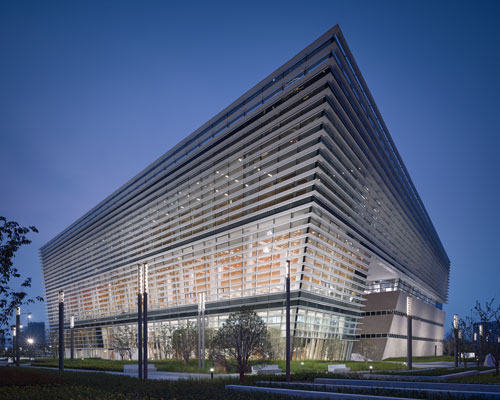
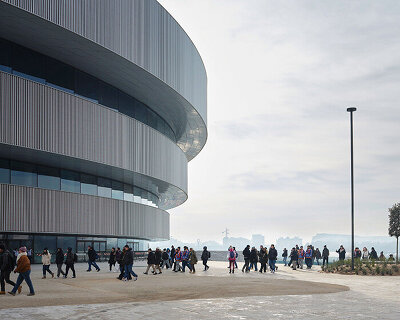
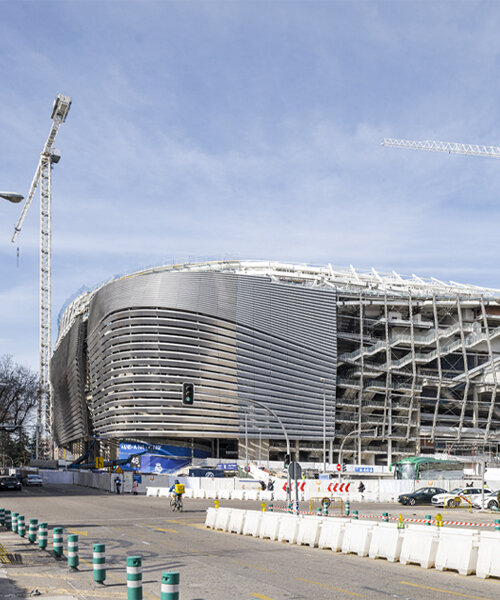
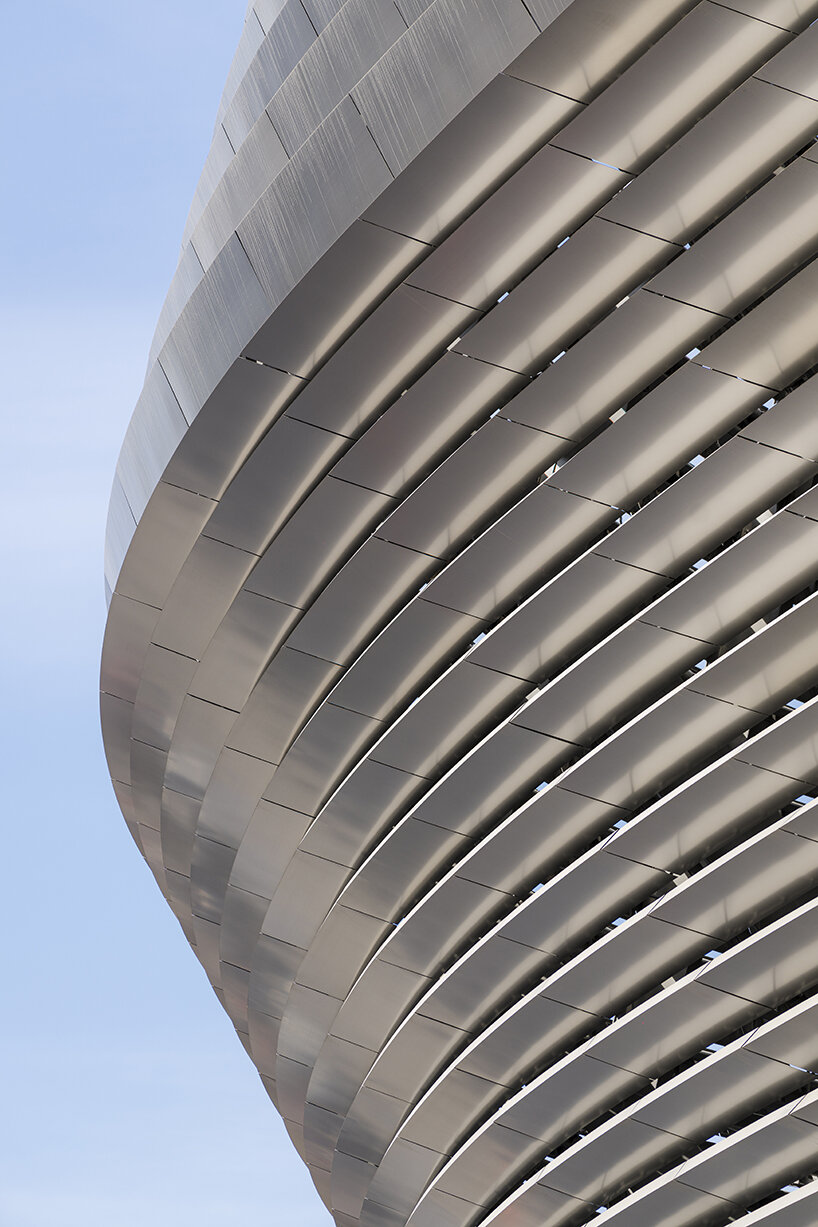
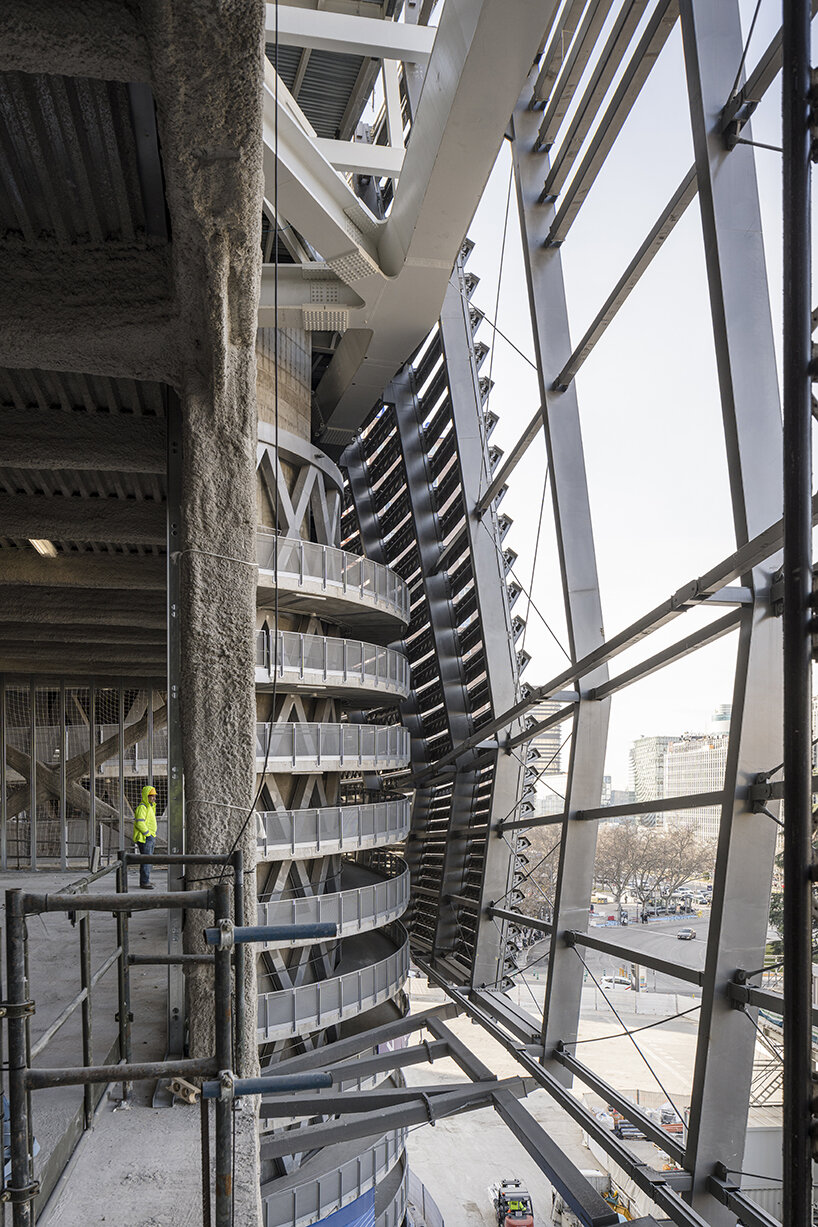
images show the new facade's curved stainless steel lamellas flowing around the structure.
prefer designboom on google[FEATURED]
a look at the revamped Santiago Bernabéu stadium
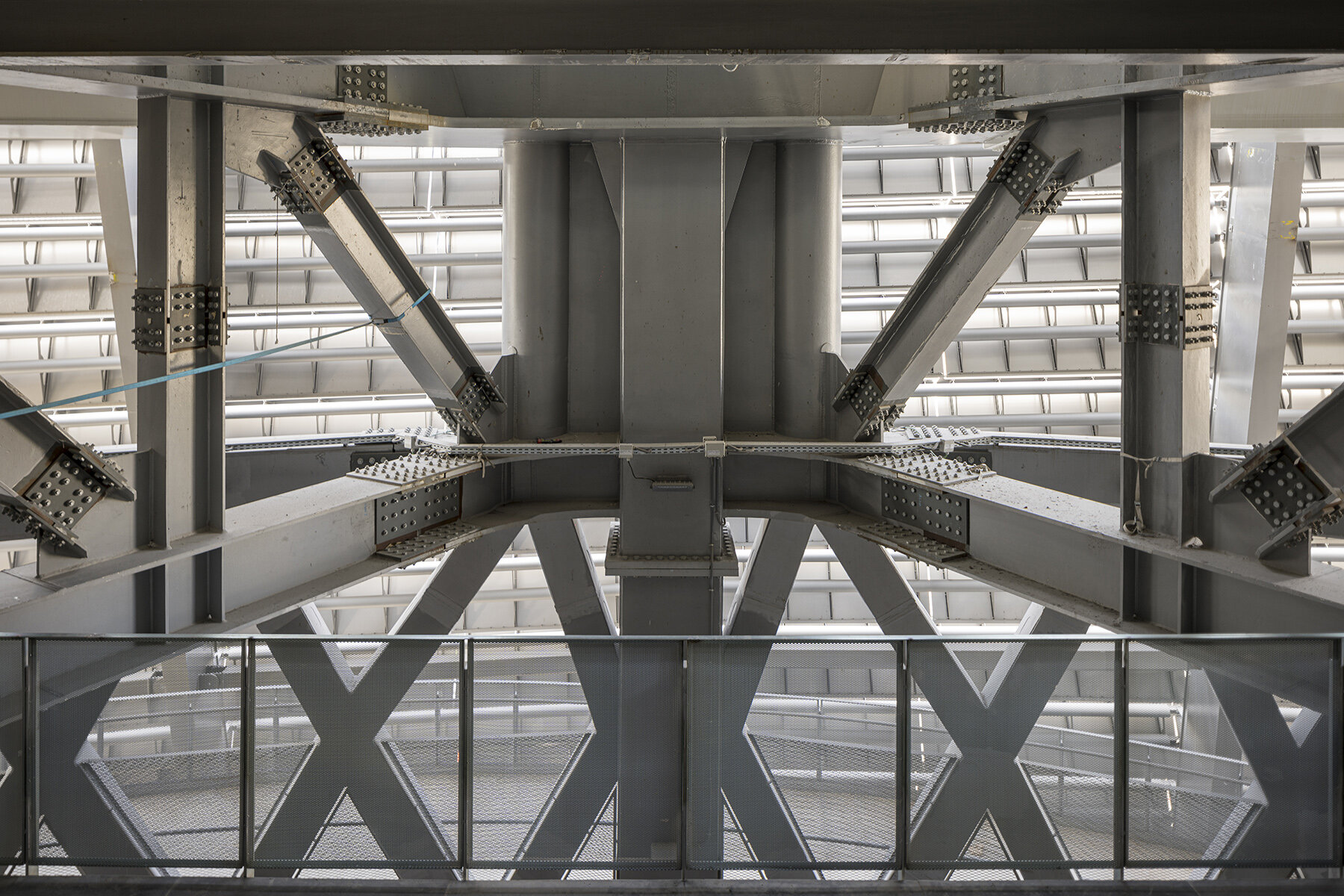
Construction progress images of Real Madrid’s revamped Santiago Bernabéu stadium have been shared by gmp Architekten, who is leading the development jointly with Spanish firms L35 and Ribas & Ribas Arquitectos. Proposed in 2014 and kickstarted in 2019, the project brief called for the transformation of the stadium exterior as well as the complete remodeling of the historic site. Furthermore, Real Madrid requested that the work be carried out without interrupting the use of the current space, initially built in 1947. You can read designboom’s complete coverage of the project here.
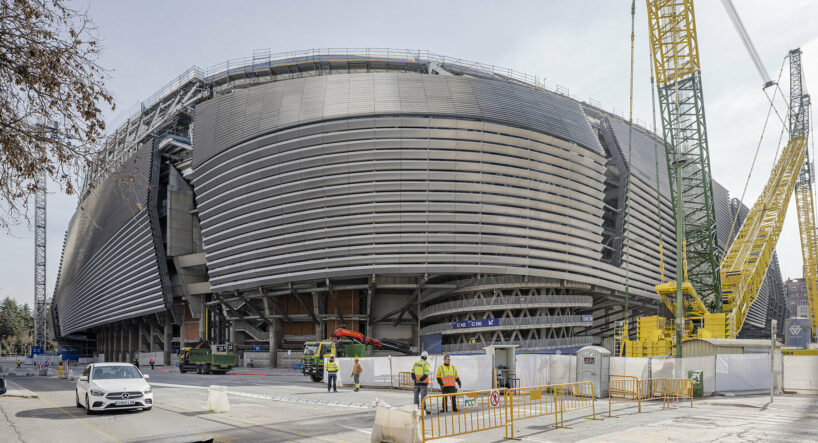
gmp Architekten unveils the dynamic, stainless steel facade
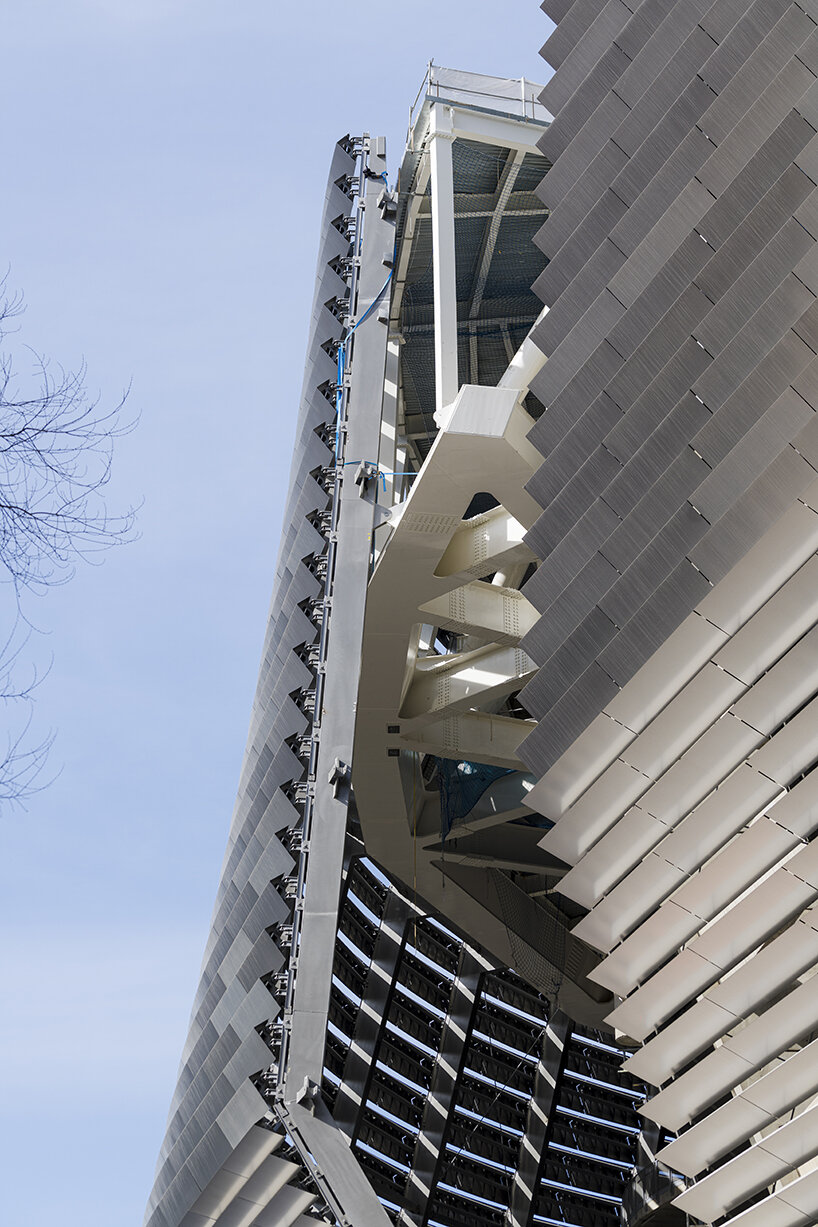
According to gmp Architekten (see more here), the most striking element of the Estadio Santiago Bernabéu conversion is nearly complete: the facade. Curved stainless steel lamellas flow around the structure from different construction periods, creating an asymmetrical and sculptural design that expresses energy synonymous with athletic activity. Furthermore, the transparent quality of the material allows a play of light and shadow that translates into ever-changing patterns throughout the day, reflecting the colorfulness of its immediate surroundings. At night, an LED lighting system will lend the facade a soft glowing light that will vary in both color and intensity – radiating internal illumination. The system will convert the Real Madrid (see more here) venue’s elevation into a giant screen projecting large-scale multimedia.
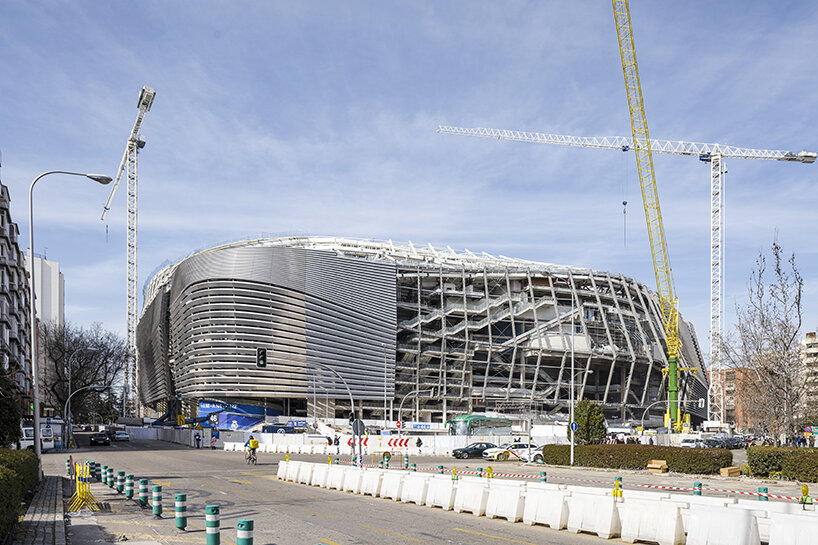
introducing new features and programs
Complementing the dynamic facade is the addition of a retractable roof that will allow the venue to be used for a wide range of events throughout the year. The canopy comprises a PTFE membrane in the exterior sections, with a series of slats on top, adding sun protection. The covering is transparent in the innermost sections, balancing natural light and solar protection during daylight hours. The teams at gmp Architekten, L35 (see more here), and Ribas & Ribas (and here) also placed a translucent membrane inside to hide the stadium’s structure and services, leaving a central area with a transparent finish. The result is that of a mega-structure that appears to levitate effortlessly.
The new design of the Santiago Bernabéu stadium also includes two significant changes to the surrounding urban environment. The first change focuses on redeveloping the eastern side and demolishing the existing shopping center. This will make room for a new green space and public facilities, including the club museum, which will be housed in a new building layer.
The second intervention takes place on the western side of the stadium to host commercial areas, a luxury hotel, and business and leisure facilities. The boxes on this side of the stadium will have direct access to the hotel and can be converted into conference rooms with pitch views. A new plaza is also underway, soon to become a place for public gatherings and events such as live transmissions. This new public space will also open a sight line to the Paseo de la Castellana, creating a visual and spatial connection to the existing green boulevard.
project info:
name: Santiago Bernabéu stadium
location: Madrid, Spain
architecture: gmp Architekten | @gmp.architects , L35 | @l35architects,
Ribas & Ribas Arquitectos | @ribasarchitects
client: Real Madrid | @realmadrid
photographer: Miguel de Guzmán
shop
your own online design shop — no sales commission collected