golucci adds rock-like formations within ‘kiki’ noodle house in shanghai
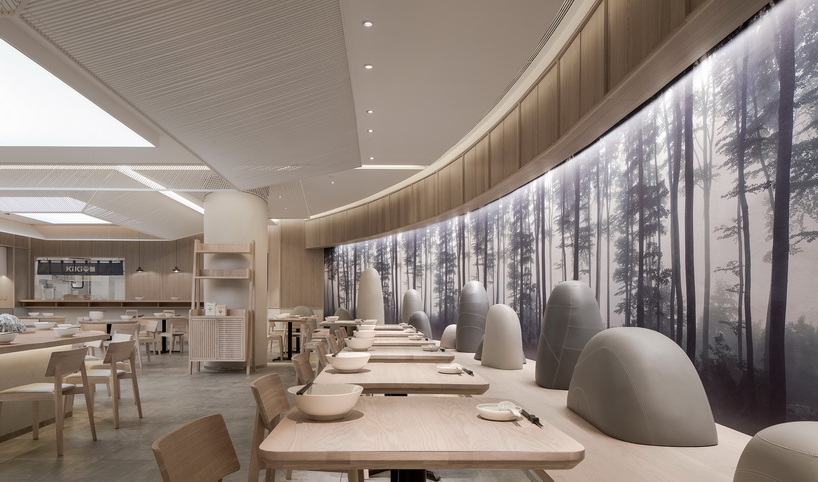
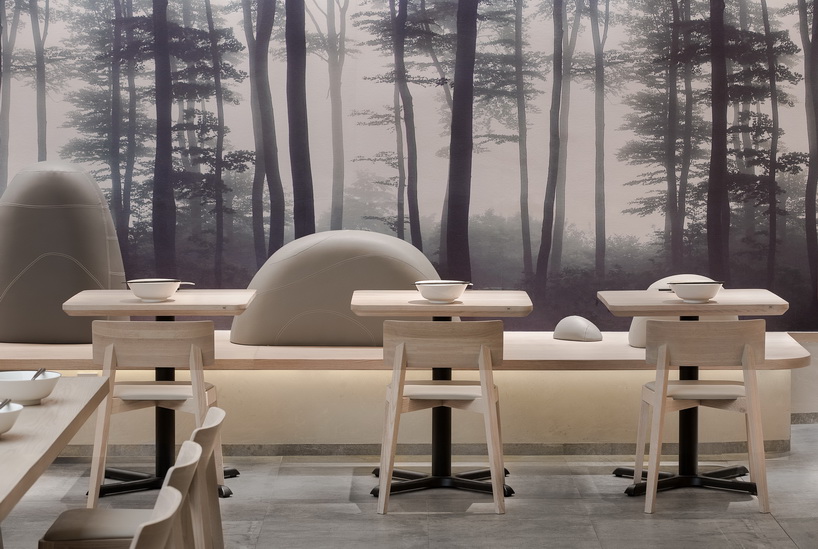
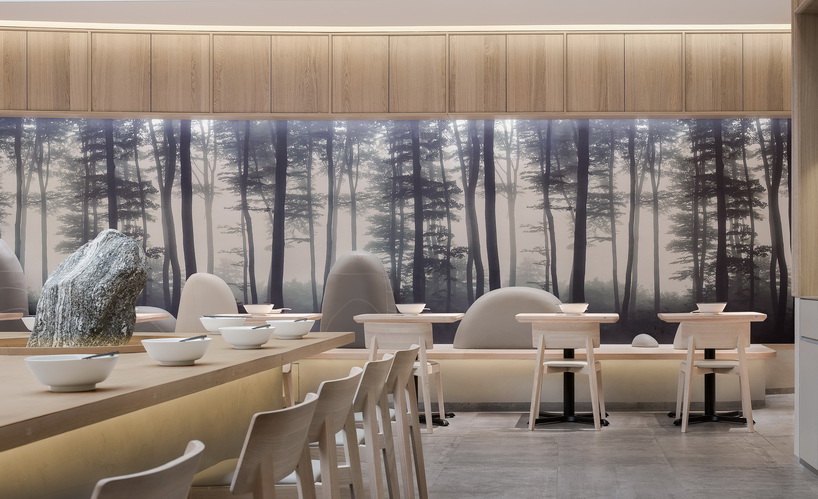
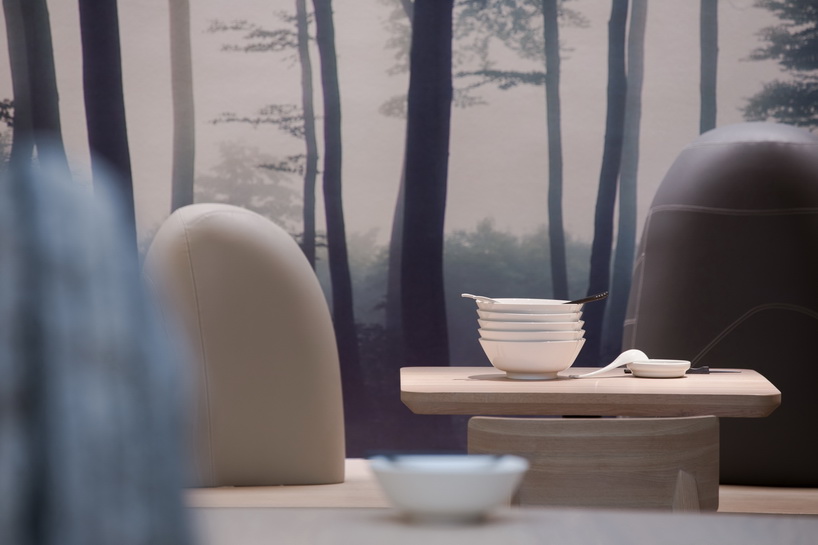
the restaurant by golucci interior architects also features a forest mural, evoking a serene atmosphere within the interior.
[FEATURED]
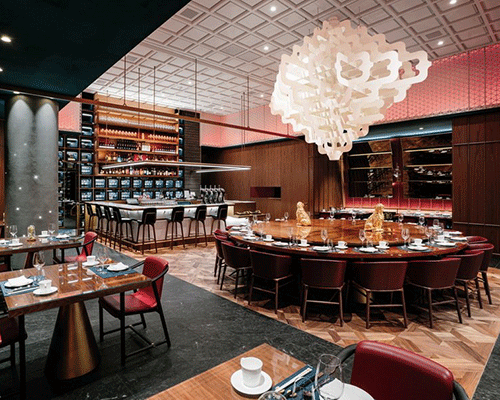
golucci interior architects have designed ‘kiki’ noodle house, the first chinese branch of a taiwan-based restaurant group, located in shanghai. the design was led with the spatial logic of traditional taiwanese architecture, reinvented through a contemporary lens, creating an environment of neutral palette tones, clean lines and an abundance of oak and concrete.
all images courtesy of golucci interior architects
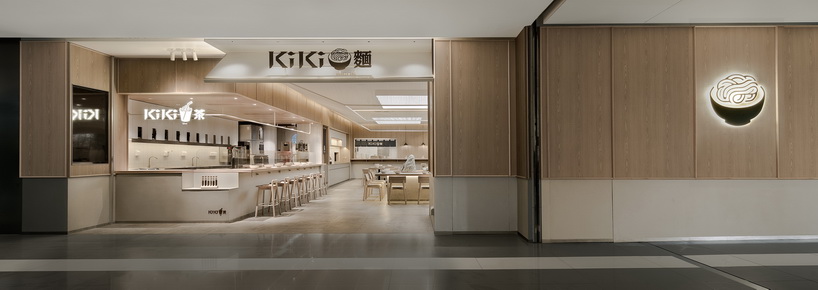
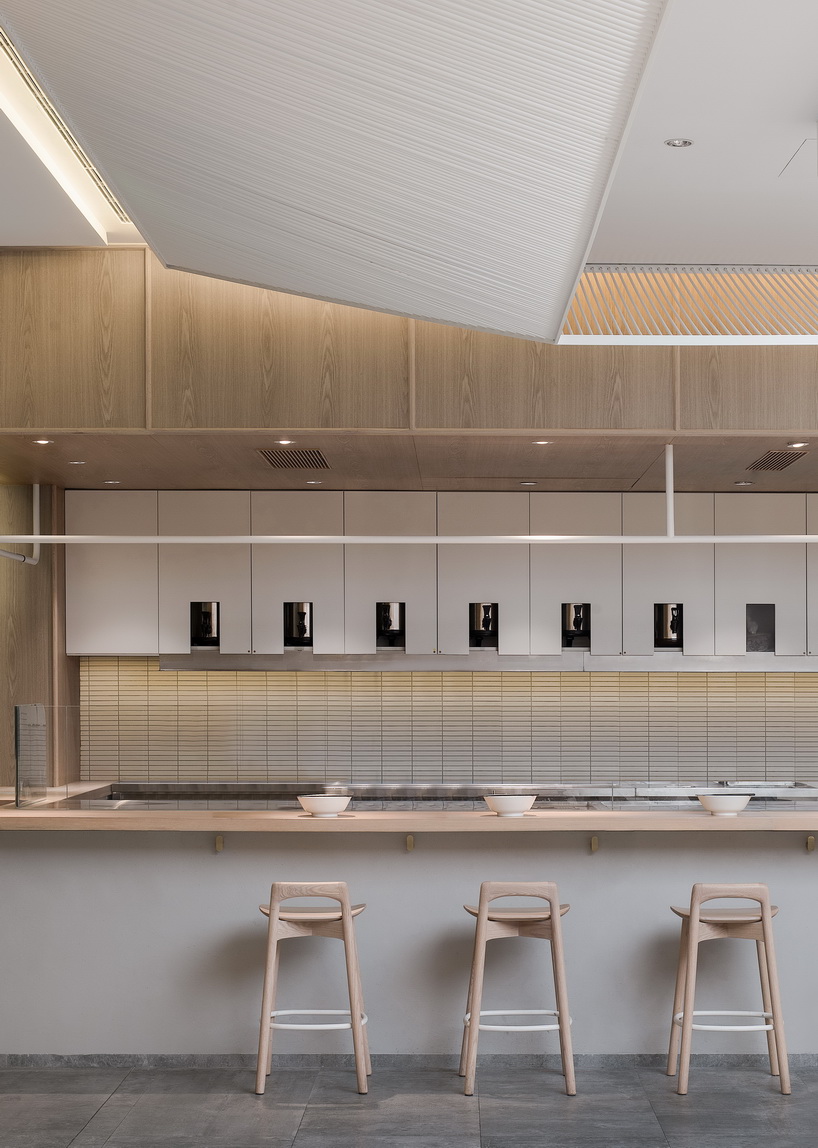
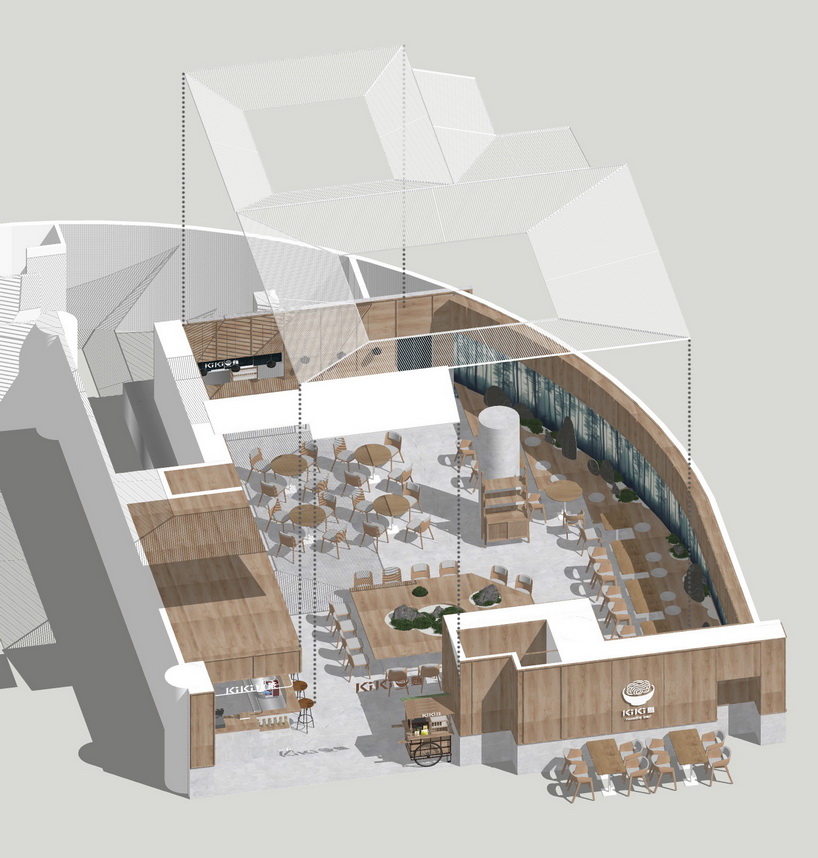
the first thing that welcomes the customers to the restaurant by golucci interior architects, is the warm, simple kiki tea bar and the old taiwanese street cooking cart parked at the entrance. the bright kitchen is visible in the distance, where a set of curtains frames the silhouette of the chef. the curtain element was also used in the first store in taiwan, referring to the origins of kiki noodle house.
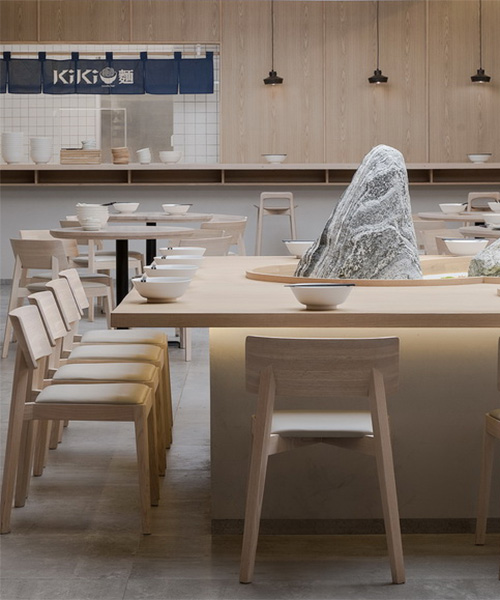
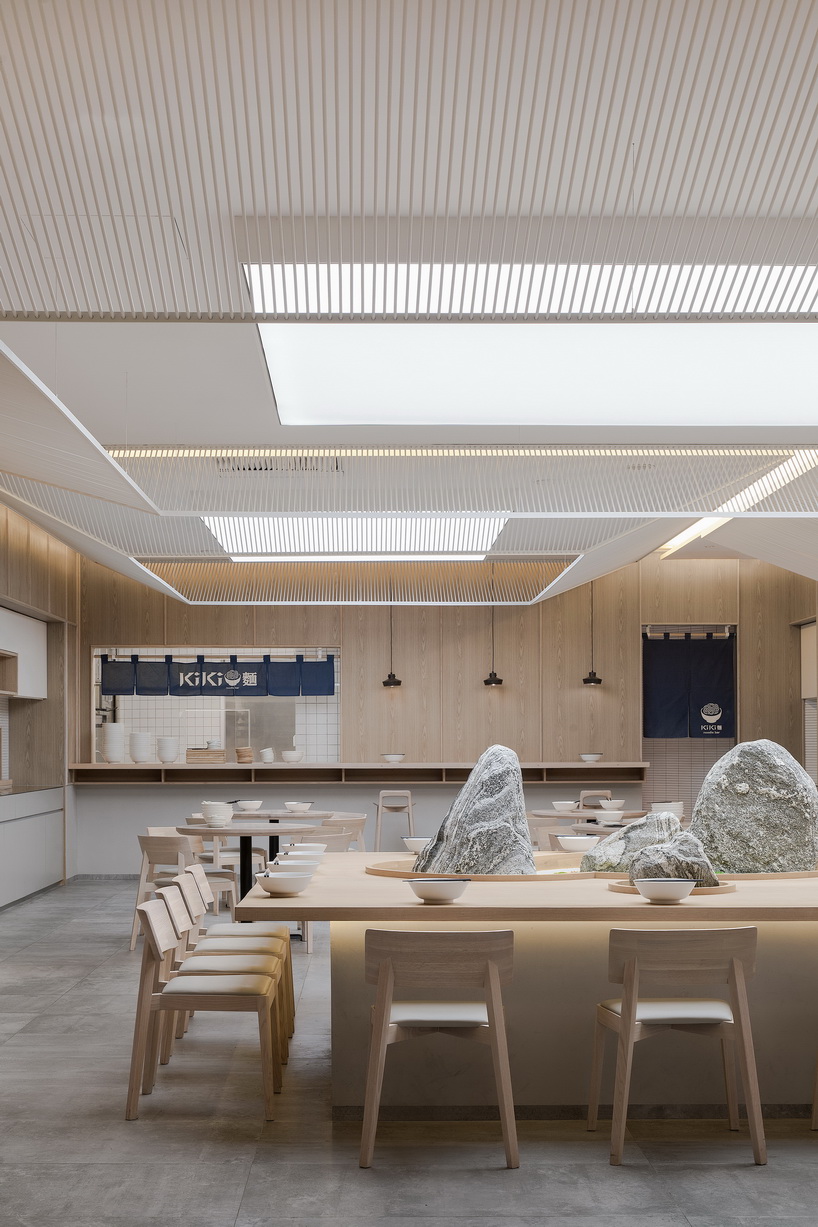
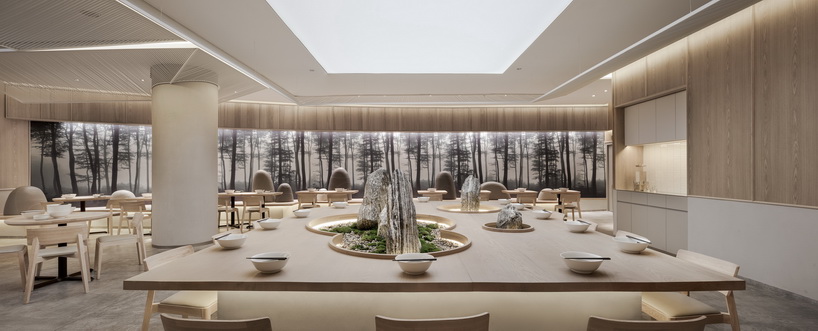
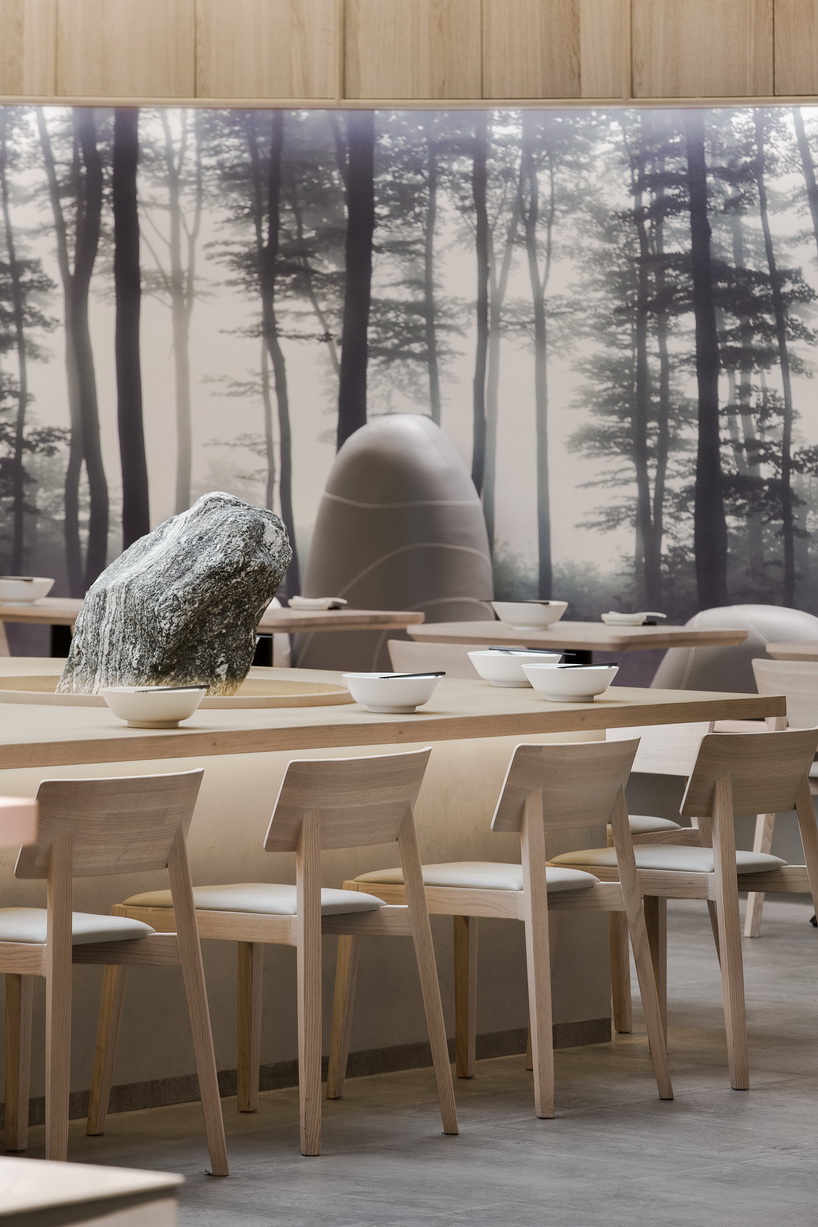
upon entering, the whole dining area opens up in front of the visitor. the large bar table can accommodate nearly 20 people, transforming the noodle bar into a shared space. the square shared table in the center of the restaurant is a carefully designed miniature landscape, with rock elements emerging from the table and evoking an earthy atmosphere within the interior.
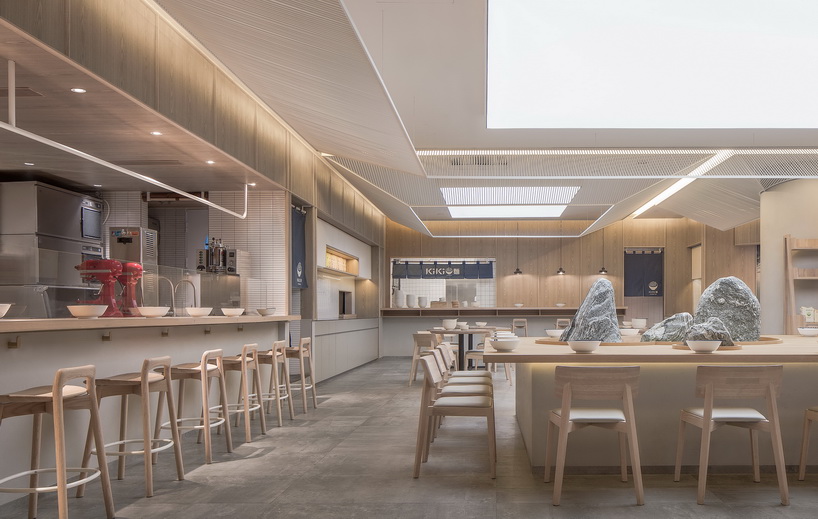
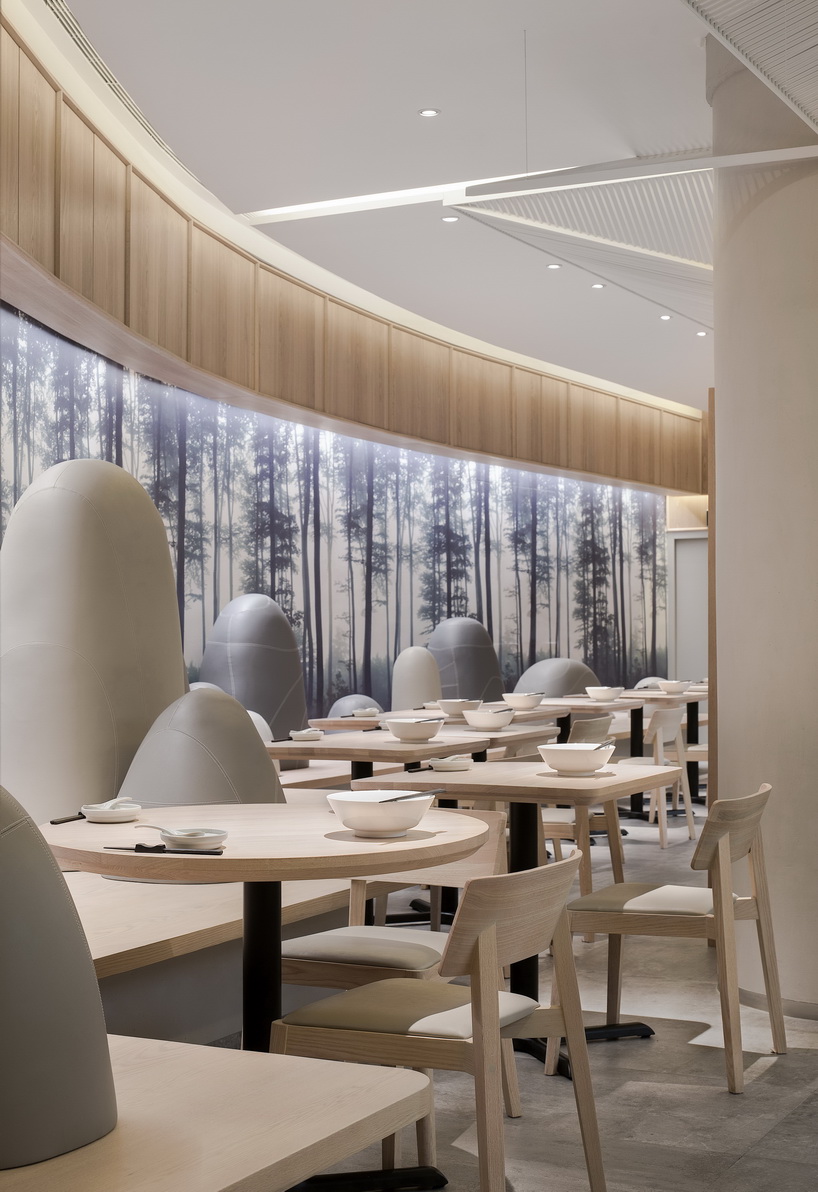
the influence of taiwanese residential design is evident in the ceiling, which mirrors the eaves and patios of classic buildings, as well as in the outdoor ‘courtyard’ layout of the restaurant itself. a curvilinear wall bearing a forest mural introduces serenity, matched by the rock-like formations and topiary that sit in the centre of tables. across the mural, there is a row of decks with ‘mountain stone’ backrests, replacing the traditional sofa.
project info:
name: kiki noodle house
architecture studio: golucci interior architecture
architects: lee hsuheng, xu jiaojiao, zhang xiaohuan
designboom has received this project from our ‘DIY submissions‘ feature, where we welcome our readers to submit their own work for publication. see more project submissions from our readers here.
shop
your own online design shop — no sales commission collected