historic french farmhouse renovated to become studio guma’s modern hécourt house
in the pastoral french village of hécourt in normandy, a renovated house has been completed by studio guma.
studio guma revives stone farmhouses in rural france
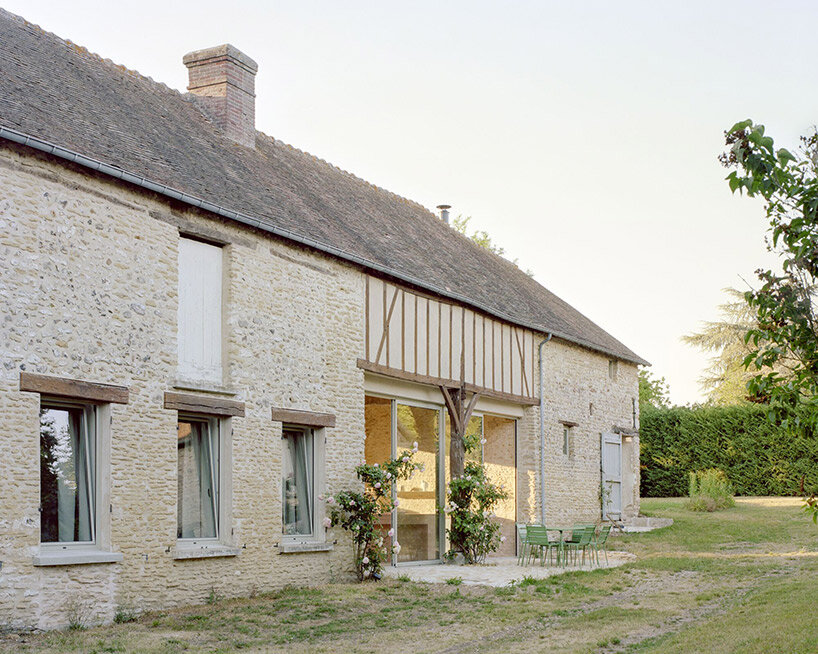
A newly renovated house has been completed within the pastoral French village of Hécourt in Normandy, showcasing the architecture of Studio Guma. This dwelling emerges as the transformation of a former farmhouse into a country dwelling. The vision behind the renovation was to create a communal retreat for the landowner’s relatives and those seeking an escape from urban life, fostering a connection with nature. With the project, the team aims to infuse modern design into the rural canvas to create a design-minded blend of old and new.
 images © Maxime Delvaux
new and natural materials shape the hécourt house
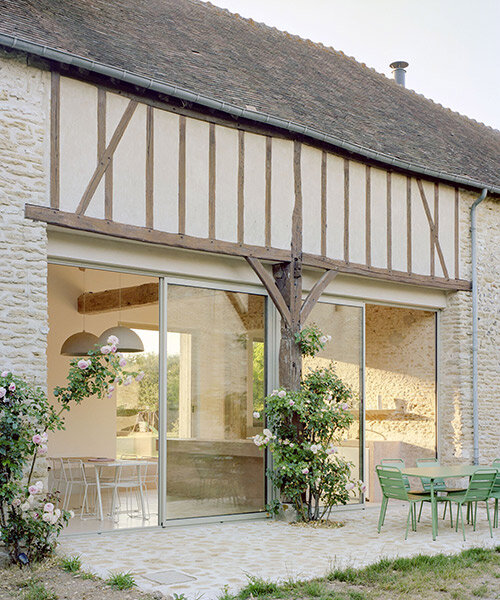
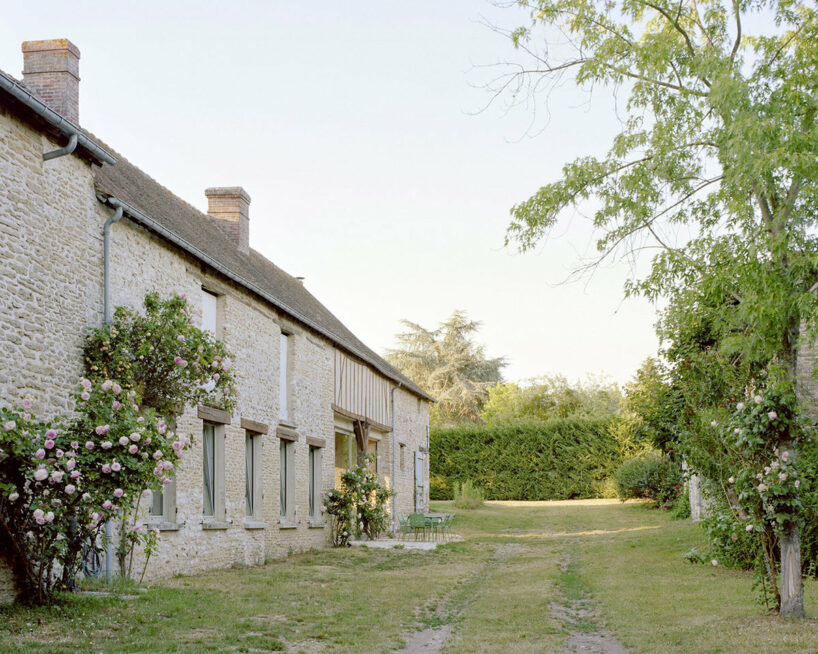
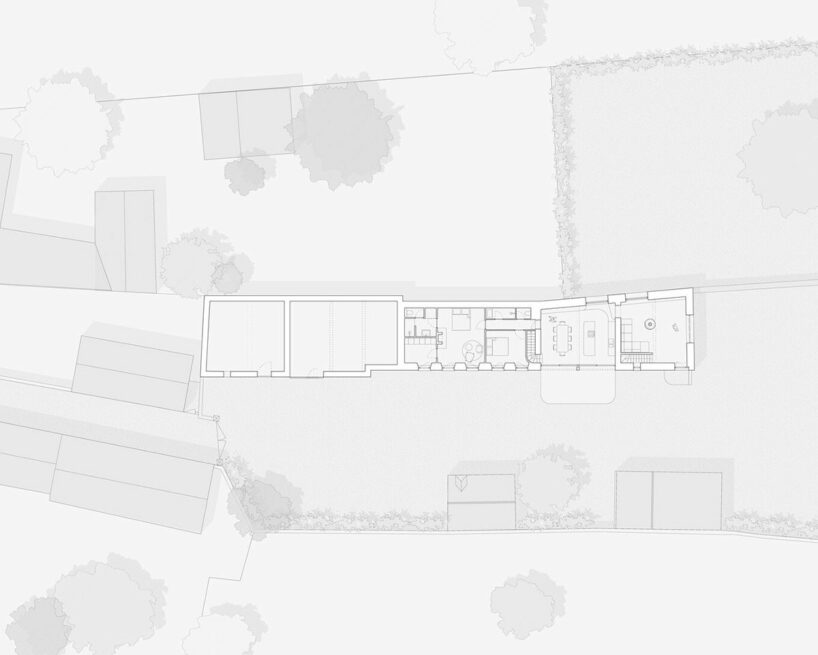
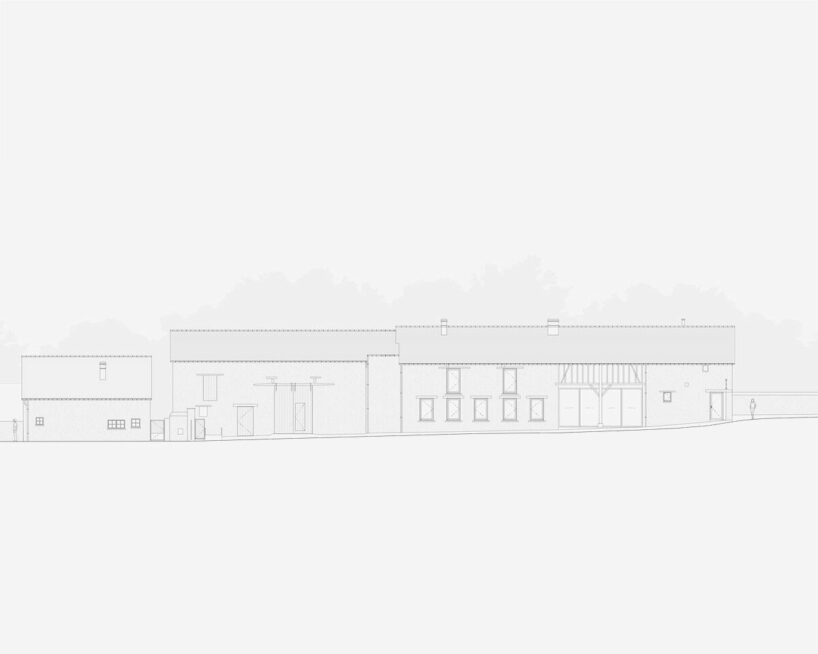
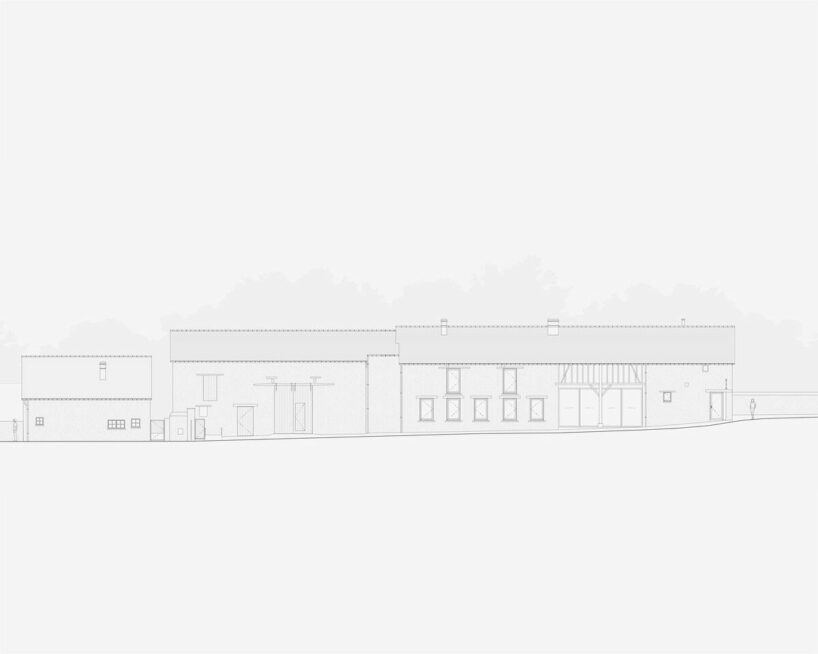
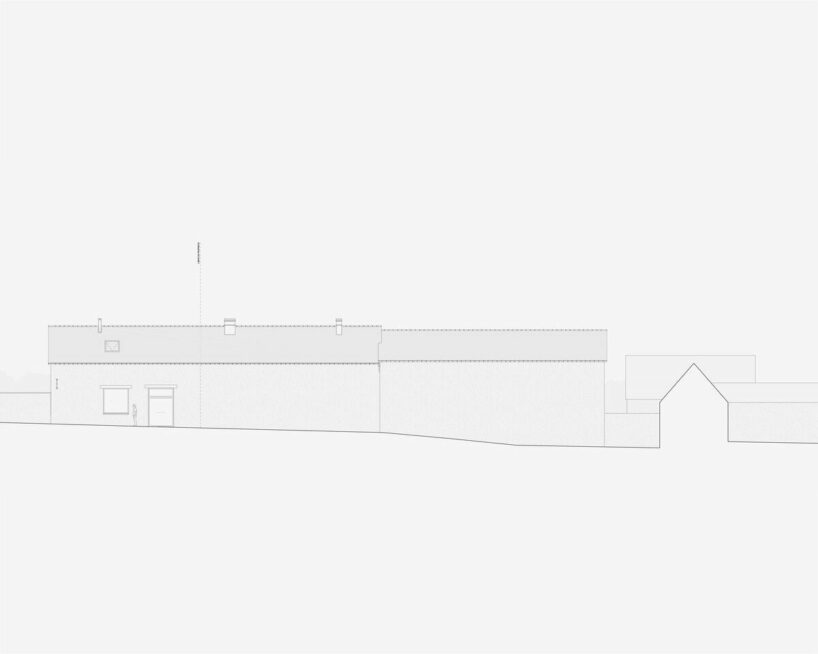
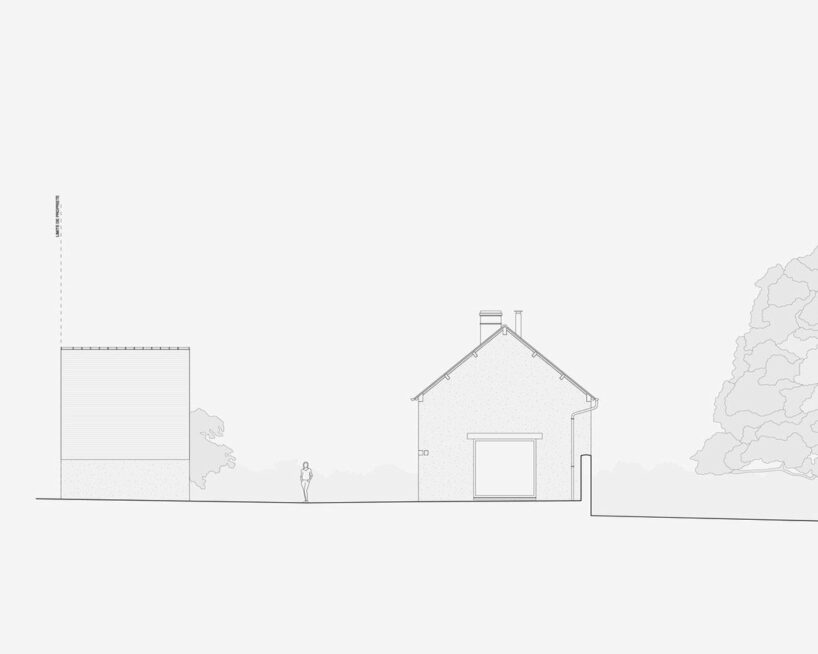
Studio Guma’s Hécourt House occupies the site of an elongated farmhouse and two quaint outbuildings, existing structures which encapsulate the rural spirit of the site. The architects employed a palette of locally sourced materials including millstone facades, red flat tile roofs, zinc gutters, and wooden lintels to contribute to an authentic atmosphere. The architectural narrative unfolds with the build volumes gently descending along the entrance path, harmoniously merging with the surrounding vegetation. Beech trees, walnut trees, shrubs, hedges, thuja rows, fruit trees, and a sprawling lawn set the stage for a project deeply rooted in preserving the material and spatial qualities of the former agricultural site.
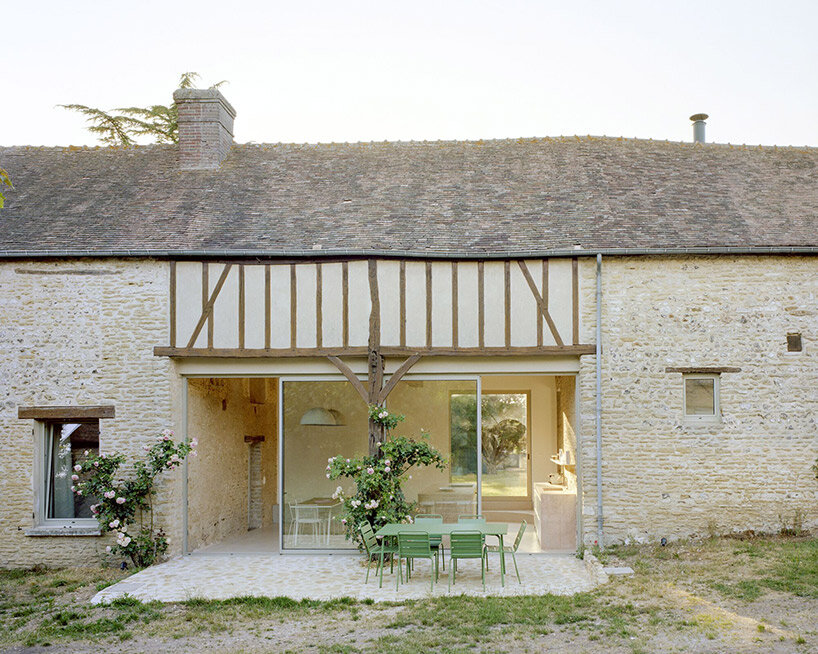
the house in Normandy’s Eure Valley is the transformation of a farmhouse into a modern country retreat
agricultural buildings adapted for a modern home
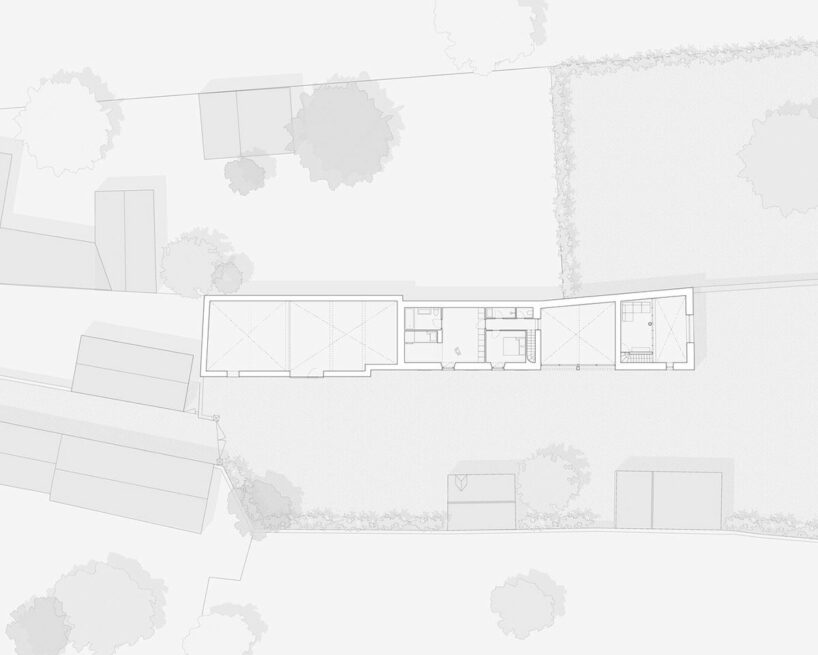
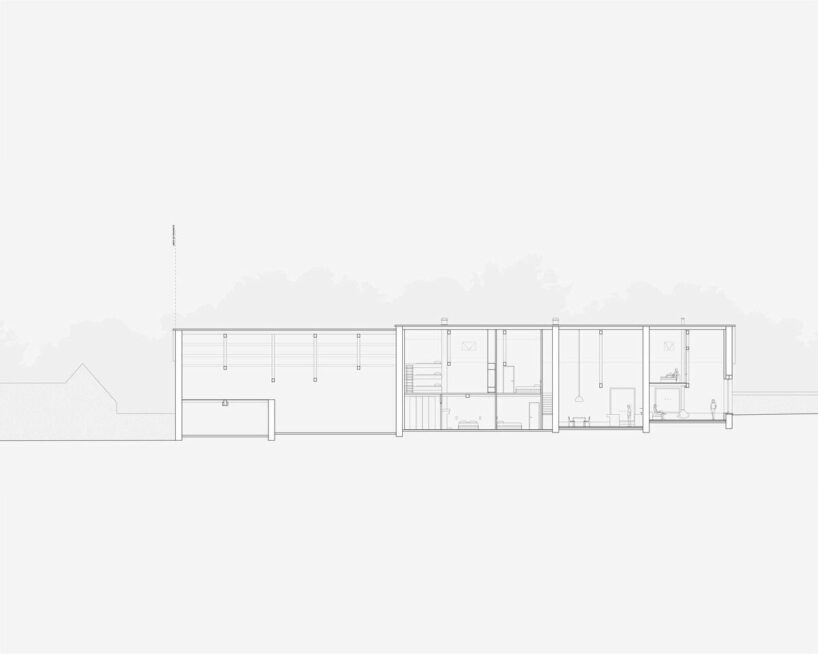
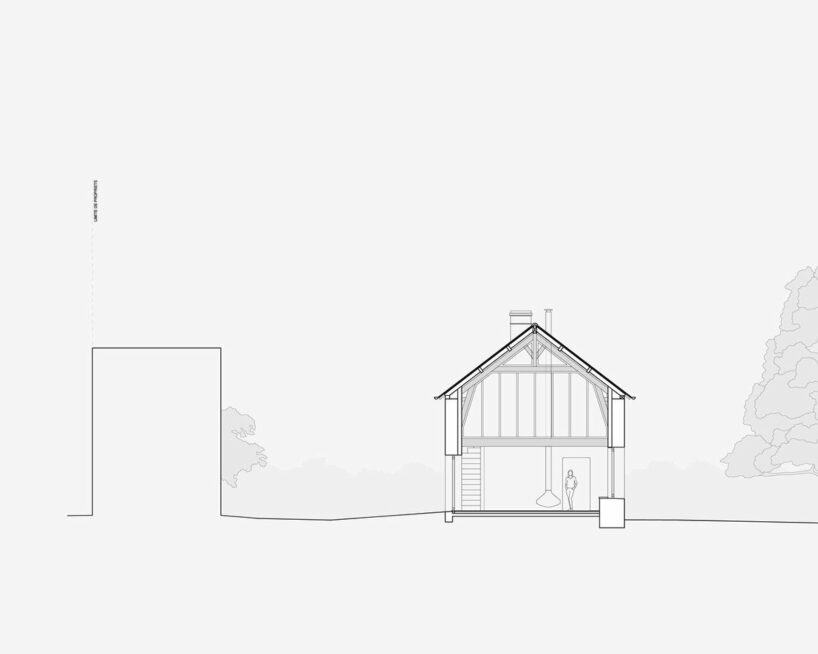
The newly organized layout of the Hécourt House is a poetic response by Studio Guma to the existing elements of the rural site. Spaces cascade, creating a seamless transition between shared and private areas. Bedrooms find their place in the lower part of the terrain, maintaining a delicate balance between openness to the garden and a sense of privacy. Preservation of walls, beams, fireplaces, and traditional vertical windows enhances the authenticity of each room, inviting nature into the private domain.
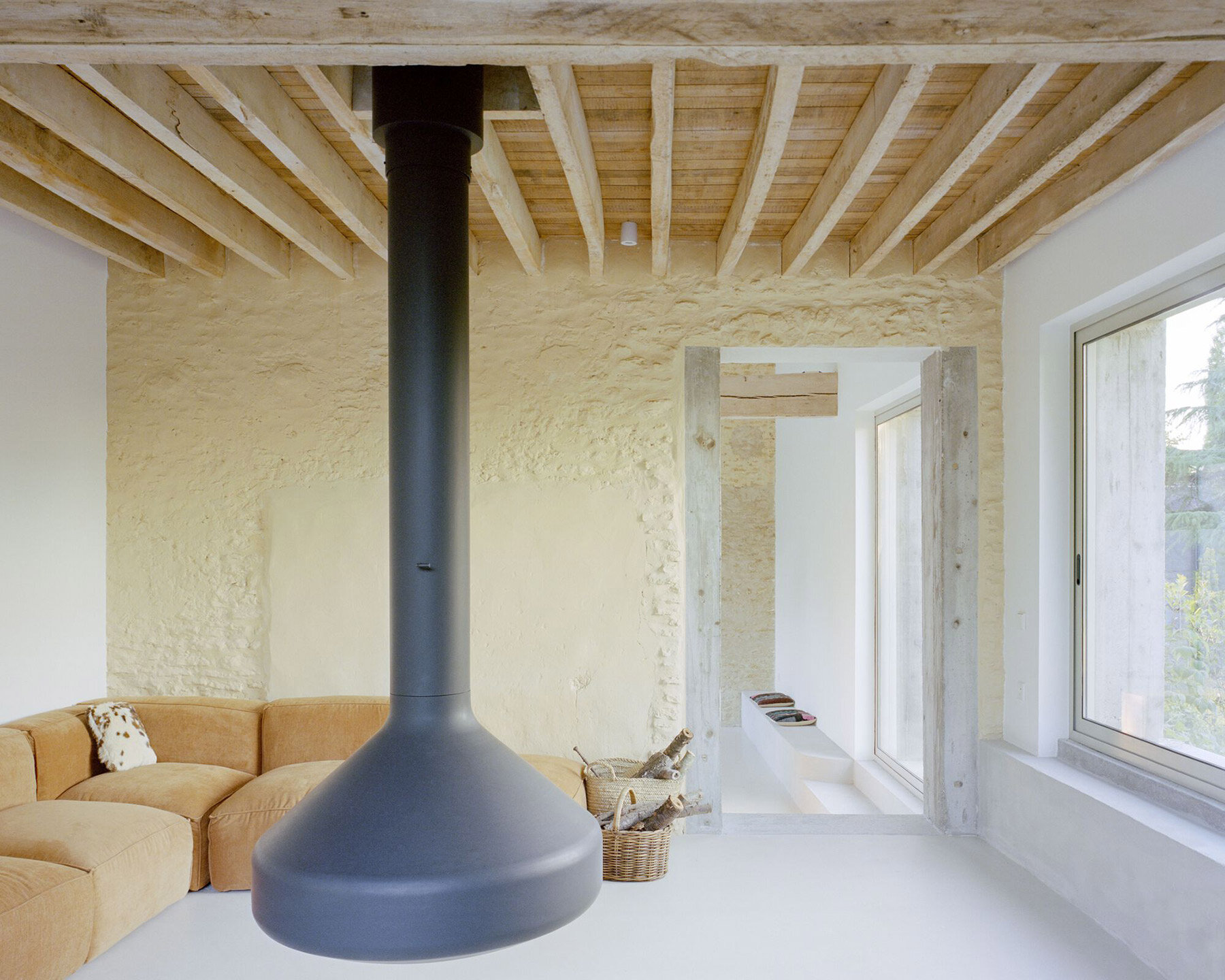
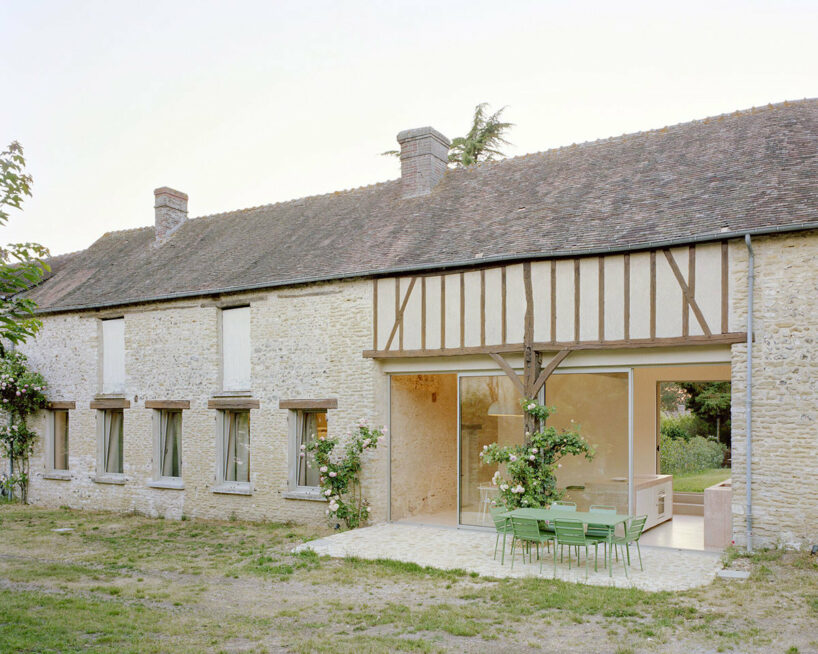
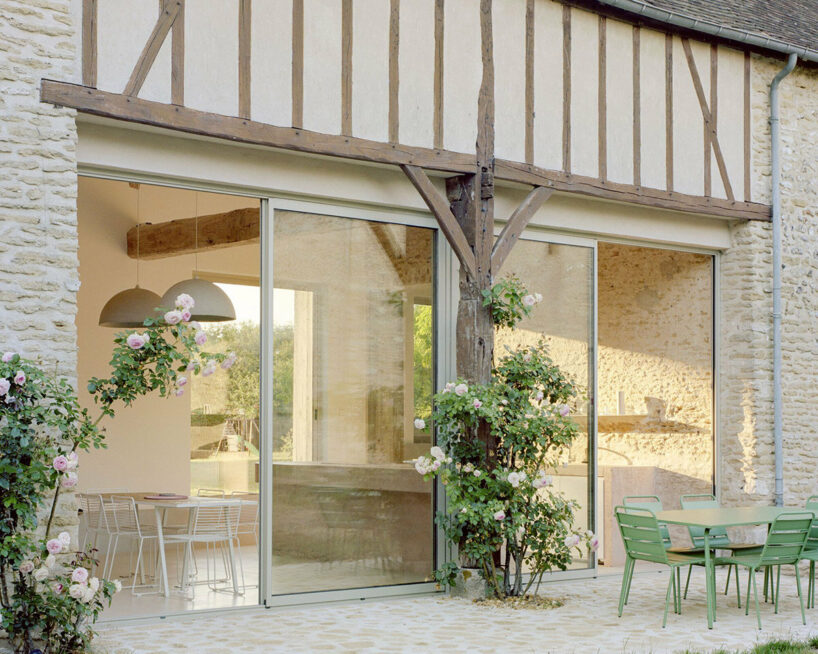
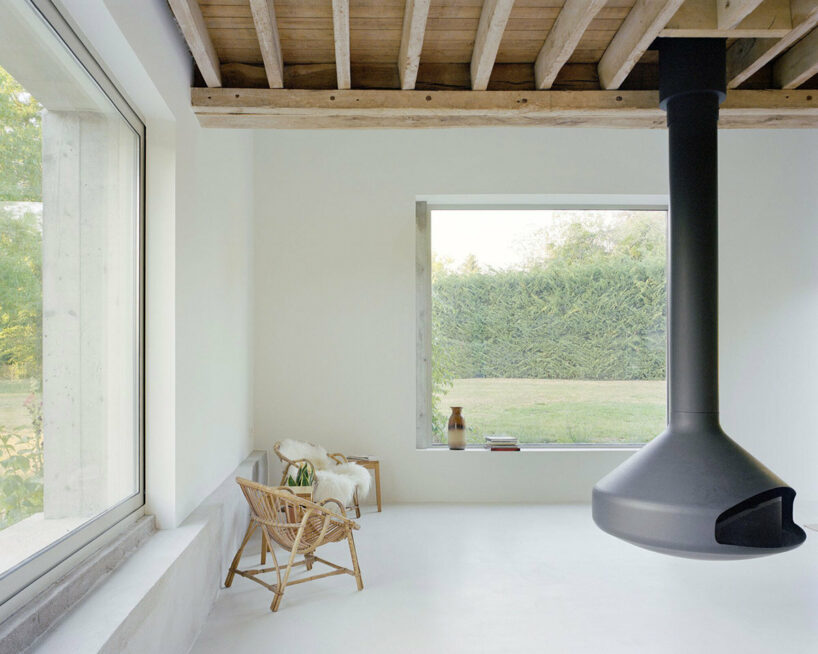
Communal spaces in the Hécourt House are thoughtfully divided into two sections, each with a unique purpose. The former cart shed now houses the kitchen-dining area, acting as the central hub where interior and exterior flows intersect. This high-ceiling space opens onto stone terraces and gardens, blurring the boundaries between inside and outside. The living room, occupying a former stable, offers a more intimate experience, with large windows framing the postcard landscapes and capturing the gentle light of dawn and dusk.
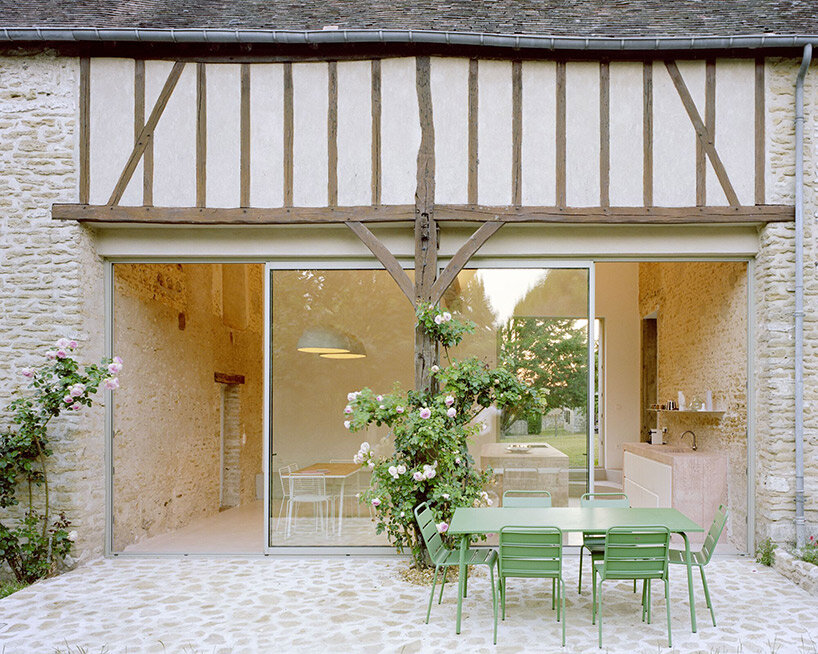
Studio Guma’s vision harmonizes with nature and preserves the original structure’s rural history
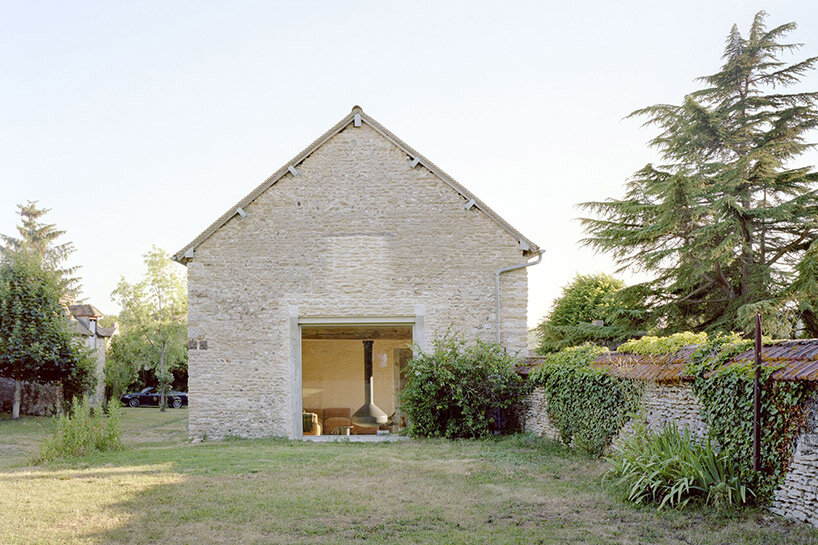
former agricultural buildings find new life between stone terraces and landscaped gardens 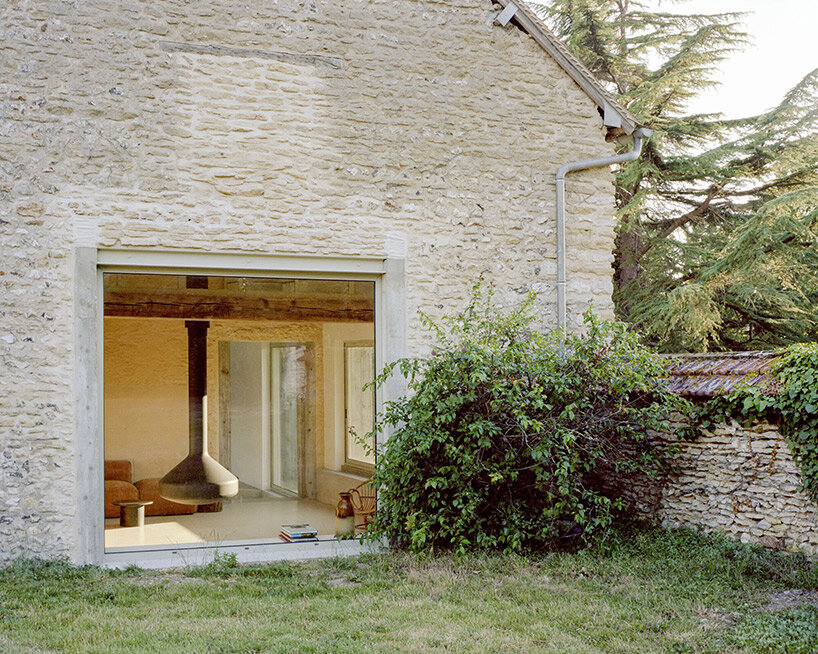
the living room, housed in a former stable, captures postcard views and soft light
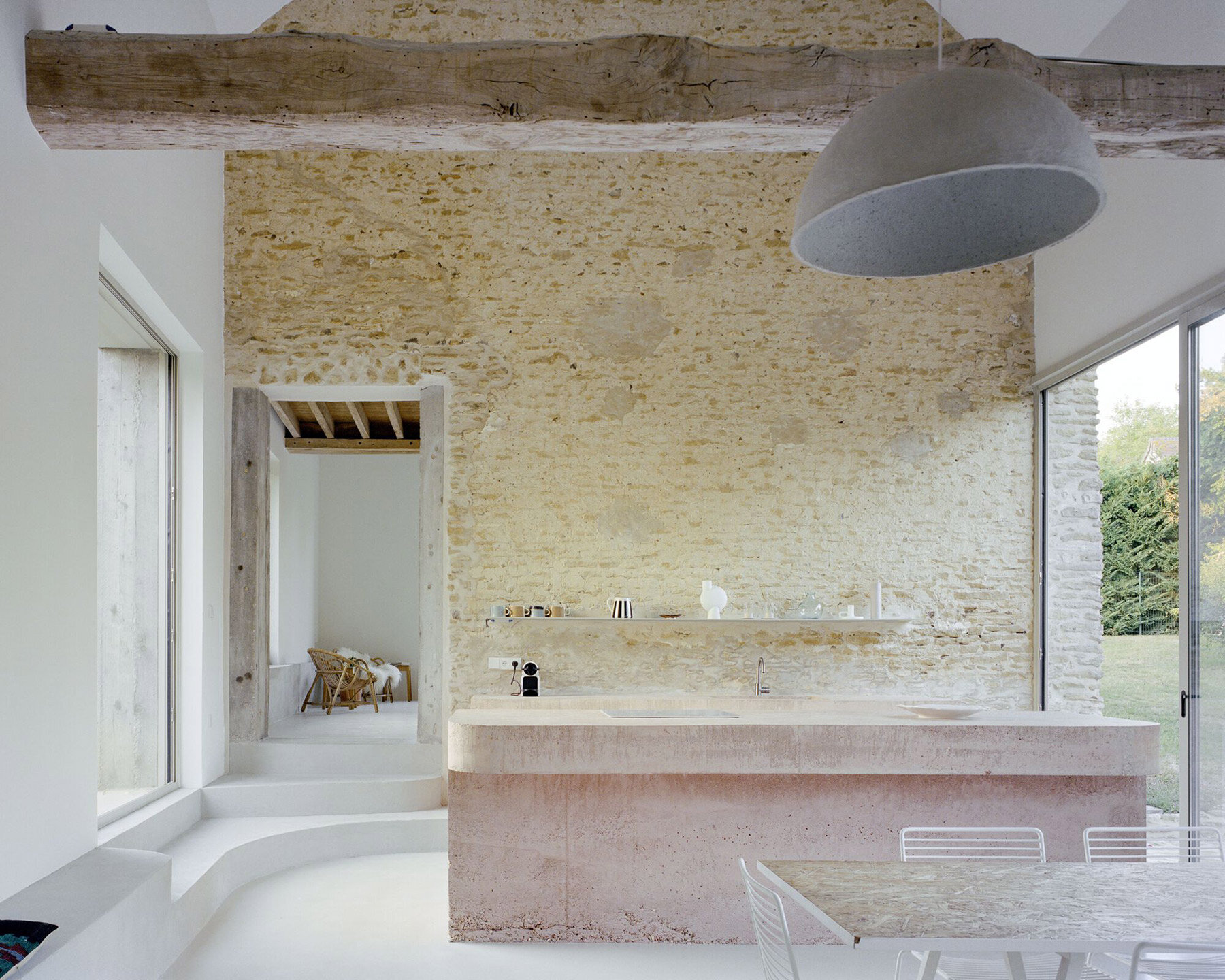
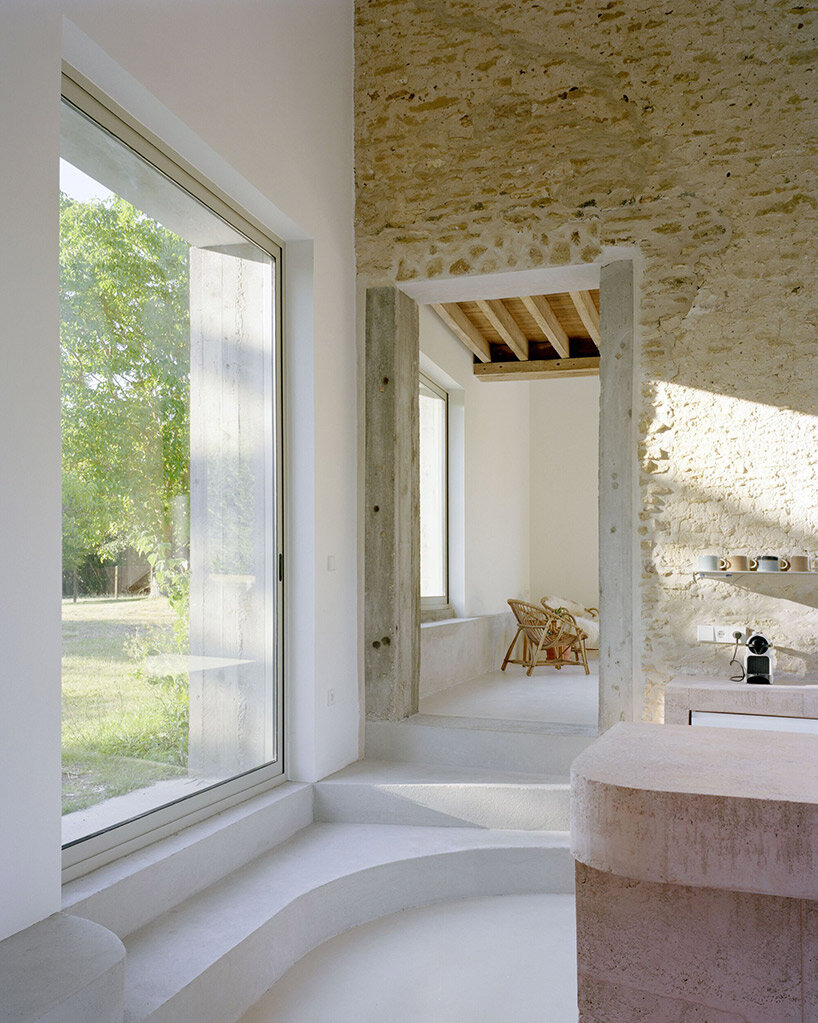
concrete, steel, and lacquered aluminum introduce modern details while preserving the building’s heritage
1/12
project info:
project title: Hécourt House
architecture: Studio Guma | @studio_guma
location: Hécourt, France
lead architect: Emmanuel Guilloux
area: 240 square meters
completion: 2023
photography: © Maxime Delvaux | @maxdelv
shop
your own online design shop — no sales commission collected