how ecoLogicStudio uses living organisms to build better spaces for living
architecture need not exclude microbes: these projects use algae, fungi and bacteria as active parts of healthier living environments.
prefer designboom on google[FEATURED]
Exploring the forest of ecologicstudio
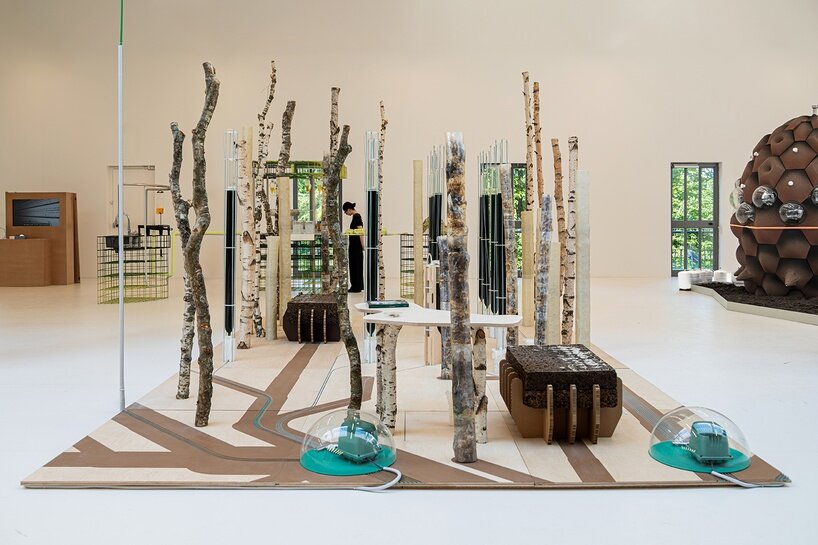
In 2025, a forest emerged in the Triennale Design Museum in Milan. It was DeepForest³, a project by the London-based design studio ecoLogicStudio, co-founded by Claudia Pasquero and Marco Poletto. It was presented as part of the exhibition We the Bacteria: Notes Toward Biotic Architecture, curated by Beatriz Colomina and Mark Wigley, who authored the book of the same title. While the installation looked as though a few saplings had risen from the shiny museum floors, what was on display was, in fact, a hypothesis about how domestic space could be transformed by processes inherent to nature, with Poletto describing it as a system constructed with a ‘fully functional and tangible biotechnological living system, grounded in the metabolic cycles of algae and fungi.’
Seeing the deep green cyanobacteria and the lichen growing from a cork bench felt like following a fungi-covered path back through the London-based studio’s projects. Since its inception in 2005 , the duo has proposed a built world that leverages the powers of nature – algae air-purifying mechanisms, waste-digesting mushrooms, and insulation that grows itself – to develop a style of architecture that grows with the environment instead of against it.
The Urban Algae Folly
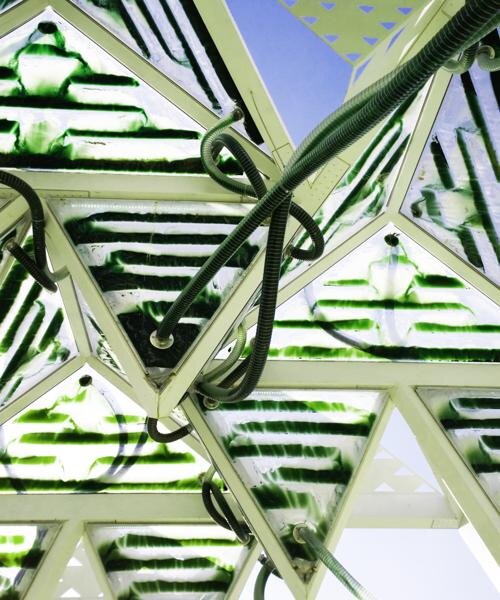
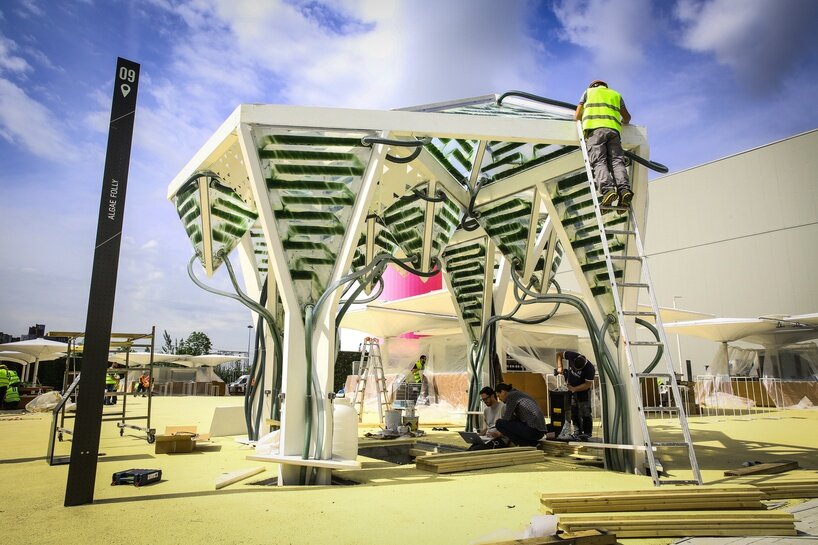
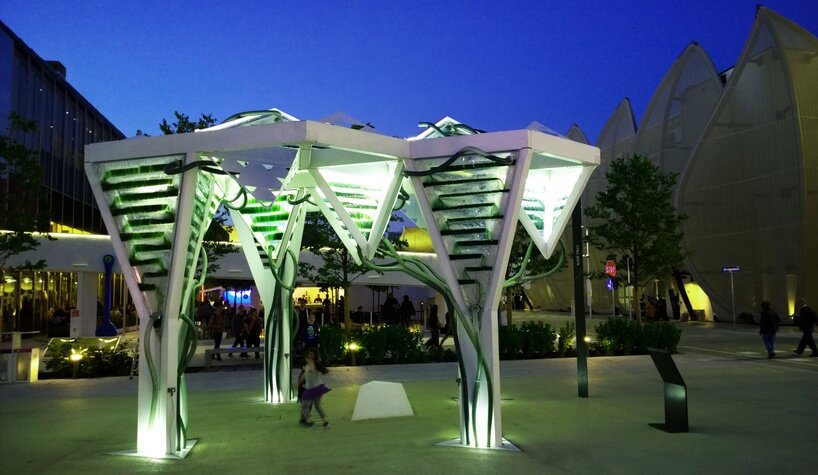
Nearly ten years earlier, at EXPO Milano 2015 Future Food District, a pavilion of triangular panels glowing with a flow of green algae was erected in the event’s central square. Called The Urban Algae Folly, the canopy provided shade through the growth of Spirulina, a type of microalgae that is highly nutritious for people while also being an effective CO₂-capturing organism. Here, ecoLogicStudio created a symbiosis between the sun, the algae, and humans. On sunny days, more algae grows in the membrane of the canopy. When a person stands under it to take advantage of its shade, the CO₂ they release continues to feed the system. The project is born from the idea that architecture should work with microbial life rather than attempt to exclude it. Here, algae become active collaborators in shaping the environment, turning a pavilion into a living, carbon-consuming system.
EXPO Milan 2015 – Urban Algae Folly
The AirBubble in Nyon
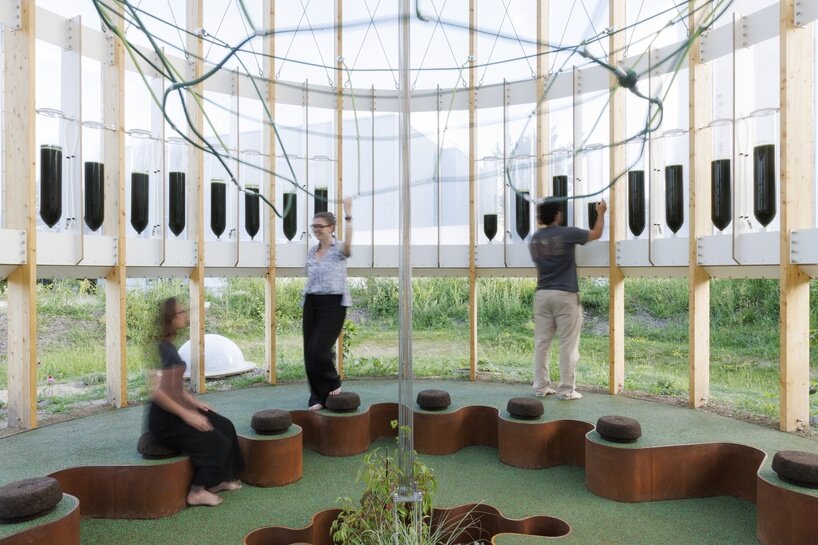
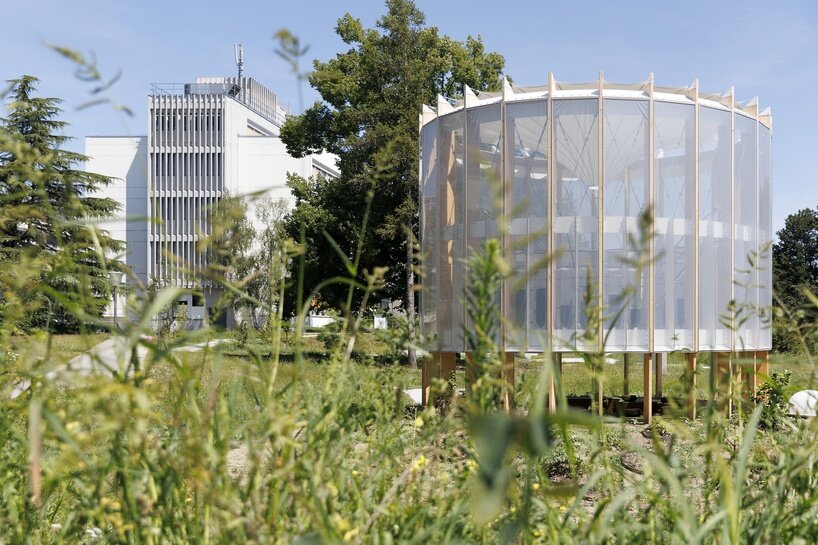
In Nyon, Switzerland, the studio developed what they call ‘the world’s first biotechnological healthcare garden that combines air-purifying algae cultures with medicinal plants.’ Here, an outdoor space, a kind of circular, tent-like structure made of semi-transparent fabric, provides a respite for its inhabitants. Inside, the circumference is lined with ‘36 large bioreactors in borosilicate glass which contain 350 litres of living green Chlorella algae cultures that can filter a flow of polluted air of 150 litres/minute.’ The project challenges the assumption that healthy spaces must be sterile. Instead, it positions living organisms as essential infrastructure, using algae and plants to create an environment where ecological and human health are interconnected.
CryoflorE at MUDAC’s Solar Biennale
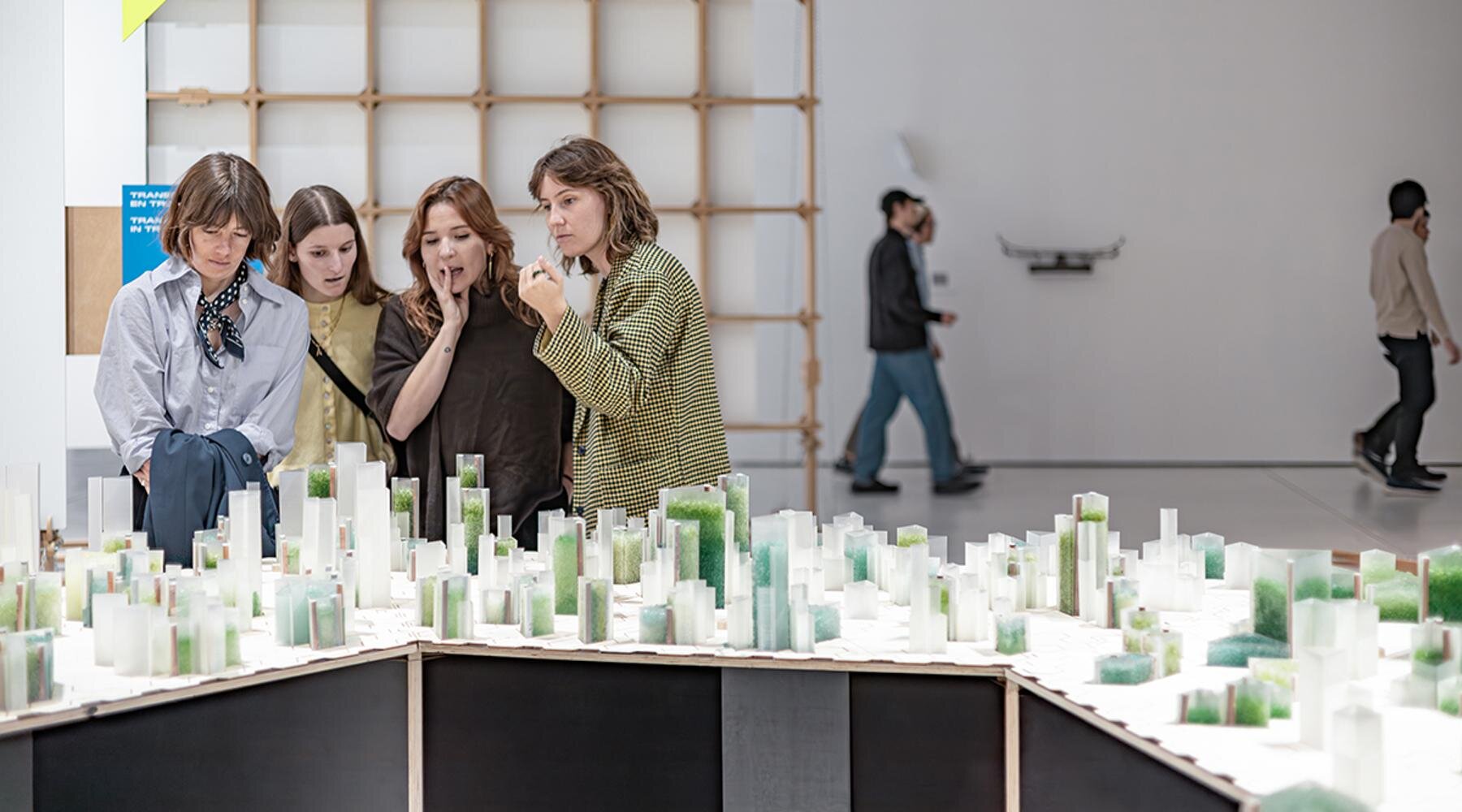
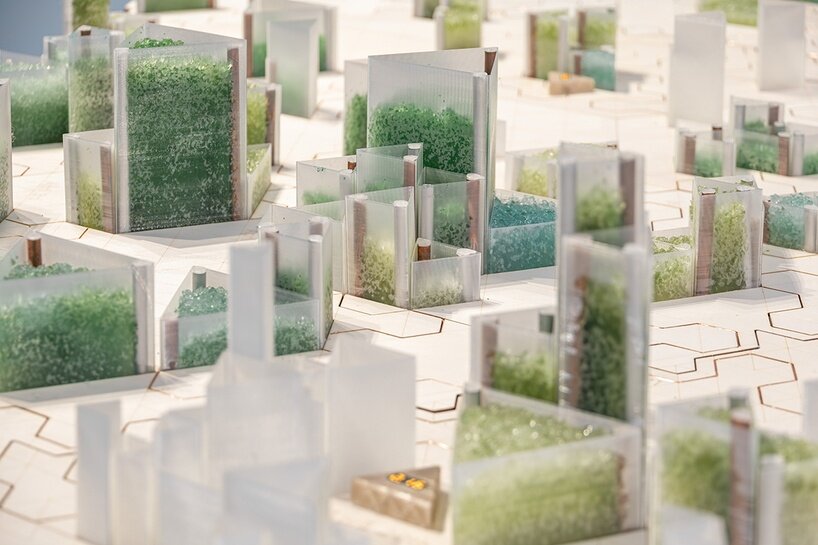
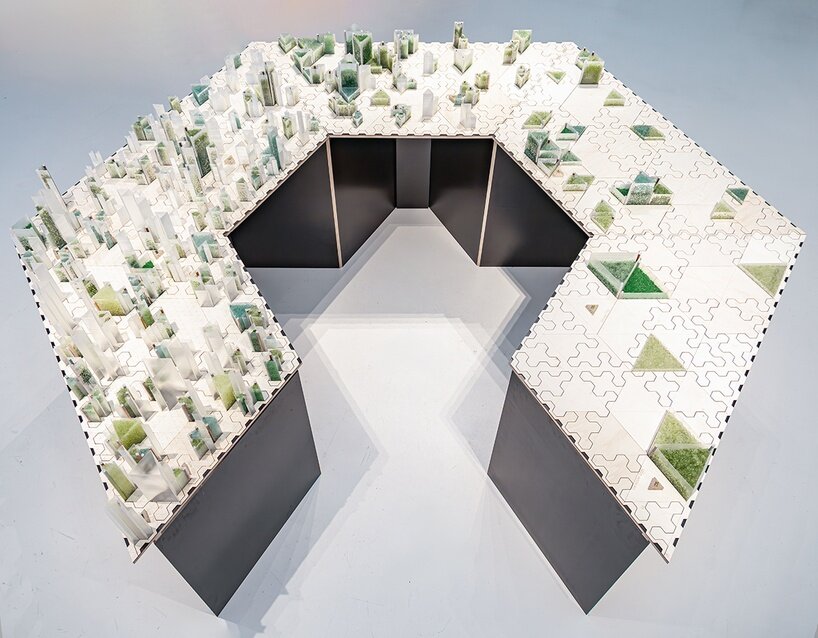
In collaboration with the Synthetic Landscape Lab at the University of Innsbruck, the studio also produced CryoflorE: a model for cyber gardening the city, which expanded this thinking beyond a singular structure and into the urban realm. As part of the MUDAC’s 2025 Solar Biennial, Soleil·s, the project takes the form of a near-hexagonal model resembling a miniature cityscape of high-rises filled with cyanobacteria.
Here, they ‘capture and channel electrons generated through photosynthesis into electrical currents flowing along the copper wires embedded in the streetscape.’ Using the energy-producing and CO₂-capturing potential of cyanobacteria, the studio takes initial steps towards developing a simulation of a city powered by bio-solar energy networks.
Constructing DeepForest³
In creating DeepForest³, Pasquero remarked, ‘We are now more and more aware that our own nature is cyborgian and collective, and that our own identities extend far beyond the limits of our bodies. We are microbial ecosystems, we are algorithmic networks. It is a necessary consequence that our home becomes an extension of these ecosystems and networks. Our home is our microbiome.’
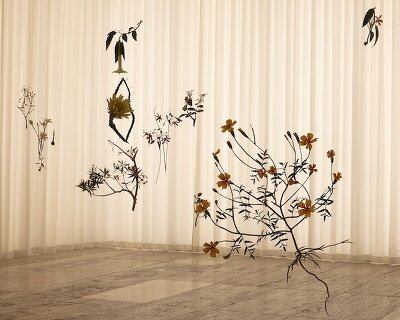
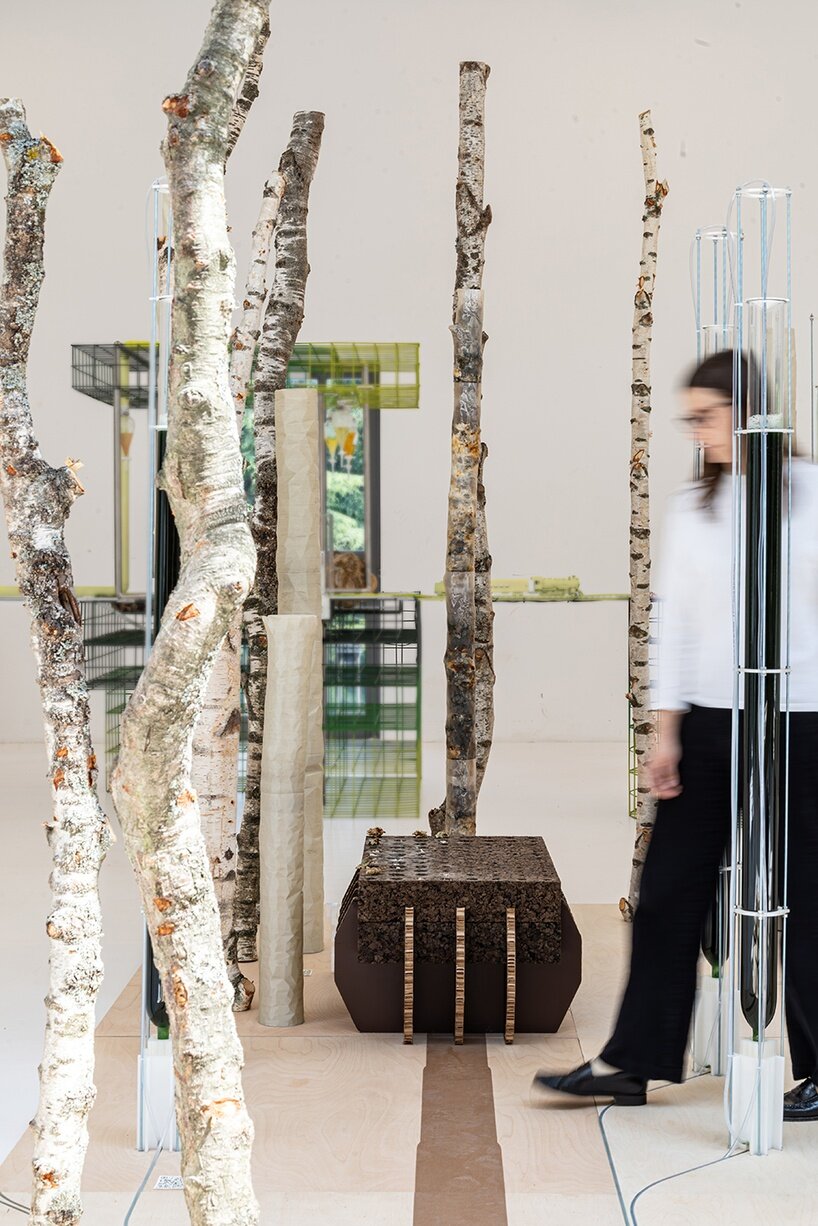
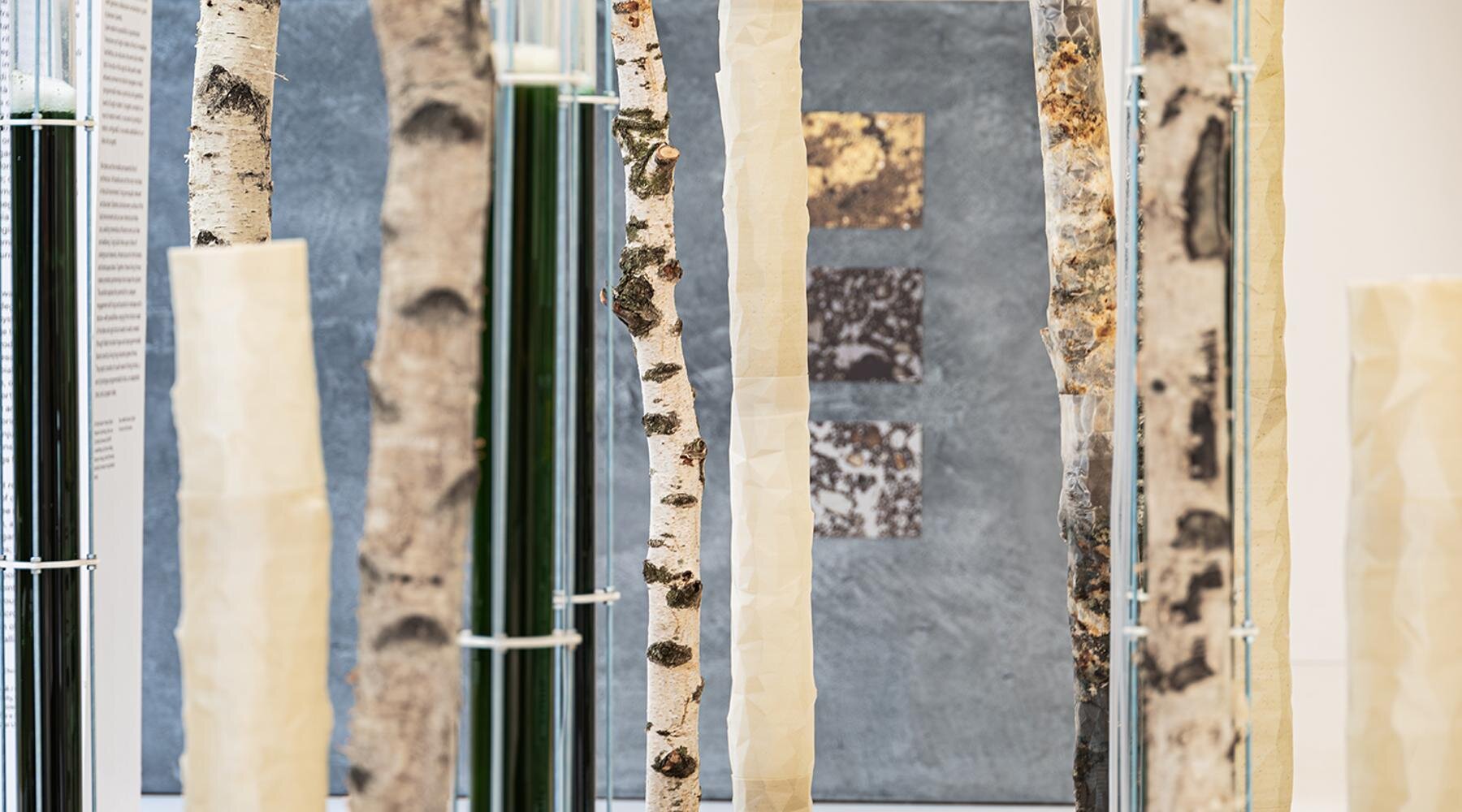
The installation itself, on the sun-filled upper floor of the Milan design museum, looks like an abstraction of a forest. There are no leaves, dirt, or moss. Instead, there is a careful arrangement of what look like birch trunks, stripped of their twigs and standing upright on a textured floor. These are what ecoLogicStudio calls ‘biodegraders, built from 3D-printed bark-like shells made of algae biopolymers, [which] host living mycelium networks.’ They get their nutrition from coffee grounds and develop a layer of sinewy material that acts as a kind of insulation.
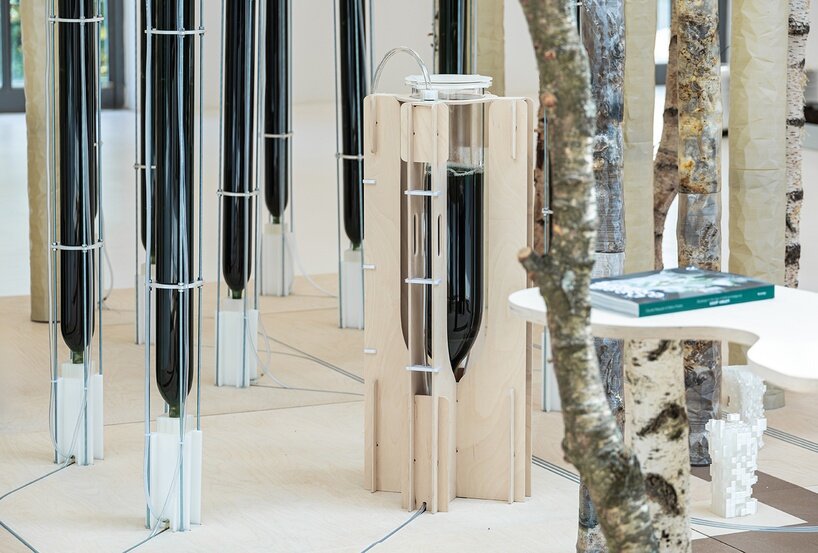
Between these structures are a series of glass containers holding ‘photosynthesizers, 50 liters of living cyanobacteria, actively capture CO₂ from the gallery environment,’ which serve as living, breathing filters. Lastly, there are ‘carbon storers,’ which digest waste material and give life to living lichen. Among these elements are the tubes, seams, and cords that make this environment possible. In this installation, ecoLogicStudio proposes not a traditional space for living, but a space that lives, grows, digests, and filters. It draws on the logic of the forest to propose an alternative way of living, in which human technologies take a back seat to organic processes.
Colomina, Wigley, and We the Bacteria
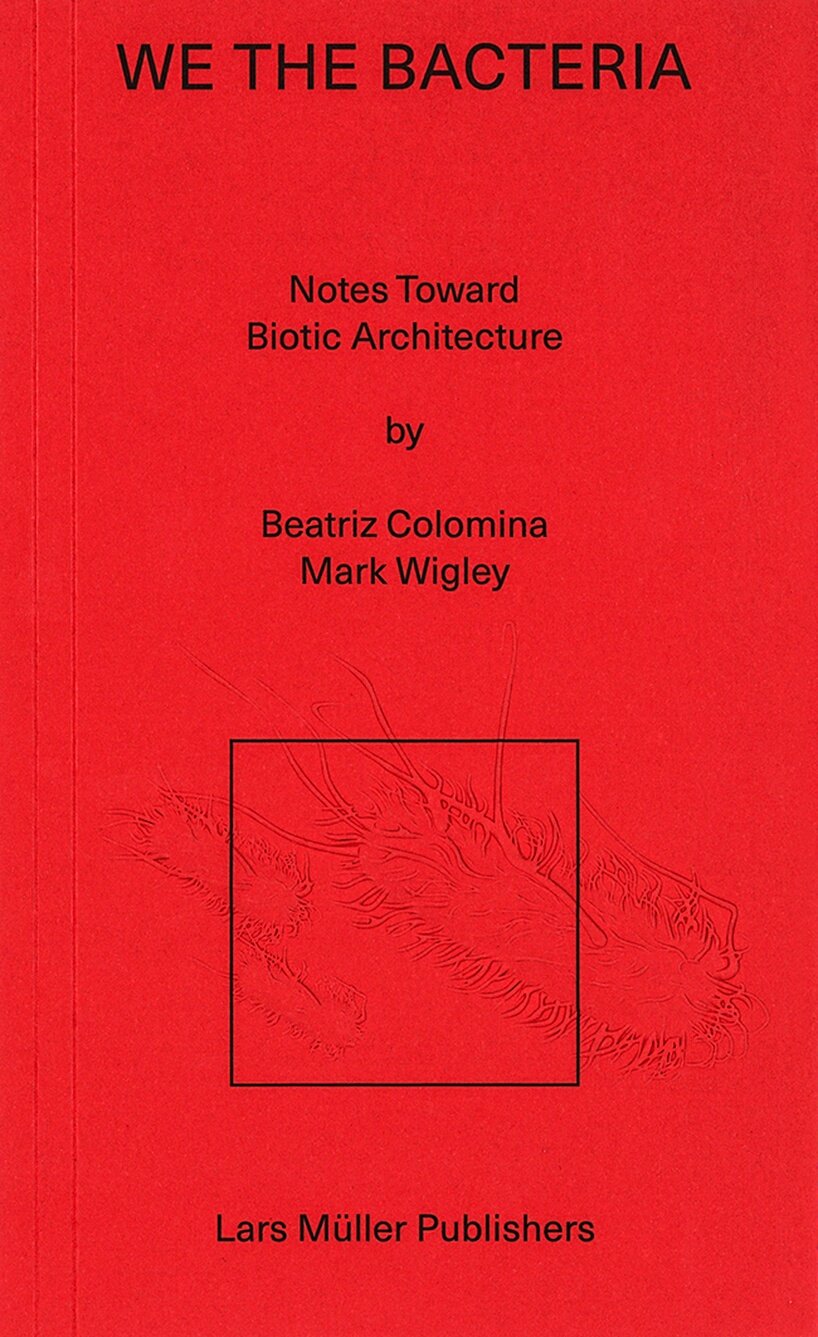
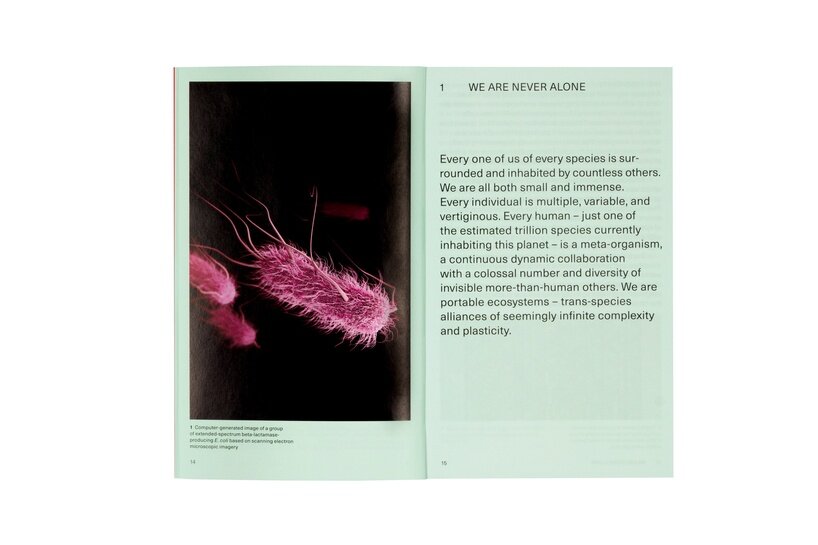
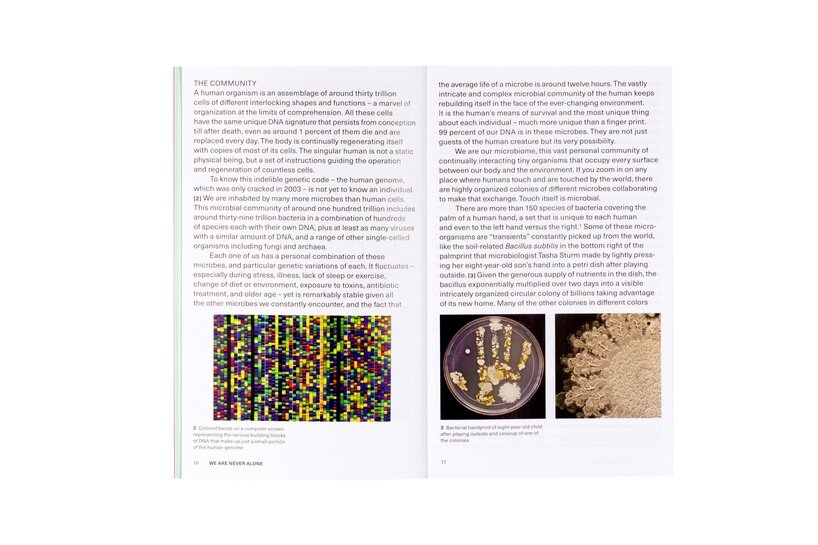
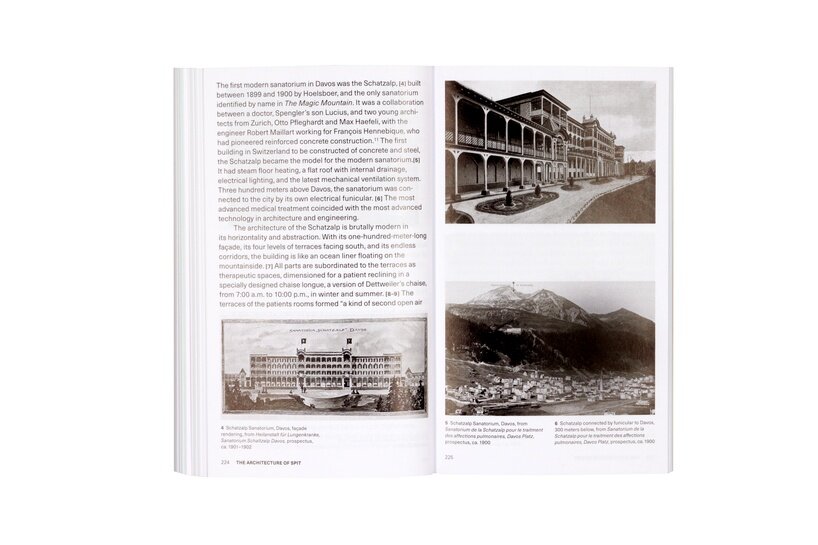
DeepForest³ serves as a case study for the ideas presented in We the Bacteria. Written by Colomina and Wigley and published by Lars Müller Publishers, the book acts as a sequel to their previous book, Are We Human? In We the Bacteria, the authors examine the sterility of contemporary architecture – its impulse to kill bacteria and what we interpret as germs and grime – and reposition this hostility as a threat to both human and planetary health. Within the text, they write, ‘this book is covered in microbes,’ offering preliminary evidence of how pervasive single-celled organisms are. The authors use evidence of disease in industrialized, developed spaces to encourage a return to the microbial, advocating forms of design that embrace environments in which bacteria can thrive.
We the Algae, Fungi, and Carbon as Well
Although We the Bacteria centers on the microbial world, it offers an equally useful framework for understanding ecoLogicStudio’s wider practice. Across these projects, algae, fungi, and carbon become active agents in architecture, challenging the separation between the built environment and the living world.
Together, these projects suggest that architecture can do more than accommodate human needs; it can actively support the organisms and ecological processes with which we share the planet. When done intentionally and carefully, these decisions can result in net-positive outcomes for human life as well. In these spaces, bacteria, fungi, and other organisms are not contaminants to be eliminated or resources to be exploited, but participants in the environments we inhabit. The home and the building become parts of a wider living system, proposing a form of mutualism in which human well-being is inseparable from the health of the more-than-human world. Rather than building against the environment, ecoLogicStudio proposes an architecture that works with it, using the capacities of living organisms to rethink how we construct our homes, buildings, and cities.
project info:
studio: ecoLogicStudio
projects: DeepForest³ (2025), The AirBubble in Nyon (2024), The Urban Algae Folly (2015), CryoflorE (2025)
This article is part of designboom’s POSTHUMAN UTOPIAS chapter, exploring what happens when humans are no longer the measure of all things. These stories rethink our relationship with the planet through interspecies architecture, living materials, regenerative landscapes and emerging technologies – learn more here! The chapter is presented in partnership with INDX|GLOBAL – a global cultural platform placing architecture, design, and creative intelligence in conversation with the world.
Each designboom editorial series explores one theme in depth through projects, interviews, features and news across architecture, design, art and technology. Discover more chapters here, and get in touch if you’d like to submit a story through our submissions portal or contact form.
shop
your own online design shop — no sales commission collected