LI WENXI architects encloses a house in a permeable boundary wall in chinese village
IN.architects did not intend to isolate the house but treat it like a selective membrane that allows people and views to pass through.
prefer designboom on google[FEATURED]
the client requested LI WENXI architects to build a house for his parents in his hometown of luohe city in the henan province of china. the site included his 30-year old family home, which the owner thought could be rebuilt into a space that provided a better quality of life for his aging parents. the site sits at the end of the village facing the fields and mountains in the distance, immersed in the landscape.
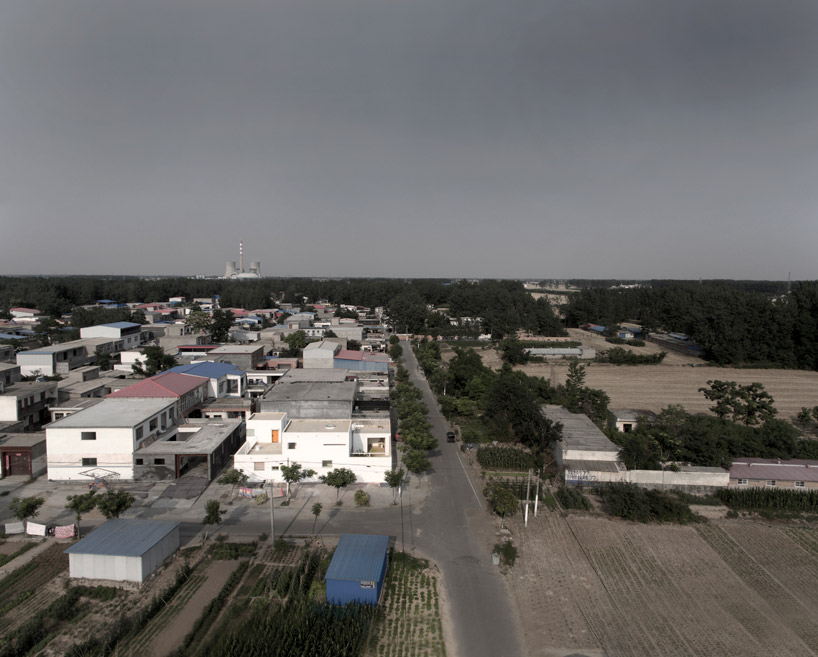
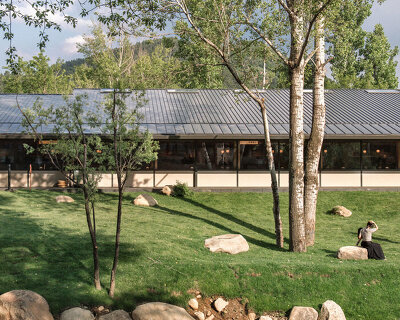
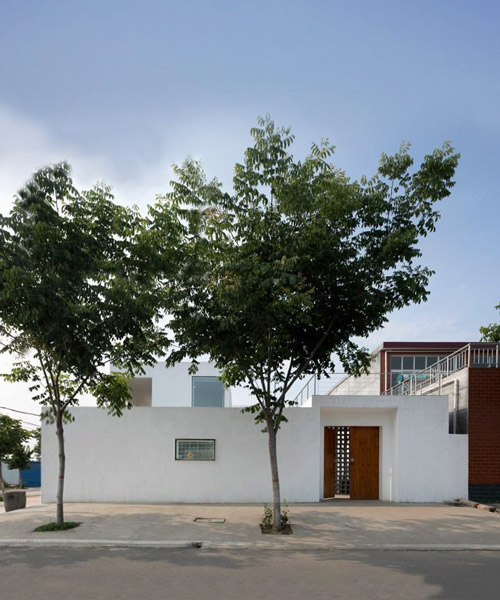
the architect first built a boundary wall enclosing the house, not as a design decision but rather as a local requirement. however, when building it, the architect did not intend to isolate the house but treat it like a selective membrane that allows people and views to pass through and also serve as a starting point for the concept.
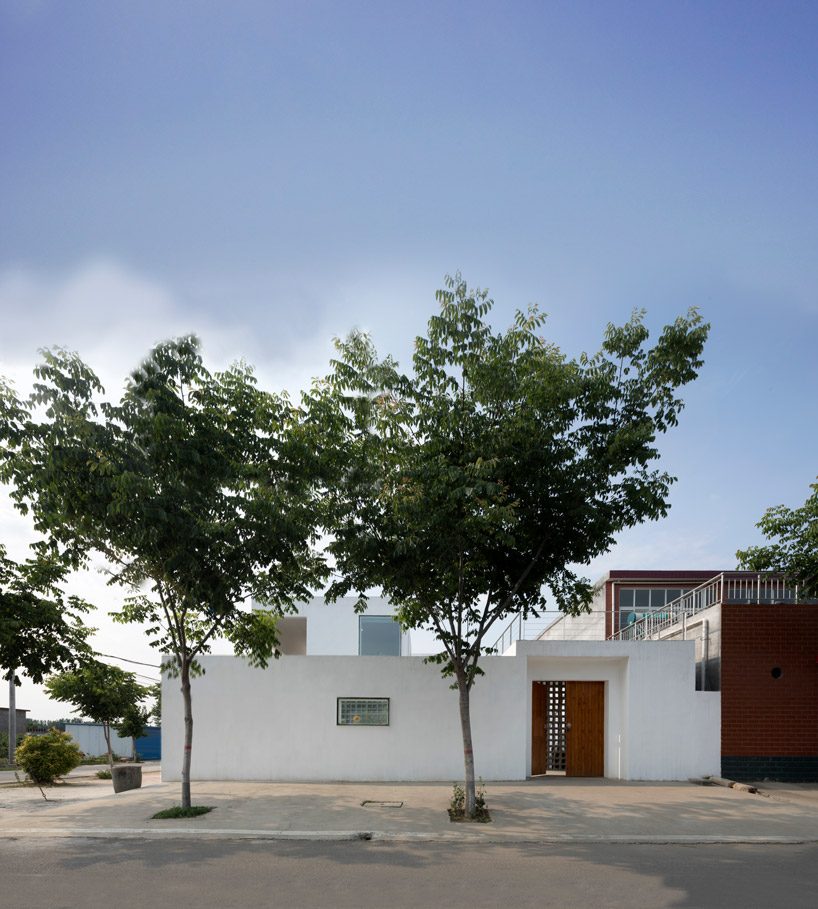
the designer tore down the existing red brick walls and used the remaining materials to build the new home. he removed the original potted trees present in the house and placed them at the house’s entrance, and loosened the concrete floor in the yard to reveal moist soil and glass. by keeping some element of the previous home, the architect attempted to retain memories that would be passed down to the new building.
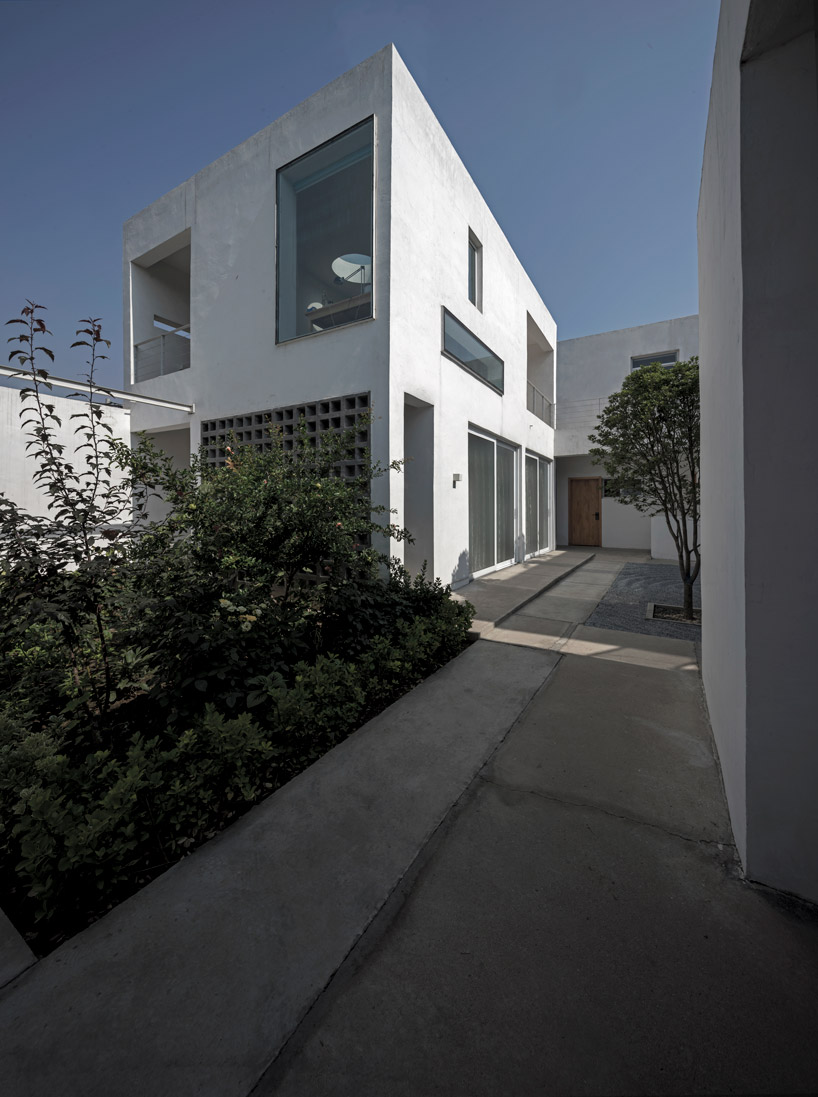
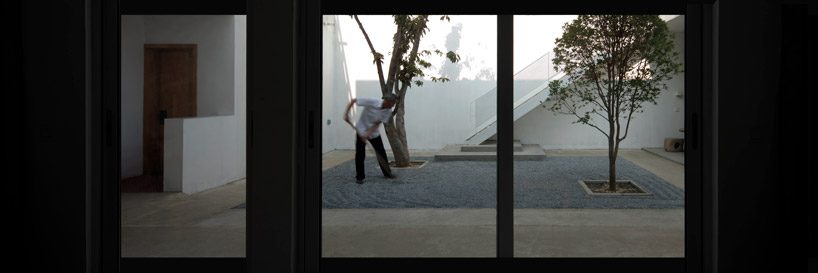
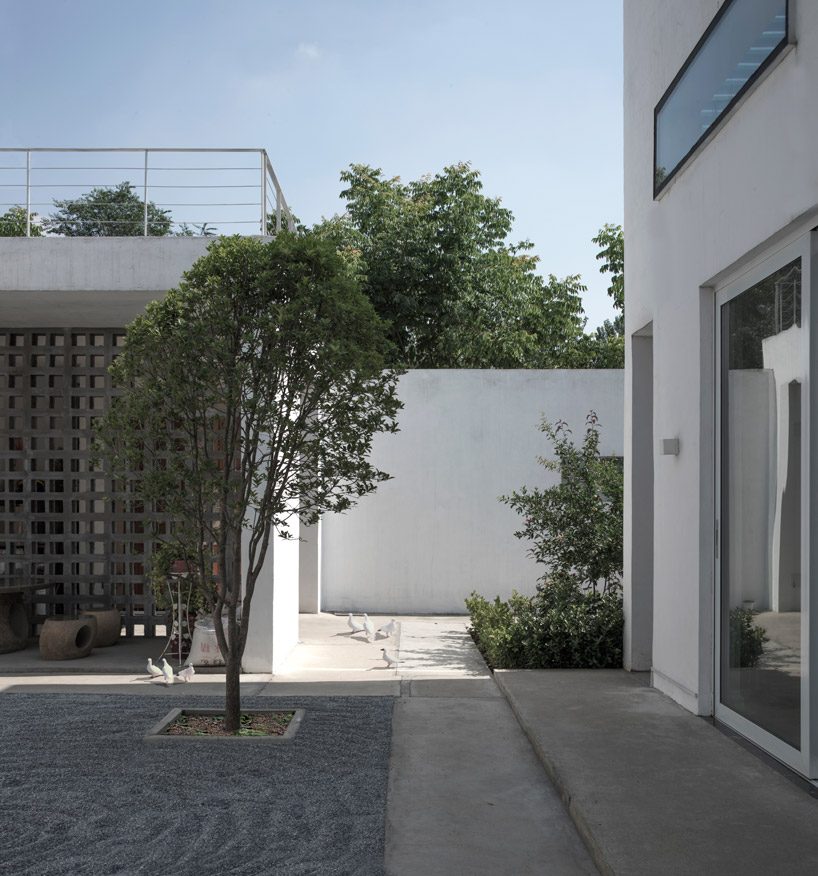
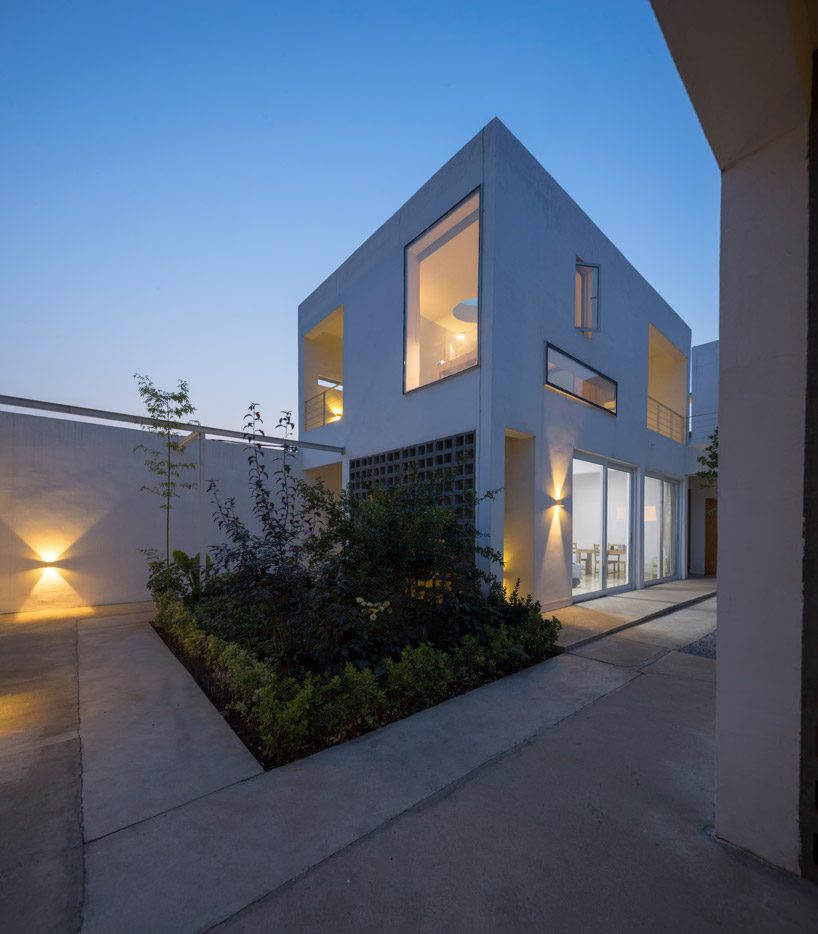
the house’s formal organization is shaped around the boundary wall. the boundary space holds nine distinct moments between the body and the wall, analogous to the treatment of the boundary wall found in traditional chinese dwellings. the entrance is located on the south side of the property, close to the neighboring family member. when entering the house, the path winds around the boundary wall clockwise passing through pavilions, walkways, steel structures and a small courtyard. on the west, guests can enter the living room where an extensive opening frames the courtyard and magnolia tree, or ascend to the second floor.
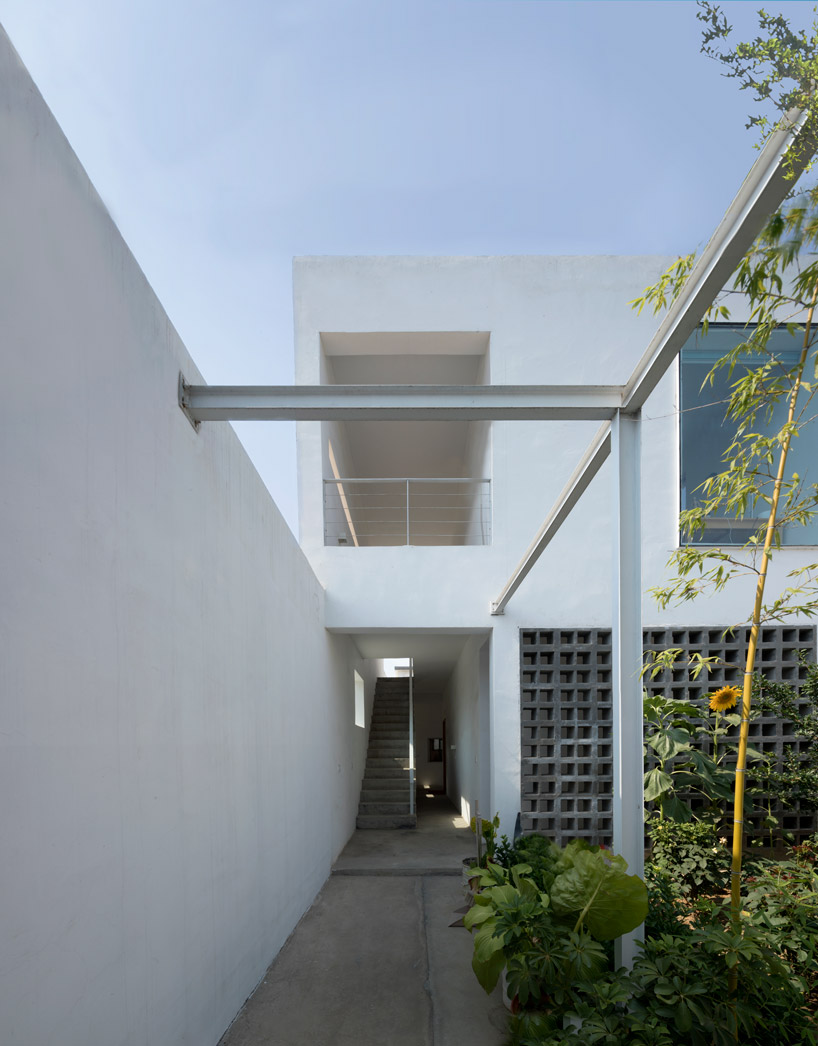
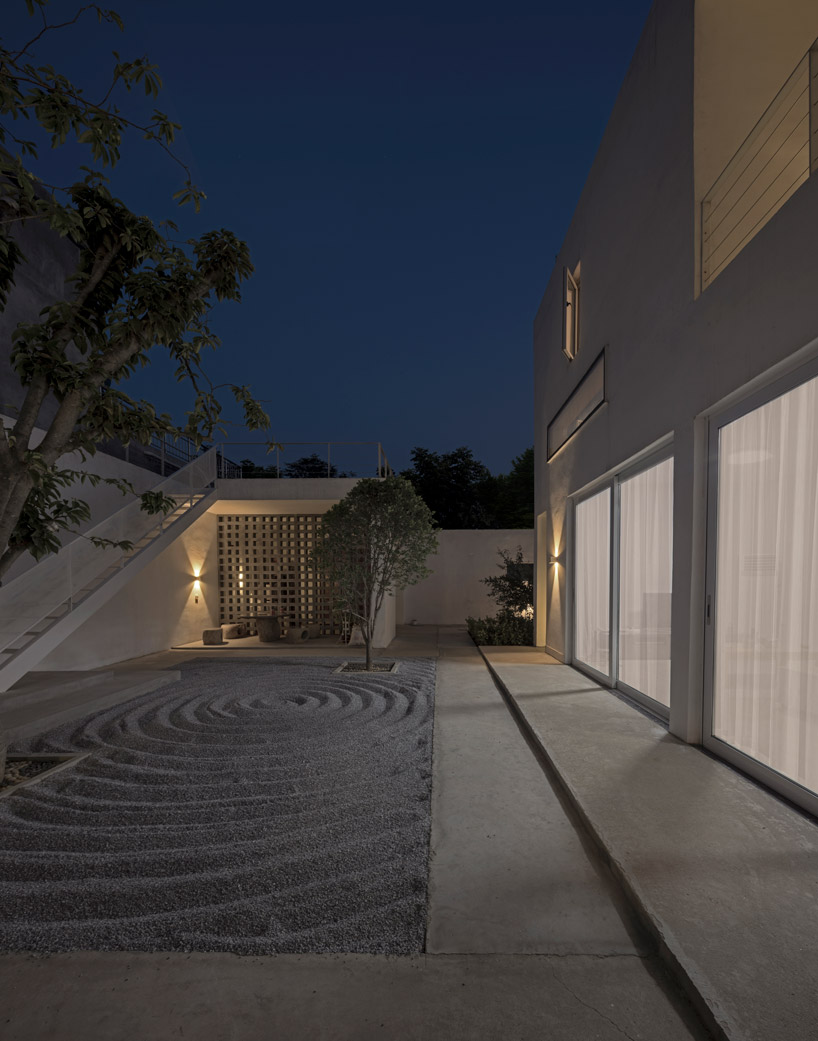
in the center of the site, in the middle old house, there was a sweet-scented osmanthus tree and a magnolia tree that reminded the owners of their children’s youth. while the low-growth osmanthus tree is still blooming, the magnolia tree died a couple decades ago. so the owner asked to replant a magnolia tree in the courtyard, acting as a main feature when it blossoms in the spring.
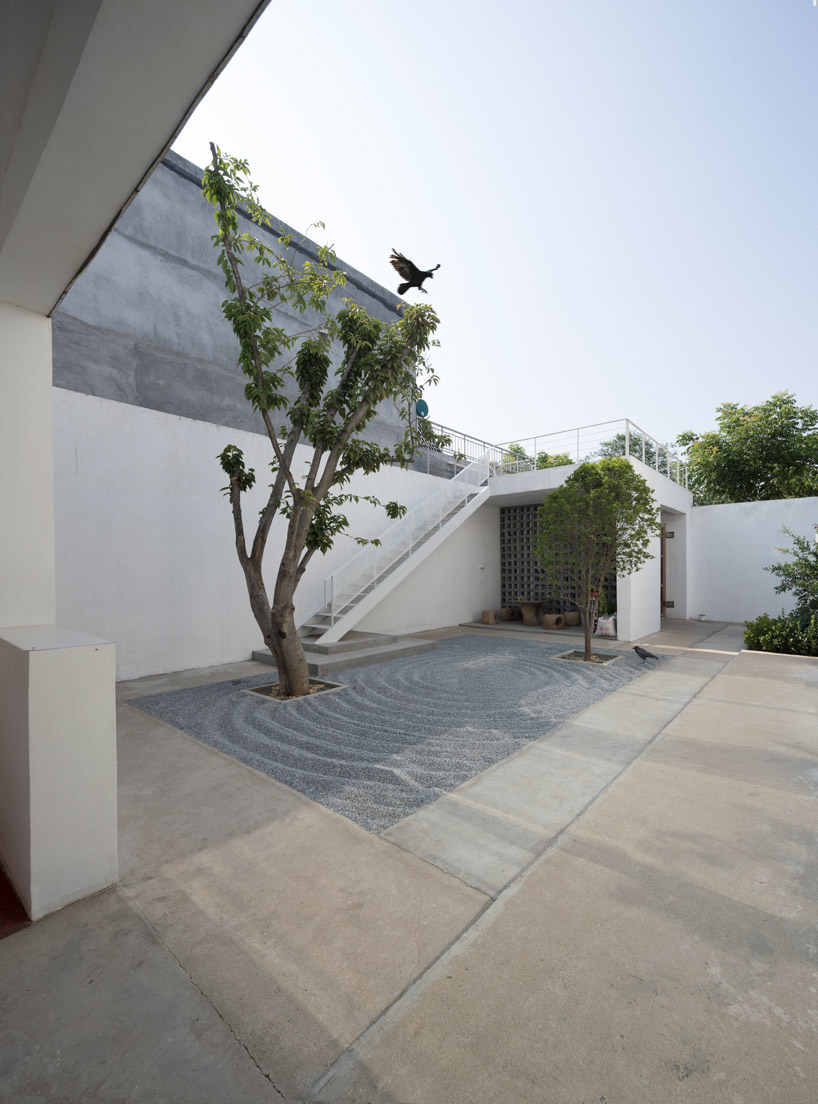
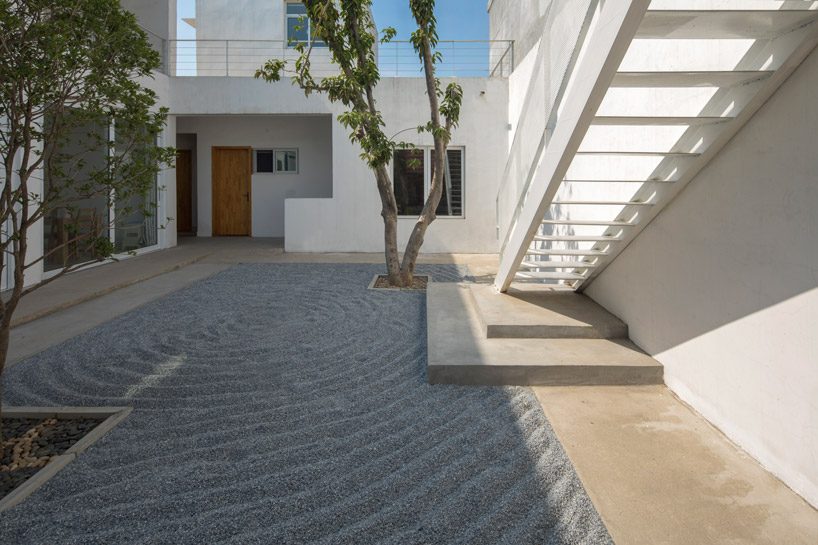
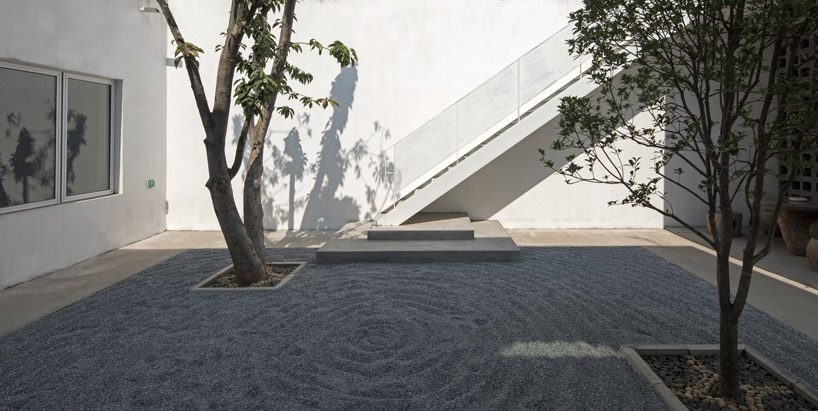
the inner courtyard is surrounded by the pavilion on the south, the living room on the west and the bedroom on the north. under the tree, there is a steel staircase that takes visitors to the roof of the pavilion, a small independent structure on the west side. although the area is small, the extensive view looks out endlessly towards the south and west.
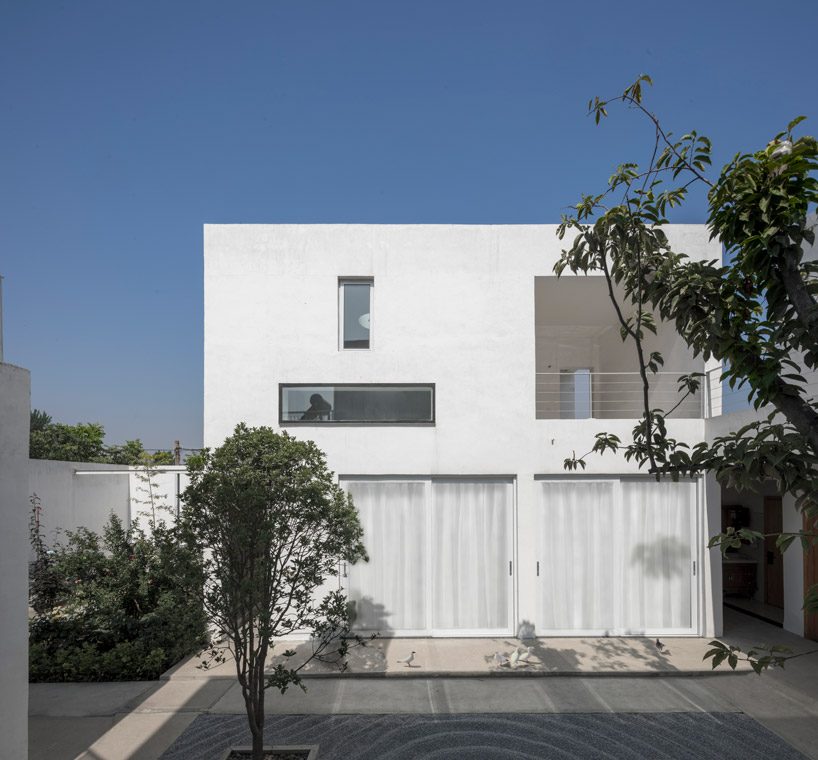
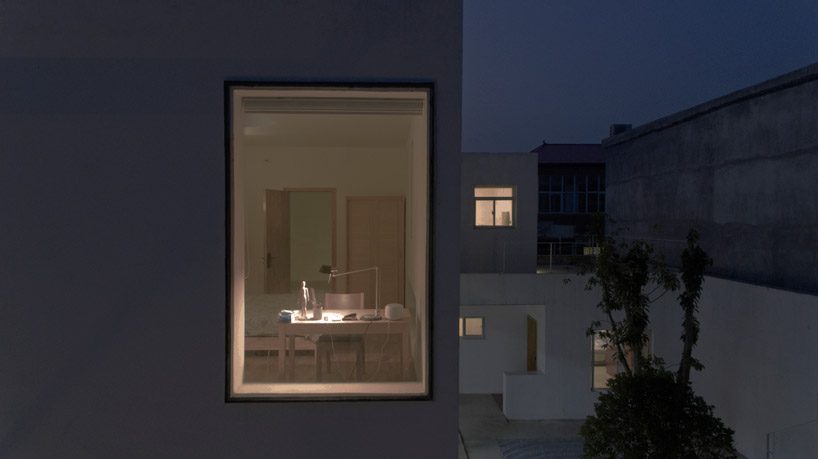
the architect used windows as a medium to relate the interior to the exterior. the architect arranged nine windows on the boundary wall, along the walking path. the openings are made up of different shapes, some smaller ones facing the sunflower field in the inner courtyard and other longer ones frame the treetops of the birch forest. some even cut through the corners to expose the far away mountains.



project info:
project name: boundary house
location: sundian village, zhaoling district, luohe, china
firm: LI WENXI architects
leading architect: li wenxi
design team: pang mengxia, lai pengfei
main body construction: li laihuo team
doors and windows: yan chuanwei, xia heng, zhang chunlei, zhao xuebing, xue xiaoying
handles, railings, steel stairs: xue yibo, li pengfei, sun denghui
photography/video: project-ion
wechat: squirrelandtrain (里建筑事务所)

shop
your own online design shop — no sales commission collected