interview: morocco pavilion’s earth-based, seismic architecture of future at venice biennale
'this pavilion becomes a place of knowledge, collective intelligence, smell, fabric, texture, memory,' the architects say, reflecting on the diversity of morocco's traditional know-how.
prefer designboom on google[FEATURED]
Materiae Palimpsest: Morocco pavilion on craft & construction
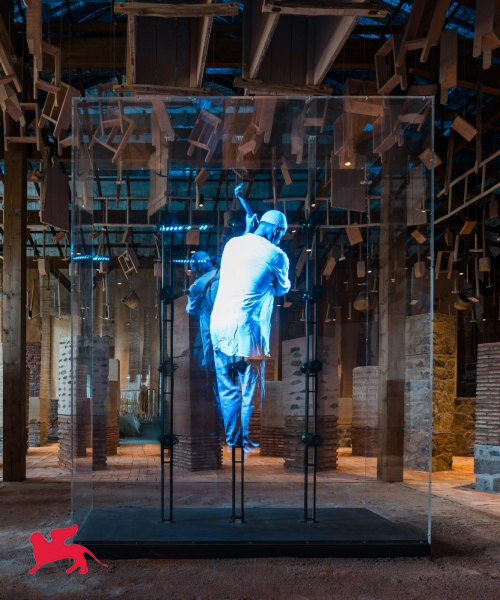
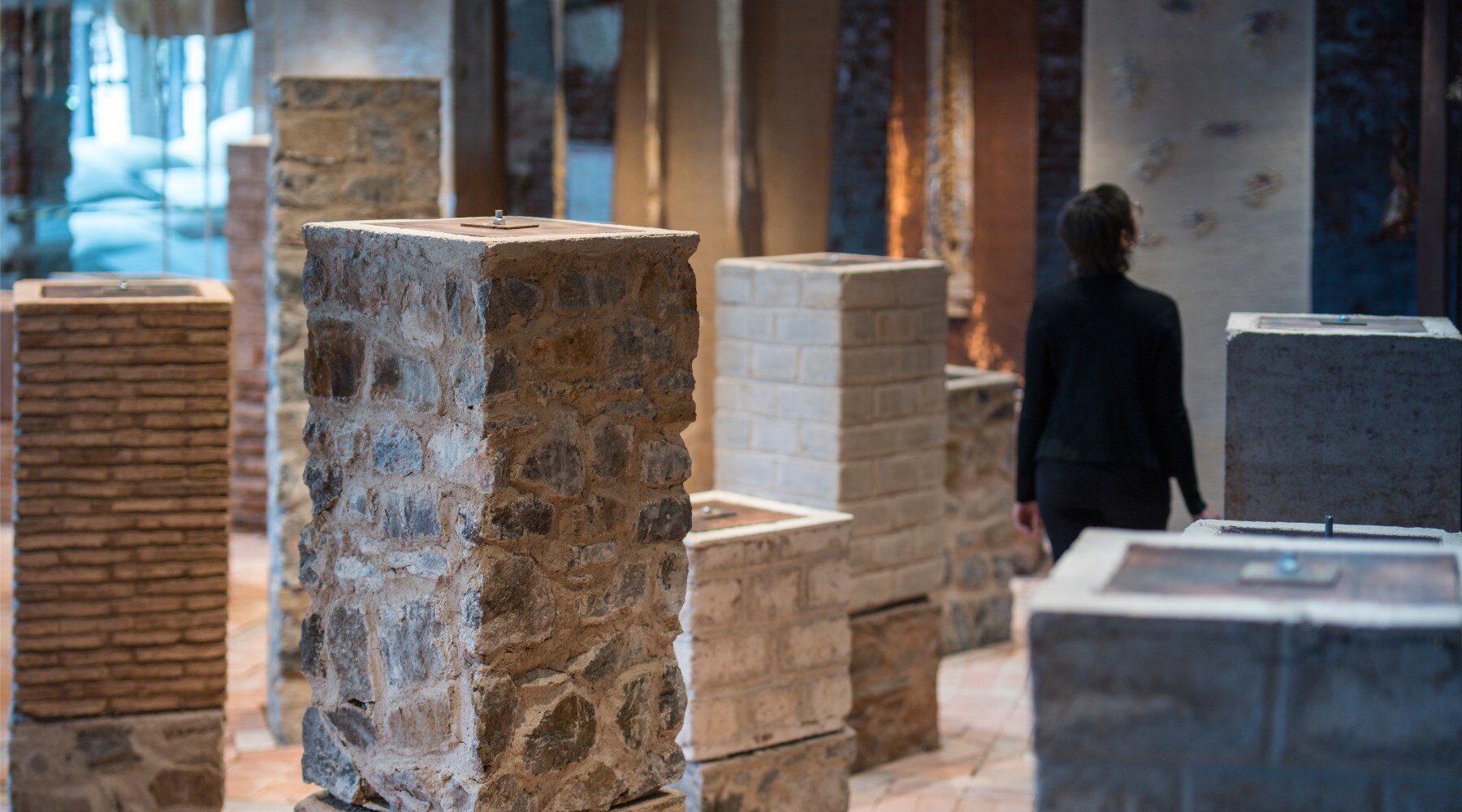
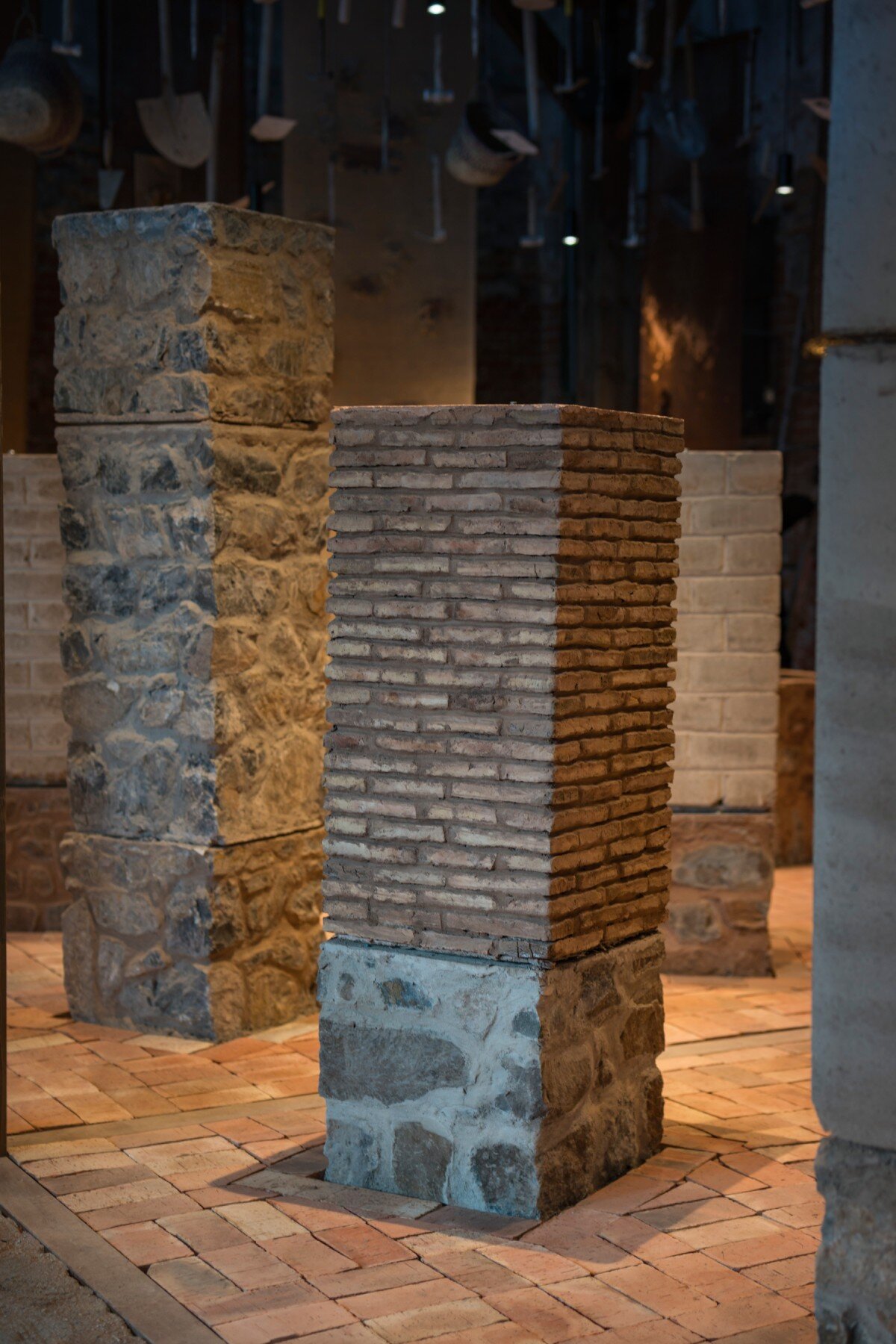
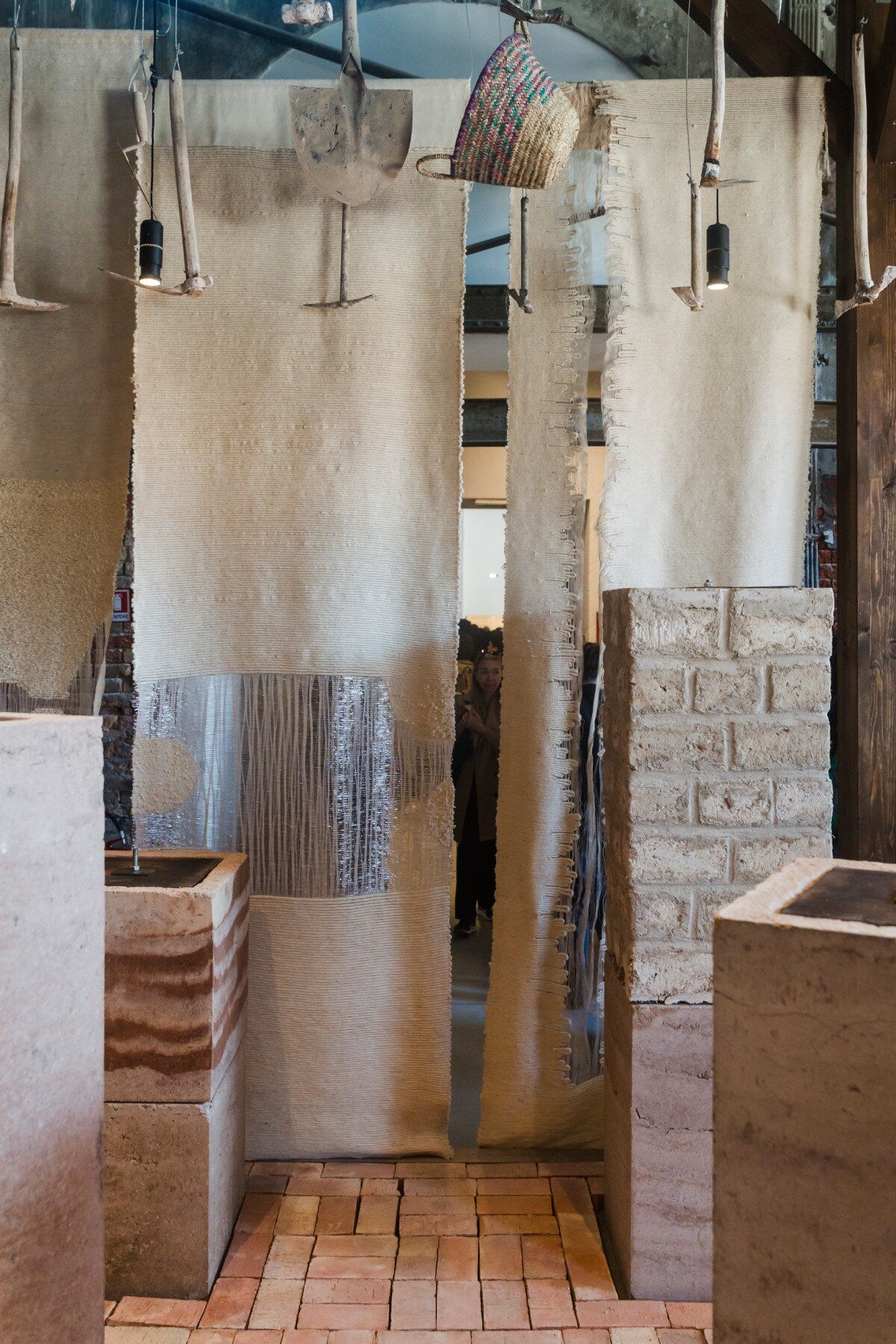
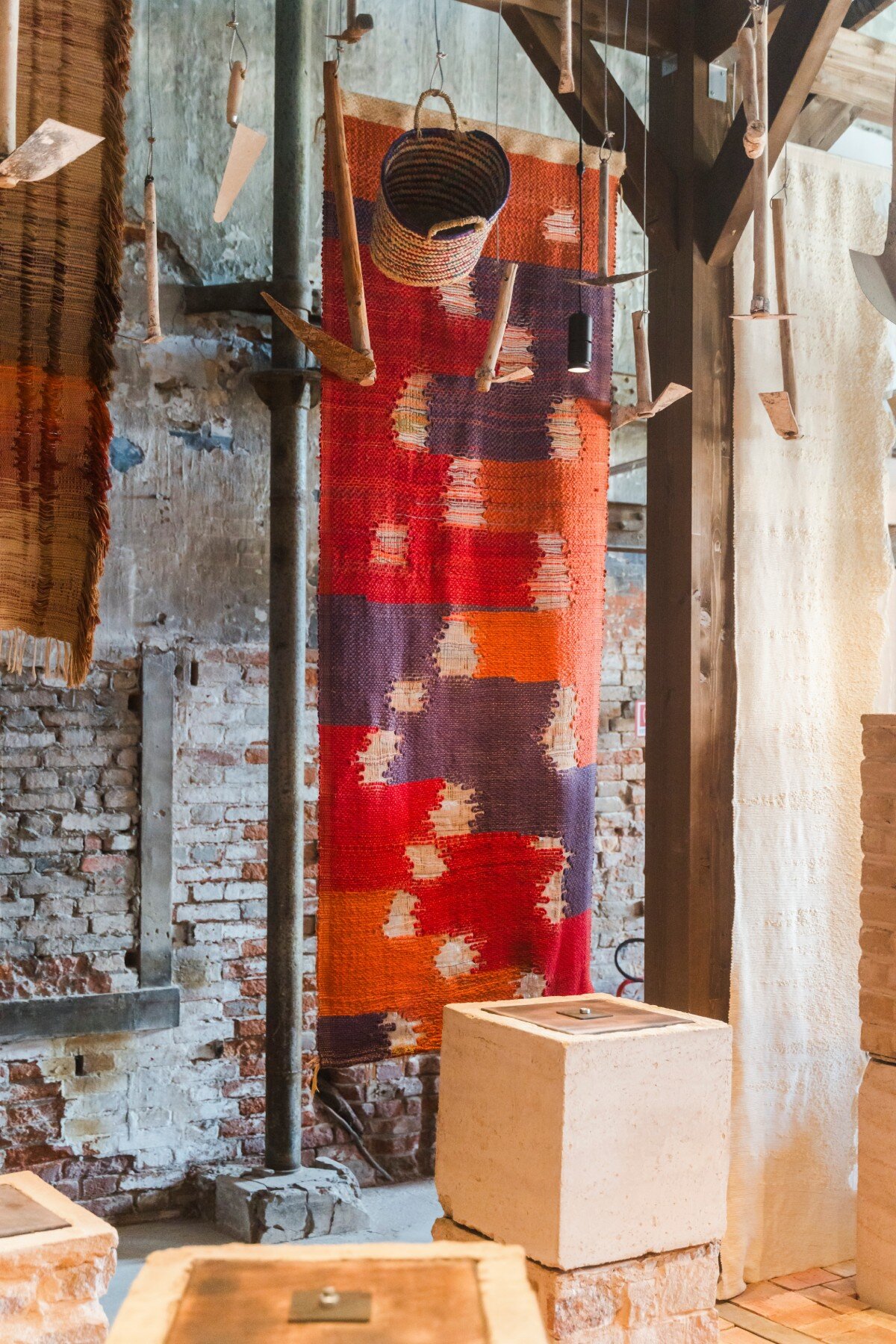
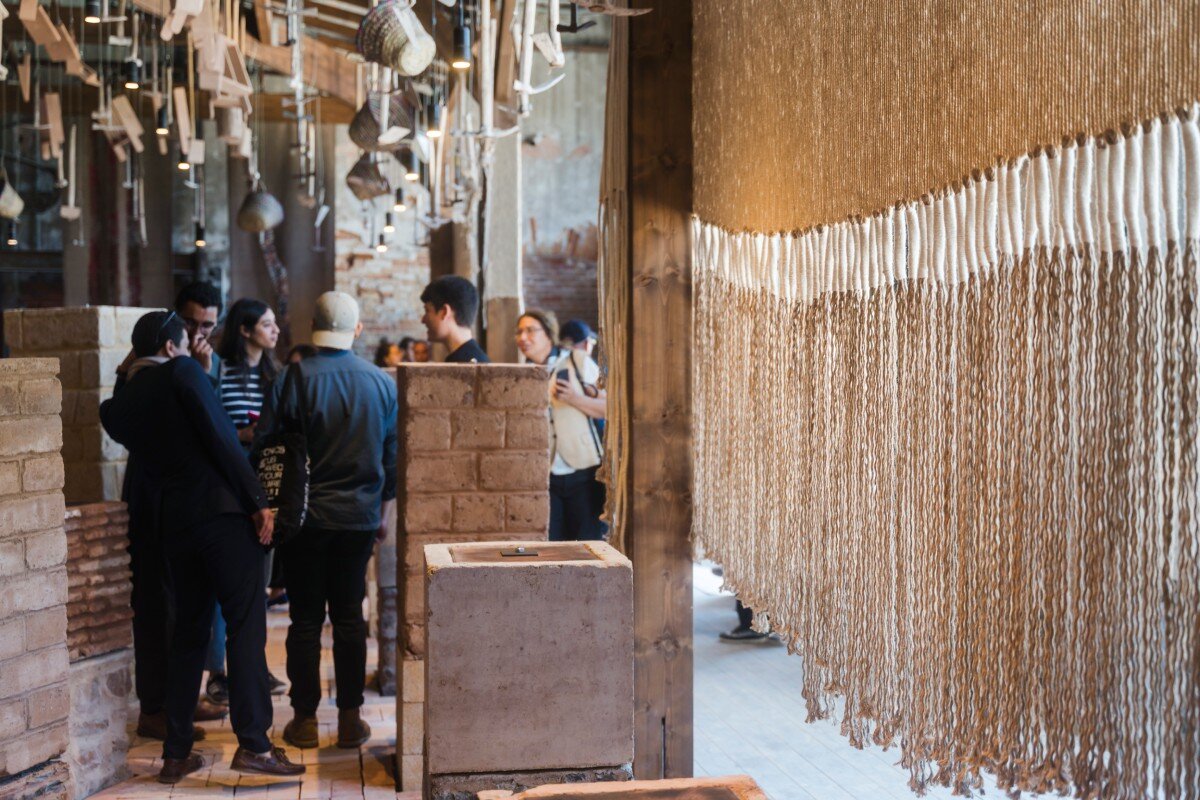
At the 2025 Venice Architecture Biennale, Morocco’s national pavilion addresses challenges posed by earthquakes across the region by taking an elemental approach to material, memory, and seismic resilience. Titled Materiae Palimpsest, the exhibition takes form as an evocative landscape bridging construction research prototypes with an artistic scenography. We see a cluster of columns built from natural local materials such as rammed earth, stone, and timber sourced from across Morocco, configured as a series of passageways almost reminiscent of architectural ruins – perhaps the aftermath of an earthquake. They all encircle a hologram representing the human condition and ancestral knowledge — ‘It’s intentionally fragile and immaterial, confronting the physical nature of the materials around it,’ Khalil Morad El Ghilali tells designboom during our visit to the pavilion.
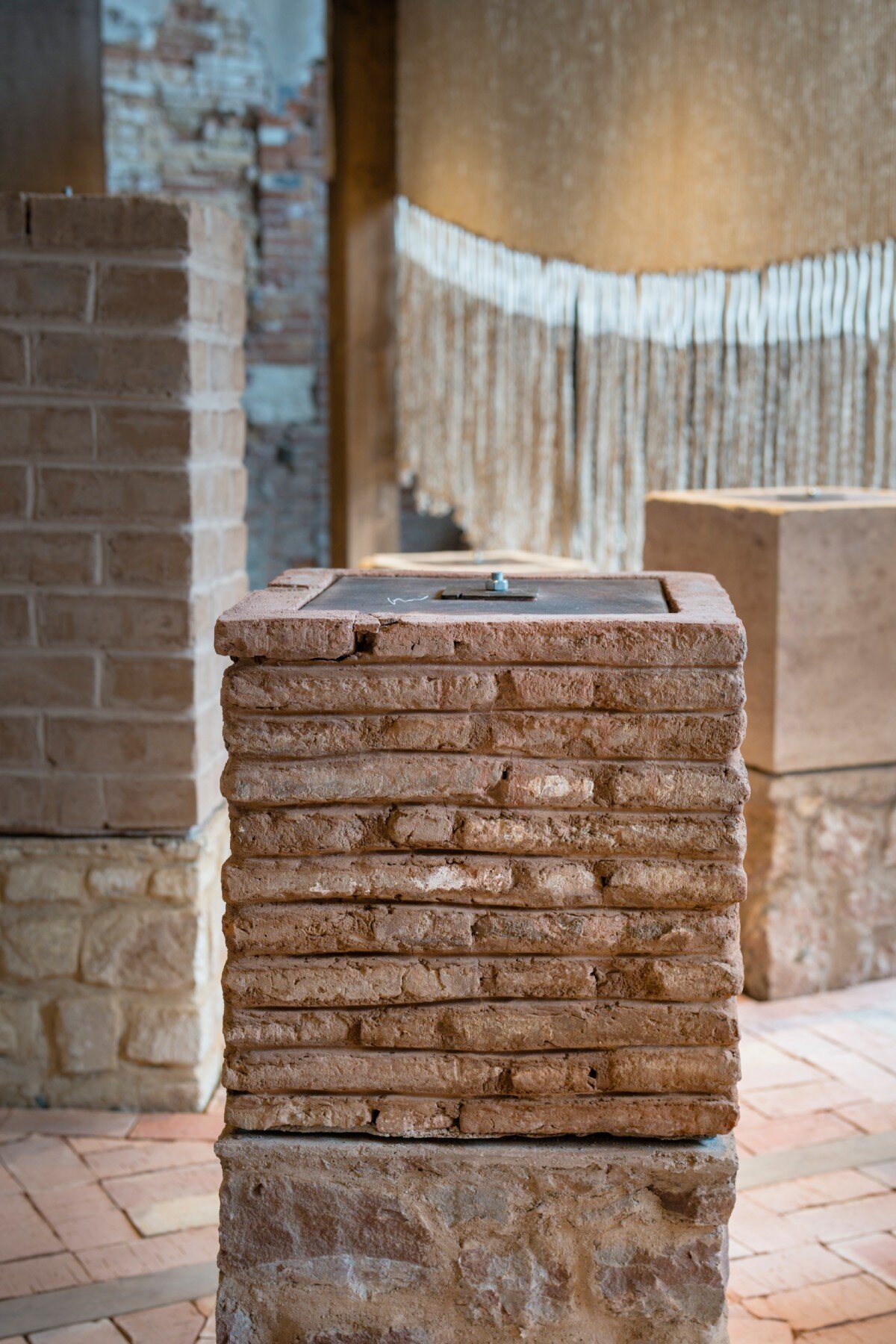
The architect, who co-curated the exhibition with El Mehdi Belyasmine, explains how these structures function as sectional scale models manifesting the duo’s ongoing research into how local construction know-how can be revitalized to shape earthquake-proof architecture. ‘We’ve been gathering around 136 completely different techniques and materialities from all around the country — from the north to the south — that we’ve here integrated into 72 columns. These columns serve as a kind of guide for construction, particularly for architects interested in sustainable development,’ he explains.
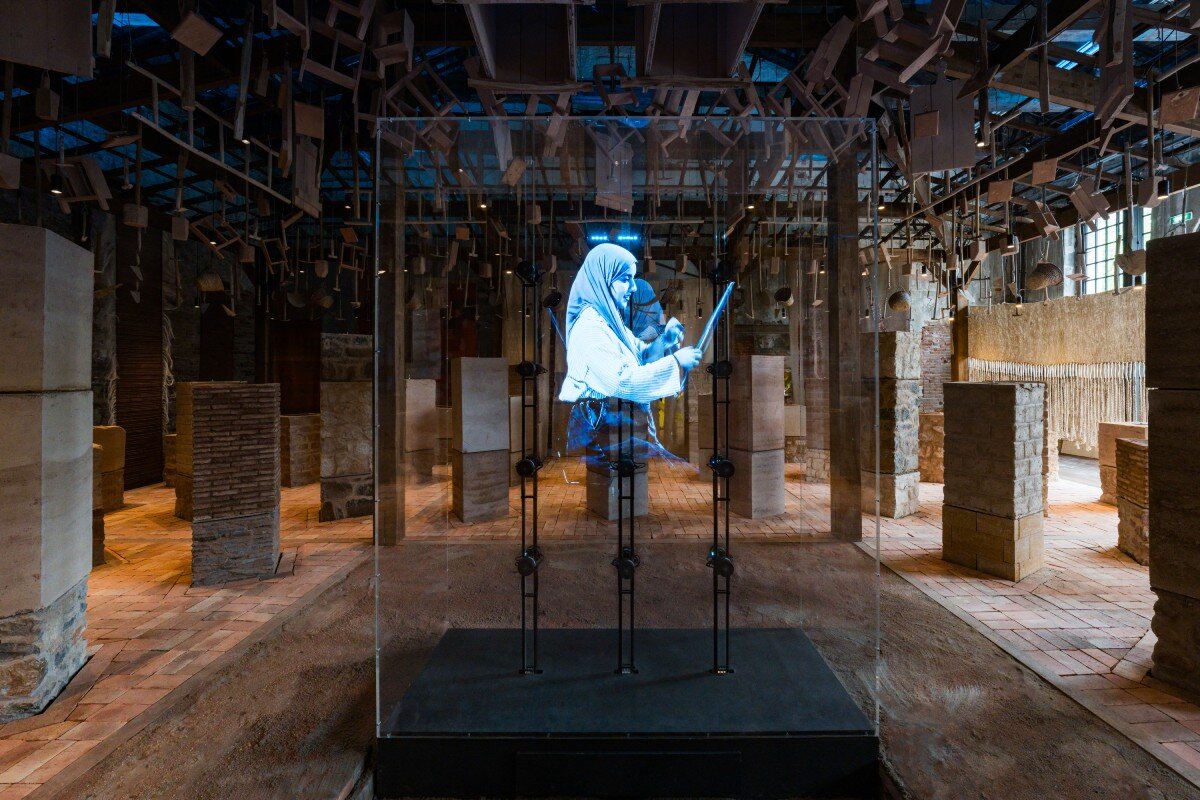
celebrating material intelligence at venice architecture biennale
Materiae Palimpsest resonates in light of Morocco’s devastating 2023 earthquake. In rebuilding affected rural settlements, Khalil Morad El Ghilali’s practice, and others like it, have demonstrated how heritage-based techniques can perform better than concrete in these particular contexts. The architect points out that some of his team’s pilot structures near the epicentre remained undamaged, owing to a combination of local craftsmanship and adapted engineering, rooted in generational know-how. This extends El Ghilali’s approach that is driven by the urgency to reframe ancestral methods as scalable, adaptive, and technically sound alternatives to industrial construction. ‘Instead of abstract concepts, we aim to improve local crafts through practical upgrades in engineering and architecture, without losing sight of what people can really do at a large scale,’ he shares. El Mehdi Belyasmine adds: ‘Working with the land — using local soil, traditional tools, and ancestral know-how — allows us to reconnect with our heritage while also empowering local labor and craft. It’s not nostalgia — it’s continuity. It’s about building with intention, with care, and with respect for the people and the place.’
This philosophy grounds the pavilion in a clear critique of contemporary architectural education and practice, which, the duo notes, often privileges conceptual gestures over material literacy. Calls for a broader reflection on how architectural knowledge is produced, as El Ghalili reflects: ‘Too often today, architects don’t know how to build with their hands. They’re trained to be conceptual rather than constructive.’ He frames revisiting these embodied modes of making is as a return to a collaborative, ground-up process that brings designers back into conversation with materials, with place, and with the people who build, as emphasized by the flickering hologram figure at the center of the space, and the traces of the human hand it confronts as carried in each of the columns. Read our full interview with the architects and co-curators below.
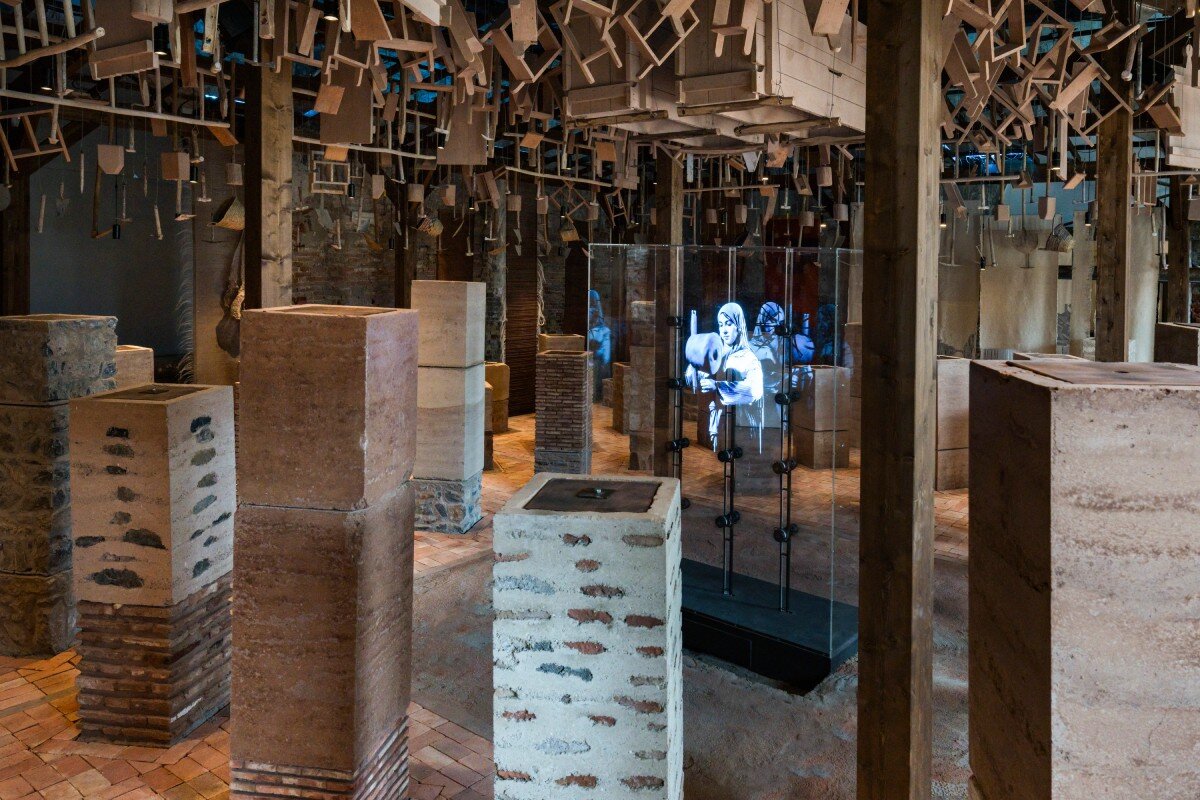
interview with Khalil Morad El Ghilali & El Mehdi Belyasmine
designboom (DB): Can you introduce the idea behind the creation of the pavilion?
Khalil Morad El Ghilali (KMEG): The idea was to sublimate the materiality and showcase the diversity of local construction techniques across Morocco. We’ve been gathering around 136 completely different techniques and materialities from all around the country — from the north to the south — that we’ve here integrated into 72 columns. These columns serve as a kind of guide for construction, particularly for architects interested in sustainable development.
This pavilion is one of our latest experiments: we used post-tensioned, prefabricated blocks as a potential solution for rebuilding in earthquake-affected areas. The entire pavilion was also assembled in three days. The blocks are solid, not hollow, and actually the heaviest one weighs 500 kilograms, and yet they were mounted like Lego pieces.
El Mehdi Belyasmine (EMB): The Moroccan Pavilion is conceived as an experimental space to deepen the understanding of cultural identity and highlight the significance of spatial performance — through visual aesthetics, scents, textures, and tactile sensations — creating an immersive and authentic experience within a dynamic environment. This approach should be implemented in all architectural projects. It is essential to design with a strong connection to the local context and its surroundings, recognizing these conditions as foundational architectural elements.
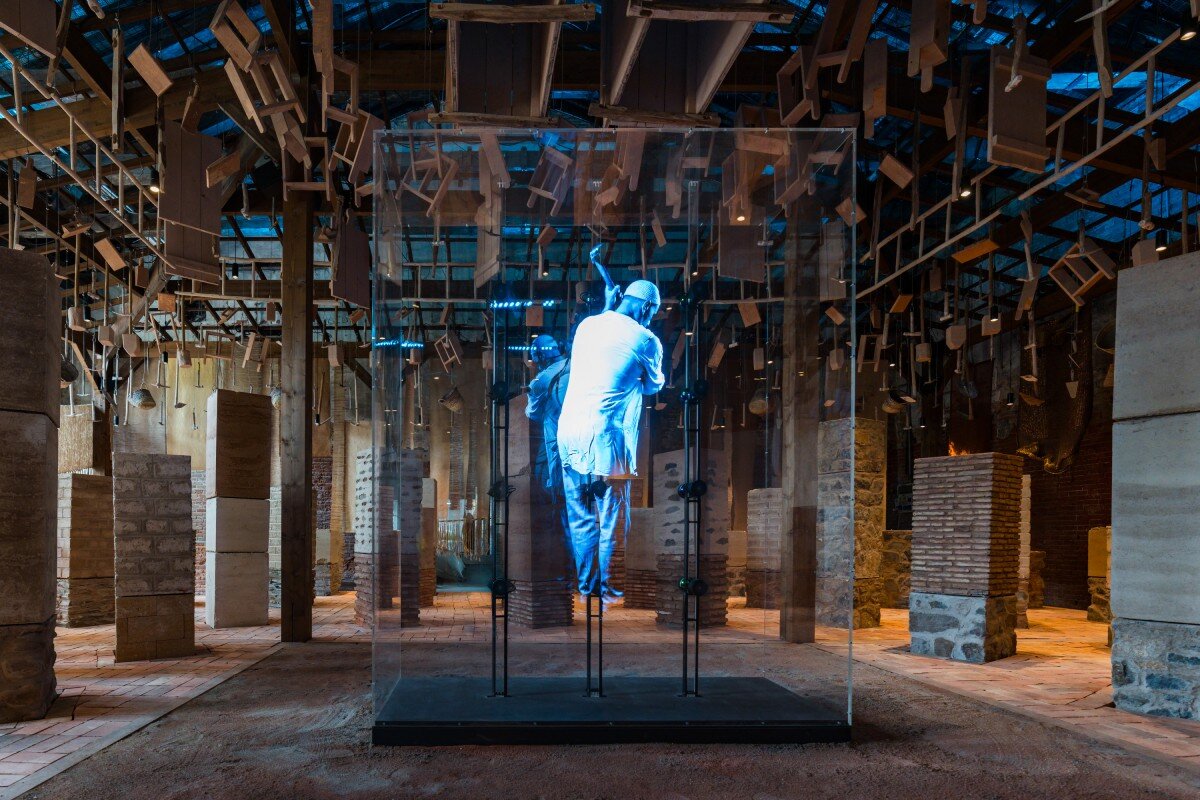
DB: There are many layers to the scenography, from the almost ruins-like landscape of columns, to the textiles and the screen at the center. Can you share more about that?
KMEG: We’ve divided the scenography into three main elements.
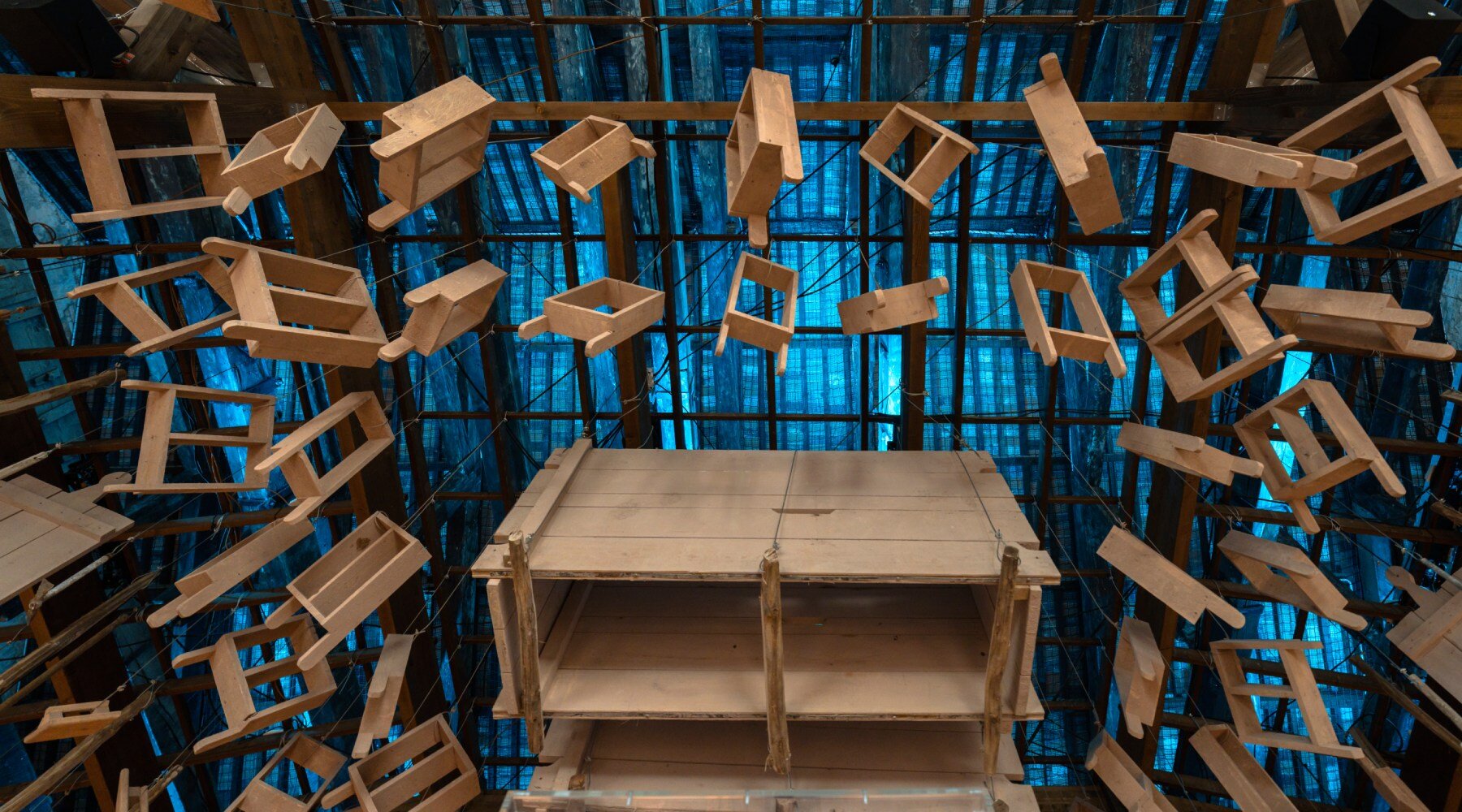
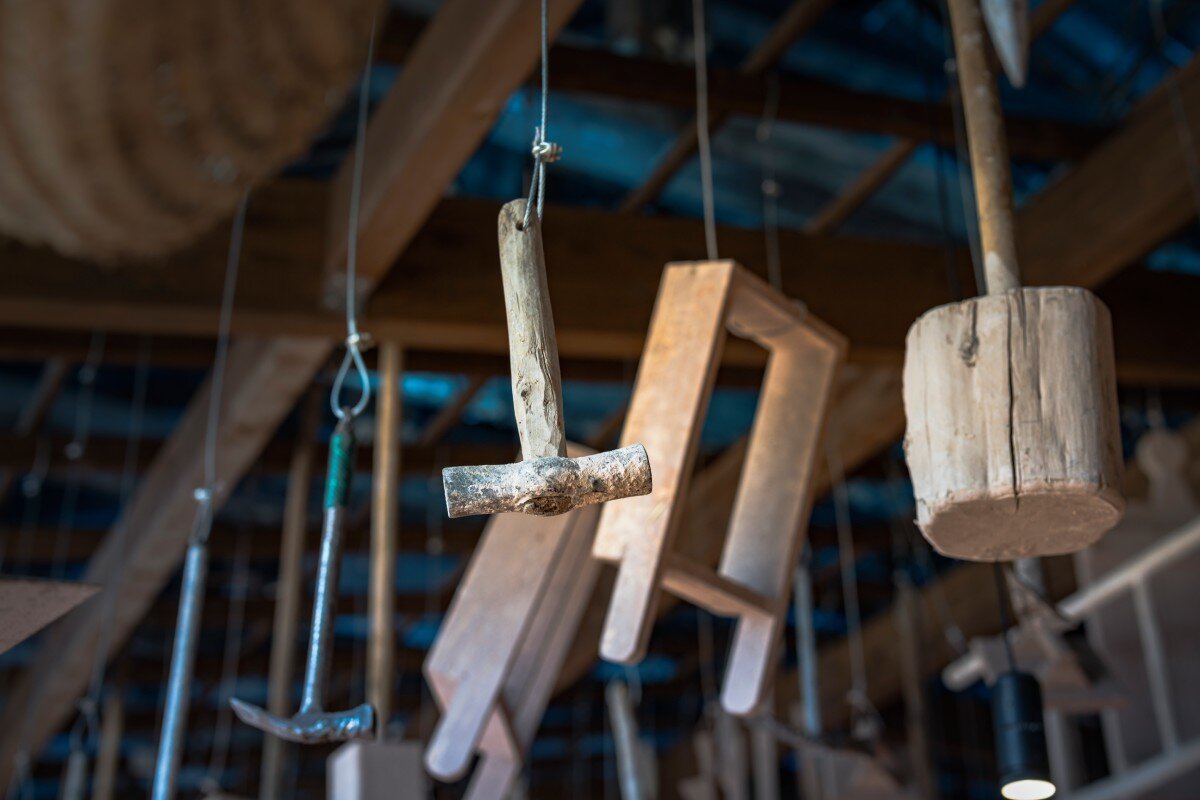
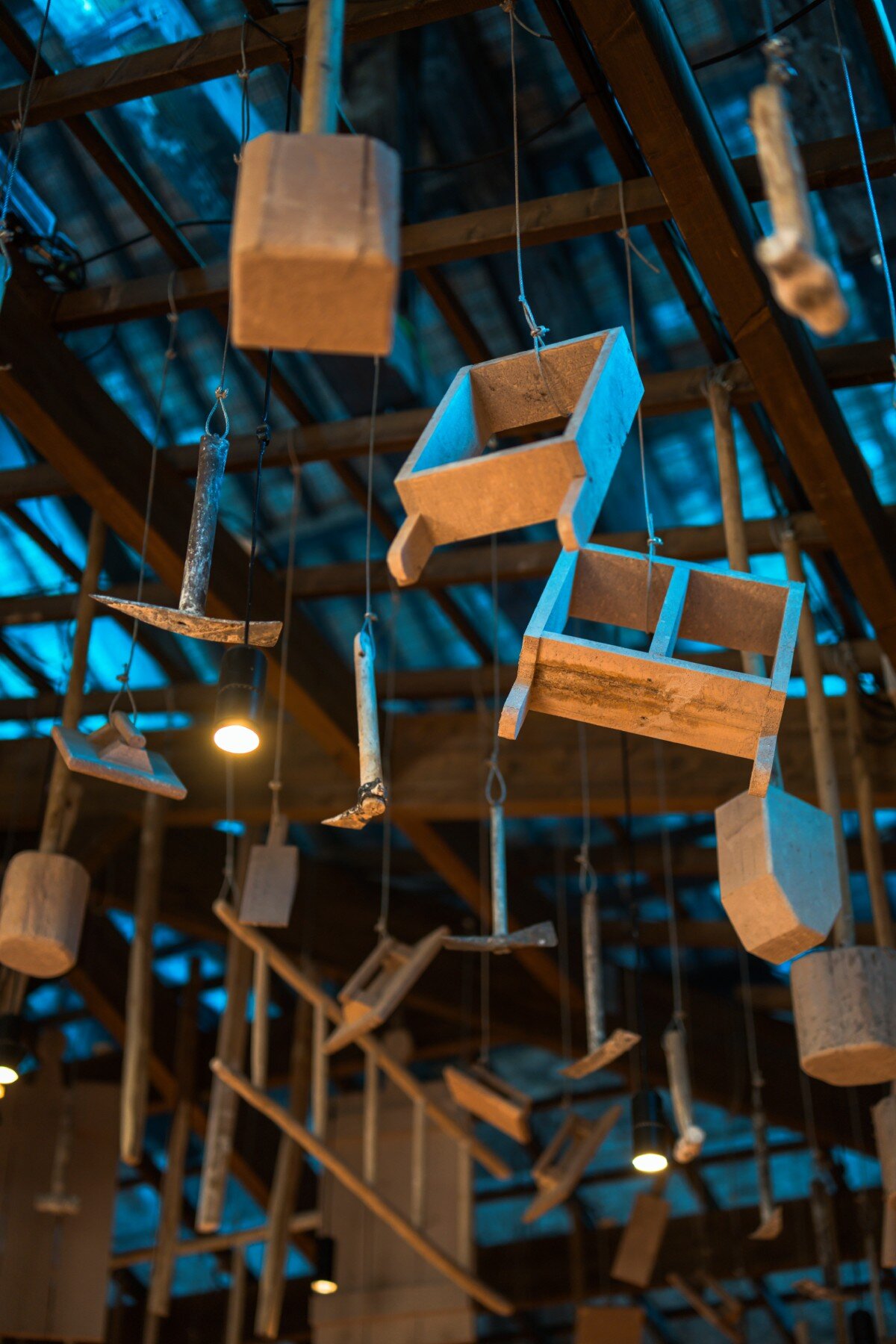
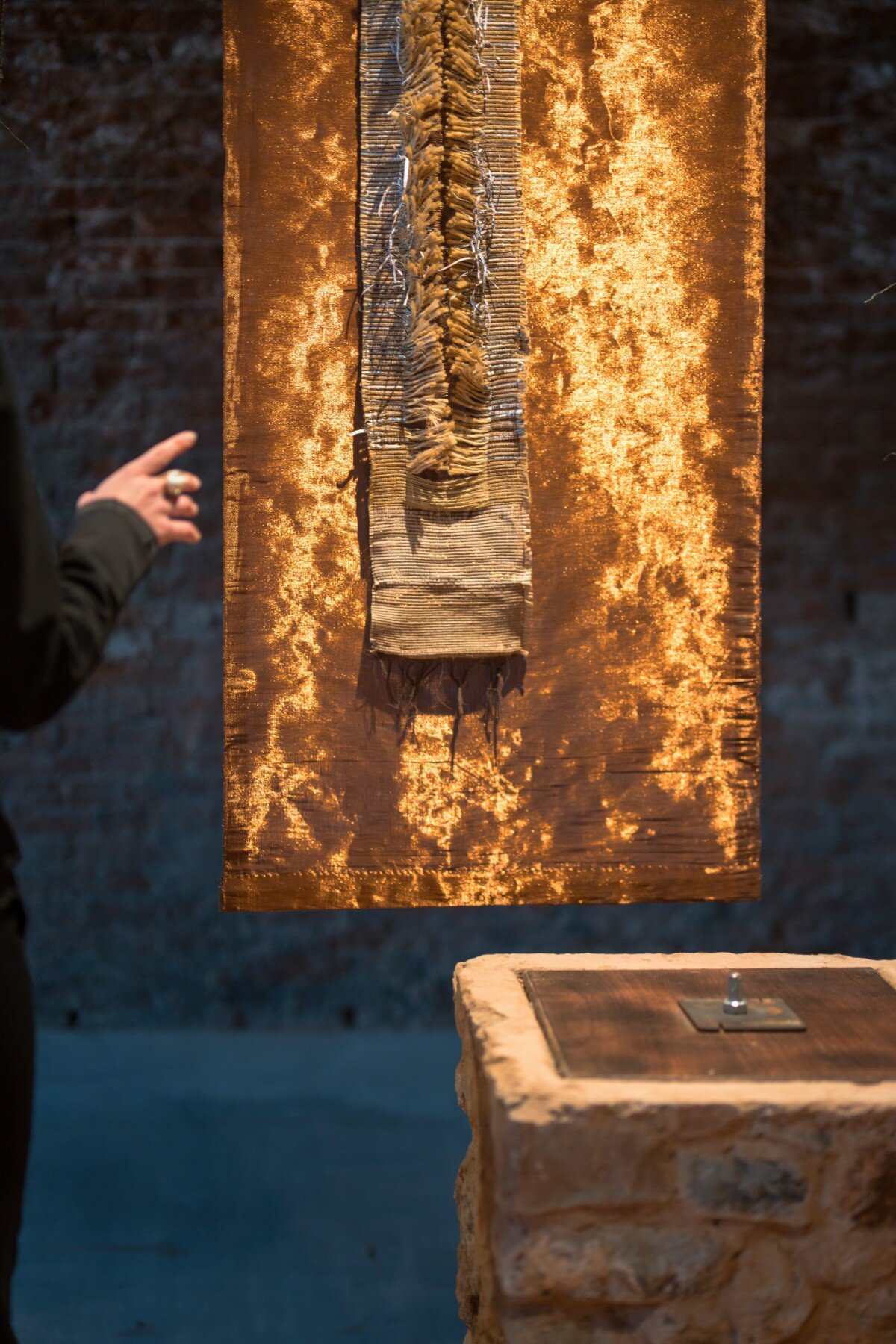
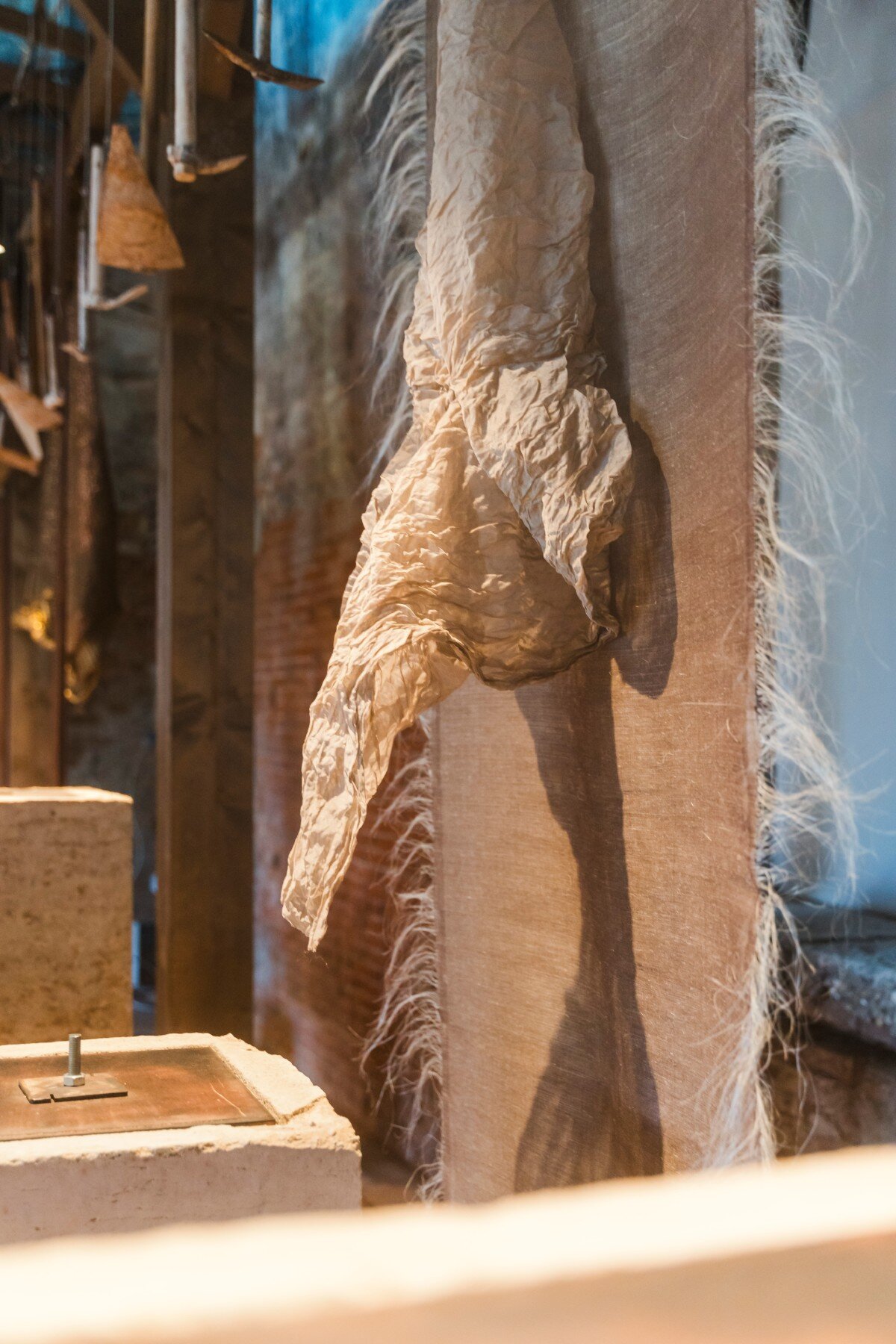
The first is the columns, which reflect building, engineering, and architecture. The second is the tools. These are represented by the muqarnas hanging from the ceiling, which were historically used to construct such elements. We sourced them from different villages, and each tool carries the trace of a human hand and an imprint of collective engineering. The third element is the human condition, represented by a hologram. It’s intentionally fragile and immaterial, confronting the physical nature of the materials around it.
EMB: I wanted to create a space that pushes the boundaries of how we understand and express cultural identity. It’s an experimental platform that explores spatial performance — not just through form and function, but through texture, scent, sound, and atmosphere. Architecture should be felt, not just seen.
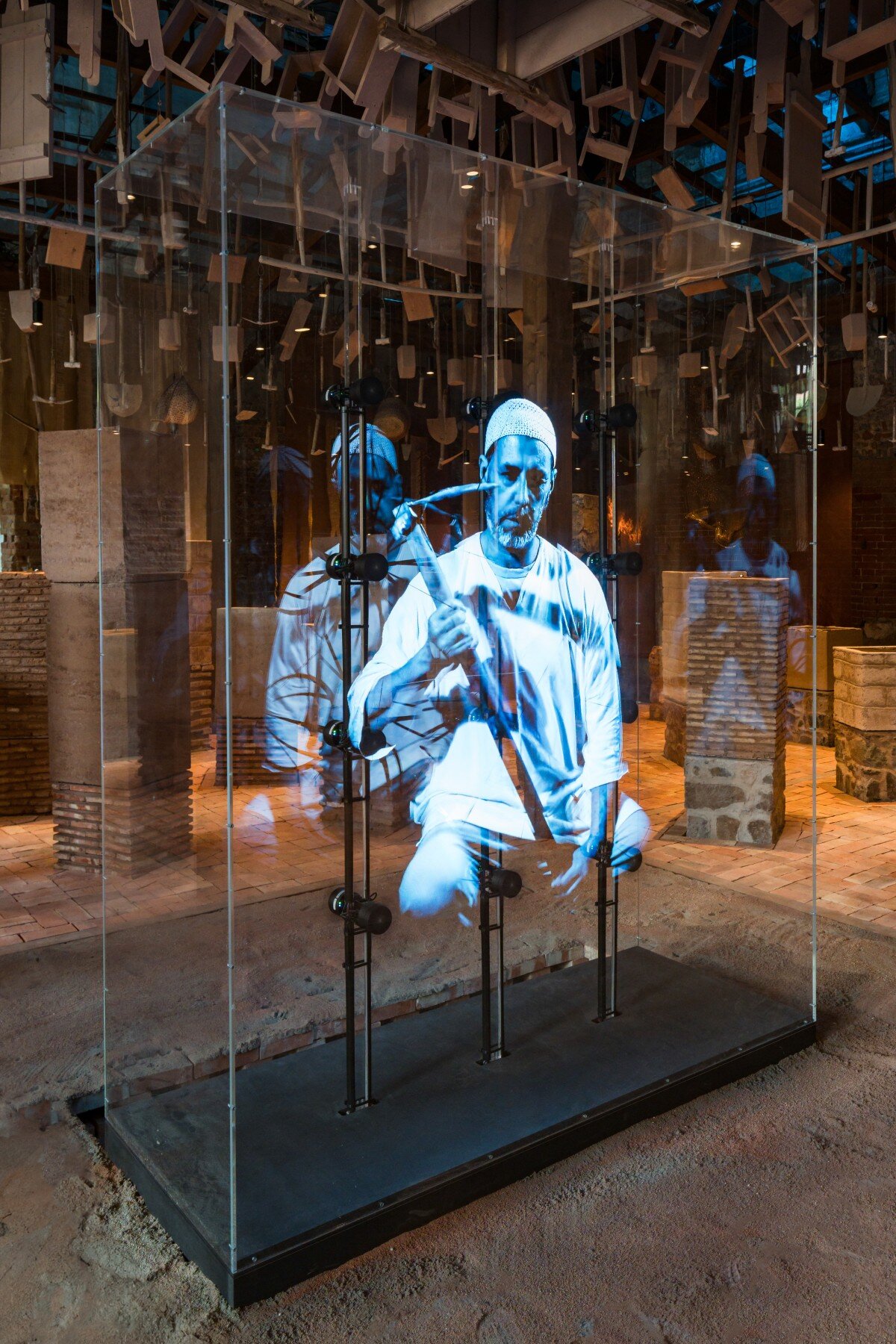
DB: The presence of the hologram was quite unexpected after walking through all these tactile details. What role does it play within the overall composition?
KMEG: It raises a question about whether we should keep chasing extraordinary technologies to solve our problems, or whether we should instead ask what we can learn from our ancestors — not archaeologically, but humbly. There’s a vast body of knowledge gathered over thousands of years, and this project is about reconnecting with that wisdom rather than erasing it and starting from scratch.
So for us, this pavilion becomes a place of knowledge, collective intelligence, scent, fabric, texture, memory. Like a foyer, a place to gather. It reflects how Moroccans welcome people, how spaces are warm and inviting. Each brick, each tool, each trace carries human intelligence. Confronting these elements — between the artificial and the natural — was very important to us and the main idea of the pavilion.
DB: Does the hologram, as a symbol for the ‘human condition’, serve as more of a symbolic counterpoint to the raw materials surrounding it, or tie them together?
KMEG: For us, it’s a confrontation. The hologram is encased in glass and placed at the center of the room, and above it, we placed some of the heaviest formwork elements, really emphasizing its fragility. But then it’s also symbolically loaded; it’s a memory of what might remain of the human condition in the future if we lose our connection to materiality and making. Maybe that’s all we’ll have left, a memory.
The idea is to really highlight the tension between the immaterial and the physical — between where we are headed and what we still have.
DB: Building on that, what kind of questions do you hope visitors will walk away with? Is the goal to present solutions, or to create space for reflection, or both?
KMEG: We’re not trying to offer definitive answers, but rather pose questions. Let people find their own meanings through the combinations of materials we present, like earth from Marrakech and stones from the coastal areas and rivers. These materials allow for different engineering possibilities, including seismic resistance, construction, elevations.
It’s really an individual experience, but also a collective one at the same time. The pavilion’s passages ensure that only one person can stand inside a column at a time. We wanted each visitor to directly face the materiality of that individual column, despite the openness of the layout.
DB: You’ve emphasized that your reference to traditional techniques isn’t nostalgic or archaeological. Can you elaborate on how these indigenous methods can be applied today, especially in the face of environmental challenges?
KMEG: The main contemporary application is earthquake resistance. You probably heard about the earthquake in Morocco two years ago. It affected regions where villages were traditionally built using earth and stone. Unfortunately, many of those techniques have been lost, and what replaced them, like poor-quality concrete, wasn’t adapted to the climate or structural needs.
Since then, one of the main questions has been to consider how we can rebuild those villages. And so we’ve been working with local techniques and engineering knowledge. Some of our projects, built near the earthquake zone using these methods, had no damage, and I’ve also been publishing research around this. The idea is to provide technologies that are accessible and replicable, technologies that people can actually assess and use, rather than ones completely out of reach due to the pace of innovation.
There are areas without internet, robotics, or digital tools. So instead of abstract concepts, we aim to improve local crafts through practical upgrades in engineering and architecture, without losing sight of what people can really do at a large scale. We worked directly with local craftspeople for this, and we built with our hands, with media,
In many ways, this is also a critique of the architectural profession.
Too often today, architects don’t know how to build with their hands. They’re trained to be conceptual rather than constructive. We need to bring back the role of the master builder. This pavilion was built by hand, together with craftspeople and media specialists. We wanted to show that design must happen through communication, with those who actually know how to make.
DB: Beyond technical performance, do these traditional methods also offer a more meaningful way to build, culturally or socially?
EMB: One of the main issues with 20th-century architecture in Morocco was the imposition of modernist ideals that were disconnected from our cultural and environmental context. Imported styles and industrial materials were favored over local knowledge and tradition, which led to buildings that didn’t speak to the identity or needs of Moroccan communities. It created a kind of architectural amnesia — spaces that felt alien rather than rooted.
For me, earth-based architecture is not just a technical solution; it’s a cultural and humanist response. It’s about returning to methods that reflect who we are and where we come from. Working with the land — using local soil, traditional tools, and ancestral know-how — allows us to reconnect with our heritage while also empowering local labor and craft. These approaches bring a tangible depth to the work and ensure that architecture remains a collective, grounded act. It’s about building with intention, with care, and with respect for the people and the place.
project info:
name: Materiae Palimpsest — Morocco Pavilion
curators: Khalil Morad El Ghilali, El Mehdi Belyasmine
program: Venice Architecture Biennale | @labiennale
dates: May 10th — November 23rd, 2025
shop
your own online design shop — no sales commission collected