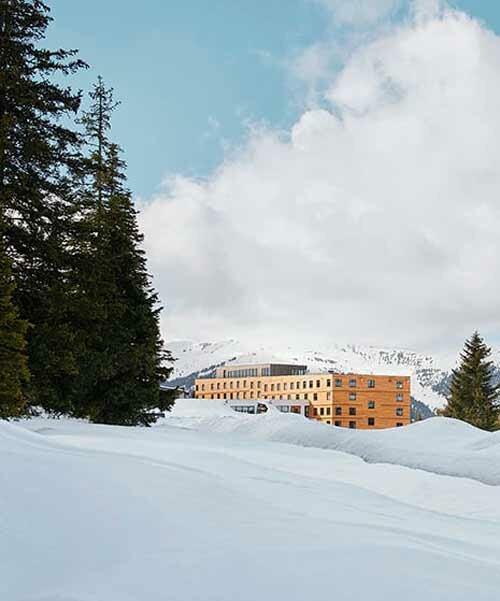
interwoven larch wood slabs wrap around youth hostel in the austrian alps
lechner.lechner.architects develops an internal vertical promenade that applies metal cladding contrasting the wooden texture.
prefer designboom on google[FEATURED]
Youth Hostel Gerlos by Lechner&Lechner stands on Alpine hills
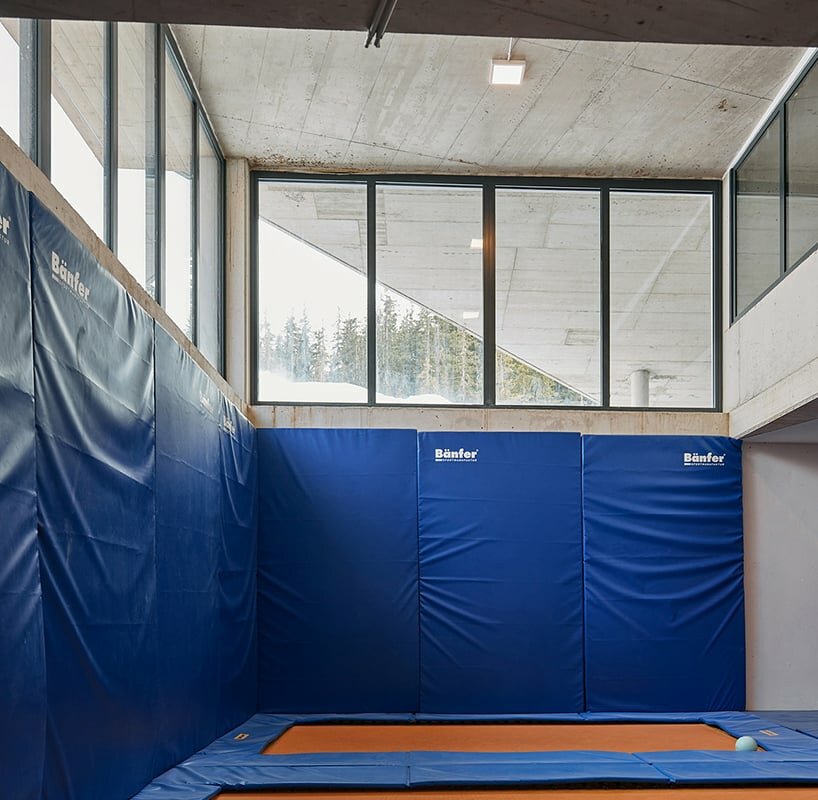
Nestled high in the Austrian Alps, the ‘Youth Hostel Gerlos’ by Salzburg-based design firm Lechner & Lechner Architects seamlessly blends with its surrounding landscape. Designed as an eco-friendly solution for schools organizing ski trips, the facility hosts various spaces dedicated to sports and leisure activities and forms a large public U-shaped square in the picturesque village of Hochkrimml. Following a mindful design approach, the creative team attends to functionality, cost-effectiveness, and aesthetics through the use of renewable materials throughout the structure.
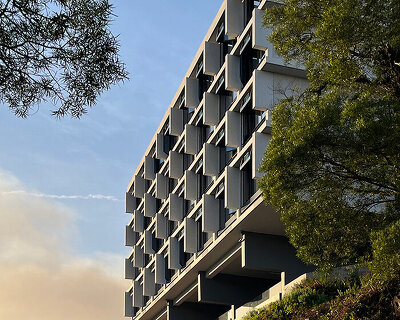
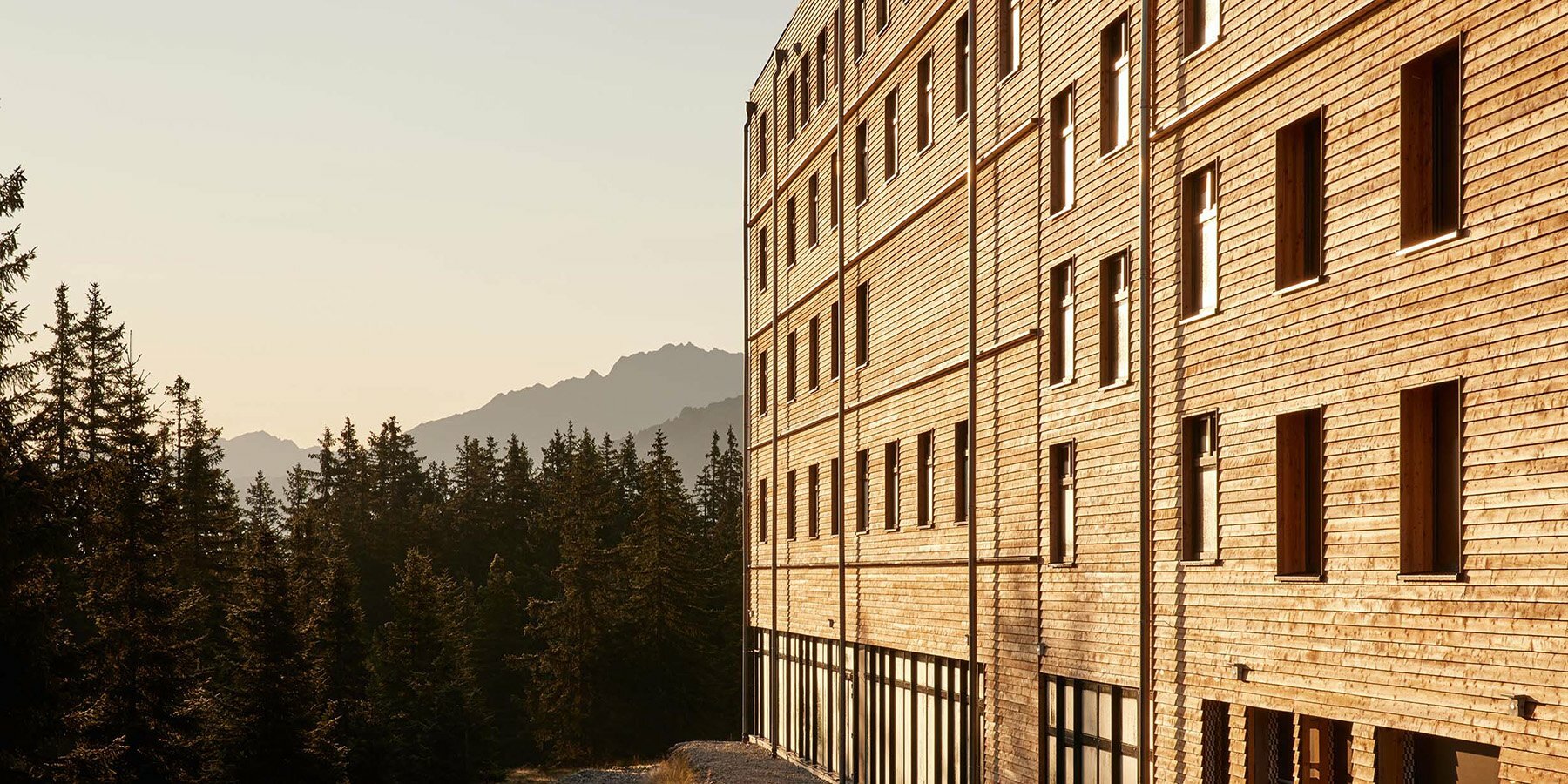
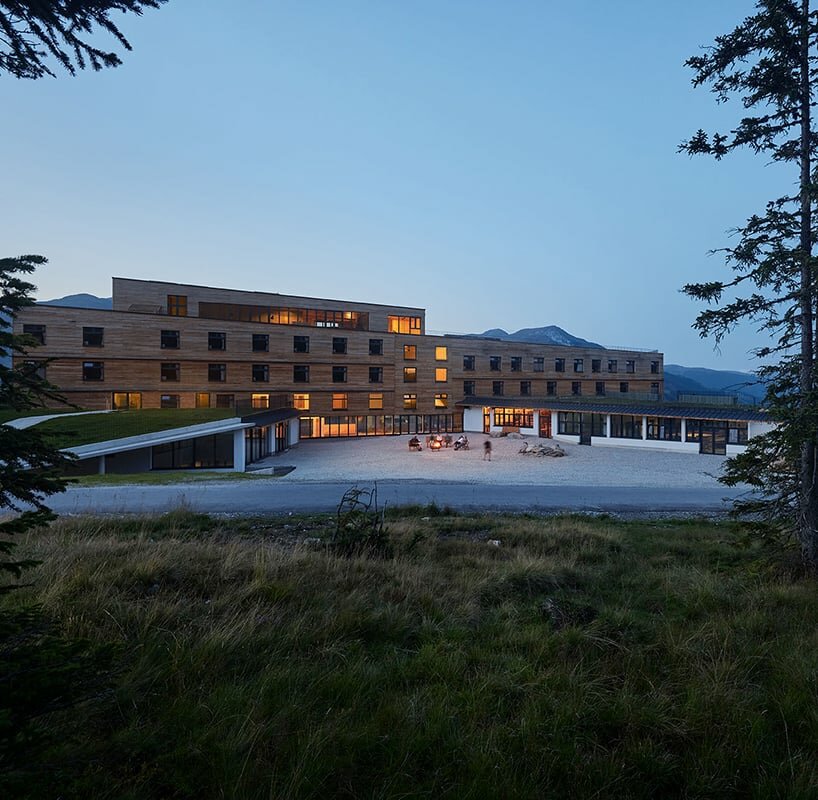
The architecture integrates the substantial building mass within the site without overwhelming the natural surroundings. The main structure is positioned on the northern portion of the plot with a slight tilt towards the main street. The volume enfolds under a single-pitched roof that mirrors the terrain resulting in a lower profile on the valley side, while recessed side wings settle sunken under planted coverings and serve as dining areas and ski storage. The facade applies interwoven larch wood slabs expected to merge with the forest over time through a natural weathering process.

dynamic interplay between materials
The Youth Hostel Gerlos, developed by Lechner & Lechner Architects, prioritizes the integration of sustainability, regionalism, and functionality in modern architectural design. The intentional use of sustainable and renewable materials and elements is engaged throughout the construction with the main use of cross-laminated timber as the primary building component.
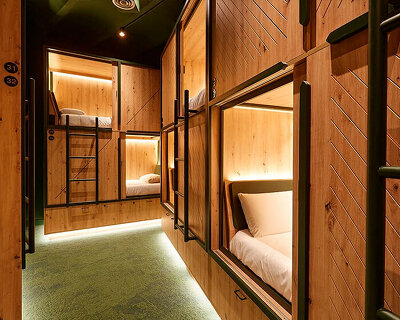
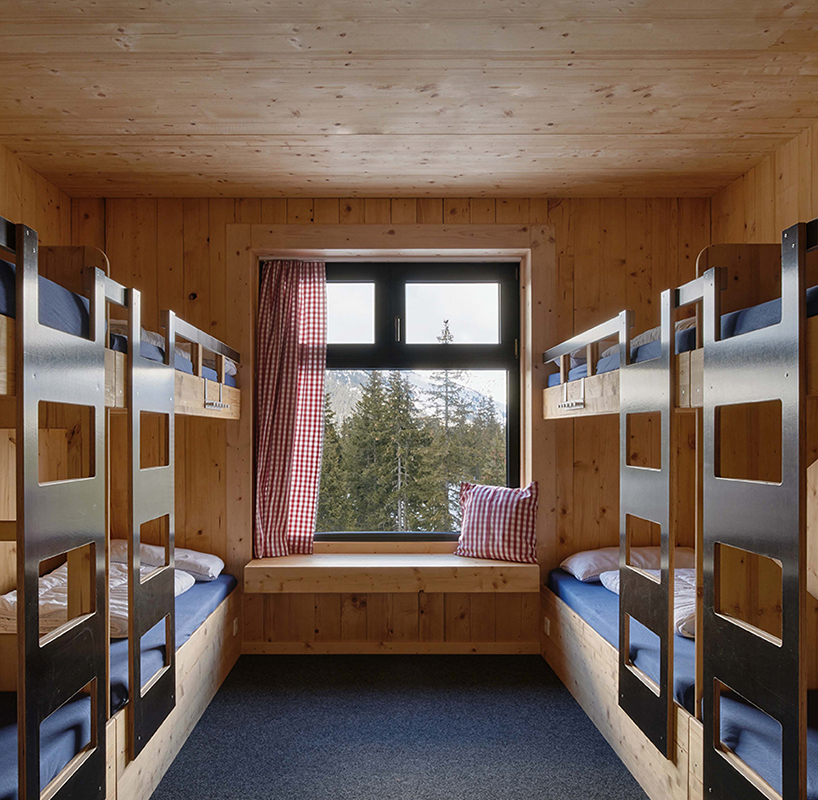
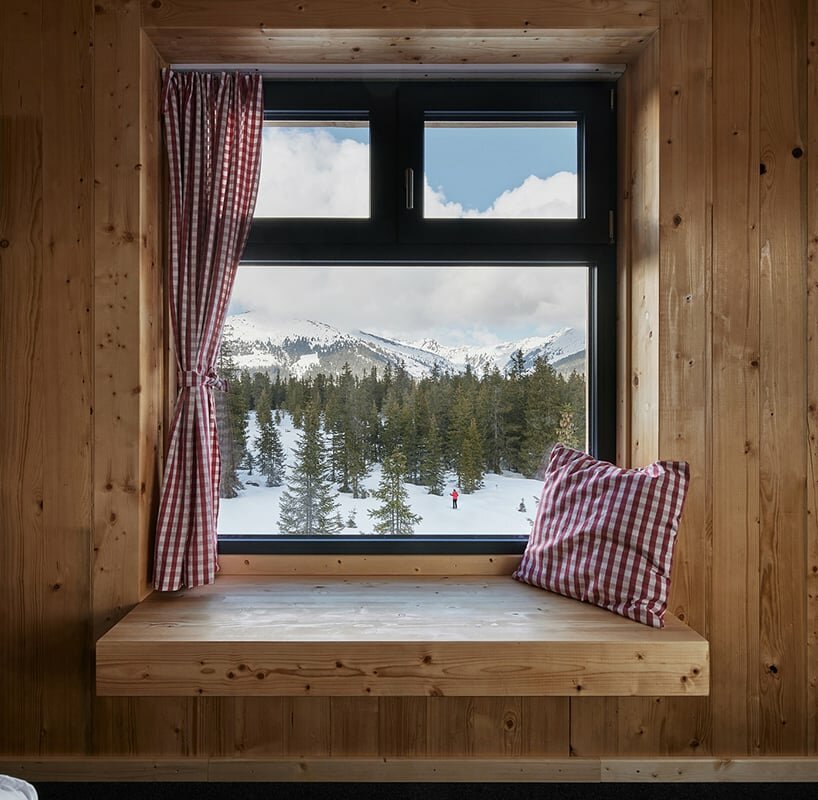
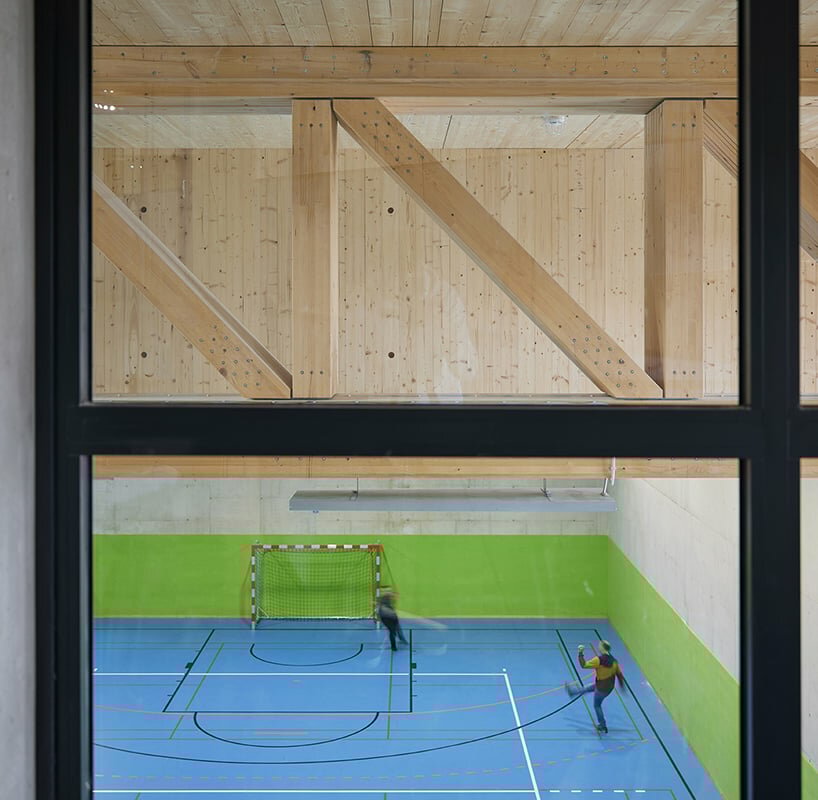
The interior arrangement features raw and untreated cross-laminated timber surfaces, while the ramp details set up metal cladding creating a visual contrast with the light-hued wood texture. The dynamic interplay of the materials elevates the design that balances between sustainability and aesthetics.
The building is heated by biomass district heating and powered by renewable energy generated from photovoltaic sources. The hostel prioritizes collective transportation to reduce its carbon footprint, utilizing coach services over individual modes of transportation. The residual wood from the transport of cross-laminated timber walls is repurposed into stylish furnishings, promoting sustainable and environmentally conscious design.




1/4
project info:
name: Youth Hostel Gerlos
designer: Lechner&Lechner | @lechner.lechner.architects
design team: Christine Lechner, Horst Lechner, Paul Lechner, Lukas Ployer
location: Salzburg Alps, Austria
photography: Julian Hoeck | @julianhoeck
designboom has received this project from our DIY submissions feature, where we welcome our readers to submit their own work for publication. see more project submissions from our readers here.
shop
your own online design shop — no sales commission collected