
israel lópez balan proposes to harvest rainwater in mexico
the project suggests to replace gradually the small network of small storm sewers with a rainwater system collector that converges in recreational lakes on the surface where towers emerge as large natural filters.
prefer designboom on google
israel lópez balan proposes to harvest rainwater in mexico
(above) anti-sinking system for big cities
all images courtesy of israel lópez balan
local-based architect israel lópez balan, in collaboration with gabriel mendoza cruz, have developed a proposal that could solve mexico city’s sinking problem. the project suggests to replace gradually the small network of small storm sewers with a rainwater system collector that converges in recreational lakes on the surface where towers emerge as large natural filters for rainwater storage and treatment plants with absorption wells for underground injection.
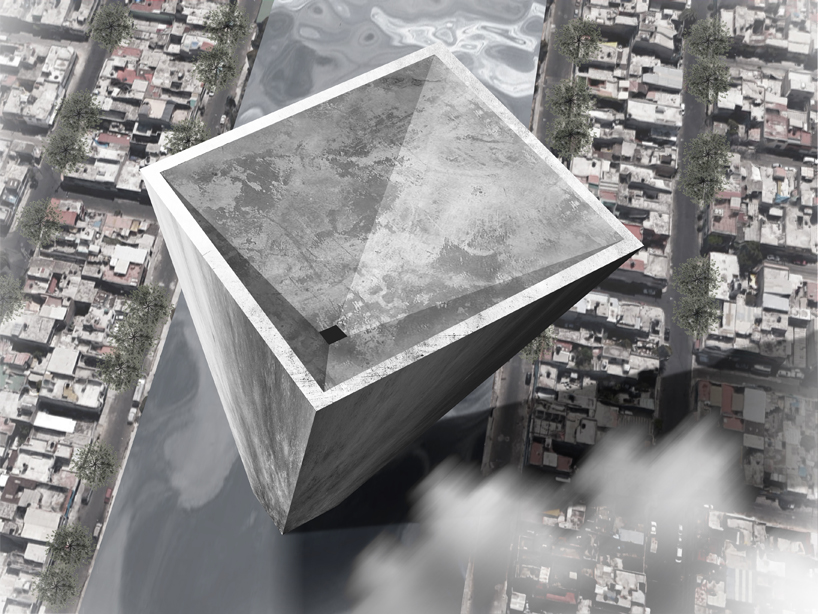
aerial view
the project is proposed for ciudad nezahualcóyotl, or more commonly called, ciudad neza, a city and municipality of the state of mexico, adjacent to the northeast corner of mexico city. in the 20th century, the land on which ciudad neza sits was under lake texcoco and uninhabited. successful draining of the lake created a new land, which the government eventually sold into private hands. today, ciudad neza is a sprawling city of over one million people.
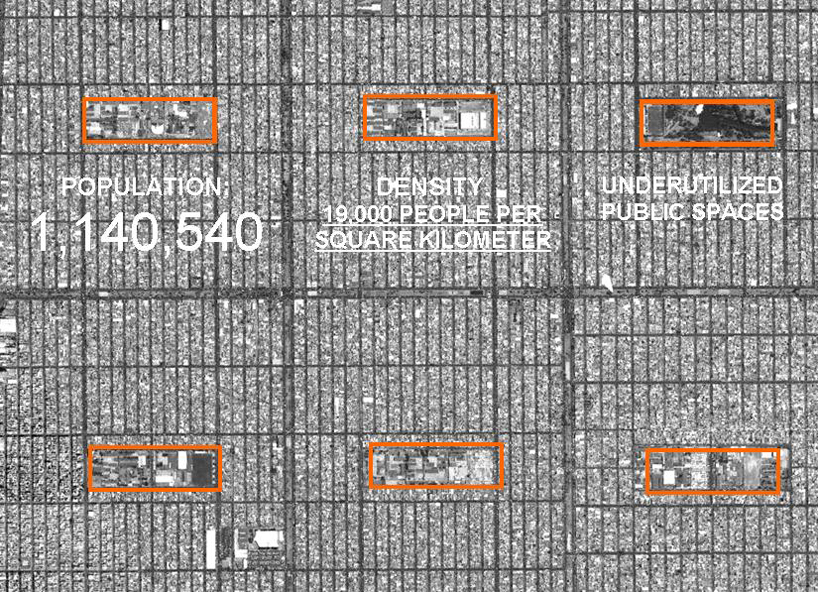
ciudad neza’s urban fabric
as mexico city continues to pull water from the aquifer below, its ground is sinking. the subsidence that results from groundwater extraction is a problem all over the world, but it is especially dramatic here. the aquifer has been under increasing pressure over the last several decades as the city’s population has skyrocketed. while subsidence has been stabilized in the city center, many parts of the metropolitan area continue to sink. some parts like ciudad neza have sunk more than 30 feet during the last century.
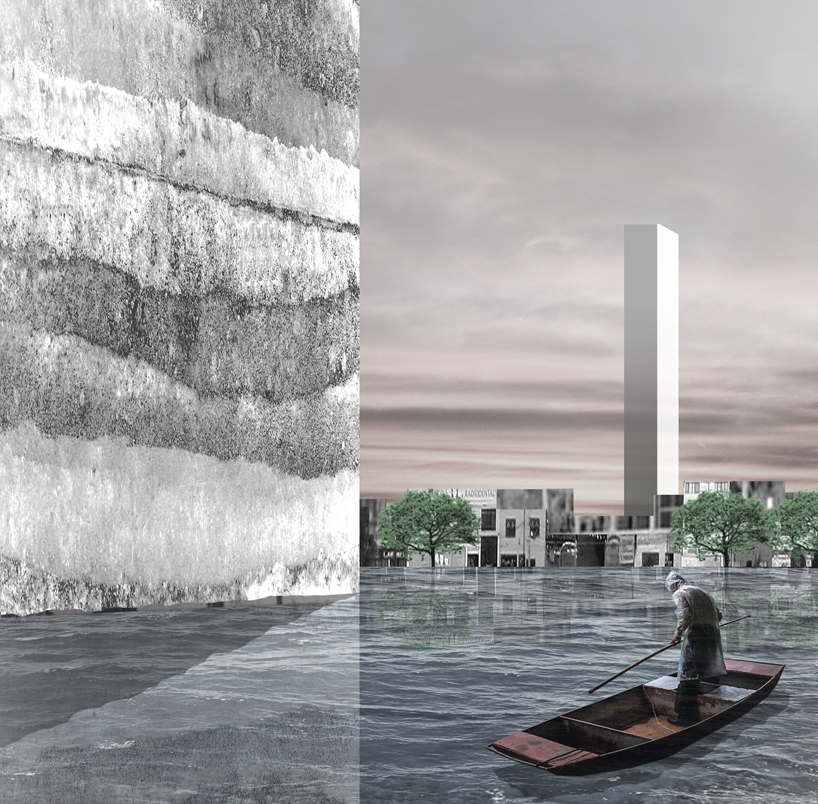
view from the lake
mexico city puts a lot of effort to stop the sinking. in some locations, it has caused the sewage lines to become slanted — resulting in the lines running backwards. consequently, the city struggles with flooding during the rainy season. emergency pumping stations have been built to maintain extraction capacity, but a major solution is needed. the water difficulties have become a vicious circle: as the city grows, more water is pumped from the aquifer. as more is pumped, the city sinks further. the sinkage ruptures more underground water pipes, sending fresh water gushing into the sewers, aggravating the shortage, requiring more water to be pumped from the aquifer, and so on.
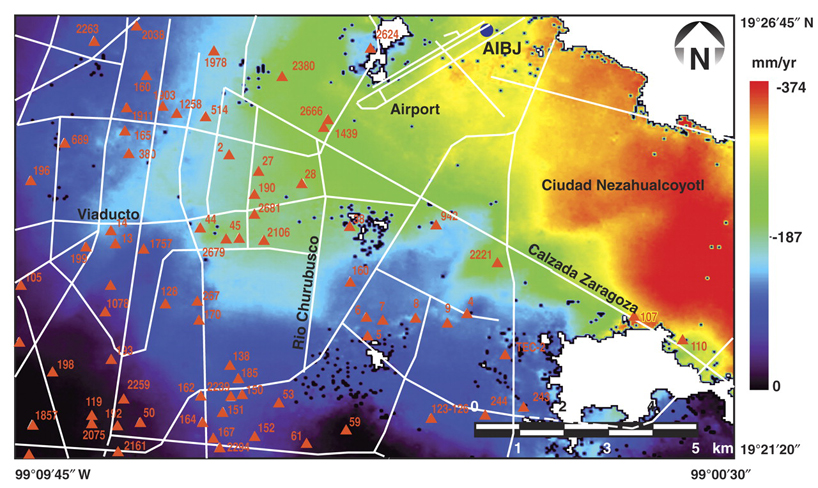
subsidence map of mexico city showing ciudad neza as one of the most affected areas
if mexico city receives significant pluvial precipitation at a total rate of 215m3/s, pluvial water is partly responsible for the urban flooding problem in rainy season, but rainwater harvesting could be part of the solution for people living in ciudad neza, where rainfall is heaviest, and the area is sufficient to collect and store water to reduce costs.
by gradually replacing the network of small storm sewers in ciudad neza with a rainwater system collector, the floods will decrease because the drainage system of the city will not be saturated during the rainy seasons, and after them, the treated water can be injected directly into the aquifer, stopping the sinking.

subsidence effects in mexico city’s downtown

problem analysis
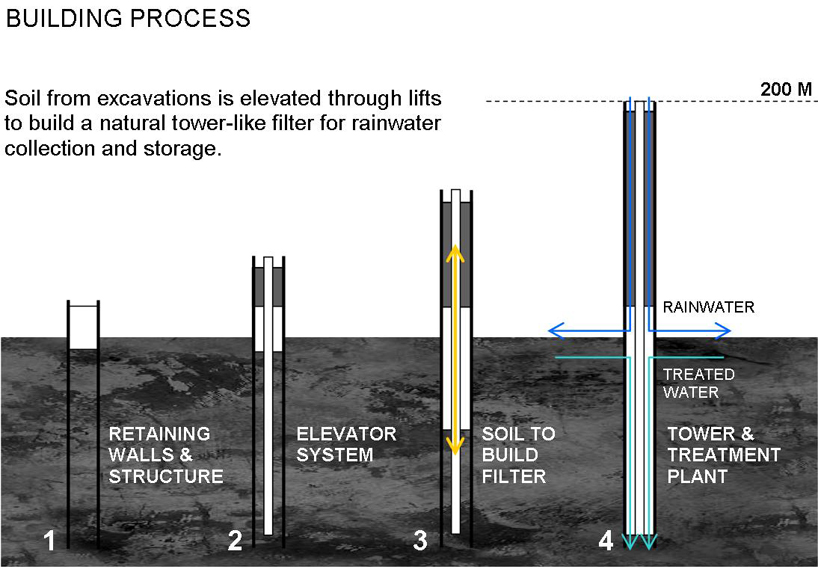
construction proposal
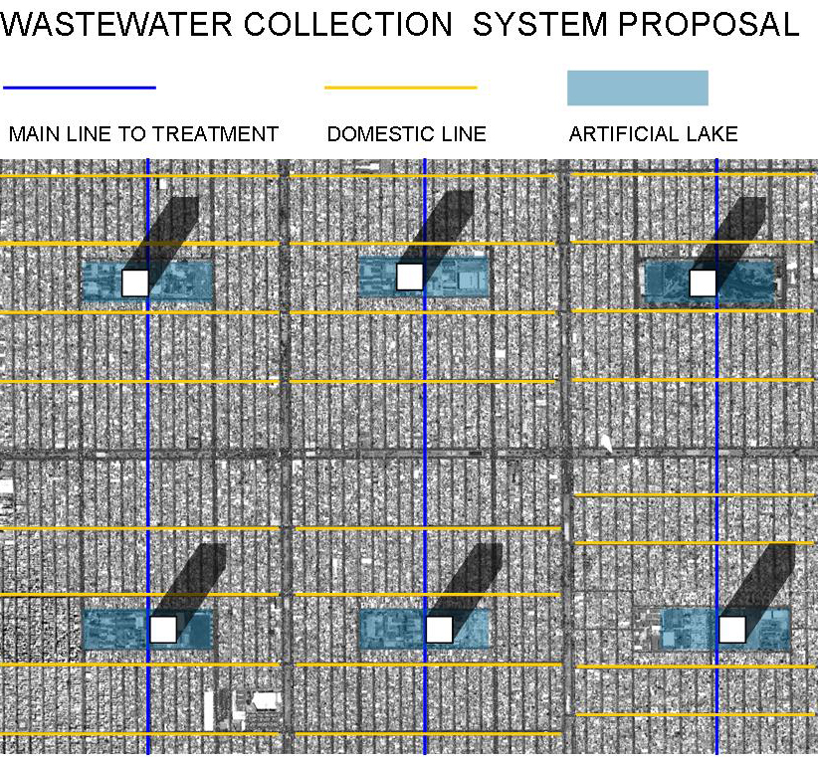
system proposal
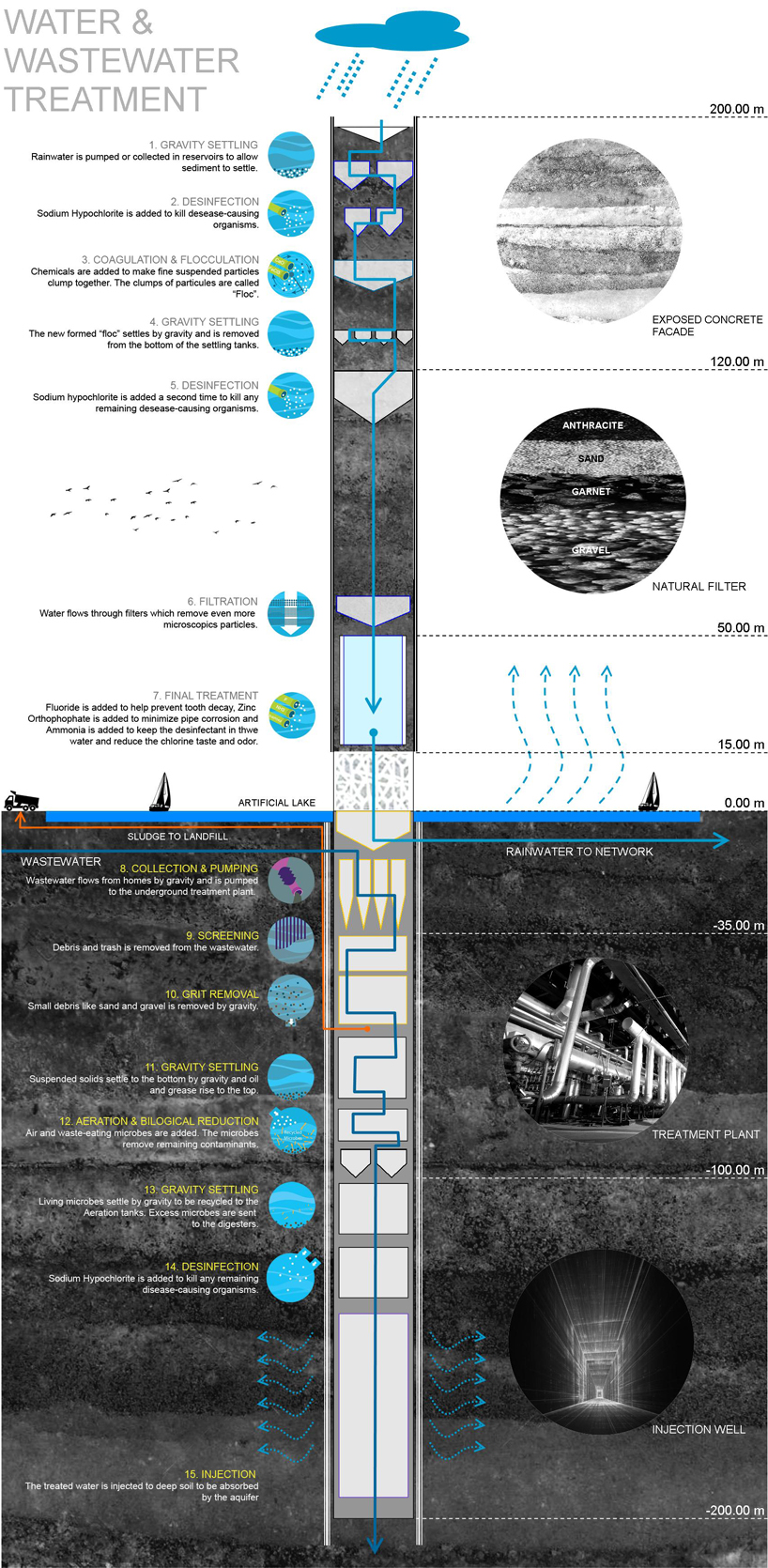
tower section
designboom has received this project from our ‘DIY submissions‘ feature, where we welcome our readers to submit their own work for publication. see more project submissions from our readers here.
shop
your own online design shop — no sales commission collected