leppanen + anker uses molded façade system for gaia building in ecuador
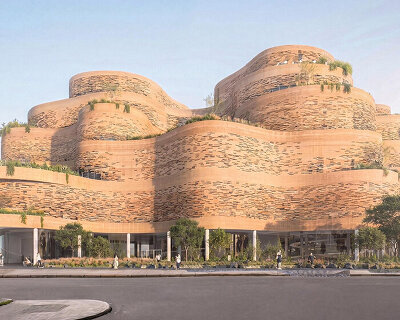
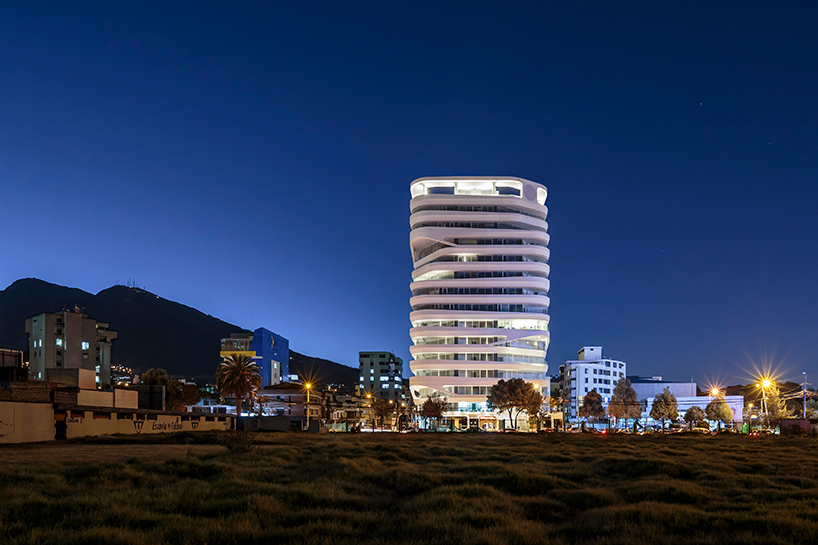
the new landmark building features a glass fiber reinforced concrete façade to influence movement and new shadow lines that reflect different points of view of quito.
prefer designboom on google[FEATURED]
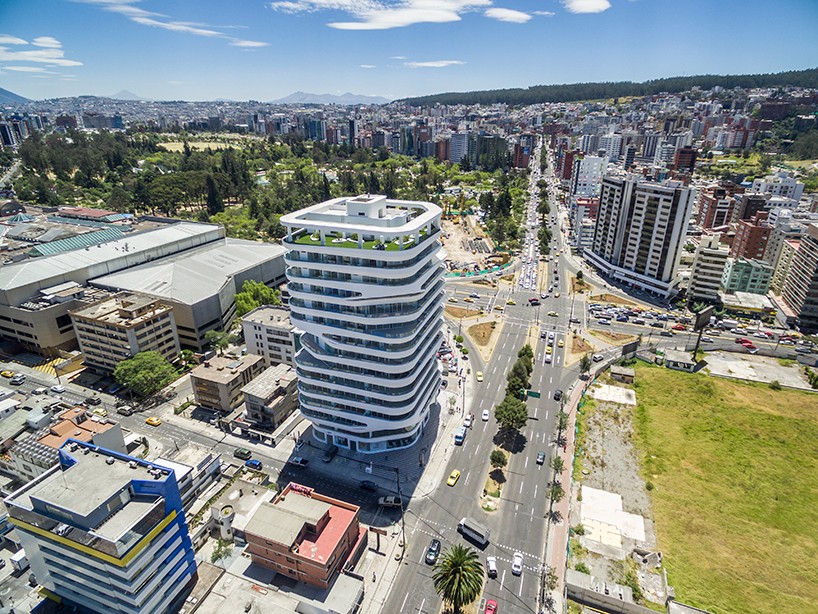
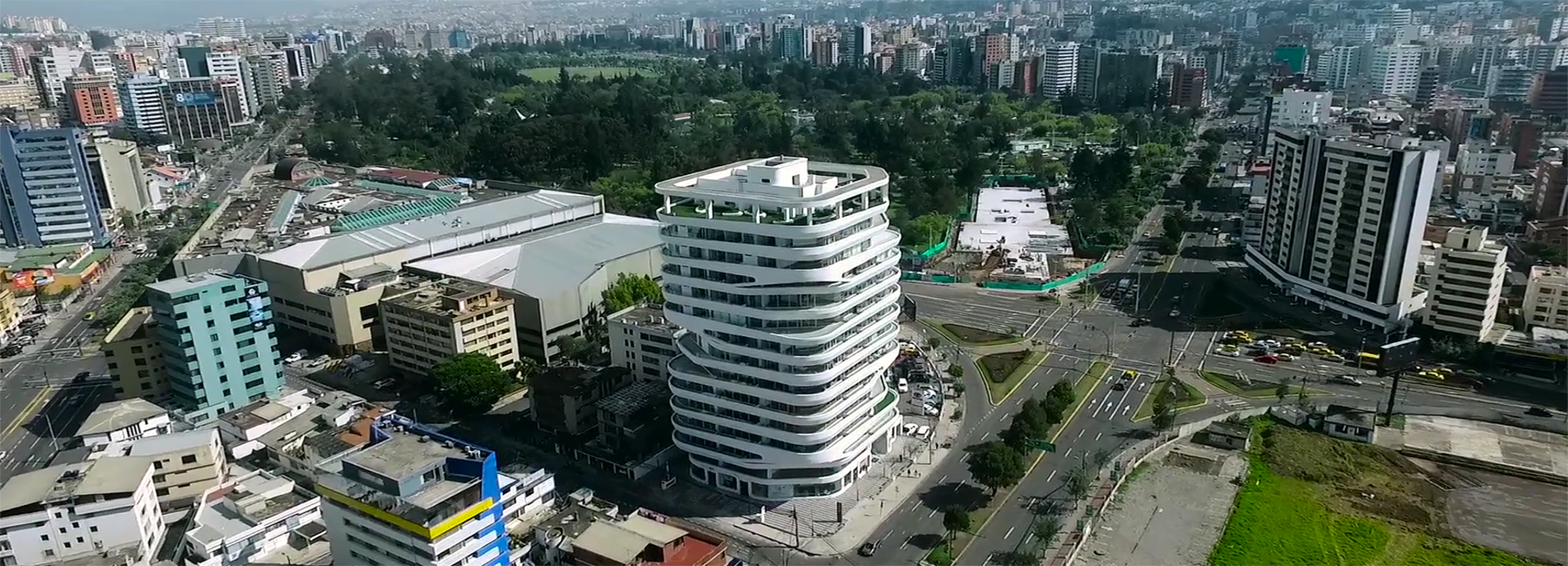
located in the ecuadorian capital of quito, the ‘gaia building’ has been constructed as a new landmark for the city. comprised of a total of 15,000 sqm of mixed-use space and topped with a large roof garden, this constructed green space is visually connected with the distant andes mountains. altogether, the fifteen storey tower merges commercial opportunities on the ground floor, offices on the next four levels and residential units on rest.
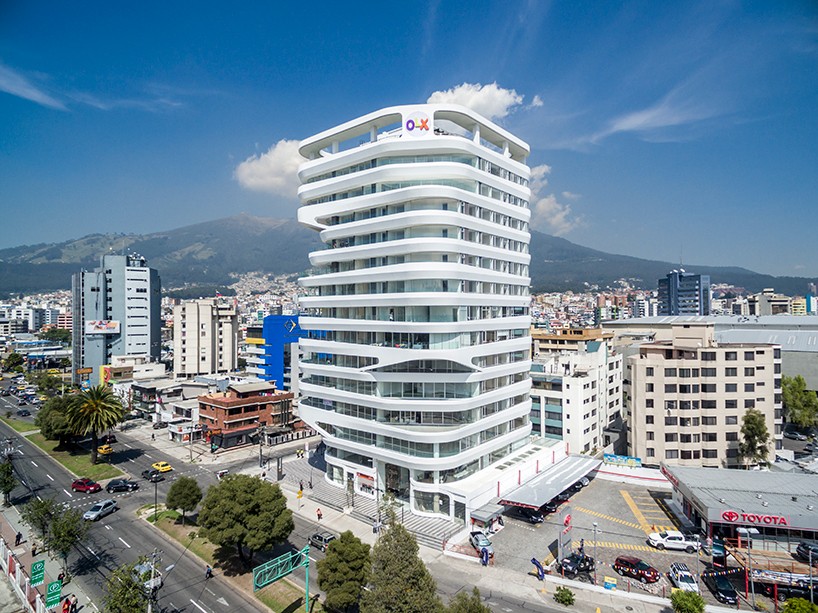
all images © sebastián crespo
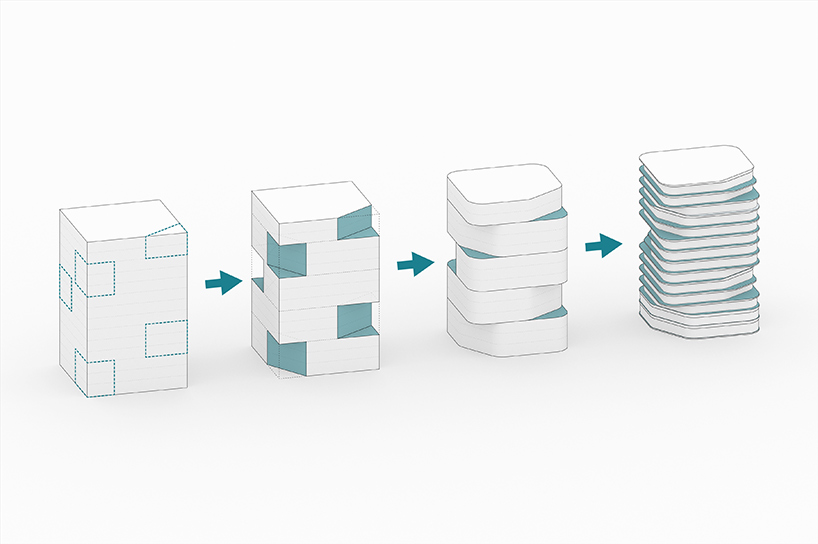
the gaia building is sited at an important intersection within the city where urban elements converge and this heavily influenced leppanen + anker arquitectos‘ final design. this includes a new metro stop, a government building, a commercial shopping center and is adjacent to the city park. the design and the construction process of the building utilizes a repeatable pattern system to reduce the overall amount of molds used in creating the distinctive white façade. a material process known as GFRC (glass fiber reinforced concrete) is sprayed directly onto the surface.
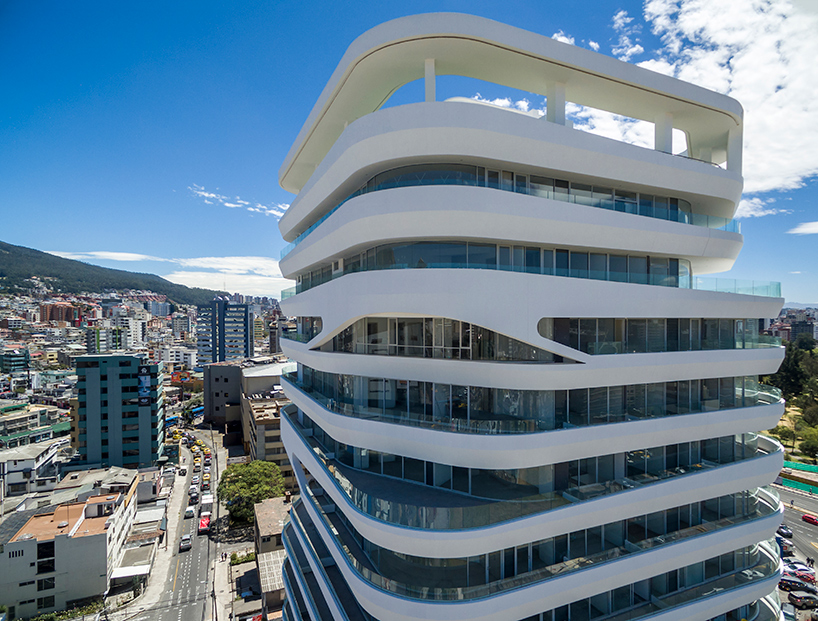
the building is a collaboration between leppanen + anker architects, and the developer uribe & schwarzkopf
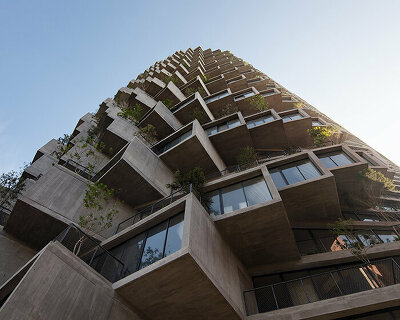
the advantages of the sinuous façade material is the efficient and ease of installation; the panels measure at to four meters and despite the size, they can be reused. a system of adjustable metallic connections allow the complex forms to align easily. being the first new construction in this neighborhood, the building attempts to combine the many existing and new diverse elements through movement to produce a play of light and shadow of the surroundings. deep balconies are carved around the perimeter of the scheme in hopes to reduce solar gain in the interior spaces and simultaneously allowing larger portions of glass to be used without sacrificing passive climate controlled spaces.
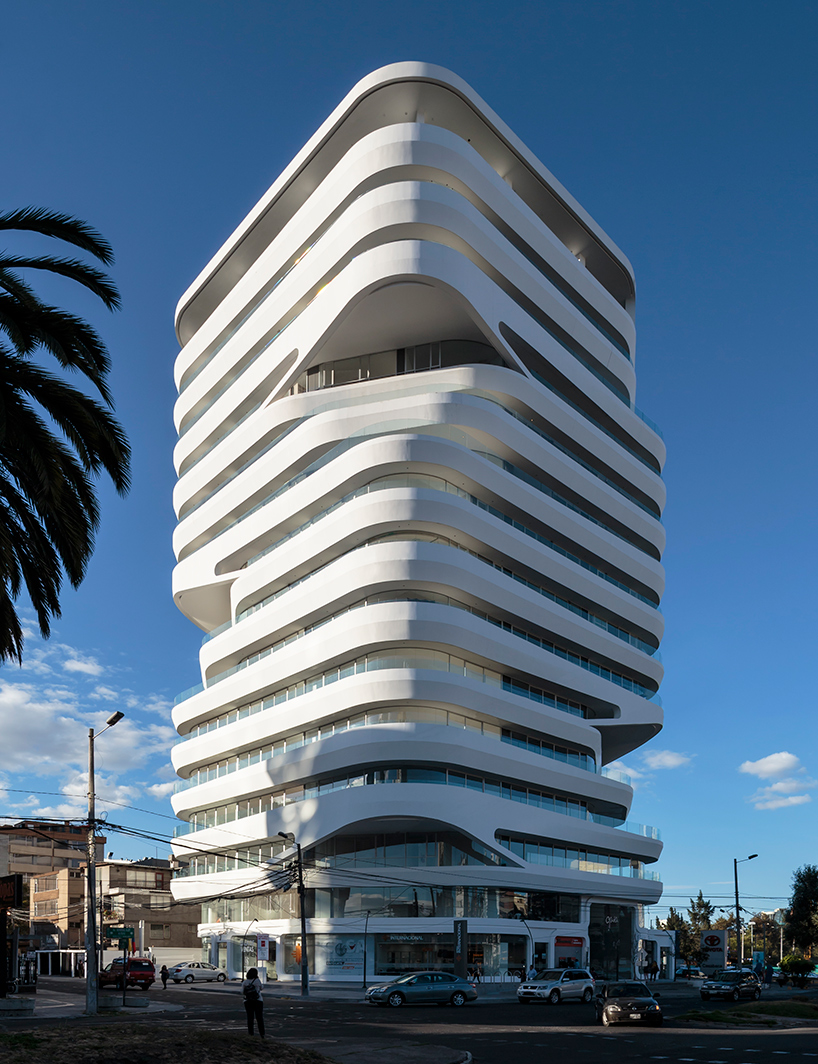
deep balconies are carved into the scheme in hopes to reduce solar gain internally
the first new construction in this zone and highly visible, the building attempts to combine the many existing and new diverse elements through movements that bring new shadow lines reflections and points of view. deep perimeter balconies wrap around the building help to reduce solar gain in the interior spaces allowing for the use of larger portions of glass in the façade, without sacrificing passive climate controlled spaces.
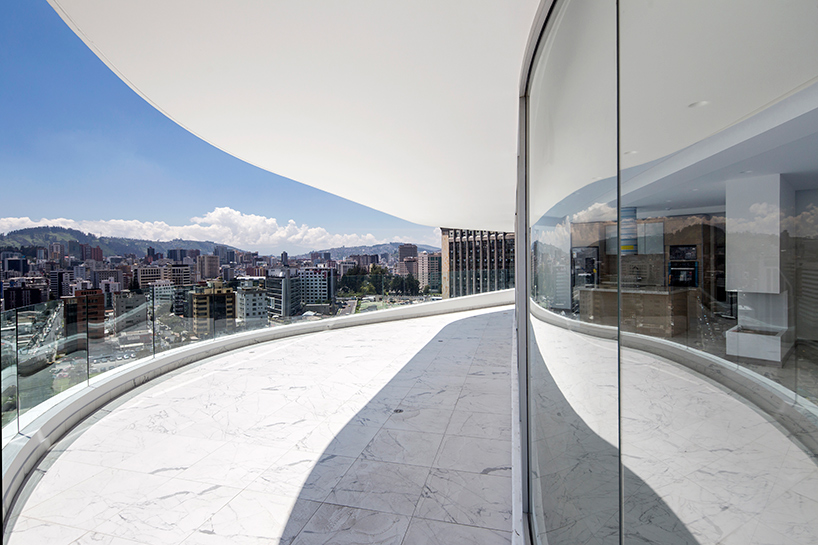
the façade provides shelter to the residential apartment’s balconies
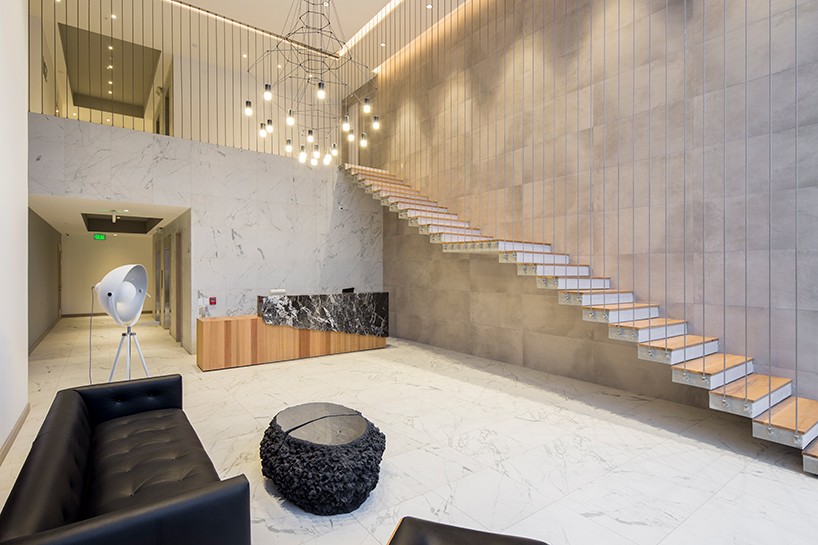
lobby into the building
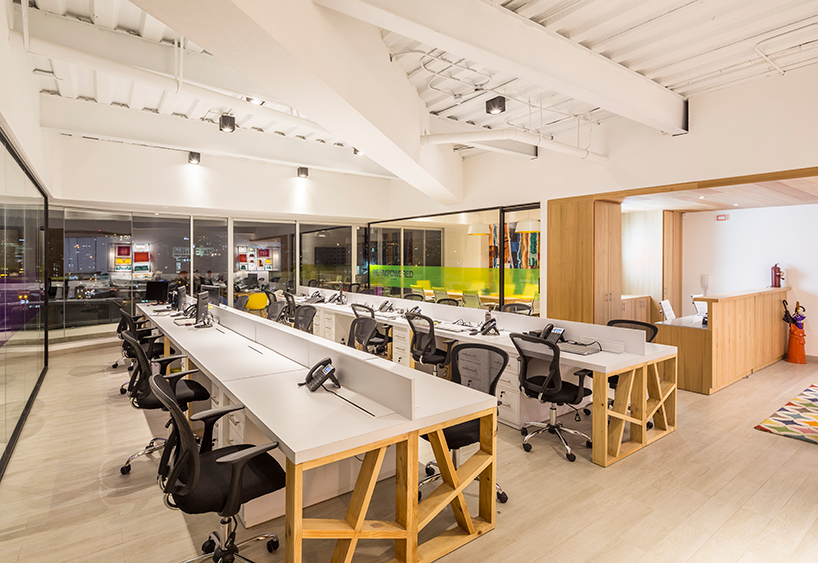
office space is used on the upper four floors
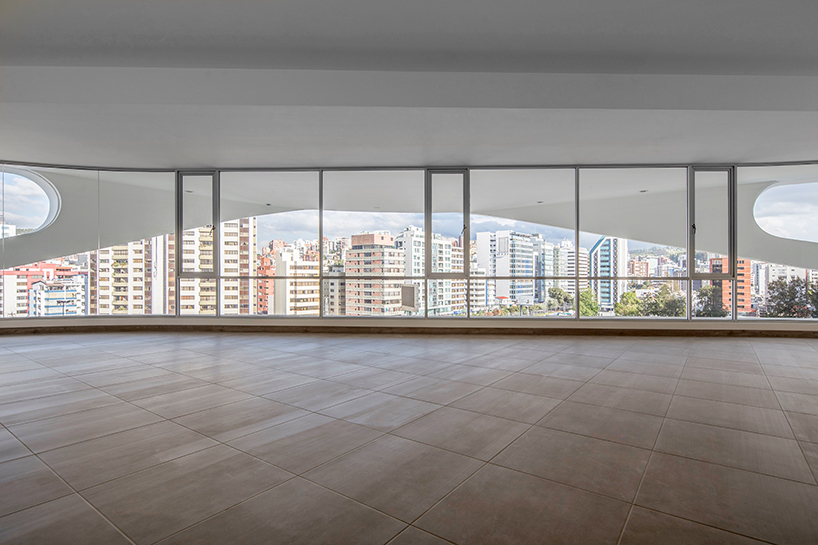
the building is topped with a large roof garden that makes visual connection to the city and surrounding andes
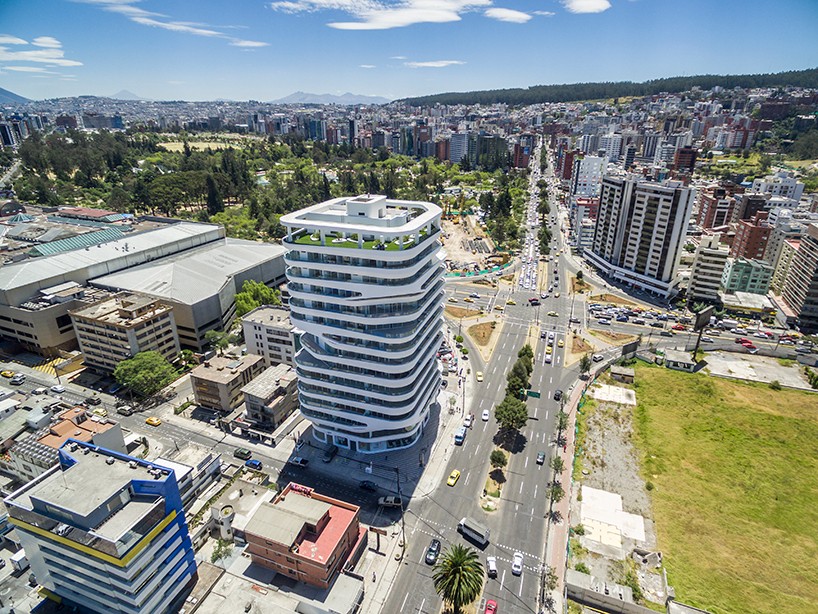
the gaia building distinctively makes a mark in its context sited next to a busy intersection
the design and the construction process of the building utilizes a repeatable patterning system to reduce the overall
amount of molds used
project info:
architects:
leppanen + anker arquitectos
uribe & schwarzkopf (interior architecture)
promoter / owner and construction: uribe & schwarzkopf
team at L+A architects:
aaron leppanen (principal)
gabriela anker (principal)
sofía chávez
caroline dieden
alberto játiva
country: ecuador
date: 2016
shop
your own online design shop — no sales commission collected