lorcan o’herlihy architects presents WATERshed exhibition at A+D museum
the show examines the relationships between urbanization and water use as placed within the context of the LA river watershed and elysian valley region.
prefer designboom on google[FEATURED]
lorcan o’herlihy architects presents WATERshed exhibition at A+D museum
all images courtesy of lorcan o’herlihy architects
current united nations climate change projections place almost half the world’s population within high water stress environments by 2030. this forecast is gaining considerable attention in california, which is quickly approaching its fifth year of drought. mandatory water restrictions have been placed, and in most cases are doing well to limit usage, but it’s still not enough. measures being enforced are well-intended, but lack a viable plan for sustainable growth.

‘sponge house’ axonometric
los angeles is one such city with an uncertain future. almost entirely reliant on imported natural resources, the sprawling metropolis is in dire need of change. often overlooked, is the los angeles river, and its potential to serve as a critical component for water use and management in the ever-growing city.

‘sponge house’ model
LA-based firm lorcan o’herlihy architects examines the relationships between urbanization and water use in their exhibition ‘WATERshed’, now open at the A+D architecture and design museum in los angeles. the works are thorough developments that exemplify contemporary urban planning, and realistically tap into existing ecological and infrastructural patterns.

‘bladder house’ axonometric
four programs are included within the project, and are conceived as occupying public and private lands in order to capitalize on the redundancies of outdated uses and infrastructure networks. the interventions take form at multiple scales, combining living, public space, and water-based systems into a hybrid environment that captures, recycles, purifies, and reconnects ground and stormwater back to the water table and LA river.
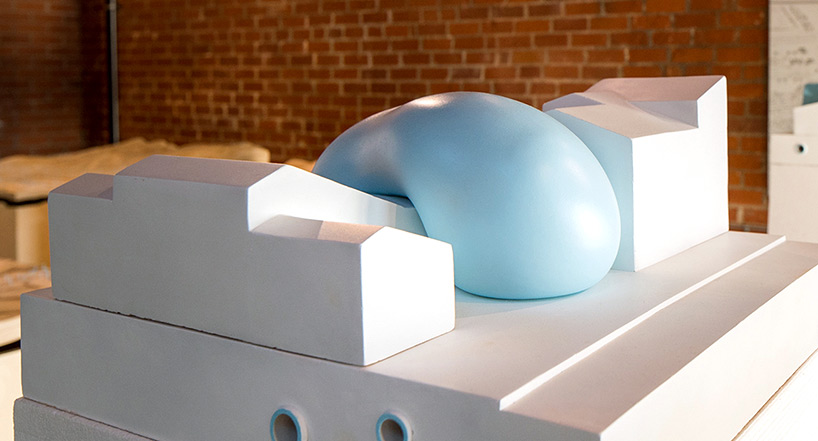
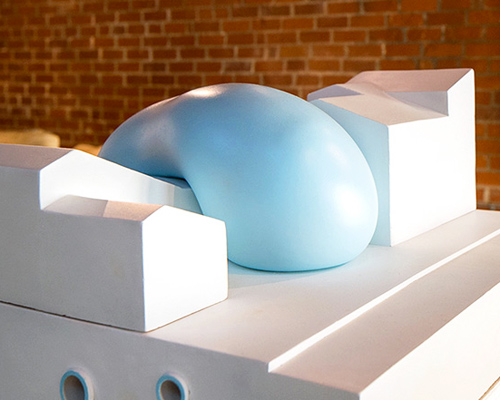
‘bladder house’ model
the ‘sponge house’ is made to be constructed in yards and underutilized zones. it is composed of a sponge filtration system embedded within the house. using its filter, the residence is able to close the gap between itself and the city’s stormwater system. it collects, purifies, and distributes recycled water back to itself and surrounding structures, enabling a closely-localized and more efficient treatment of limited water resources. during rare instances of high-volume rain events, the ‘bladder house’ comes into play. the structure collects and stores water for later community-wide access during extended periods of drought.

‘transit hub’ drawing
equally important to contemporary views on architecture, is the infrastructure with which they’re placed in. situated in the residual space left by the confluence of the metrolink rail, figueroa bridge, the I-5 and 110 interstates, arroyo-sec, and LA river is a proposed bike path extension. using the existing greenway trail, the program negotiates the disparate elements while also providing a range of multi-unit houses, public spaces, transportation and water systems.

‘transit hub’
last of the four, is the ‘river bridge cap’. like the others, its primary function is to blend housing and water filtration within a singular form. it also provides a connective public space that crosses the waterway. when water levels spike seasonally, the ‘cap’ removes large debris, optimizing passing water for future recycling and distribution by the other programs.
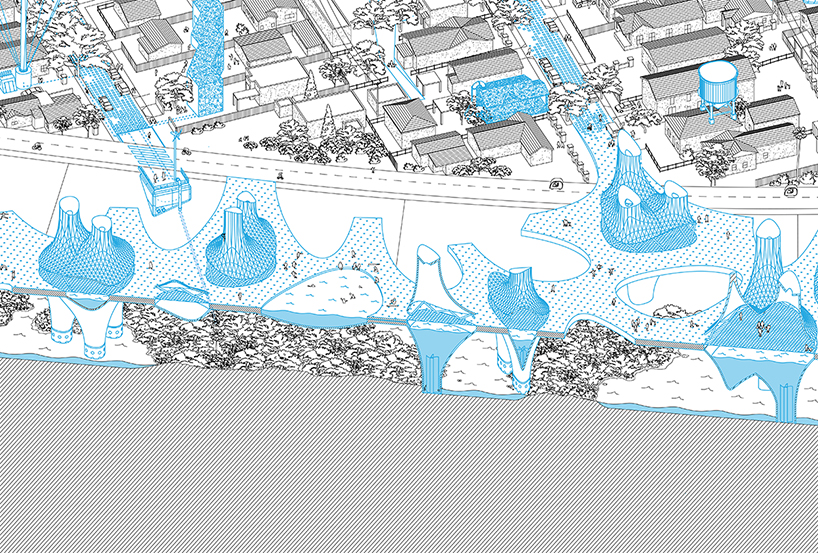
the los angeles ‘river bridge cap’ combines housing and water filtration
all models represent a portion of the LA river watershed located in the elysian valley. the speculative vision of ‘WATERshed’ embraces local natural resources in order to boost activities. the interventions establish an extensive network that uses finite space and ecological assets to set into motion critical regional transformations.

‘river bridge cap’
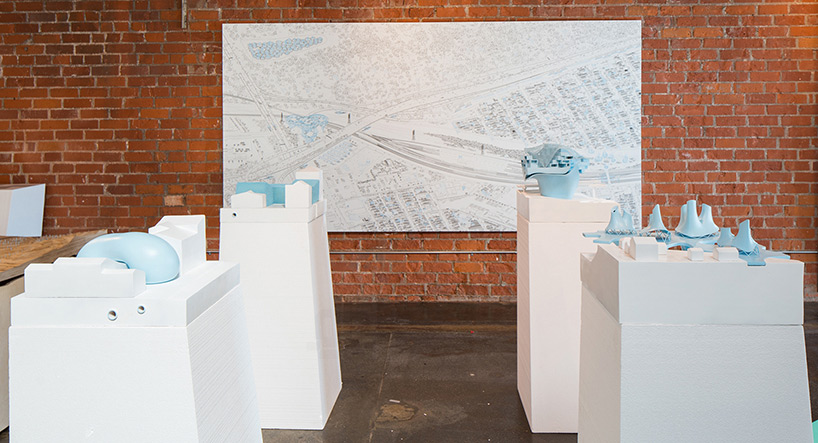
‘WATERshed’ exhibition overview

topographical maps of the elysian valley

locations of interventions in the city
designboom has received this project from our ‘DIY submissions‘ feature, where we welcome our readers to submit their own work for publication. see more project submissions from our readers here.
shop
your own online design shop — no sales commission collected