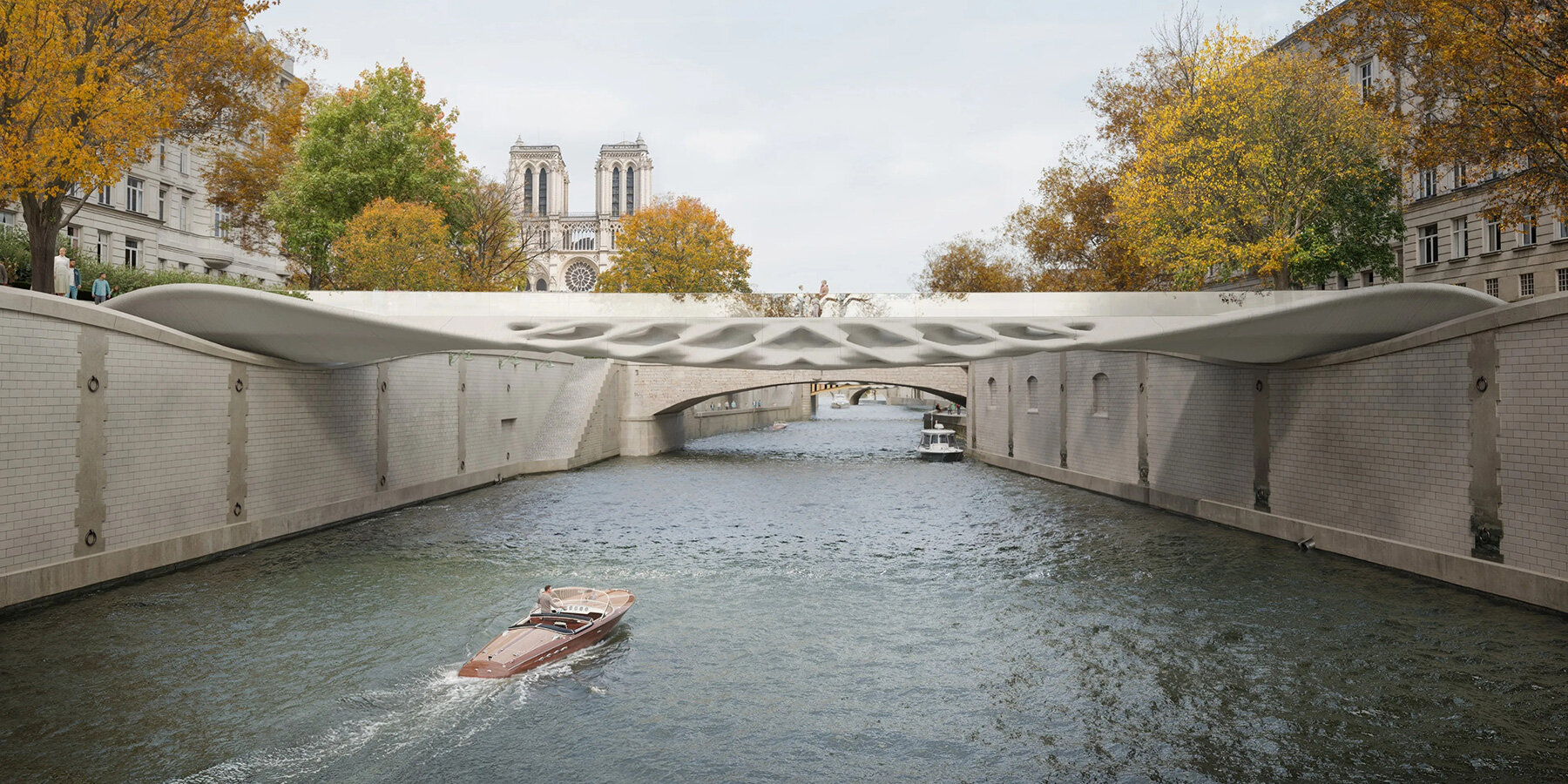
Diamanti Bridge debuts modular design at Venice exhibition
Presented as part of the Time, Space, Existence exhibition organized by the European Cultural Centre (ECC) in Venice, the Diamanti bridge is the result of a multi-institutional collaboration led by Professor Dr. Masoud Akbarzadeh, his team at the Polyhedral Structures Laboratory (University of Pennsylvania), and Sika Group Switzerland, led by Karolina Pajak.
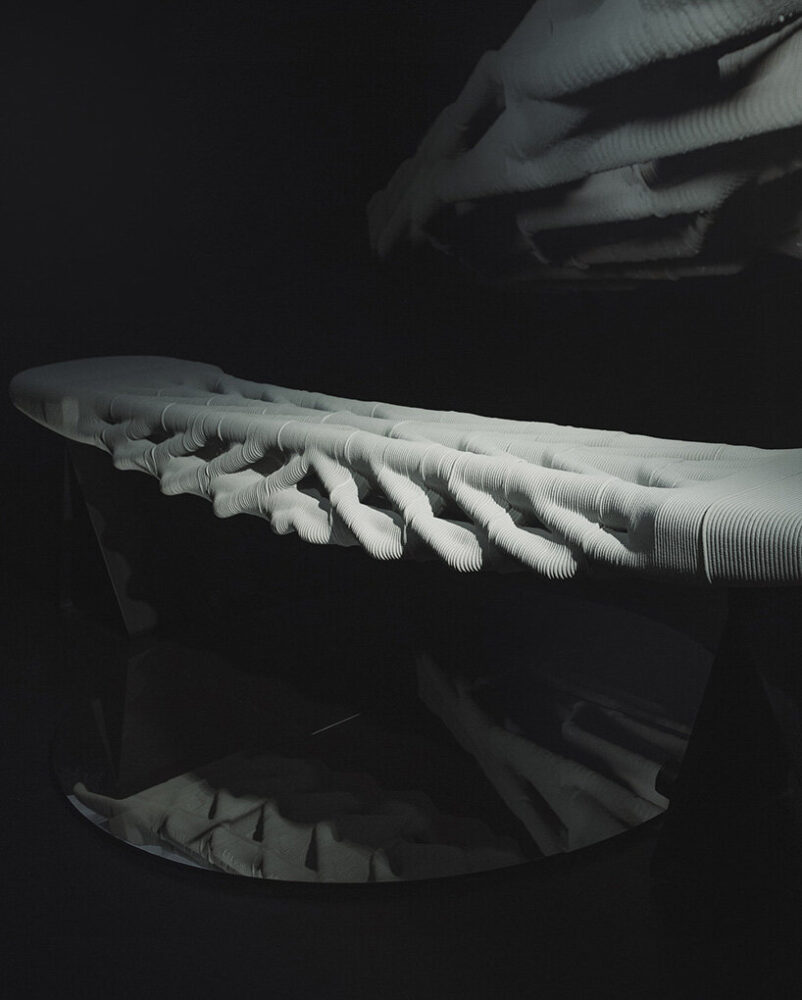
The small-scale prototype of the structure was fabricated by the Dutch firm Vertico, while the 10-meter version was 3D printed by Carsey3D in France. The bridge is composed of nine prefabricated concrete segments, 3D printed using a robotic arm and a two-component cementitious mix developed by Swiss construction chemicals company Sika. The geometry of each segment includes voids and surface articulation that support structural performance and enhance sustainability metrics by lowering embodied carbon. These segments are held together by eight ungrouted steel cables, forming a post-tensioned system that is functional and reversible. No adhesives or grout are used in the connections, making the bridge entirely demountable and recyclable.
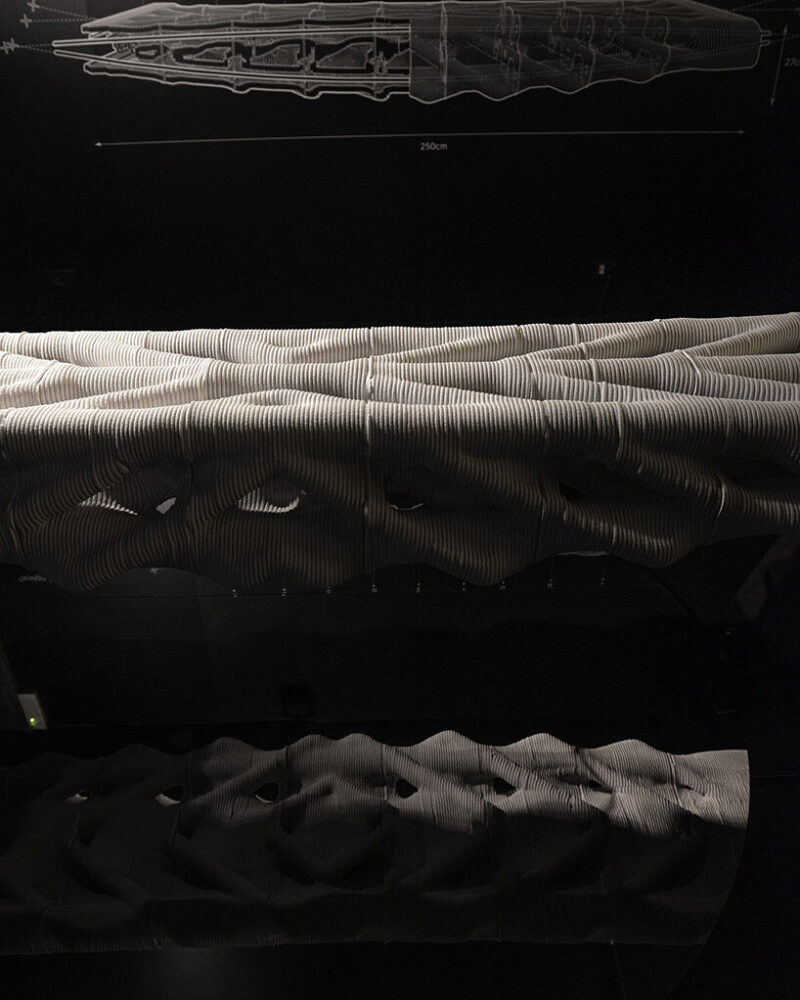
The project explores the future of construction through computational geometry, modularity, and additive manufacturing. Engineered around funicular logic and fabricated using robotic 3D concrete printing, the 2.5-meter-long bridge model offers a glimpse into how architectural spans can evolve toward material efficiency and demountable systems.
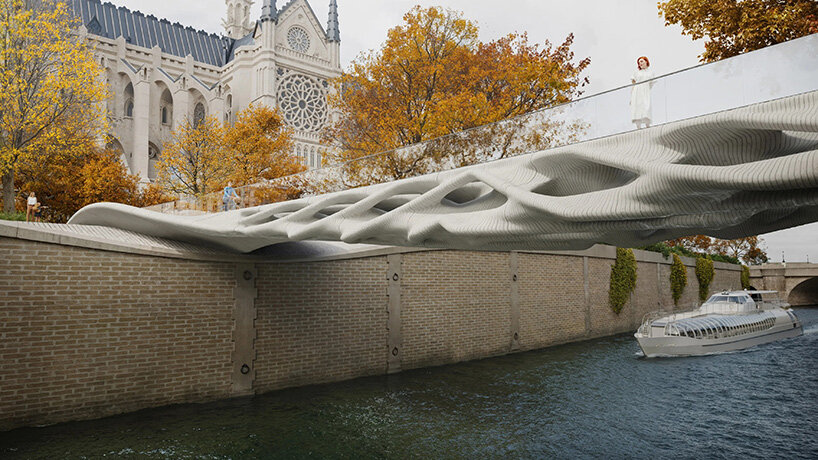
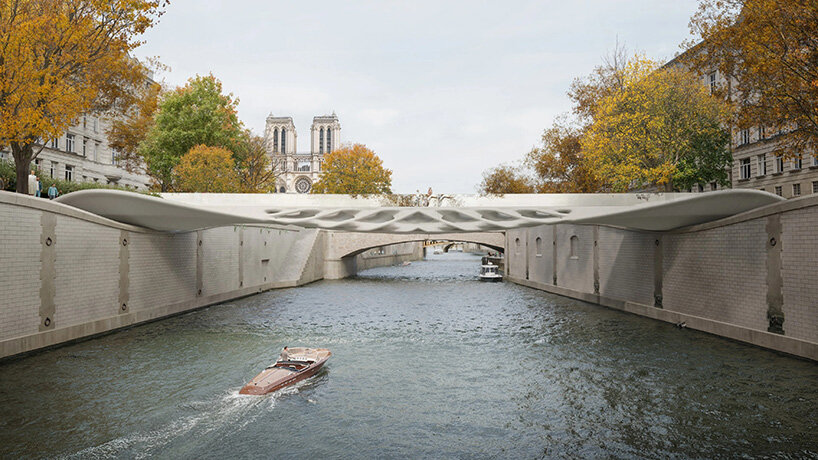
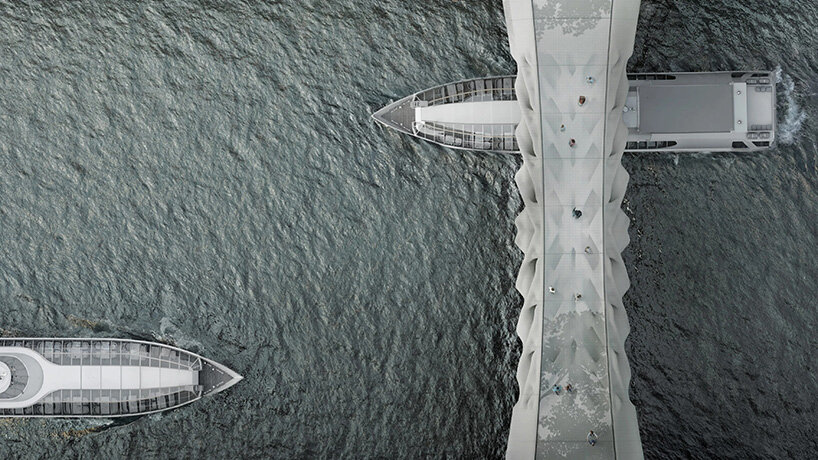
Diamanti bridge proposal design in Paris | visualizations by Fortes.vision, courtesy of Massive Form
3D-printed Concrete Construction Uses Polyhedral Forms
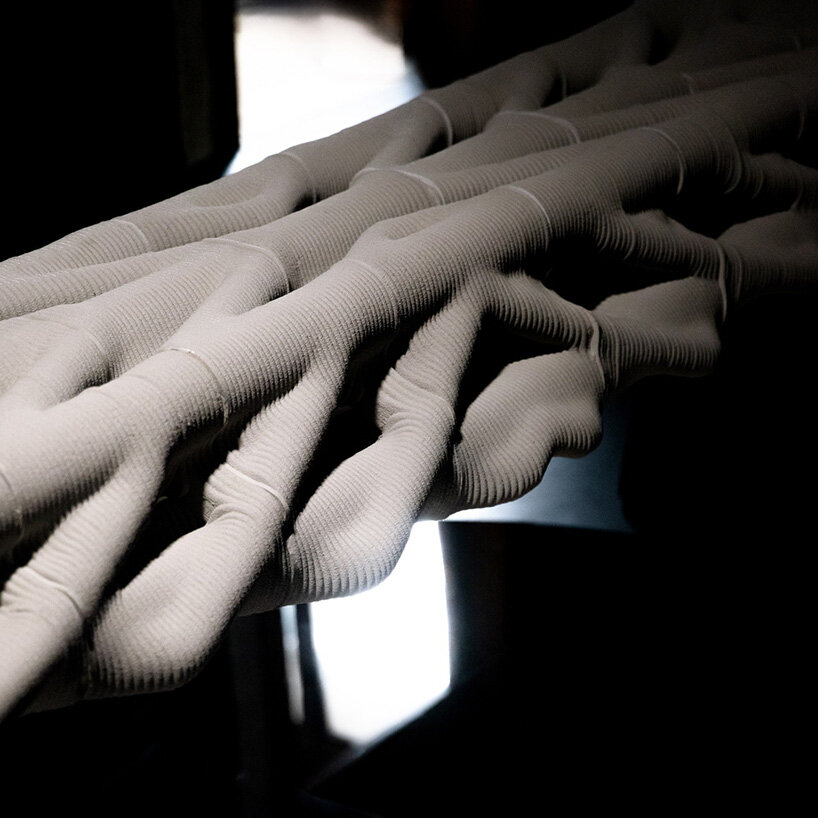
Drawing on the design method of Polyhedral Graphic Statics (PGS), the Diamanti project channels compressive and tensile forces through a polyhedral form optimized for performance with minimal material. The geometry of the structure is shaped by force flow and fabrication constraints and integrates anticlastic diamond surfaces that stiffen the segments, distribute loads, and reduce concrete usage without sacrificing integrity.
While the version on display at the seventh edition of ECC’s Time Space Existence in Venice spans 2.5 meters with a slim 26 cm depth, the design led by Professor Dr. Masoud Akbarzadeh has been successfully tested at a full 9-meter span, underlining its scalability. The underlying concept proposes a rethink of how construction systems can reduce reliance on massive reinforcement, cut material waste, and favor ease of disassembly. The Polyhedral Structures Laboratory team integrates computational design with innovative material systems.
Professor Dr. Masoud Akbarzadeh and his team at the Polyhedral Structures Laboratory design the Diamanti bridge
cross-disciplinary collaboration shapes low-carbon prototype
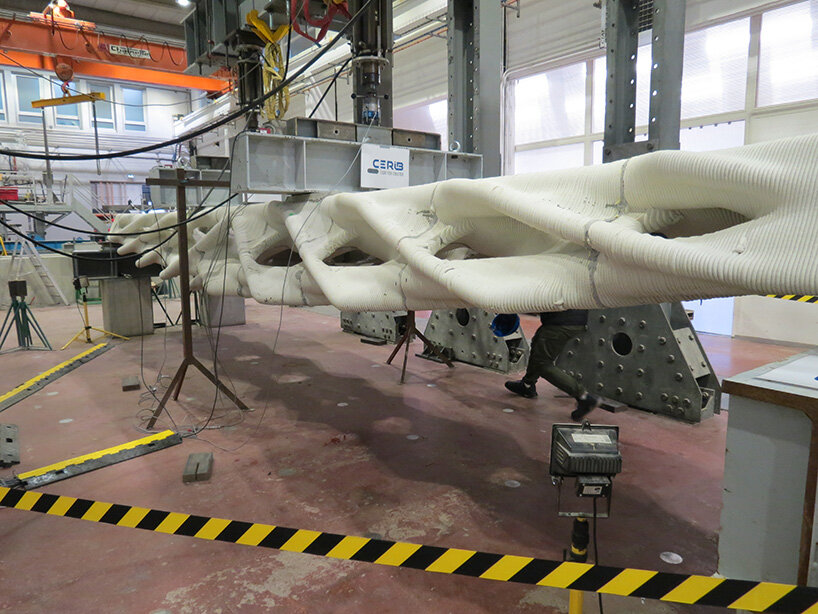
The Diamanti bridge reflects a systems-based approach that links academic research with industrial application. Each phase of the project was carried out through a network of collaborators. Sika Group developed a customized cementitious mix tailored for robotic extrusion. Carsey 3D printed the parts and managed the logistics of fabrication and assembly, while post-tensioning expertise was provided by AEVIA. Structural modeling and analysis were conducted independently by researchers at City College of New York and Villanova University, and physical load testing took place at the CERIB institute in France.
Diamanti should be understood as a working prototype, a testbed for modular construction methods that focus on material efficiency, reversibility, and low-carbon performance. Its design is driven by a logic of force distribution, demonstrating how structural performance, ease of assembly, and future disassembly can be integrated within a single prefabricated system.
the bridge is composed of nine prefabricated concrete segments
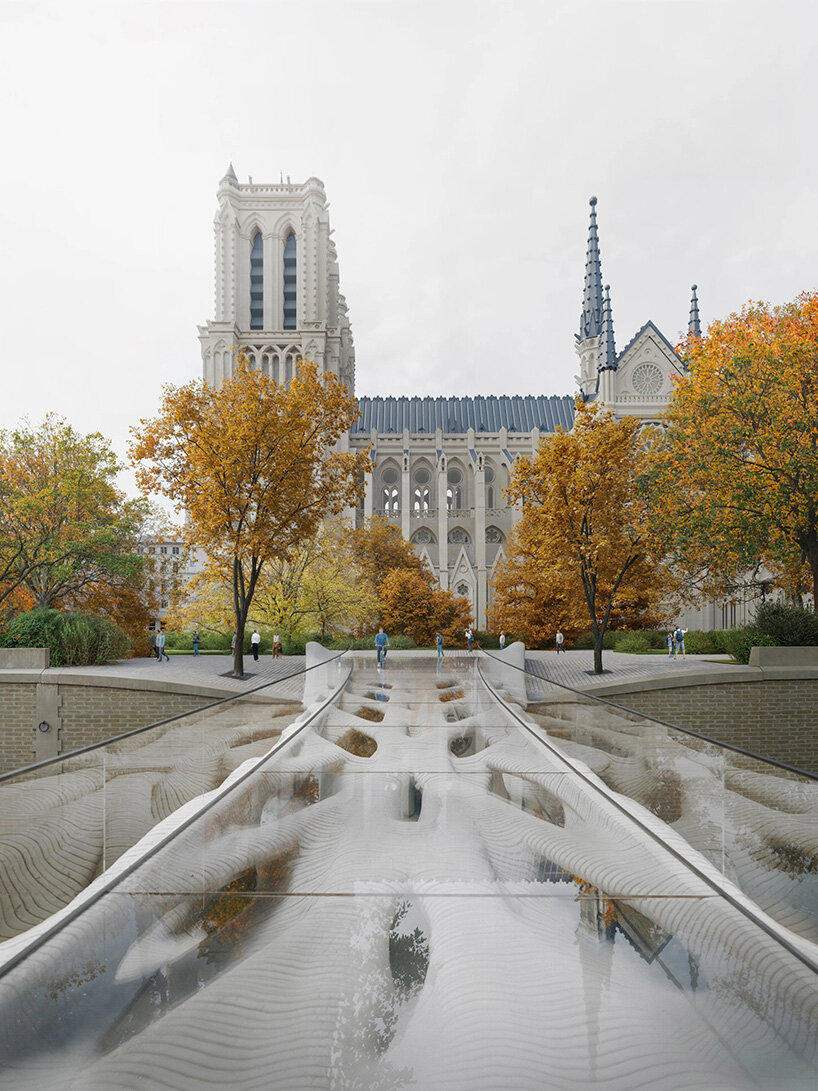
the geometry of each segment includes voids and surface articulation that support structural performance
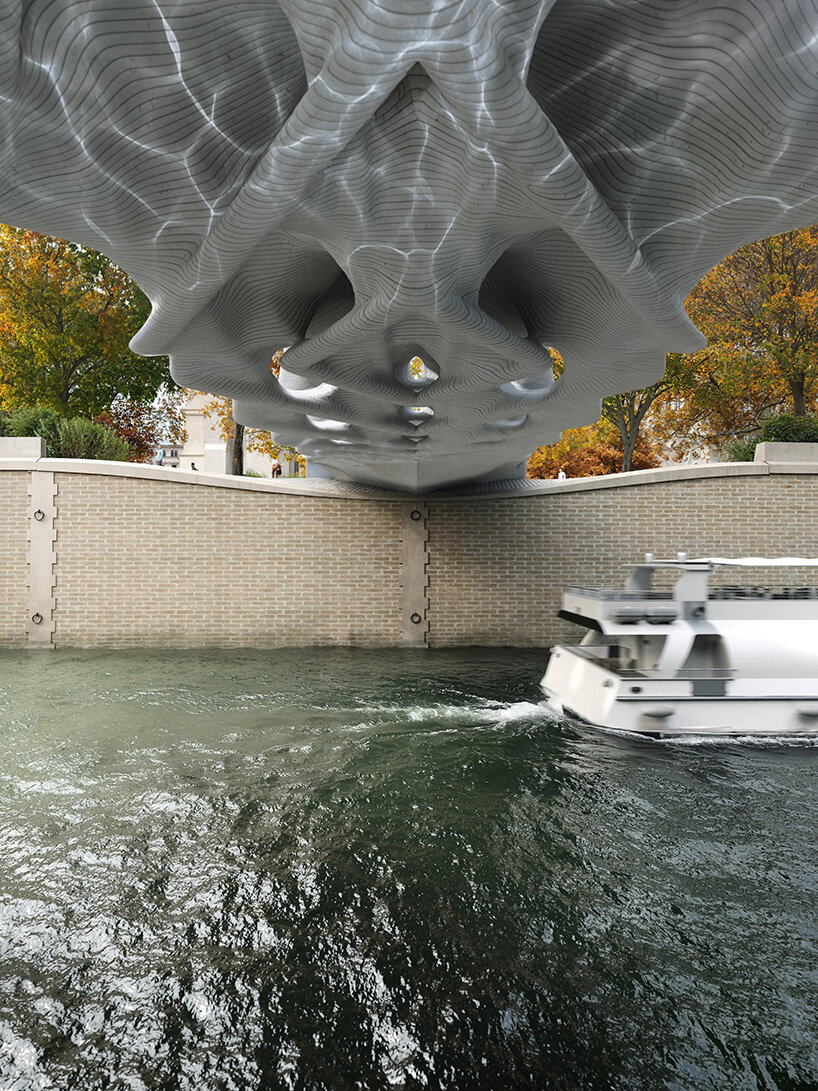
enhancing sustainability metrics by lowering embodied carbon
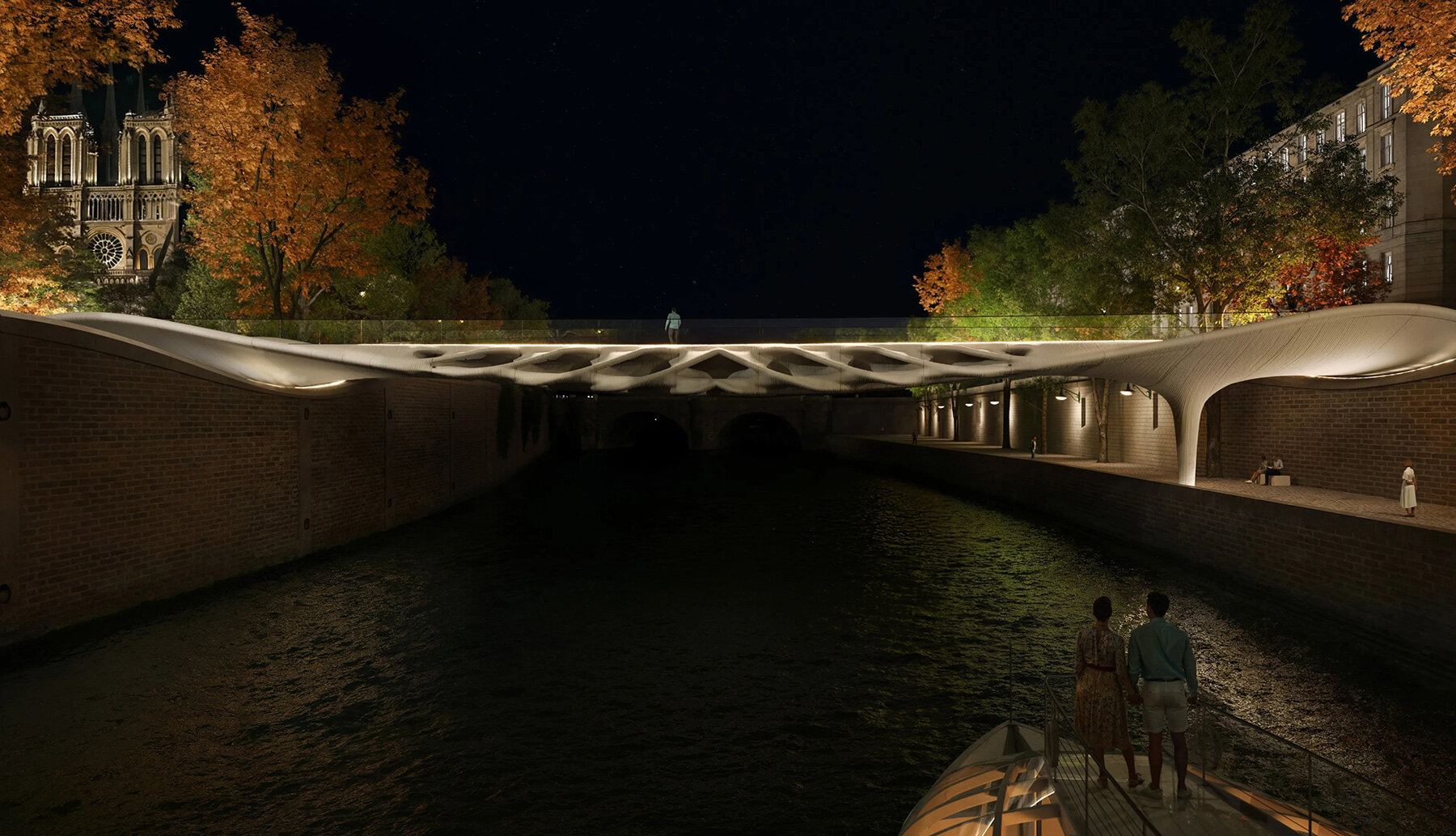
segments are held together by eight ungrouted steel cables
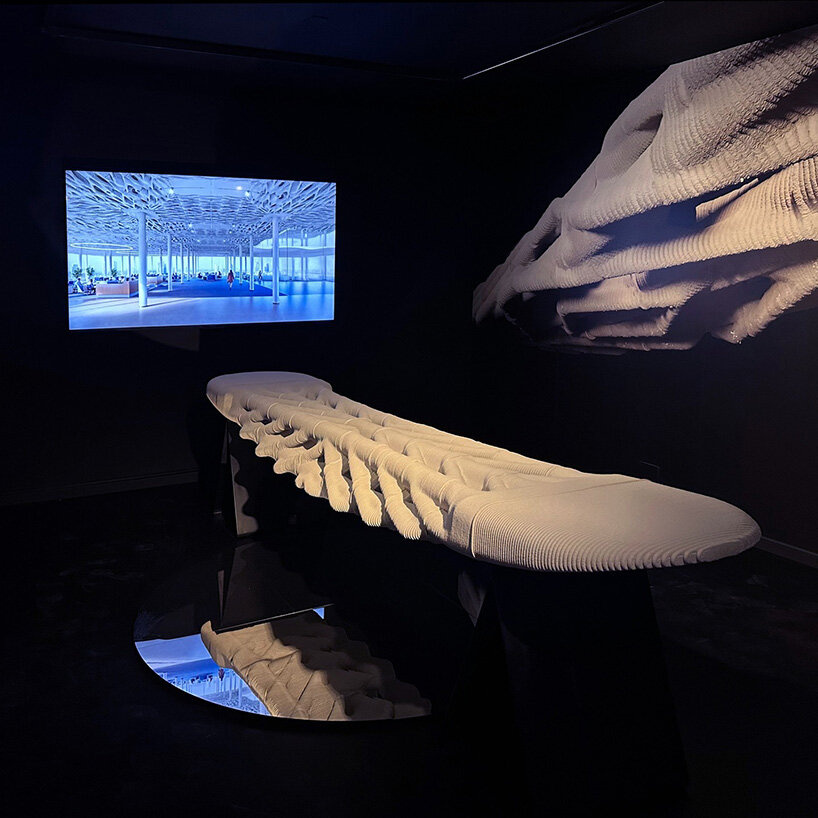
part of the Time, Space, Existence exhibition in Venice | image via @masoudakbarzadeh
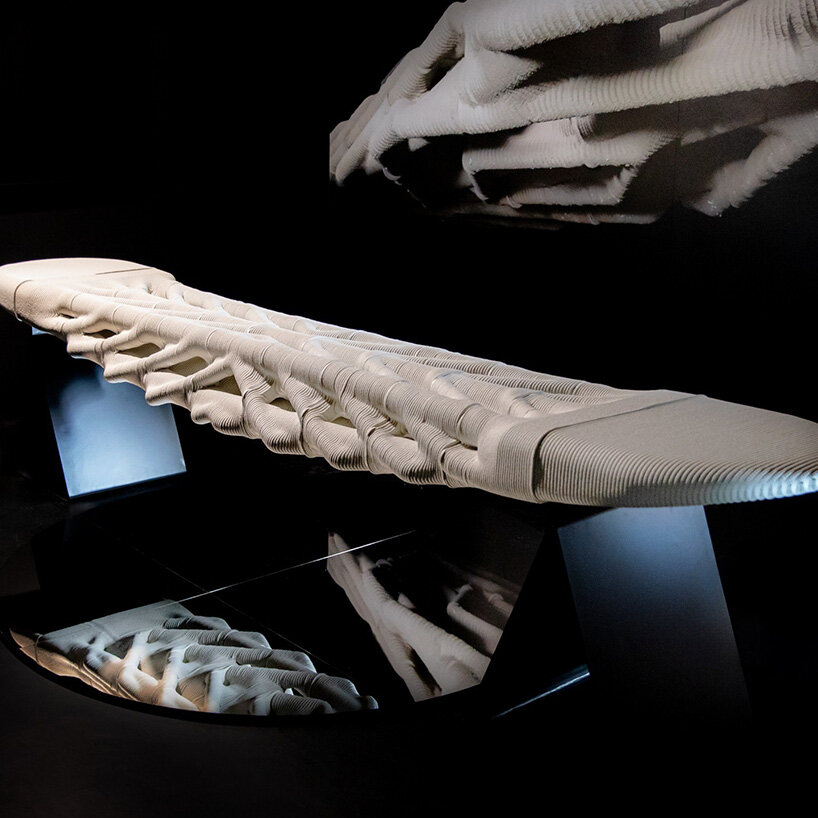
a post-tensioned system that is both fully functional and reversible | image via @masoudakbarzadeh
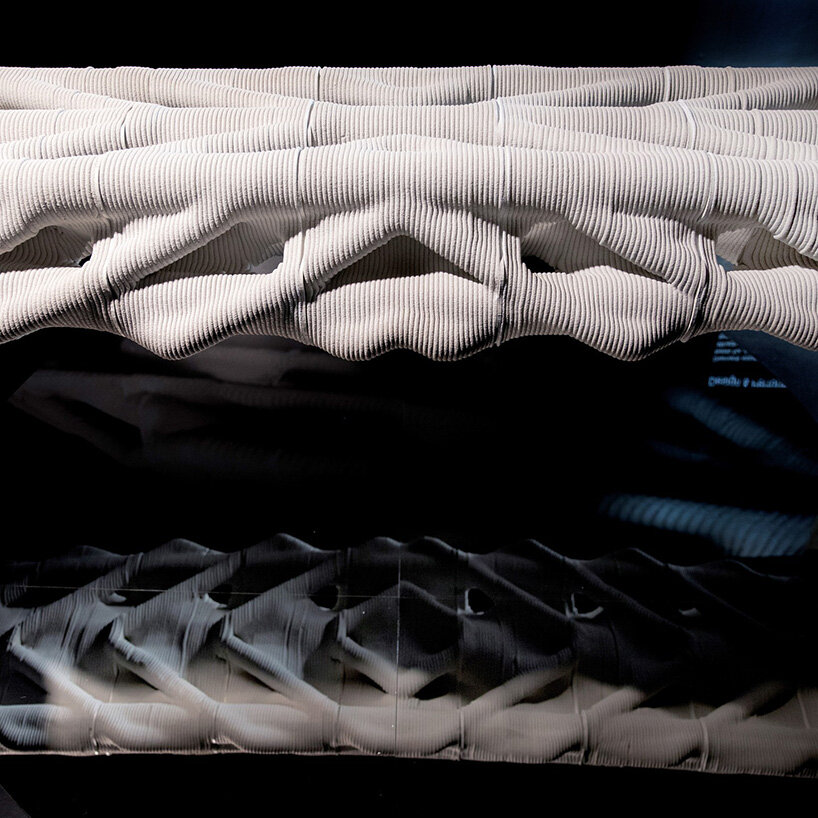
the model spans 2.5 meters with a slim 26 cm depth | image via @masoudakbarzadeh
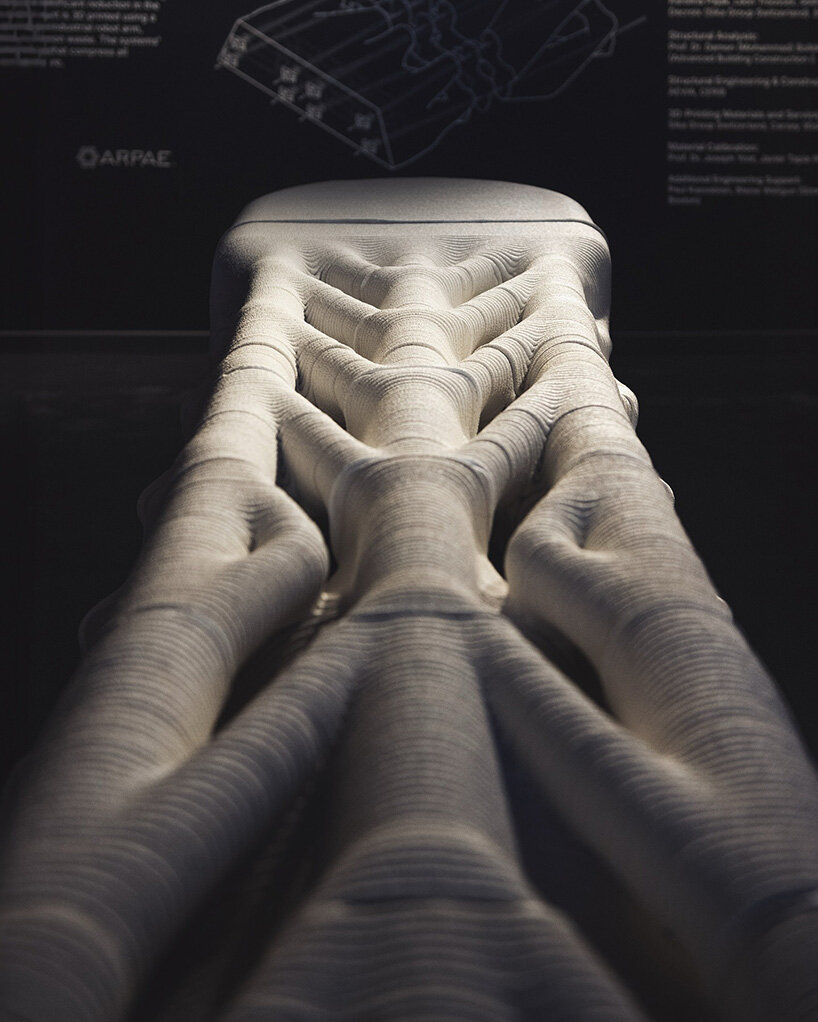
challenging the conventional concrete–timber hierarchy | image via @vertico.xyz
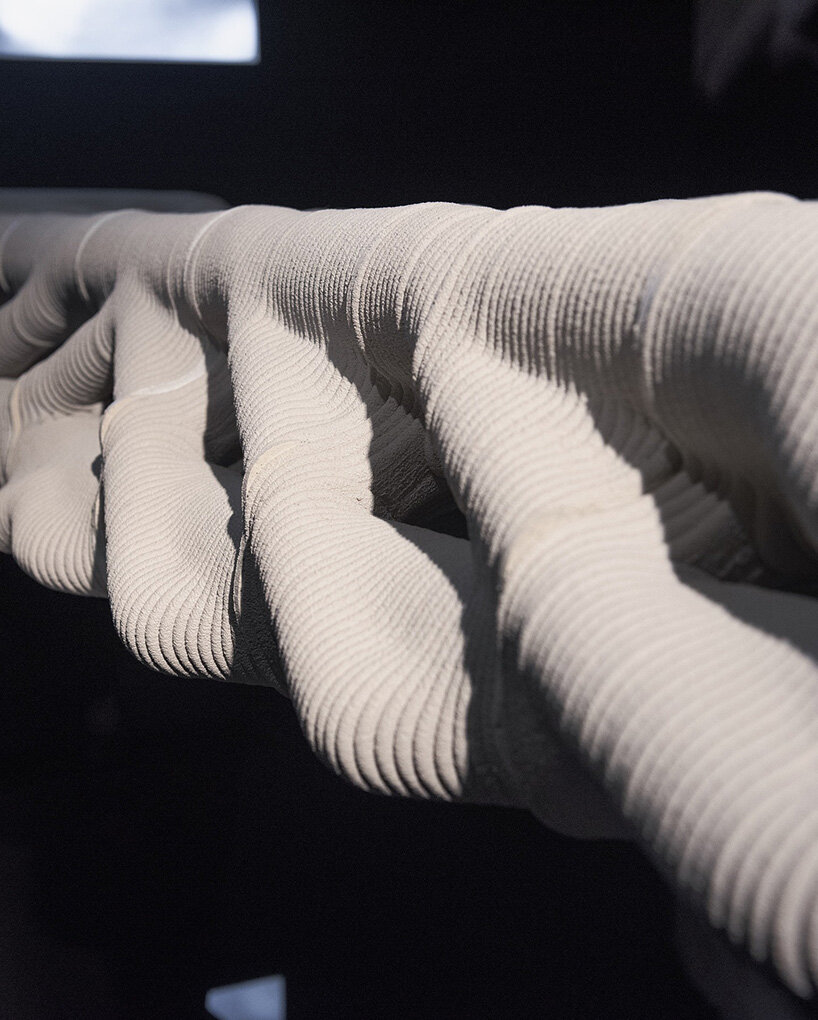
a testbed for modular construction methods | image via @vertico.xyz
project info:
name: Diamanti
design and structural engineering: Prof. Dr. Masoud Akbarzadeh | @masoudakbarzadeh (Massive Form | @massive_form), Amir Motavaselian, Dr. Maximilian E. Ororbia, Hua Chai, Yefan Zhi, Teng Teng, Pouria Vakhshouri, Dr. Mathias Bernhard (Polyhedral Structures Laboratory | @polyhedralstructureslab, University of Pennsylvania)
exhibition: Time Space Existence 2025
location: Giardini della Marinaressa, Venice, Italy
organized by: European Cultural Centre (ECC) | @ecc_italy
3D printing: Vertico
material and mix development: Sika Group (Karolina Pajak, Leon Trousset, Severin Mueller, Mylene Bernard, Fabrice Decroix)
fabrication + assembly: Carsey 3D
post-tensioning: AEVIA
structural analysis: Advanced Building Construction Lab, City College of New York (Prof. Dr. Damon Bolhassani, Dr. Fahimeh Yavartanoo)
load testing: CERIB, France
material calibration: Prof. Dr. Joseph Yost, Javier Tapia (Villanova University)
additional support: Paul Kassabian, Blaise Waligun
3D printing (886)
 Mar 15, 2026
 Mar 09, 2026
 Mar 08, 2026
 Mar 02, 2026
 Feb 27, 2026
bridge architecture and design (266)
 Jan 25, 2026
 Jan 08, 2026
 Dec 01, 2025
 Nov 21, 2025
 Nov 18, 2025
carbon neutrality? (184)
 Feb 17, 2026 Jan 25, 2026
 Jan 17, 2026
 Jan 16, 2026
 Jan 12, 2026
concrete architecture and design (981)
 Mar 15, 2026
 Mar 09, 2026 Mar 08, 2026
 Mar 06, 2026
 Mar 04, 2026
materials (198)
 Mar 10, 2026
 Mar 10, 2026
 Mar 09, 2026 Mar 08, 2026
 Mar 06, 2026
modular design (179)
 Mar 09, 2026
 Mar 09, 2026
 Mar 06, 2026
 Mar 03, 2026
venice architecture biennale 2025 (60)
 Oct 30, 2025
 Sep 03, 2025
 Aug 20, 2025
 Aug 06, 2025
 Aug 05, 2025
 Mar 12, 2026
 Mar 11, 2026
 Feb 24, 2026