
the frankfurt kitchen and margarete schütte-lihotzky’s vision of a ‘machine for living’
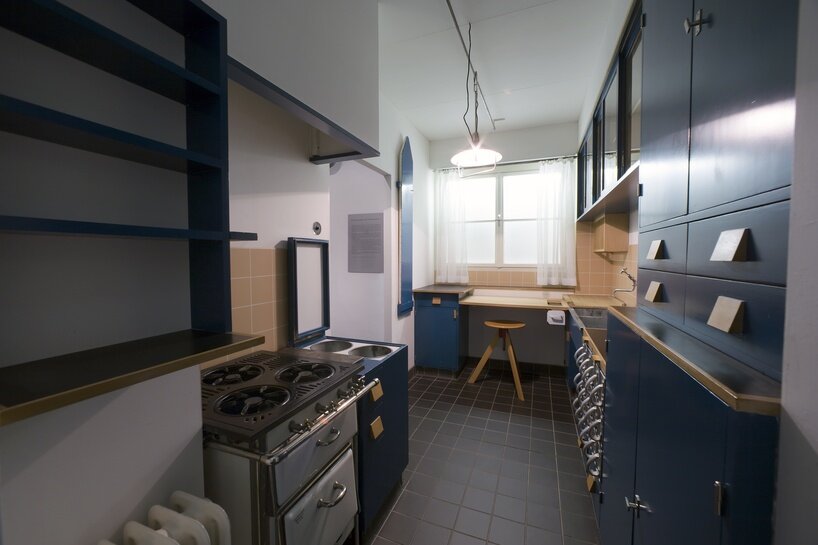
nearly everything in this domestic space, the double-basin sink, the easy to reach cabinets, the ease of access, championed a future where the kitchen becomes a 'laboratory' for creation.
prefer designboom on googleone kitchen used by thousands
About one hundred years ago in Germany, the Austrian architect Margarete Schütte-Lihotzky, was tasked with creating one kitchen that thousands of people would use. It’s the 1920s, not even a decade after the end of the First World War, and Germany’s Weimar Republic is looking for a mass housing solution for its citizens. One response was the development of the New Frankfurt, or Neues Frankfurt — a public housing project holding thousands of highly standardized, functional apartments that promised quality of life to its inhabitants. In each of these spaces, breakfasts, dinners, and all the things eaten and consumed in between, were created in a compact kitchen designed by Schütte-Lihotzky that many would refer to as a kind of ‘laboratory’ for meal making and domestic labor.
Sebastian Hackenschmidt, curator at the Museum of Applied Arts, Vienna (MAK) which houses a reproduction of the Frankfurt Kitchen, mentions how tens of thousands of these kitchens were produced. ‘Of course, over time, many of these were destroyed, rebuilt, partly taken down, or partly conserved. But with a bit of luck, many museums have managed to acquire a more or less original kitchen.’
Curator Sebastian Hackenschmidt on the Frankfurt Kitchen
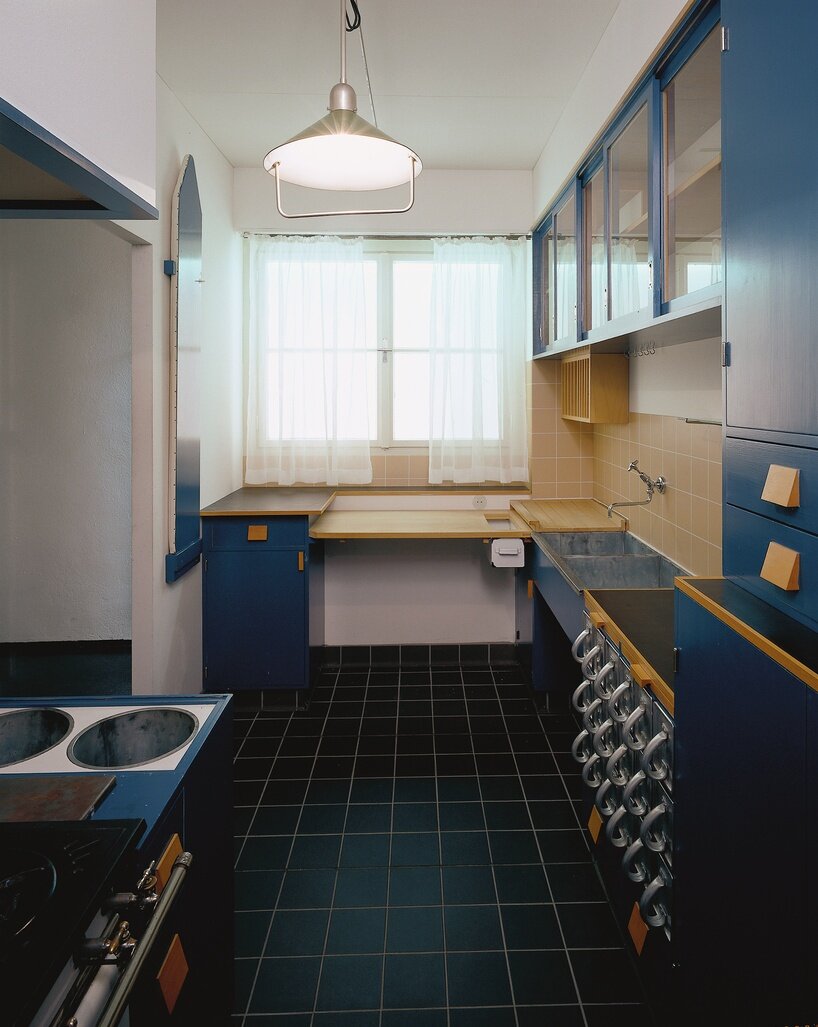
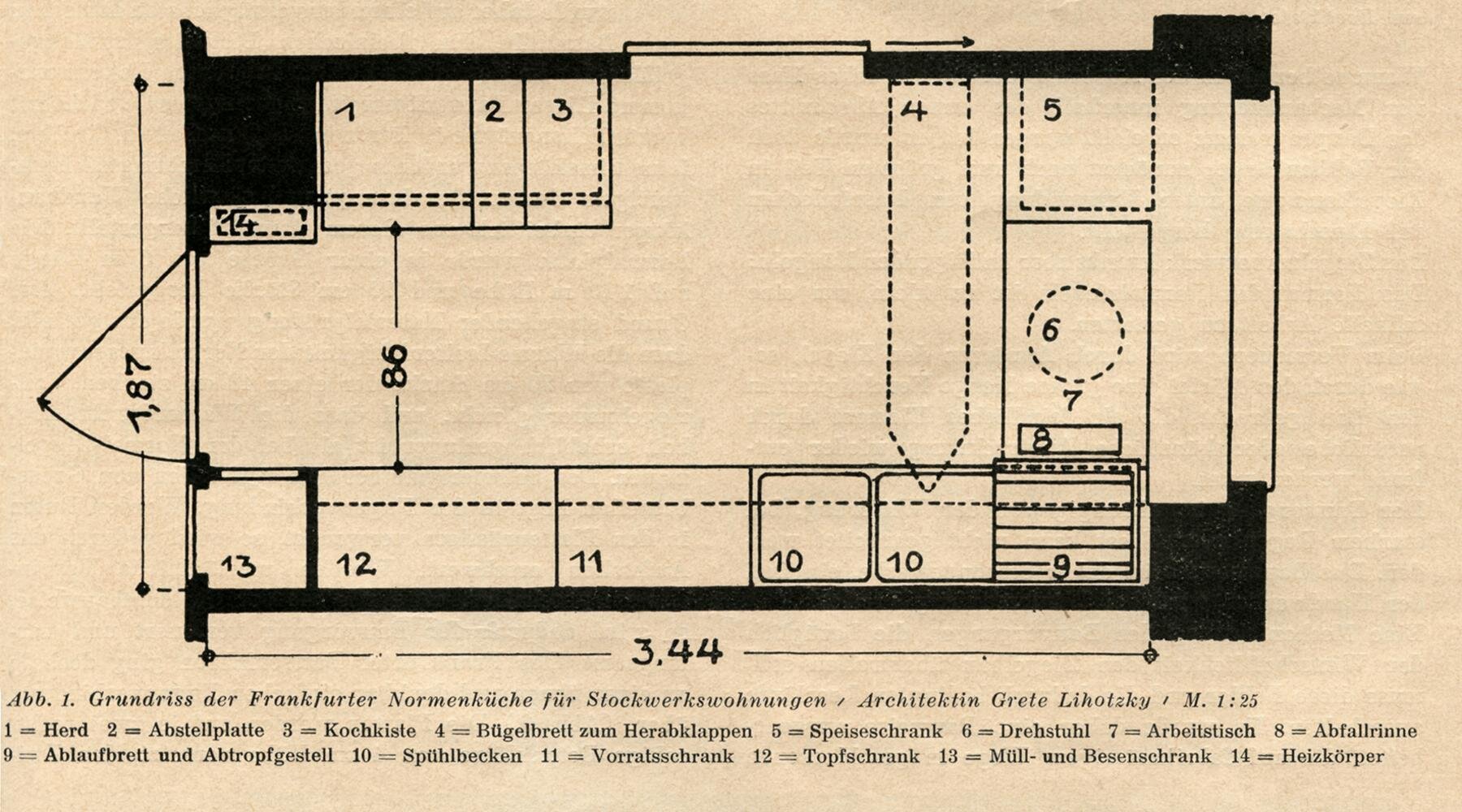
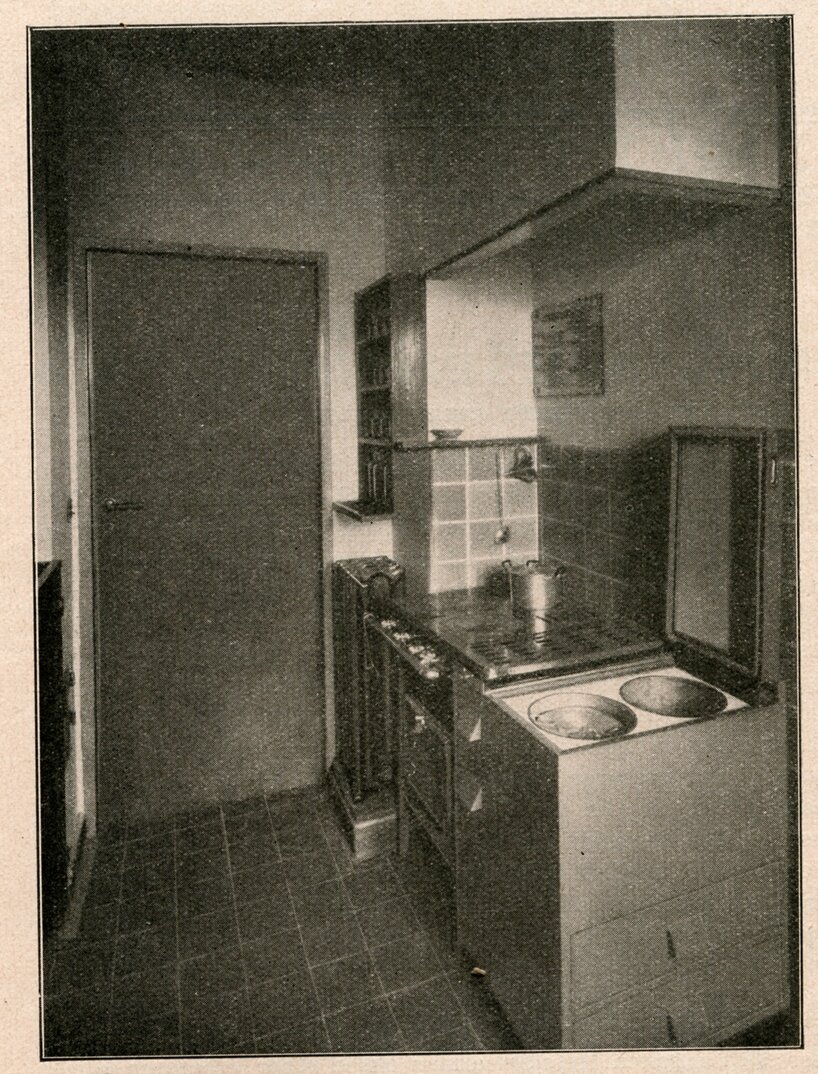
Looking at the Frankfurt Kitchen’s compact floor plan, one can imagine how a single operator, or cook, could easily move between the oven, cabinets, and sink. ‘The kitchen was a field of experimentation in the 1920s,’ Hackenschmidt tells designboom of the history of MAK’s recreation. ‘It’s not just Margarete Schütte-Lihotzky who designed this kitchen, but many architects at the time were steering towards what Le Corbusier called “the machine for living.” Everything was becoming more efficient, more rationalized, more machine-like. They wanted to do away with the ballast of historicism and embrace the age of standardization and industrialization.’
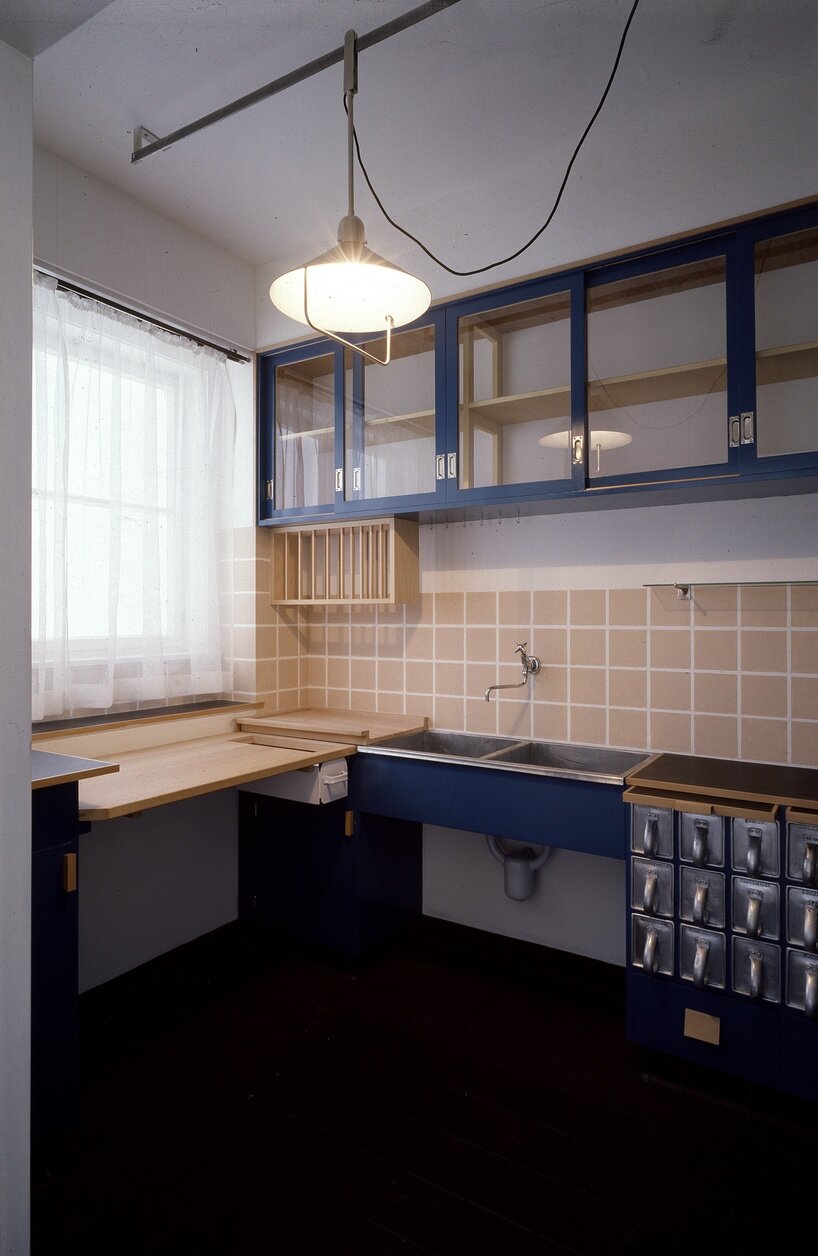
Margarete Schütte-Lihotzky’s Frankfurt Kitchen for MAK
Working in MAK’s Furniture and Woodwork Collection, Hackenschmidt talks about how the blue Frankfurt Kitchen replica made its way into their permanent collection. In the early 1990s, when the museum reopened, acting director Peter Noever identified it as a crucial piece of design history. The Forschungsgruppe Schütte-Lihotzky, the feminist art historians’ research group who curated the Kitchen’s installation, worked directly with the original architect’s input, even building a friendly rapport with her, to make an iteration that Hackenschmidt points out is ‘not just a reproduction of the kitchen, but it’s her ideal reproduction.’ Through this collaboration, enabled by architect Gerhard Lindner, the parties involved were able to create what MAK calls, ‘a replica based on Schütte-Lihotzky’s memory, on her expertise, and on her programmatic convictions, [which] occupies a position between copy and original.’
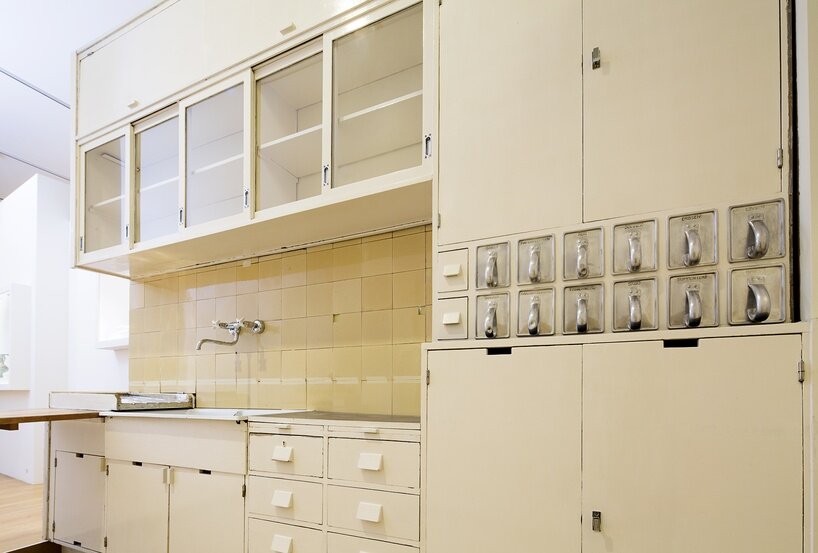
An Original Frankfurt Kitchen at Museum Angewandte
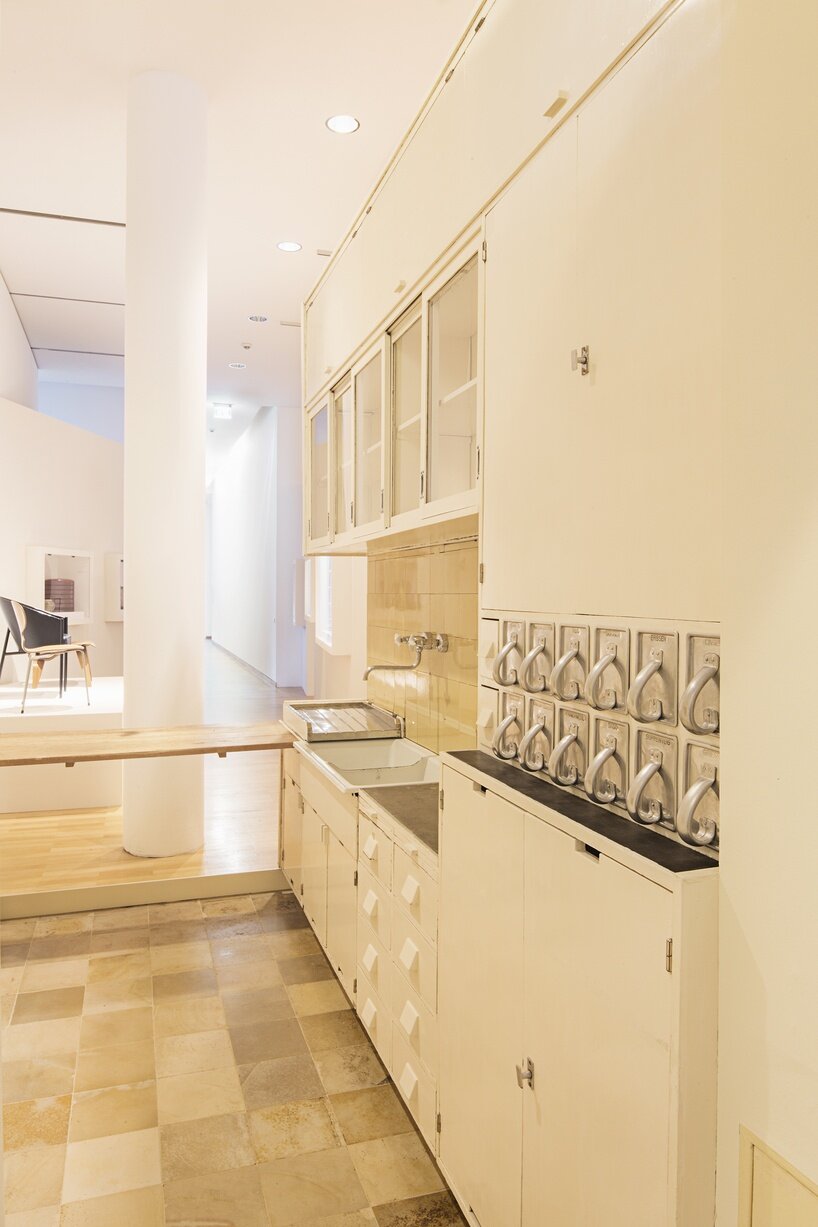
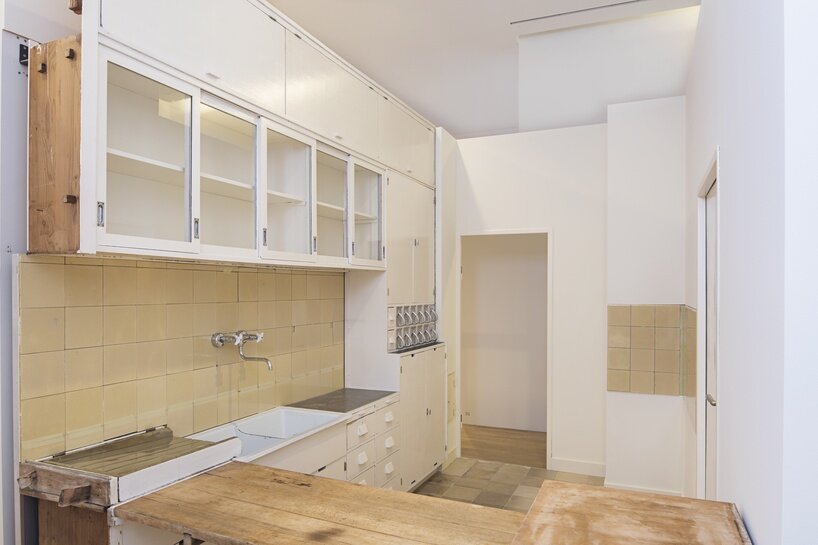
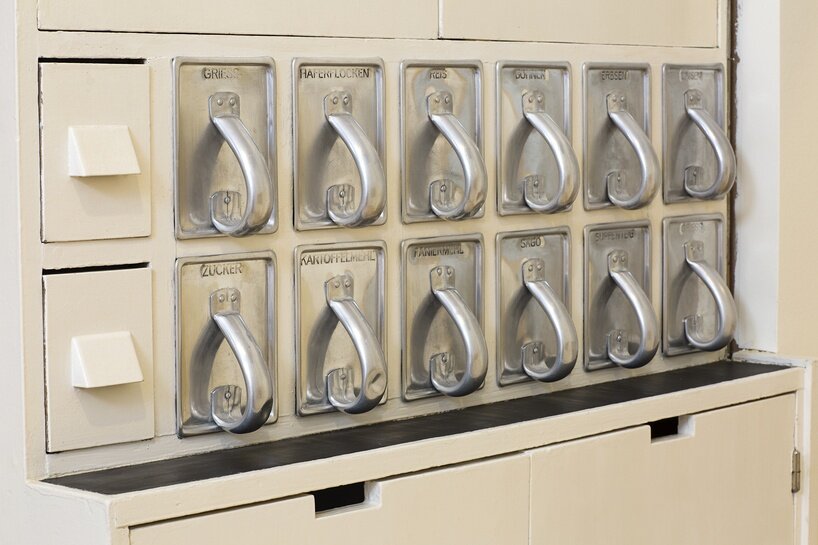
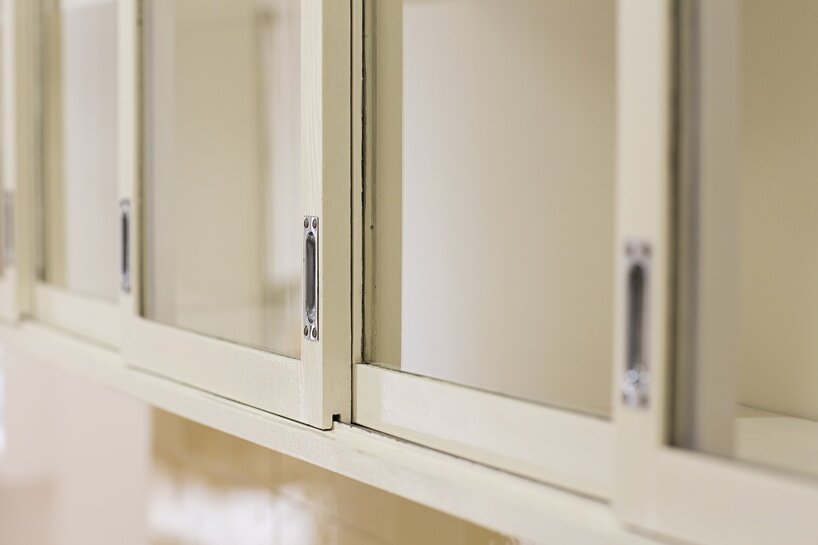
As Hackenschmidt mentioned, given the importance of the Frankfurt Kitchen, many institutions have taken it upon themselves to contribute to its preservation. At Museum Angewandte, the same city where the original kitchens were created for New Frankfurt, a kitchen taken from the Bornheimer Hang housing estate on Wittelsbacher Allee was offered as a long-term loan in 2015 and restored to faithfully exhibit how it would have sat in an apartment. The signature marks of the kitchen are all there: the aluminum storage containers, the built-in cabinetry, the two-basin sink. What’s unique here is how the museum’s conservator Christian Dressen ‘decided to expose the original painted surfaces by removing later coats of paint, but also to leave signs of wear and tear visible,’ revealing how the kitchen responded to daily use.
How the Kitchen Became a ‘Machine for Living’
The kitchen was envisioned for everything to be within close reach and easy to clean. While there weren’t an abundance of appliances — each kitchen having only a stove, oven, and electric light — there were still many choices considered to make the best use of the space. While soft pinewood was used for most of the kitchen, the flour container was created in oak to repel mealworms. Even the kitchen’s blue, not a standard feature although it appears in Schütte-Lihotzky’s MAK iteration, was said to repel flies from landing on surfaces. Hackenschmidt talks about how these parts came together for zippy preparation of household meals. ‘Her kitchen is very small because it’s, for the first time, a kitchen that was meant to be a laboratory for cooking. Cooking was perceived as part of the house work, so everything in this working process has to be made very efficient and rational in terms of handling, cleaning, and reaching for things.’
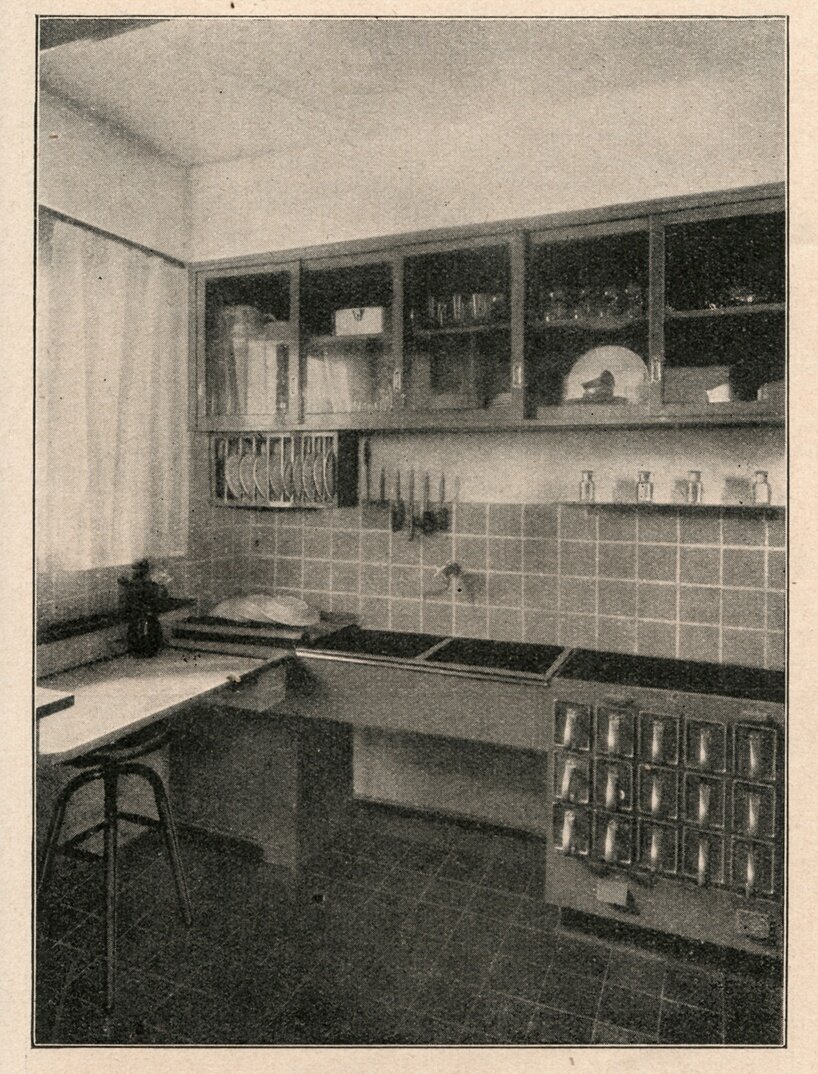
Successes and Critiques of the Frankfurt Kitchen
Nevertheless, the concept of a woman being prescribed this kind of domestic labor surrounded the reception of the kitchen. ‘[Schütte-Lihotzky] was asking herself questions like: If women do the housework, how can I make the housework so efficient that the women have more time to do enjoyable things, to educate themselves, to spend time with their kids and their husband, to go to a museum, or to read a book or a magazine? That was really very important to her.’ Hackenschmidt goes on to address the criticism. ‘So it hurt her when people implied that, by making the kitchen more efficient, she only tied women more closely to the hearth than before. Which, of course, was nonsense. Her concern was to free women from household work. That’s why she made everything so efficient.’
Nevertheless, looking back on the kitchen, there’s a clear line between the efficiency in her model and the sleek, contemporary cooking spaces that have become a fixture of today’s homes. ‘Margarete Schütte-Lihotzky found a form that we today perceive as a design classic because she brought together all these different aspects that people had been thinking about for years in a way that couldn’t be optimized anymore, if we look back at demands of the time.’
Kunst, Frankfurt in 2017 | image by Anja Jahn © Museum Angewandte Kunst
project info:
name: The Frankfurt Kitchen
location: The New Frankfurt, Germany
construction dates: 1926 – 1930
architects: Margarete Schütte-Lihotzky
reproduction location: Museum of Applied Arts, Vienna (MAK)
curator in converation: Sebastian Hackenschmidt
date: 1989-1990
architects: Margarete Schütte-Lihotzky and Gerhard Lindner
original kitchen location: Museum Angewandte, Frankfurt
presentation date: November 23, 2017
conservator: Christian Dressen
curator: Prof. Dr. Klaus Klemp
support by: Hessischer Museumsverband (Hessian museum association)
This article is part of designboom’s MODES OF HABITATION chapter, exploring how the spaces we inhabit can reshape the ways we live together. Discover more stories rethinking domesticity, shared living, and the many forms a home can take here.
shop
your own online design shop — no sales commission collected