MINI LIVING + penda present ‘urban nest’ in shanghai: a living network of scaffolding
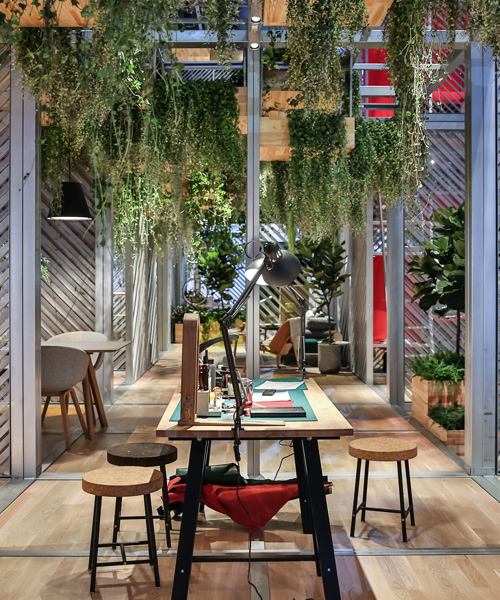
the design incorporates urban farming on the roof of each module, as the designers envision the modules as spaces that can be used for planting food for the owners.
prefer designboom on google[FEATURED]
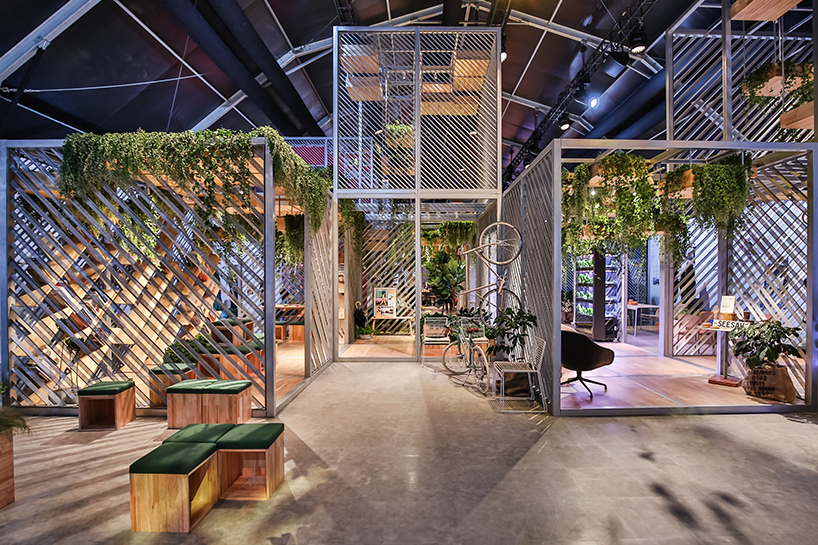
the MINI LIVING initiative is premiering penda’s ‘urban nest’ at urban matters shanghai. the urban nest is the latest example in MINI LIVING’s range of low-personal-footprint concept dwellings and takes the form of a flexible scaffolding system, which can be rearranged to produce different configurations for distinct living scenarios. the installation is composed of 26 modules, which are prefabricated in a factory to truck-sized parts and assembled on site.
all images courtesy of GQ and MINI
the shanghai MINI LIVING presentation is held in a narrow space, similar to shanghai’s neighborhoods of the past. the design installation recreates the little alleys and small houses of shanghai, while looking to the future. the material employed for penda + MINI LIVING’s ‘urban nest’ is recyclable metal, which is commonly used on construction sites. the metal extends the building’s life cycle: after the exhibition finishes, all materials will be recycled and reused for different functions.
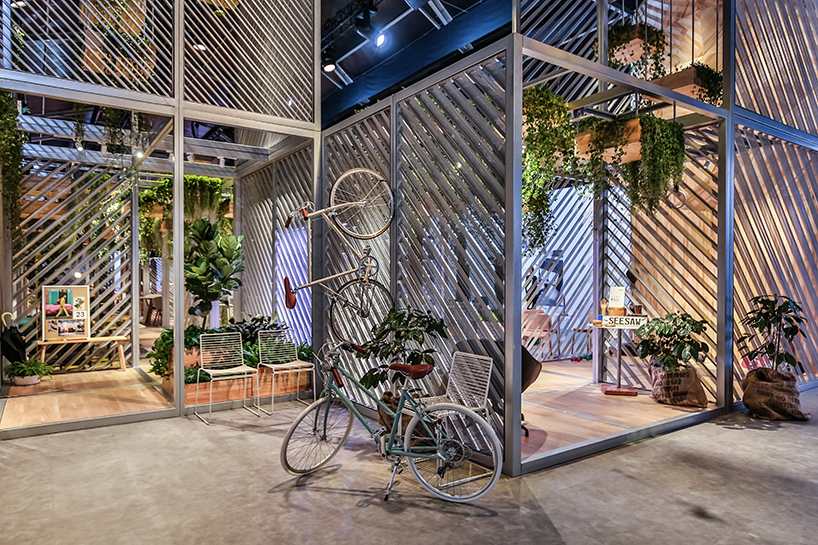
the installation is composed of 26 modules, which are prefabricated in a factory
the design incorporates urban farming on the roof of each module, as the designers envision the dwellings as spaces that can be used for planting food for the owners. in addition to fresh and healthy food, plants on the roof save energy consumption, cool down the space and reduce greenhouse gas. the roof can also be used to place solar energy equipment for electricity and heat. irrigation water can be collected from rain and distributed to the building.
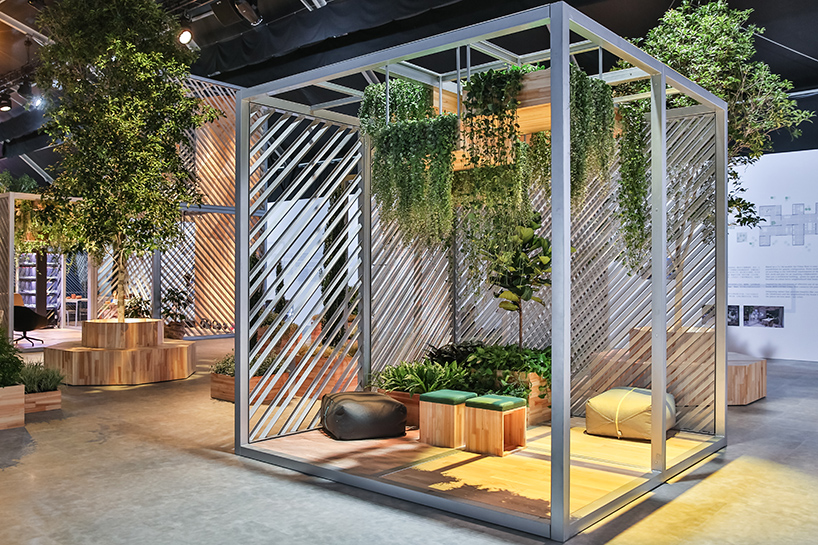
the design incorporates urban farming on the roof of each module
‘this is our understanding of flexible and sustainable architecture’, says dayong sun, founding partner of penda, ‘movable, extendable, reusable and recyclable’. MINI LIVING urban nest becomes more than just a residential building – given its open and flexible character it invites the public in and becomes an urban micro neighborhood that beats at the heart of the city.
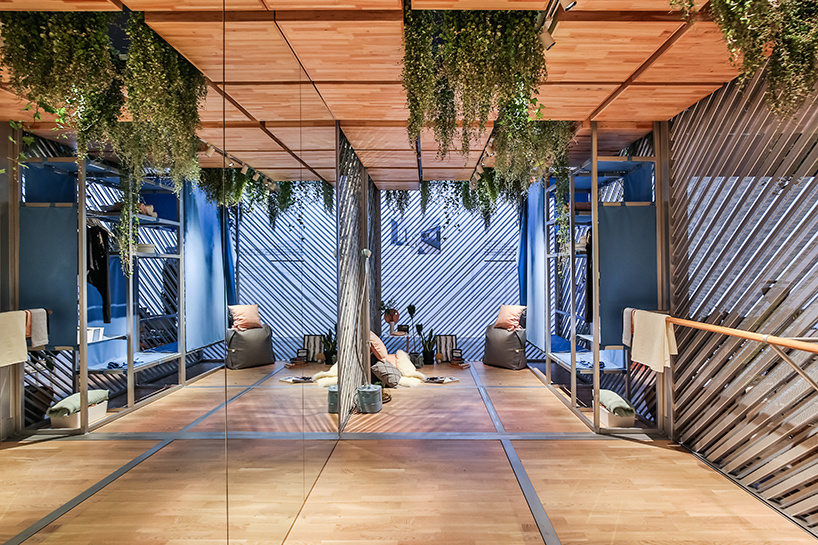
the designers envision the modules as spaces that can be used for planting food for the owners
MINI LIVING installations aim to address the pressing issues of future urban living, tackling the shortages of affordable housing and public spaces. in doing so, the exhibitions showcase potential solutions for our future city environments, which focus on offering shared ‘living’ areas. the organization has previously collaborated with SO-IL for the ‘breathe’ installation in milan and sam jacob for the ‘urban cabin‘ during the 2017 london design festival.
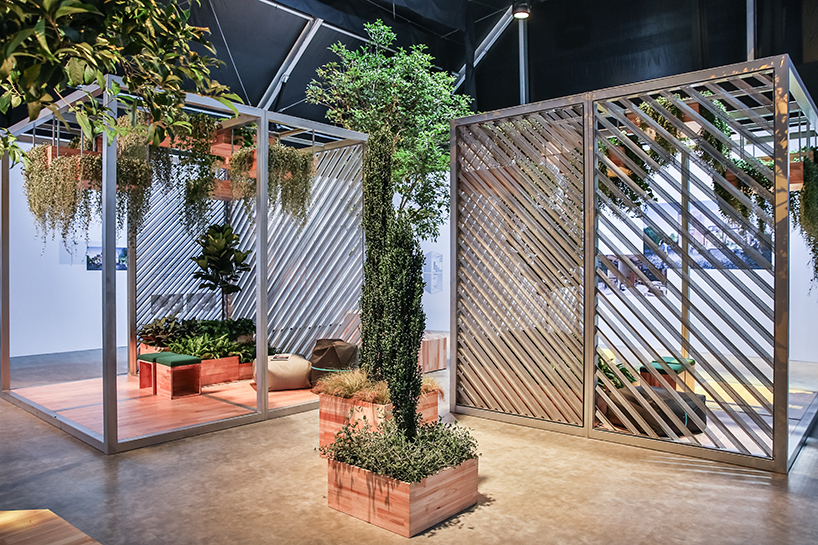
the installation is conceived as an urban micro neighborhood
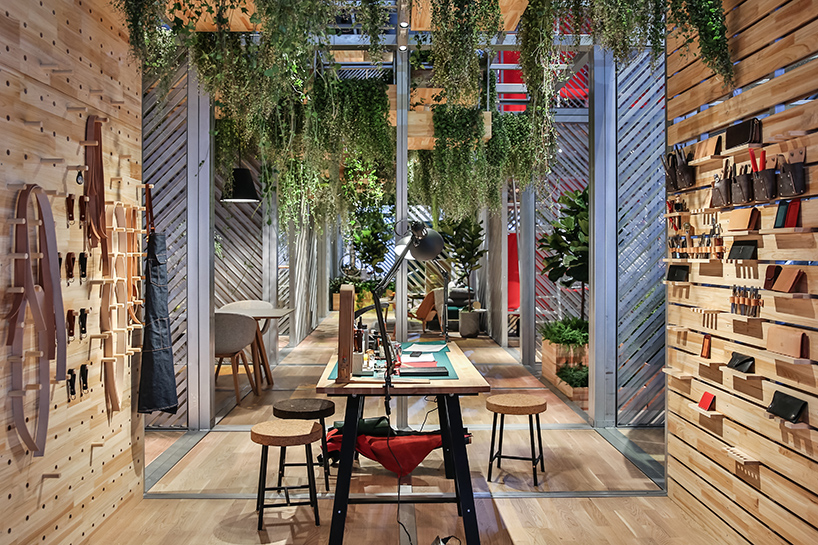
the exhibitions showcase potential solutions for our future city environments
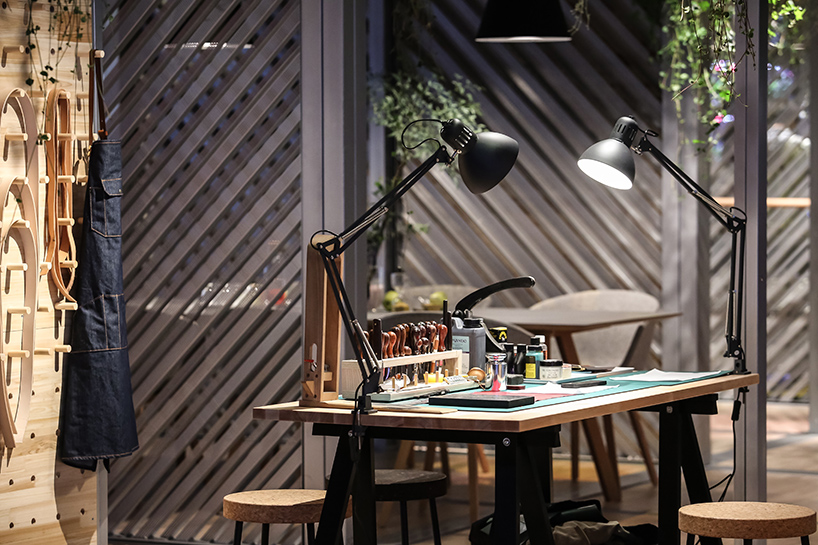
the open and flexible environment promotes collaboration and community
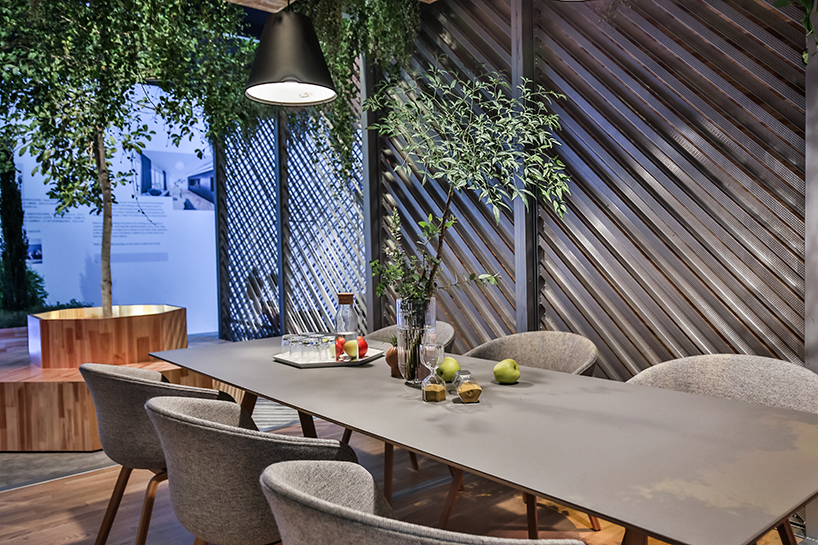
community gathering spaces are incorporated throughout the design
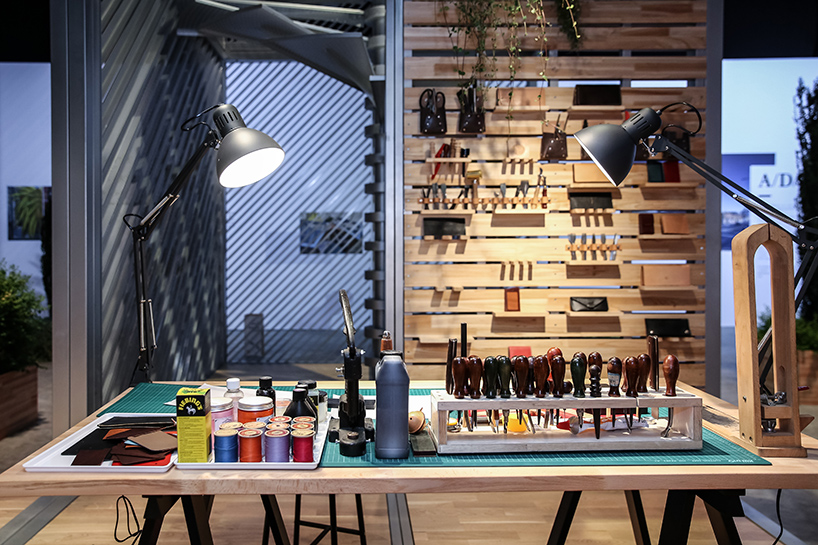
the MINI LIVING concept seeks to minimize the personal foot print of living spaces
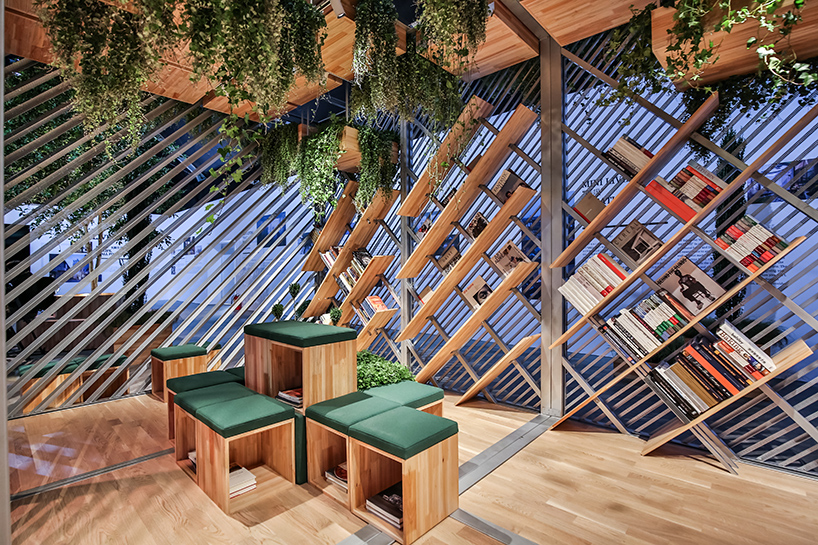
after the exhibition finishes, all materials will be recycled and reused for different functions
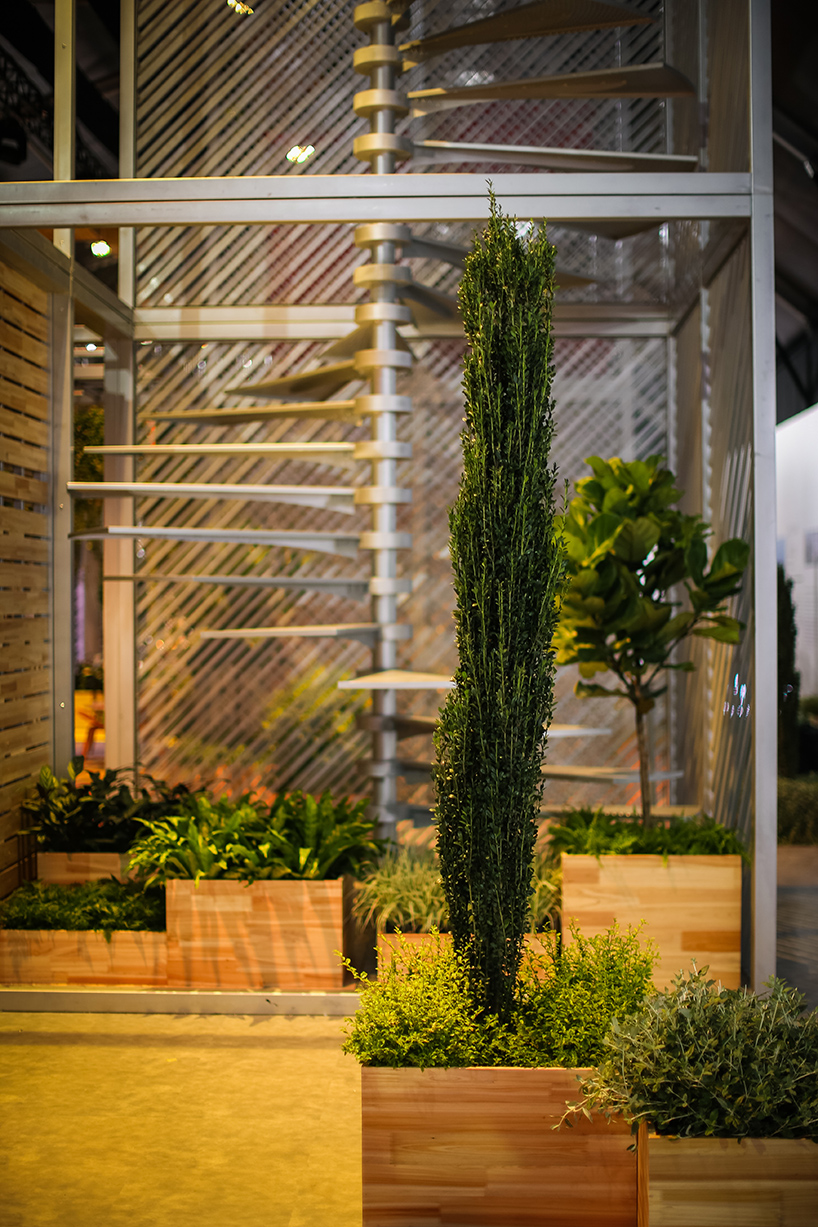
greenery and gardens adds a living component to the metal design
project info:
architects: penda
location: shanghai, china
architects in charge: sun dayong, chris precht, wan shuyan
design team : xie yuhong, dominic ding, yaoyao meng, xie feng, yurii suhov, wen xu, zhu yue, leng junyi, tatiana pankina, zhang yi, dai hechi
lighting design: zhu haiyan
interior design: liu xiaotao
plant design: wei yuhou
area: 200 square meters
project year: 2017
photographs: GQ, mini china
shop
your own online design shop — no sales commission collected