MVRDV’s yellow grand staircase marks atelier gardens’ new central hub in berlin
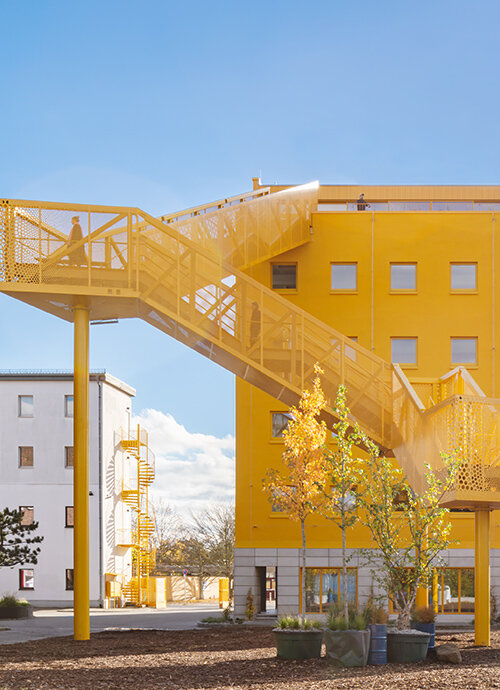
a 57-meter-long external staircase provides panoramic views over tempelhof field and leads to the rooftop pavilion and terrace.
prefer designboom on googleAtelier Gardens introduces HAUS 1 by MVRDV
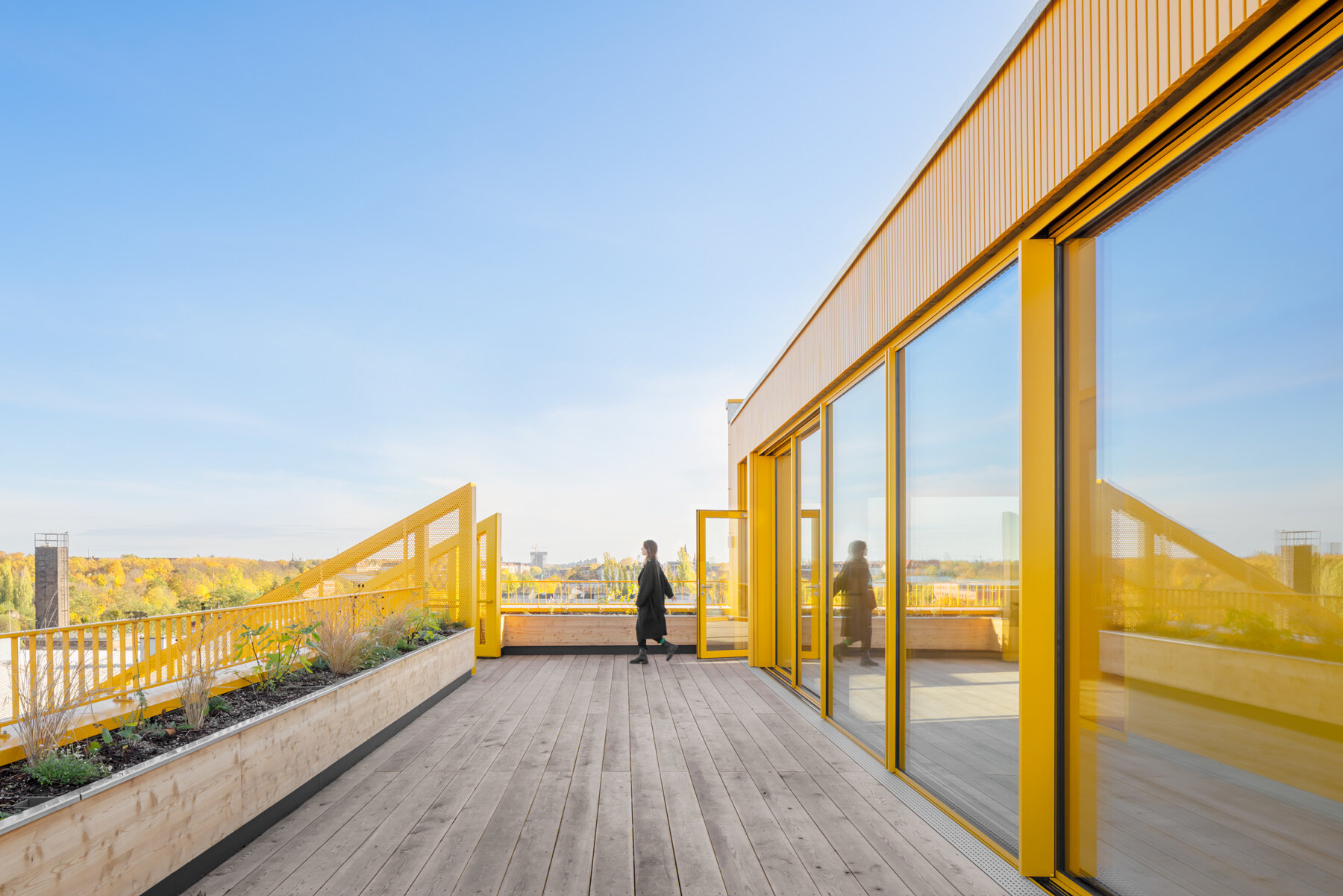
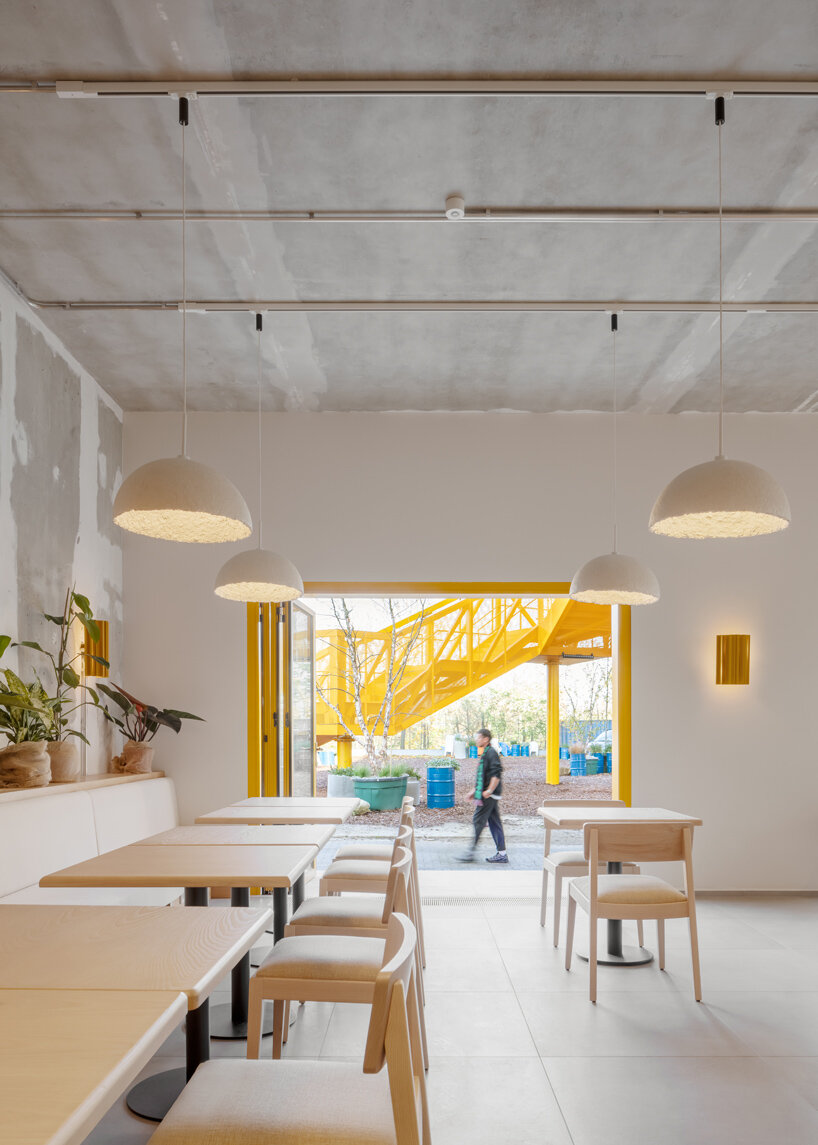
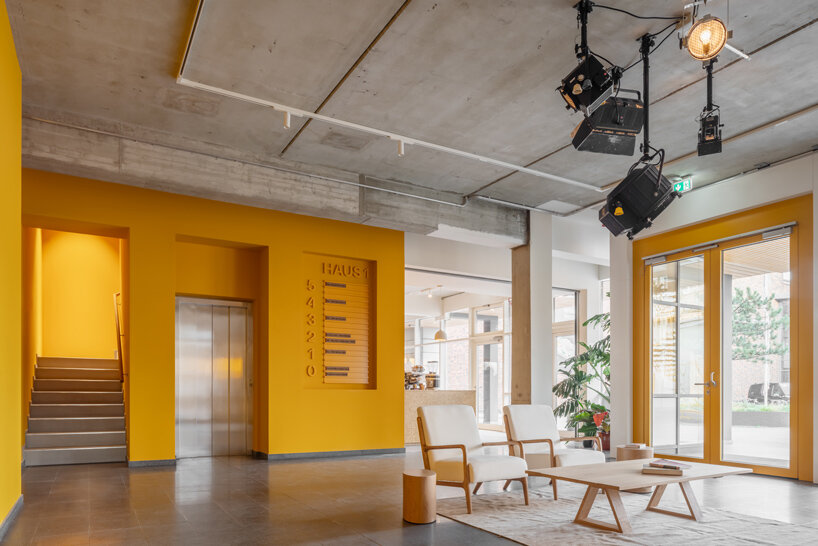
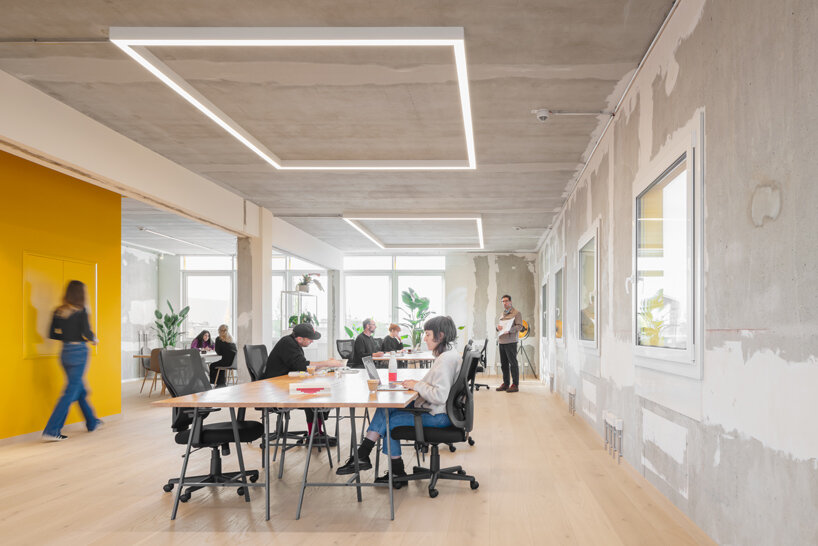
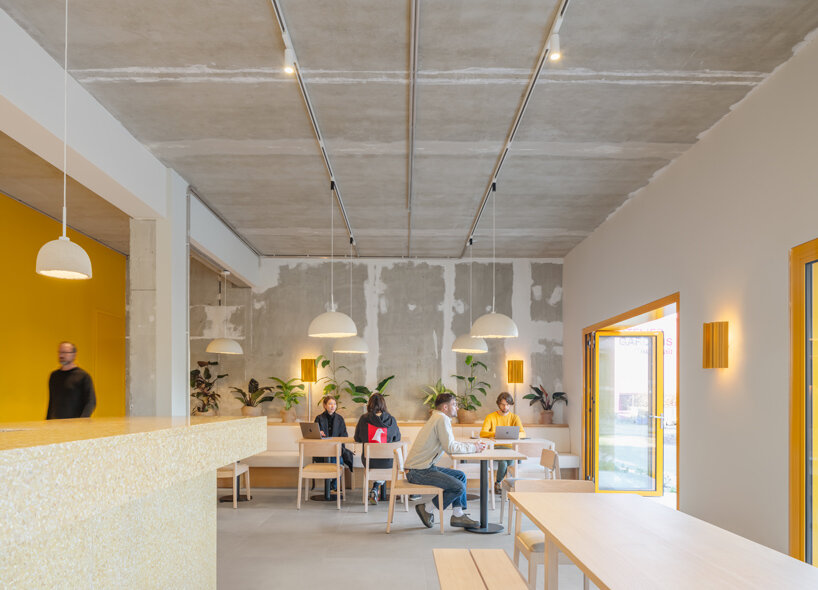
HAUS 1 at Atelier Gardens is the latest structure within Berlin’s evolving impact campus, marking a significant phase in its redevelopment. Designed by MVRDV, the repurposed building, positioned at the heart of the six-acre campus adjacent to Berlin’s Tempelhof Field, offers 1,747 sqm of adaptable space across four floors. The building features a vibrant 57-meter-long external staircase in yellow, forming a unique ‘stairscape’ offering panoramic vistas while guiding access to the rooftop pavilion and terrace. Its versatile layout hosts offices, a concierge service, and a café, emphasizing functionality and innovation. Once an underused office space, HAUS 1 now accommodates Atelier Gardens’ growing community, and welcomes impact-driven organizations, film enterprises, and artists, aligning with the campus’s motto of ‘Celebrating Soul, Soil, and Society’.
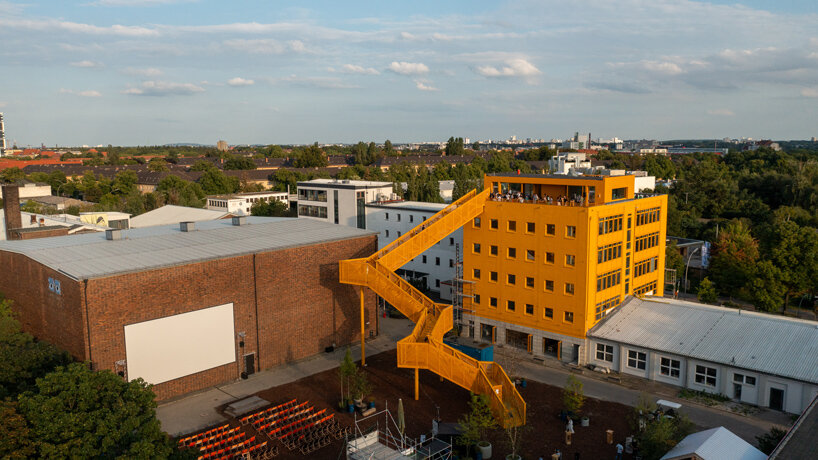
a hub for connectivity and well-being
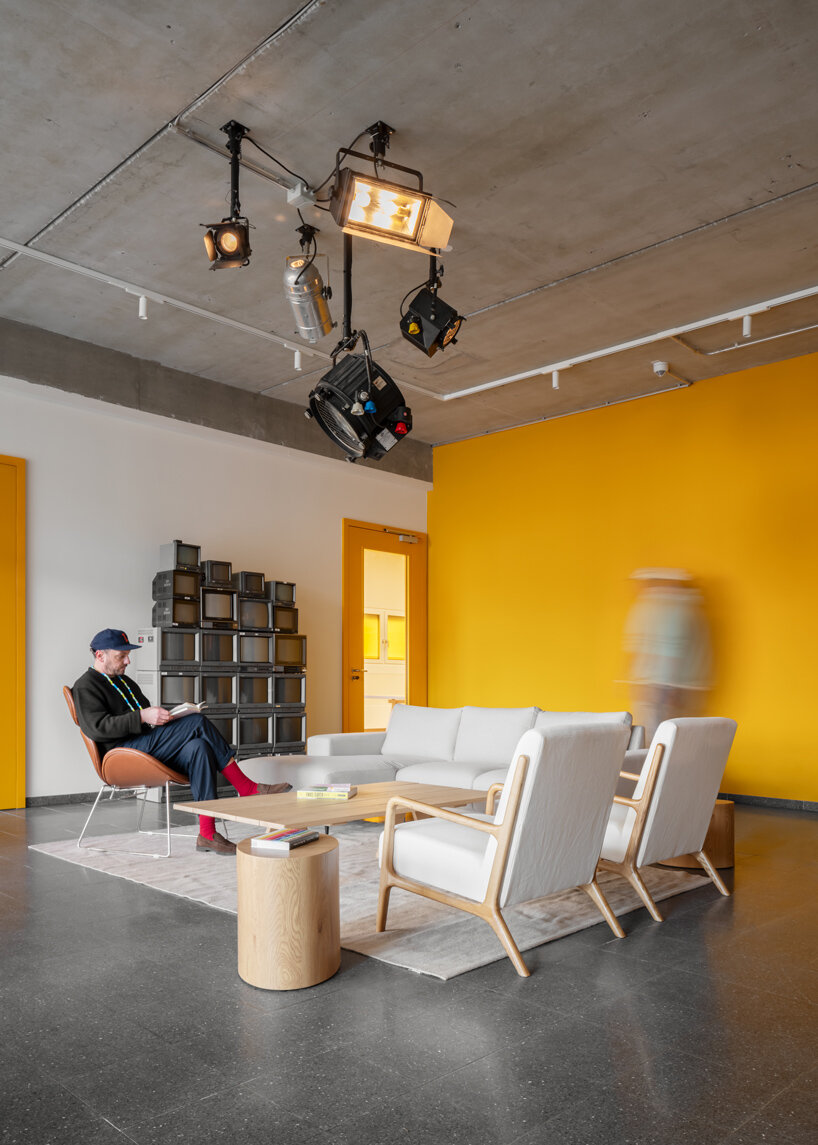
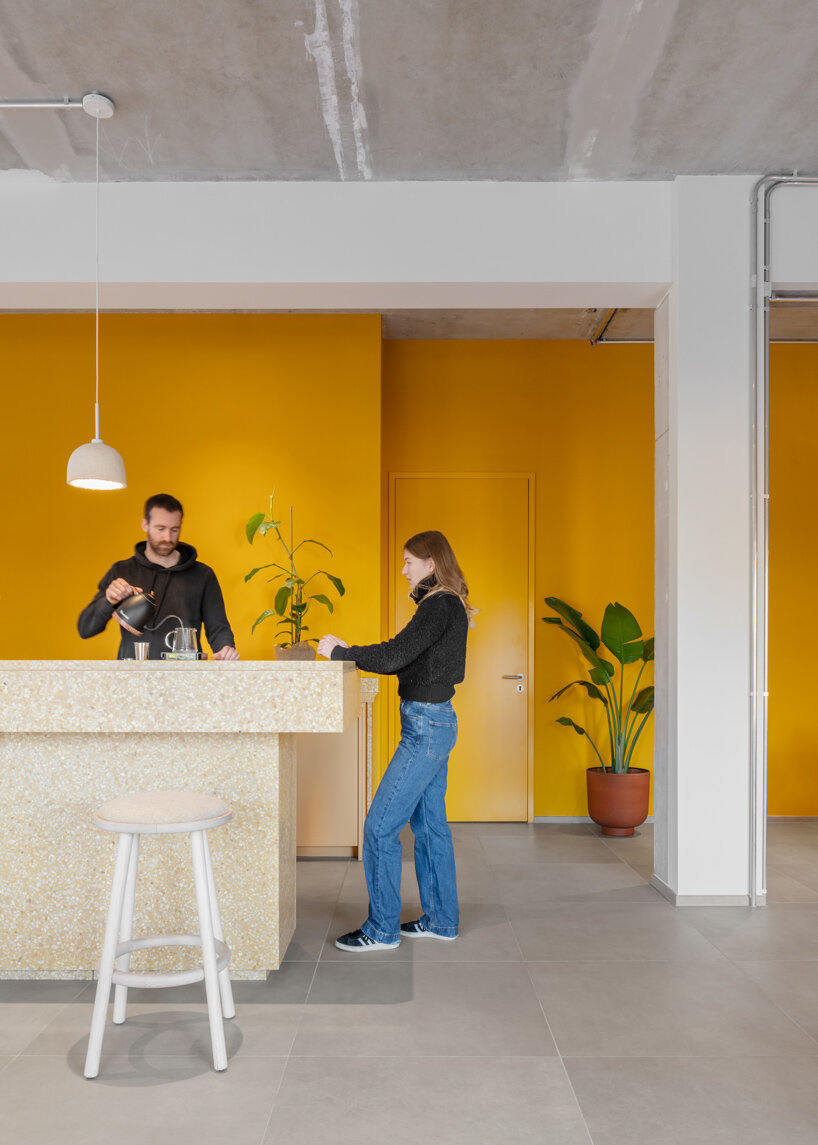
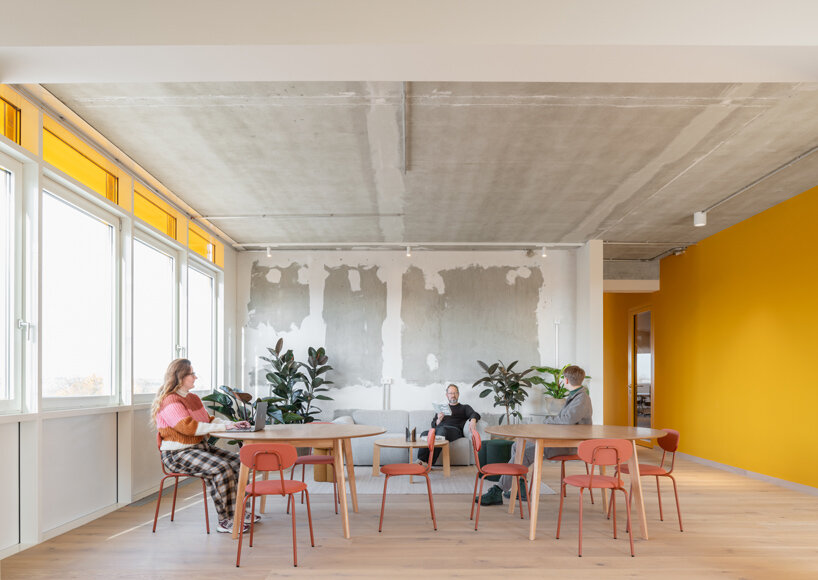
Led by MVRDV (see more here), Hirschmüller Schindele Architekten (more here), and Harris Bugg Studio (more here), the regenerative masterplan reimagines the mix of buildings on the 100-year-old film studio site, reintroducing greenery and circular water strategies to express Atelier Gardens’ philosophy. Its transformation preserves the existing structure, adhering to principles of re-use, and elevates it with high-quality design elements, fittings, and finishes. It serves as a hub for connectivity, fostering collaboration among diverse tenants, and providing communal spaces for work, relaxation, and idea-sharing. Sustainability measures within HAUS 1 highlight its commitment to environmental responsibility, featuring carefully selected materials, energy-efficient systems, water-saving fixtures, and initiatives promoting biodiversity, such as a living roof and regreening strategies.
Selim P. Güngör, the Campus Director, takes pride in contributing to positive change in Berlin, stating: ‘The world needs more places like Atelier Gardens that facilitate regenerative impact whilst driving purpose-driven, profitable business.’ The campus remains actively used for film and television production, and over the last five years, investor and developer Fabrix envisions Atelier Gardens as a model for integrating purpose and profit, diversifying offerings to accommodate a progressive impact community. Helen Newman, Director of Sustainable Investing at Fabrix, expressed: ‘Atelier Gardens is a vibrant events and workspace campus for creative impact occupiers that uniquely reflects the values of, and brings together, our diverse occupier community and events clients. It places sustainability and impact at the heart of everything that takes place here with the intention to be an exemplar in transformation of spaces and regeneration, from the soil to the nature it supports, enabling people and wildlife to thrive.’
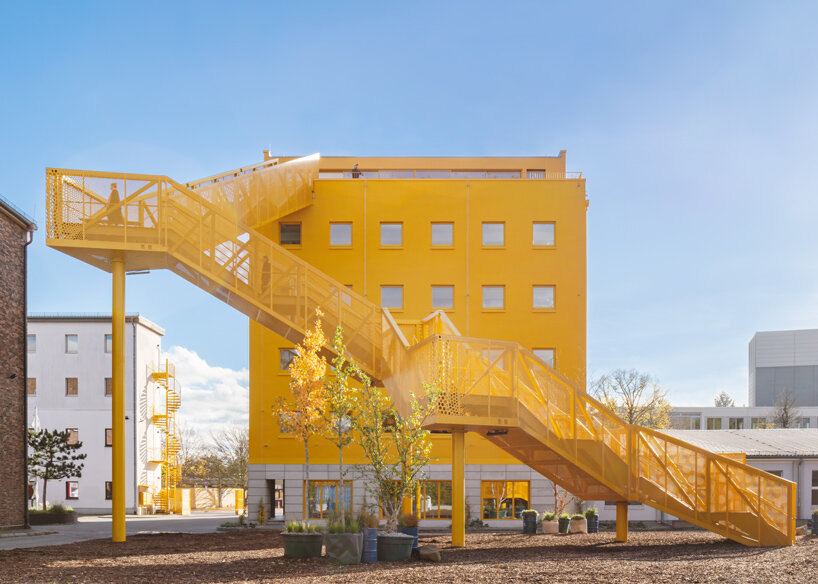
Environmental Integration & Circular Water Strategy in HAUS 1
HAUS 1 includes the use of environmentally conscious materials such as biobased elements, sustainable timber for the new CLT pavilion, cladding, and internal flooring. Additionally, a significant portion of the materials used contains high recycled content and holds Environmental and/or Health Product Declarations. The lighting system has been upgraded to energy-efficient LED systems, while the sanitary fittings prioritize water efficiency. This includes low water-use WCs that will utilize recycled rainwater from the campus’ rainwater harvesting system. The structure features a new living roof with carefully selected plant species to promote biodiversity, along with a rooftop terrace enhancing the building users’ views and potentially contributing to their well-being. Moreover, the refurbishment efforts incorporated additional solar shading to support a natural ventilation strategy, ensuring comfort within the building while minimizing operational energy use.
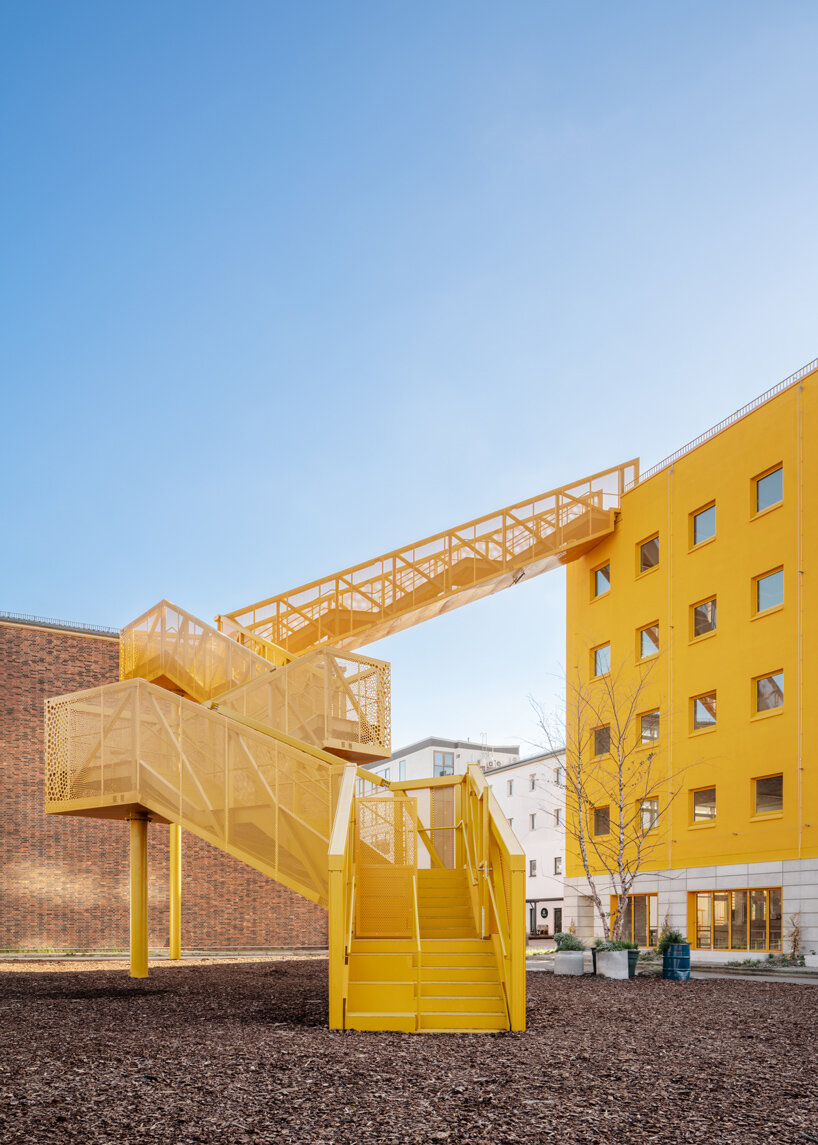
Atelier Gardens employs a circular water strategy, converting previously impermeable surfaces into permeable ones and utilizing rainwater for on-site reuse in WC flushing and landscaping. This approach bolsters the campus’ climate resilience and water efficiency. The regreening initiative, integral to Fabrix’s vision, aims to reintroduce nature, planting 57 new trees and over 8,300 plants to enhance biodiversity, support nature restoration, and create a green corridor with Tempelhof Field. These efforts contribute to climate resilience and offer spaces for occupants to relax, supported by beekeeping and sustainable food practices in the campus canteen, which emphasizes a ‘no waste’ approach, composting leftovers on-site to create nutrient-rich compost for reuse. Atelier Gardens serves as a model for future urban campuses, fostering a collaborative space for activists and thought leaders while promoting sustainability and nature regeneration.
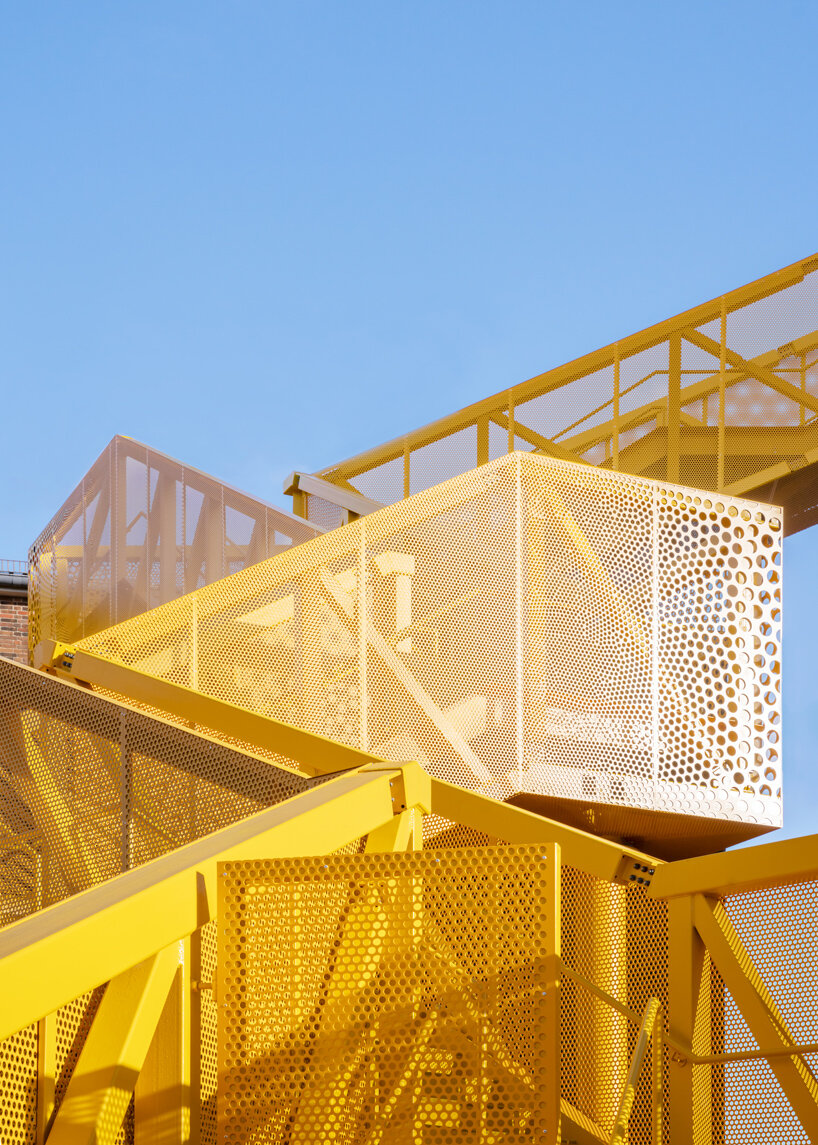
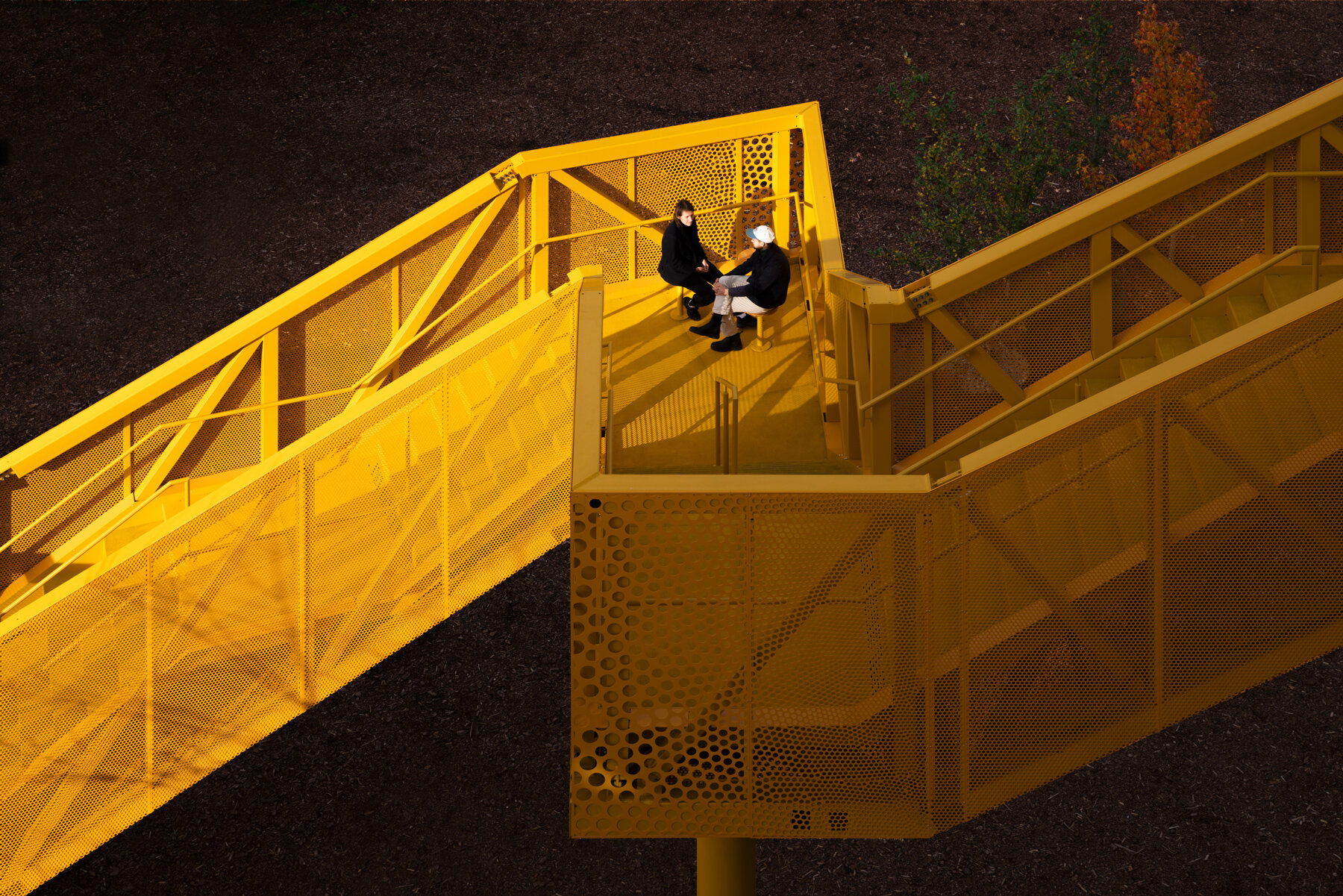
 the project creates spaces for work and relaxation, encouraging interaction and idea-sharing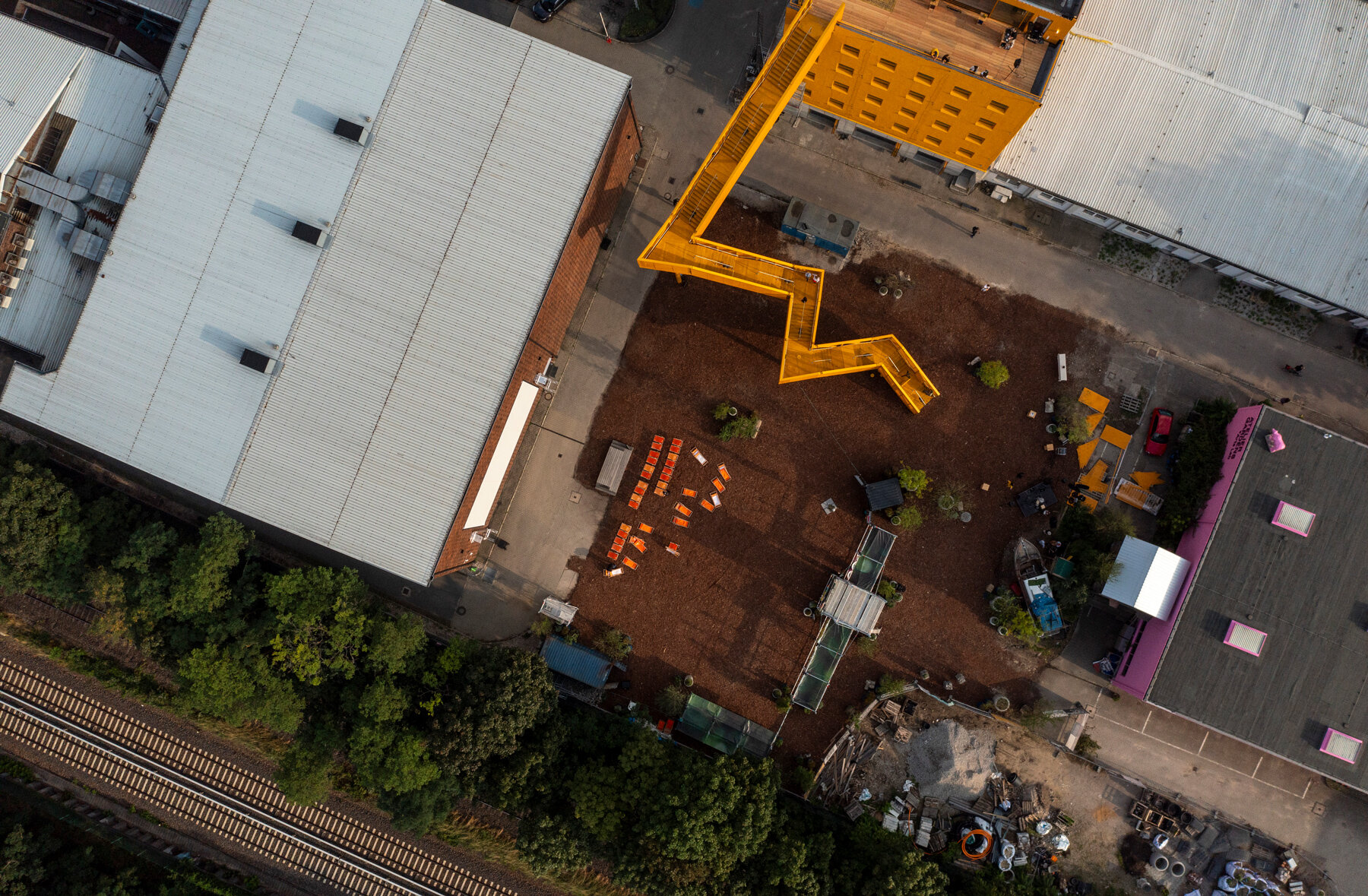
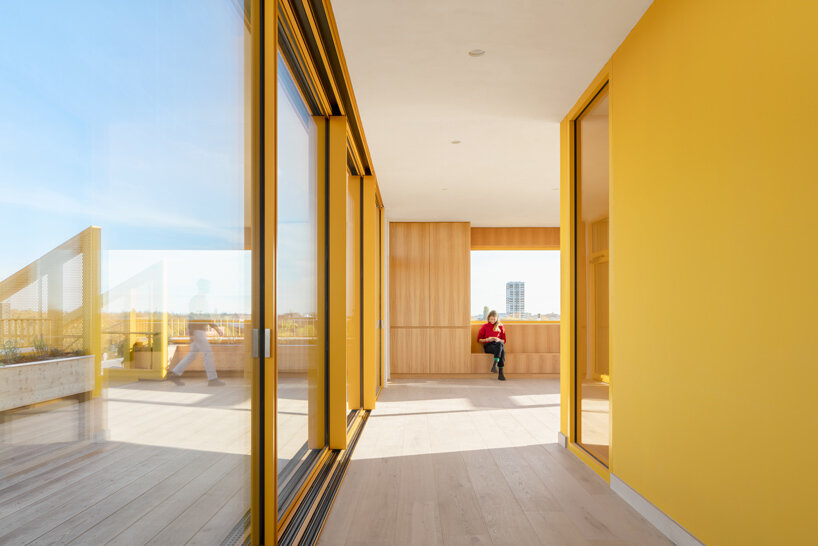
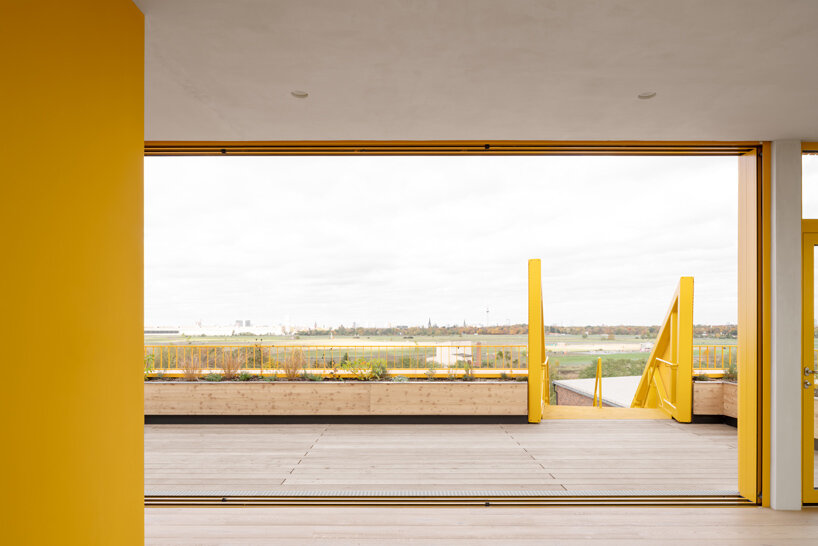 a sustainable and healthy workspace that will become a vibrant, recognizable symbol for the campus
1/7
project info:
name: HAUS 1
architects: MVRDV | @mvrdv, Hirschmüller Schindele Architekten and Harris Bugg Studio | @harrisbuggstudio
location: Atelier Gardens, Berlin
exterior and interior images: Schnepp Renou
drone images: Adam Wakeling
shop
your own online design shop — no sales commission collected