
my archischool students propose sustainable urban architecture concepts
concepts range from vernacular architecture with a rainforest-inspired semi-open roof to a naturally built boathouse and glass butterfly house.
my archischool challenges students to create sustainable urban architecture
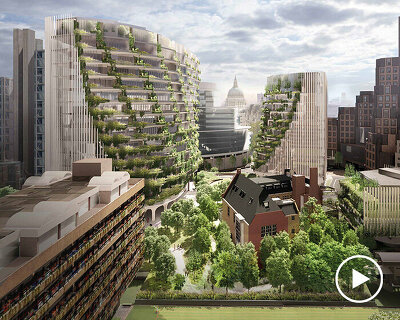
Now, more than ever before, sustainability is the chief concern for young creatives. The topic has been further stressed during the pandemic, as hundreds of millions of people have been isolating in city centers. As such, My Archischool, the Hong Kong-based educational institute, challenged its students to create sustainable urban architecture that encourages a new and much needed dialogue between city dwellings and nature. The year-long research studies explored the fundamentals of urban areas, the behavior of its residents, and the key environmental issues at play. The concepts reveal diverse, inspiring experiments, ranging from rooftops designs to window innovations and material studies.

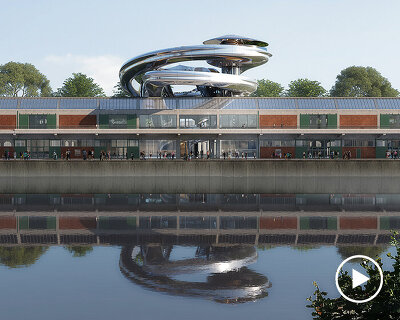
raindrops tower by oscar chung
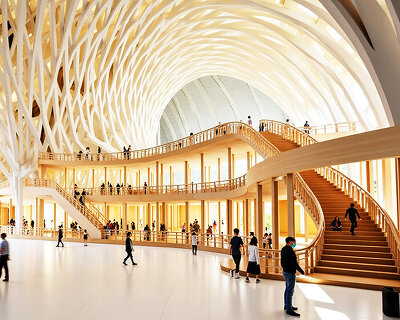
Called Raindrops Tower, Hong Kong designer Oscar Chung conceptualizes a natural history museum with a semi-open rooftop inspired by large-sized rainforest leaves. As visitors climb the spiral ramp of the cylindrical lobby, the upper deck offers sheltered, panoramic views. The semi-open rooftop aims to bring the outside in, namely its raindrops. Borrowing principles of vernacular architecture, a natural circulation of air is achieved with heat rising and cold air lowering. This method ensures no air conditioning system is needed, reducing both the amount of energy used and carbon emission levels.
‘I would like the users, visitors to experience the sense of being protected under a ‘big leaf’ while they see the raindrops dripping down along the edge of the roof. The structural framework was designed with forms of tree branches,’ says Oscar.
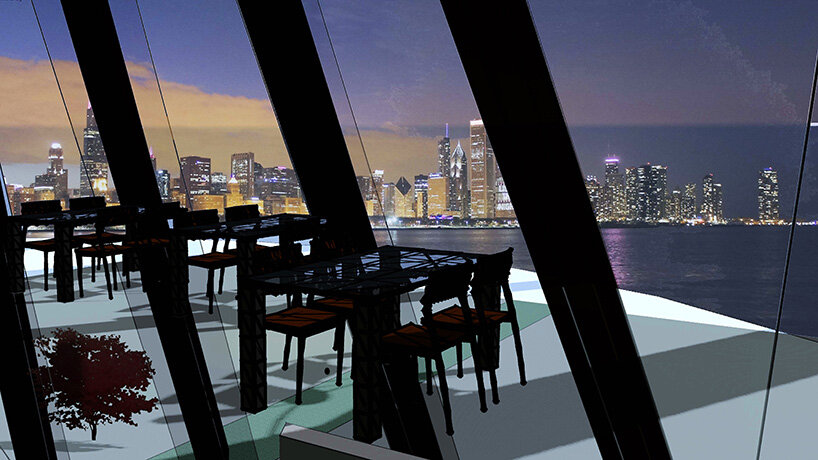
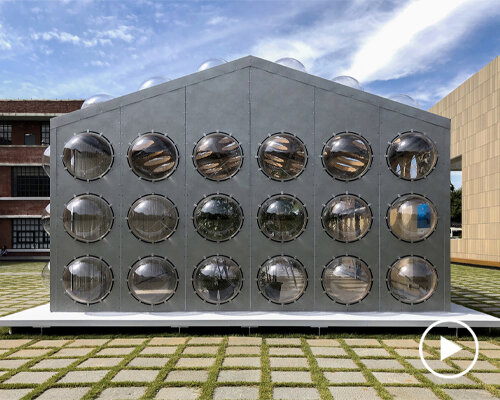
Community terrace by abigail shih
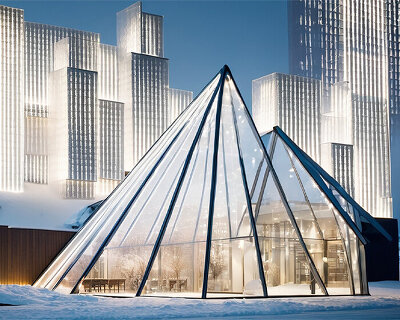
Hong Kong and Taiwanese designer Abigail Shih transforms a typical urban rooftop into a sheltered community terrace. The proposal emphasizes the importance of social lives for sustainable urban architecture, especially after years of social-distancing during the pandemic. A tent-like structure is built using slanted glass façades to avoid internal reflection at night. The results offer ideal views across the surrounding city, as the community gathers there together after work.
‘People can gather atop their own building – their own community! The concept will work even when whole districts are locked down,’ explains Abigail.
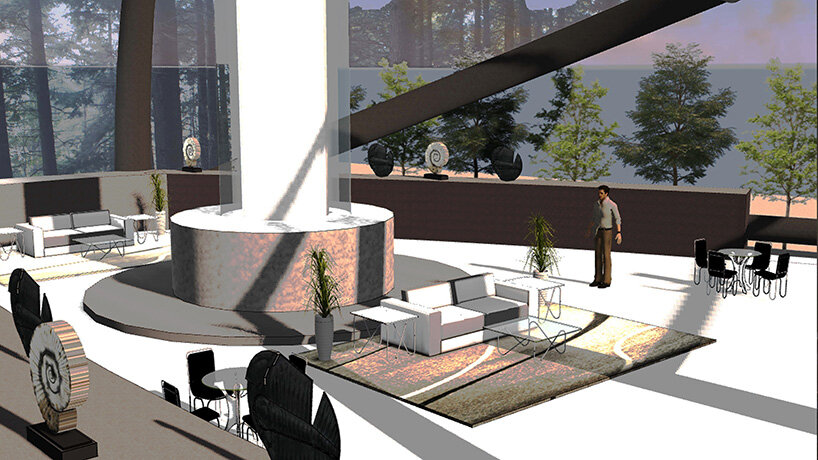
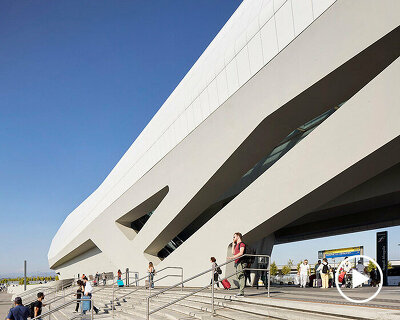
outdoor exhibition terrace by natalie lau
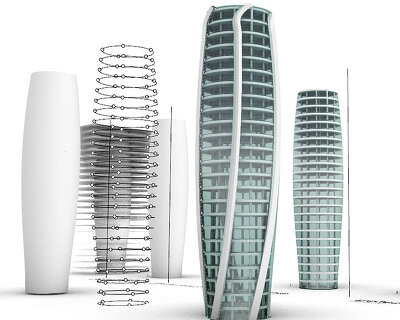
Hong Kong designer Natalie Lau presents another design that understands the ability to enhance and enrich the often available space atop of roofs in our cities. The student creates a podium terrace above high-rises which can facilitate outdoor exhibitions. The space aims to be flexible and versatile for different uses, highlighting how significant open, communal areas are to people’s healthiness.

boathouse by annecy hui
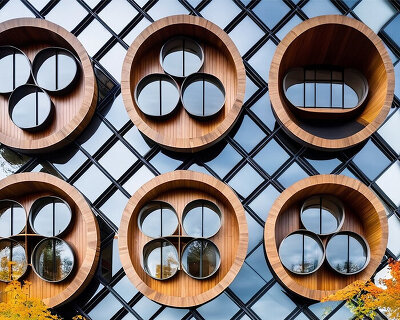
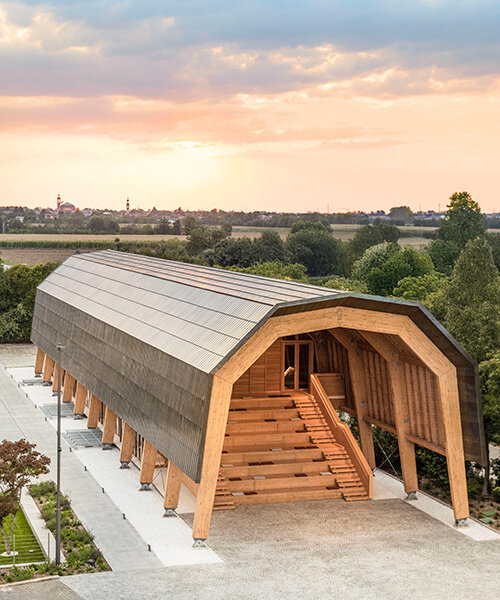
Annecy Hui, another Hong Kong designer, shapes a twin boathouse with pitched rooftops that exemplifies the successful use of sustainable materials. Inspired by its local environment, the dwelling’s mountain-like form not only mimics but actually reflects its surroundings. The use of a glass façade and laminated timber for its structure demonstrates the advancements of natural, sustainable building materials. They are affordable, high performing and do not compromise the beauty of the design.
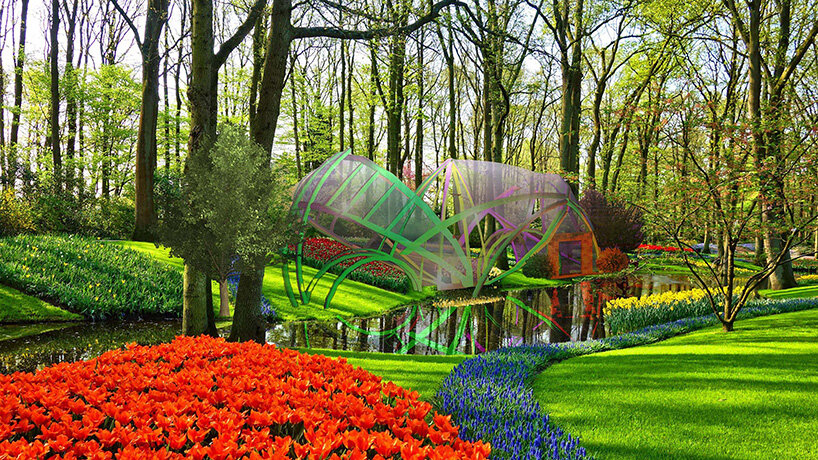
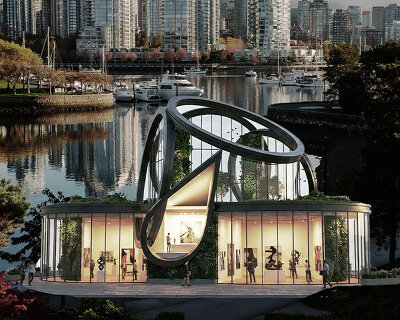
butterfly house by alanna mak
Hong Kong designer Alanna Mak creates a butterfly house that directly promotes nature in the urban environment. A gigantic flower-like open structure supports the breeding ground and nursery of its namesake insects. Multiple layers of curved glass covers are engraved with various patterns and articulations that add personal, informative details to the design.
project info:
school: My Archischool
course: Sustainable Architectural Design and Research Study Stage I and II at My Archischool
criteria: students of 11 -18 years old or above who completed level 5 of the school’s architectural design program 1.0
students: Oscar Chung, Abigail Shih, Natalie Lau, Annecy Hui and Alanna Mak