national gallery’s sainsbury wing reopens with transparent entrance by selldorf in london
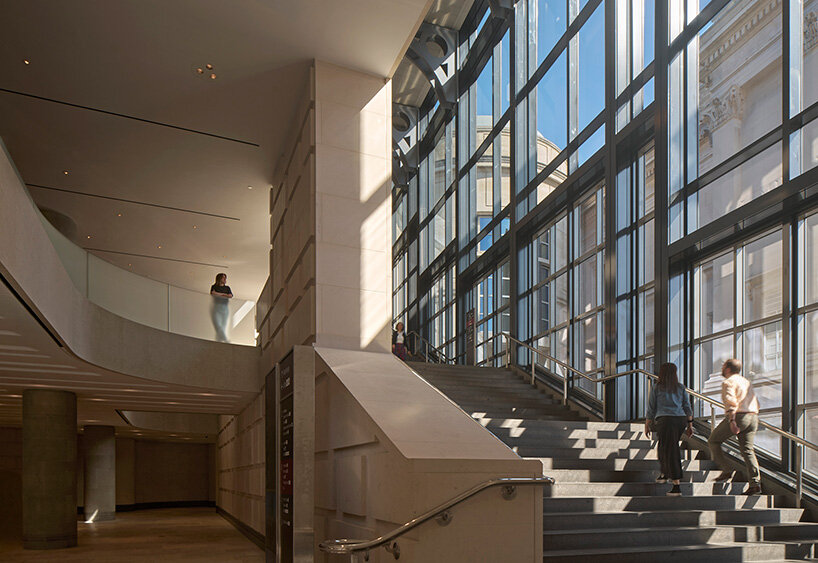
new conservation-grade clear glass replaces the original dark glazing, revealing the interior’s grand stair and circulation.
prefer designboom on googlelondon’s National Gallery debuts its renewed main entrance
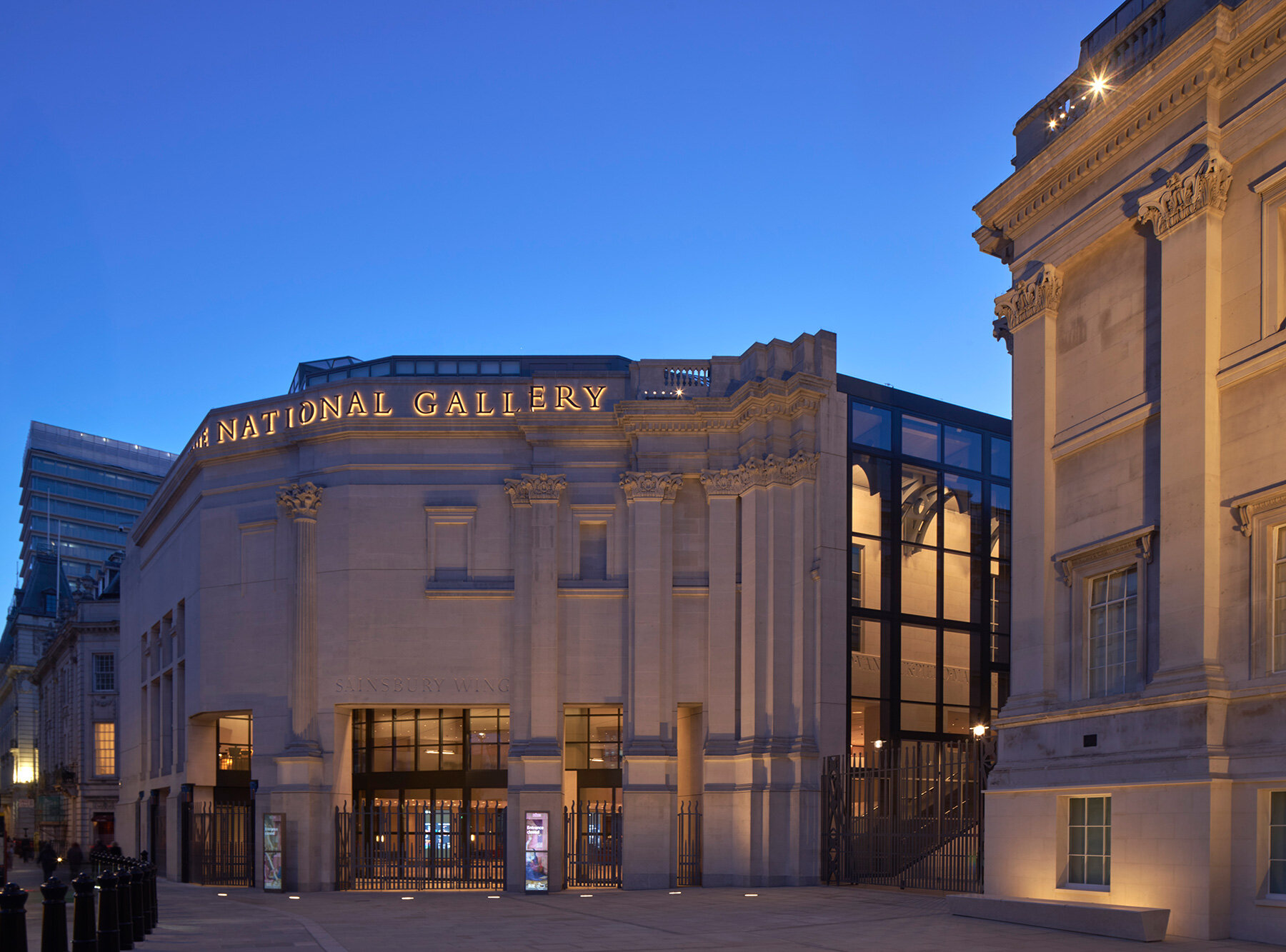
The National Gallery in London is set to open its redesigned main entrance on May 10, a clear architectural move by Selldorf Architects that completely changes how visitors approach the building. Working closely with the project’s heritage architects, Purcell and landscape designers, Vogt, the intervention keeps the bones of Venturi, Scott Brown and Associates’ (VSBA) 1991 Sainsbury Wing, but improves access, orientation, and lighting.
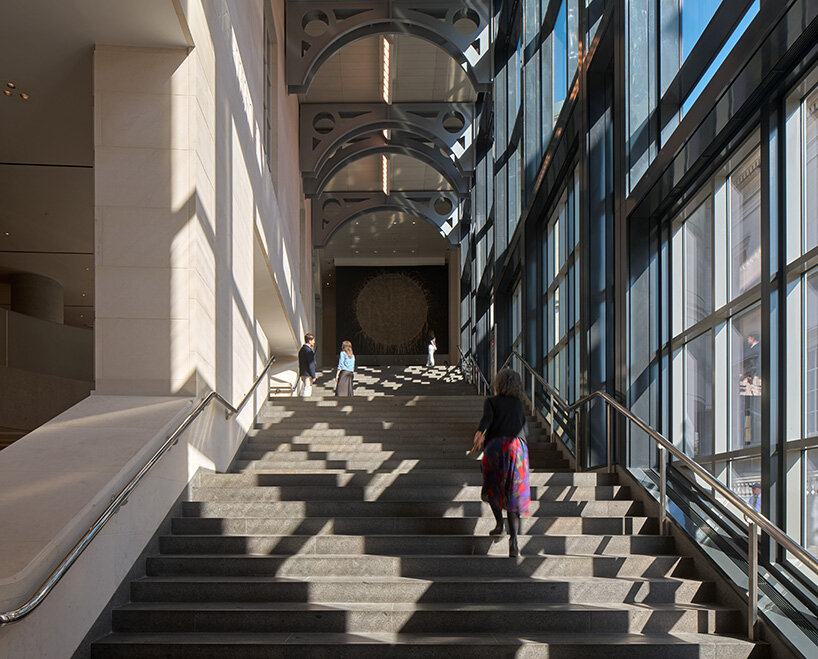
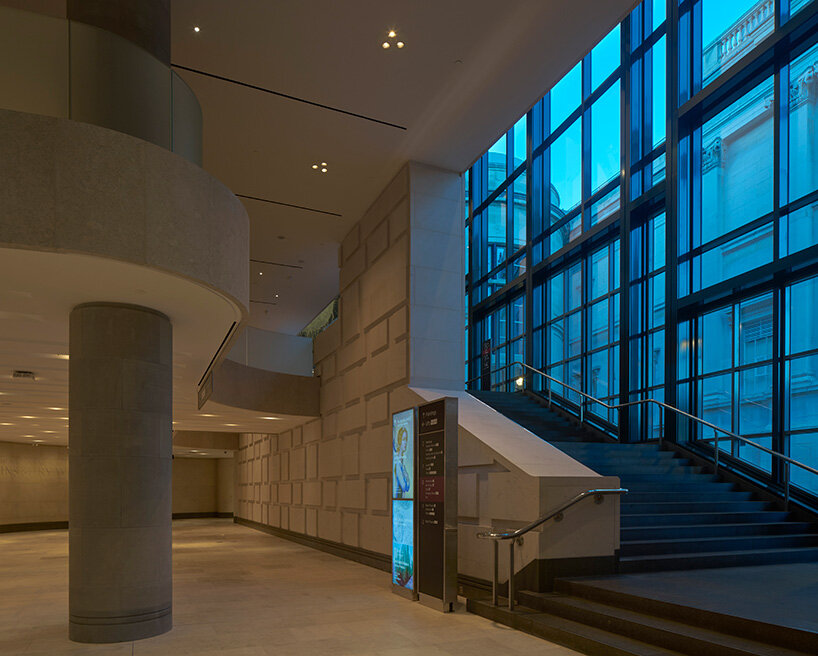
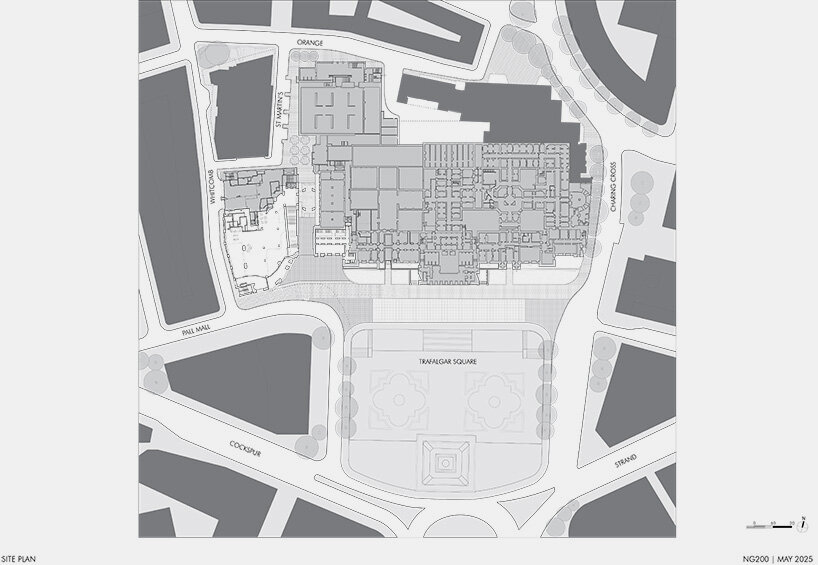
At the heart of the redesign is a new public forecourt, a ‘square within a square’, created by removing a little-used courtyard between the Sainsbury Wing and the historic Wilkins Building. This move gives the Wing more breathing room but also aligns it more fully with Trafalgar Square. It’s the first time visitors can walk from the street directly into the Gallery without steps, and the first time the building offers a transparent view inside. New conservation-grade clear glass replaces the original dark glazing, revealing the interior’s grand stair and circulation and making the space feel porous, social, and alive.
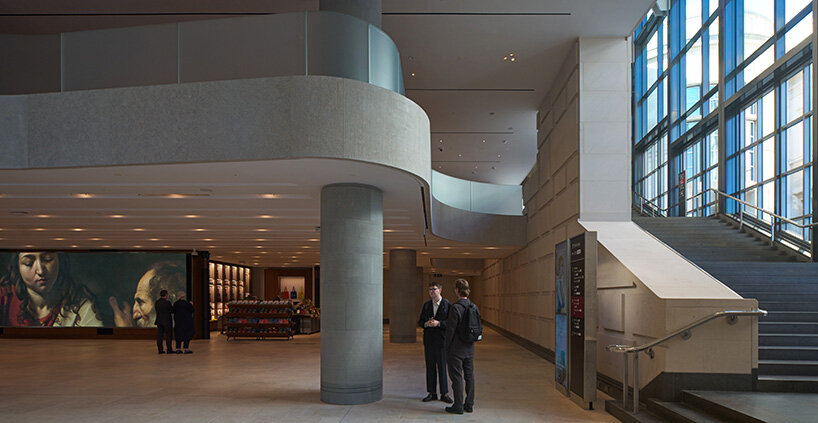
Selldorf Architects improves orientation and lighting
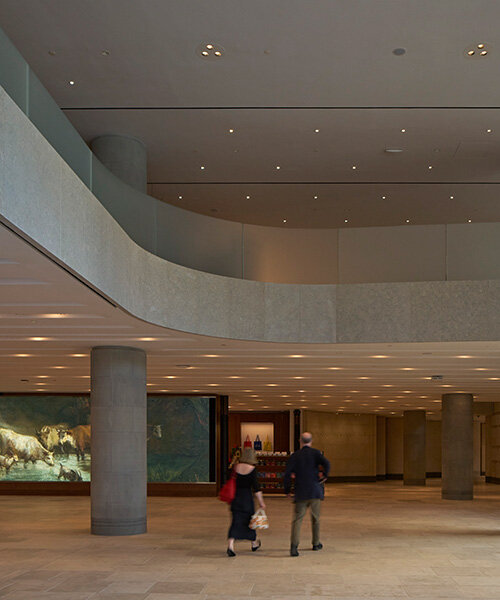
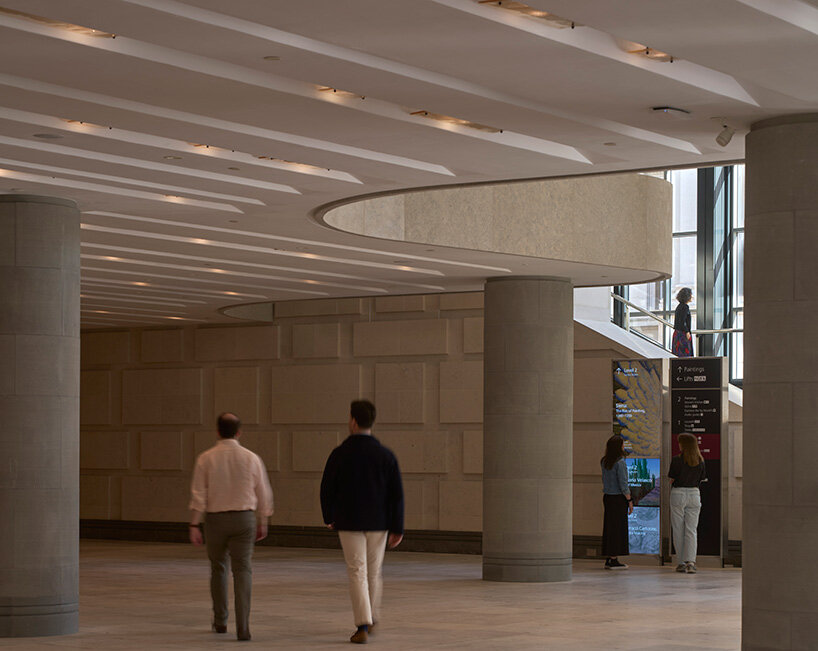
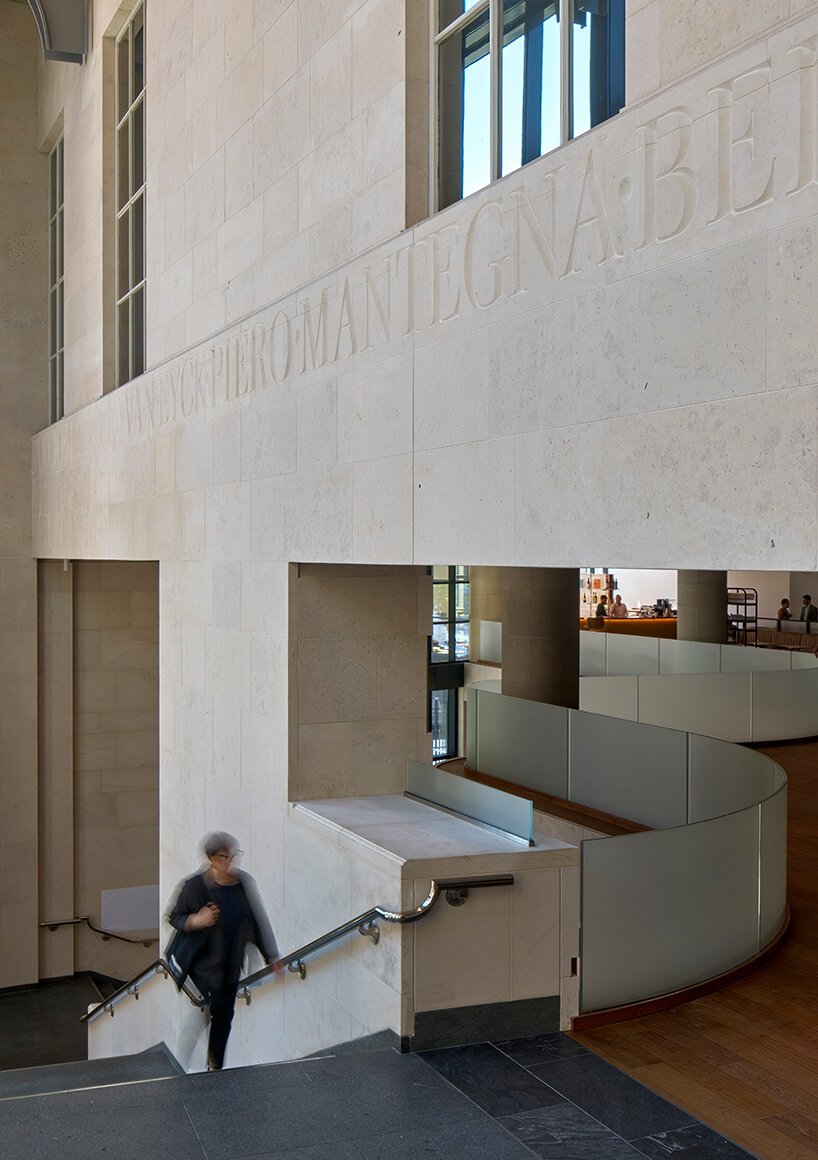
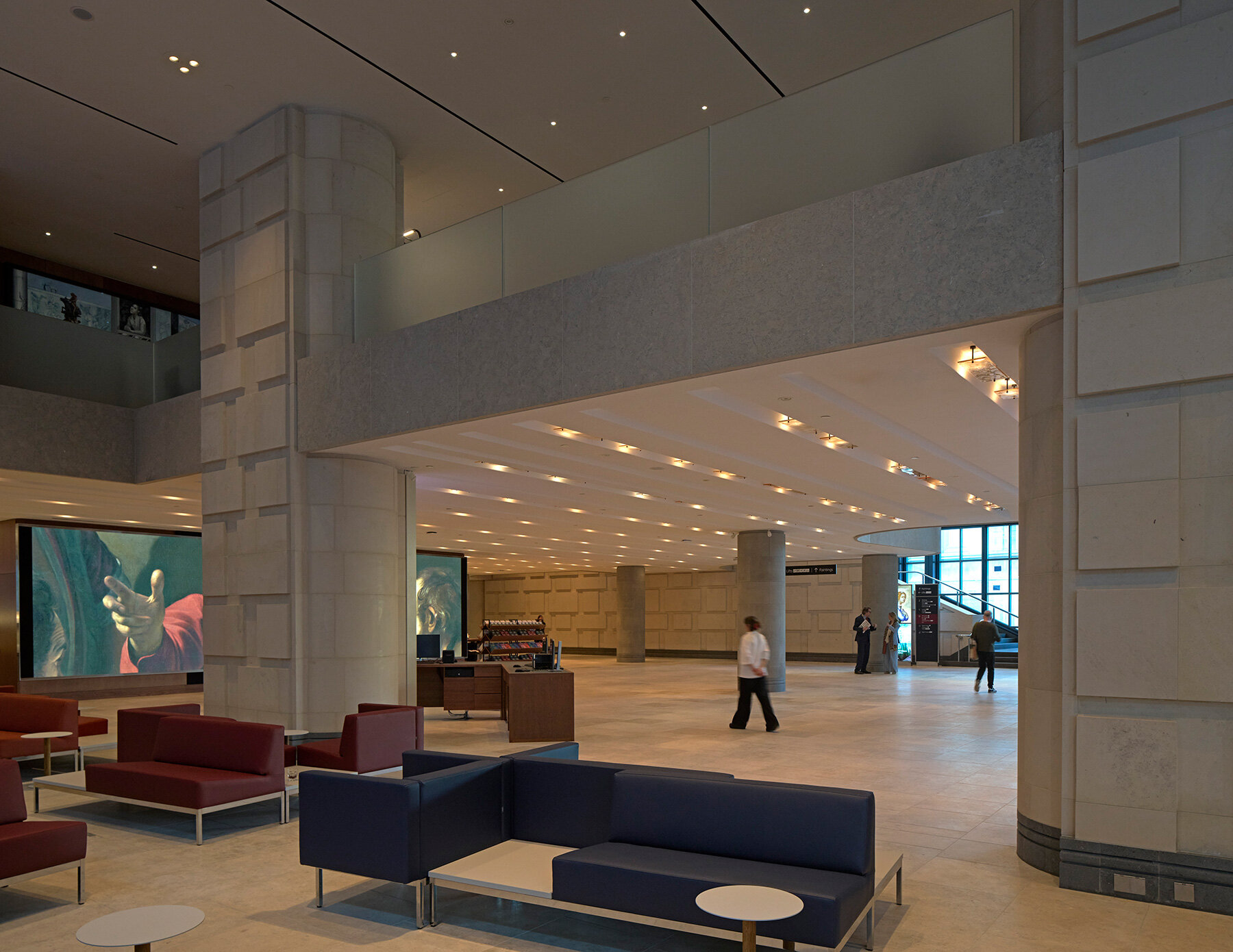
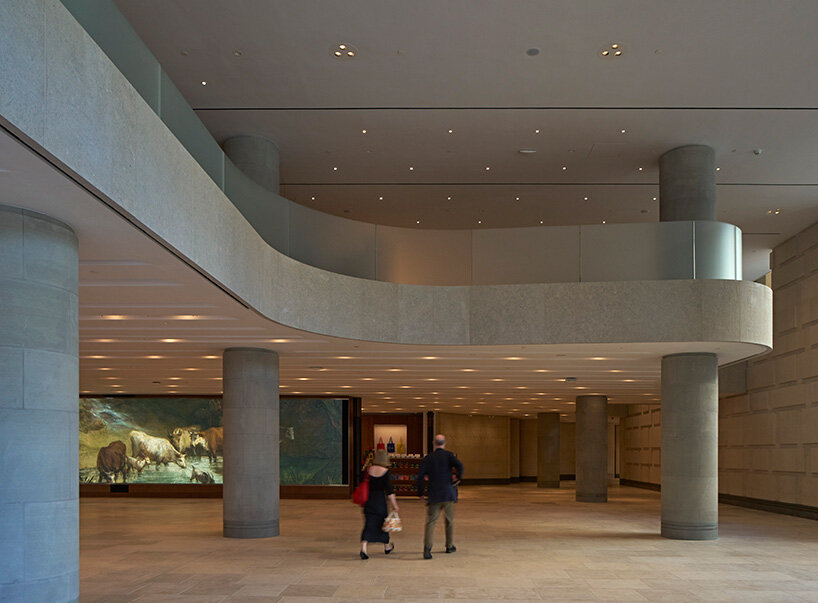
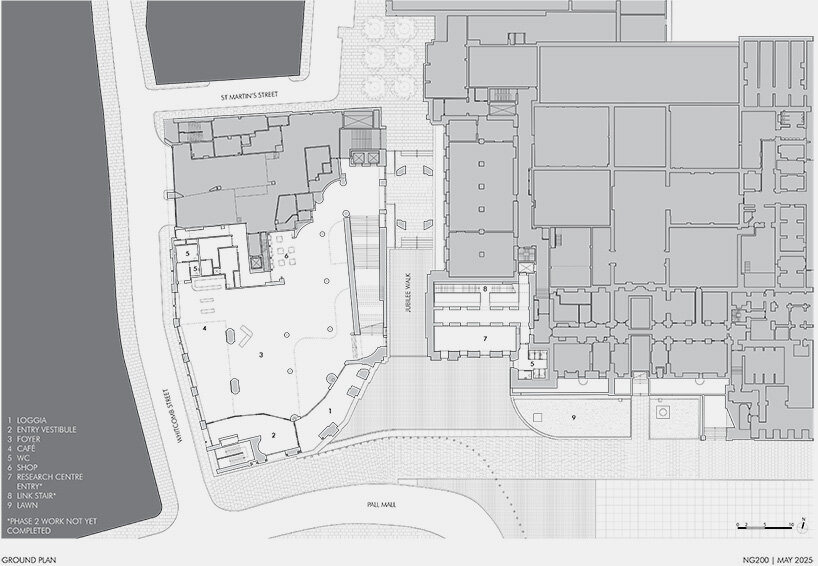
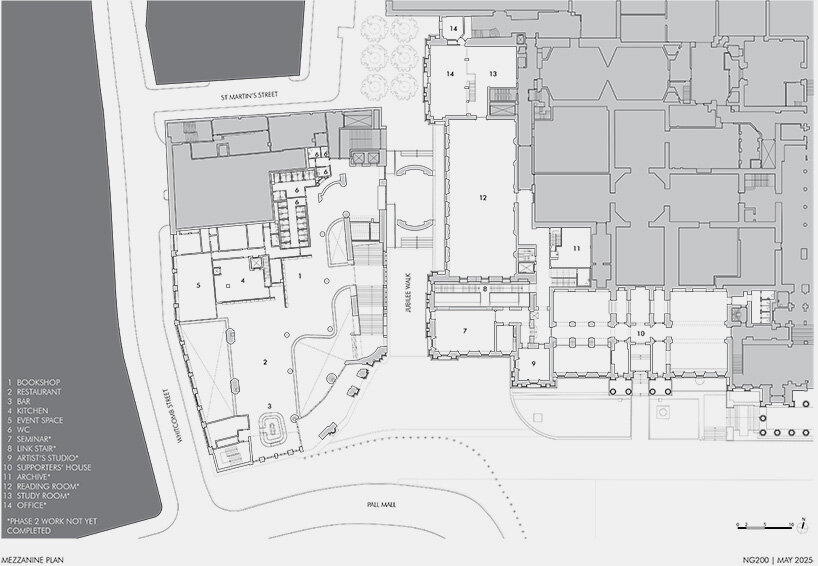
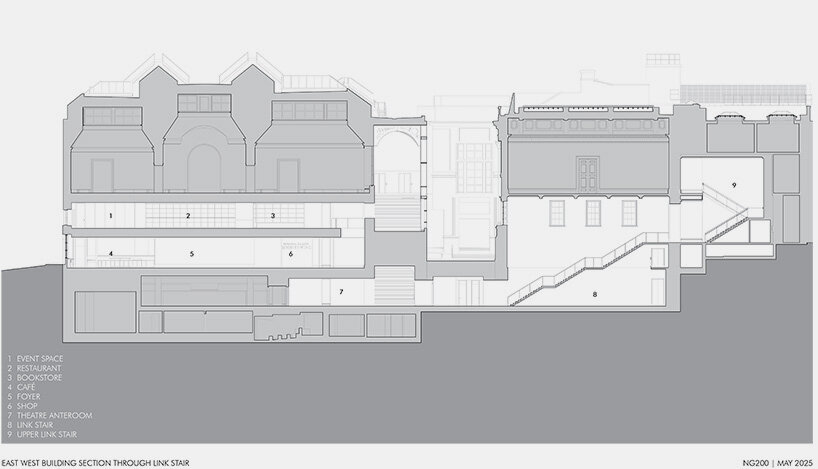
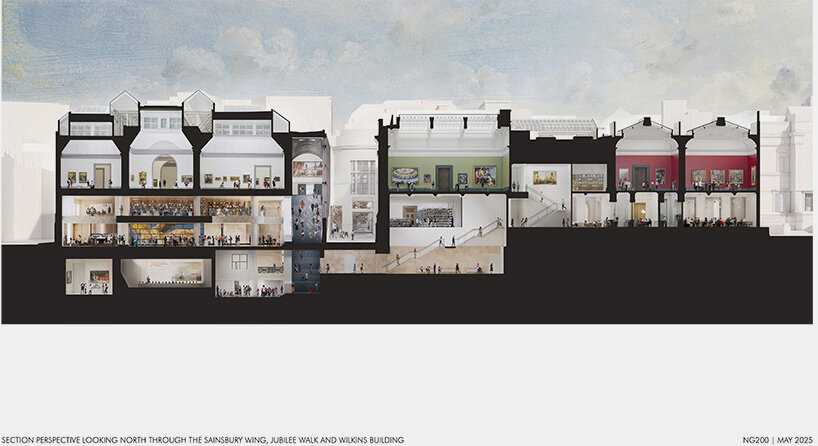
Inside the National Gallery building, the original VSBA layout, a dark, compressed entry leading to a soaring staircase, remains legible, but everything around it has changed. The team of Selldorf Architects expands the foyer by 60%, replaces dark glazing with clear views, and adds two new double-height volumes to the east and west of the vestibule, preserving the original Postmodern play of compresion and release. These volumes now host a lounge, museum shop, and café, while the mezzanine houses a restaurant, bar, and bookshop. Orientation is easier, lighting is better, and every surface is quieter, clad with grey pietra serena limestone, Chamesson from Burgundy, slate, oak, black granite.
Oversized, non-structural columns were removed or slimmed down; donor walls and Egyptian-style columns were relocated for better sightlines. Lighting is improved both naturally, through glass, and artificially, via Murano glass LED diffusers. The grand stair remains untouched but is now foregrounded, a focal point rather than an afterthought.
the first phase of the 200th anniversary program
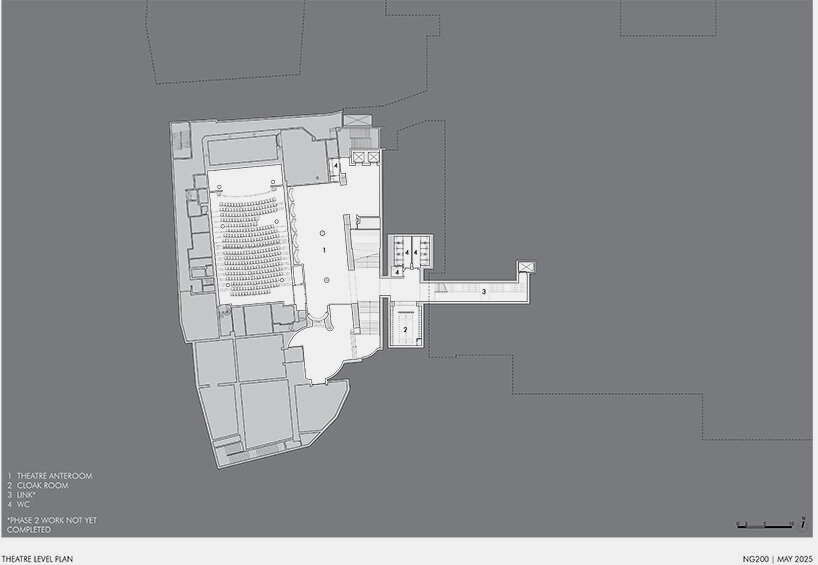
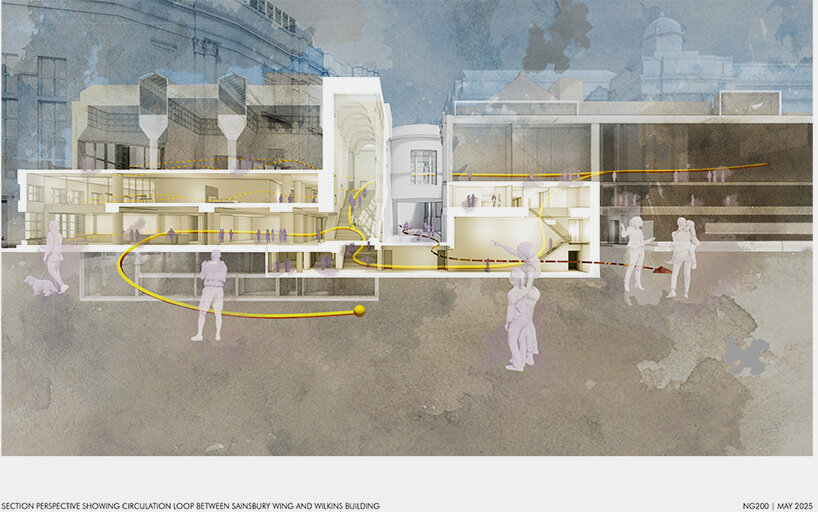
The intervention is the first phase of the £85 million NG200 Welcome program for the National Gallery’s 200th anniversary. The goal is to rethink what a national gallery should feel like. Upcoming additions include the refurbished Research Centre, a new underground link between the Sainsbury Wing and the Wilkins Building, and the Supporters’ House, a hospitality space for patrons with views over Trafalgar Square. Meanwhile, VOGT’s landscape scheme keeps things minimal, replacing the former courtyard with terrazzo-style benches made from reconstituted Portland limestone.
1/7
project info:
name: The National Gallery | @nationalgallery
design architect: Selldorf Architects | @selldorfarchitects
heritage architect: Purcell | @purcell.architecture
location: Trafalgar Square, London WC2N 5DN, United Kingdom
landscape design: Vogt | @vogtlandscape
project manager: The NG200 Project
construction manager: Gardiner & Theobald | @gt_llp
structural, services, sustainability, pedestrian flow & acoustic engineers: Arup | @arupgroup
lighting: L’Observatoire International | @lobservatoire_intl
planning: The Planning Lab | @the_planninglab
access: David Bonnett Associates, Jane Simpson Access
wayfinding & graphics: Pentagram | @pentagramdesign, Thomas Matthews | @tm_thinking
community engagement: Kaizen
fire: OFR Consultants
security: MFD/Thornton Tomasetti
approved inspectors: AIS Chartered Surveyors
vibration: Bickerdike Allen
business case: Colley Associates
communications: London Communications Agency (LCA) | @thisislca
café / espresso bar (ground floor): Studio Linse | @studiolinse, Selldorf
Locatelli restaurant (mezzanine): LXA | @lxaprojects
Locatelli cocktail bar (mezzanine): Selldorf
bookshop (mezzanine & ground floor): RFK / Ryder | @ryderarchitecture
gallery shop (ground floor): RFK / Ryder
digital visitor experience: The Office of Future Interactions | @future.interactions
client: National Gallery
director: Gabriele Finaldi
NG200 project director: Sarah Younger
shop
your own online design shop — no sales commission collected