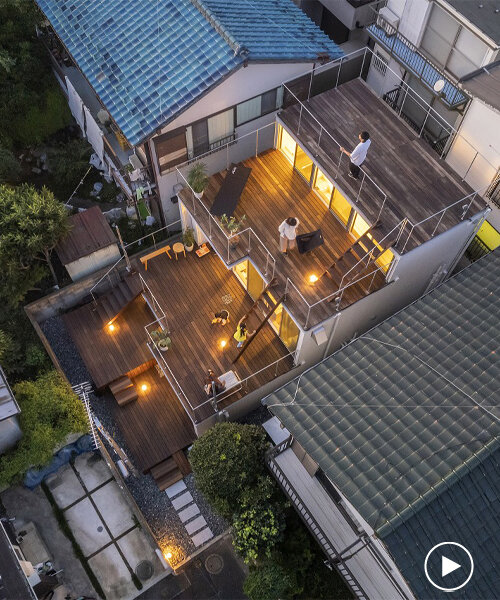
niji architects shapes family house as terraced decks in crowded tokyo neighborhood
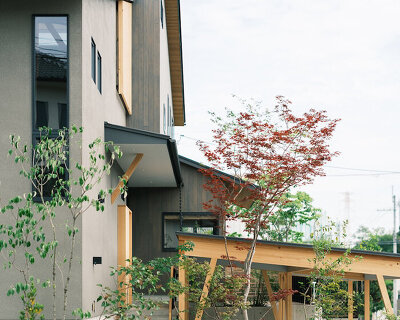
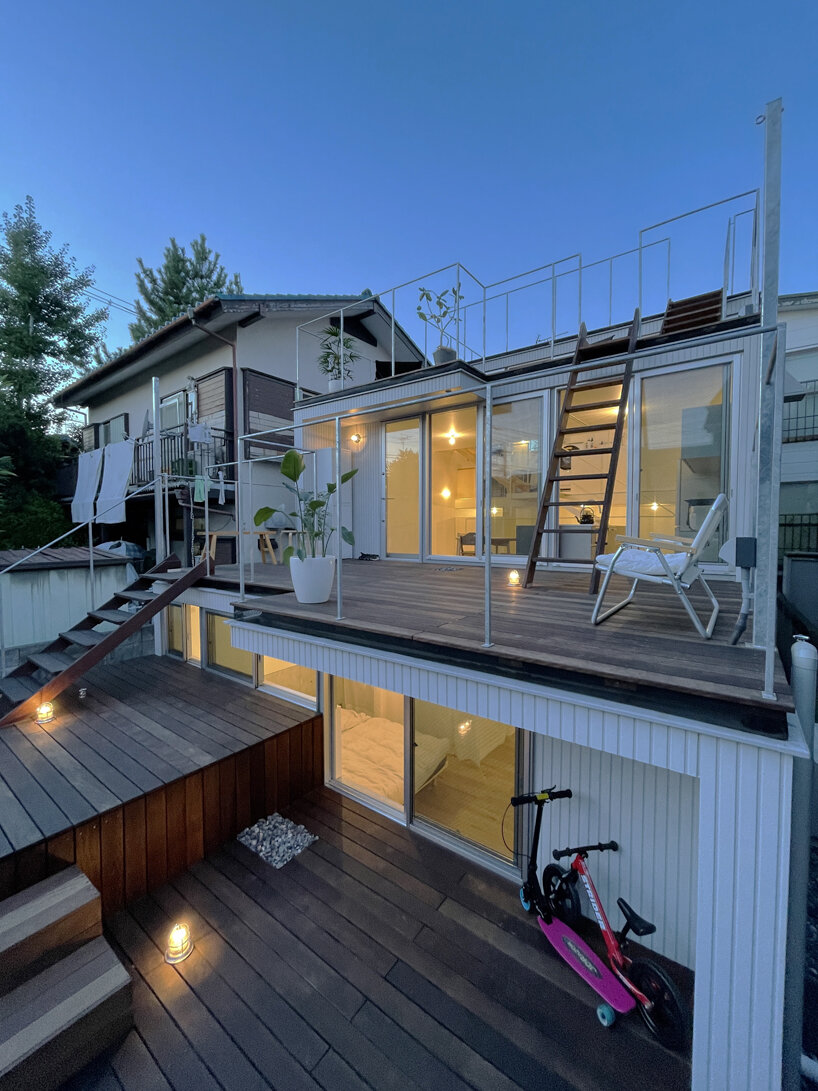
wooden decks on each level extend the living space of adjacent rooms, transforming into dining rooms, workspaces, or laundry areas.
prefer designboom on google[FEATURED]
inside the step garden house by niji architects in tokyo
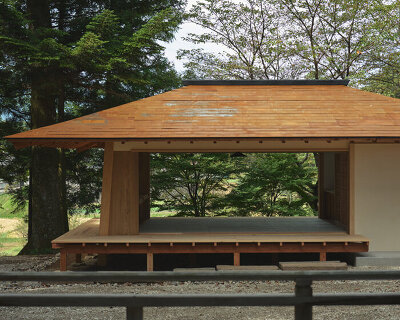
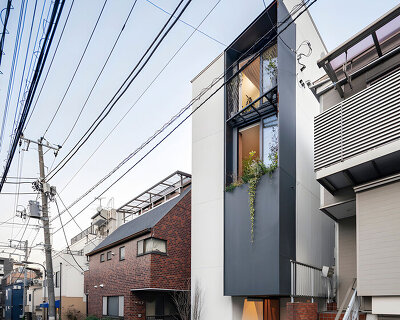
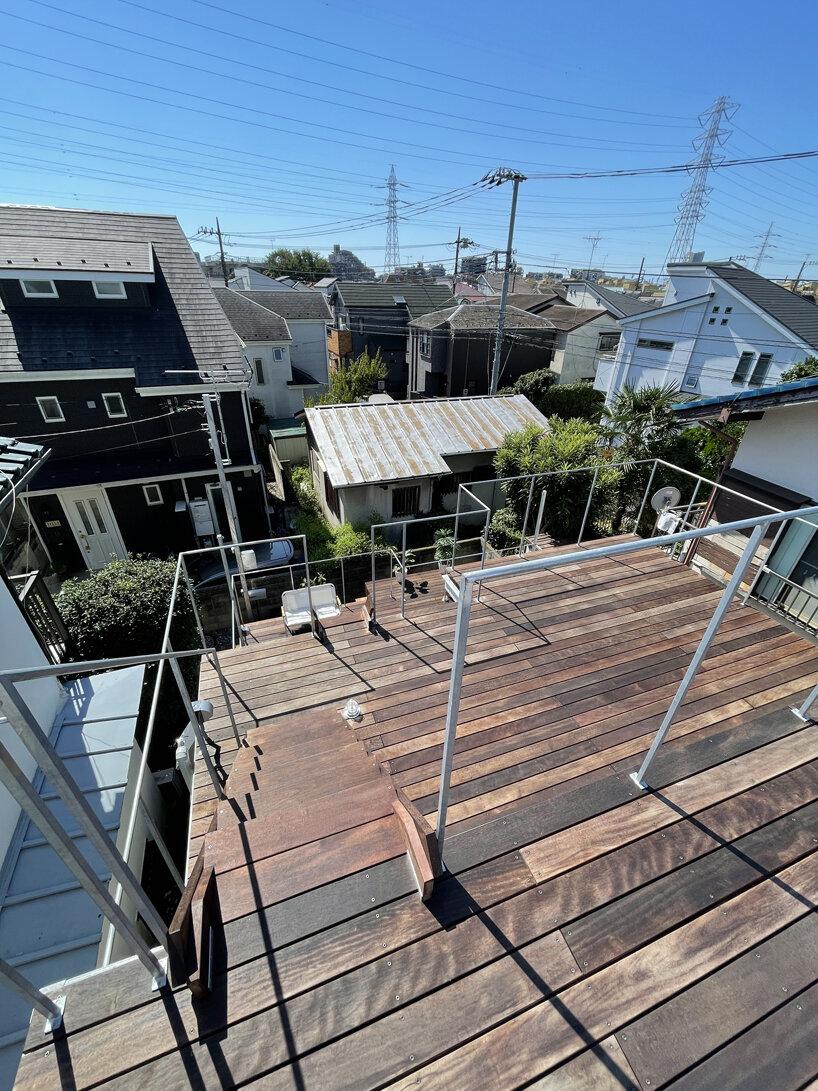
Japanese practice Niji Architects introduces the Step Garden House in a dense residential area of Tokyo. Despite its crowded context and extremely narrow plot of land, the family dwelling bathes in sunlight and welcomes ample ventilation thanks to its terraced composition of wooden decks that gradually set back and ascend toward the north, creating a garden-like space across all levels. Beyond spatial configuration, the project reflects the changing needs of living at home on two levels, particularly after the COVID-19 pandemic. On the one hand, the design adapts to different uses throughout the day; on the other hand, it allows for both togetherness and privacy within a family.
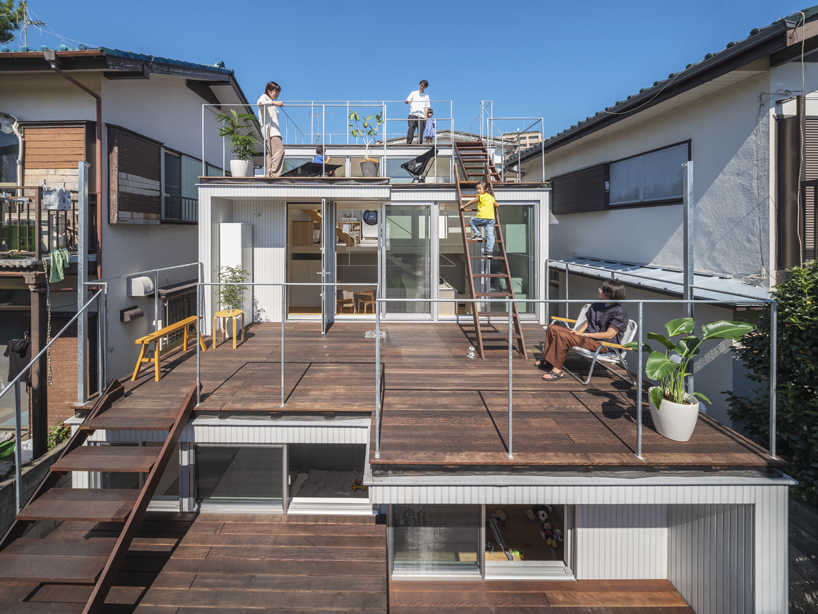
Step Garden House | image © Shinkenchiku-sha
using a skip floor system across four levels
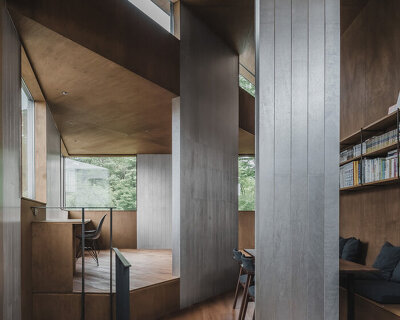
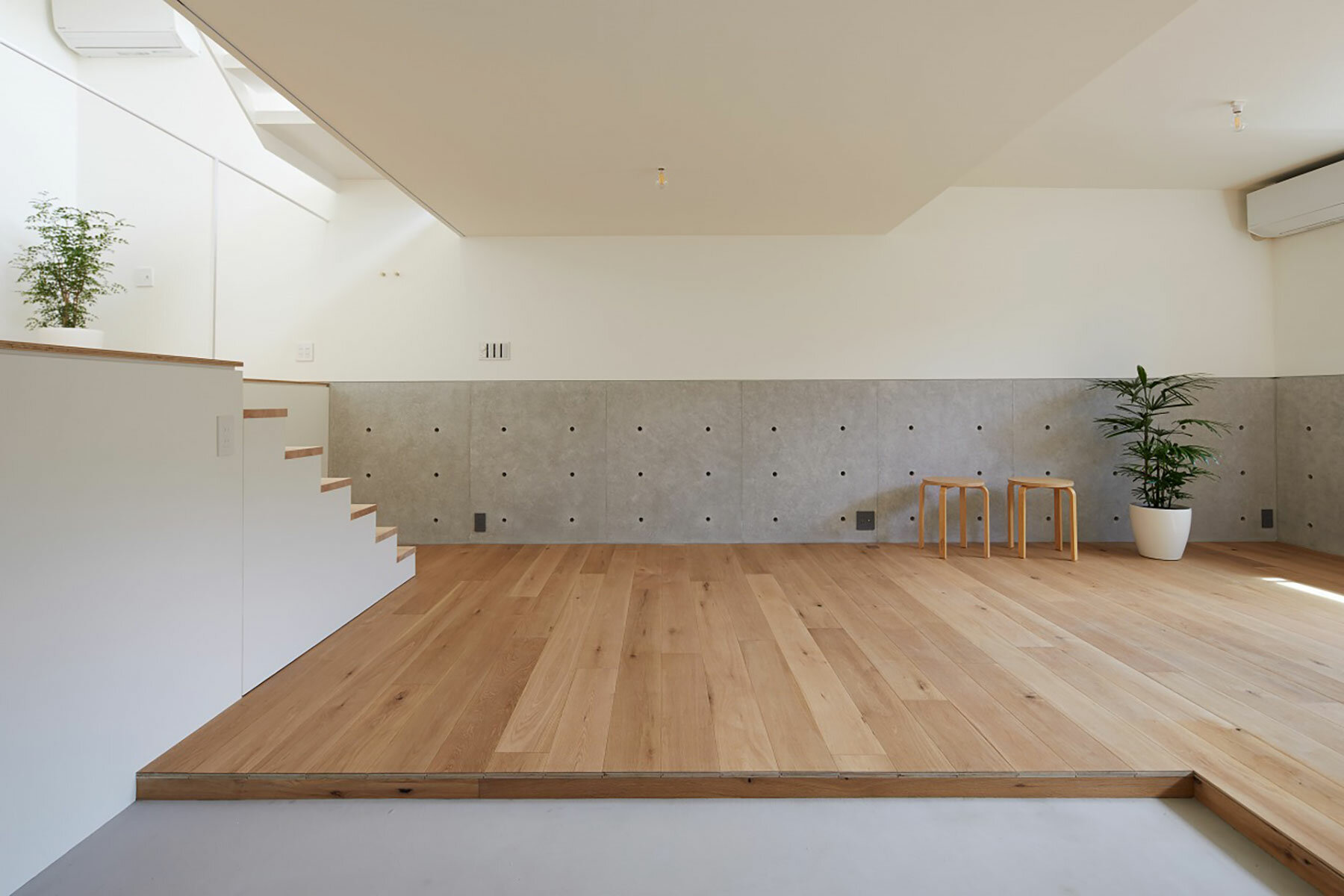
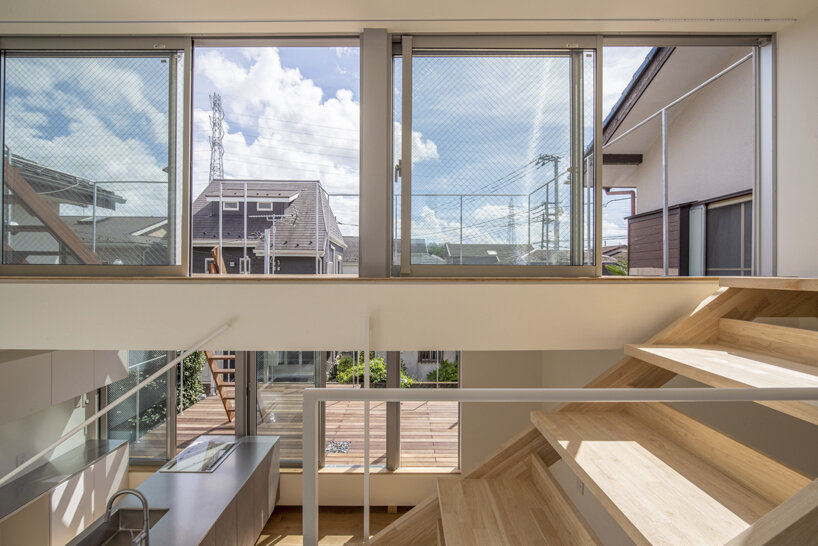
The team at Niji Architects (see more here) divides the Step Garden House into four stories, each reimagining the ways of living in a crowded neighborhood. Instead of a traditional ground floor entrance, residents enter the home on the second floor via a walkway leading to a wooden deck. Beneath this deck is a semi-basement level, serving as the first floor. Inside, the practice adopts a dynamic skip floor system, meaning that some floors do not line up directly with others, creating a link between the rhythms of the exterior stairs and the interior layout. Sunlight streams through the gaps in these floors, illuminating the lower levels and simulating spaciousness.
post-pandemic flexible living in a crowded neighborhood
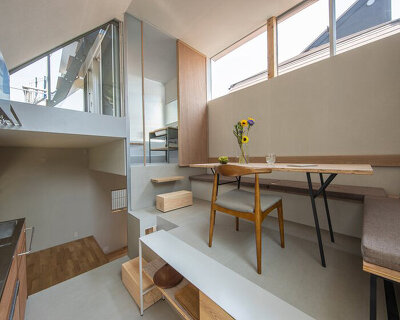
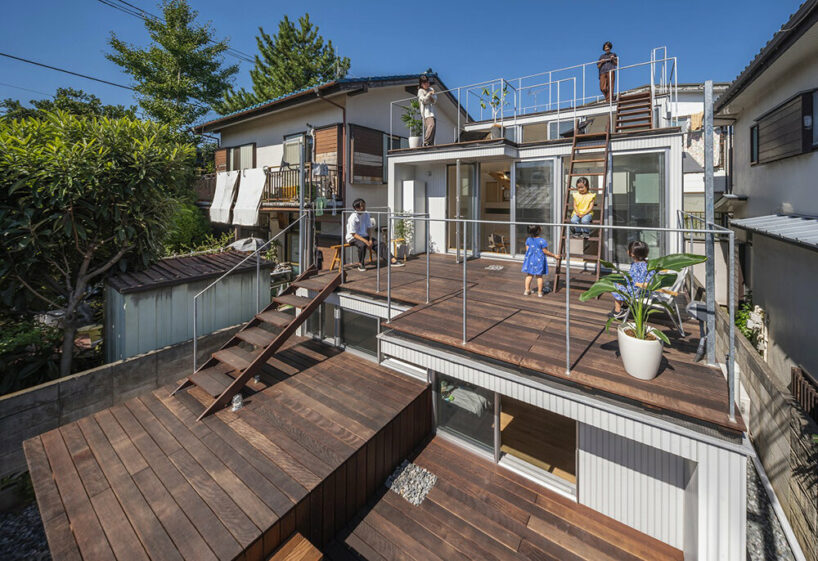
Skip floors entail flexible navigation, with stairs and ladders spread throughout the house, allowing easy movement between indoor and outdoor spaces. Meanwhile, wooden decks on each level extend the living space of adjacent rooms. They can transform into living areas, dining rooms, workspaces, laundry areas, or even vegetable gardens! These decks become an extension of the home, blurring the lines between inside and outside. As a result, the entire property, with its interconnected decks and stepped design, functions as both a house and a garden. ‘We believe that the stepped shape will be one of the answers to the new demands post covid-19 in densely populated residential areas,’ concludes the studio.
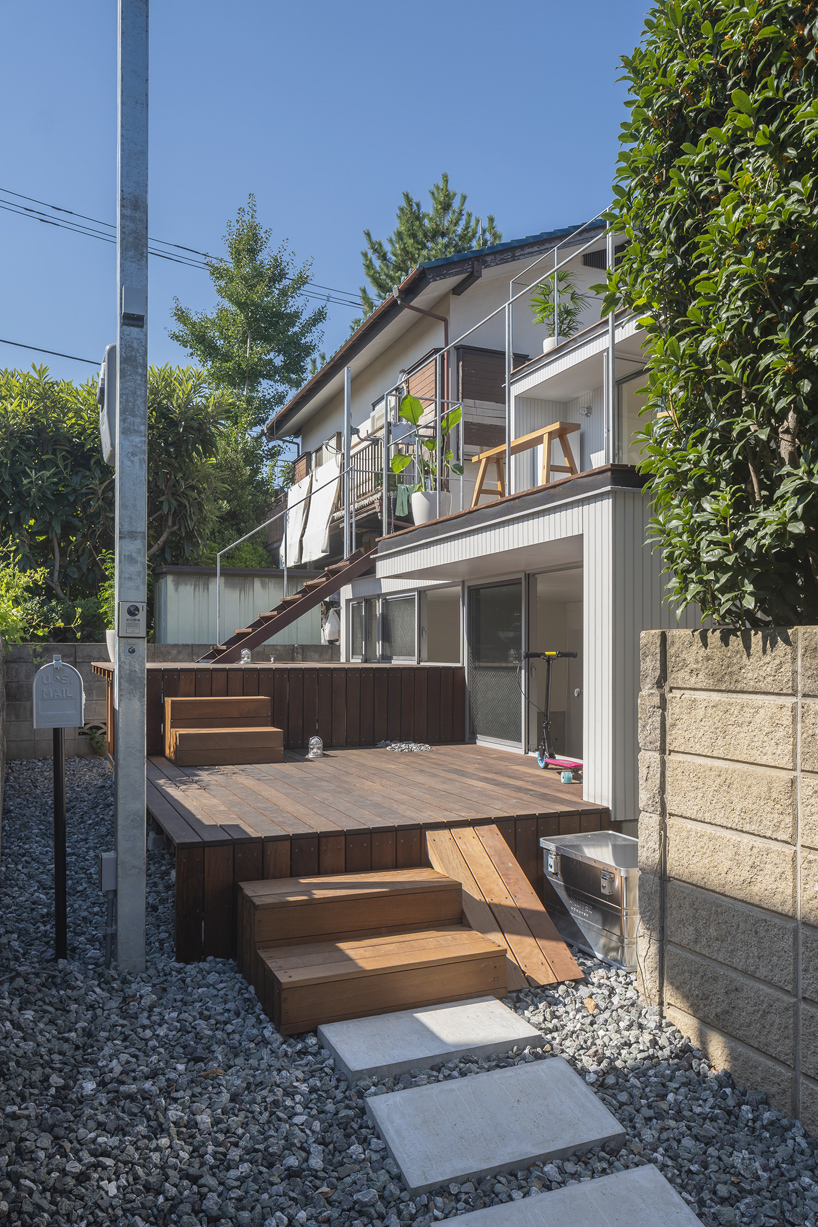
the dwelling is tucked in a crowded neighborhood | image © Shinkenchiku-sha
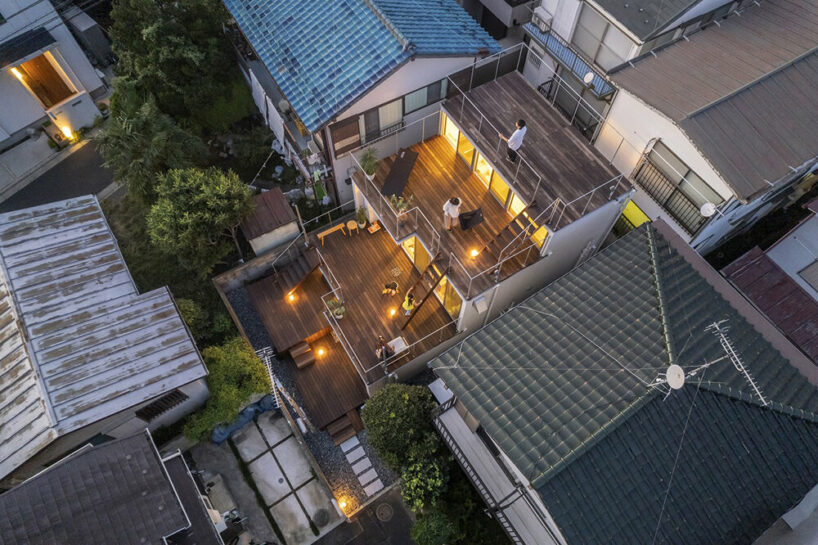
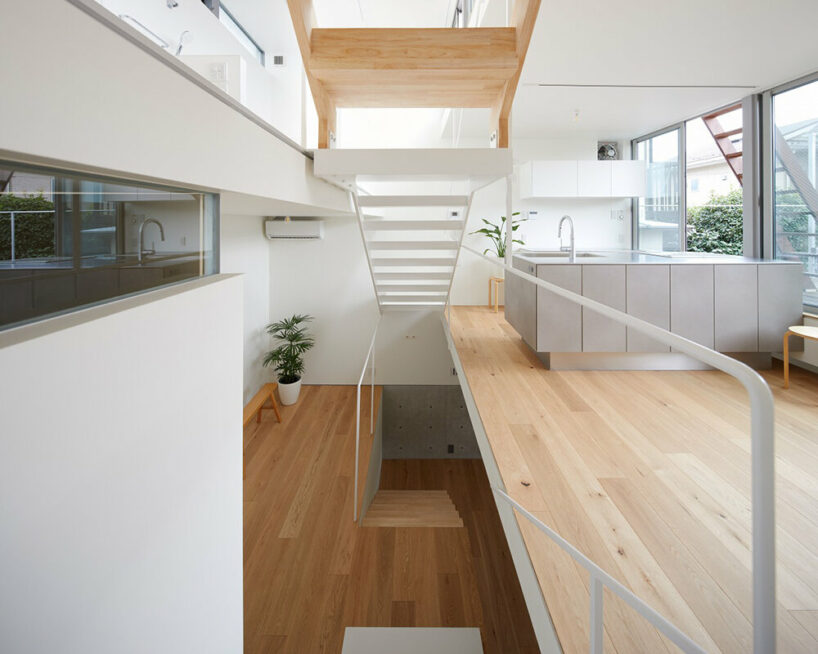
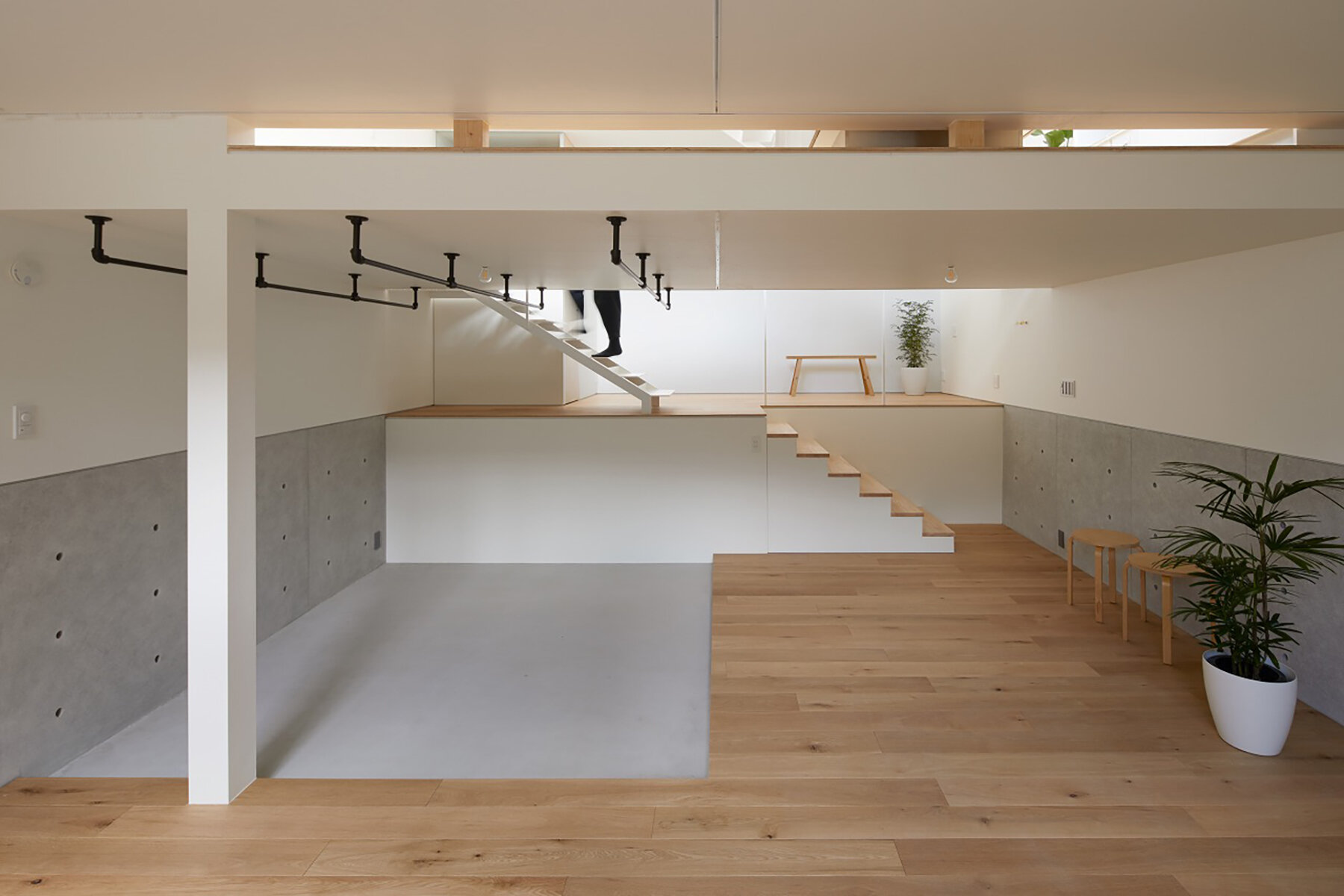
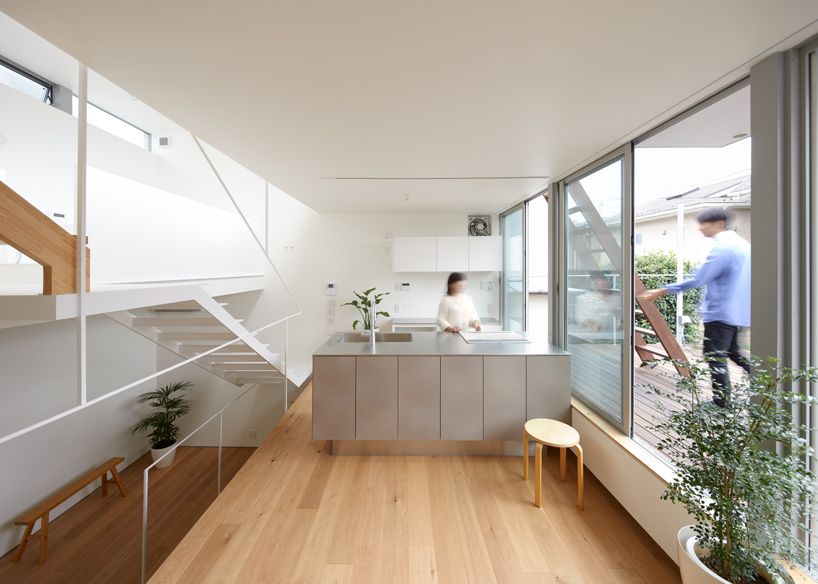
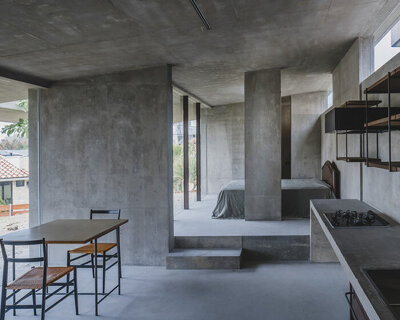
kitchen area | image © Kazuhisa Ishikawa
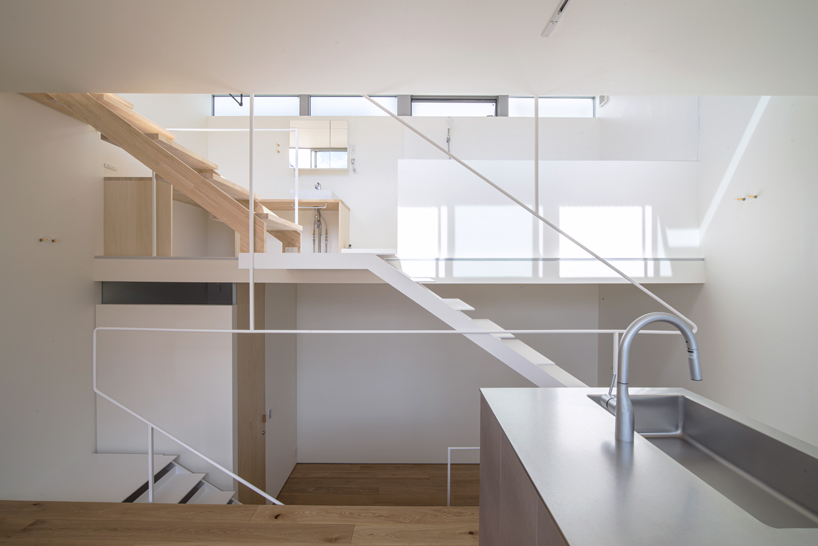
Niji Architects uses a skip floor system | image © Niji Photo
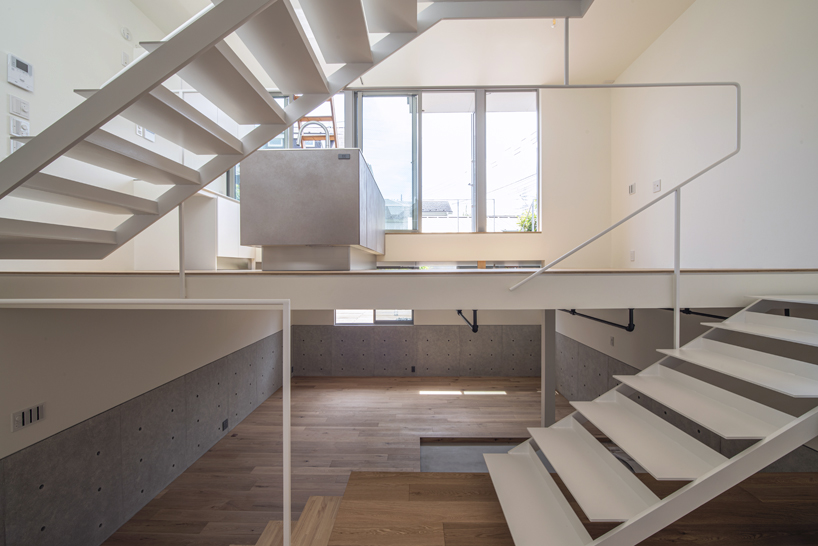
navigation becomes flexible | image © Niji Photo
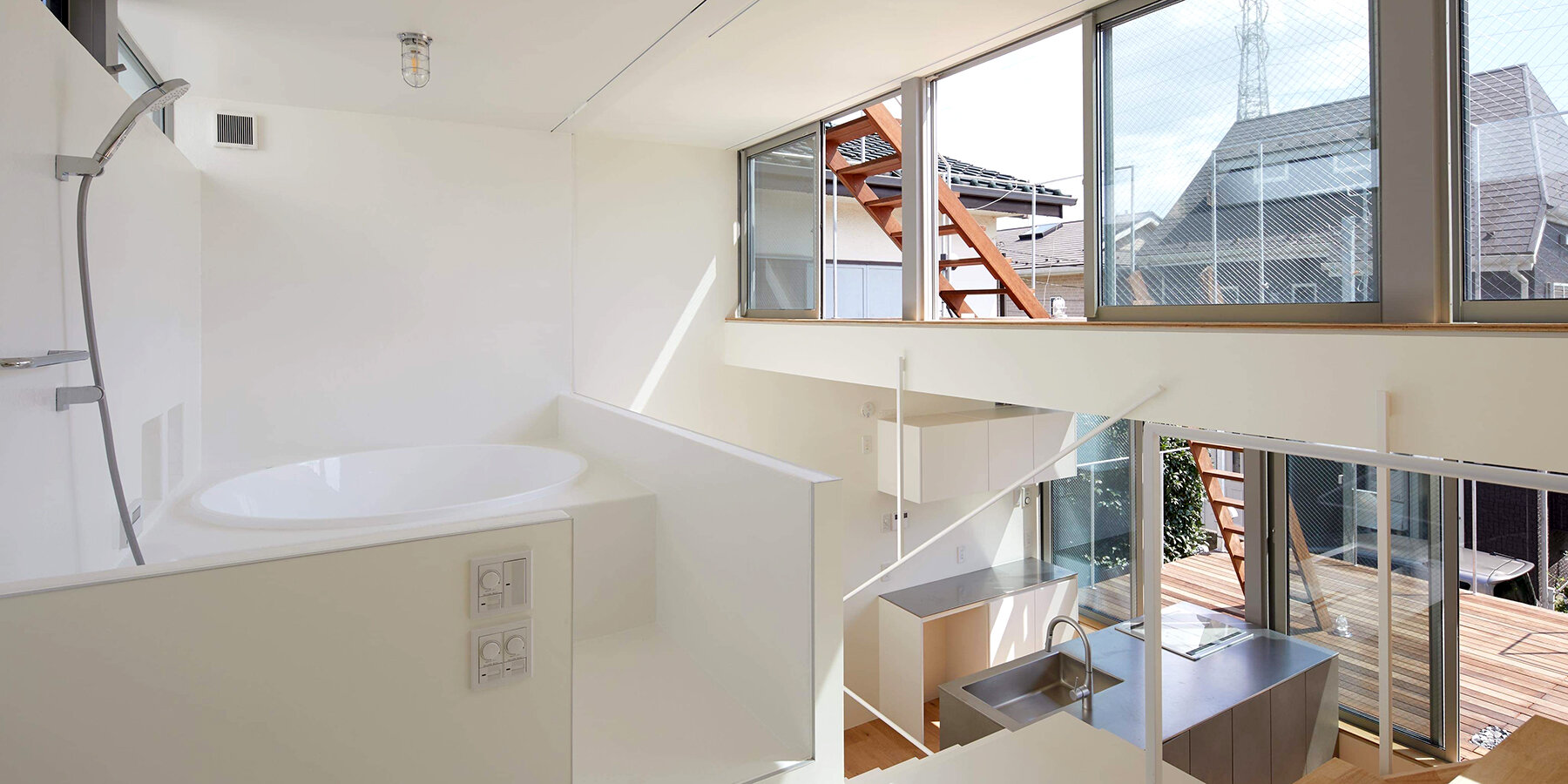
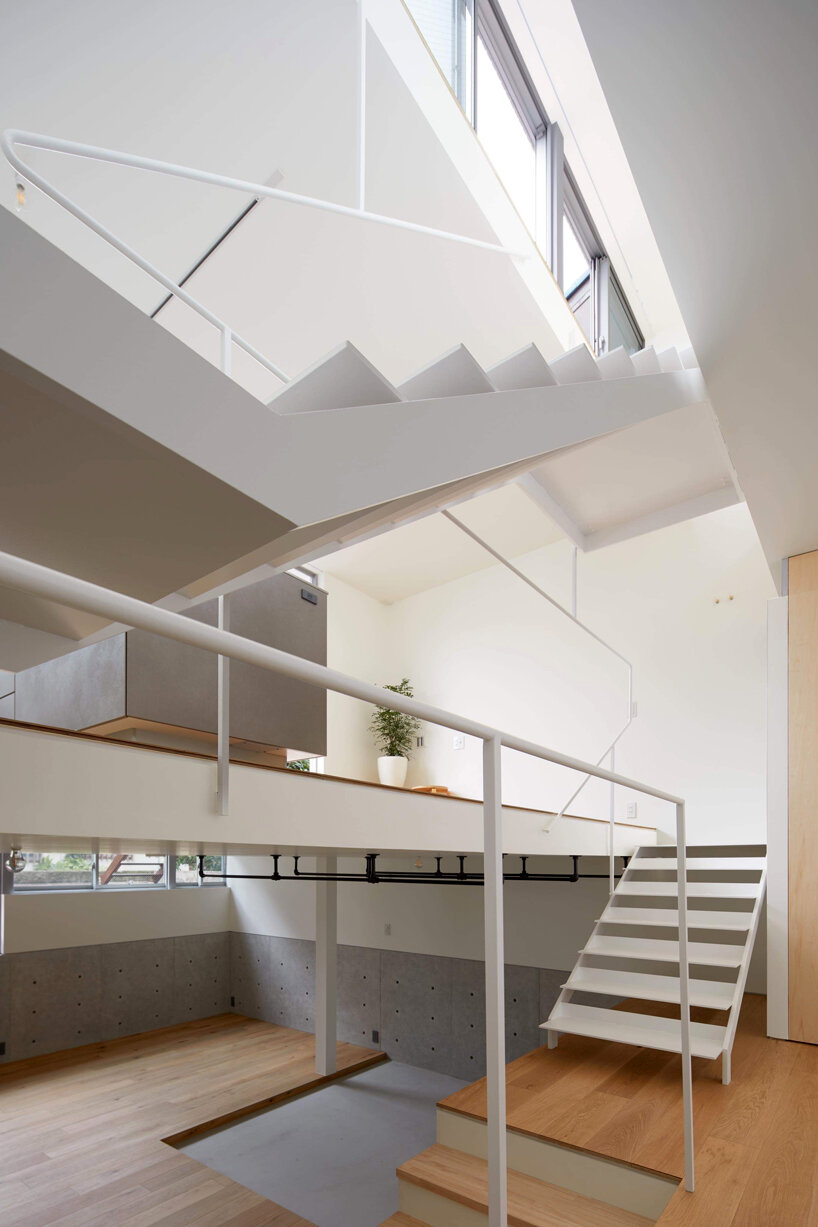
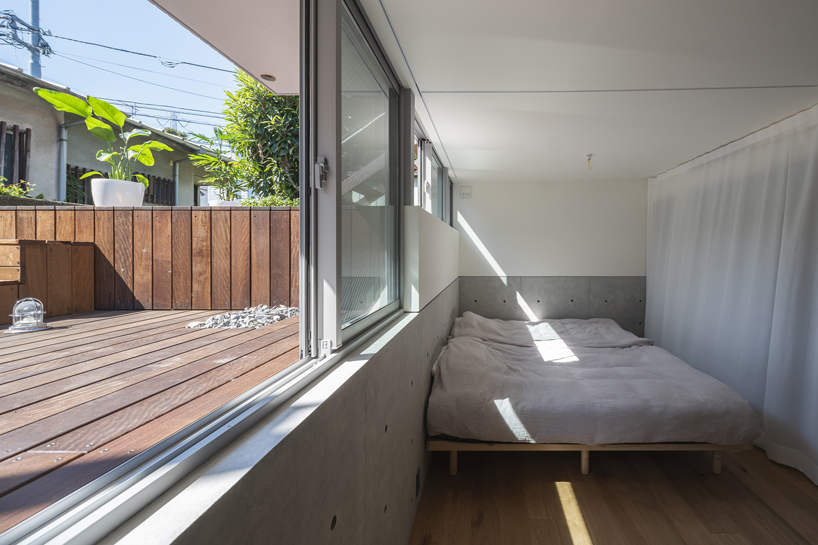
bedroom area | image © Niji Photo
1/3
project info:
name: Step Garden House
location: Tokyo, Japan
architects: Niji Architects
principal designers: Masafumi Harada + Maiko Taniguchi
construction type: timber structure
number of stories: 2
site area: 93.3. sqm
building area: 43.75 sqm
total floor area: 73.07 sqm
designboom has received this project from our DIY submissions feature, where we welcome our readers to submit their own work for publication. see more project submissions from our readers here.
shop
your own online design shop — no sales commission collected