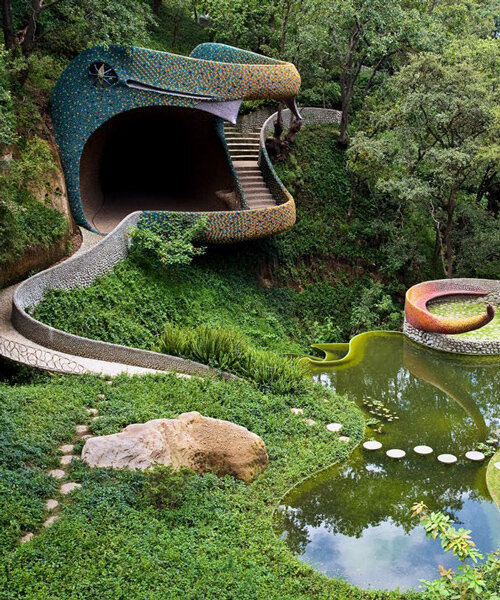
noguchi museum exhibits mexico’s subterranean art and architecture ‘in praise of caves’
'in praise of caves' showcases mexican artists-architects carlos lazo, mathias goeritz, juan o’gorman, and javier senosiain.
prefer designboom on google[FEATURED]
exploring the organic architecture of the cave
The Noguchi Museum showcases the work of four Mexican artist-architects in its newly opened exhibition ‘In Praise of Caves, Organic Architecture Projects from Mexico by Carlos Lazo, Mathias Goeritz, Juan O’Gorman, and Javier Senosiain.’ The show spans multiple galleries of the museum, which has occupied a converted factory building in Long Island City, New York since 1985.
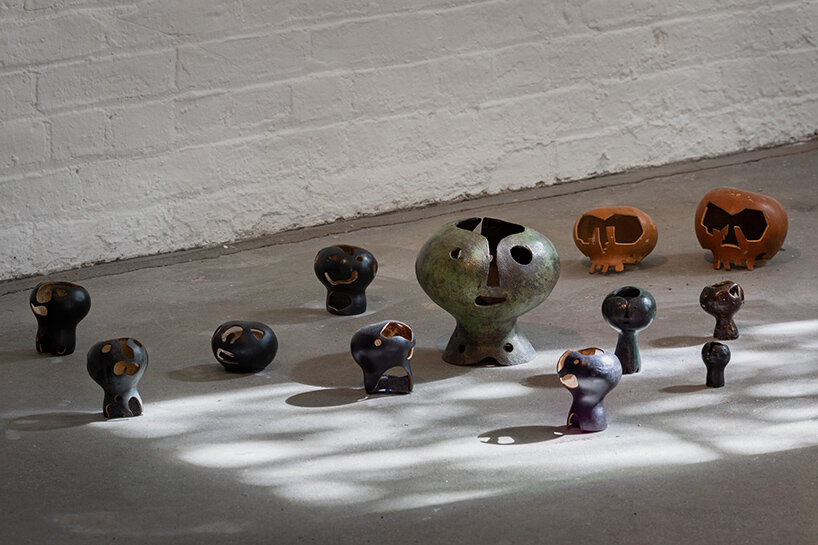
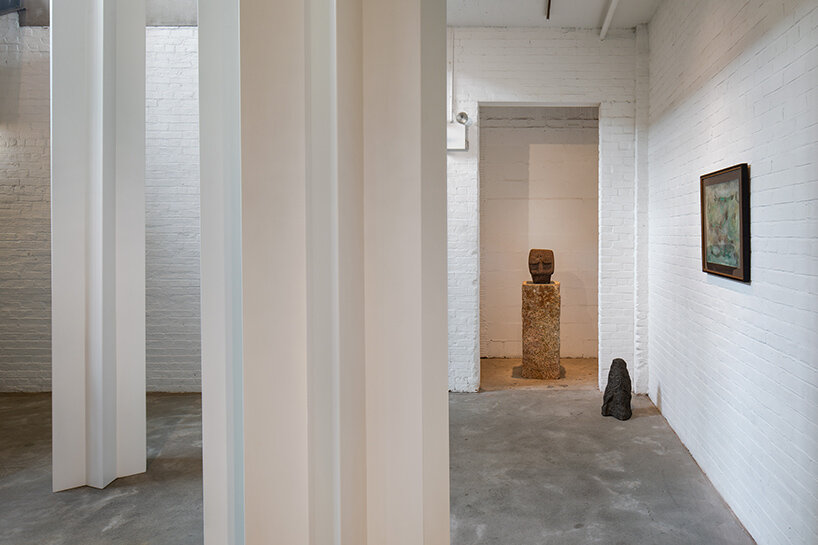
From major urban planning proposals and houses built into the earth, to sculptures both large and small — the selected projects each explore the ‘organic architecture’ of the cave. While some of the projects remain unbuilt, many have been impressively crafted and are either on display in the gallery or exist as an otherworldly work of underground architecture in Mexico.
Together, the collection transforms the interiors into a cavernous landscape, as a ‘metaphor for contemplating and reassessing our place in the world.’ Ahead of the opening last week, designboom visited the Noguchi Museum to explore the exhibition organized by Dakin Hart, which will run until February 26th, 2022.
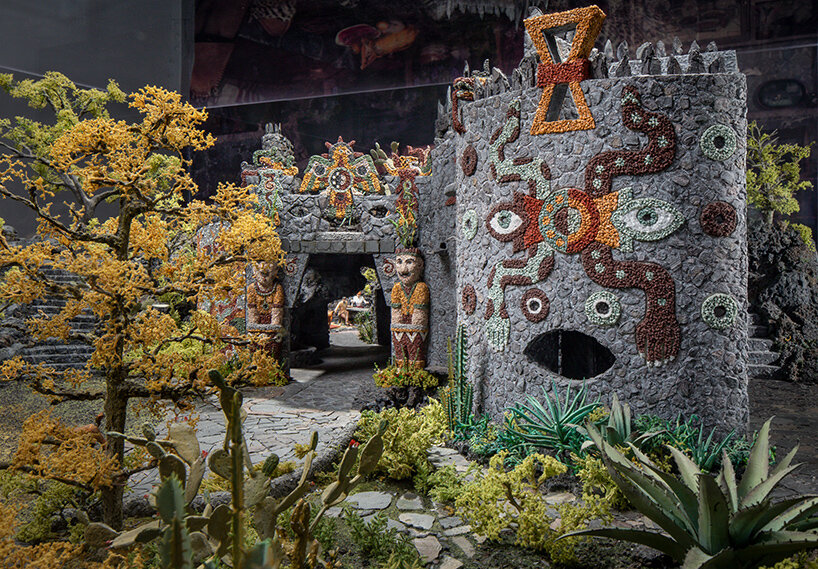
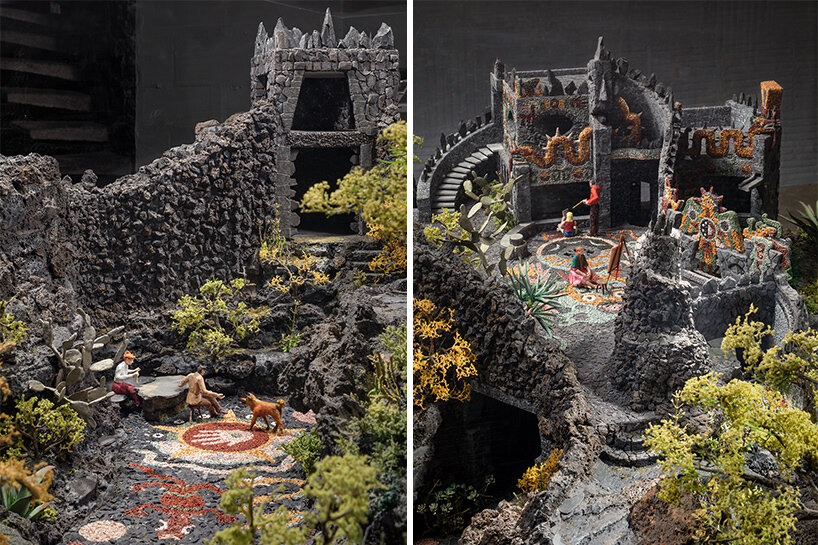
Juan O’Gorman, model of the O’Gorman Cave-Studio House, (1948–54, partially destroyed c. 1969), 2021–22
created by Senosiain Arquitectos | coordinator: Enrique Cabrera Espinosa de los Monteros
reconnecting with the earth
The artists spotlighted at the Noguchi Museum’s exhibition ‘In Praise of Caves…’ worked independently from each other throughout the mid twentieth century. While this investigation into cavernous environments was not an artistic or architectural movement, Mathias Goeritz, Juan O’Gorman, Javier Senosiain, and Carlos Lazo together shared common themes and threads of values.
These shared interests arose alongside the conclusion of the second World War, especially after the dropping of the atomic bombs. ‘All of humanity sort of had a mental shift,‘ explained Hart, ‘we had ruptured our connection to nature. As soon as we have the power to destroy it all, that changes our power dynamic with Mother Nature, and these architects and artists were interested in repairing that breach.’
Within the context of Mexico City and its surrounding landscape, the architects sought to build into the earth, rather than simply on top of it. With this type of earth architecture, built space is shaped by the rocks and trees, burrowing itself around the unmovable elements to form complex subterranean interiors. The strategy aimed to reintroduce a respect for the earth, a philosophy which is just as relevant today.
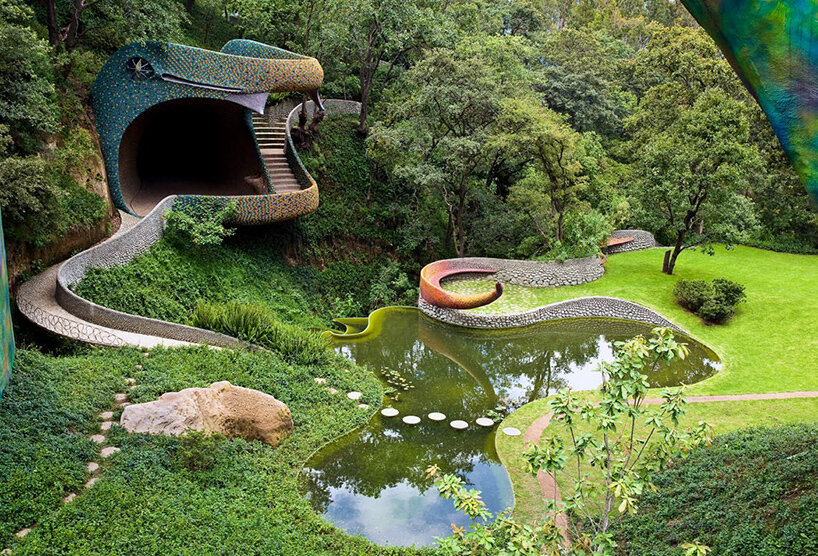
Javier Senosiain, El Nido de Quetzalcóatl, Naucalpan, Mexico, 1998–2007
image © Javier Senosiain / Arquitectura Orgánica
serpent sculptures and snake-like spaces
Imagery of serpents is a common motif among the works shown at the Noguchi Museum’s ‘In Praise of Caves…’ exhibition. Hart explains the significance of the snakes to a collection of works exploring the cave: ‘Snakes are the ones who are moving between. They are like our ambassadors to the Earth, our ambassadors to the underworld.’
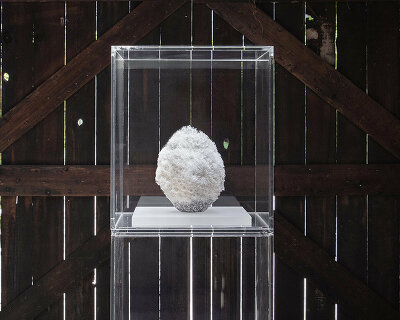
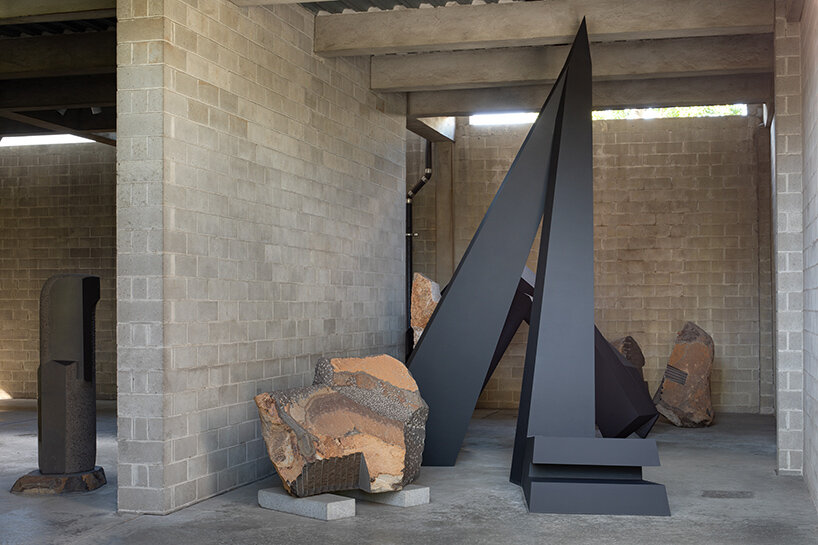
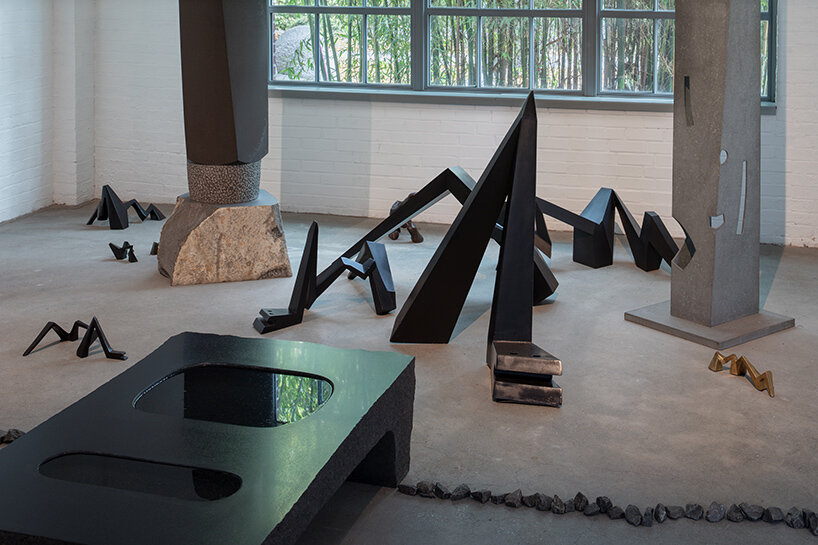
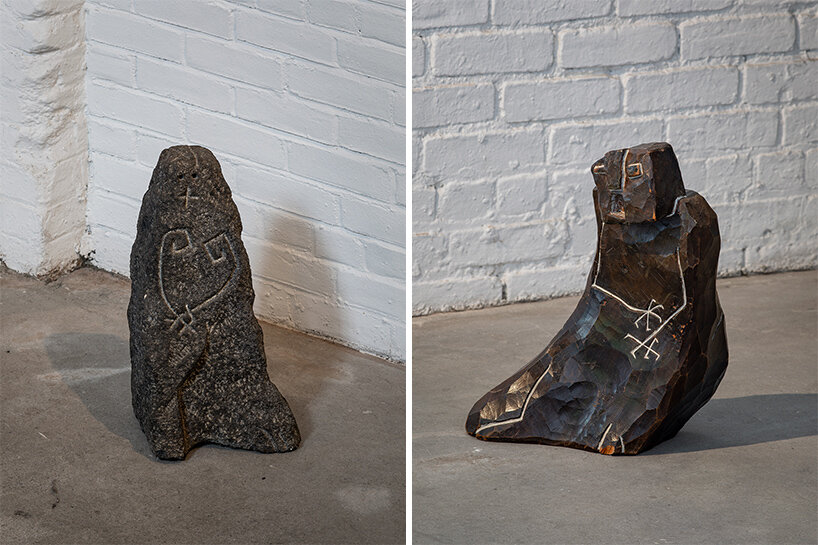
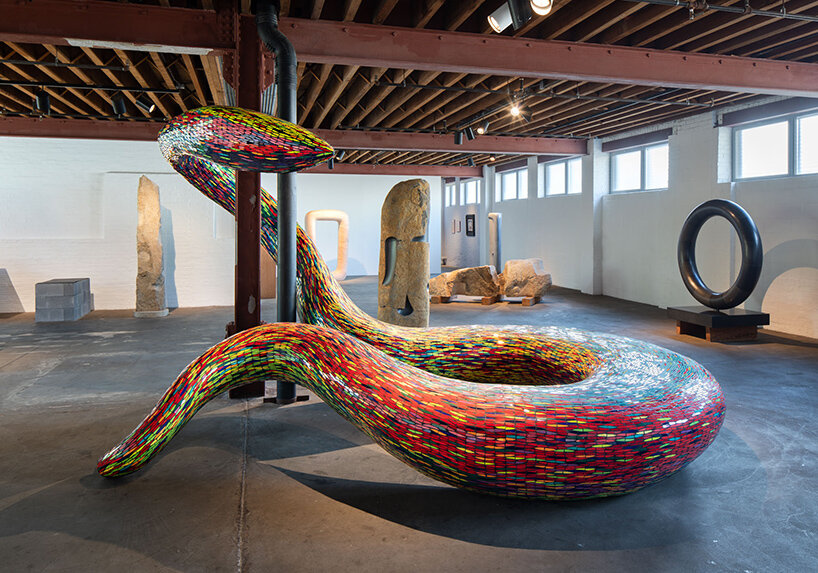
Standing like an ambassador to the exhibition, a massive sculptural work by Mathias Goeritz titled, La Serpiente de El Eco (El Eco Serpent), 1953, greets visitors, rising sixteen feet within the lofty front gallery space. Smaller, experimental iterations occupy the next room, scattered among Noguchi sculptures which rise from the gallery floor like stalagmites.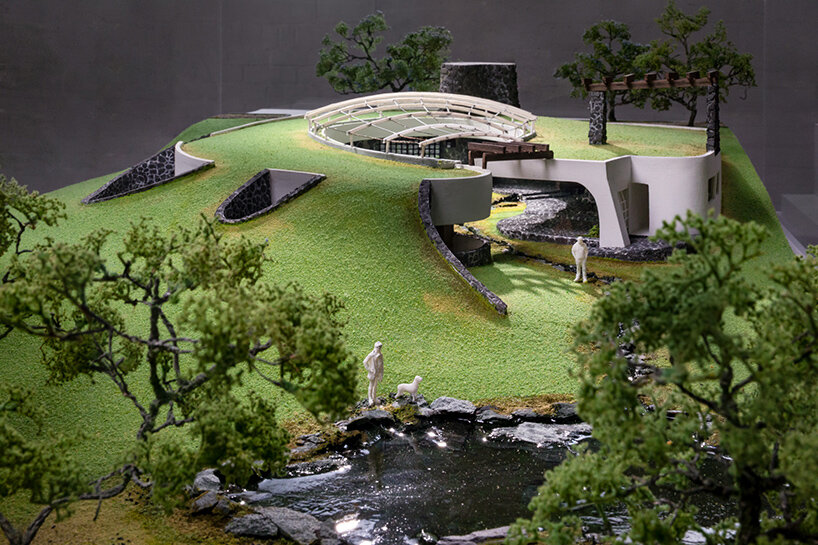 Carlos Lazo, model of Carlos Lazo’s Proyecto Casa-Cueva de la Era Atómica (1948), 2021–22
created by Javier Senosiain, Arquitectura Orgánica and María Fernanda Zarate Espinosa | courtesy Javier Senosiain
all images by Nicholas Knight © The Noguchi Museum / ARS
underground spaces, conceptual and built
The exhibition showcases a collection of impressive physical models representing cavernous works of architecture by Juan O’Gorman, Javier Senosiain, and Carlos Lazo.
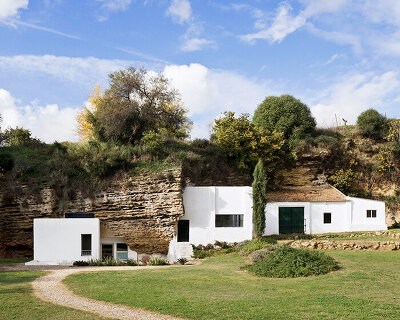
The O’Gorman Cave-Studio House was completed in 1954 and served as the home of Juan O’Gorman, a Mexico City-based architect known to have built the studios of Diego Rivera and Frida Kahlo. After mastering the modernist style of glass and steel, he rejected the rational, inorganic practice and became instead a passionate advocate for organic architecture. His subterranean dwelling is embedded into the lava rock, negotiating between the natural contours of the landscape.
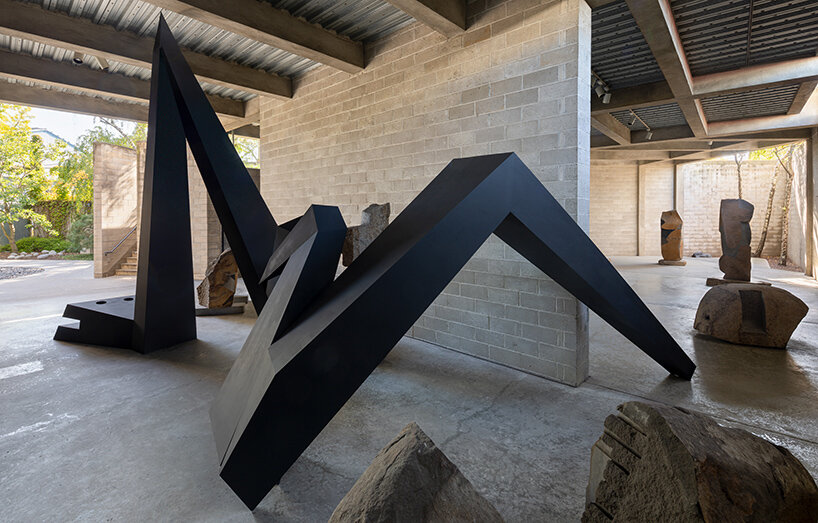
Mathias Goeritz, La Serpiente de El Eco (El Eco Serpent), 1953; exhibition copy fabricated 2022
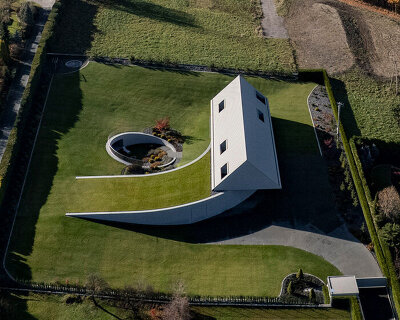
Another built project existing today in Mexico City is Javier Senosiain’s El Nido de Quetzalcóatl (The Nest of Quetzalcóatl), 1998–2007. The vast work stands as a still-developing organic architecture theme park. The architect’s interest in building organically, which he does principally in formed concrete, extends to a wide range of models and systems patterned on nature. What they all share in common is a quality of emerging from, and/or nestling into, the earth.
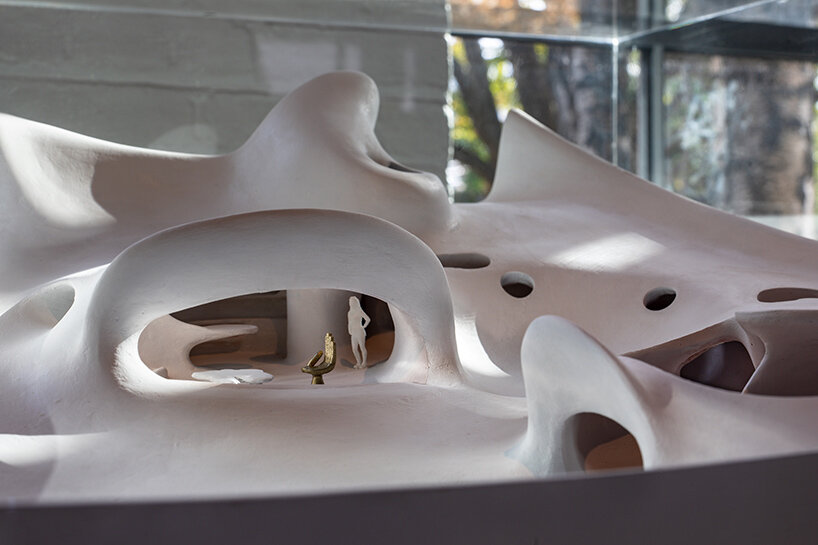
Javier Senosiain Aguilar, Model for Casa Orgánica, Mexico City (1985), 1984
fabricated by Enrique Cabrera Espinosa de los Monteros
courtesy Javier Senosiain / Arquitectura Orgánica
An unbuilt work of subterranean architecture showcases Carlos Lazo’s ideas about cave living. La Casa-Cueva de la Era Atómica (Atomic Age Cave House), 1945–48, is displayed in the form of a recently constructed physical model. The hyper-modern cave home is described as a ‘synthesis of the Flintstones and the Jetsons.’ It is accompanied by a display of images of Lazo’s other efforts to take modern living back to the future in his Cuevas Civilizadas (Civilized Caves) project, which was to have included 110 homes dug into a canyon wall in the Belén de las Flores neighborhood of Mexico City.
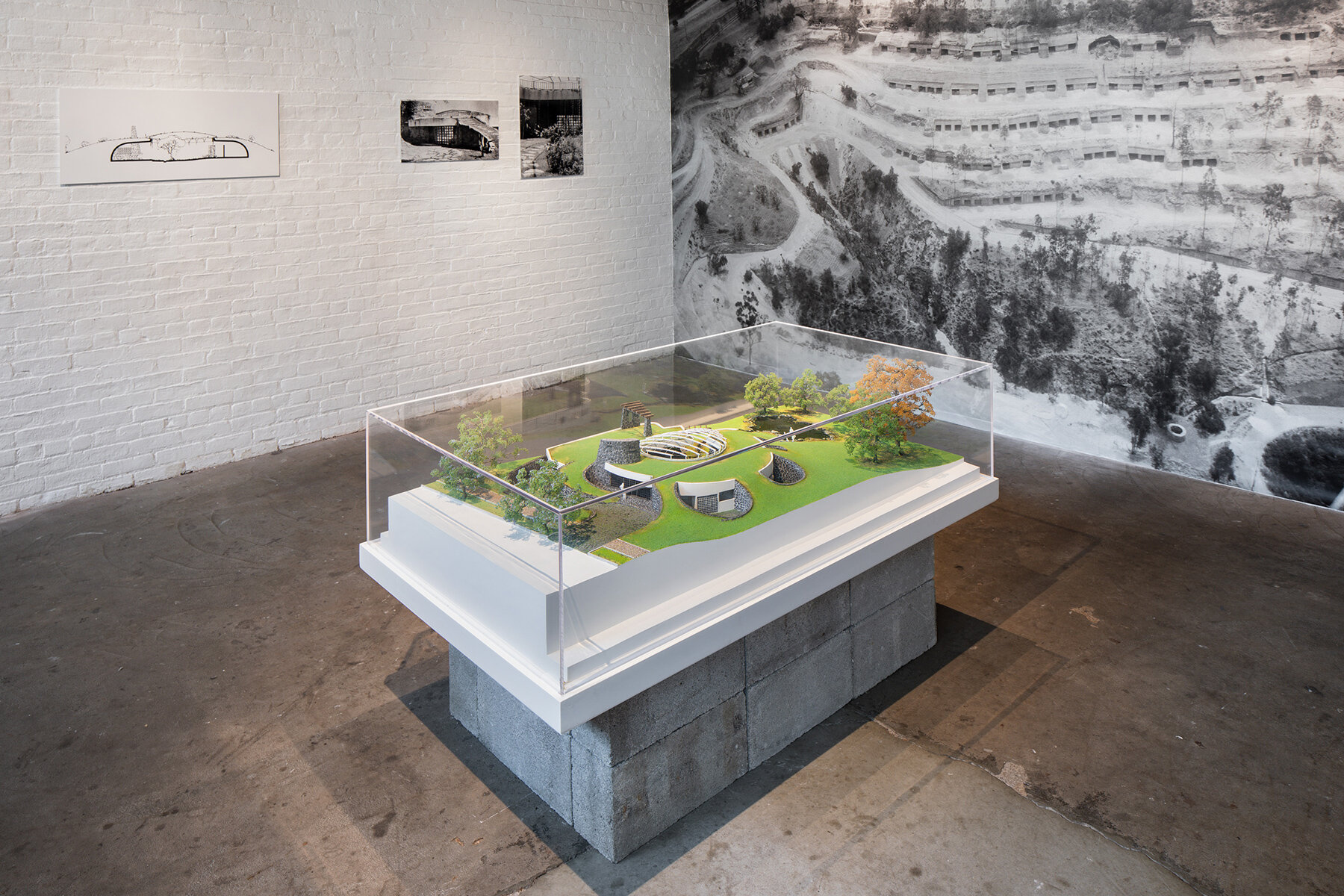
created by Javier Senosiain, Arquitectura Orgánica and María Fernanda Zarate Espinosa | courtesy Javier Senosiain
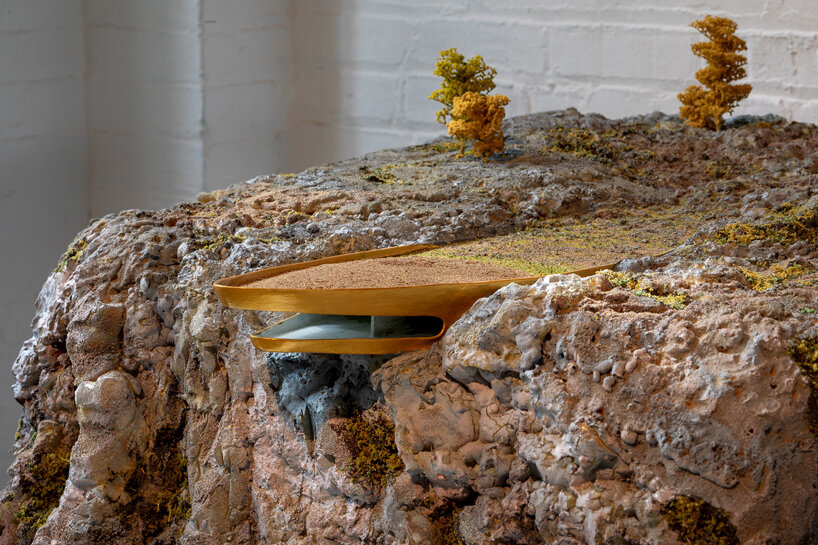
Javier Senosiain Aguilar, model for Proyecto Refugio Iztaccíhuatl, 2003 (unrealized)
fabricated by Enrique Cabrera Espinosa de los Monteros
courtesy Javier Senosiain / Arquitectura Orgánica
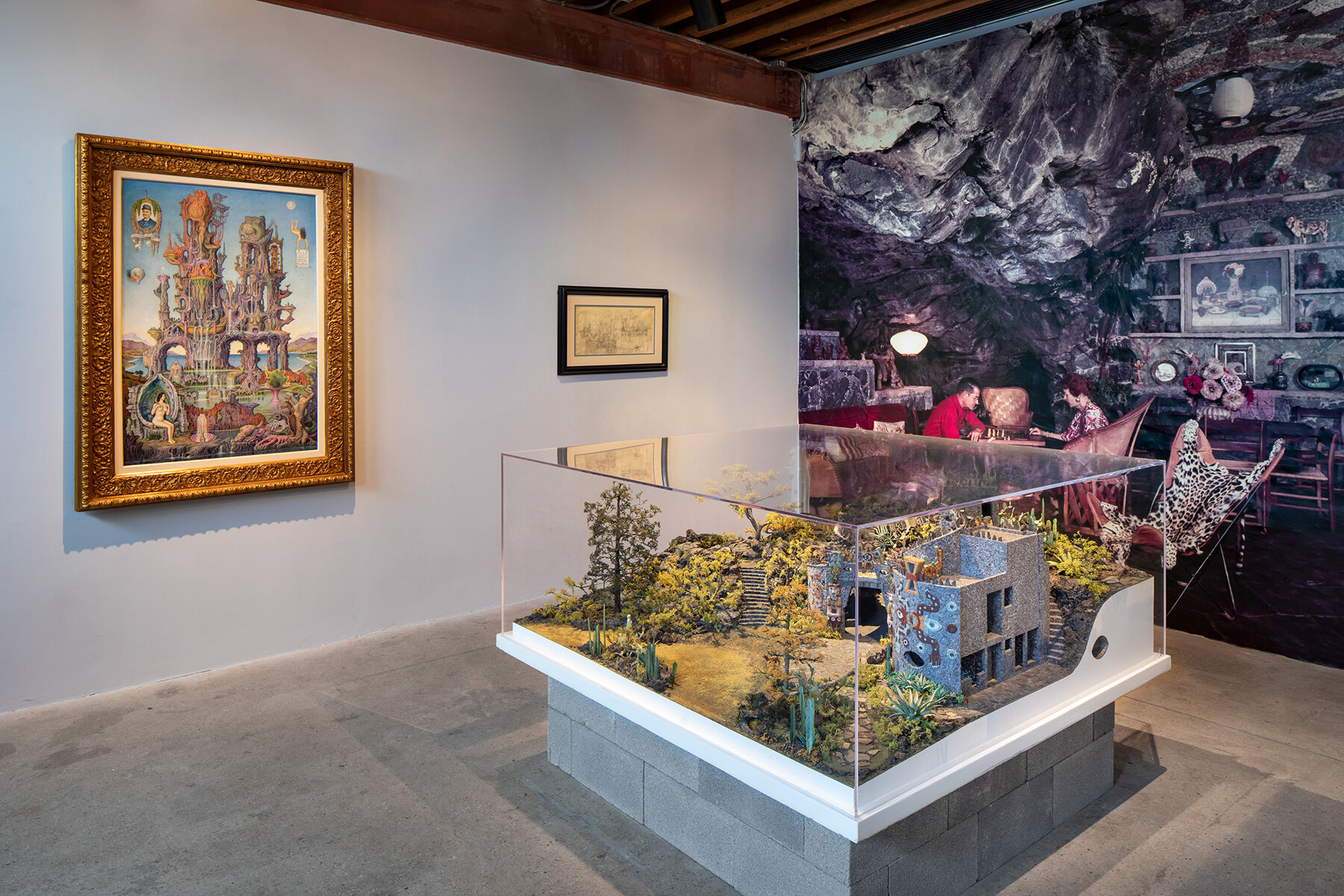
created by Senosiain Arquitectos | coordinator: Enrique Cabrera Espinosa de los Monteros
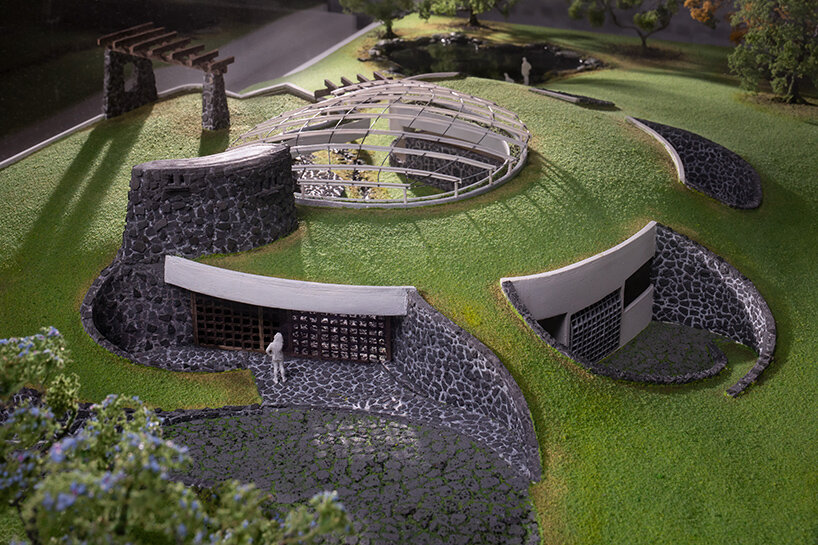
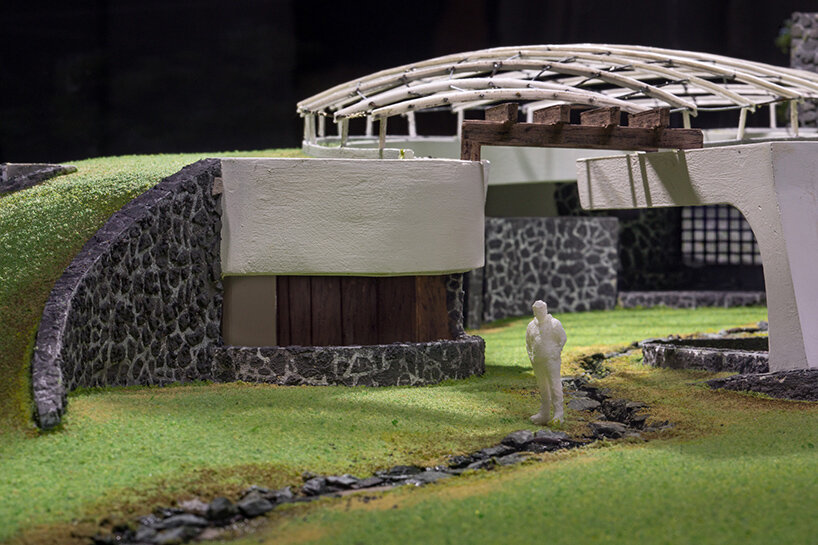
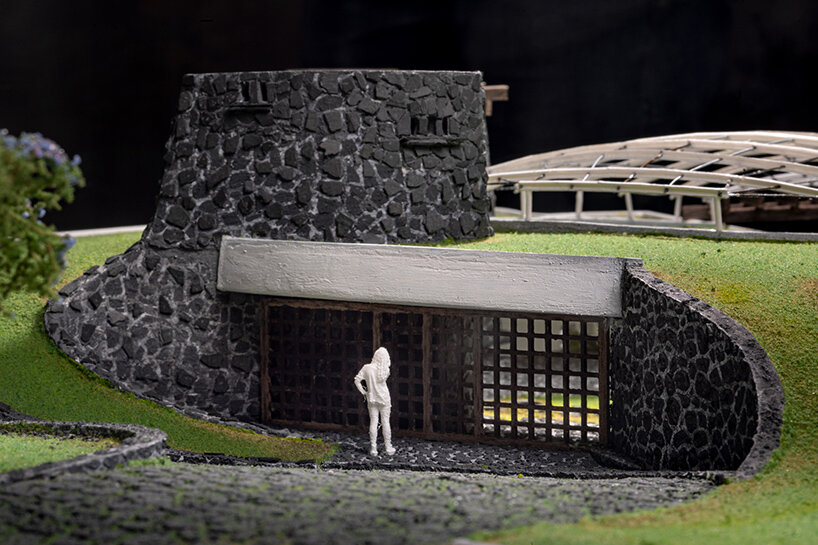
1/12
project info:
exhibition title: In Praise of Caves, Organic Architecture Projects from Mexico by Carlos Lazo, Mathias Goeritz, Juan O’Gorman, and Javier Senosiain
location: Noguchi Museum | @noguchimuseum
museum address: 9-01 33rd Road, Long Island City, NY
exhibition dates: October 19th, 2022 — February 26th, 2022
photography: Nicholas Knight © The Isamu Noguchi Foundation and Garden Museum, NY / Artists Rights Society (ARS)
shop
your own online design shop — no sales commission collected