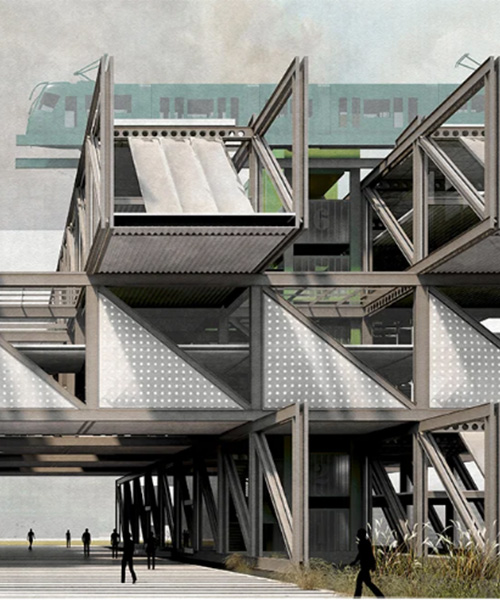
papalampropoulos + syriopoulou reveal proposal for new ministry building in athens, greece
the project examines the symbolic language that is frequently utilized in federal building design, focusing on the origin of its primary elements.
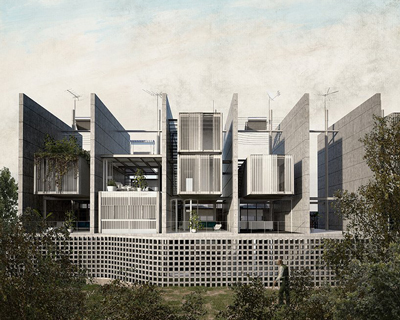
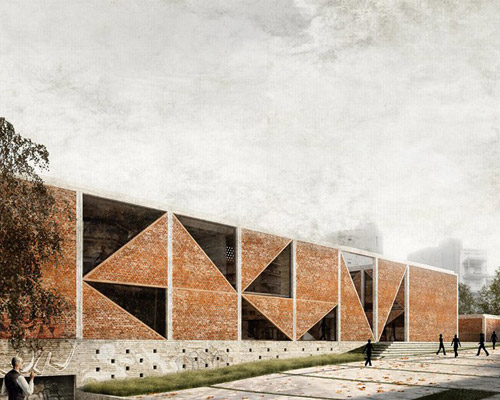
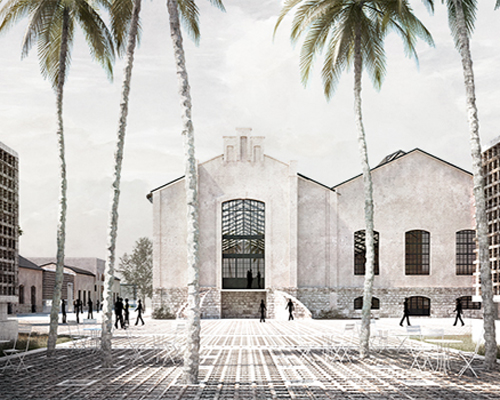
leonidas papalampropoulos and georgia syriopoulou have revealed ‘ἀρχεῖον’, their proposal for the design of the new office building of the general secretariat of infrastructures in athens, greece. the project attempts to critically examine the semantic meaning of the symbolic language that is frequently utilized in federal building design, by focusing rather on the archetypical origin of its primary elements than on the representational quality of its symbols.
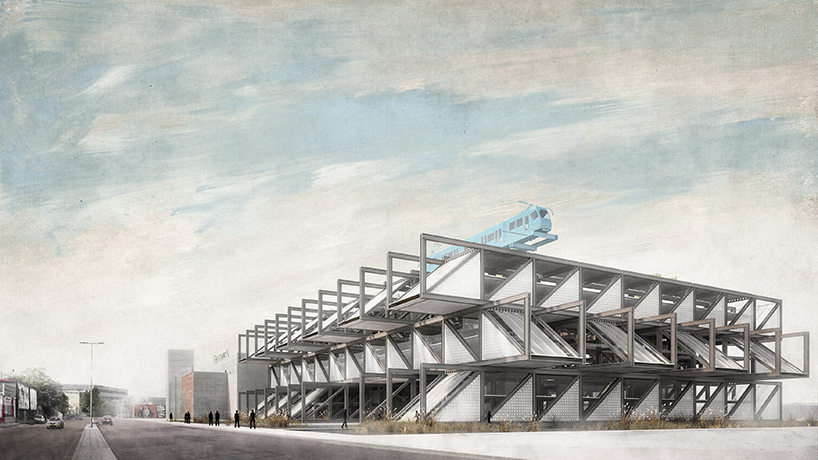
view from peiraeus av.
all images courtesy of leonidas papalampropoulos and georgia syriopoulou
the proposal by papalampropoulos and syriopoulou traces back to the conceptual and typological reference of the ‘ἀρχεῖον’ (archive): the residence of the governor where all the public documents were kept. the greek term for archive bears a double meaning as both a ‘starting point’ and ‘public authority’. in contrast to the theatricality of the ‘vouleftirion’ (legislative authority), the building of the ‘ἀρχεῖον’ (executive power) is characterized by the generic structure of the residence which is affiliated typologicaly with the unified and compact body of the archive (the body of documents). the convergence of the layout with the compact archive through the principle of repetition of the module leads to the production of a generic space which characterizes the conceptual and spatial origin of the archetype.

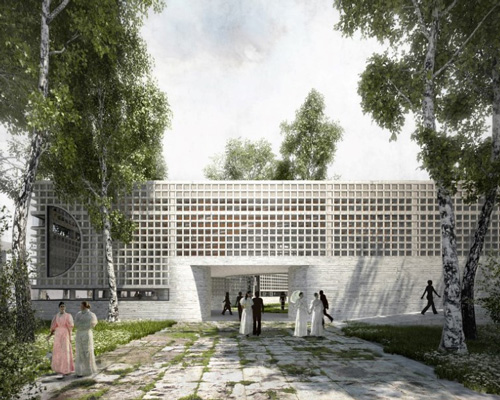
front entrance to the public gallery
the body of the building is produced by the repetition of the double height truss system which is utilised as the ‘εμβάτης’ (the module). the transversal, vertically alternating stacking of the module spatially formulates the volume of the building. the absence of infill between the modules generates void areas, allowing natural light to brighten the interior, while the omission of two modules in the groundfloor defines, in the form of a public gallery, the crossover from the adjacent avenue and the neighbouring area to the entrance of the building and the train station. this gallery provides access to the buidling, but also acts as the connecting element between the hard urban boundary and the surrounding public green space.

internal atrium – groundfloor – office spaces
the proposal incorporates a bioclimatic approach that permeates all the scales of the design. the cross-stacking of the individual volumes provides protection from direct sunlight, creating shaded atriums that allow the natural circulation of air. the high porosity of the building mass maximises natural light access while minimising electricity consumption for artificial lighting. the extended surfaces of water surrounding the building create a pleasant cooling microclimate in summer and can function as thermal energy depositors in winter. the mechanological installations feature photovoltaic panels on the roof, where rainwater collection is also integrated. the facade design includes a multi-facetted system for managing sunlight radiation, which combines dynamic ETFE parts with an adaptive sun-shading pattern of glass panels with integrated micro-shutters.
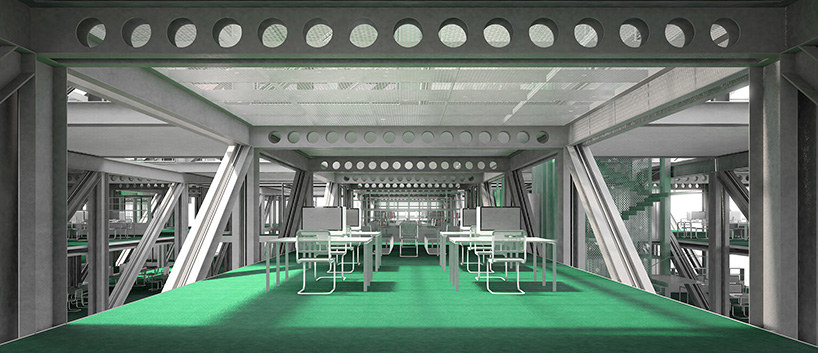
the office spaces
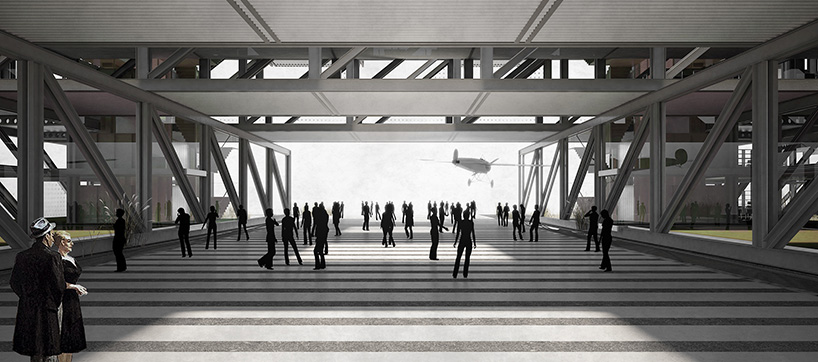
the public gallery
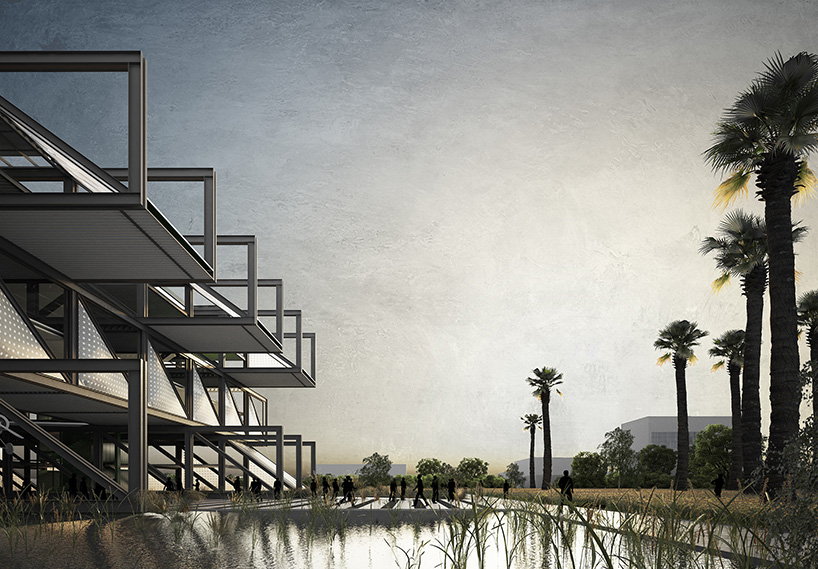 the entrance to the gallery, approached from the train station
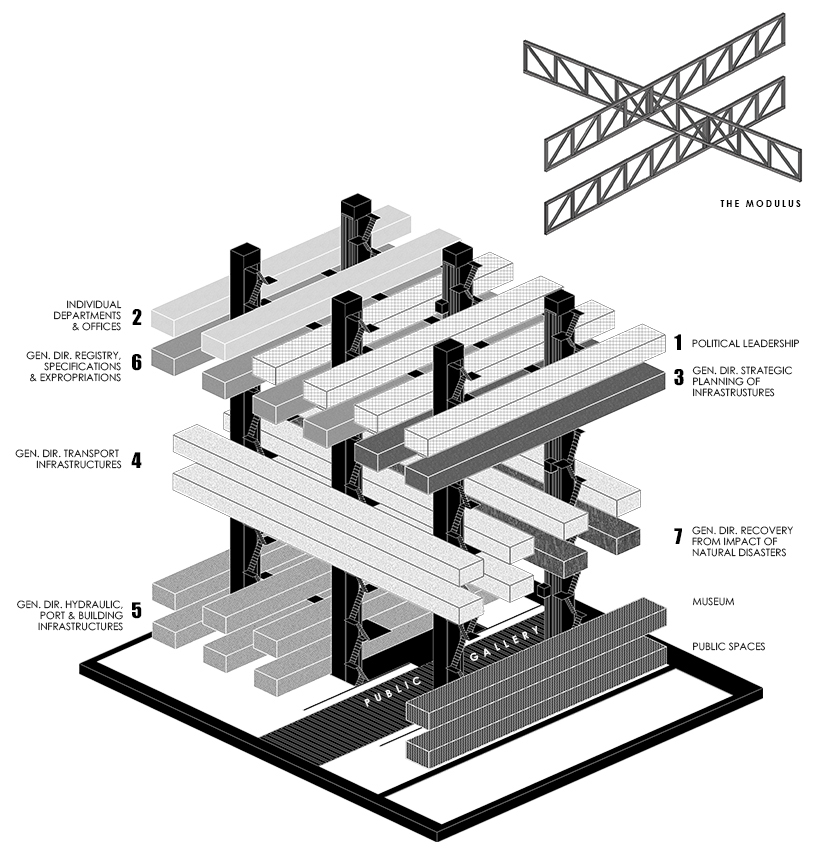
the modulus & the body
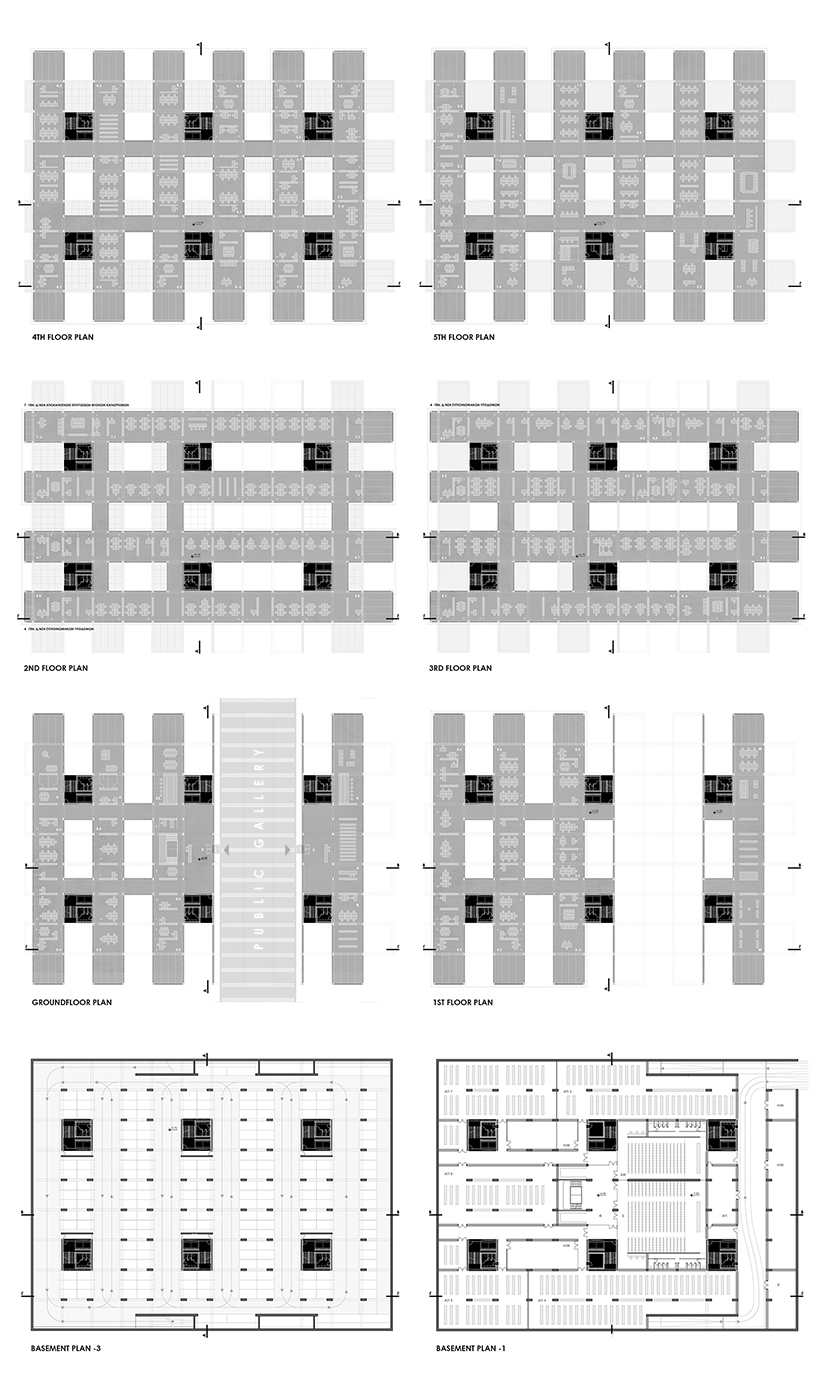
plans
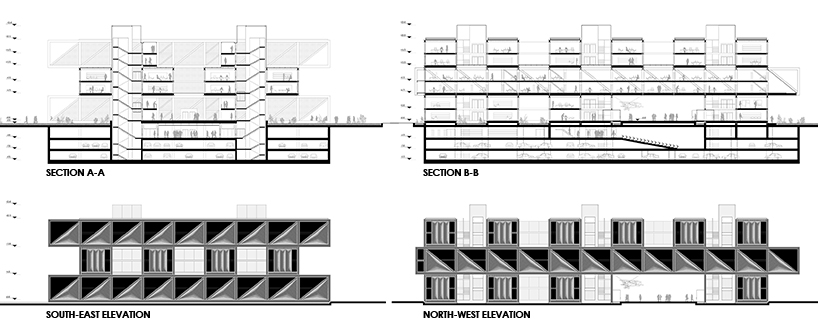
sections & elevations
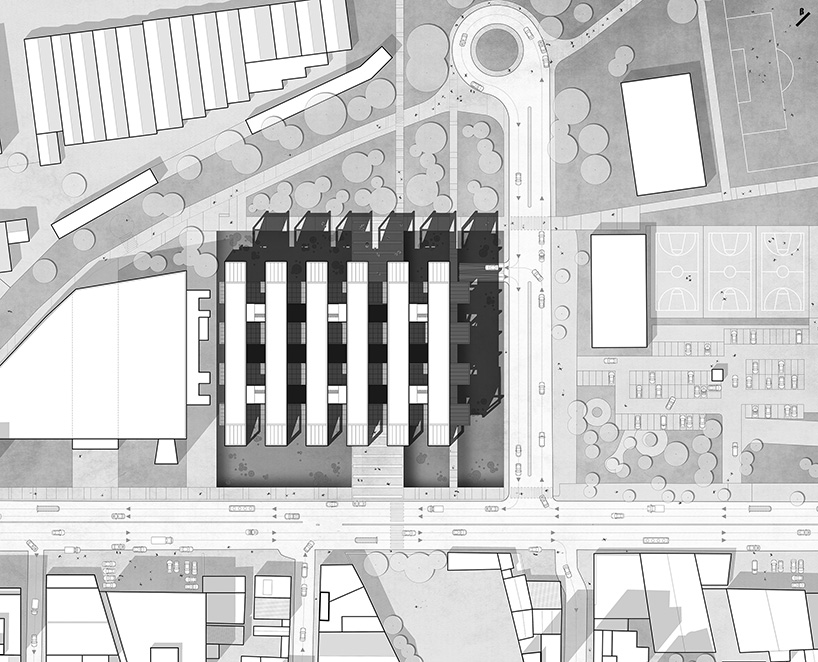
masterplan
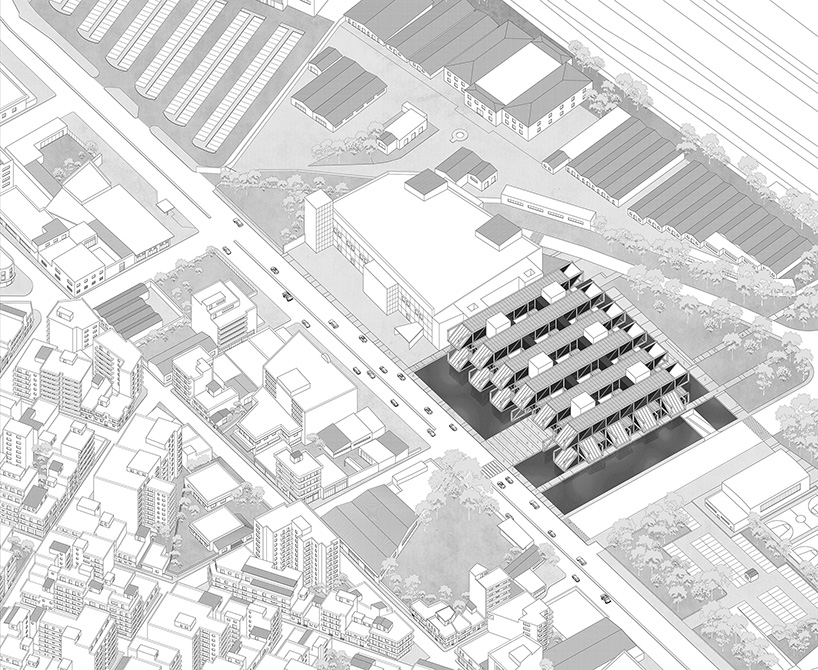
axonometric
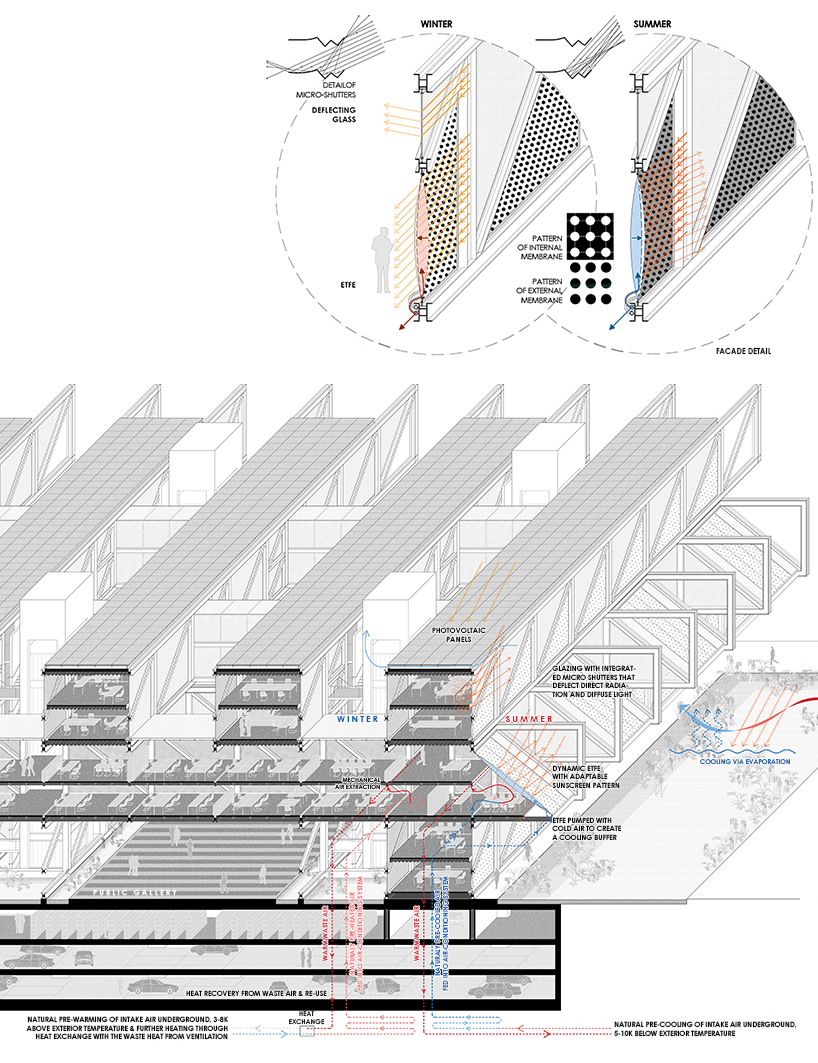
sustainability design
project info:
name: ἀρχεῖον
lead architects: leonidas papalampropoulos and georgia syriopoulou
project team: natalia sotirchou, eirini kitsou, yiannis orlis (architecture students)
area: 20,000 sq.m.
location: athens, greece
structural engineer: marinos kattis
mechanical engineer: maria mageirou
designboom has received this project from our ‘DIY submissions‘ feature, where we welcome our readers to submit their own work for publication. see more project submissions from our readers here.
shop
your own online design shop — no sales commission collected