paulo moreira enhances waterpoints across luanda with small-scale, low-cost interventions
utilizing local and reused metal modules, the project creates a new interface between a waterpoint and an open-air laundry with the public space
prefer designboom on google[FEATURED]
paulo Moreira unveils luanda waterpoints in wako
In the Wako neighborhood of Cacuaco, Angola, the Luanda Waterpoints project by Paulo Moreira reimagines urban intervention for enhancing community facilities and interaction. By adapting and enhancing three water access points on the city’s outskirts, the project demonstrates the impact of small-scale, low-cost solutions on improving the quality of life for disadvantaged populations. With a commitment to utilizing local labor and promoting inventive reuse of materials, Moreira’s approach involved visiting informal, open-air markets in Luanda and finding a series of metal modules that were originally used in guardrails on urban elements in the city centre, now adapted for reuse in the waterpoints project.
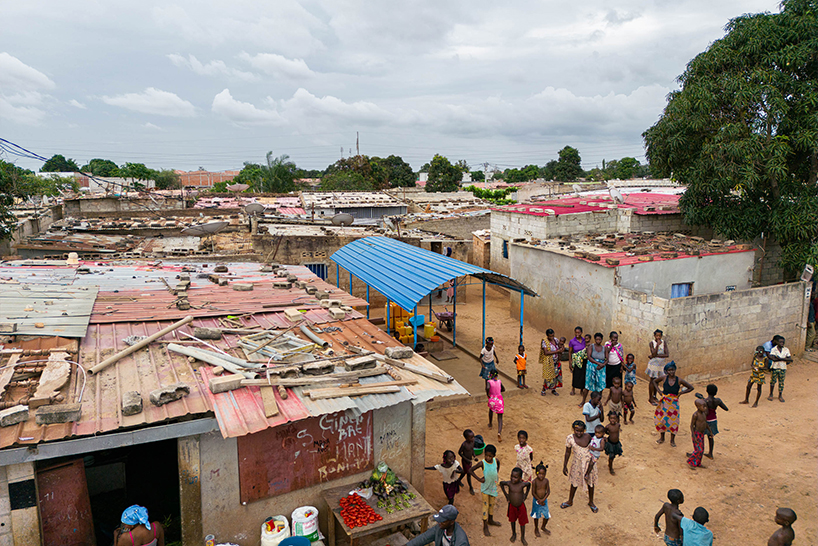
small-scale, low-cost solutions for enhanced quality of living
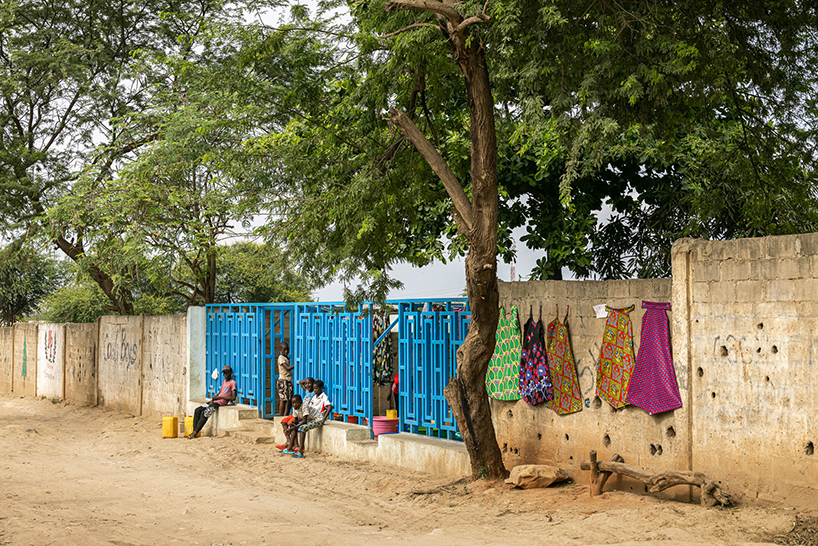
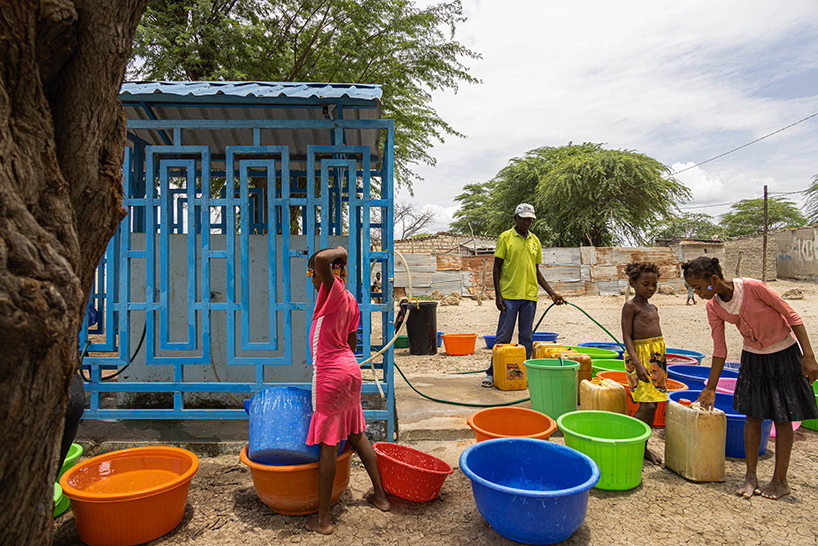
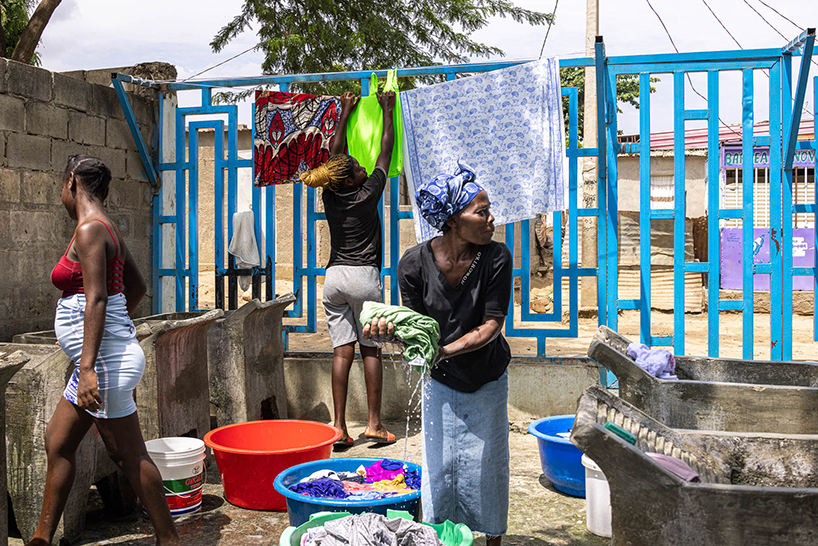
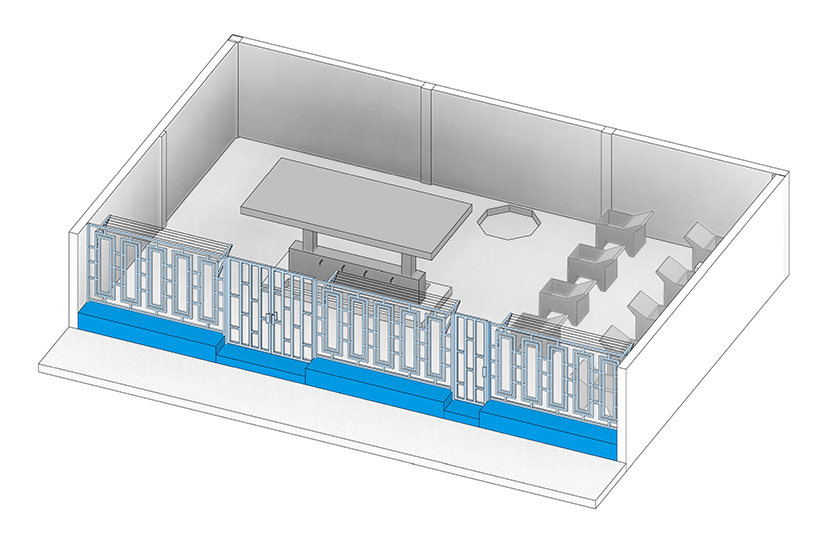
The Luanda Waterpoints project focused on creating a new interface between a waterpoint and an open-air laundry with the public space. Porto-based architect Paulo Moreira alongside a team of local workers installed three modules, delimiting the intervention area and serving a threefold purpose: railing, street-facing bench, and a drying rack facing the laundry space. Beyond enhancing safety, the structure creates a more welcoming environment at the facilities, fostering community interactions between visitors as they wait their turn.
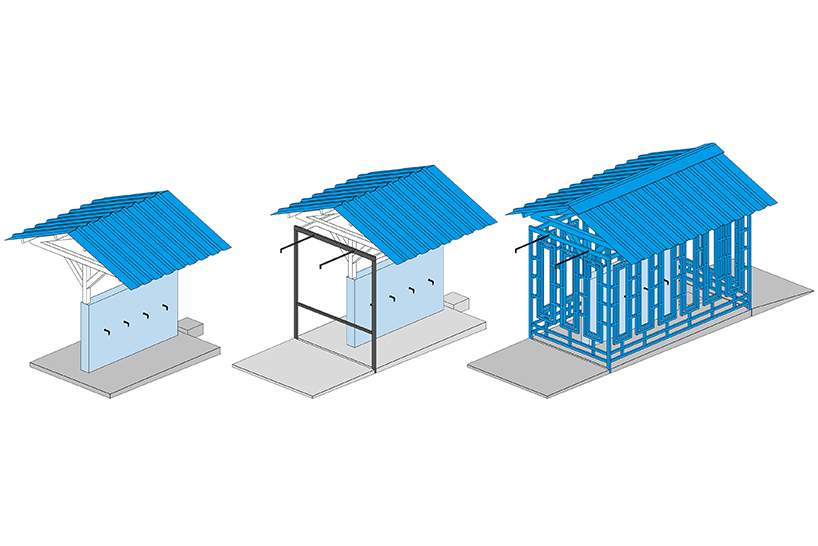
Meanwhile, the waterpoint in Kilunda was gradually designed through an experimental laboratory between local residents and professionals. Following a series of visits and participatory sessions, a novel ‘giraffe’ structure was devised to elevate hoses, streamlining the filling process without the need for additional assistance. In response to a request from the individuals who manage the waterpoint, an enclosure was added to reduce COVID-19 transmission risks, allowing only one designated individual, the ‘zelador’ (janitor), to operate the taps.
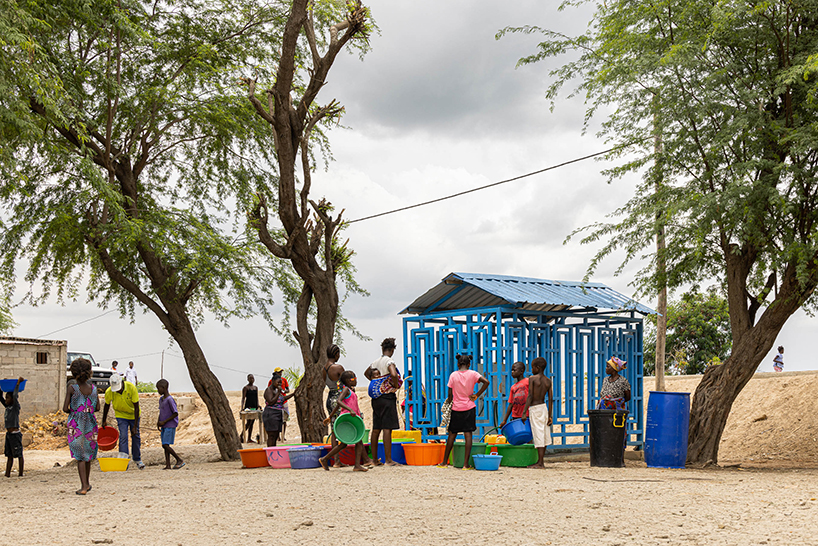
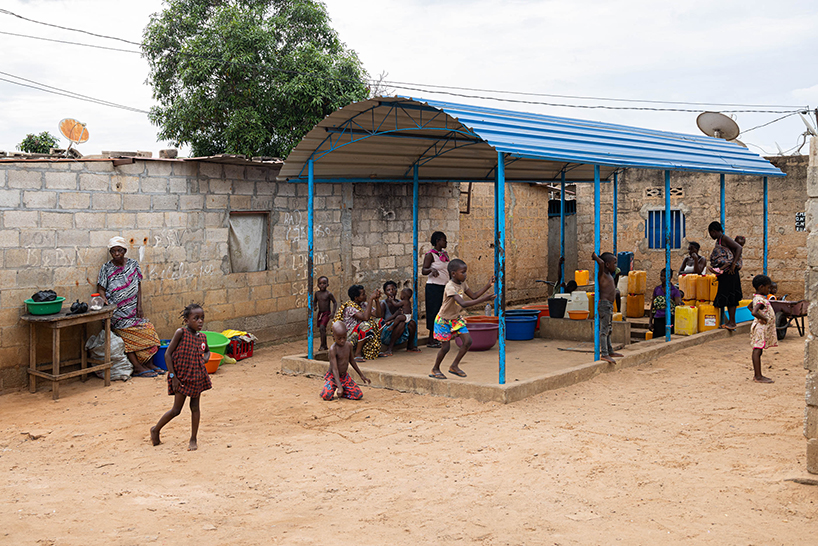
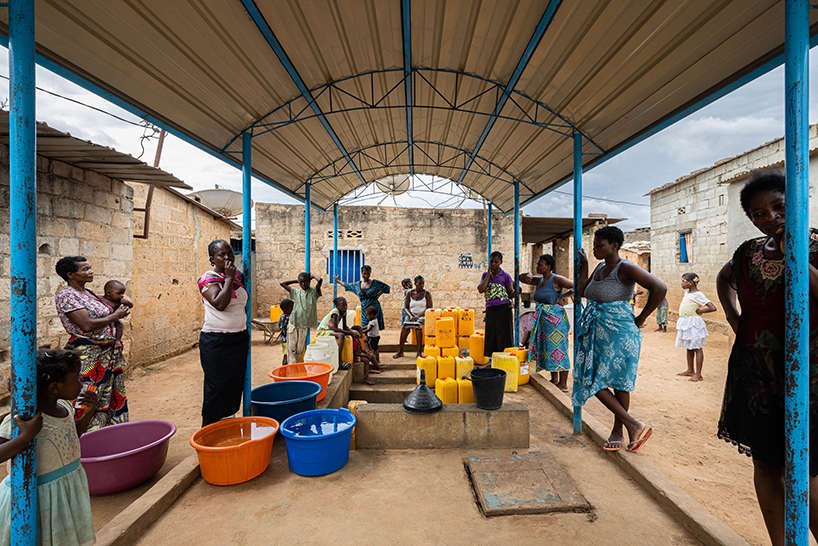
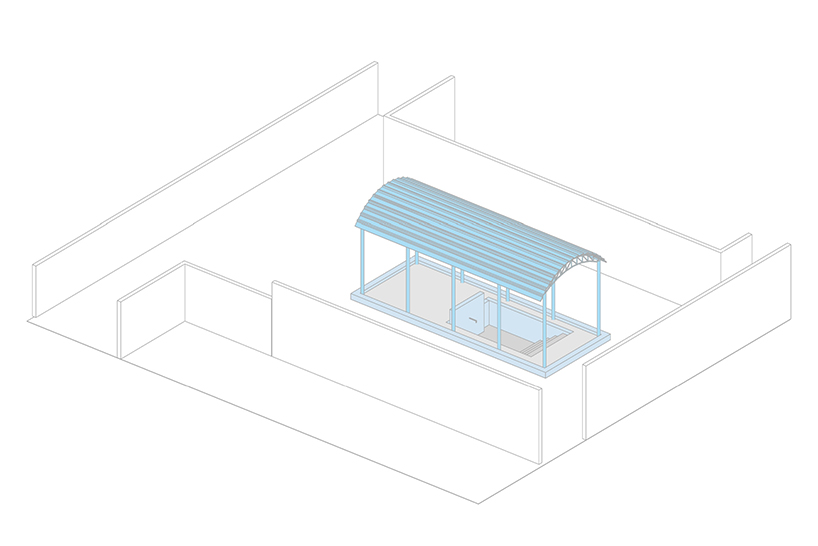
The Gika waterpoint, the most distinct model, has been sunken into the ground due to the lack of water pressure preventing the supply from reaching the elevated taps. Despite this solution, the waterpoint became unusable when it rained. Paulo Moreira’s intervention involved creating a shelter to provide protection from rainwater and ensure year-round functionality. Beyond practicality, this structure creates an area of shade to encourage social interaction and evolve the waterpoint into a communal gathering space within the neighborhood.
project info:
name: Luanda Waterpoints
architecture: Paulo Moreira
location: Cacuaco, Angola
photography: © Ivo Tavares Studio | @ivotavaresstudio
designboom has received this project from our DIY submissions feature, where we welcome our readers to submit their own work for publication. see more project submissions from our readers here.
shop
your own online design shop — no sales commission collected