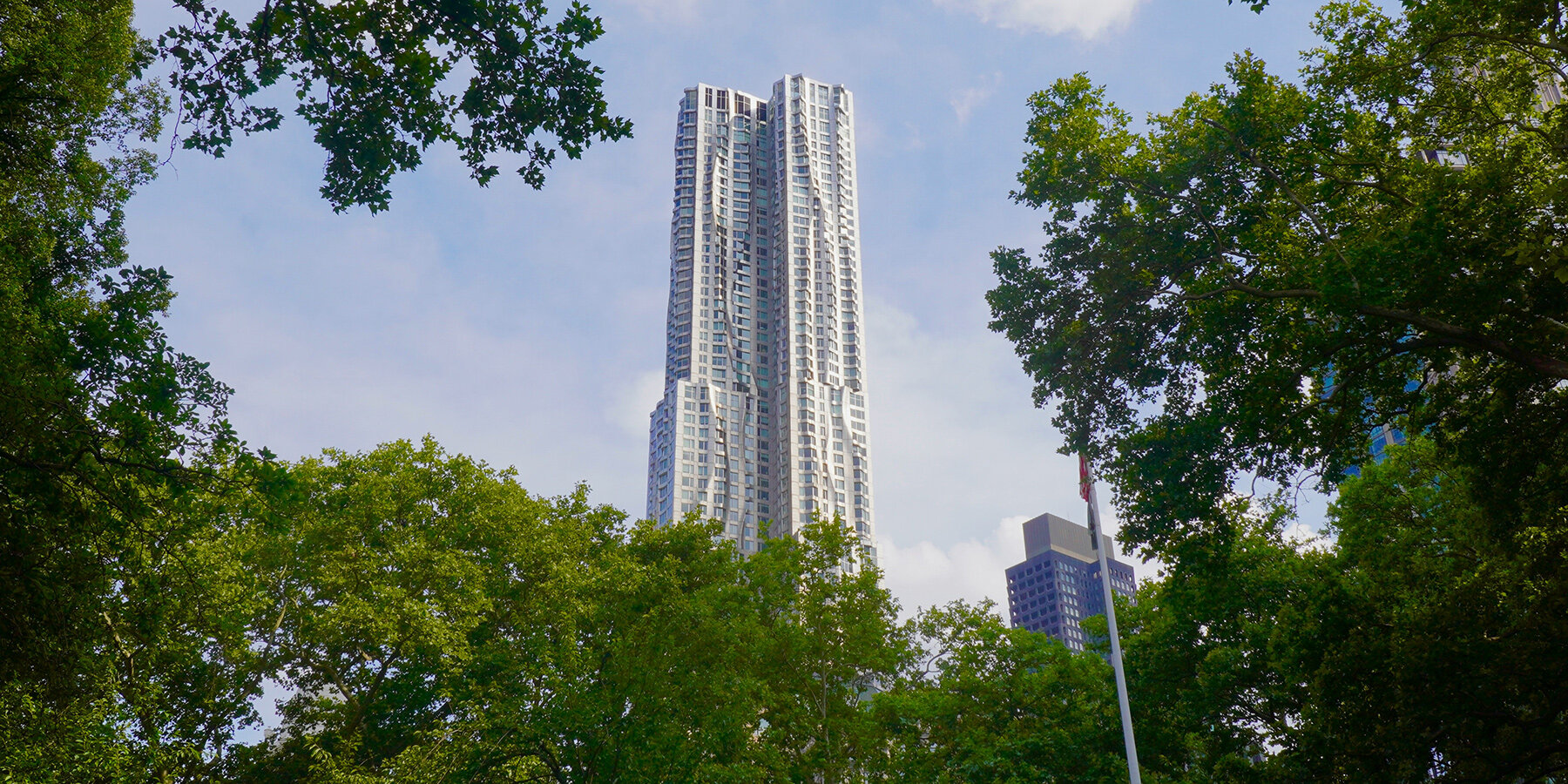
buildings by Frank gehry that shifted the world
With the death of Frank Gehry at 96, we are revisiting some of his most iconic buildings that reshaped cities, reoriented cultural institutions, and redefined what architecture could look and feel like. Across more than six decades, the legendary architect created works that fused sculptural ambition with technical innovation, pushing the boundaries of form, material, and emotion. Below, a closer look at a selection of the projects that most clearly express his influence.
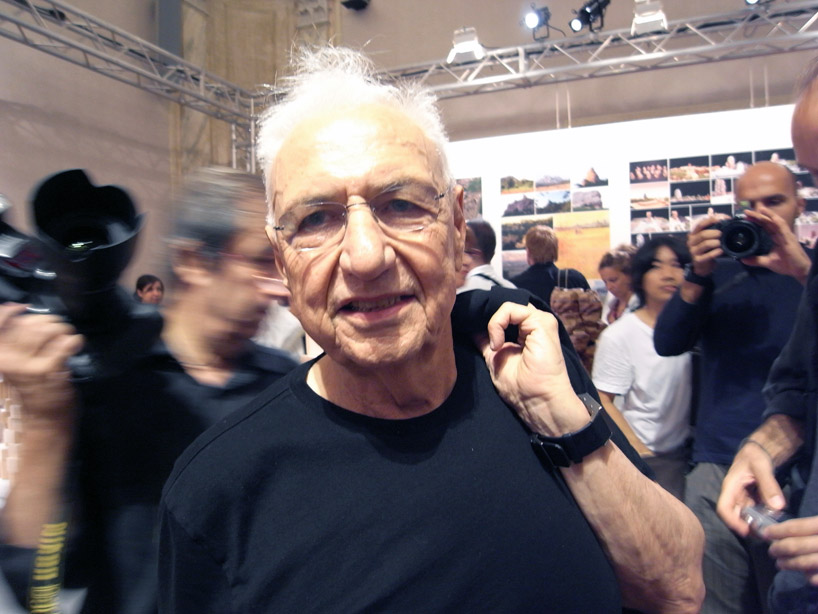
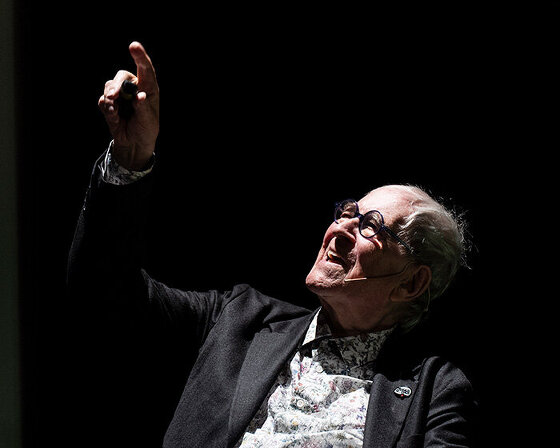
Frank Gehry at the 12th International Architecture Exhibition in Venice, 2010 | image © designboom
Guggenheim Museum Bilbao (1997)
Frank Gehry’s Bilbao museum remains his most transformative achievement, both architecturally and culturally. Clad in sweeping titanium panels and organized as a composition of fluid, interlocking forms, the museum demonstrated how digital modeling could translate sculptural complexity into buildable architecture. It’s more than an aesthetic icon. It jumpstarted the revival of a declining industrial city, drawing millions of visitors and sparking what became known worldwide as the ‘Bilbao effect.’ Few buildings have had such measurable civic and economic impact, and its shimmering presence on the Nervión River continues to symbolize the power of architecture to change the fate of a city.
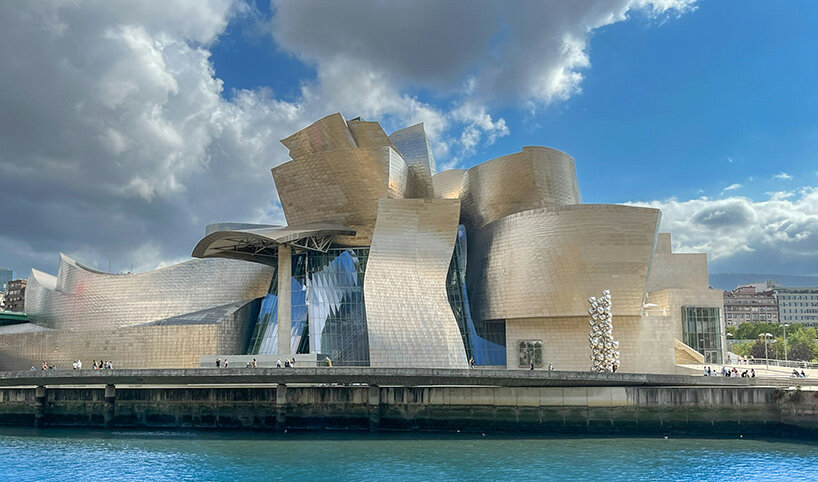
Guggenheim Museum Bilbao, Bilabao, Spain, 1997 | image © Hans-Jürgen Weinhardt
Walt Disney Concert Hall, Los Angeles (2003)
Nearly two decades in the making, Walt Disney Concert Hall stands as one of the most acoustically and formally ambitious buildings and concert venues in the world. Its stainless steel exterior unfurls in sweeping, sail-like planes, while the interior features Douglas fir and oak surfaces that enhance the hall’s acclaimed acoustics, shaped with the help of Yasuhisa Toyota. The project offered Los Angeles a defining civic monument and became a long-awaited cornerstone for Grand Avenue’s cultural district. Today it remains both a beloved public space and a testament to Gehry’s ability to merge sculptural exuberance with functional precision.
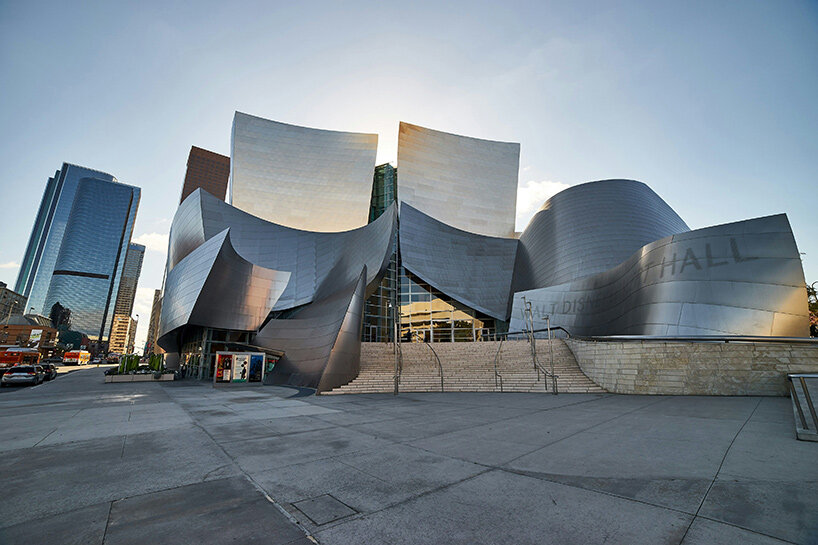
Walt Disney Concert Hall, Los Angeles, USA, 2003 | image © Tim Cheung
Fondation Louis Vuitton, Paris (2014)
Situated in the Bois de Boulogne, Frank Gehry’s Fondation Louis Vuitton resembles a collection of glass ‘sails’ billowing around a solid core. The architect used advanced glass technologies to create curved, transparent forms that give the museum a startling lightness despite its size. The building navigates the delicate balance between parkland and monumental architecture, becoming at once a cultural destination and an experiential journey through layered spaces, gardens, and promenades. It demonstrated Gehry’s continued evolution late into his career, pushing digital fabrication and structural engineering to new heights.
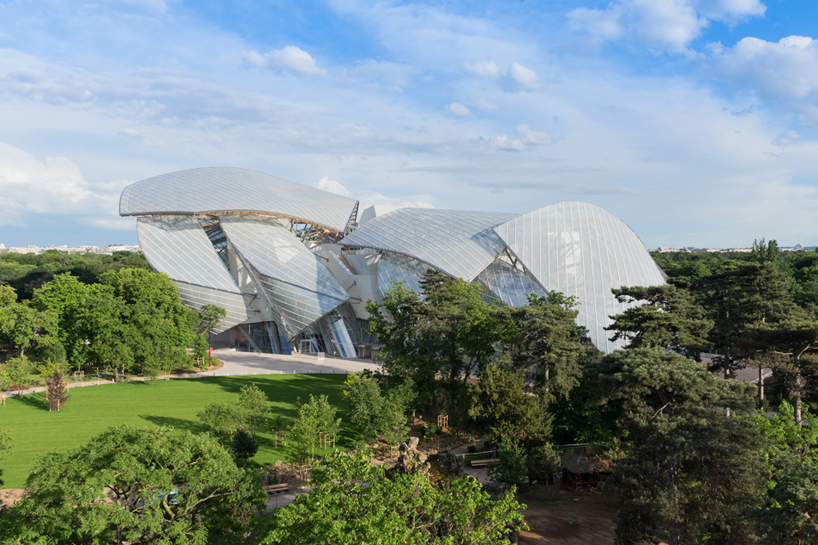
Fondation Louis Vuitton, Paris, France, 2014 | image © Iwan Baan
Vitra Design Museum, Weil am Rhein (1989)
Frank Gehry’s first European project marked a turning point in his international recognition. The Vitra Design Museum introduced a new vocabulary of sharp angles, white plaster surfaces, and expressive, intersecting volumes — foreshadowing the complex geometries that would later define his better-known works. Although it’s modest in scale, the building holds outsized influence as an early example of deconstructivist architecture and as a beacon in Vitra’s campus of radical design.
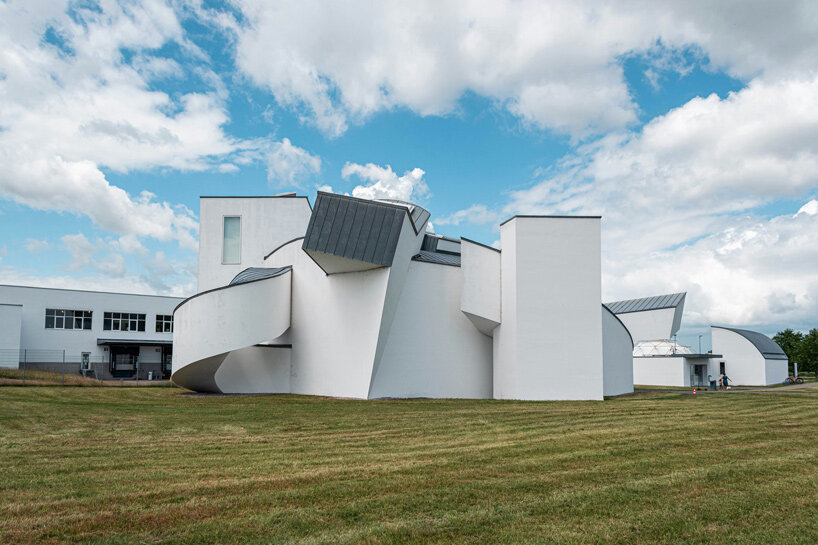
Vitra Design Museum, Weil am Rhein, Germany, 1989 | image © Arvydas Venckus
Dancing House (Fred and Ginger), Prague (1996)
One of Frank Gehry’s most distinctive urban buildings, the Dancing House is defined by the dialogue between a curving glass tower and a more static stone volume, often described — at Gehry’s suggestion — as ‘Fred and Ginger.’ This nickname is of course in reference to the iconic dance duo Fred Astaire and Ginger Rogers. Built on a difficult riverside site, the building sparked controversy for its bold departure from Prague’s historic architecture, but ultimately became a beloved landmark. It remains a key example of Gehry’s ability to inject movement and personality into tight, complex city contexts.
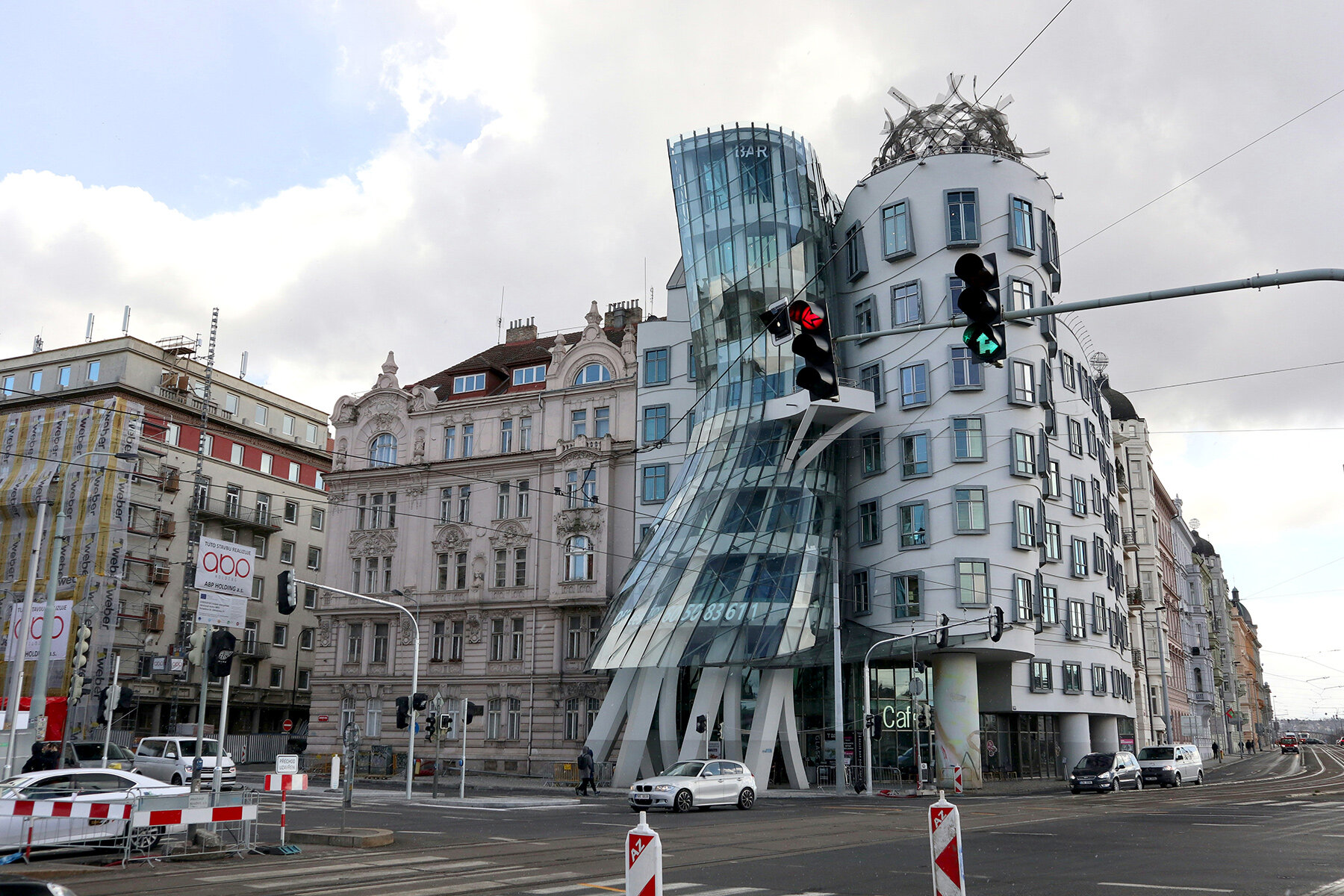
Dancing House (Fred and Ginger), Prague, Czech Republic, 1996 | image © Te Lun Ou Yang
8 Spruce Street / New York by Gehry (2011)
This 76-story residential tower in Lower Manhattan — the tallest residential building in the world at its completion — brought Frank Gehry’s sculptural approach into the vertical city. The facade’s rippling stainless-steel panels catch and distort light, giving the tower a sense of motion against the skyline. Inside, 8 Spruce includes a public school and amenities designed by Gehry Partners. It proved that his signature forms could be adapted to high-density, commercial residential development while maintaining an expressive architectural identity.
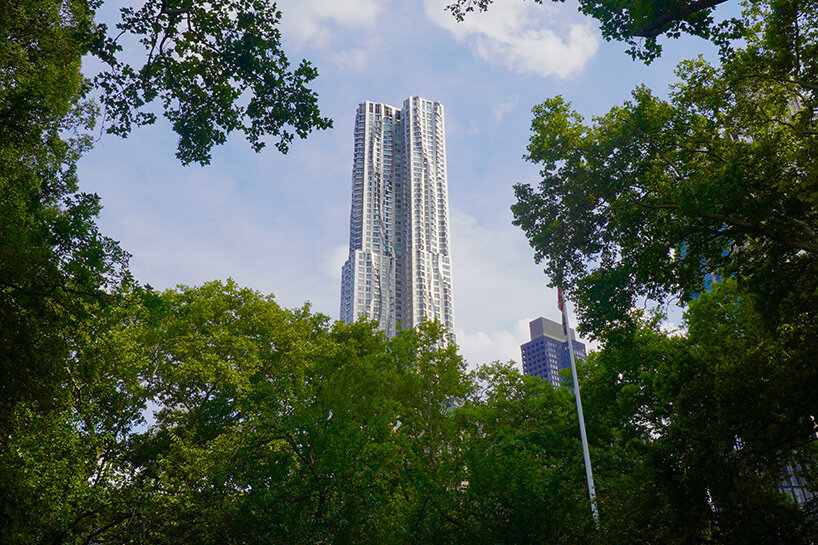
8 Spruce Street, New York, USA, 2011 | image © Brett Wharton
LUMA Arles, Arles (2021)
Frank Gehry unveiled the sculptural LUMA Arles in June 2021. The museum occupies a 27-acre creative campus at the Parc des Ateliers in the city of Arles, France. Its opening exhibition will show works by over 45 artists and designers. the tower hosts exhibition galleries, project spaces, and LUMA‘s research and archive facilities, alongside workshop and seminar rooms. The newly completed structure is defined by its twisting, rippling geometry — finished with 11,000 stainless steel panels — that boldly stands out from the modest fabric of the city.
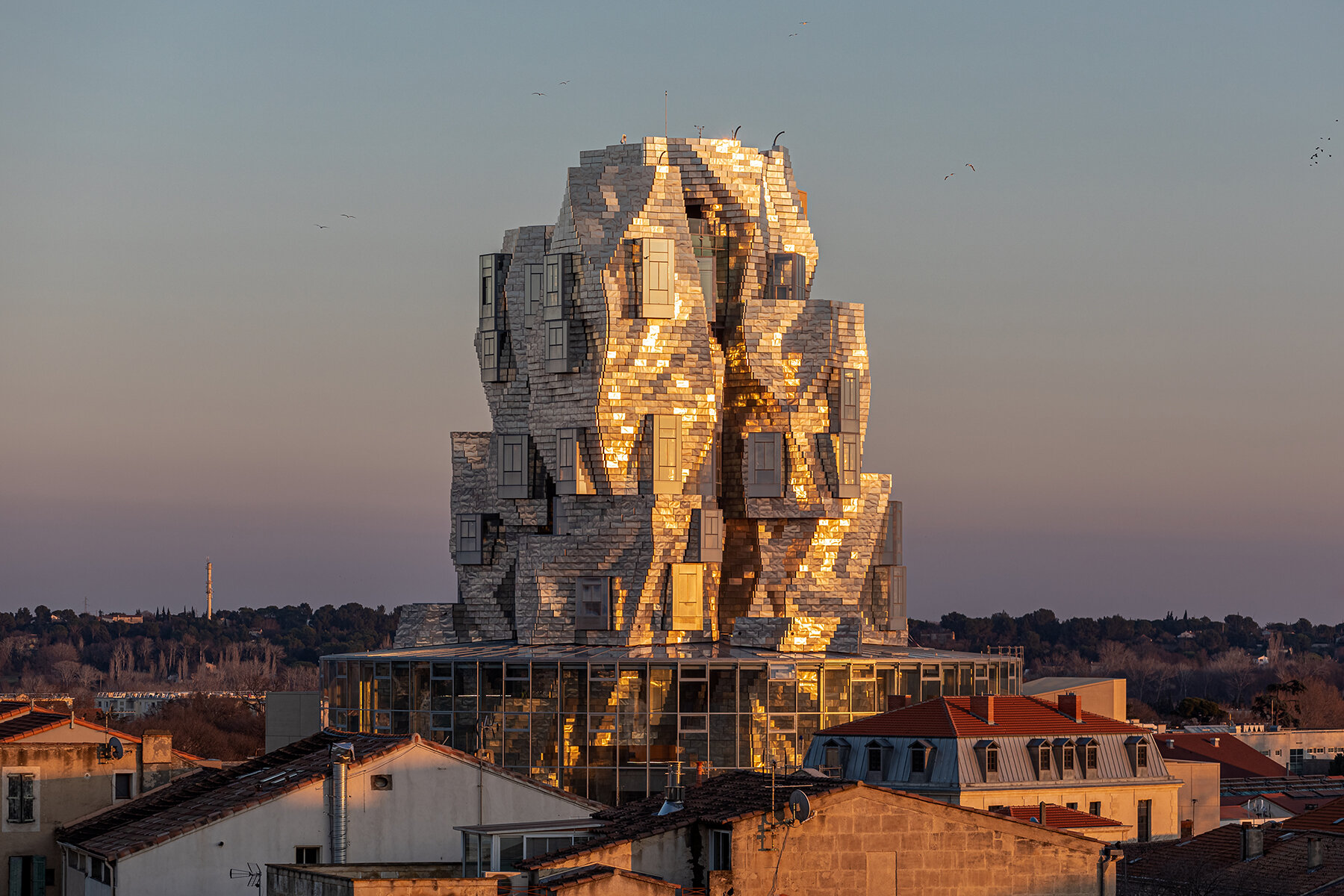
LUMA Arles, Arles, France, 2021 | image © Adrian Deweerdt
Weisman Art Museum, University of Minnesota (1993)
Before Bilbao, the Weisman hinted at the language that would later become Gehry’s hallmark: curving stainless-steel forms, unexpected shifts in geometry, and an animated interplay of surfaces. Positioned on a bluff overlooking the Mississippi River, the museum captures shifting Midwestern light across its metallic skin. The building also stands as a case study in how Gehry approached university commissions and balances experimentation with institutional needs.
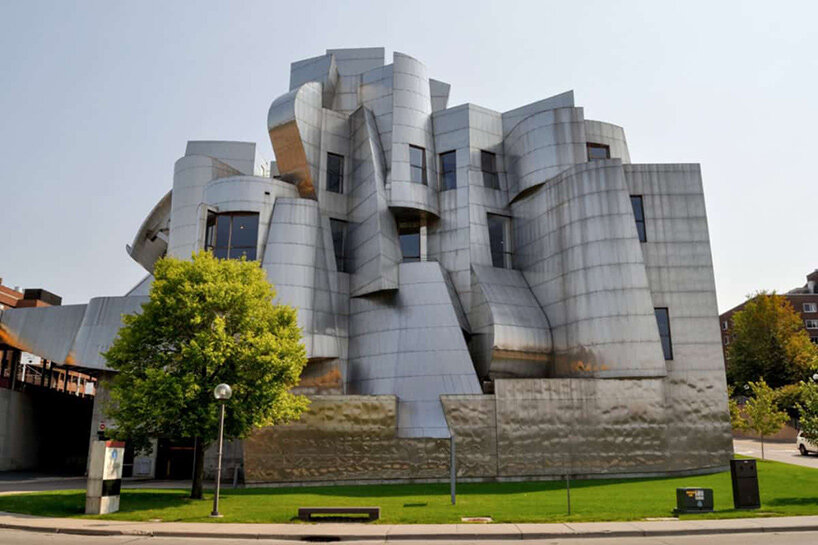
image courtesy Weisman Art Museum
Jay Pritzker Pavilion, Chicago (2004)
A centerpiece of Chicago’s Millennium Park, the Pritzker Pavilion brought Gehry’s sculptural sensibility to the outdoor concert typology. The proscenium’s sweeping ribbons of stainless steel dramatically unfurl over the stage, while a trellis of crisscrossing steel pipes extends across the Great Lawn to support a state-of-the-art sound system. The pavilion established a new model for outdoor urban performance spaces.
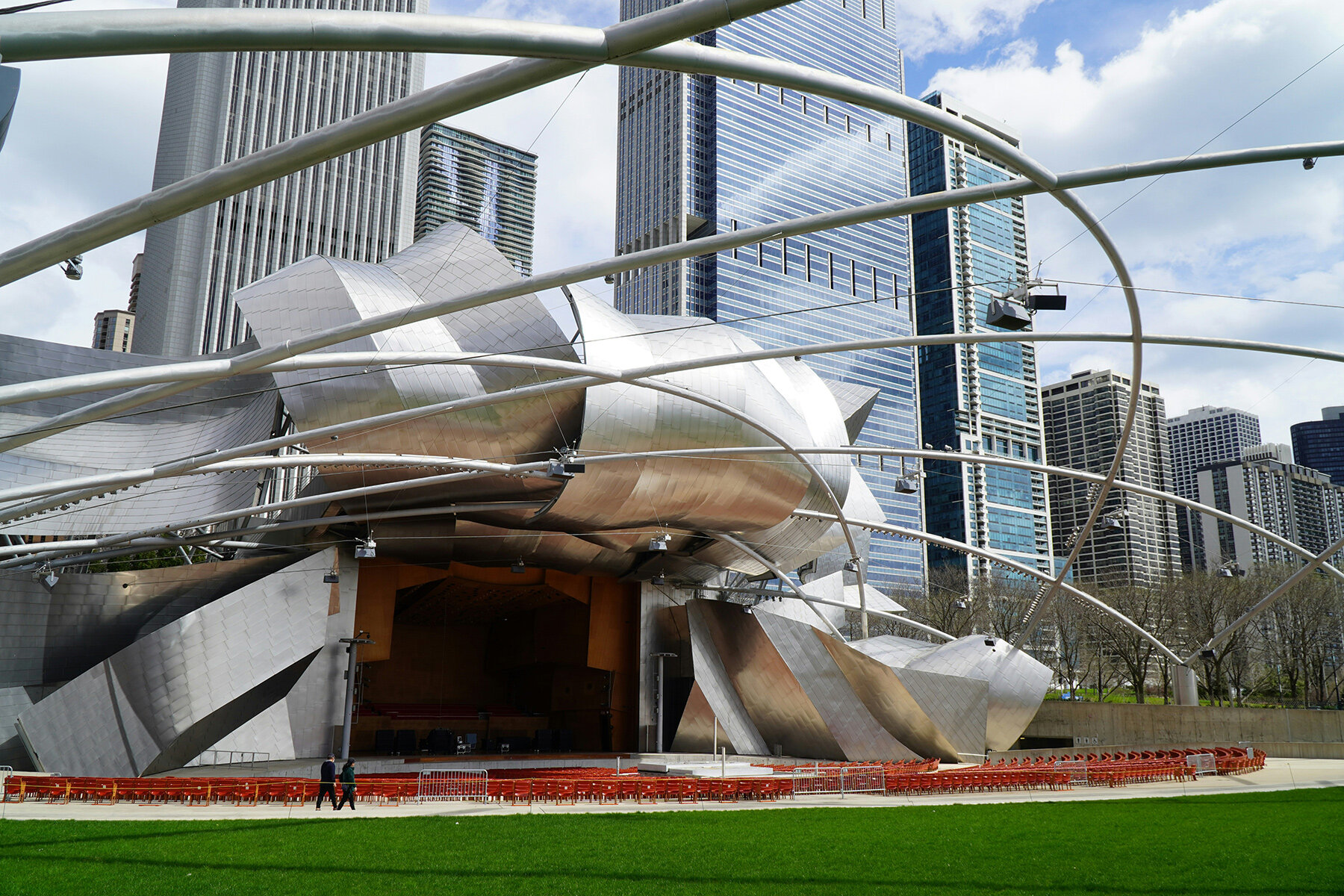
Jay Pritzker Pavilion, Chicago, USA, 2004 | image © Joel Durkee
EMP Museum (now MoPOP), Seattle (2000)
Commissioned by Microsoft co-founder Paul Allen, the EMP Museum (MOPOP) — originally dedicated to music and pop culture — embraces Gehry’s love for expressive form-building. The structure is composed of undulating volumes clad in a patchwork of brightly colored sheet metal, reportedly inspired by the smashed shapes of electric guitars. Despite polarizing reception, it remains one of Gehry’s most exuberant works, revealing the role of play, pop culture, and material experimentation in his practice.
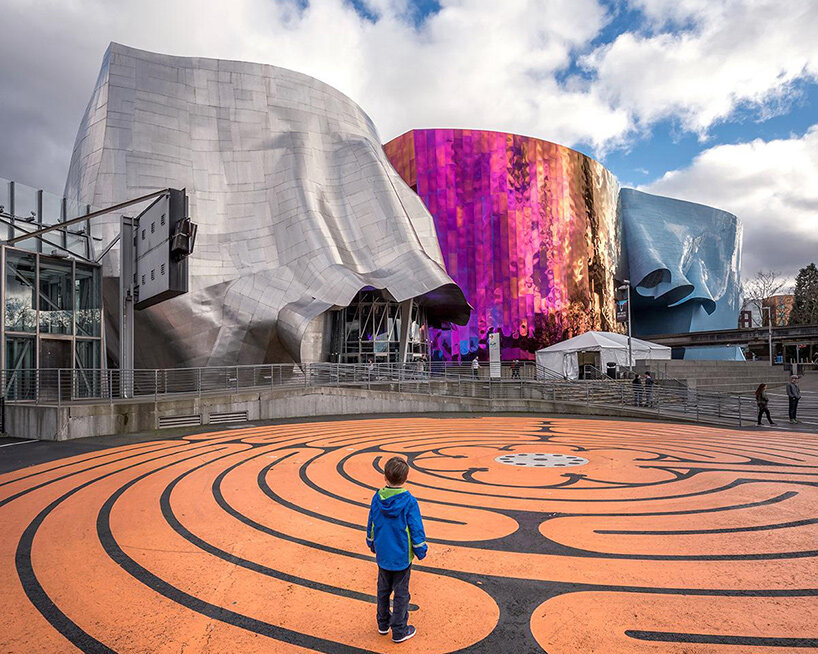
EMP Museum (MoPOP), Seattle, USA, 2000 | image © Pygmalion Karatzas
Gehry Residence, Santa Monica (1978; expanded later)
The project that first drew widespread attention from the architecture world, Gehry’s renovation of his own home involved wrapping a conventional bungalow in raw materials such as corrugated metal, chain-link fencing, plywood, and glass. The house challenged traditional ideas of domestic architecture and became a defining example of early postmodern and deconstructivist experimentation. Its rough edges, exposed structure, and fragmentary forms signaled the beginning of the architectural language that Gehry would refine over the next four decades.
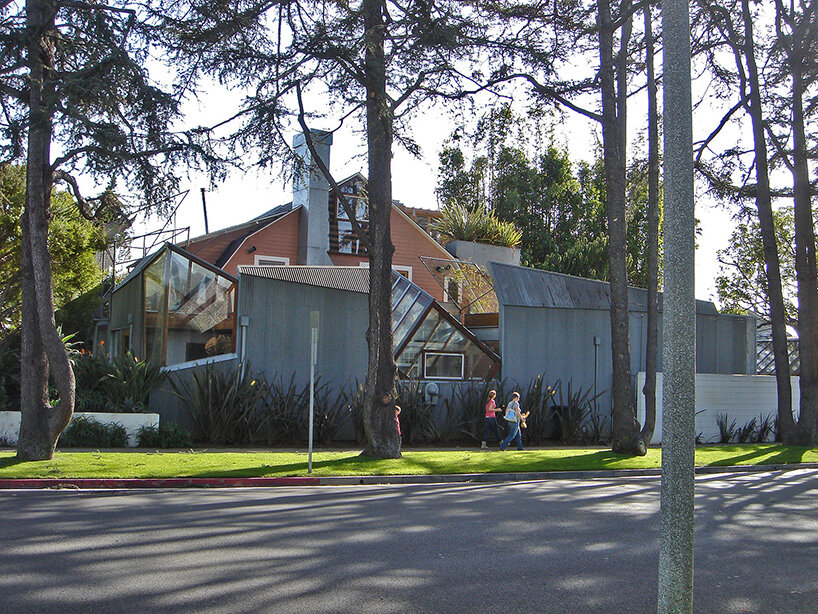
Gehry Residence, Santa Monica, USA, 1978 | image © Flickr
frank gehry (97)
 Dec 05, 2025
 Oct 27, 2025
 Mar 27, 2025
 Mar 11, 2025
 Oct 17, 2024
obituaries (110)
 Mar 18, 2026
 Mar 18, 2026
 Mar 12, 2026
 Mar 11, 2026