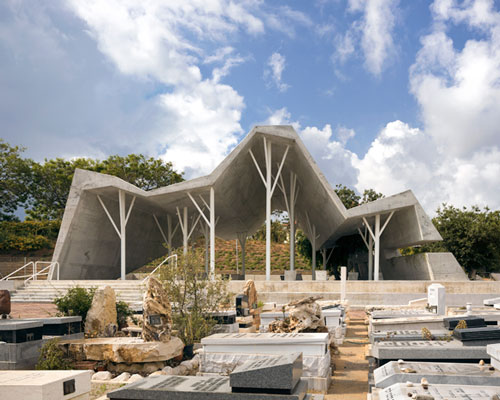
ron shenkin places concrete folded canopy over cemetery pavilion in israel
supported by metal tree-shaped pillars, the open-sided shelter sits adjacent to a burial ground and serves as a quiet place for mourning and eulogies.
prefer designboom on google[FEATURED]
ron shenkin places concrete folded canopy over cemetery pavilion in israel
all images by shai epstein
defined by its sculptural and staggered canopy, this ‘open sided shelter’ by israeli studio ron shenkin is located on the grounds of a cemetery in pardesia, israel. the structure acts as a sacred and peaceful place for mourners and the reading of eulogies before and during burial ceremonies.
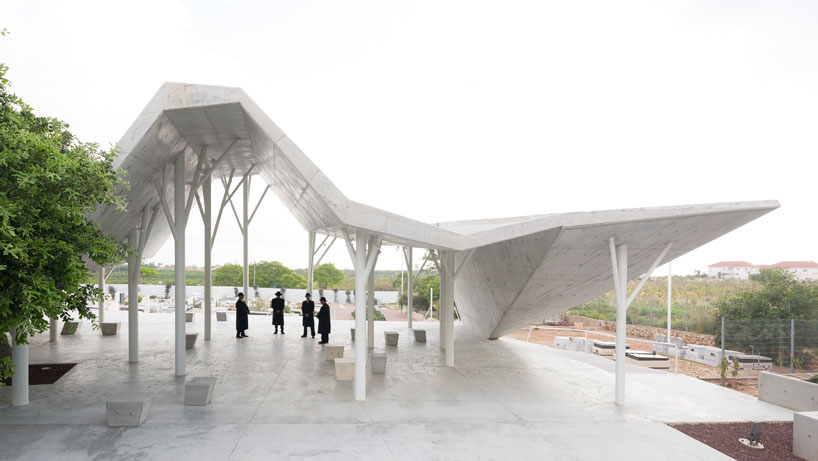
a grey color palette has been used all the way through to strengthen the minimalist and clean nature
characterized as an exposed concrete slab, this is supported by a series of tree-shaped metal pillars– formed in homage to the trees that were cut down for the urban re-purposing of the area. a single oak tree remains, incorporated within the structure where an opening has been cut to allow the foliage to emerge through the roof.
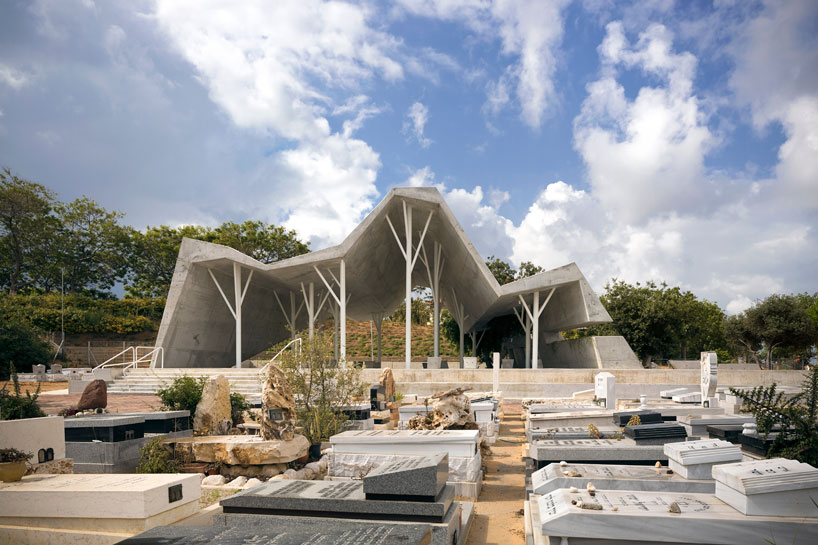
the pavilion sits adjacent to the burial ground and serves as a place for mourning and eulogies
the staggered, northern side of the building symbolizes ‘a man who comes from dust and to dust returns’, this has influenced the line of concrete, beginning from the ground and ascending to the highest point then back to the earth.
access to the pavilion is through two separate entrances. the smaller of the two is allocated for the family members of the deceased meanwhile the other, serves as an access for the guests attending. the scheme is contemporary and sensitive response to its function. while being fully opened on both sides, this arrangement instills a sense of closeness for mourners who prefer to remain at a distance, but at the same time be sheltered.

the lifted edge allows sunlight to pass through

the structure has one solid stone wall to the west which blocks direct afternoon sunlight
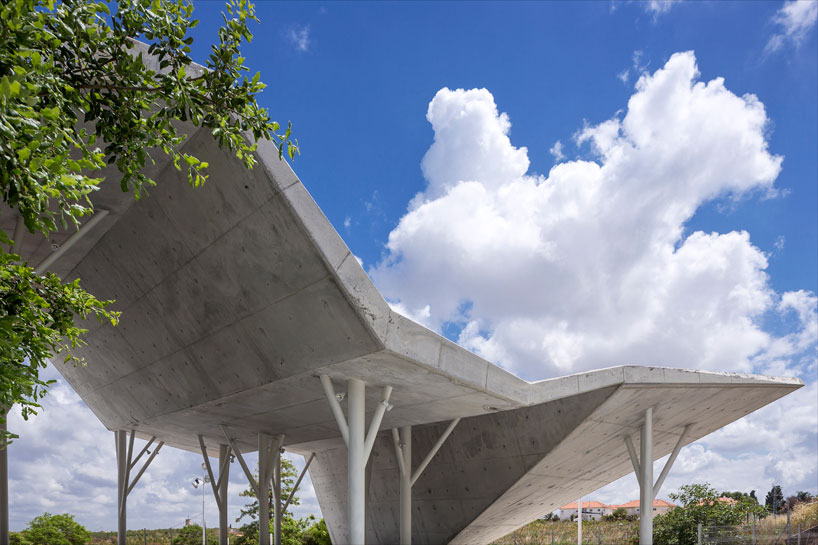
the area was surrounded by orchards but chopped down to make space for new residential and commercial buildings
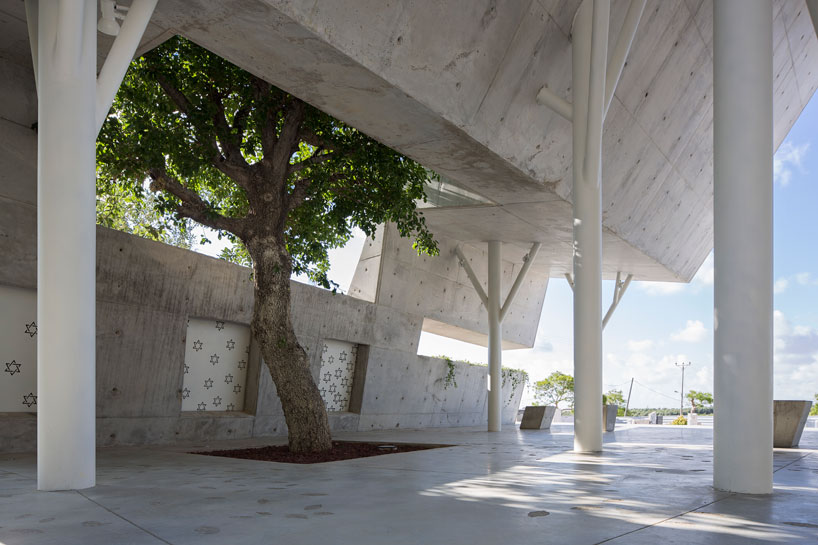
an opening has been created to allow the oak tree to naturally emerge through the structure

metal tree-shaped pillars support the concrete canopy
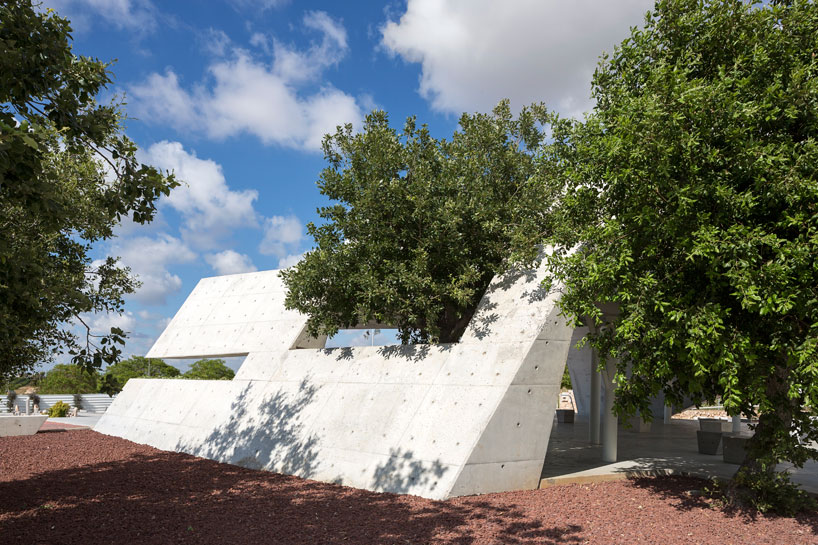
two exits leading to the burial lots, one of which is easily accessible and the other is via a flight of stairs
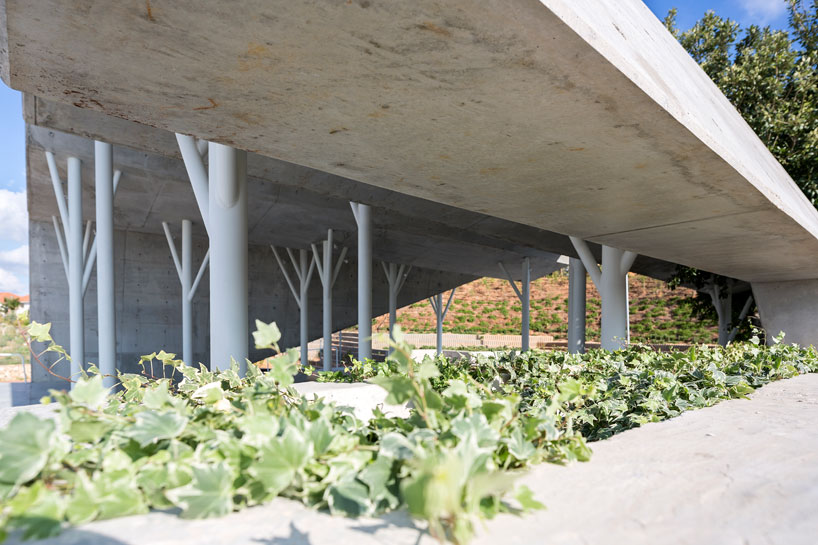
the metal ‘tree’ structures were brought to the site and assembled as per the design
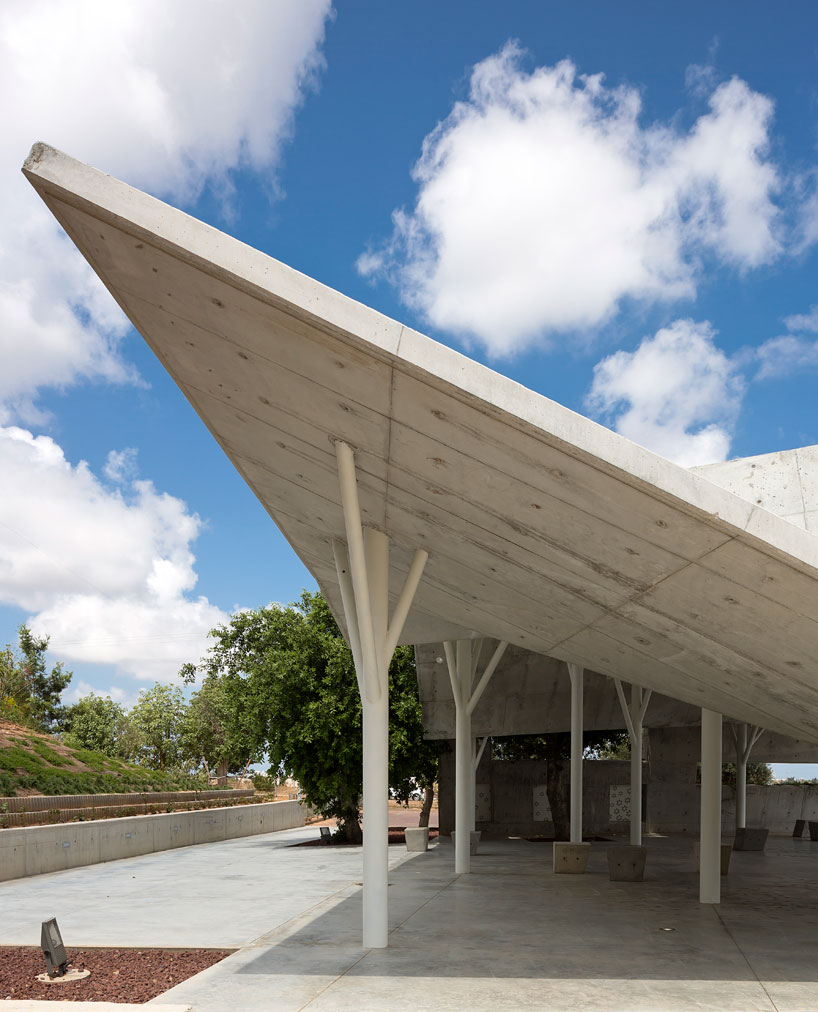
the structure uses more than 300 panels of differing sizes and shapes and fitted together by computer software
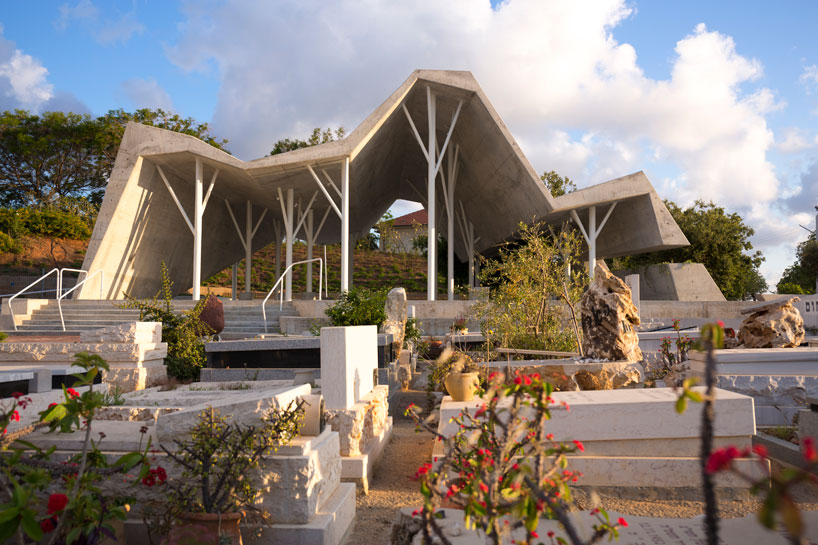
the contemporary structure is a distinctive and sensitive response to its melancholy function
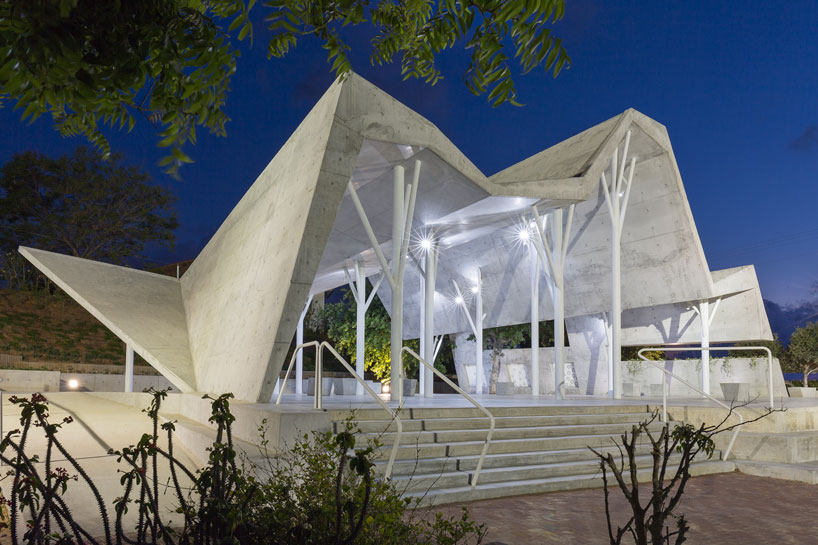
a folding and staggered form defines the shelter
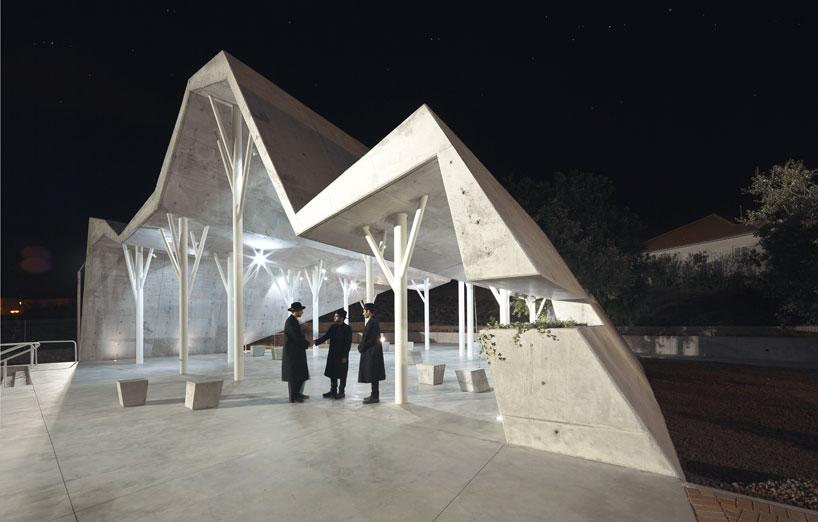
at night, the pavilion is lit up


1/8