ROOVICE renovates 1960s wooden house in Kajiwara
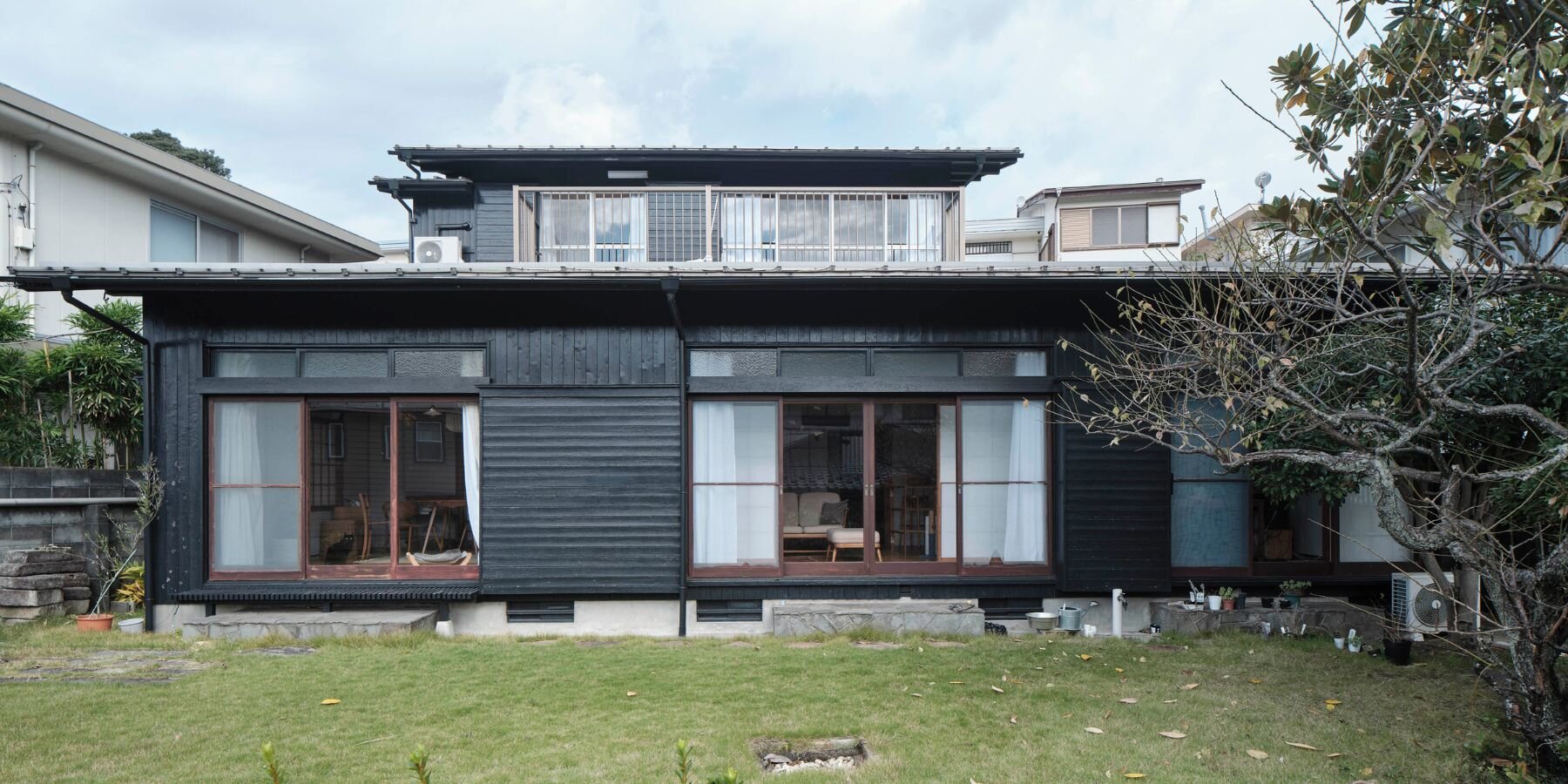
ROOVICE has renovated a two-story wooden house from the 1960s in Kajiwara, a residential area in Kamakura, Japan. Designed for a creative couple and their two cats, the project prioritizes preservation and selective intervention, maintaining the existing character and proportions of the house while improving functionality.
The renovation began with the exterior, which was repainted in black. The entrance door and window frames were finished in the same tone to establish a cohesive facade. The intervention aimed to unify the appearance of the building while retaining its original form. Inside, the entrance preserves a distinctive original detail: a narrow strip of smooth white pebbles set between reddish floor tiles and a concrete step. The pebbles remain loose, introducing a subtle tactile quality. Aging wooden wall panels were replaced, and a simple wooden fence was installed near the entrance to prevent the cats from exiting when the door is open.
ROOVICE renovates a 1960s wooden house in Kajiwara | all images by Akira Nakamura
Kajiwara House retains its original timber framework
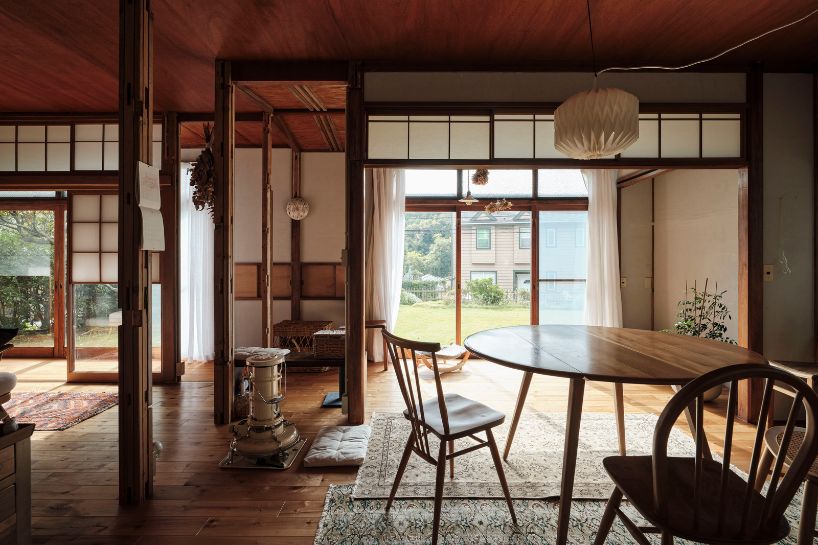
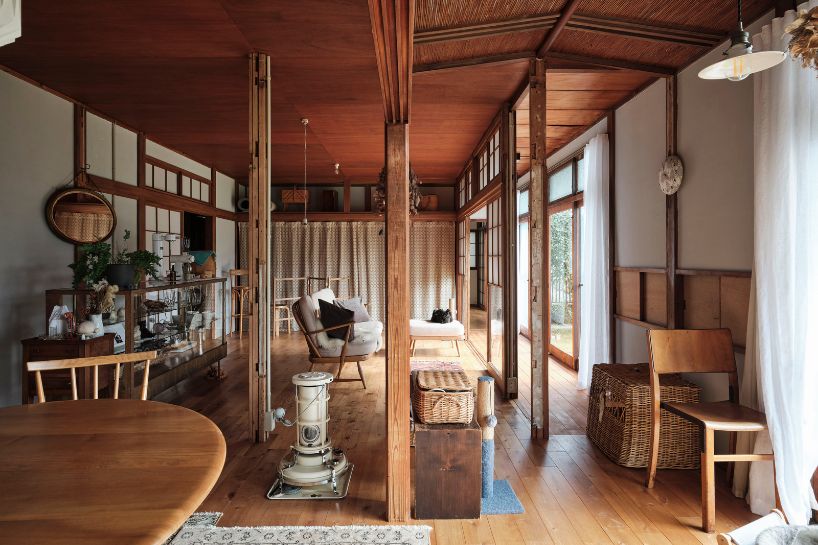
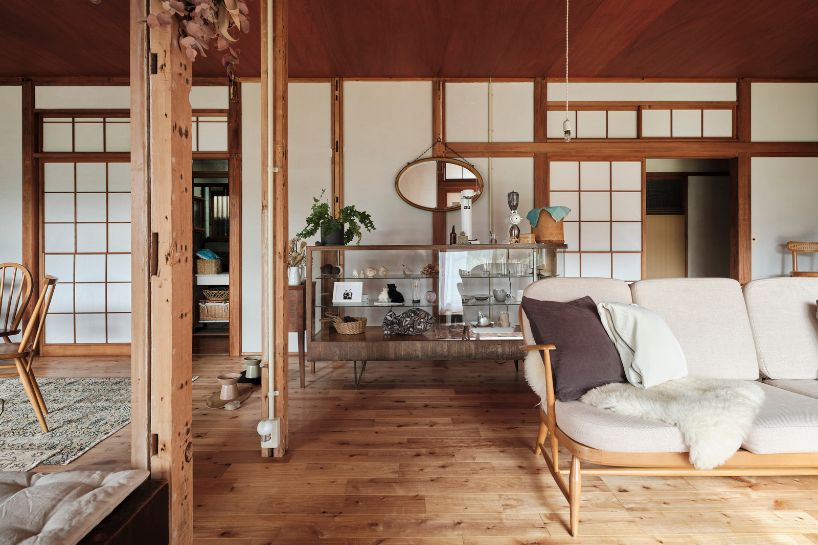
On the ground floor, the design team at ROOVICE converts the front room into a studio and office. Original glass sliding doors from the built-in storage were repaired and retained as functional and visual features. At the rear, two garden-facing rooms were combined to form a single living area. Large windows provide daylight and establish a visual connection to the garden. Along the engawa corridor, shoji-lined walls were preserved, as were the original ceiling boards. Newly connected ceiling sections were finished with new wooden panels, creating a visible distinction between original and added elements. Continuous flooring throughout the level reinforces spatial flow.
The bathroom retains an interior window facing the hallway. The space was slightly enlarged to improve usability, while existing wall tiles were preserved where possible. Where matching tiles were unavailable, new white tiles were introduced as a deliberate contrast. The original tamaira floor tiles remain in place, maintaining the layered character of the space. In the kitchen, built-in cupboards were refreshed and retained. Only the outdated section was replaced with a custom-made wooden counter. The floor was finished in mortar at the owners’ request, acknowledging the potential for cracks to develop over time as part of the material’s natural aging process.
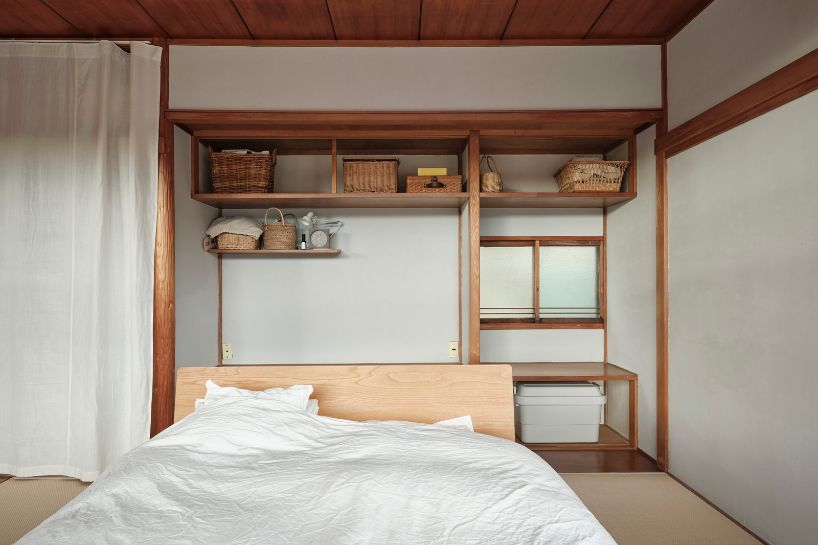
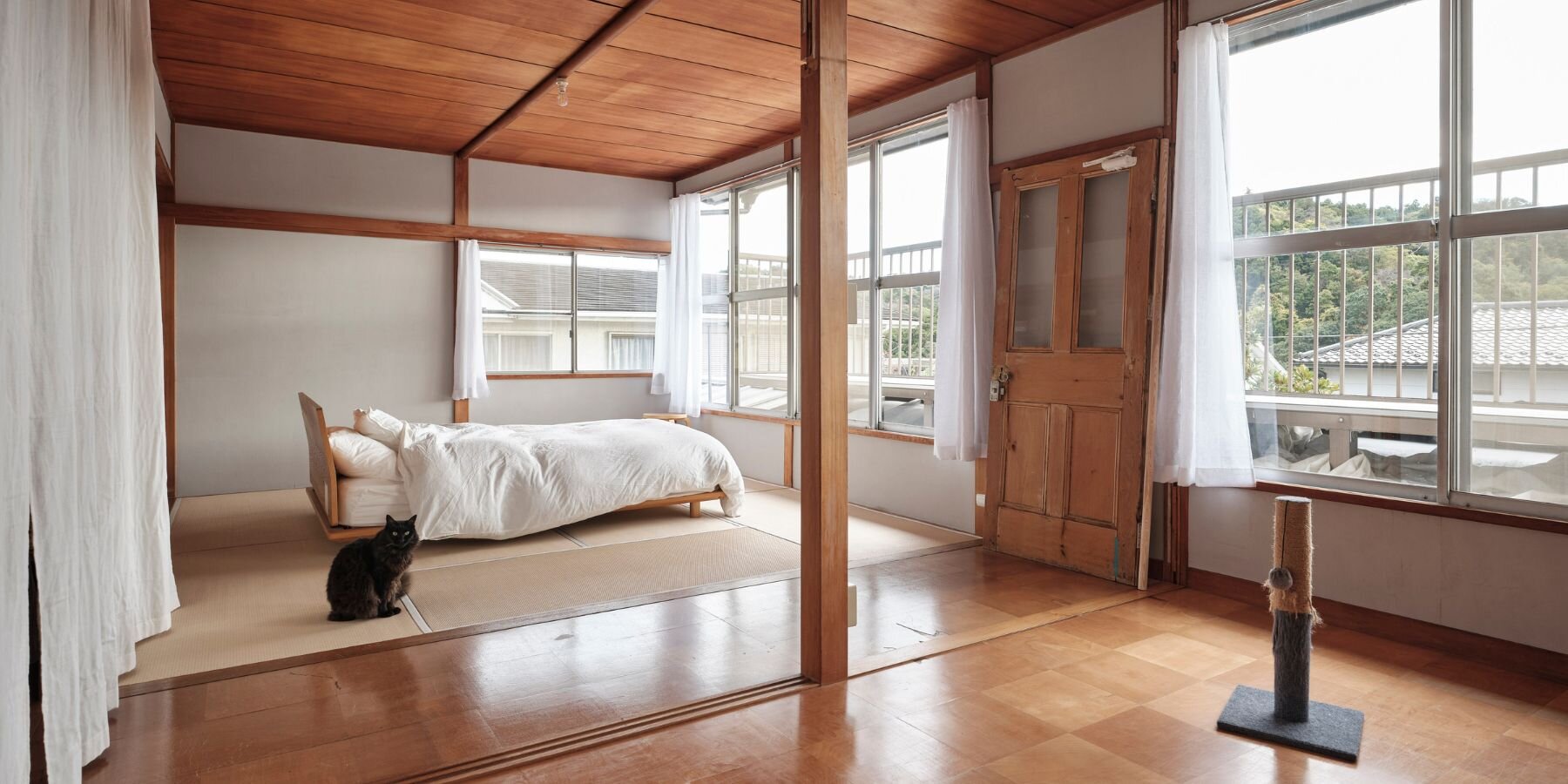
Upstairs, two smaller rooms were merged to create a single bedroom. Existing oshiire closets were combined into one continuous storage area. Wide windows provide natural light across the enlarged space. Although the renovation work has been completed, the owners plan to finish the walls with shikkui plaster themselves, extending the process of adaptation beyond the formal construction phase.
the two-story structure retains its original proportions and timber framework
original ceiling boards contrast with newly added wooden panels
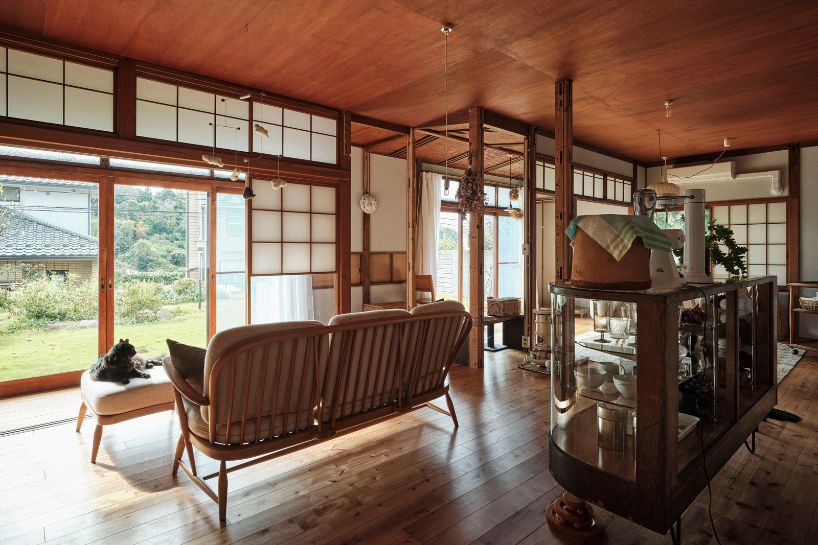
large windows frame views and draw daylight deep into the interior
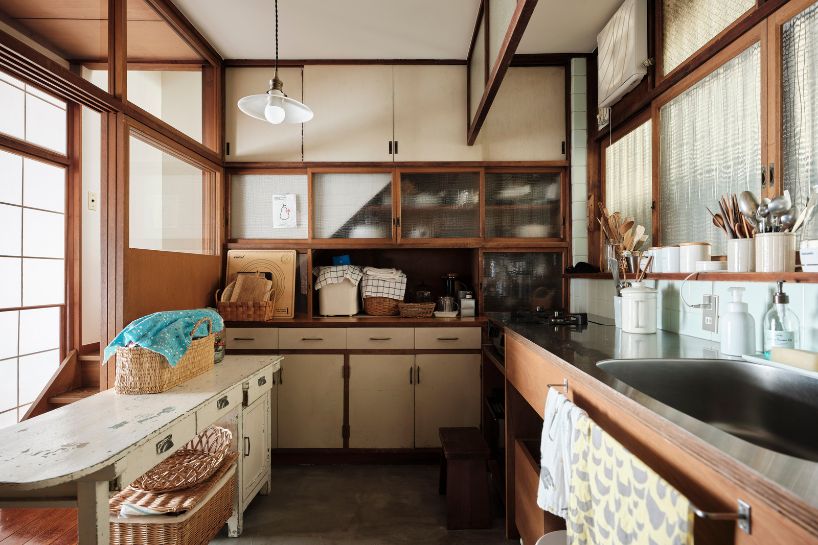
the mortar kitchen floor is designed to age and develop cracks over time
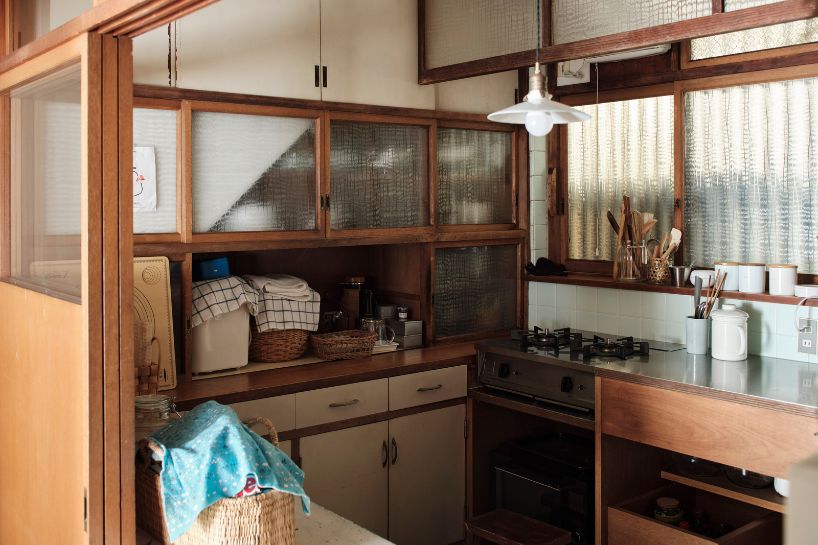
built-in kitchen cupboards are refreshed alongside a custom wooden counter
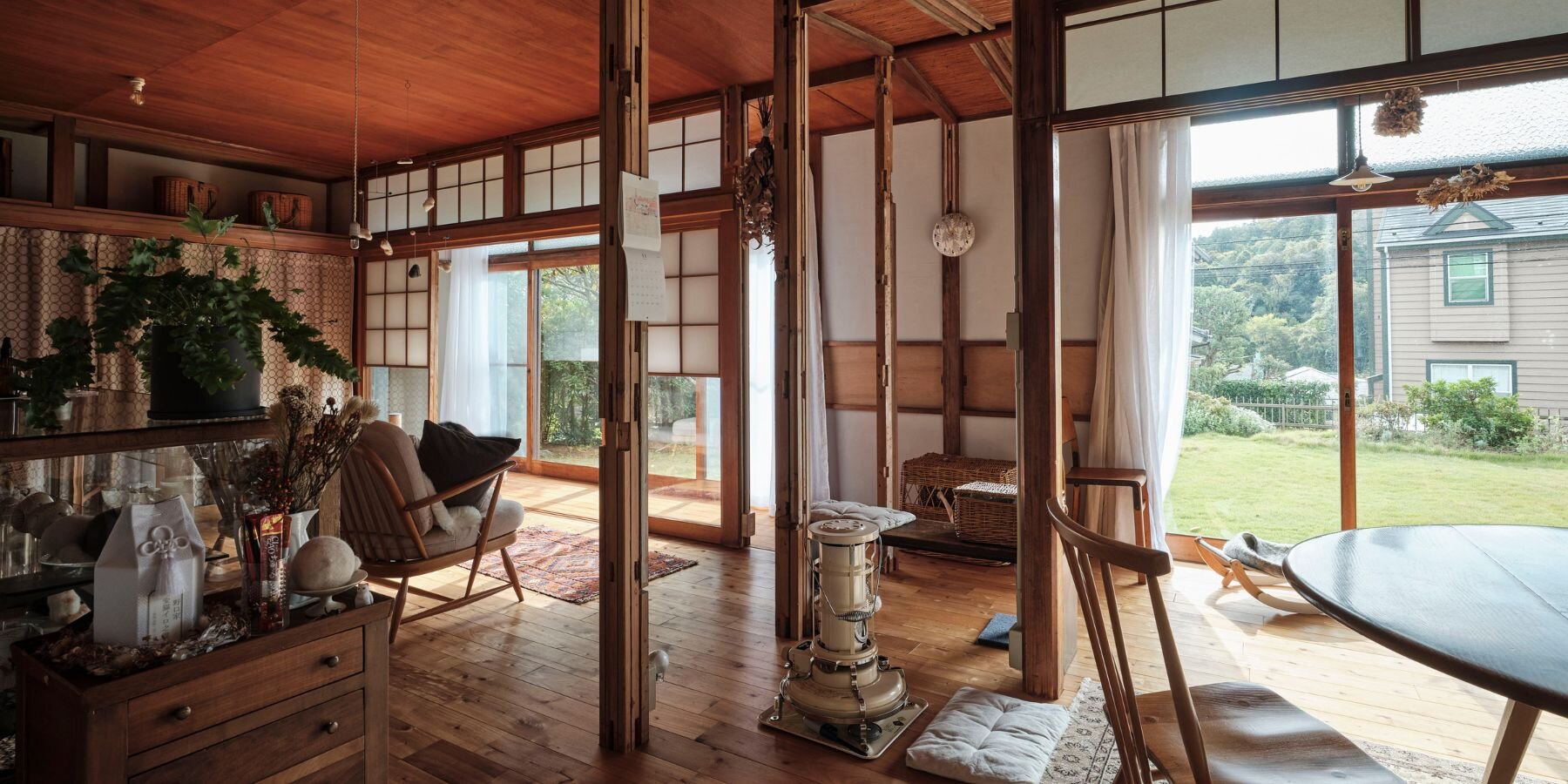
continuous flooring reinforces spatial flow across the ground level
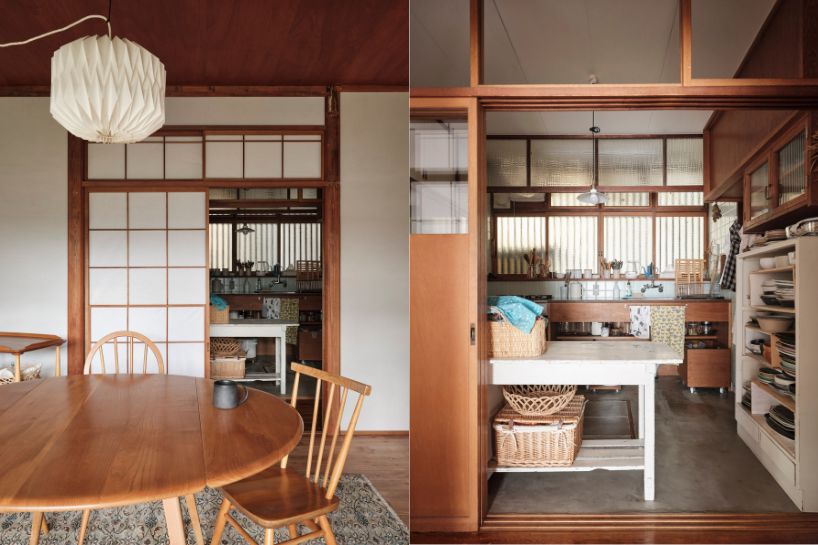
Shoji-lined walls are preserved along the engawa corridor
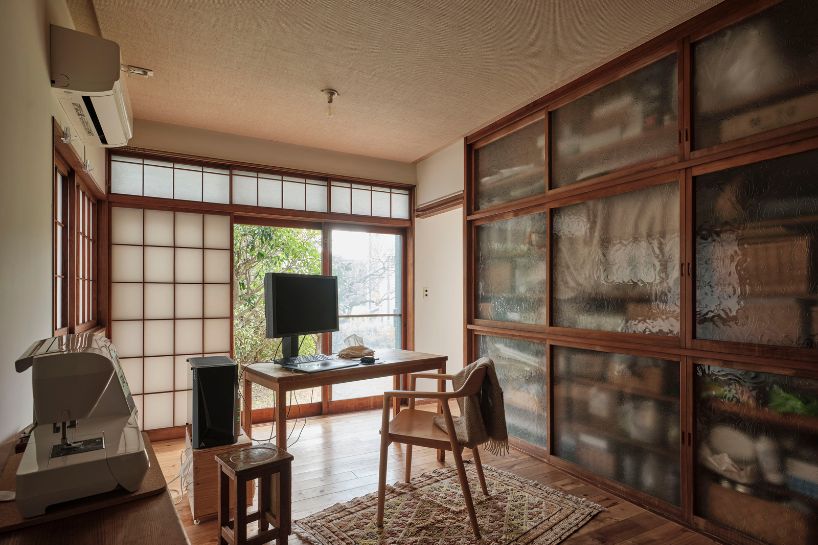
garden views anchor the living area at the rear of the house
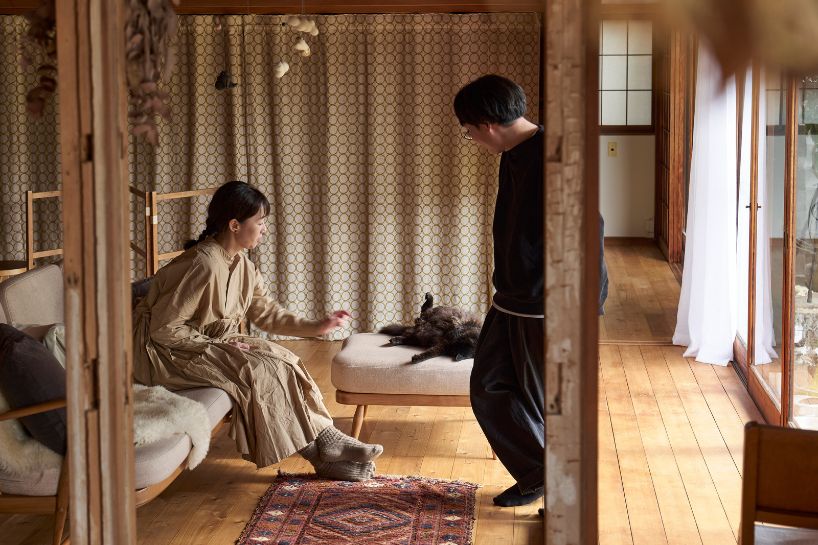
timber surfaces define the interior atmosphere across both floors
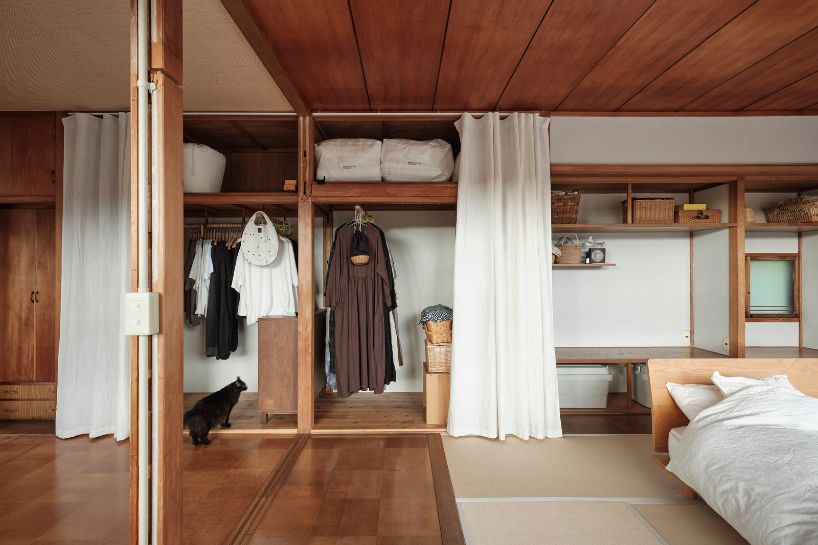
upstairs, two rooms are combined into a light-filled bedroom with continuous oshiire storage
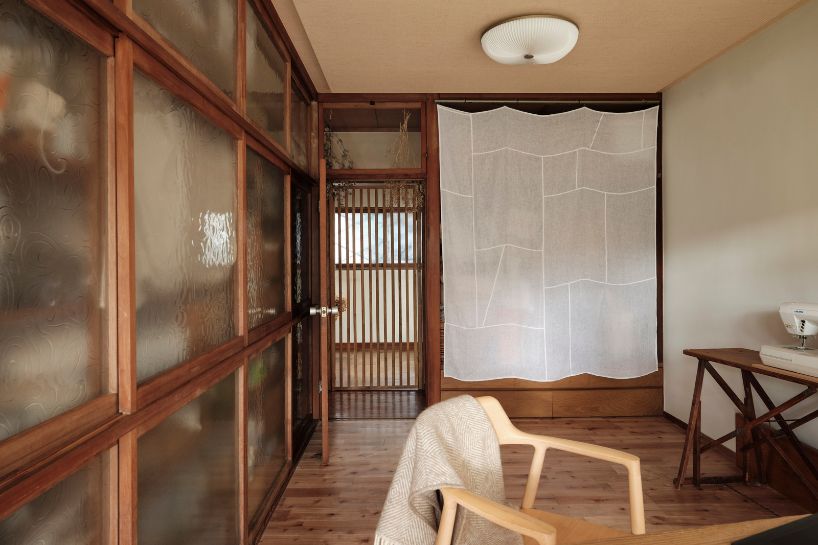
built-in storage elements remain integrated within the walls
existing walls are preserved, with white replacements added in contrast
material continuity reinforces the house’s spatial rhythm
architecture in japan (1702)
 Feb 19, 2026
 Feb 12, 2026
 Feb 10, 2026
 Feb 08, 2026
 Feb 07, 2026
renovation and restoration architecture and design (1160)
 Feb 21, 2026
 Feb 20, 2026
 Feb 17, 2026
 Feb 14, 2026 Feb 12, 2026
residential architecture and interiors (4757)
 Feb 20, 2026
 Feb 20, 2026 Feb 19, 2026
 Feb 19, 2026
 Feb 19, 2026
ROOVICE (19)
 Jan 10, 2025
 Sep 05, 2024
 Jul 24, 2024
 Jun 21, 2024
 Jun 02, 2024
wood and timber architecture and design (1391)
 Feb 20, 2026 Feb 20, 2026 Feb 19, 2026
 Feb 19, 2026
 Feb 16, 2026
 Feb 10, 2026
 Feb 04, 2026
 Jan 20, 2026