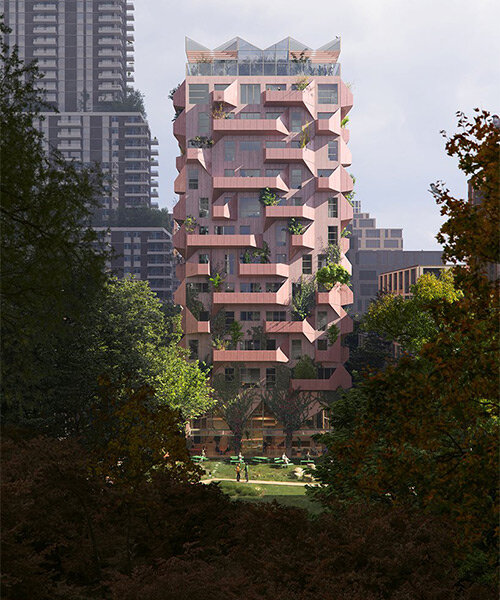
sculptural pink residential proposal rises proudly amid the urban fabric of amsterdam
to help occupants raise their families in the city, the project offers spatial flexibility, multifunctional communal areas as well as a child-friendly layout.
prefer designboom on google[FEATURED]
‘tic-tac-toe’ is a flexible residential proposal in amsterdam
VMX architects, DS landscape architects and edwin oostmeijer introduce ‘tic-tac-toe’, a residential proposal designed for families in amsterdam. the sculptural design with its earthy materiality and light pink color scheme stands out within the urban environment. to help occupants raise their family in the city, the project offers flexibility in the floor plans, multifunctional communal areas as well as a child-friendly building layout. the homes can be adjusted to suit the needs and wishes of families in various stages of life.

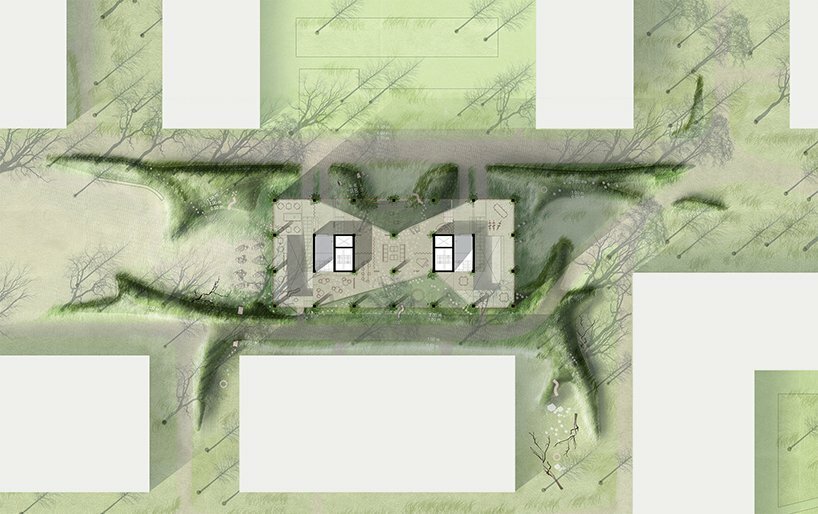
tic-tac-toe and its surroundings
all images courtesy of proloog
adjustable family apartments
tic-tac-toe consists of 75 rental homes and 14 multifunctional areas. the project is designed to prove that comfortable living, working from home, experiencing nature, pleasant communal areas, and community spirit can be combined within a single residential complex.
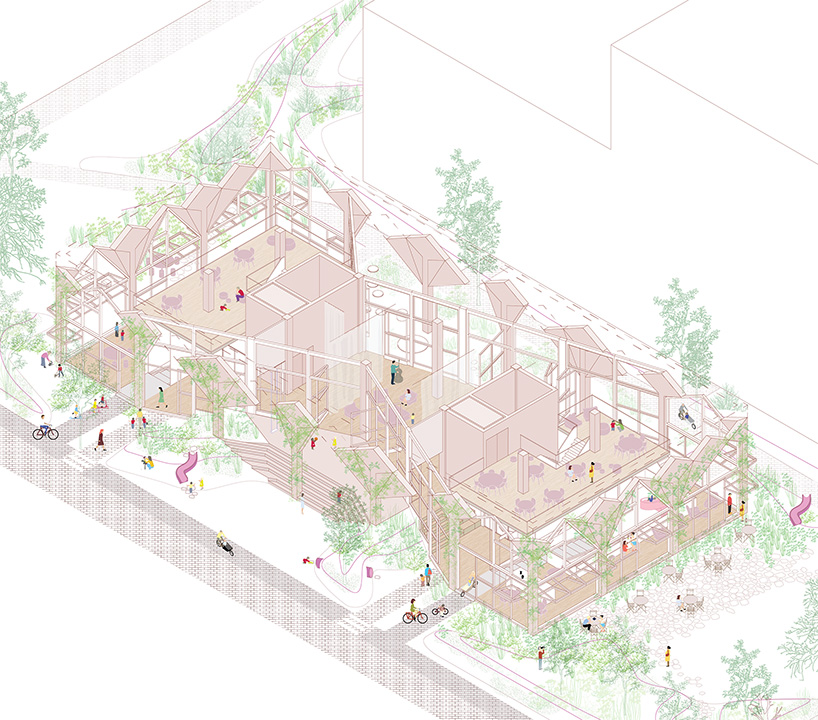
each floor incorporates sic or seven multifunctional apartments. the layout consists of square rooms with dimensions of 3.3 by 3 metres. in this grid layout, all of the rooms are of equal size. the rooms can be enclosed via flexible walls, enabling family apartment configurations of up to five rooms. the rooms can serve various purposes: dining rooms, bedrooms, living rooms, playrooms, and much more. as a result, residents can adjust their homes to suit their needs perfectly.
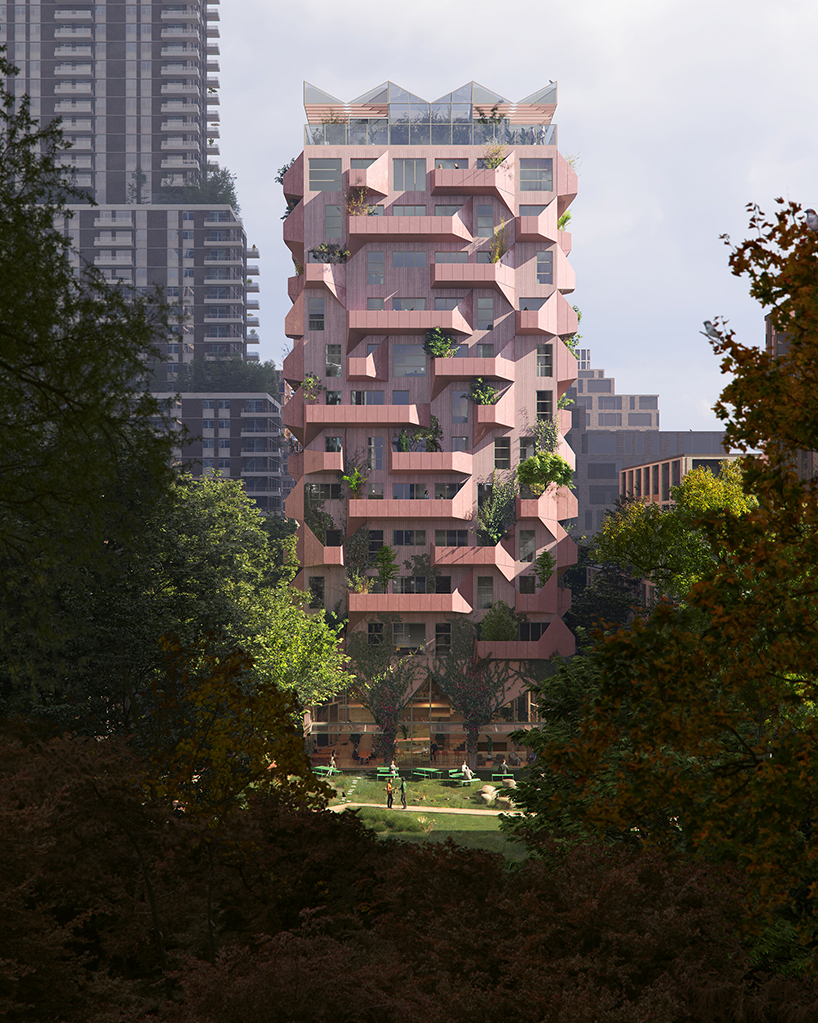
proud to be pink
multifunctional areas on each floor
14 multifunctional areas are spread across all floors, allowing the families to flexibly expand or contract their spatial needs. these rooms have their own entrance and can be rented by one or more families in addition to their apartment. all kinds of uses are possible: a bedroom for a teenager, temporary accommodation for another family member or a guest room for grandparents or friends visiting from abroad. they can also be used as a study, a workshop, a shared home office, a shared studio, or a gaming room, and can also be rented for slumber parties, daily yoga routines, or making music.
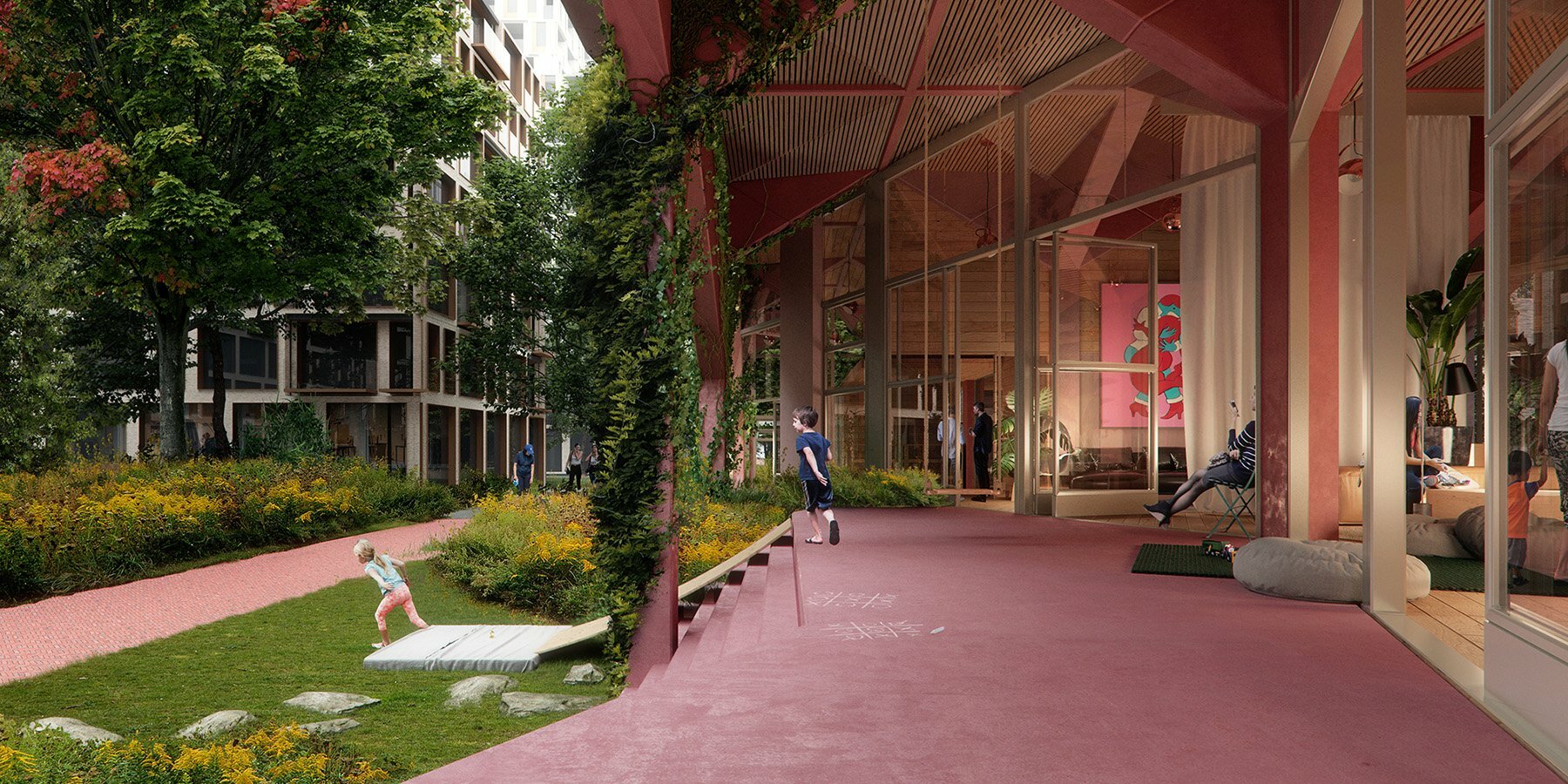
the ground floor serves as a community living room, where all residents can meet and interact. its design incorporates glass surfaces, generating an open and transparent feel. in addition, the wooden touches provide warmth and the child-friendly layout encourages the young residents to play safely.
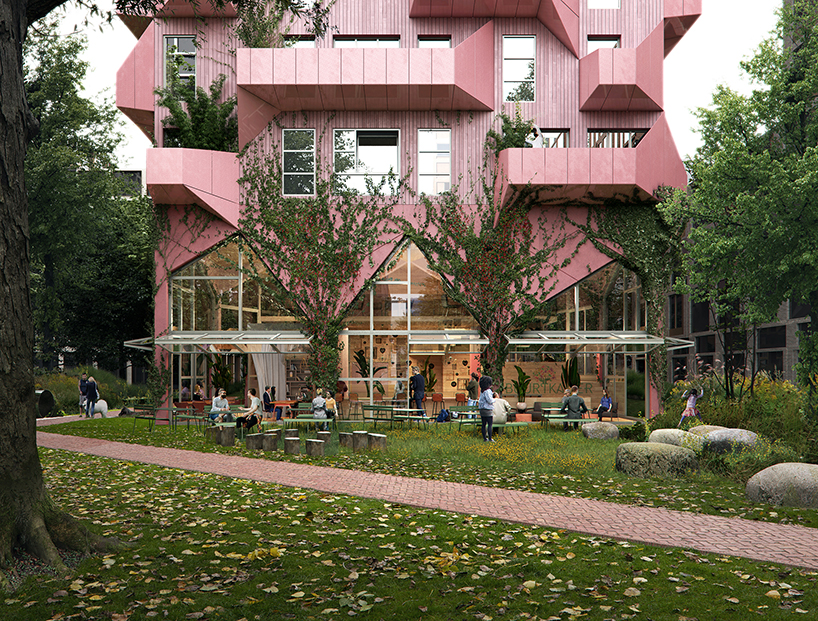
shared facilities
proud to be pink
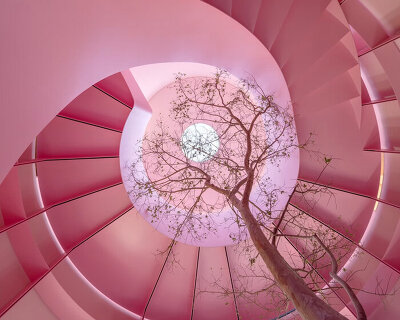
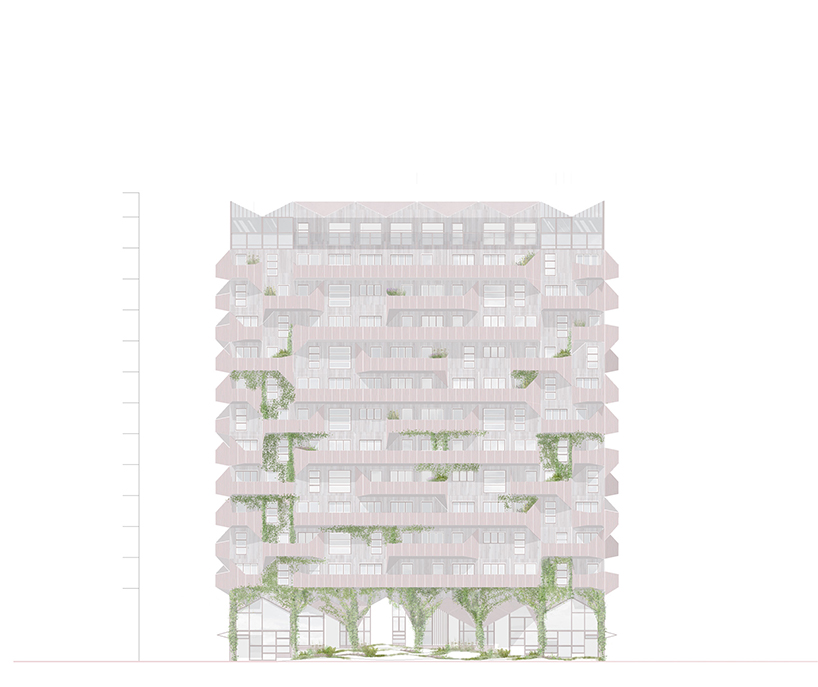
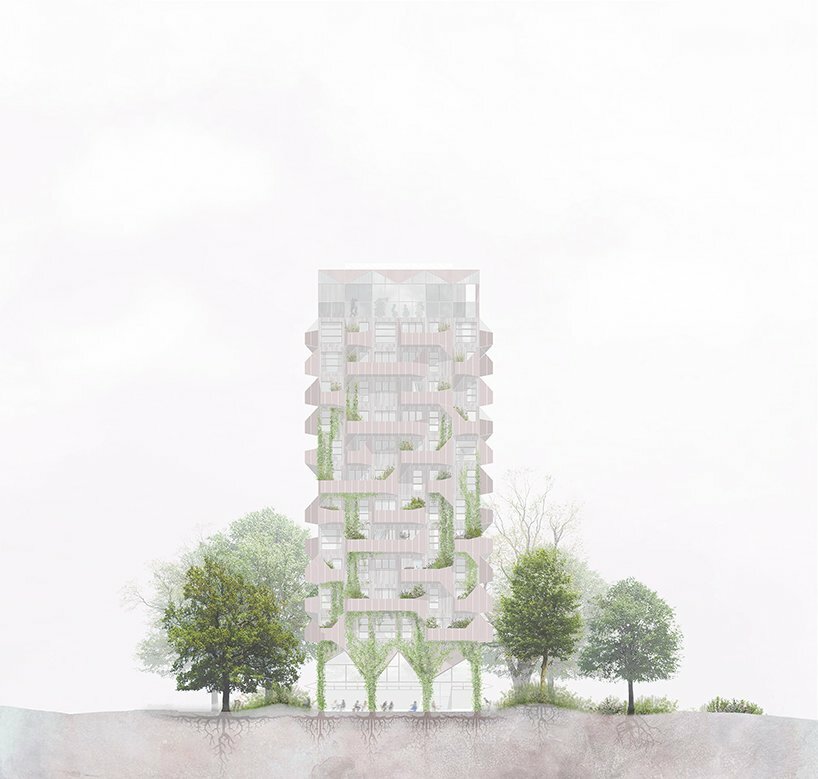
the building has a sculptured and malleable shape characterized by the shape and the positioning of the 100+ balconies. the multifaceted building with its interplay of lines presents itself as an entirely unique volume while fitting efficiently into the general orientation of the neighborhood. the light pink color of the exterior was selected to symbolize optimism. the light wooden elements give a natural look to the overall design.
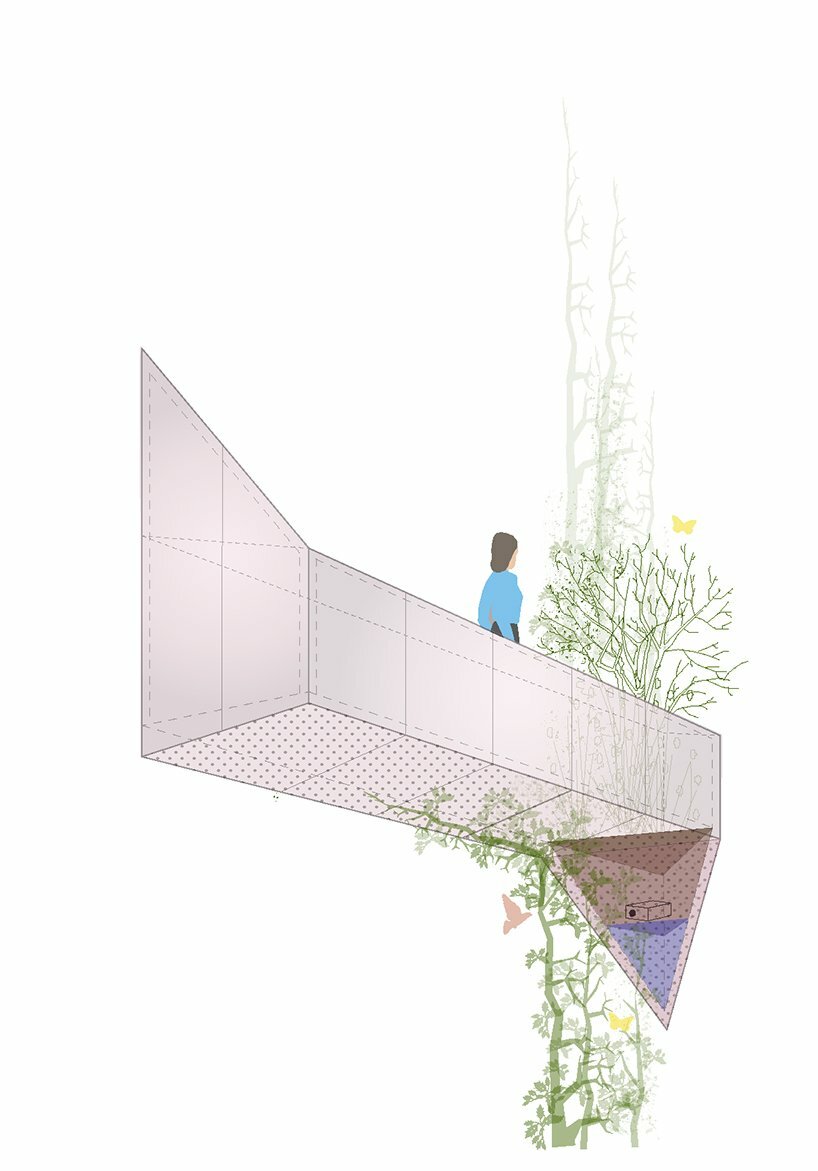
while the building itself is of a low-tech design, the balconies form the aesthetic, intelligent brain of the building. these are integrated modules with multiple sustainability functions. ton-sur-ton solar panels generate energy in the facade and greenery is cultivated in special plant pots that also collect and store rainwater. the balconies provide privacy and give residents their own personal outdoor area. they also feature nesting boxes and hollows for birds and bats. the distinctive shape of the balconies optimizes the amount of energy that they generate, creates room for plants/roots and gives the building a sculptural vibe from both near and afar.
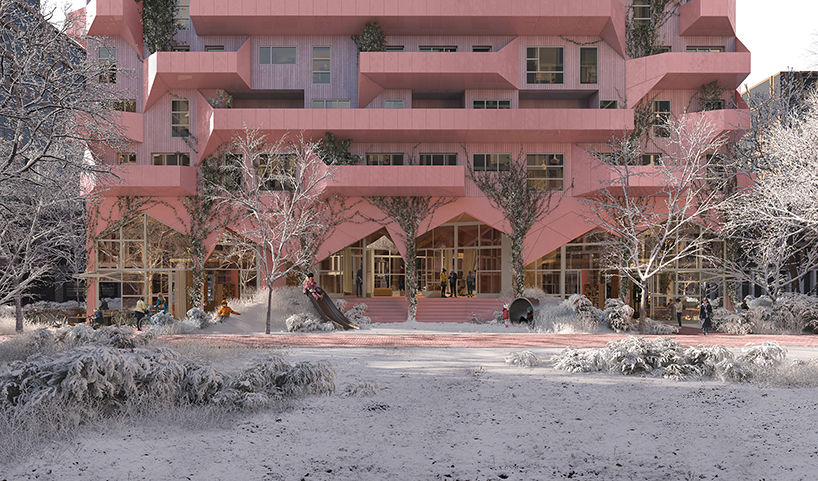
entrance
nature inclusive
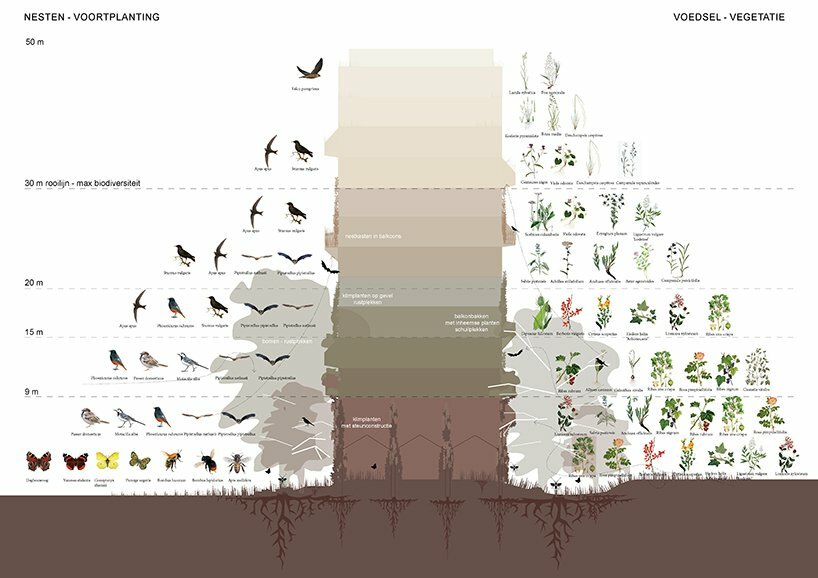
the multifaceted building provides a multitude of habitats for birds, bats, and insects. the building was designed to function as an ecosystem and integrates food, shelter, hiding places, and areas where animals can rest. the nature-inclusive features of the building are largely concentrated on the first 30m of the building. in this zone, a balance has been struck between plants -rooted in the ground to the greatest extent possible- and recesses in the facade that allow local wildlife to shelter. the first 30 metres provide habitats for small birds (sparrows, finches and blue tits) to forage and nest, as well as nectar-rich plants that attract both bats and insects. towards the roof, the plants take on a rockier nature to suit animals that live at these heights such as swifts, starlings and bats.
1/4
project info:
name: tic-tac-toe
architects: VMX architects, DS landscape architects
development: edwin oostmeijer
location: amsterdam, the netherlands
designboom has received this project from our ‘DIY submissions‘ feature, where we welcome our readers to submit their own work for publication. see more project submissions from our readers here.
shop
your own online design shop — no sales commission collected