Mandala-inspired self-sufficient 3D printed farm, itaca
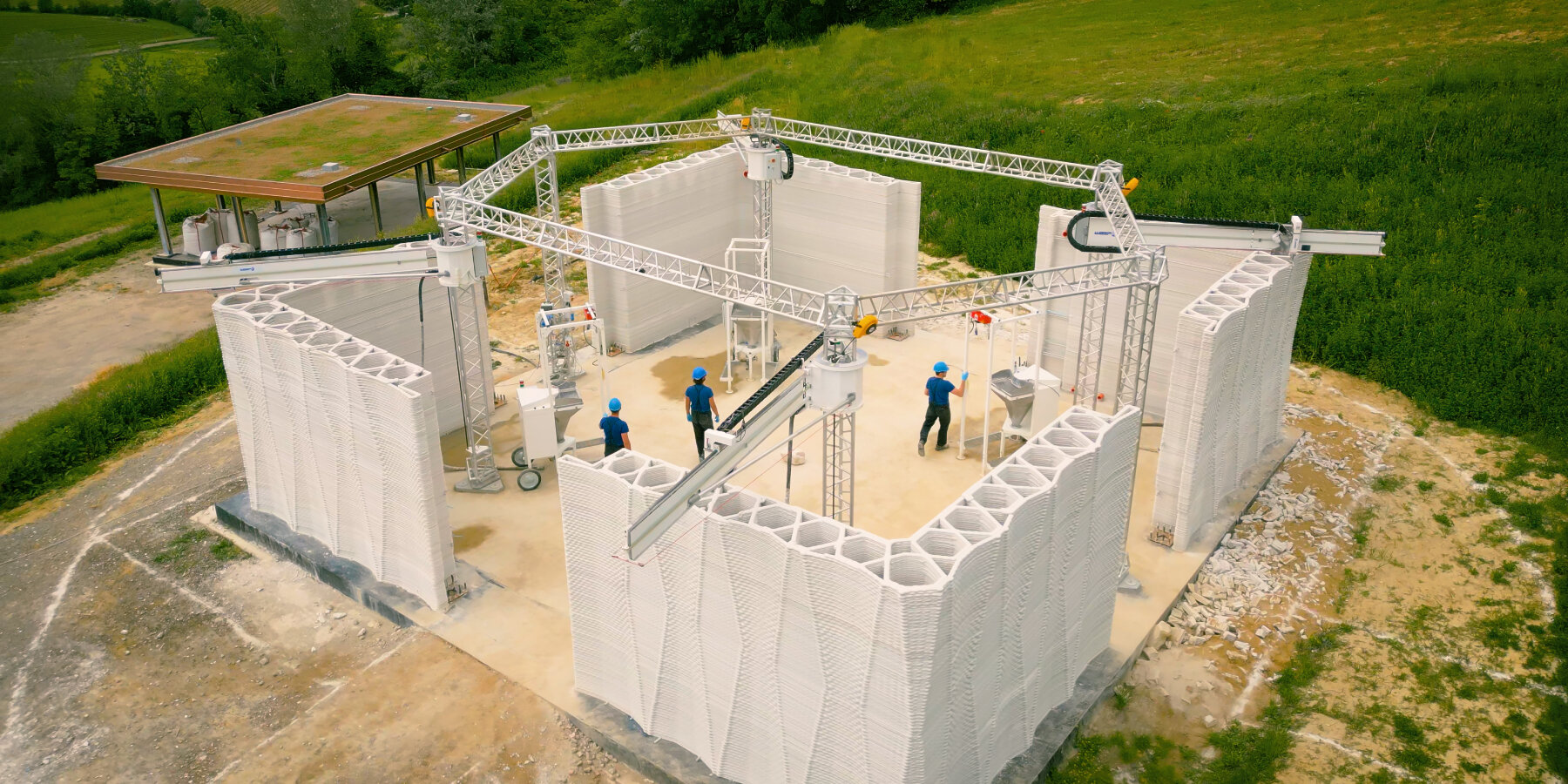
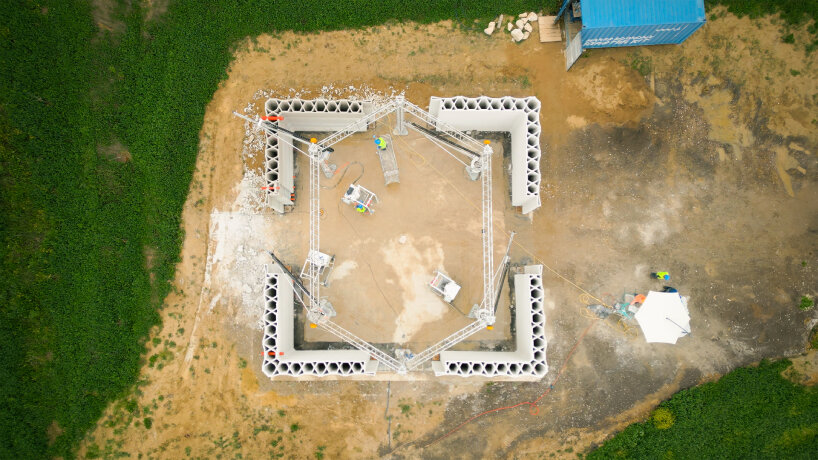
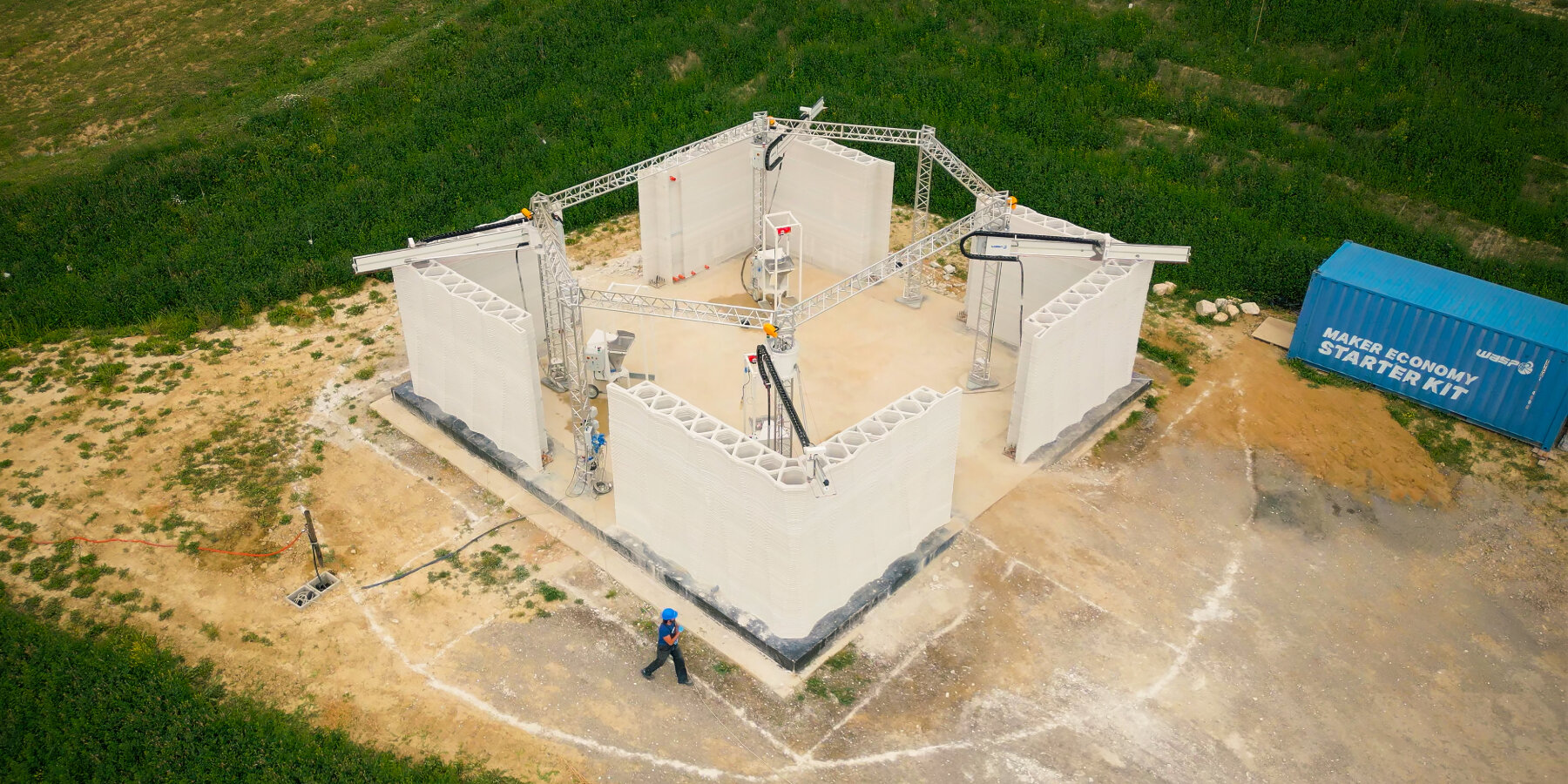
WASP completes constructing the wall of the self-sufficient 3D printed farm Itaca in the Shamballa open-air laboratory in the hills of Northern Italy. Inspired by the geometry of a Mandala, the printed construction uses four robotic arms positioned at the vertices of a hexagonal structure. Itaca’s layout consists of a square inscribed within a circle, and the design includes four main walls at the corners of the square, creating a central opening on each side. The team adds that the walls are printed using a lime-based mixture without any concrete to lower the carbon emissions produced and that the material allows the facades to regulate their temperature on their own.
Inside the walls are a series of reinforcement columns that can weather through earthquakes and support the load of the roof. These infills are packed with rice husks sourced from waste produced by the agricultural-food supply chain as well as natural lime power. The self-sufficient 3D printed farm is topped with a green roof and solar panel system so it can power up itself and remain cool. Inside the farm, the laboratory is planned for the use of extracting active ingredients from plants and conducting biological research for the resources in Shamballa, which is the open-air laboratory site of the self-sufficient 3D printed farm.
all images courtesy of WASP
AI-powered automatic garden to grow medicinal plants
Around Itaca, there are two rainwater harvesting basins for water recovery and to control soil erosion and support agricultural activities. As part of WASP’s reforestation and agroforestry initiative aimed at restoring biodiversity, over 500 trees and 50,000 aromatic medicinal plants will be planted in the surrounding area, and there’s already an AI-powered automatic garden currently in development to be integrated into the Shamballa space. The company also adds a series of 3D printed vertical hydroponic systems that will be installed to ensure fresh vegetables all year round, using minimal water. For the infills in the walls, they’re designed with radiant heating systems and electrical installations, already embedded during the printing process.
The ventilation system is to allow more air to pass through the interior spaces, transforming the self-sufficient 3D printed farm into a ‘living’ house. The project Itaca was first announced by Massimo Moretti, founder and president of WASP, on the main stage of Italian Tech Week in Torino, where he introduced it as WASP’s initiative to develop a 3D-printed, self-sufficient farm and living model based on a circular micro-economy. The construction of Itaca was executed by WASP 3D Build, WASP’s innovative startup dedicated to 3D-printed construction using the Crane WASP system, and the farm is the first 3D-printed structure to take shape in Shamballa, WASP’s open-air laboratory for sustainable living, nestled in the hills of Northern Italy. The team says that the official inauguration of the Itaca Project, along with the spaces of Shamballa, is planned for spring 2026.
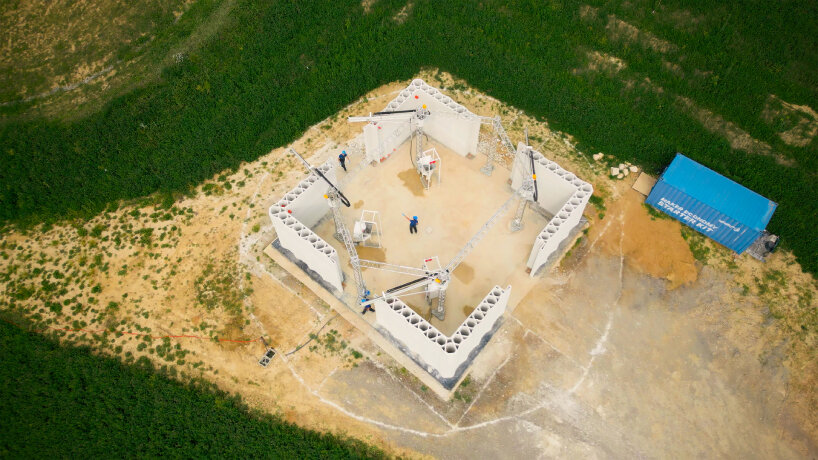
the printed construction uses four robotic arms positioned at the vertices of a hexagonal structure
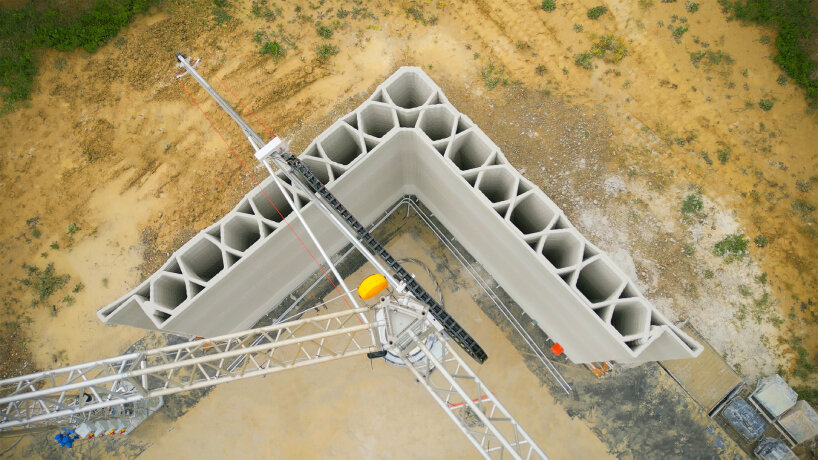
detailed view of the construction
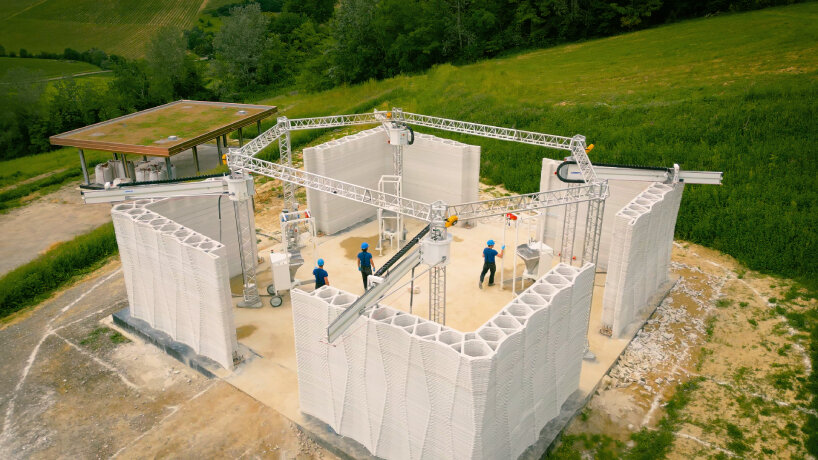
Itaca’s layout consists of a square inscribed within a circle
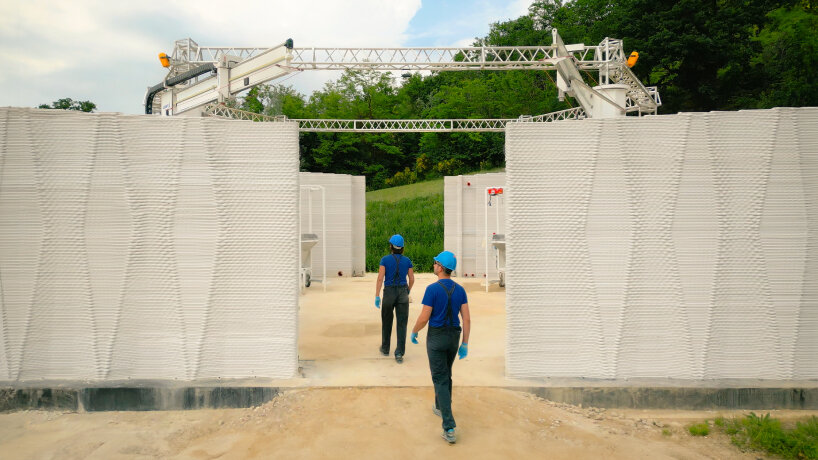
the design includes four main walls at the corners of the square, creating a central opening on each side
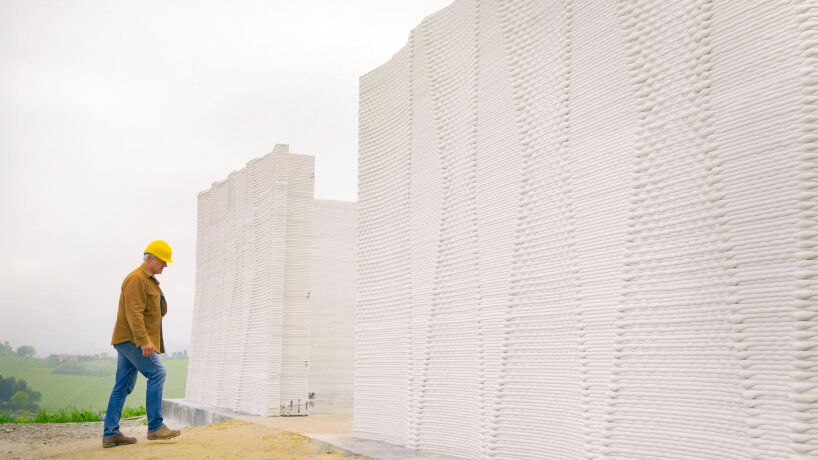
the team adds that the walls are printed using a lime-based mixture without any concrete
the infills are packed with rice husks sourced from waste
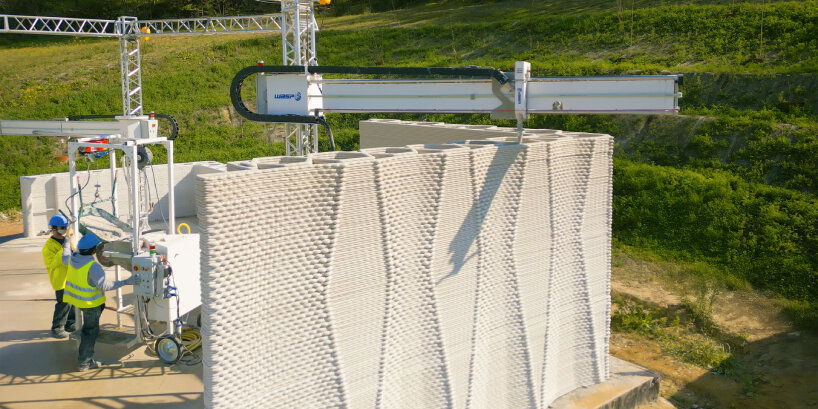
the lime-based material allows the facades to regulate their temperature on their own
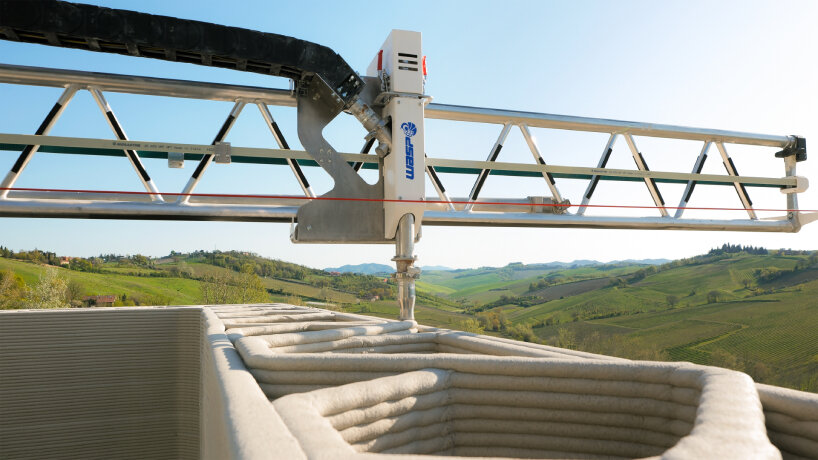
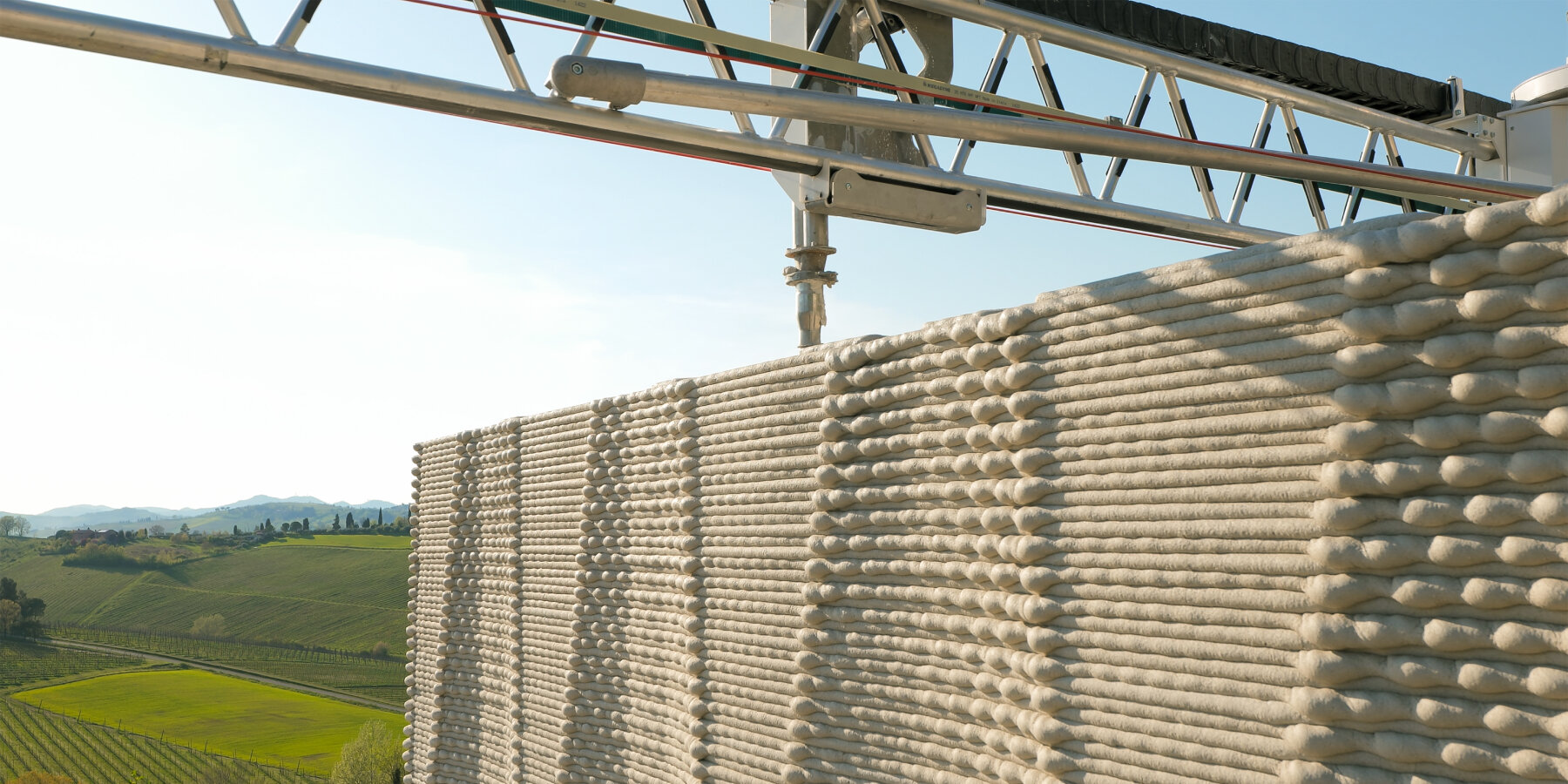
detailed view of the robotic arm 3D printing the wall
the inauguration of the Itaca project is set in Spring 2026
3D printing (882)
 Feb 17, 2026
 Feb 11, 2026
 Feb 09, 2026
 Jan 23, 2026
 Jan 19, 2026
architecture in italy (658)
 Feb 17, 2026
 Feb 16, 2026
 Feb 15, 2026
 Feb 12, 2026
 Feb 11, 2026
biomaterials (42)
Feb 17, 2026 Feb 09, 2026
 Feb 05, 2026
 Feb 04, 2026
 Jan 08, 2026
 Feb 10, 2026
 Feb 04, 2026
 Jan 20, 2026