boyeruca fishing cove by SGGB architects in chile
the architecture presents a dialogue between two differentiated and dilated strata by means of five semi-inverted concrete beams.
prefer designboom on google[FEATURED]
boyeruca fishing cove by SGGB architects in chile
all images courtesy of SGGB architects
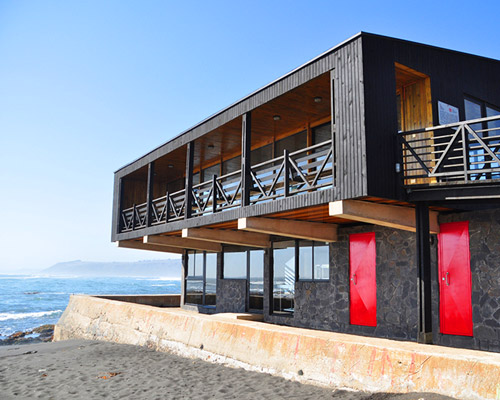
for the chilean town of talca, SGGB architects has constructed ‘boyeruca fishing cove.’ the installation is constructively composed by two differentiated, dilated strata by means of five semi-inverted concrete beams. the interior stratum, in its base condition, harbors the functional programs of the project: distribution hall, fishermen-union office, kitchen, refrigeration chamber, storage boxes, and bathrooms. this operative condition is reinforced by the use of raw concrete beams, local black stone, and folded, red metal doors. the superior stratum harbors the restaurant-union headquarters, picking up elements of the local architecture of the south of chile in its morphology, constructive process and color scheme.
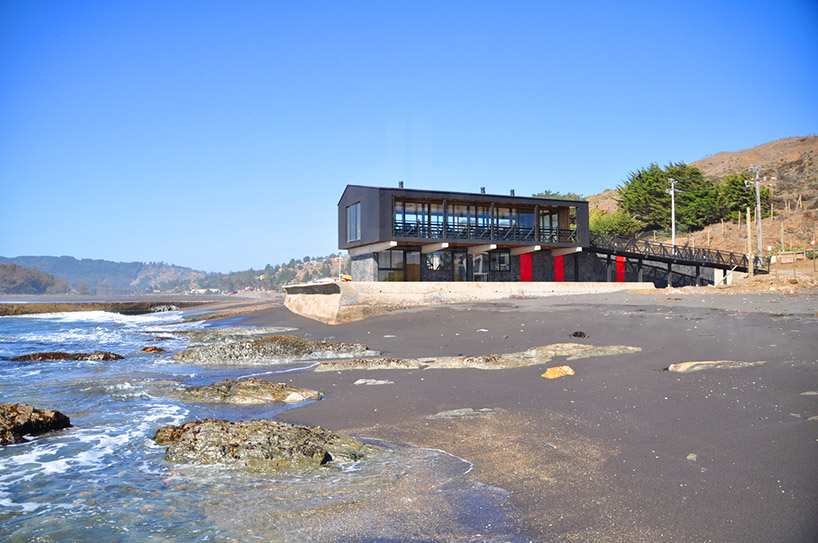
view of the structure from the shoreline
both groups of layers assimilate different climate variables: the first assimilates collapsible structural principles in case of tsunami for some of its elements; meanwhile, the second assimilates wind and water protection by means of a careful process of black waterproof seal, the integration of asymmetric double slope roofing, and the development of hidden water channeling. protected from the prominent southern wind by a strategic positioning of the project, the fishermen operations platform becomes an important public open space for the surroundings.
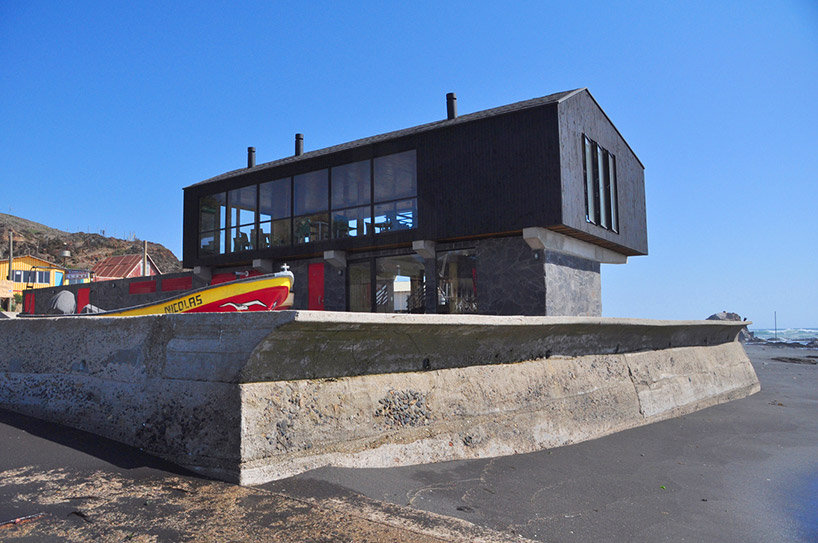
the positioning of the cove shelters fisherman from the prevailing southern winds
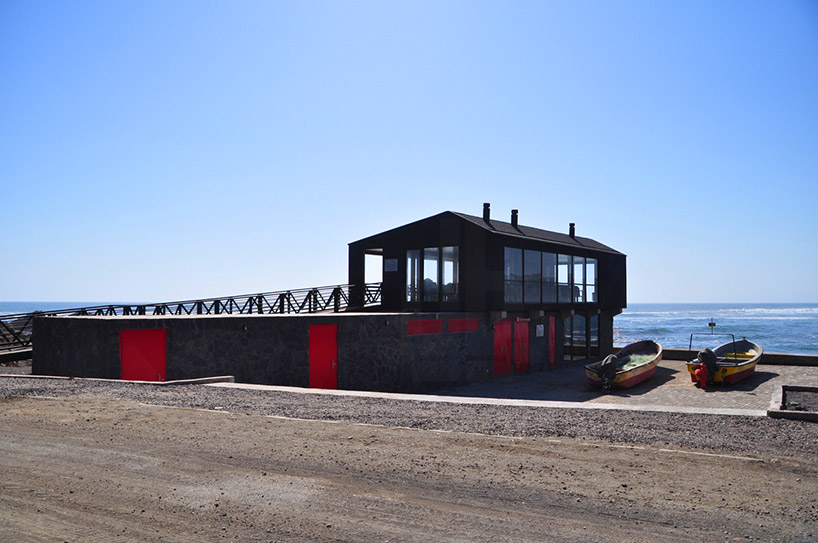
view of the building from the street
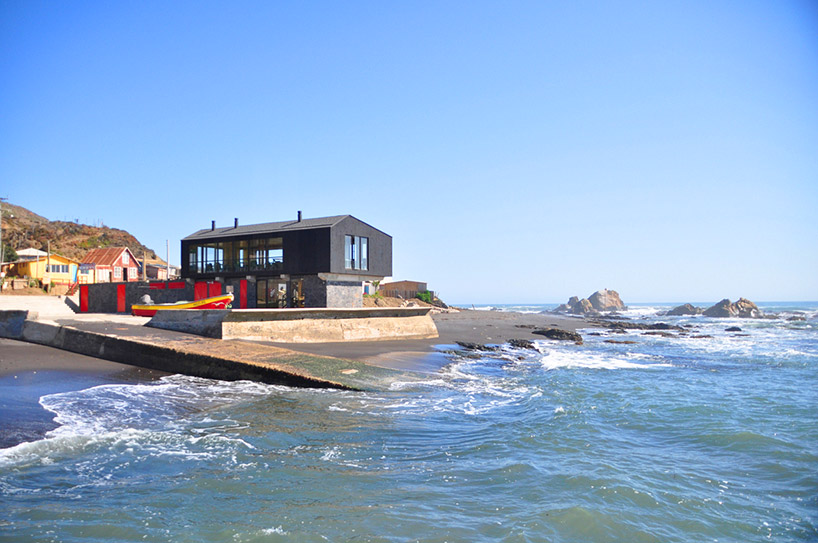
view from the water
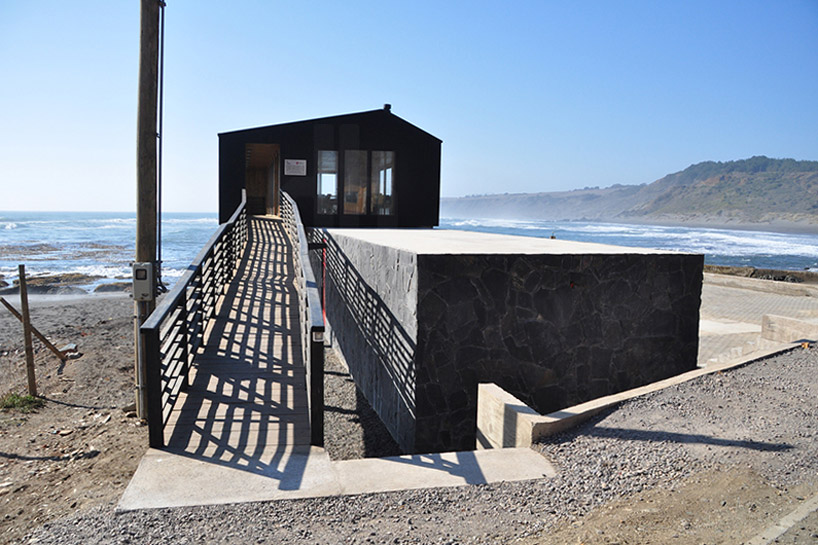
entrance ramp
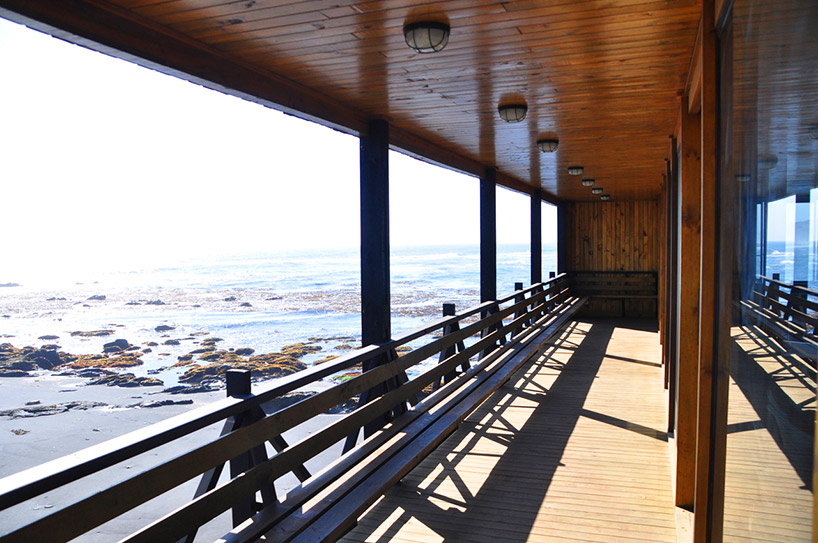
exterior deck overlooking the water
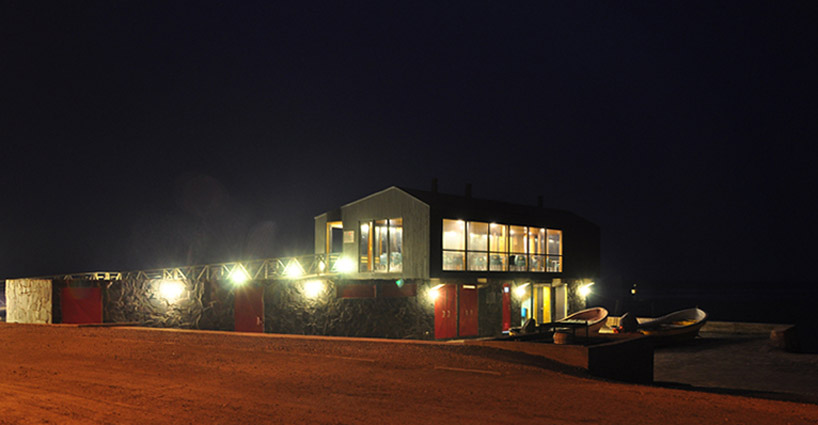
the building lit up at night
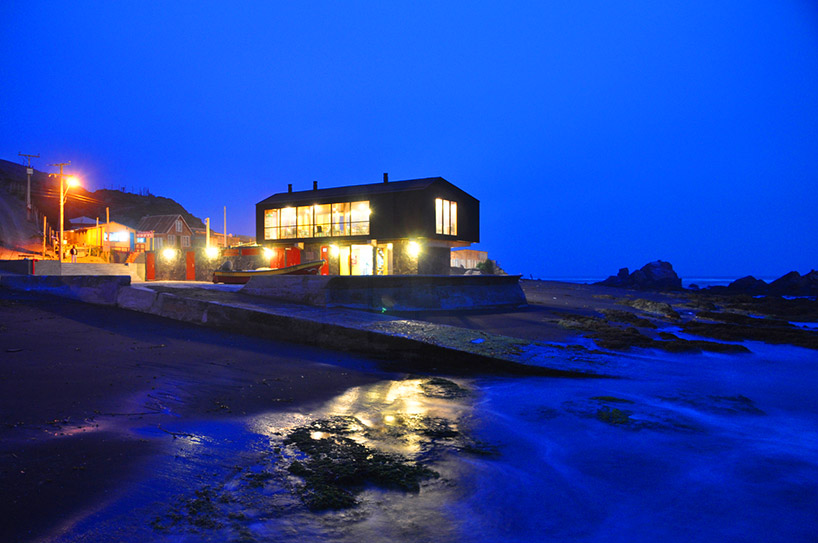
red doors accent the architecture
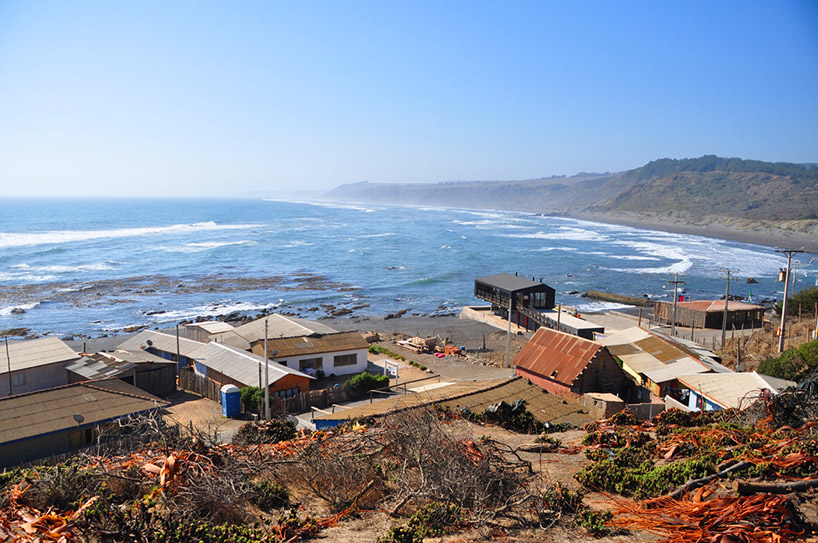
view from the nearby hill

view from the hill
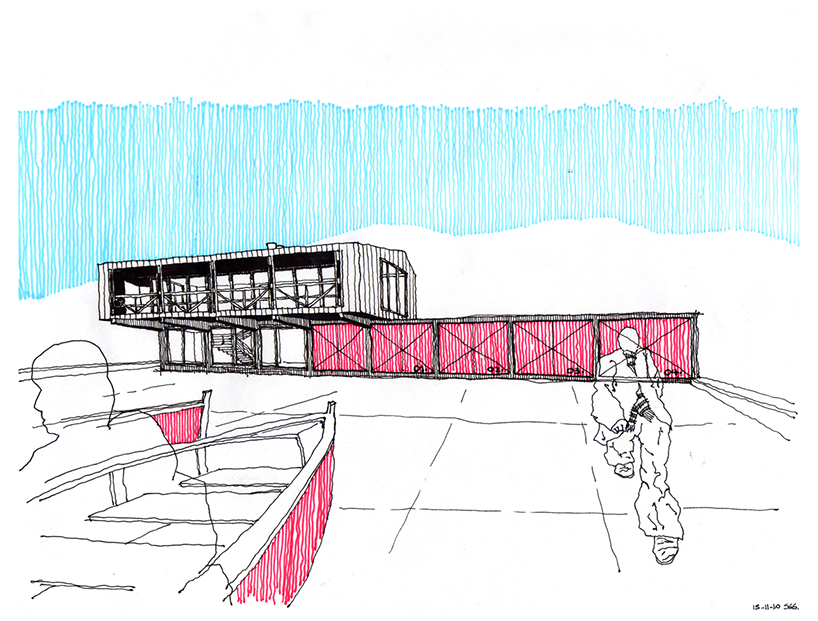
conceptual sketch
designboom has received this project from our ‘DIY submissions‘ feature, where we welcome our readers to submit their own work for publication. see more project submissions from our readers here.
shop
your own online design shop — no sales commission collected