
smiljan radić pitches a chilean circus tent in spain for concéntrico 2026
carrying memories of chile’s traveling circuses, a twenty-meter circus tent becomes a temporary public interior in logroño.
prefer designboom on googlea circus TENT lands in logroño
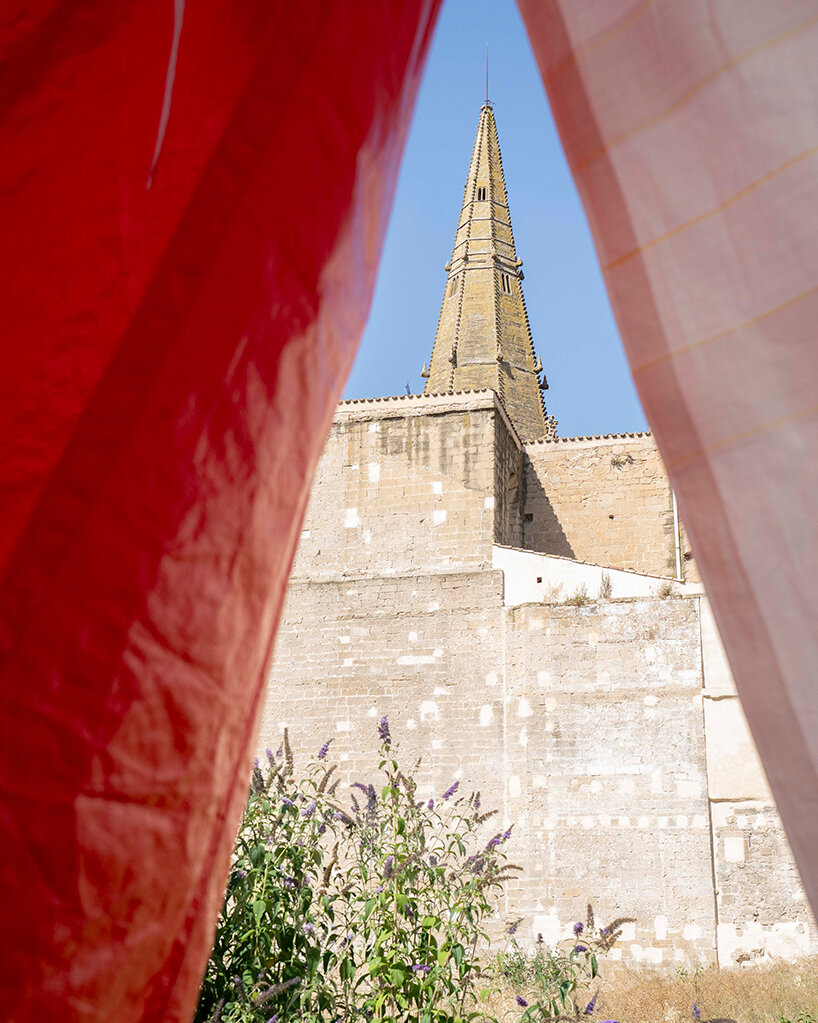
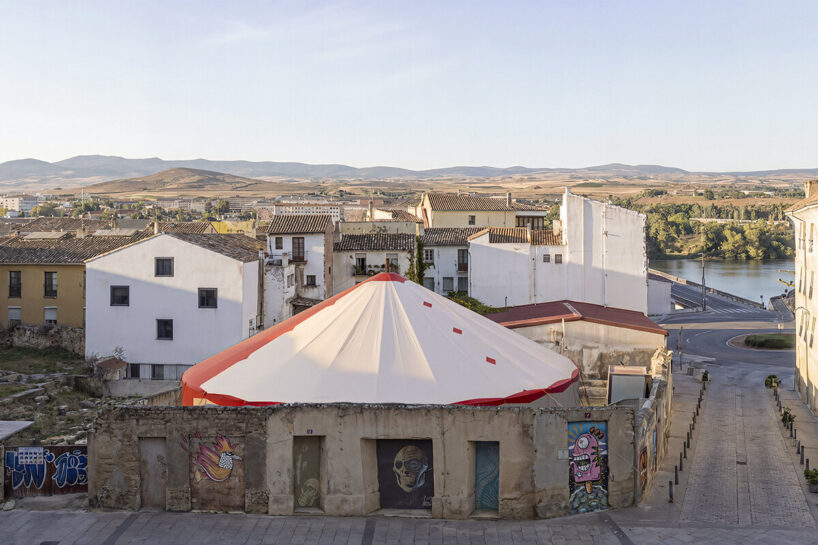
A red and white circus tent rises within an open plot in Logroño, its conical roof pulling the eye upward before the city returns around it. For Concéntrico 2026, Chilean architect Smiljan Radić brings Circo to the Spanish city as a temporary architecture with a long memory, shaped by travel, repair, and the strange intimacy of gathering under fabric.
The installation forms part of the festival’s Identity and Fiction program, which looks at the city as a place built through images, rituals, and shared stories. Radić approaches that theme through one of architecture’s most mobile forms: the small circus tent, able to be folded, moved, rebuilt, and filled with people in a matter of hours.

smiljan radić looks to chile’s traveling circuses
The references by architect Smiljan Radić come from the modest circuses that move along Chile’s central coast each summer. They arrive on neighborhood football fields or empty lots, stay for three or four days, then leave with almost no physical trace. Their architecture is direct and economical, made from cheap plastic sheeting similar to the fabric used for oversized rubble bags.
That material carries the life of the structure. Sun passes through it, colors fade with each trip, and the tent survives through the repeated repairs of its owners. In Logroño, this fragile logic is translated into a twenty-meter-diameter circus, relocated and colored for a soft patch of ground in the city.

an architecture of fabric and air
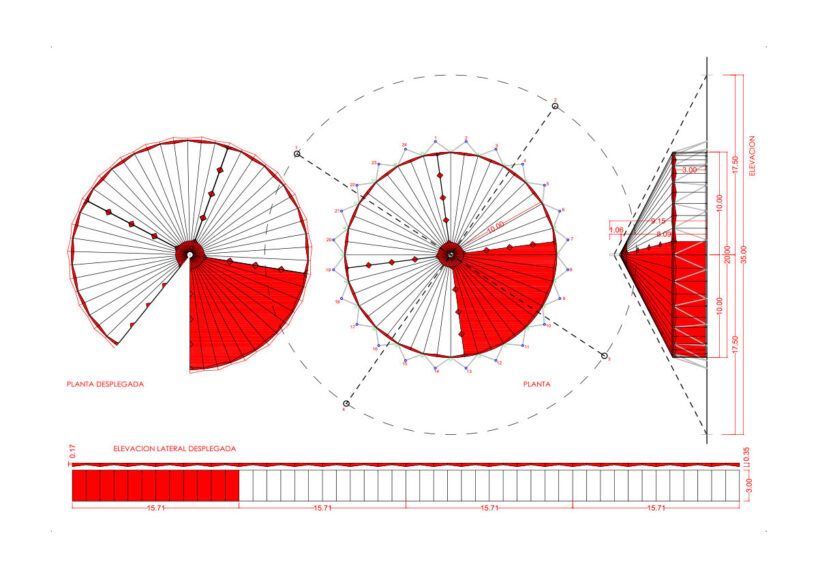
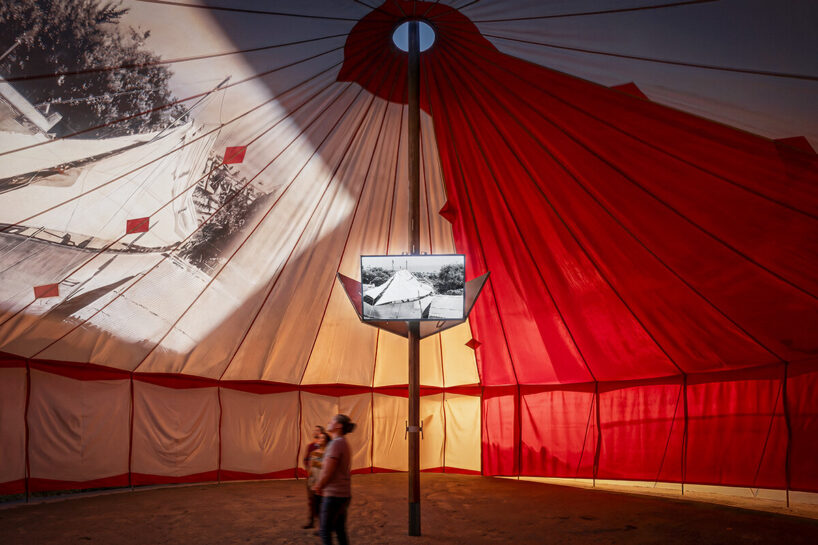
The tent appears simple from outside, but its section reveals a precise temporary system. A circular plan is pulled toward a central mast, with radial lines stretching outward to hold the canopy in tension. Red segments cut through the lighter fabric, turning the roof into a graphic field that changes with light.
Inside, the space is communal and loose. Screens sit among folding circus chairs placed across the ground, and Joris Ivens’ 1963 short film Le petit chapiteau plays out of sync. Filmed in Valparaíso, the seven-minute work brings a second circus into the tent, creating a layered scene of image, memory, and constructed atmosphere.

a folded building with a cultural memory
Radić links the project to Chilean artist Eugenio Dittborn, who sent large folded paintings around the world in grey envelopes during the years of dictatorship. The comparison gives the tent a political and material charge. Like Dittborn’s Pinturas Aeropostales, the circus can be packed, carried, opened, and placed in a new context.
This ability to travel gives Circo its force. The project brings an architecture from the edge of the city into the center of an urban festival, using fabric and projection to build a room that feels temporary but fully present. It is light in structure, yet dense with references.

concéntrico and the temporary city
Concéntrico has long used temporary installations to change how people move through Logroño, inviting residents and visitors into plazas, courtyards, and vacant sites with fresh attention. Radić’s tent fits that rhythm through a familiar form that belongs to childhood memory, popular entertainment, and architectural experimentation at once.
By placing a Chilean circus tent in Spain, Circo turns a borrowed structure into a public interior. It speaks to the history of itinerant performance, but also to architecture’s capacity to appear briefly and alter the reading of a place. For a few days, the city gains a fabric room full of air, images, and scattered chairs, then the tent can move again.



1/3
project info:
name: Circo
architect: Smiljan Radiç
location: Logroño, Spain
festival: Concentrico | @concentricofestival
film component: Le petit chapiteau by Joris Ivens, 1963
shop
your own online design shop — no sales commission collected