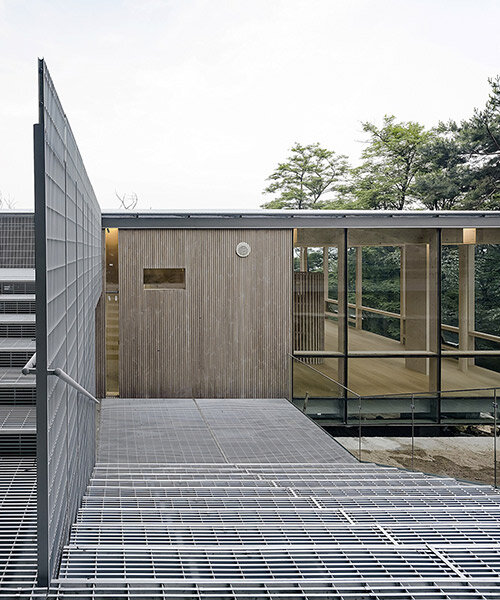
former guard post on south korea’s inwang mountain becomes modern forest retreat
once a restricted military outpost, the new public retreat offers shelter, a library, and a cultural venue in the forest.
prefer designboom on google[FEATURED]
restricted military guard post becomes public retreat
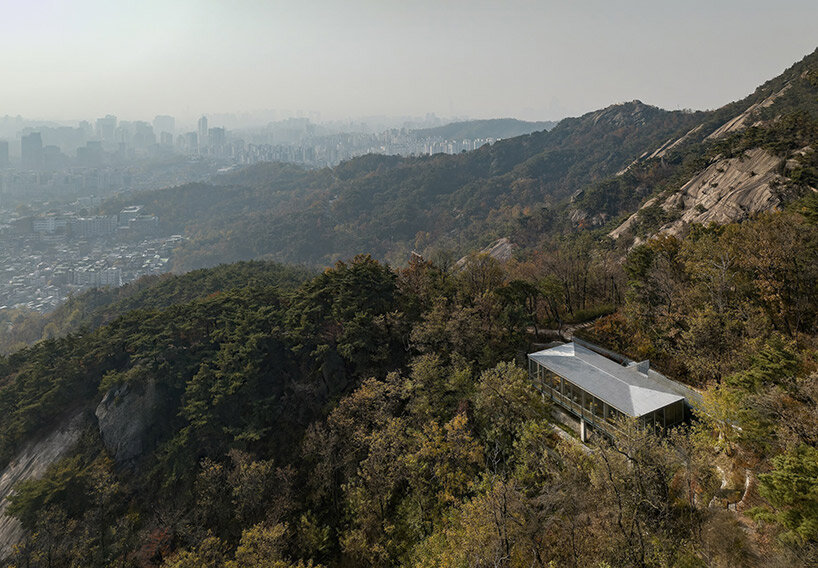
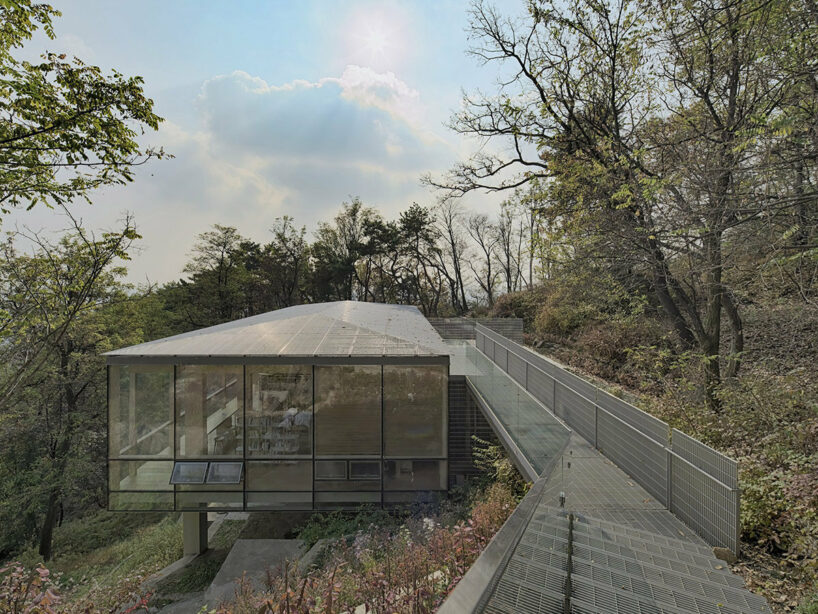
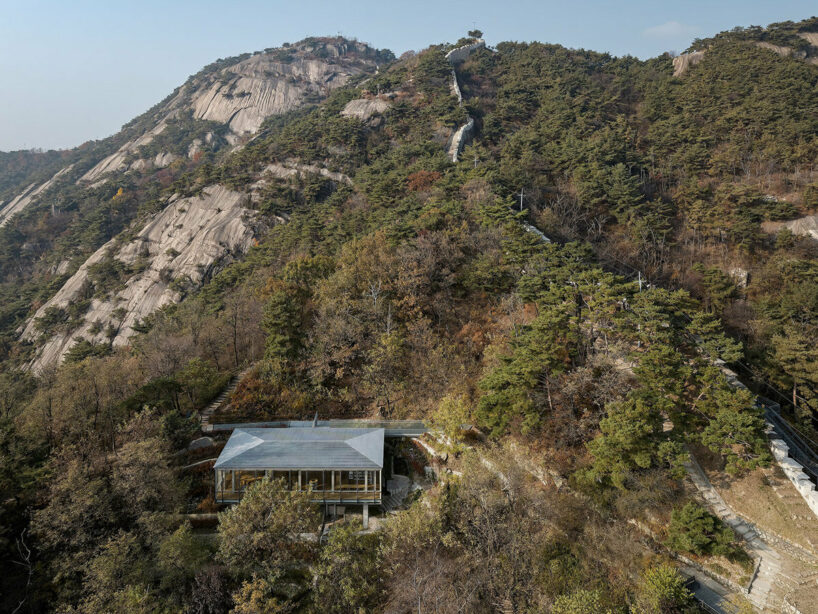
A former military barracks, or guard post, in Seoul’s Inwang Mountain forest has been renovated to become a modern retreat for the community. The project is the result of a collaboration between Korean studios Soltozibin Architects and SN Architecture, developed in response to the heritage of the area. In 1968, following an attack on the South Korean presidential office, heavily guarded military posts were established on Inwangsan and Bugaksan mountains, restricting public access to the area. Over time, many of these posts were deconstructed, with the area reopening to the public in 2018. The Inwang Guard Post Forest Retreat itself was one such post — a former military barrack hidden within the valley. As part of this regeneration project, three guard posts were preserved to serve as historical markers, while the remaining seventeen were deconstructed.
images © Kim Yongsoon
transforming a symbol of division
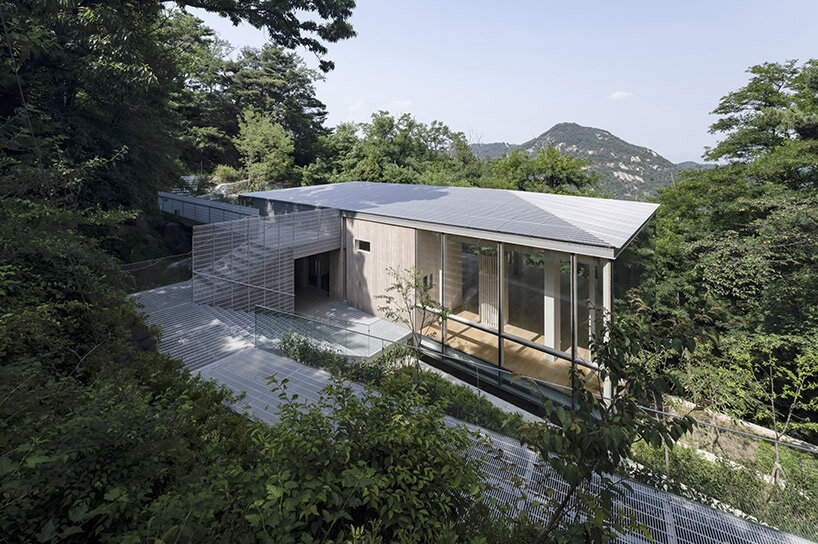
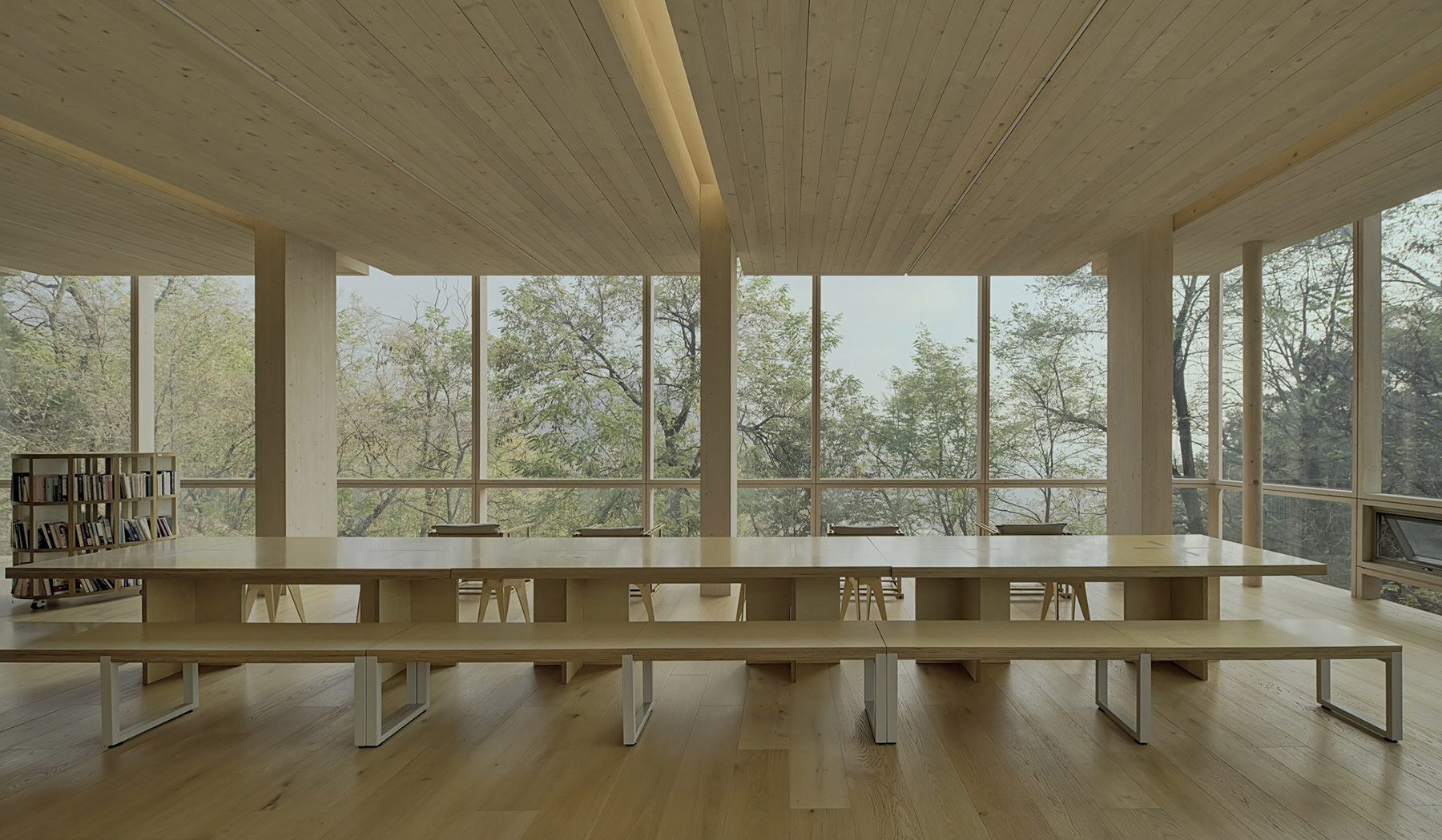
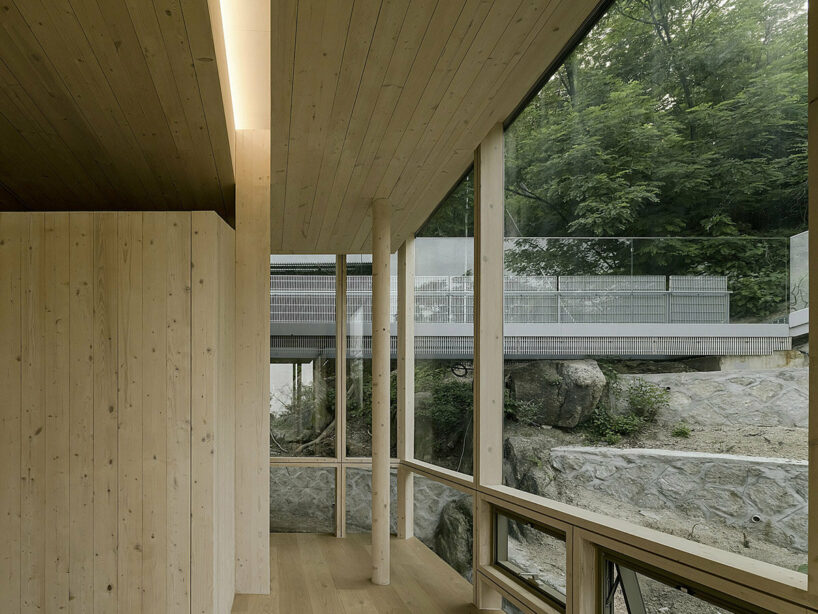
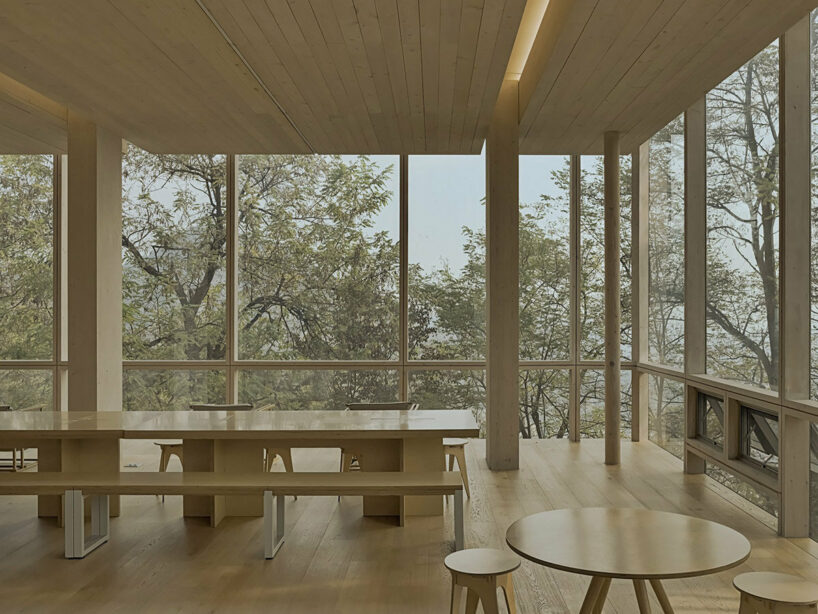
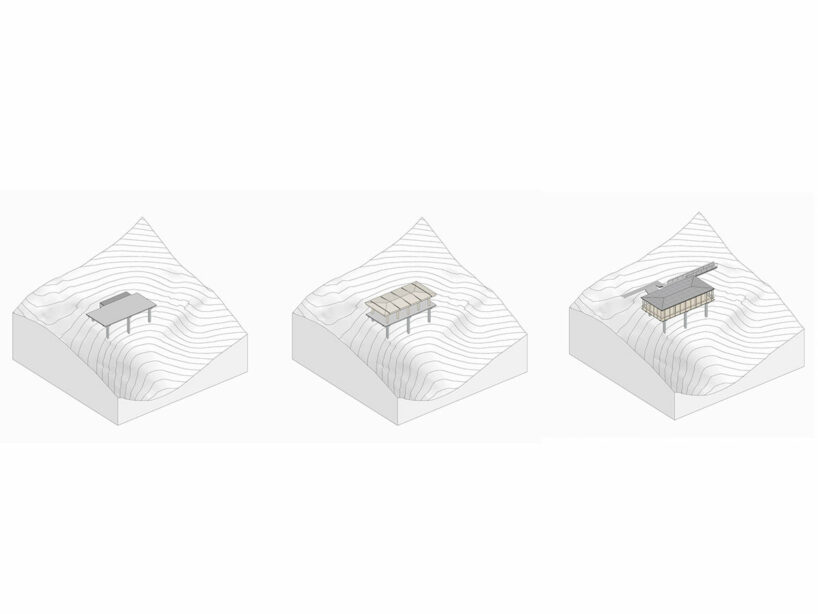
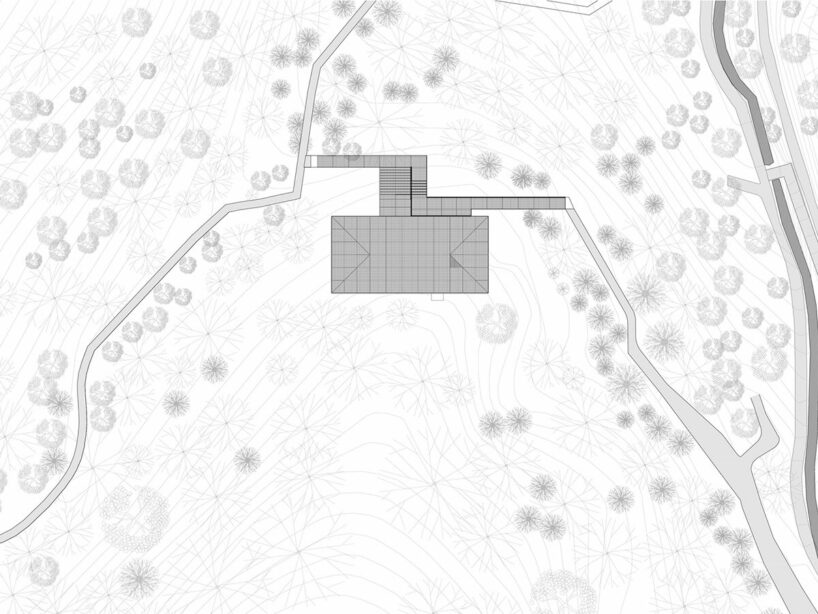
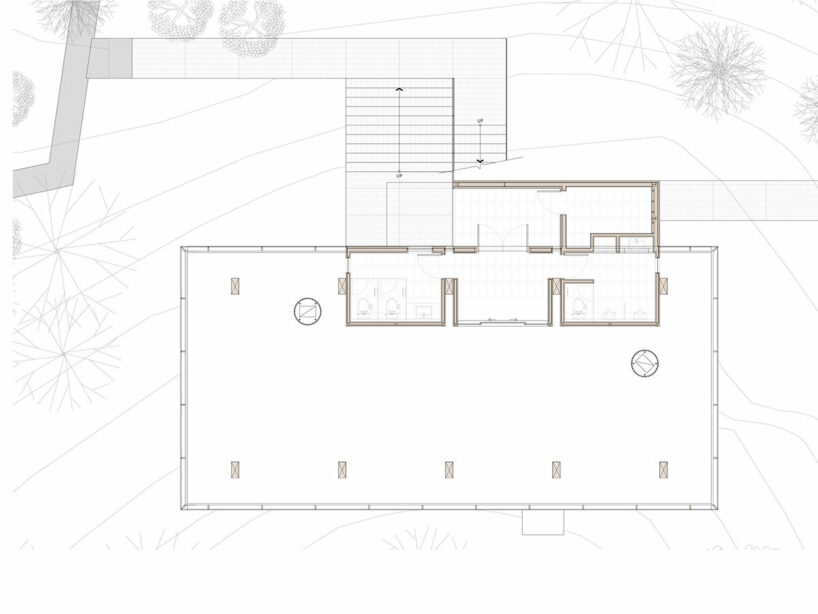
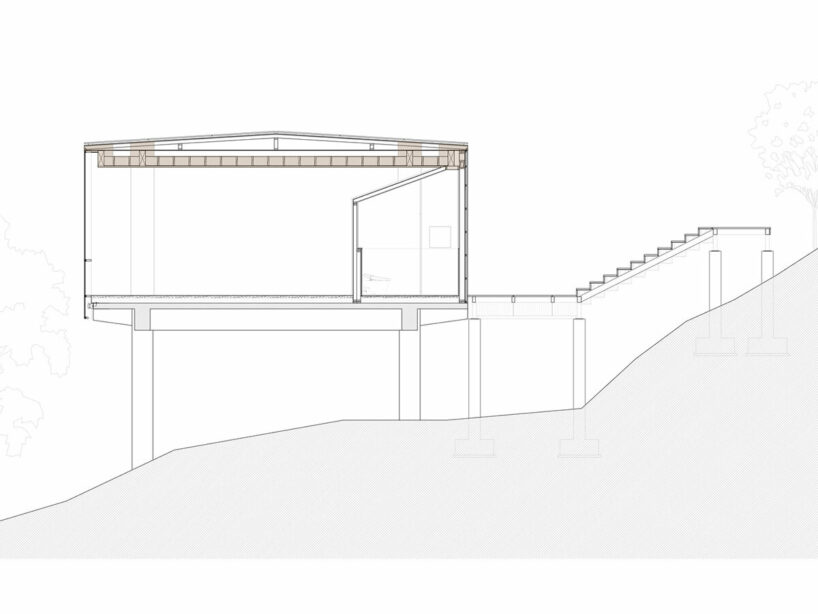
The original structure of the Inwang Guard Post Forest Retreat was built by Soltozibin Architects and SN Architecture using reinforced concrete pilotis and sandwich panels. The architects envisioned a dramatic transformation which involved dismantling the structure above the pilotis and creating a new space that fostered connection in this newly open era. This shift aimed to replace the previous symbol of restriction and hostility. Today, the retreat serves a dual purpose — offering shelter for hikers and a cultural hub for local groups. Functioning as a shelter, library, and hall, the new facility fosters harmony between the natural environment and the people who visit.
the mountains and the Han River shape the unique character of Seoul
modern timber construction in inwang forest
Traditional timber architecture relies on a ‘tectonic’ method. This involves assembling elements to create a three-dimensional structure. In Korean architecture, this typically translates to a framework of columns, beams, and rafters. The Inwang Guard Post Forest Retreat breaks away from this convention.
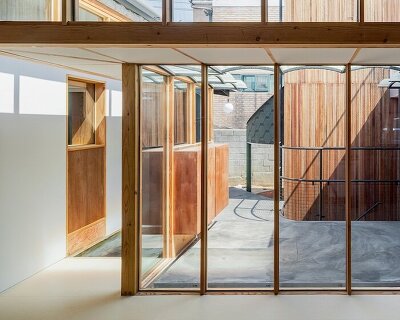
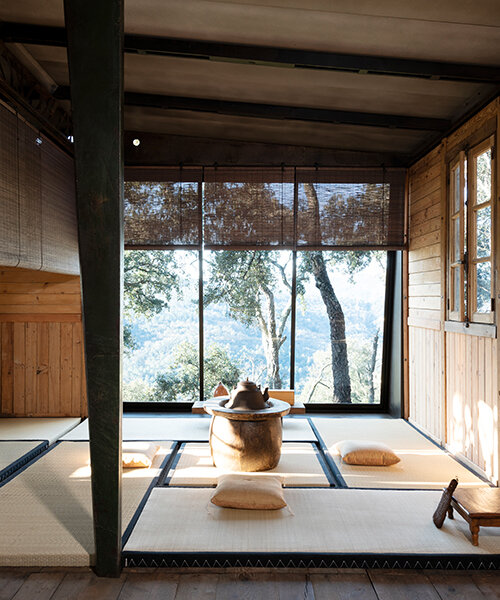
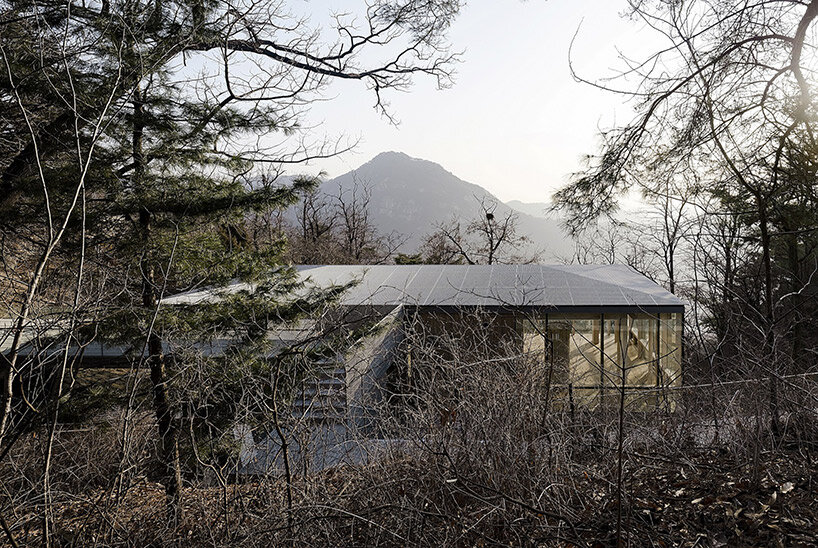
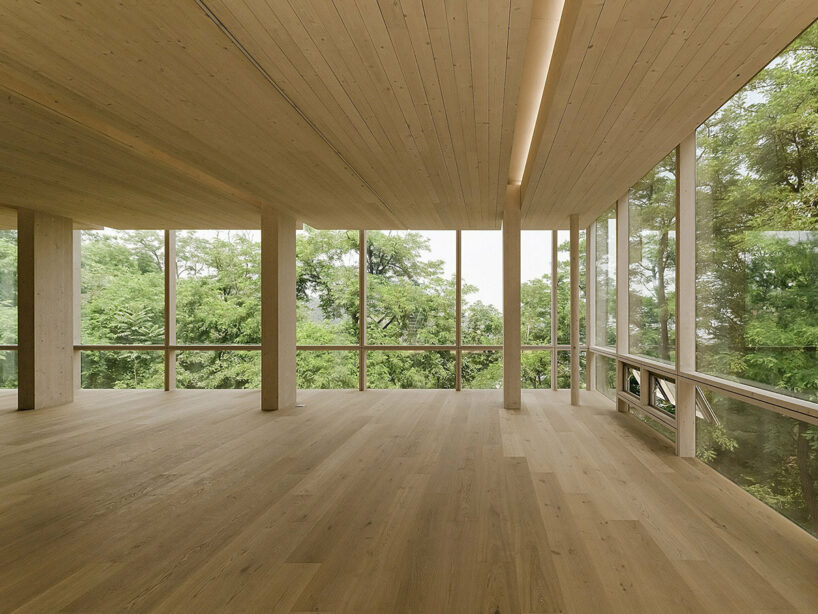
Instead, the design employs half-sized wooden columns positioned in front and behind large wooden panels. The space between the columns and panels is accentuated by indirect lighting, emphasizing the disconnection. These heavyweight panels appear to defy gravity, floating between the columns rather than resting upon them. This innovative approach transforms the perception of wood, imbuing it with a sense of lightness rather than its usual heaviness. This architectural paradox mirrors the situation of the middle class and Wihang literature – a powerful voice emerging from an unexpected place.
the new community center was once a restricted military outpost
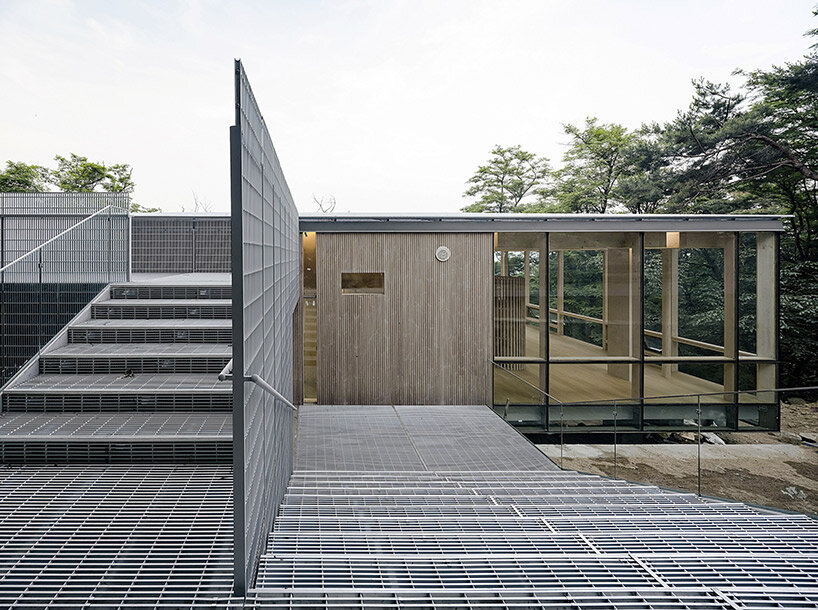
now a public space, the retreat offers shelter for hikers, a library, and a cultural venue 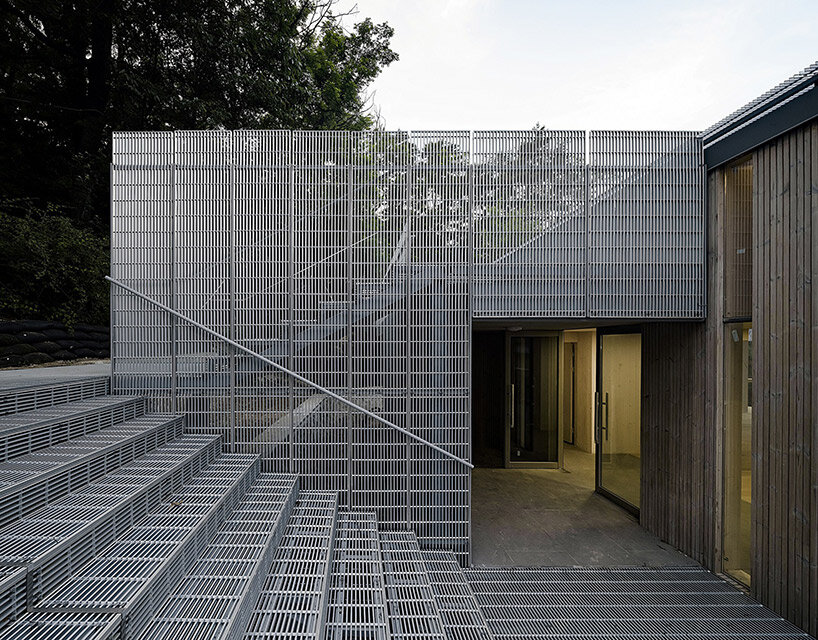 the project is part of a larger regeneration project
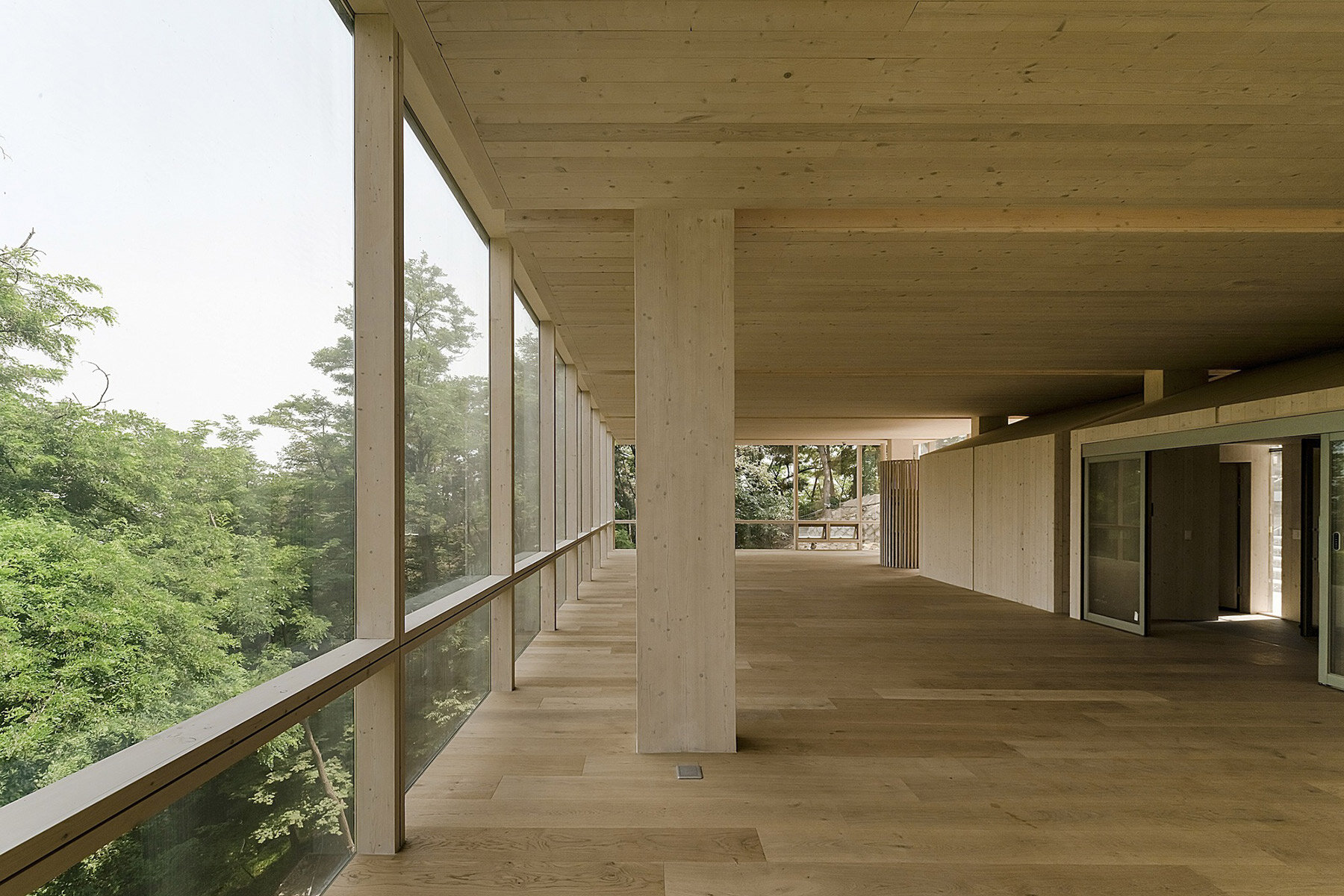
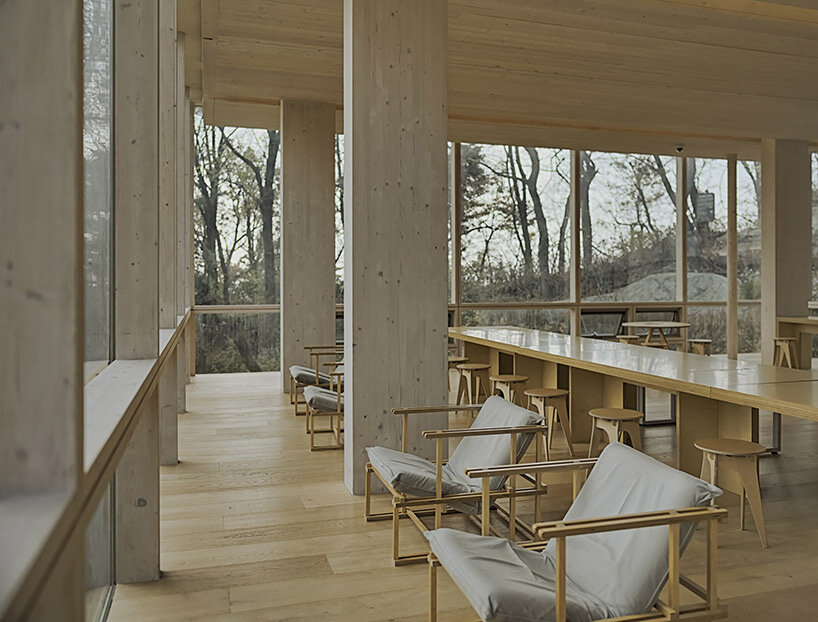
half-sized wooden columns and large panels create a sense of disconnection from the city
1/9
project info:
project title: Inwang Guard Post Forest Retreat
architecture: Soltozibin Architects, SN Architecture | @soltozibin_architects @sn_architecture
location: Jongno-gu, South Korea
area: 237 square meters
completion: 2020
photography: © Kim Yongsoon
lead architects: Cho Namho, Kim Sangeun, Kim Eunjin
structural engineer: Supia Construction
mechanical engineer: Jinwon Technology
electrical engineer: Elim Technology
construction: Supia Construction, Az Construction Engineering
shop
your own online design shop — no sales commission collected