soma: multiple natures fibrous tower for taiwan tower competition
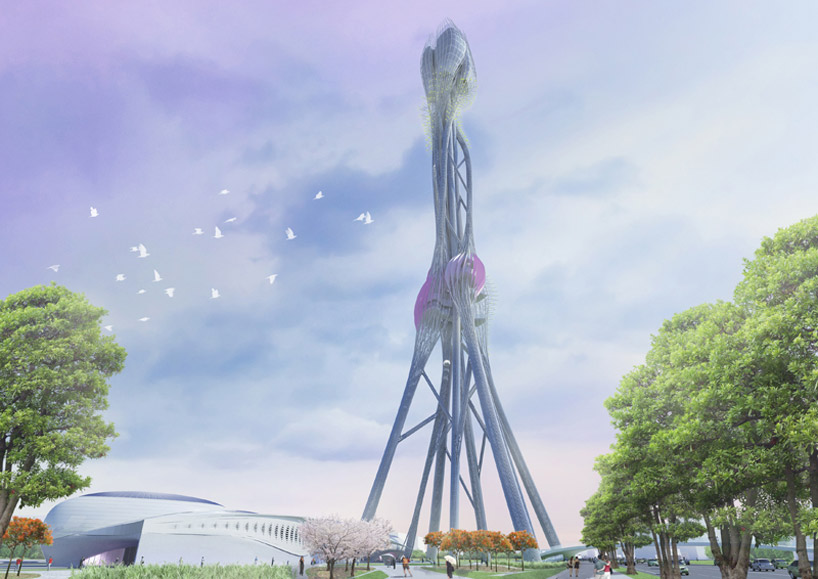
the observation tower and city museum are based on structural methods from cells and plant-life to create a self-sufficient zone in taiwan.
prefer designboom on google[FEATURED]
‘multiple natures – fibrous tower’ for the taiwan tower competition by soma, taichung, taiwan all image © soma
austrian architecture firm soma was runner-up in the open international taiwan tower complex competition.
‘multiple natures – fibrous tower’ was their submission for the observation tower and taichung city museum, taiwan.
‘multiple natures – fibrous tower’ was their submission for the observation tower and taichung city museum, taiwan.
the proposal was strongly based on architectural forms that learn from nature and are based on the underlying principles
of the structures of plant and animal life.
of the structures of plant and animal life.
the layout of the buildings and park follow the pattern of cells for the built and circulation areas. to protect the visitors
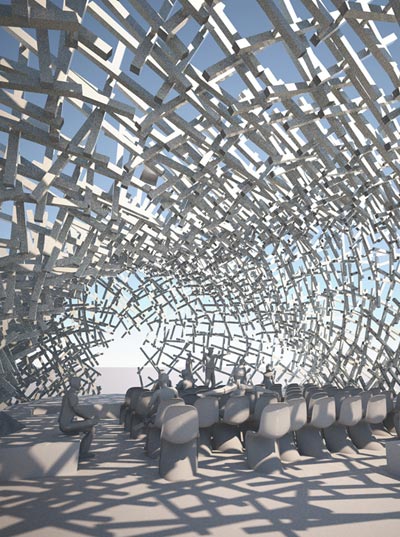
as they near the structure biomimetic lamellas overhead adapt to weather conditions by opening and closing,
much like the mechanisms of flowers.
as they near the structure biomimetic lamellas overhead adapt to weather conditions by opening and closing,
much like the mechanisms of flowers.
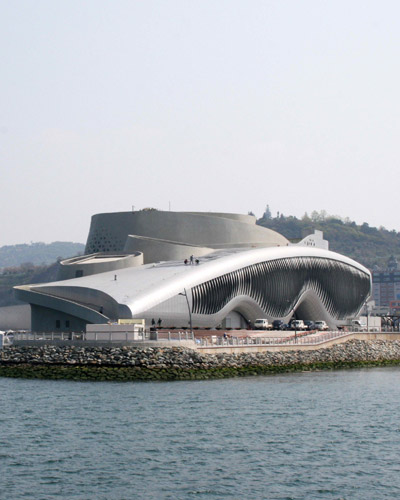
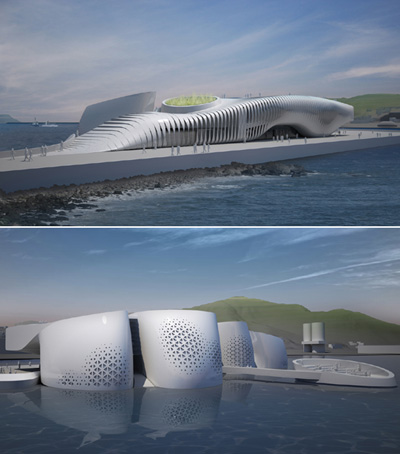
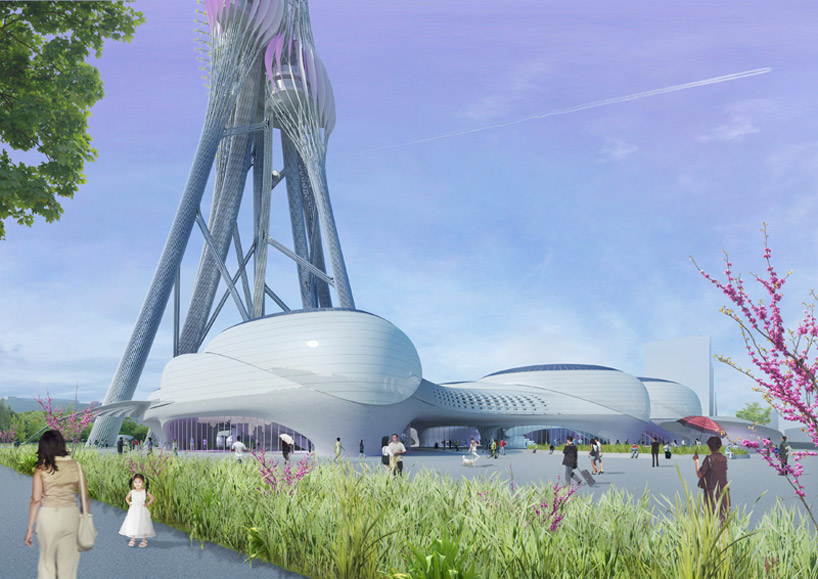 view of the taichung city museum from the surrounding park
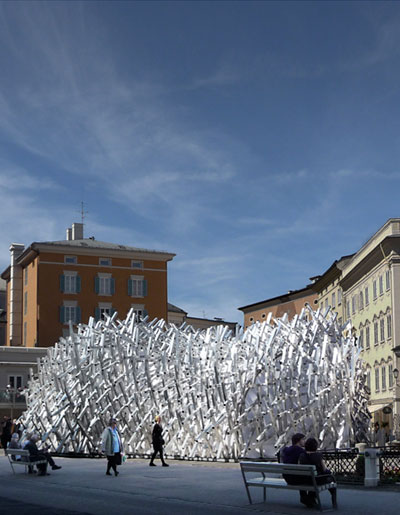
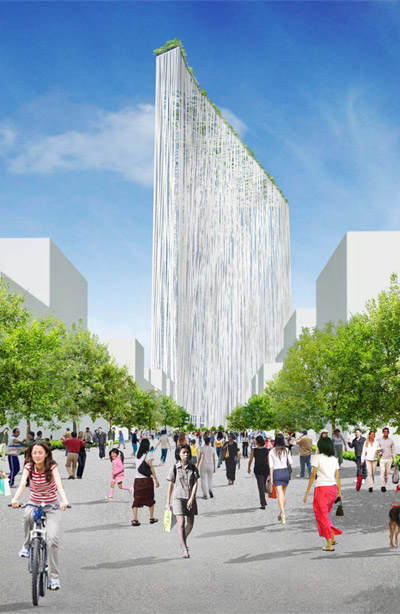
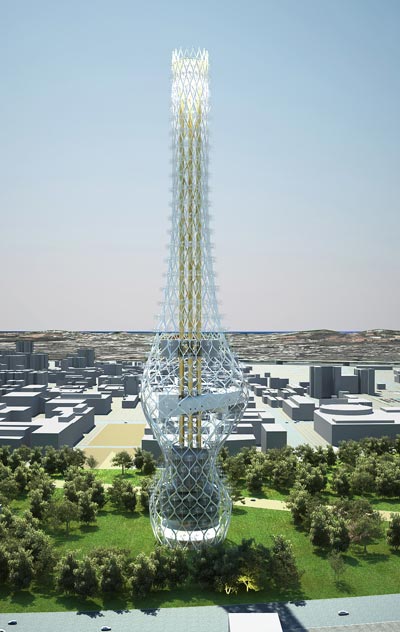
the observation tower uses genetic algorithms found in natural growth processes and applies them to digital models to organize the bundles of tubes and sub-tubes that create façade of the undulating building. the final result was derived by calculating and comparing more than 2.5 million alternative solutions. for stability, the eight tower legs are connected by diagonal members. the tubes have varying diameters ranging from 2 – 5.5 meters and are the main building elements. to make them easier to build, the hollow forms dissolve into bundles and regroup, resulting in an aerodynamic waved silhouette that maximizes the wind load resistance. much like the fibers of trees or the growth of muscles, the funnels adapt to each segment’s individual stress. in addition, the bundled ducts are made of locally available materials and easy to construct on the ground.
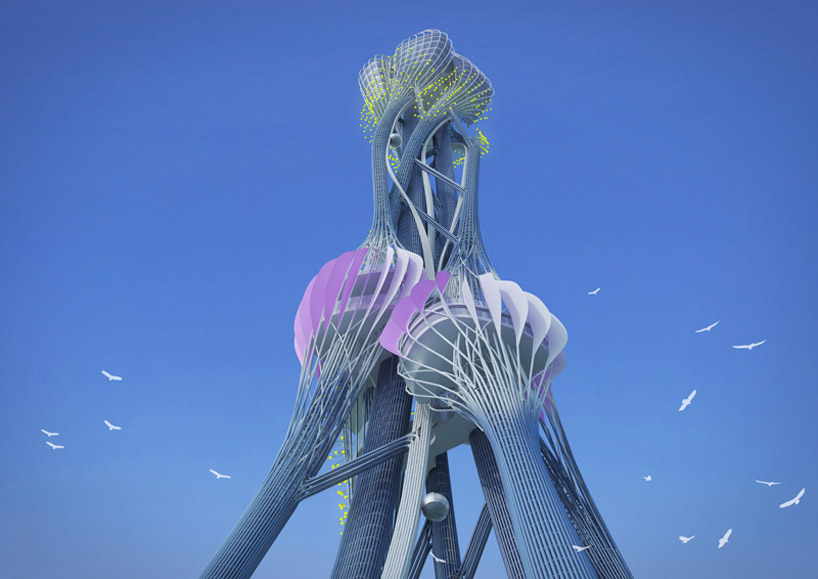 the tower as seen from below
an example of a self-sufficient system, the zero carbon tower generates energy on site with photovoltaic cells integrated into the roof areas of the museum. semi-transparent modules are used in locations where daylight is needed for the spaces below, while simultaneously controlling solar heat gain. the skin of the tower is also a vertical solar absorber with 25, 000 square meters of exterior surface covered with the flexible PV modules. this allows all electricity needed to be produced on-site. outside of the technologically advanced systems, low-tech strategies are also used to produce comfortable climate zones. shading trees, cooling pods and pavilions with water curtains produce a microclimate for the visitors. 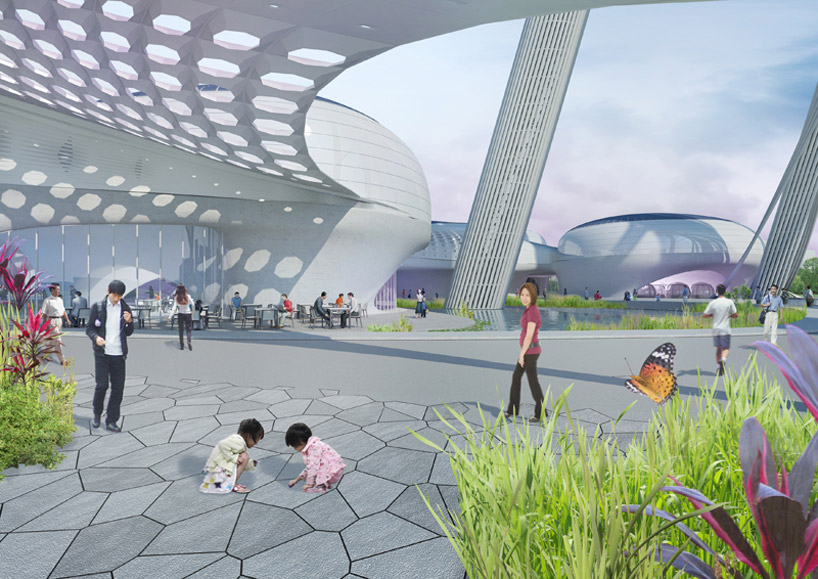 visitors under the adapting biomimetic lamellas
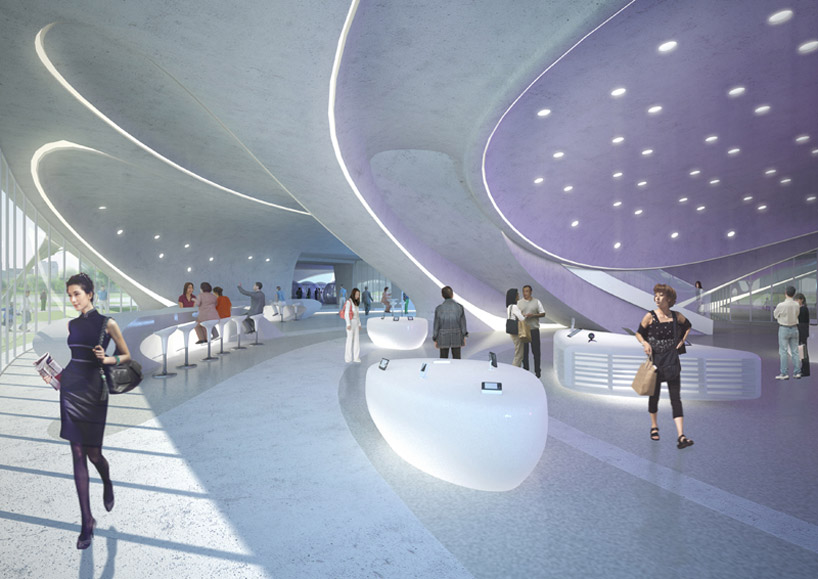 main lobby
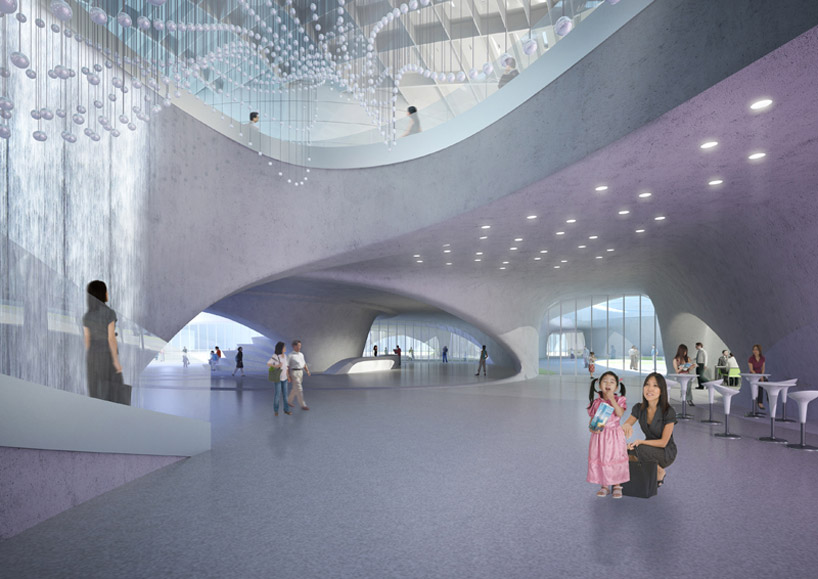 lobby of museum
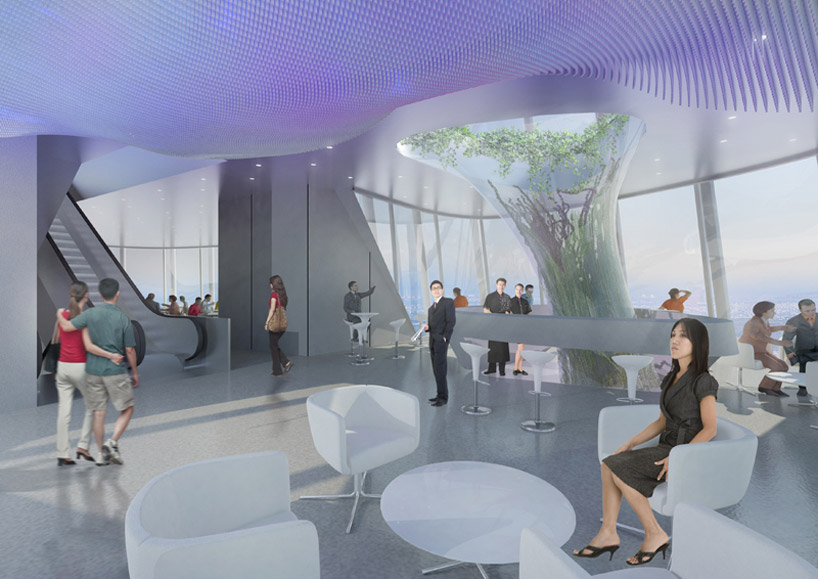 observatory
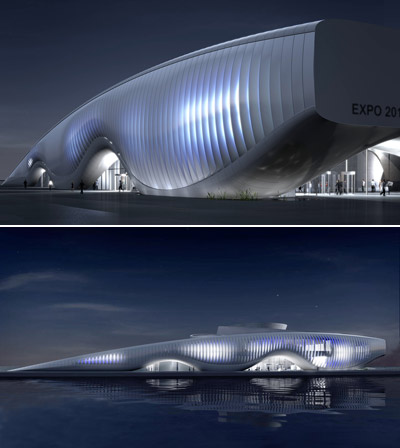
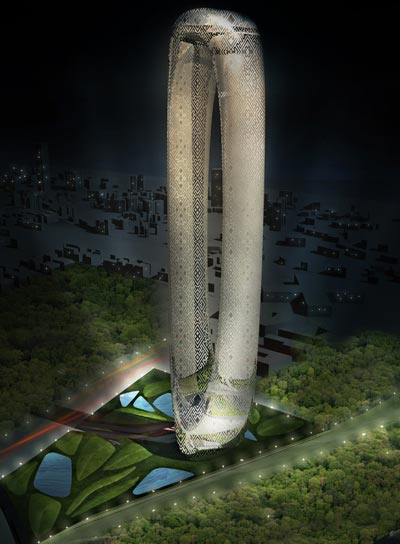
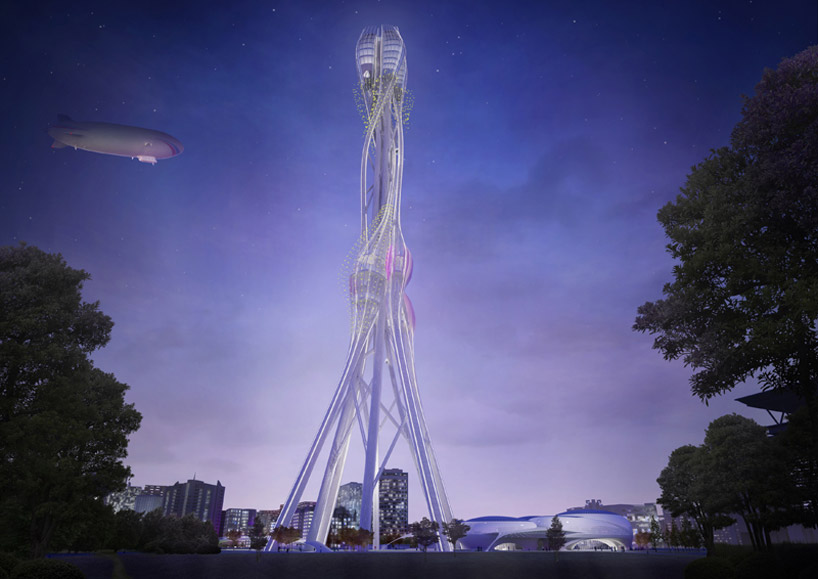 night view of building
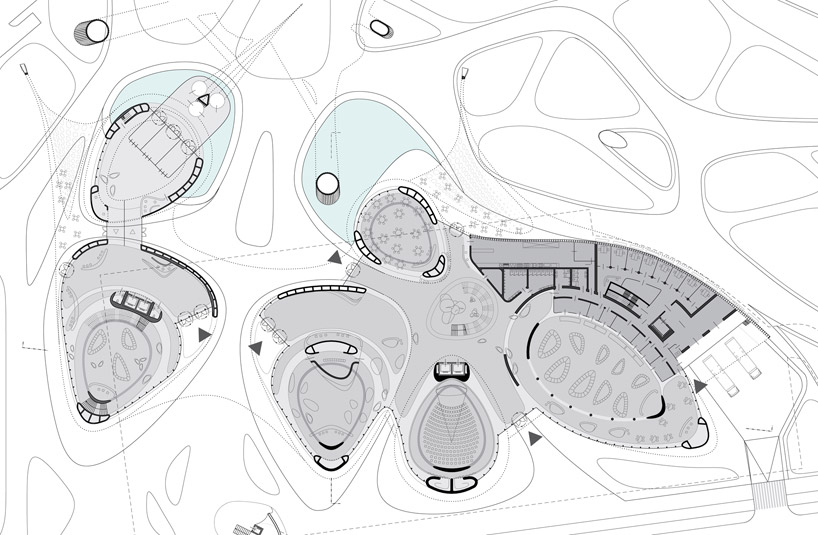 floor plan / level 0
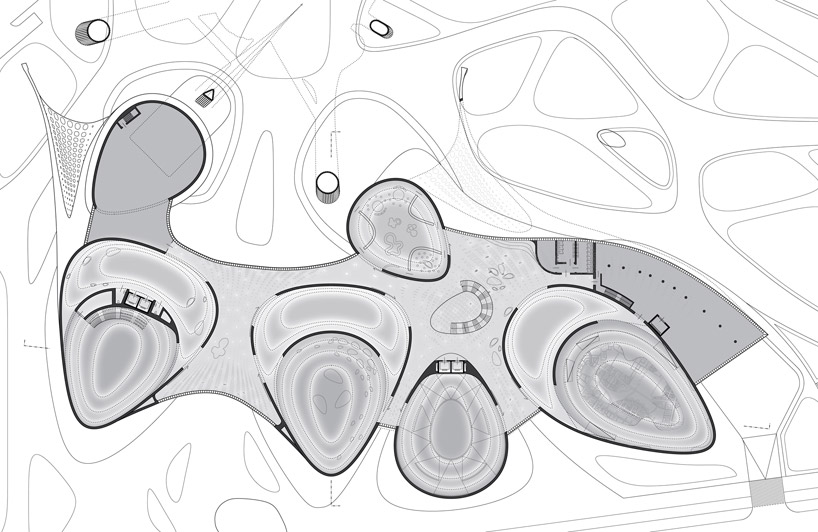 floor plan / level 1
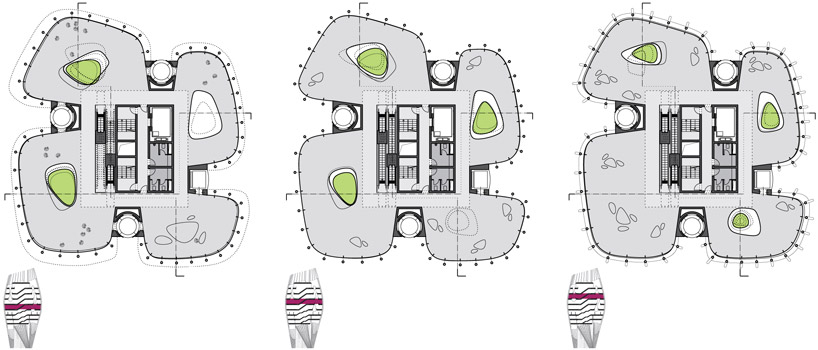 floor plan / tower levels
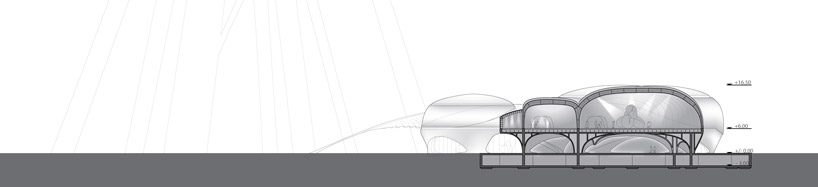 section
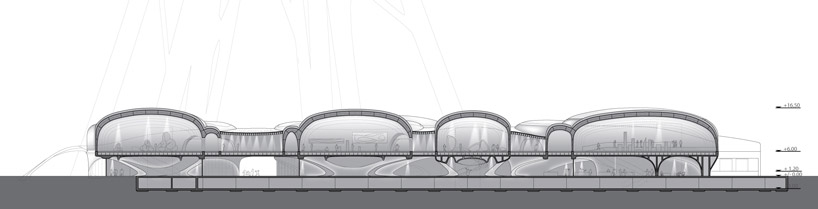 section
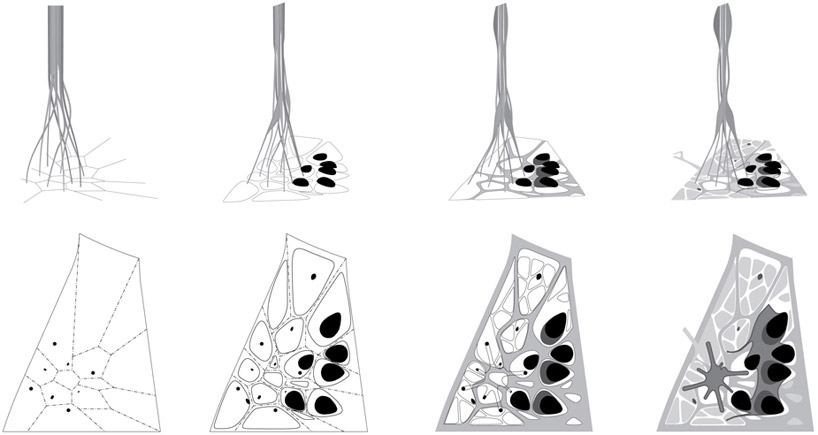 development diagrams
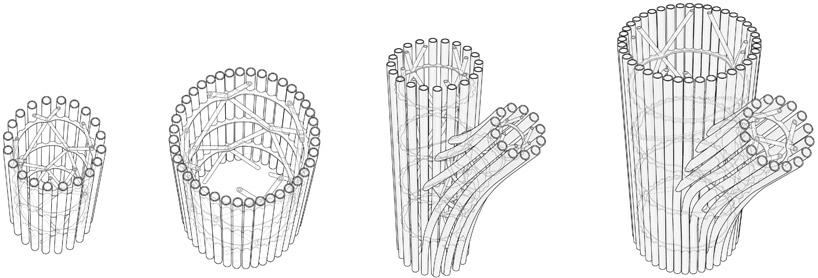 structural diagram of bundled tubes
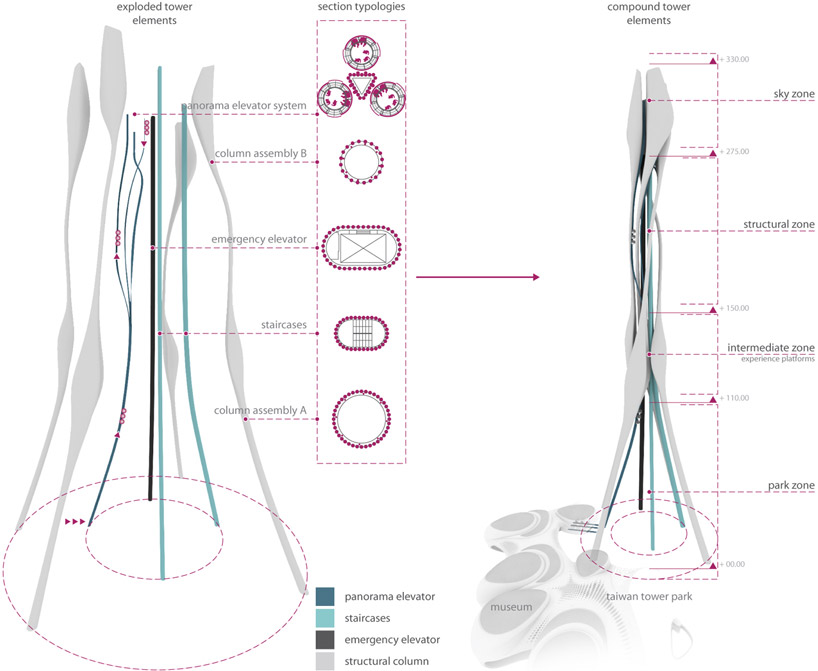 structural diagrams
project info:
project name: multiple natures – fibrous tower client: taichung city government location: taichung, taiwan use: observation tower, taichung city museum, park site area: 44.000 square meters building area: 10.000 square meters gross floor area: 27.000 square meters building coverage ratio: 23% structure: steel max. height: 330 meters landscape area: 34.000 square meters parking lot: 254cars local partner: RLA architects, taipei structural engineer: bollingergrohmannschneider zt gmbh, vienna climate: transsolar, stuttgart lighting: aglicht, bonn/germany landscape: realgrün, munich facades: emmer pfenninger, münchenstein/switzerland kinetic elements: knippershelbig, stuttgart

shop
your own online design shop — no sales commission collected