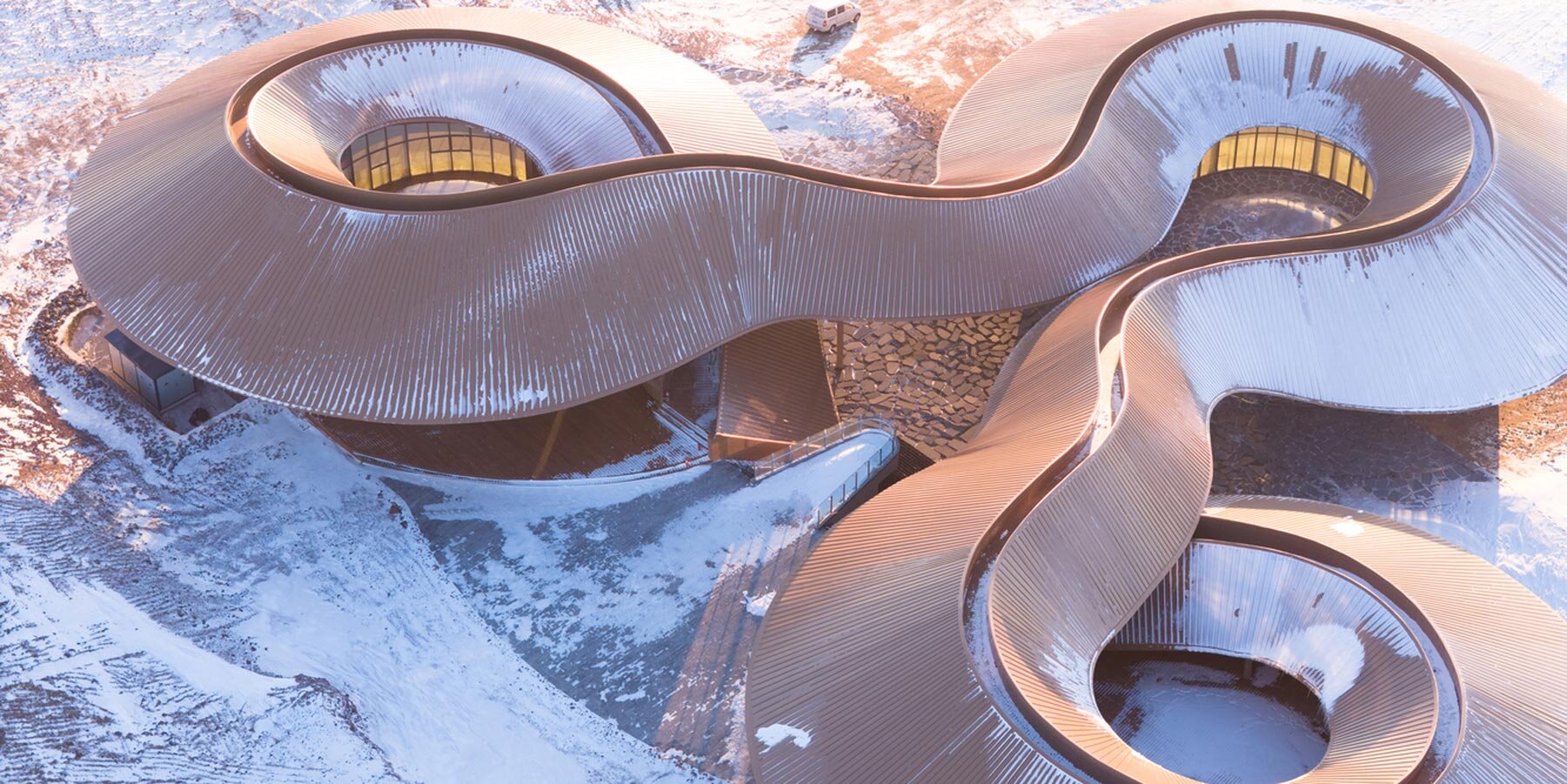
PLAT ASIA’s Visitor Center Within the Baiyinkulun Steppe Volcano
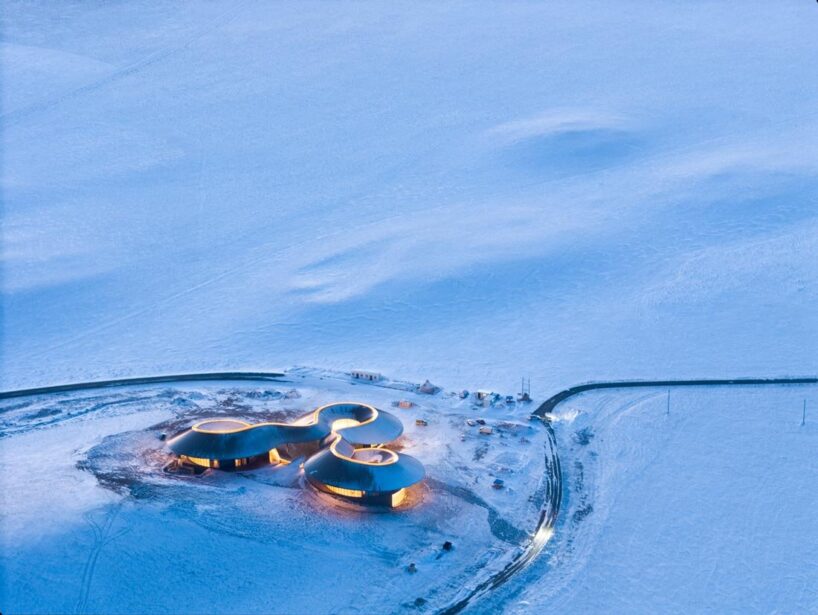
The Volcano-In Visitor Center by PLAT ASIA is conceived as an architectural intervention that develops in close relationship with its geological context. The project is based on the idea of co-growth between architecture and the volcanic cone, establishing a spatial dialogue with the surrounding steppe and emphasizing movement around the volcano as a primary experiential component. The building is designed to respond to environmental conditions while reinforcing the physical and perceptual connection between people and the volcanic landscape.
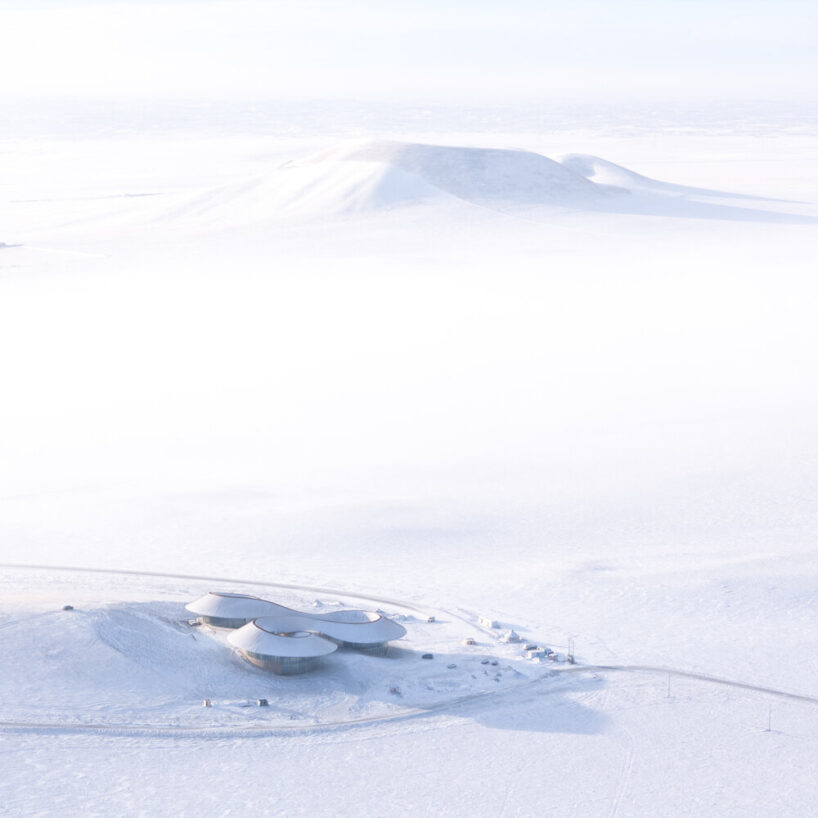
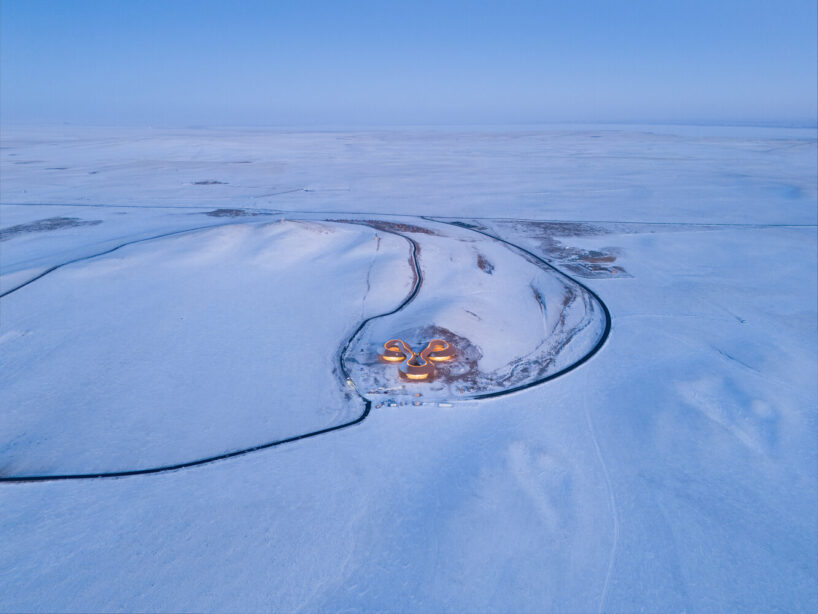
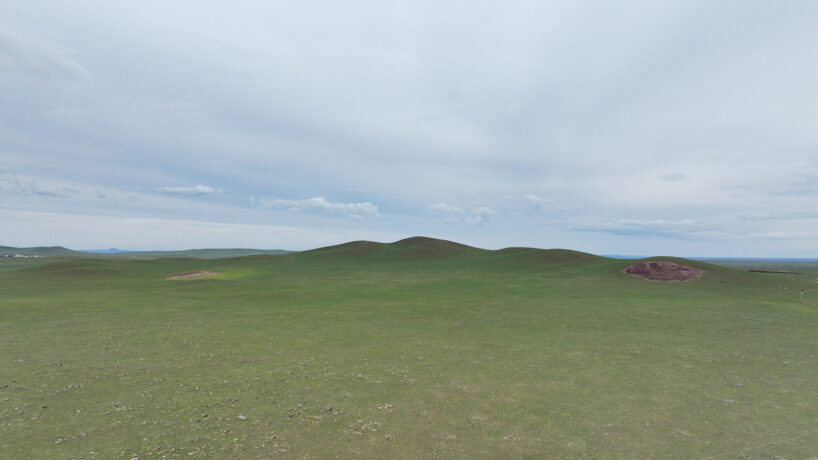
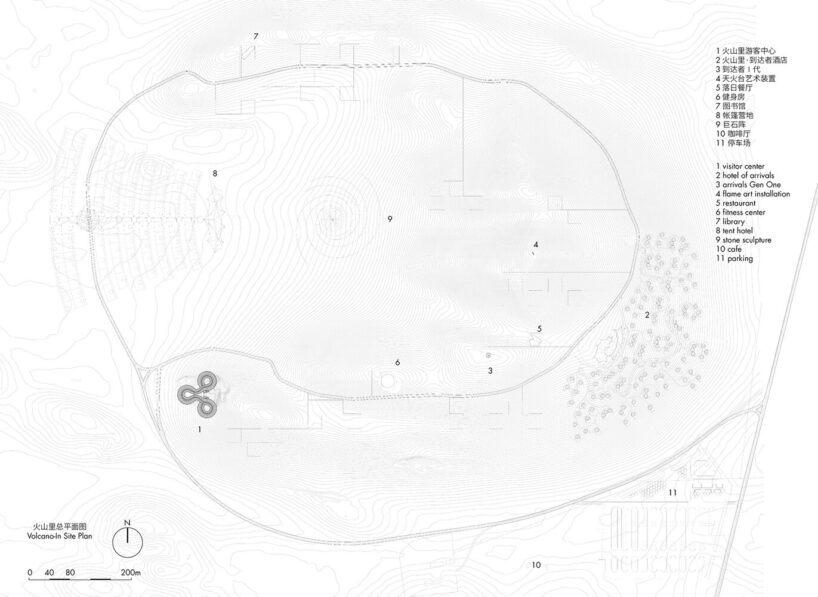
PLAT ASIA completed the first phase of the Baiyinkulun Steppe & Volcano Tourism Resort in December 2025, which includes the Volcano-In Visitor Center and the Volcano-In Hotel of Arrivals. The project is located within a C-shaped extinct volcano formed approximately 150,000 years ago during the Pleistocene Epoch. It is part of the Baiyinkulun Steppe & Volcano Area in China, which contains 108 volcanoes and is situated approximately 380 kilometers north of Tian’anmen Square. The site lies on the southern edge of the Xilingol Steppe, bordered by the Otindag Sandy Land to the south, Dali Lake to the east, the Yanshan Mountains and the Greater Khingan Range farther east, and the Baiyinkulun Relict Gull Nature Reserve to the west. The surrounding environment includes a range of ecosystems such as wetlands, forests, lakes, steppes, sandy lands, and seasonal snowfields.
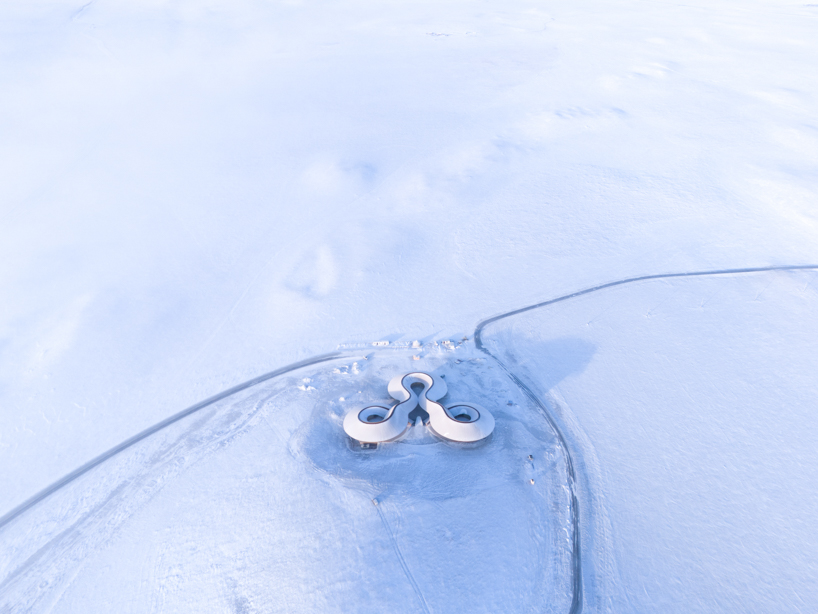
all images by Arch-Exist
Volcano-In Visitor Center Follows the Geometry of the terrain
PLAT ASIA began working in the Baiyinkulun Steppe & Volcano Area following an initial site survey in July 2021. During this process, the design team identified a large excavated area located west of the volcanic cone, which local herders indicated had remained exposed for approximately a decade. The decision was made to locate the visitor center on this disturbed ground, using architecture as a means to limit further erosion and stabilize the terrain. The project adopts a strategy of integrating the building with the volcanic form, positioning the visitor center as part of a broader effort to protect the site and support ecological recovery.
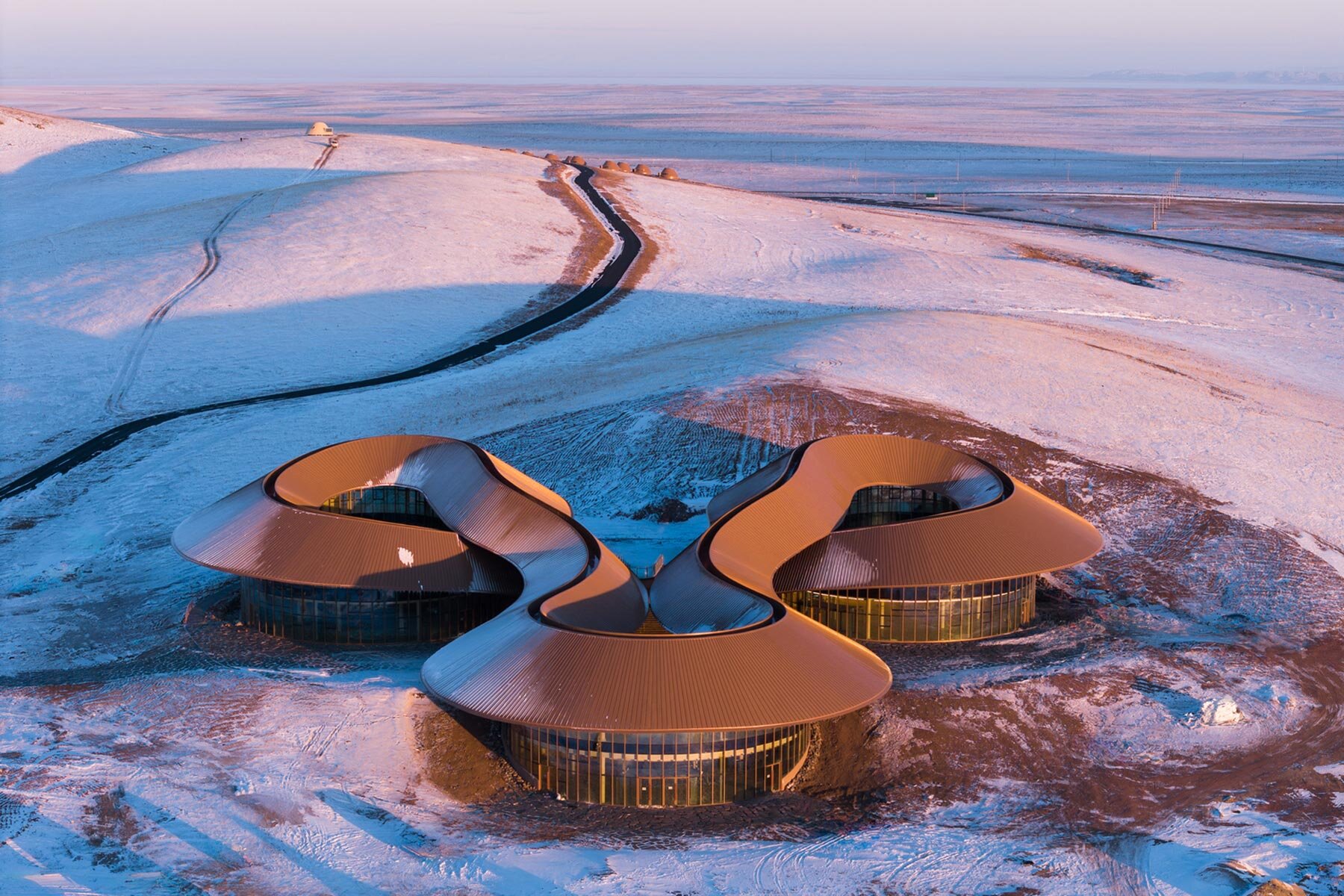
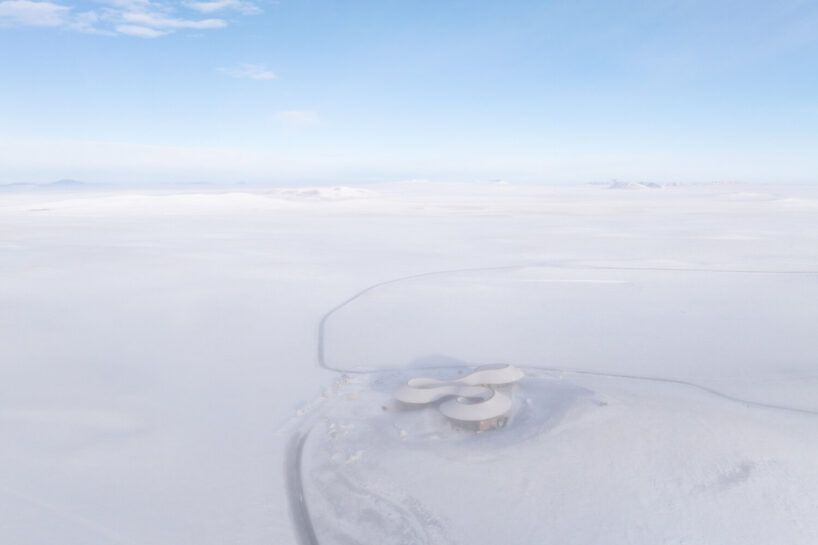
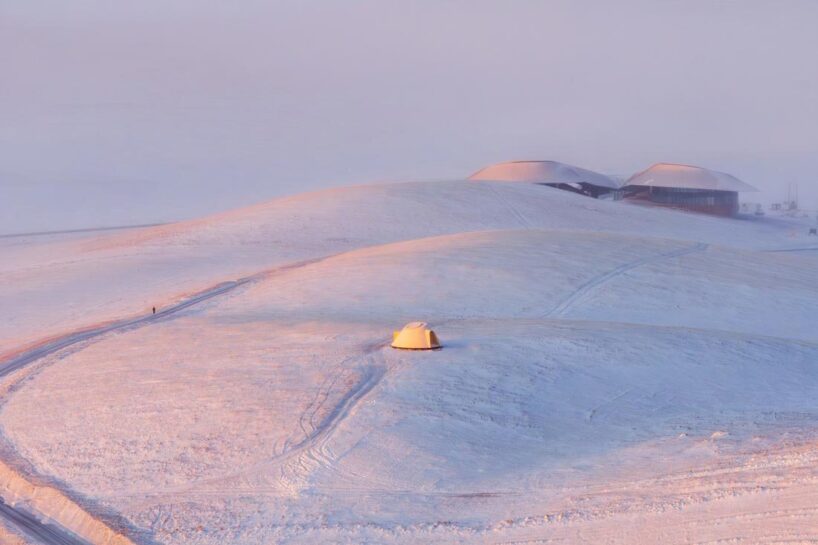
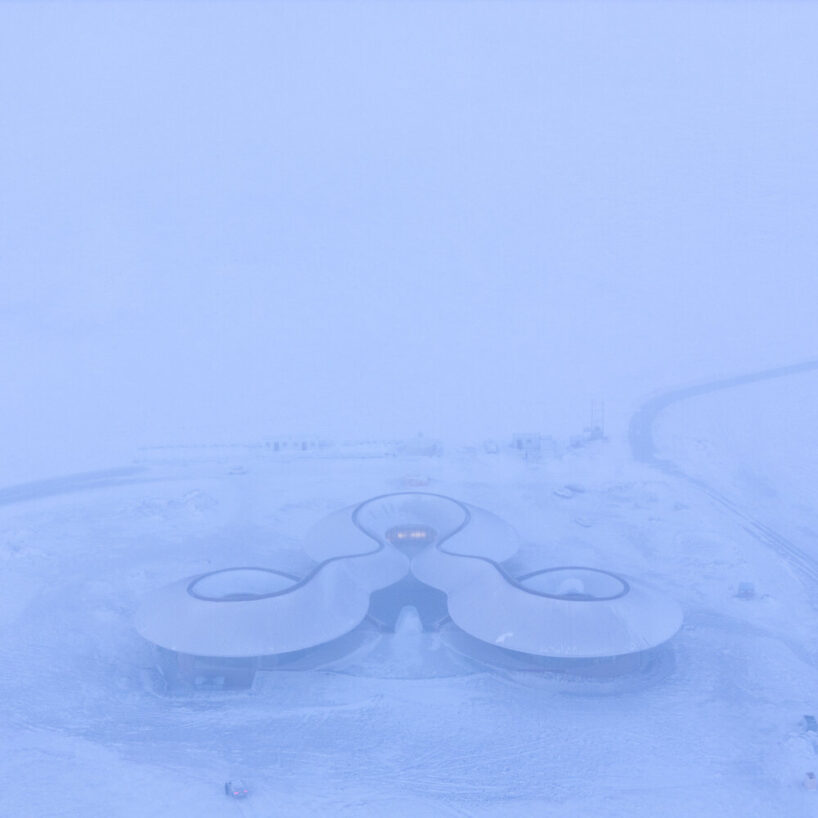
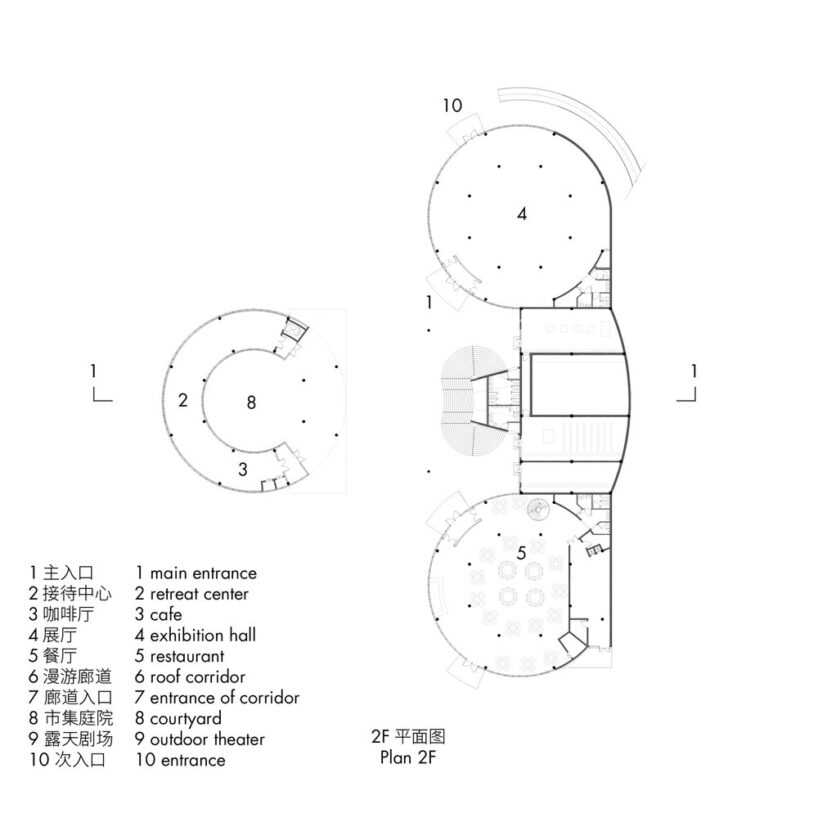
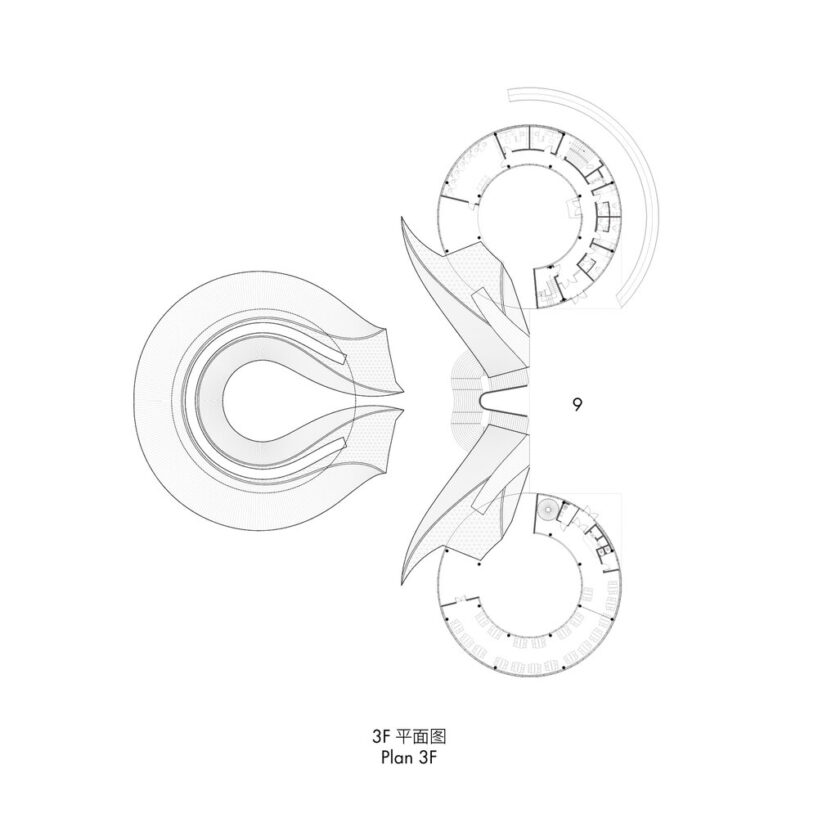
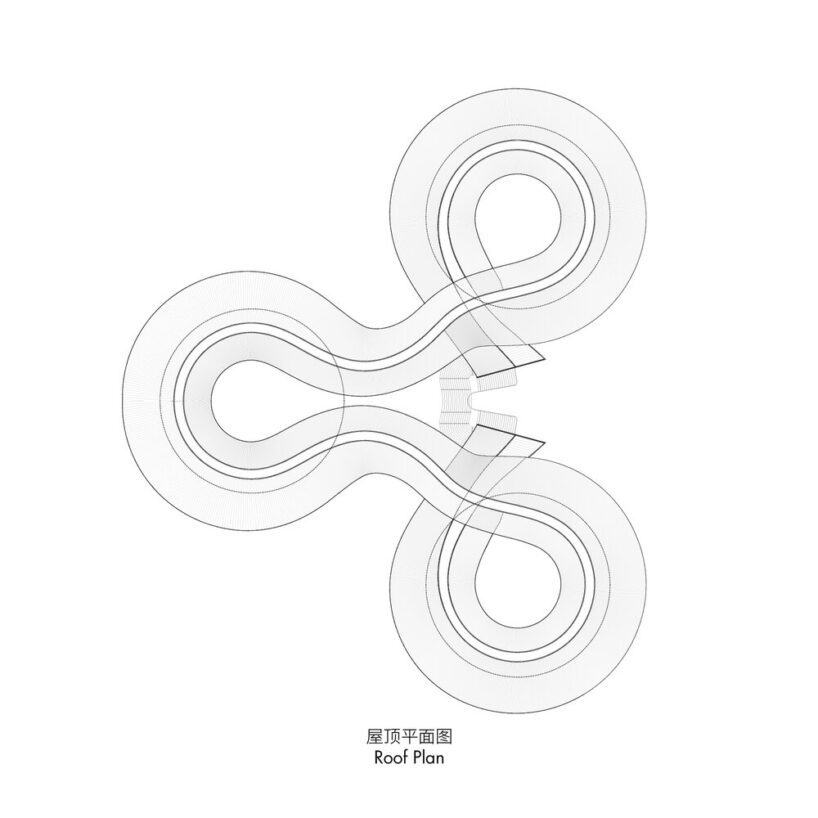
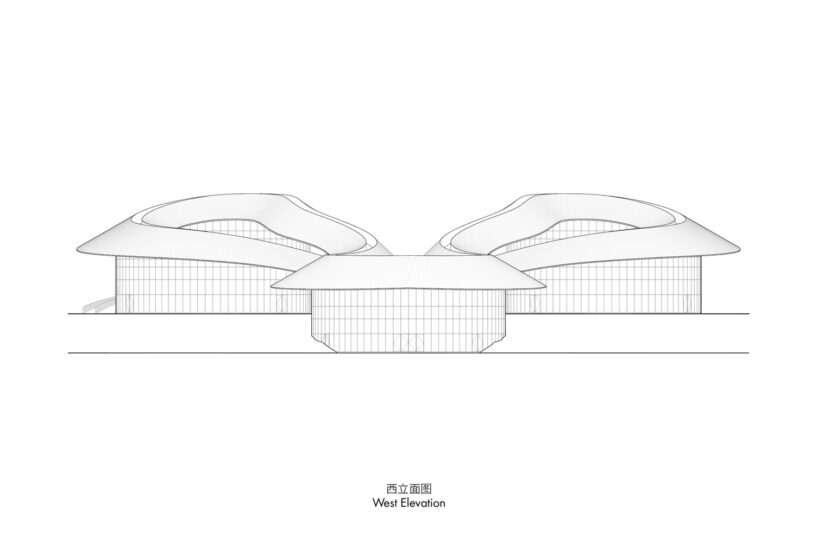
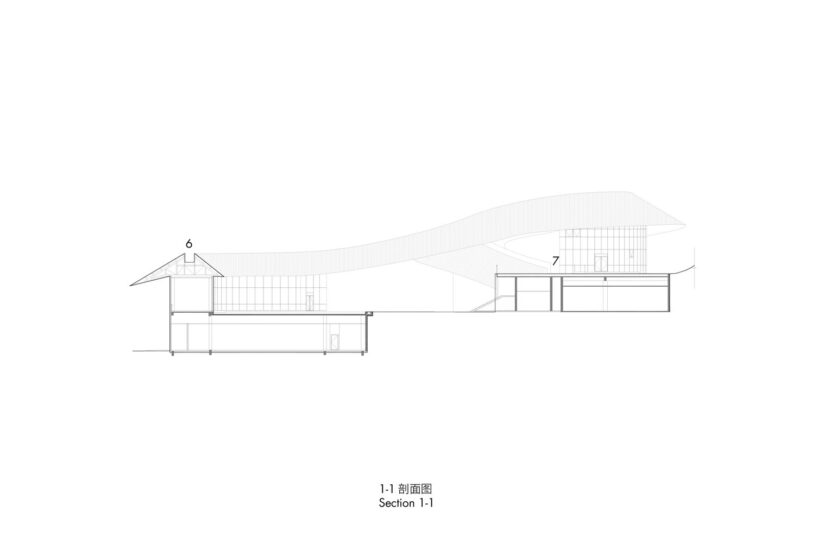
The design concept is based on positioning the volcano as the dominant formal reference. The architecture follows the existing topography through a curved roof structure and three circular volumes arranged at varying elevations. Together, these elements outline a conical silhouette that echoes the geometry of the volcanic landform. A continuous, winding corridor connects the three volumes along a 274-meter path, forming a loop that allows visitors to circulate around the volcanic ash ring. This route frames views toward the surrounding steppe, sandy land, lake, and nearby volcanoes. From the roof corridor, inward-facing spaces define a crater-like enclosure that houses the programmatic functions, including visitor services, a café-bookstore, exhibition spaces, administrative offices, and a restaurant.
Outdoor spaces are integrated into the architectural layout. The visitor service courtyard is designed to accommodate temporary events such as art fairs, while the open square between the exhibition and restaurant volumes functions as an outdoor theater. Eco-bleachers embedded along the eastern slope provide seating oriented toward the roof structure and the wider volcanic landscape.
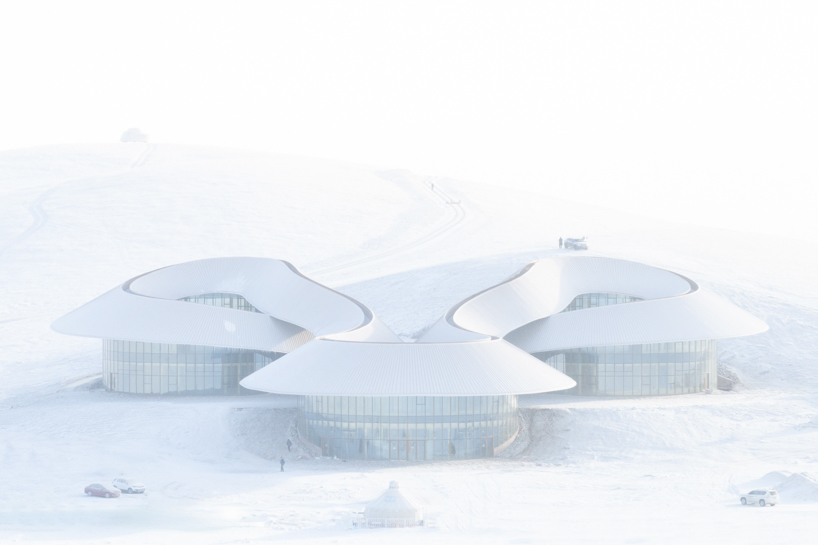
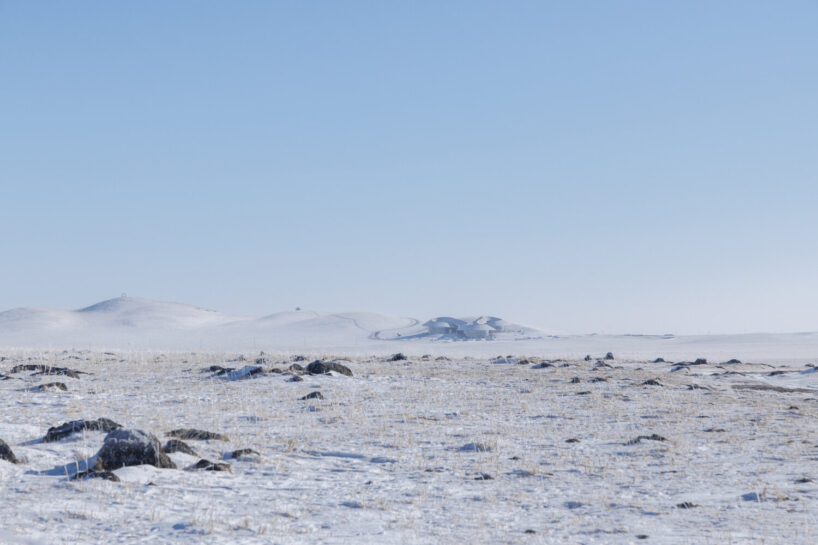
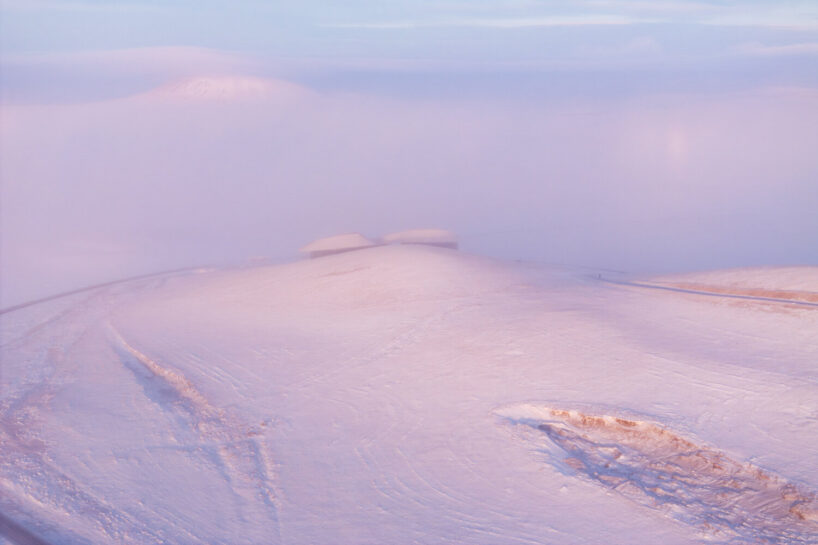
the Volcano-In Visitor Center is embedded within the geological structure of an extinct volcanic cone
local Materials visually merge the center with volcanic ground
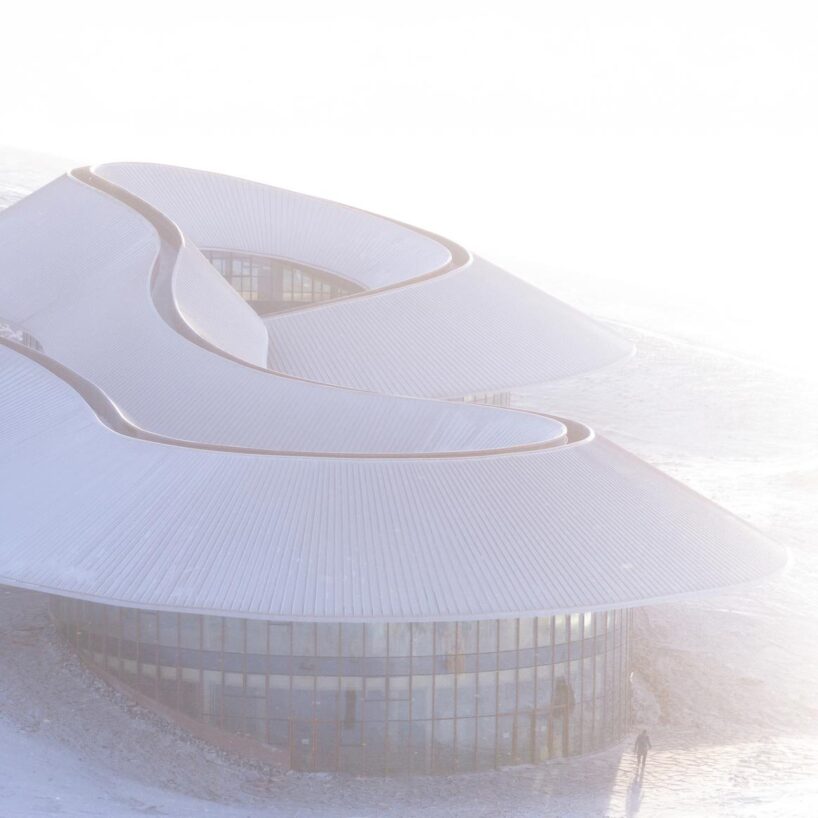
The Baiyinkulun region experiences a temperate continental climate, with strong winds and frequent snowdrifts during winter and spring. To address these conditions, the building adopts a curved profile that reduces wind pressure and shear forces. Extended roof eaves provide protection from snow accumulation, shelter outdoor courtyards, and frame views of the surrounding landscape. Glass curtain walls reflect the volcanic terrain while allowing visual continuity between interior and exterior spaces.
Cold temperatures present an additional challenge, with winter lows in Xilinhot reaching –43°C. The building envelope incorporates weather-resistant metal panel cladding to improve thermal performance and maintain interior comfort. In line with a low-intervention approach, locally sourced volcanic stone is used throughout the site. Natural stone slabs, laid at a depth of approximately 5 centimeters, define pathways and public squares, while weathering steel platforms are embedded into the terrain. These elements allow the architecture to visually and materially integrate with the volcanic ground over time.
Through its form, circulation strategy, and material choices, the Volcano-In Visitor Center establishes a spatial framework that responds to geological conditions, climate, and landscape. The project positions architecture as an extension of the volcanic environment, supporting public use while maintaining a restrained physical footprint within the site.
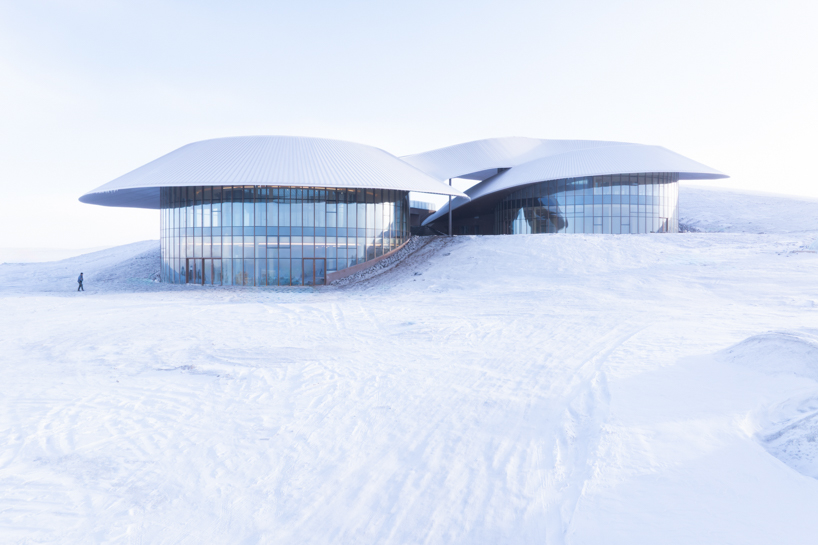
the architecture develops through a strategy of co-growth with the volcanic landscape
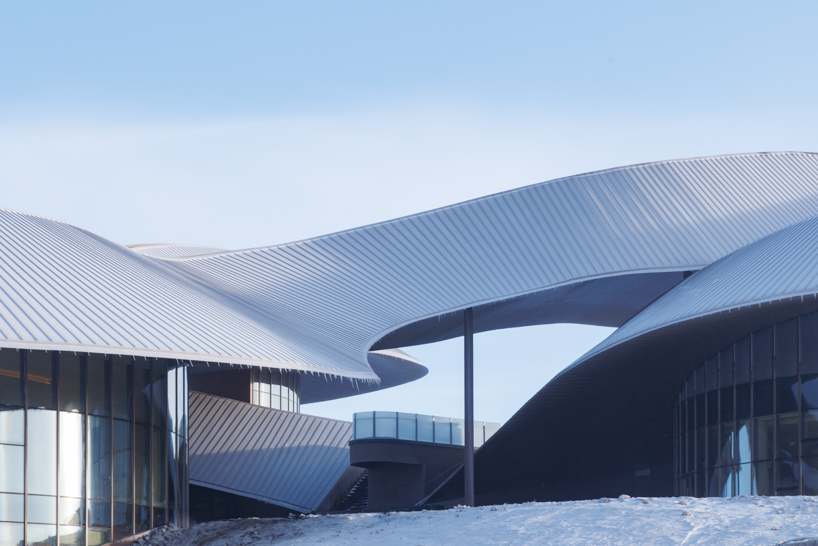
glass curtain walls reflect the terrain while maintaining visual continuity
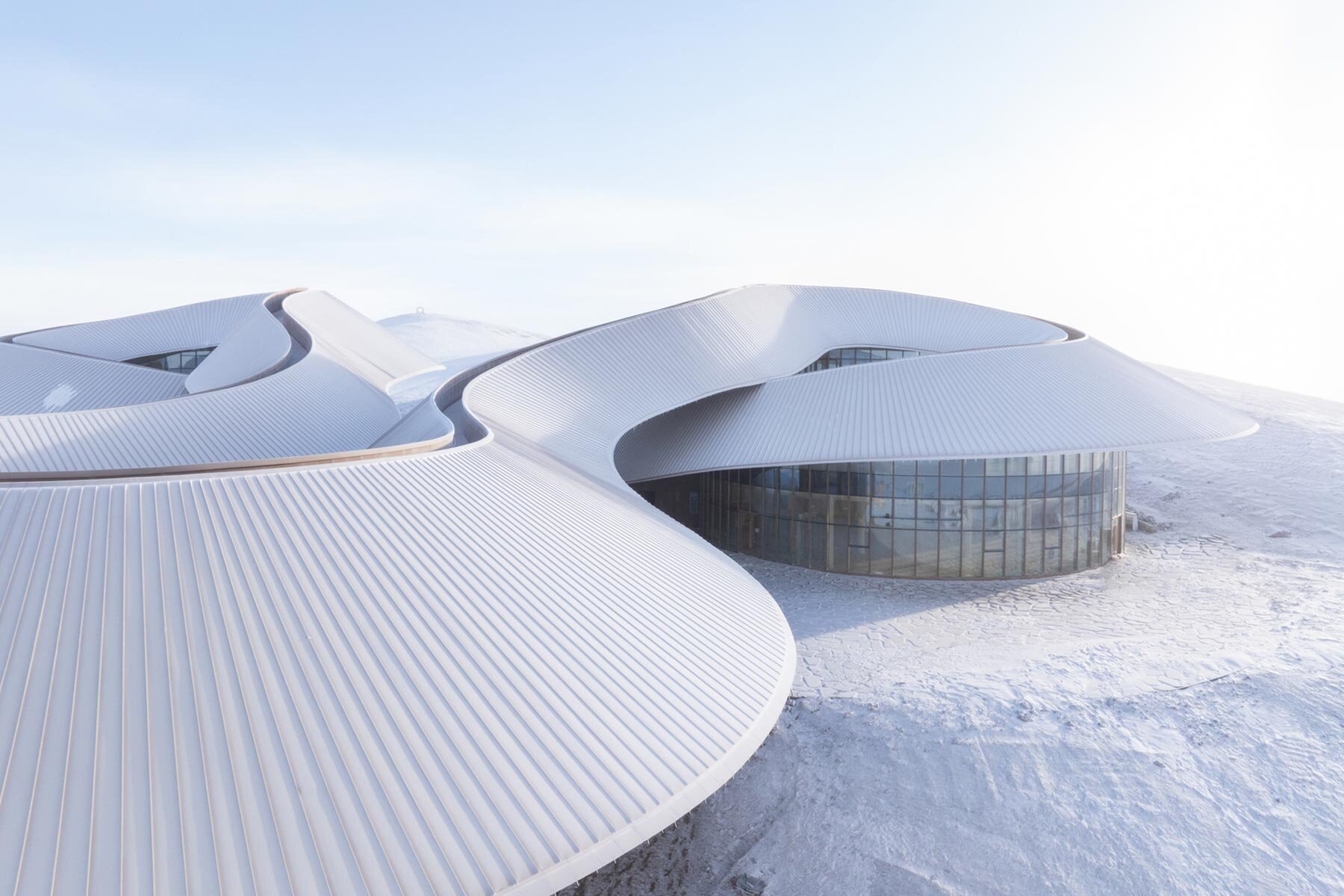
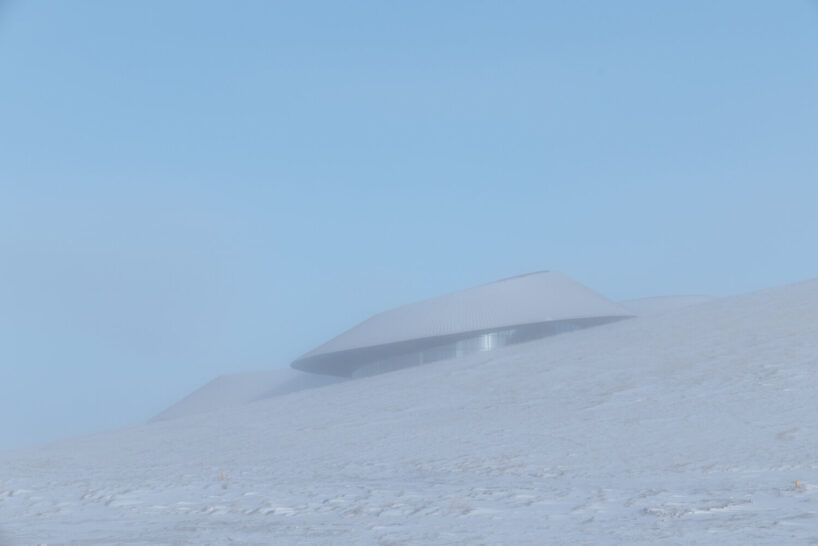
curved building forms follow the geometry of the volcanic terrain
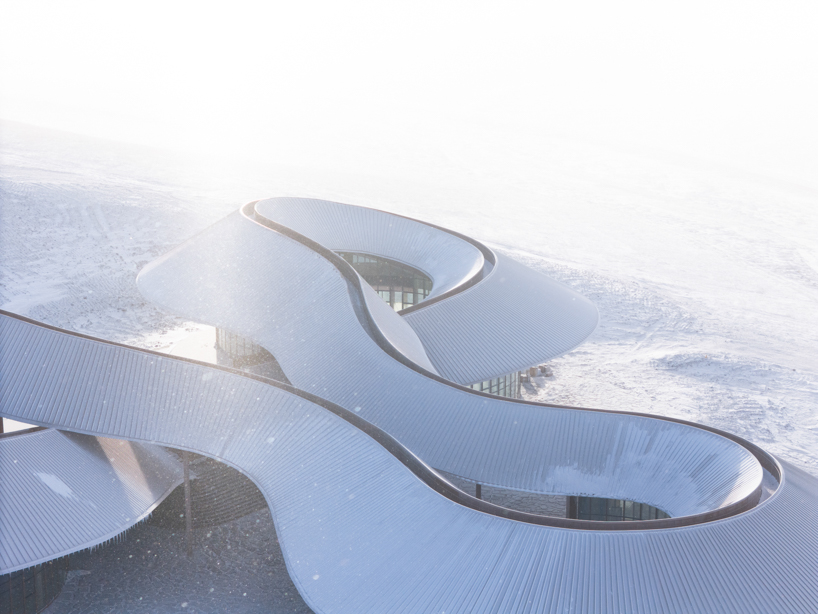
the project emphasizes movement around the volcano as a primary spatial experience
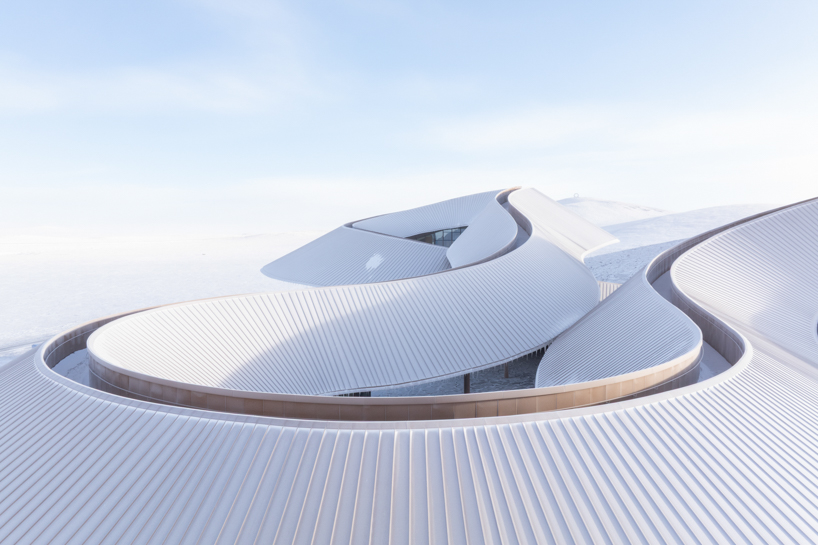
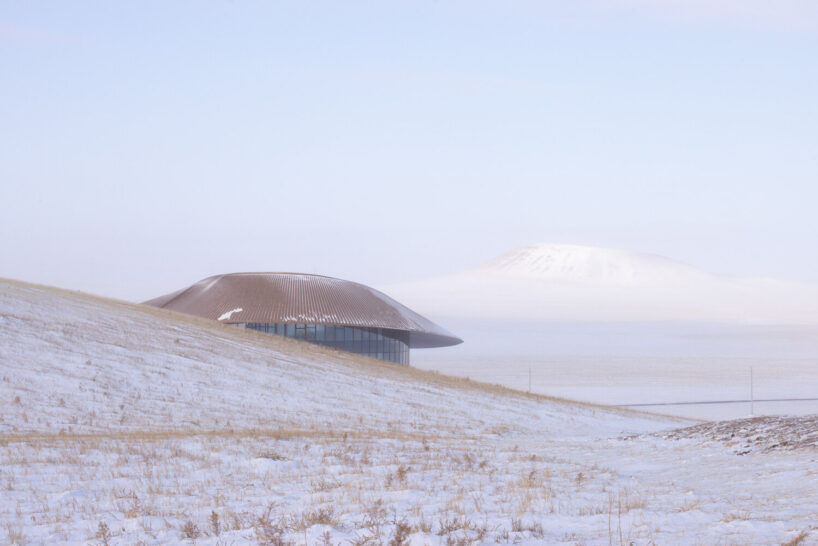
the building sits on the southern edge of the Xilingol Steppe in northern China
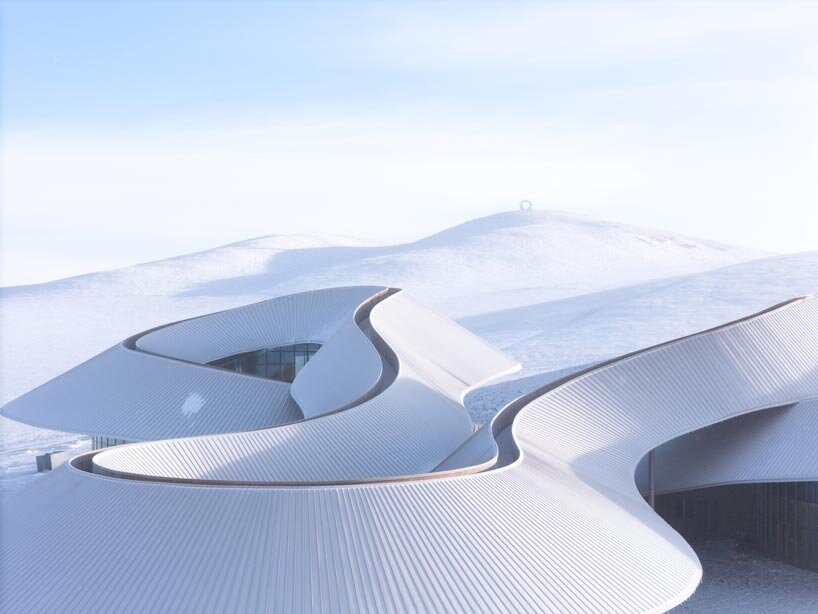
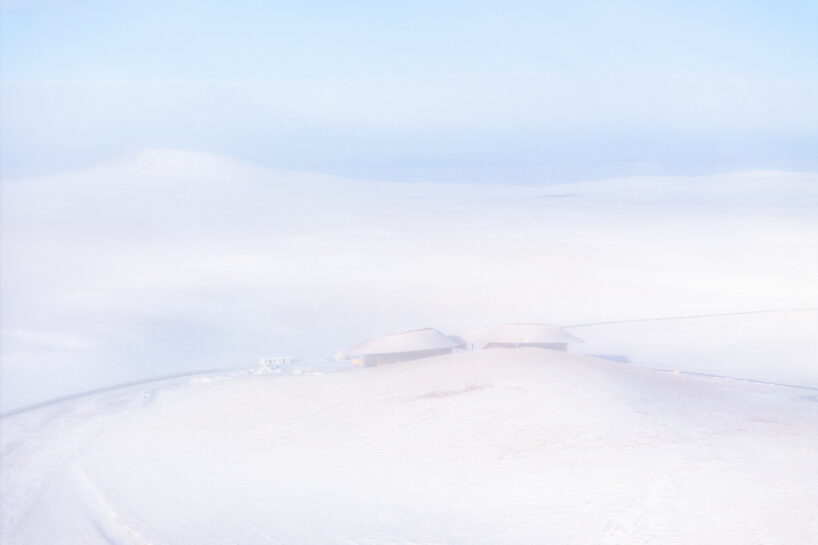
the design responds to a temperate continental climate with strong winds and snowdrifts
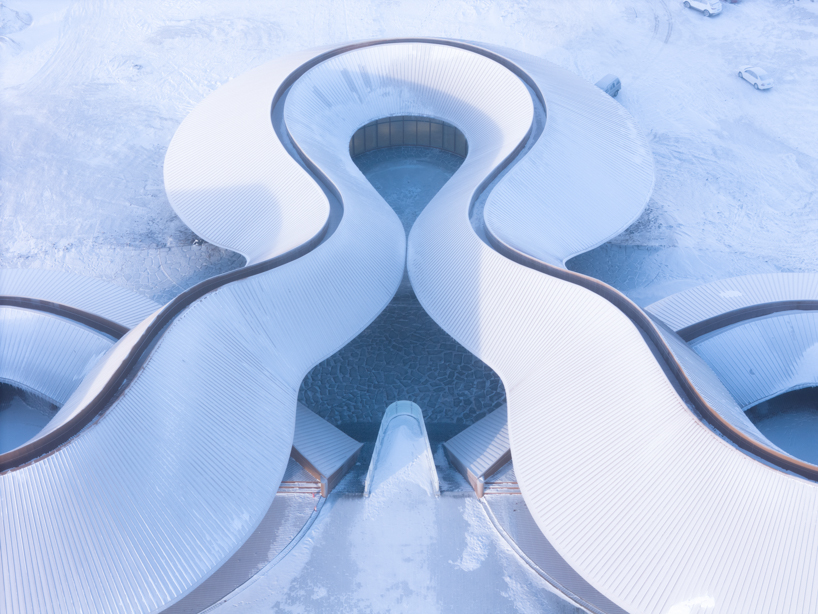
a curved architectural profile reduces wind pressure and shear forces
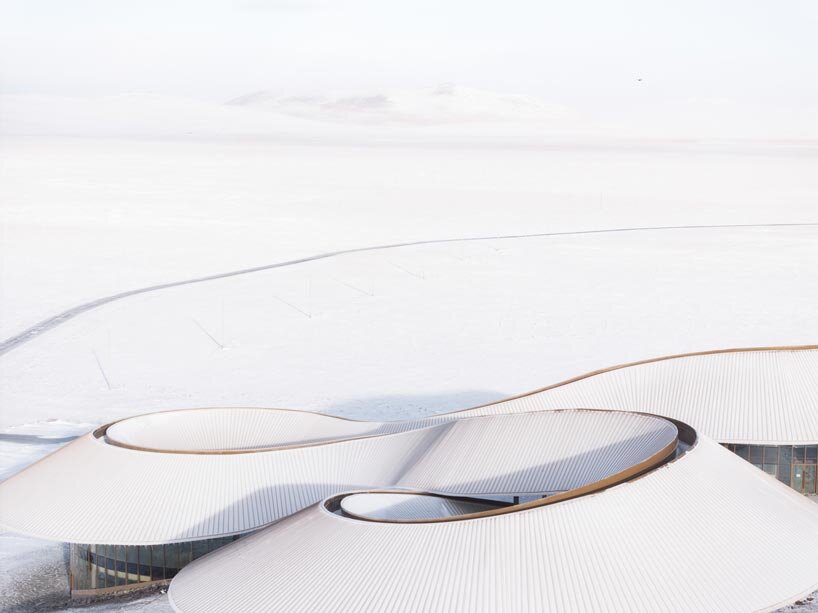
extended roof eaves protect outdoor spaces from snow accumulation
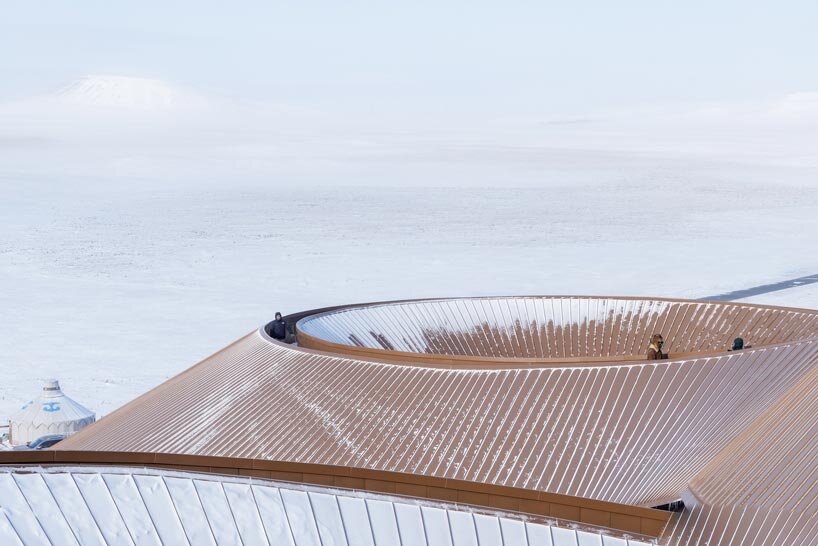
roof overhangs frame views of the volcanic landscape and surrounding steppe
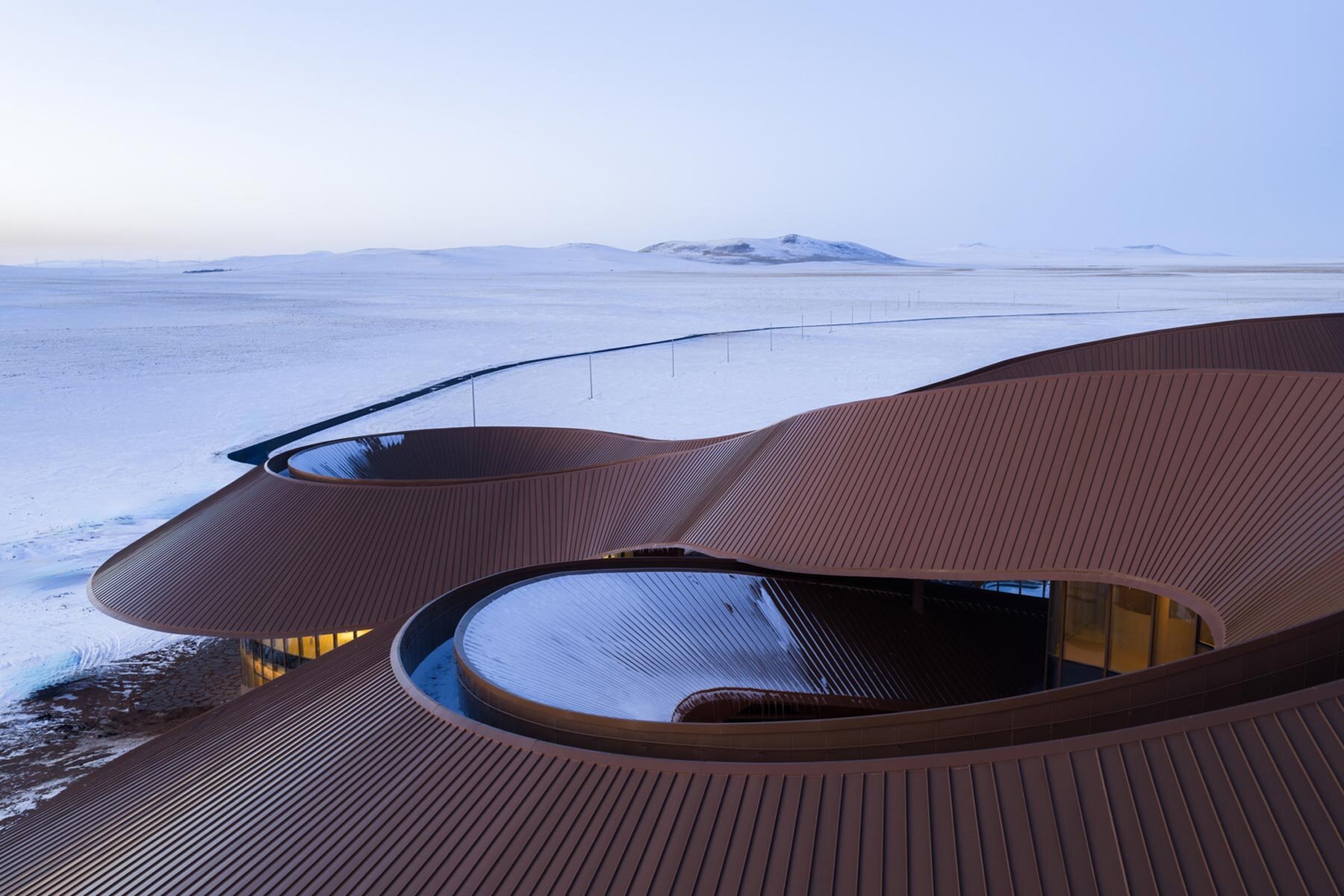
material choices allow the architecture to integrate visually with the volcanic ground
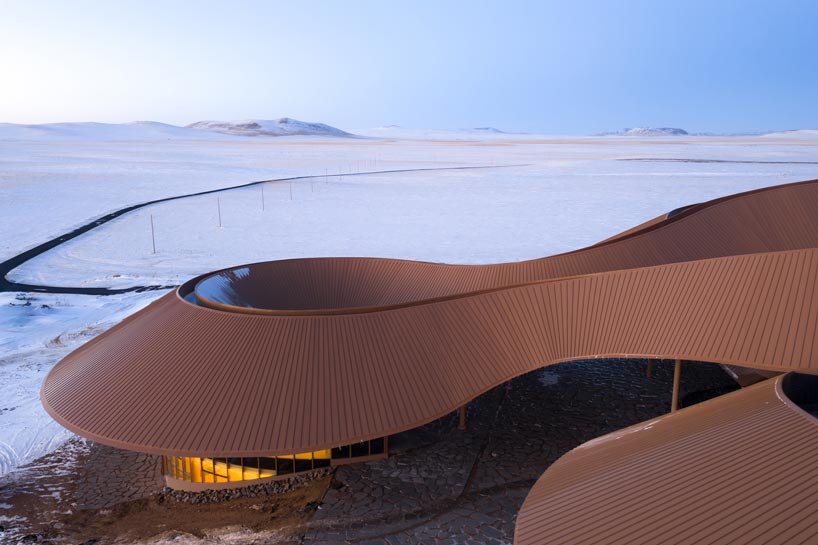
weather-resistant metal panels improve thermal performance in extreme cold
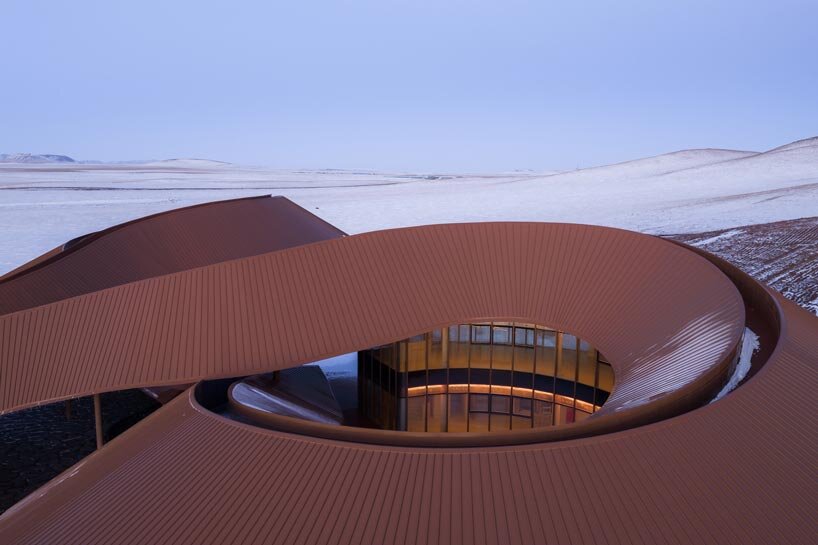
the project positions architecture as a restrained extension of the volcanic environment
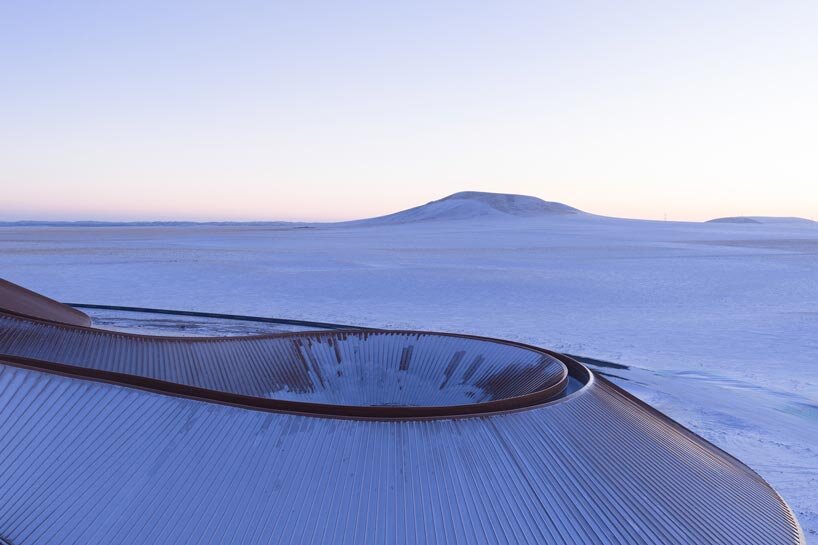
the visitor center is located within a C-shaped volcano formed approximately 150,000 years ago
the site is part of the Baiyinkulun Steppe & Volcano Area, home to 108 volcanoes


project info:
name: Volcano-In Visitor Center
architect: PLAT ASIA | @platasia
location: Xilinhot, Inner Mongolia, China
site area: 2187 sqm
building area: 3532 sqm
building materials: steel, metal panel, concrete, glass, volcanic rock, micro-cement
principal architect: Bian Baoyang
project architect: Liu Xinwei, Yang Lu
site architect: Su Lede
architecture & interior design team: Nandin, Guo Lulu, Dong Zijuan, Ma Xuan, Chu Jianwei, Yan Xinran
landscape design team: Zhang Xiaozhan, Wang Xiaochun
construction design: HUACHENGBOYUAN Engineering Technology Group
interior construction design: PLAT ASIA
landscape construction design: PLAT ASIA
steel structure design and construction: Beijing Jinshengjie Membrane Structure Technology Ltd., Co.
glass curtain wall and roof construction: TONGCHUANGHUAJIAN Group
lighting consultant: Beijing Wuse International Lighting
construction contractor: Inner Mongolia TianLong Construction Co., Ltd.
clients: Inner Mongolia Da Meng Shen Zhou Tourism Development Co., Ltd.
photographer: Arch-Exist | @archexist
video: Nandin-PLAT ASIA
designboom has received this project from our DIY submissions feature, where we welcome our readers to submit their own work for publication. see more project submissions from our readers here.
edited by: christina vergopoulou | designboom
architecture in china (2056)
 Feb 17, 2026
 Feb 16, 2026
 Feb 16, 2026
 Feb 10, 2026
 Feb 10, 2026
PLAT ASIA (7)
 Nov 02, 2024
 Nov 08, 2023
 Apr 05, 2023
 Nov 02, 2022
 Dec 15, 2021
 Feb 10, 2026
 Feb 04, 2026
 Jan 20, 2026