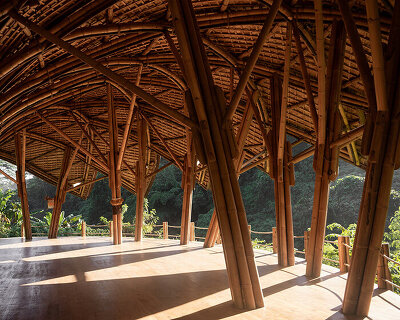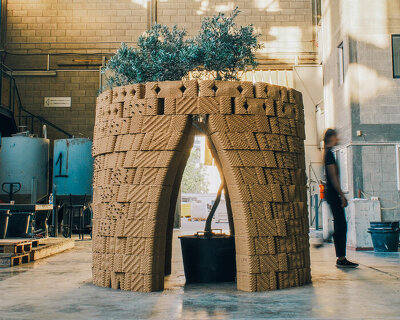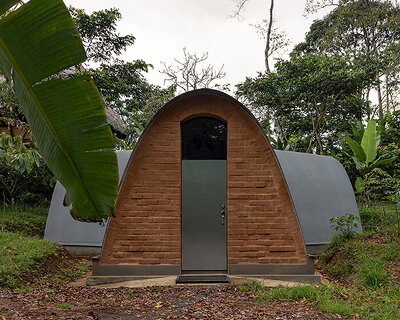
students propose bamboo flood-responsive housing in karachi using vernacular architecture
the design remains sensitive to sindh's climate and customs while enabled to float, submerge, or block in response to flooding.
sustainable flood-responsive housing for disaster relief
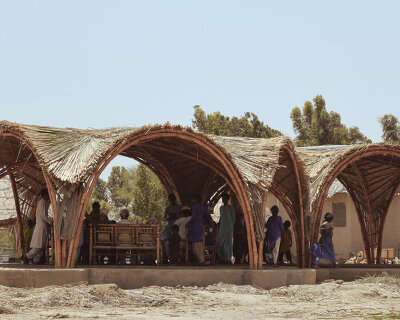
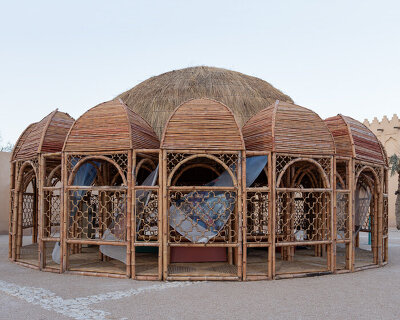
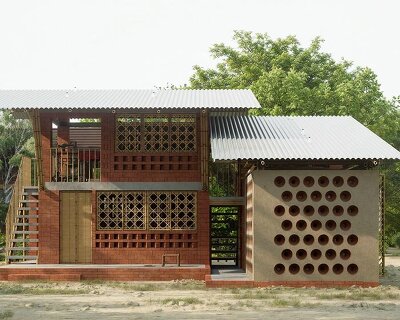
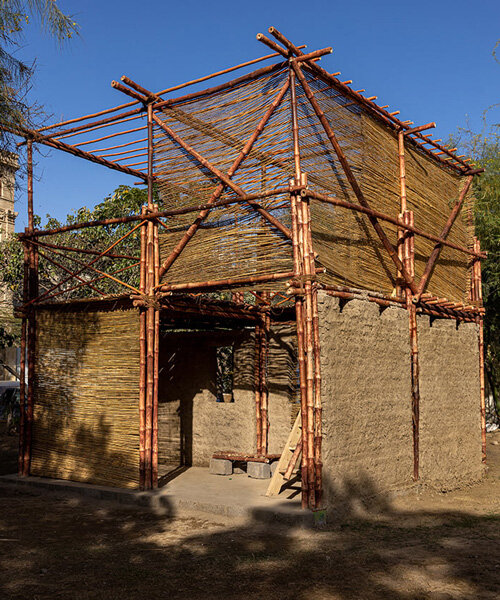
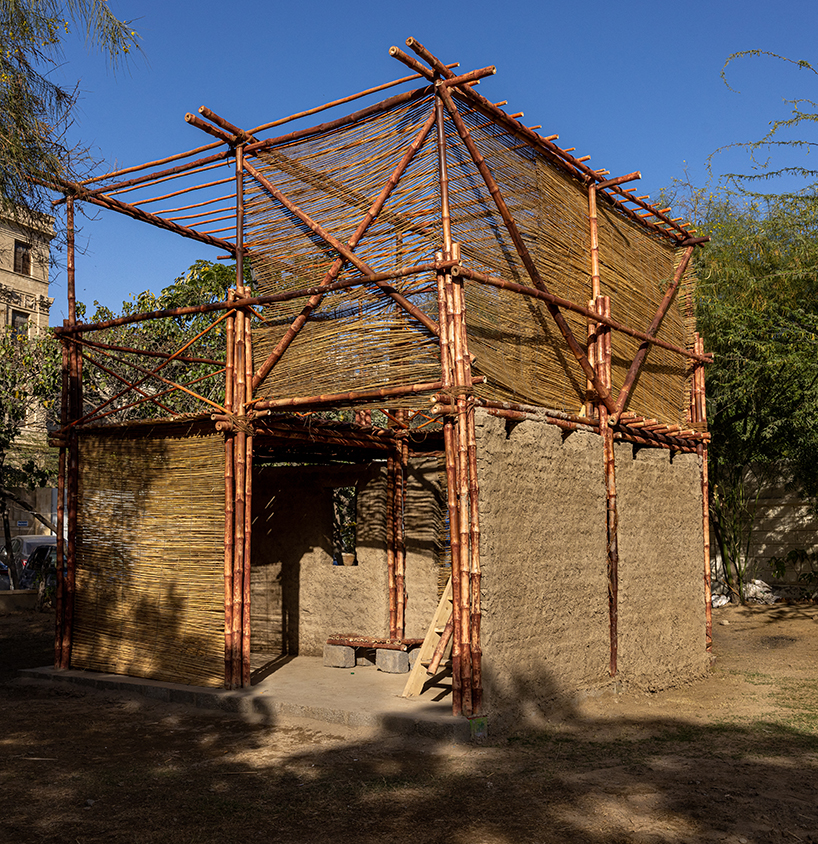
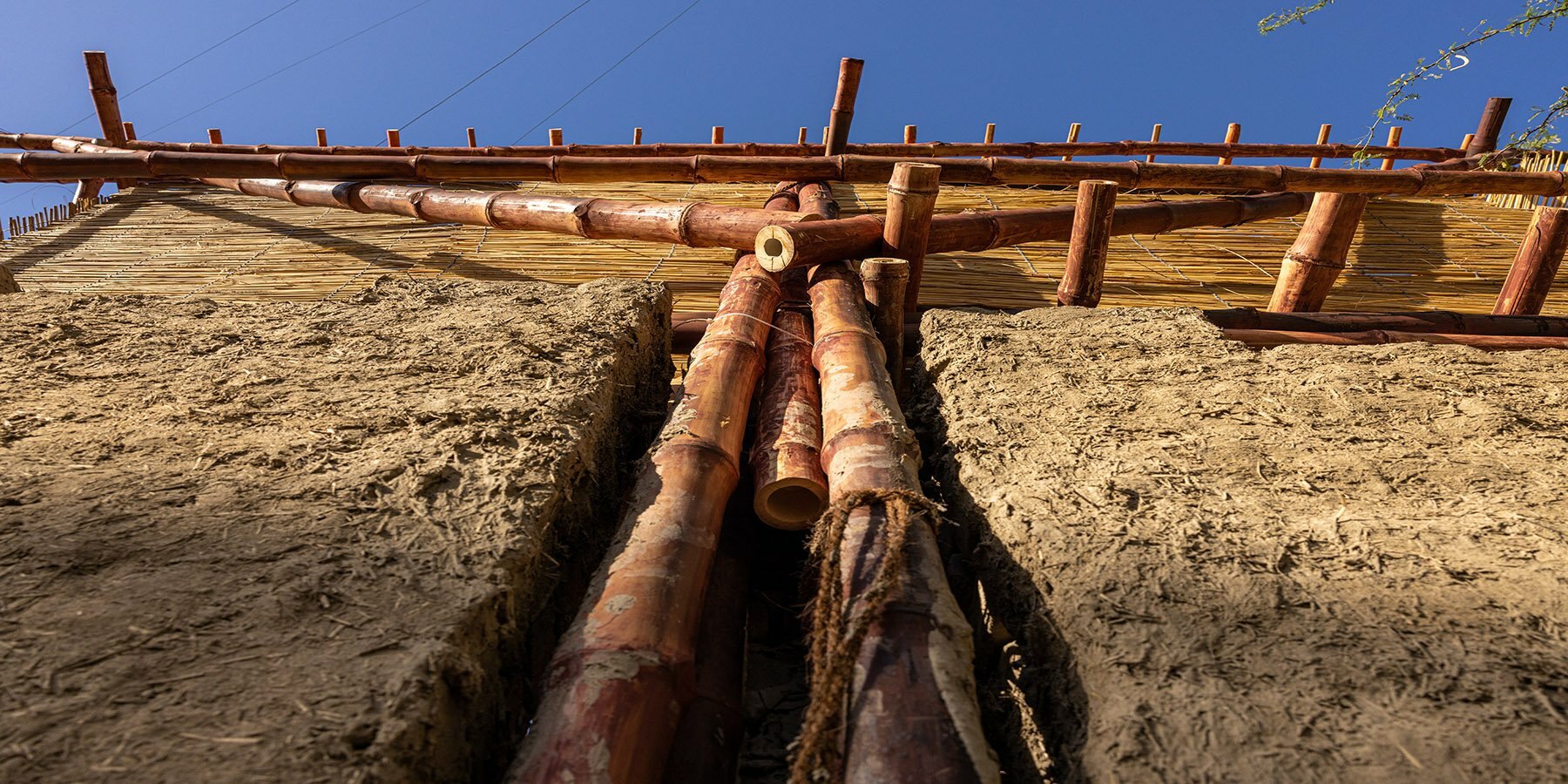
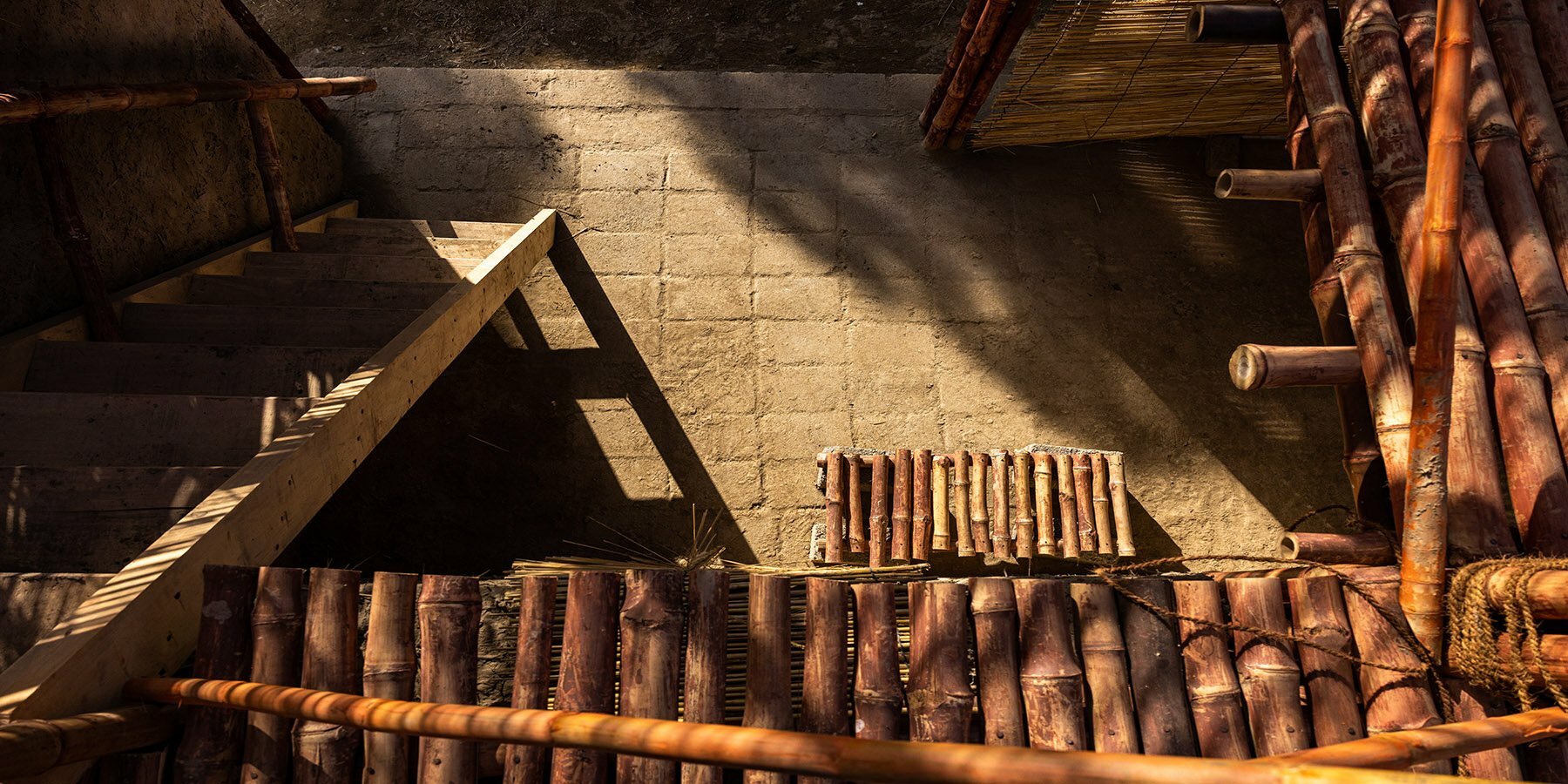
Following a month-long housing design and build exercise at the Indus Valley School of Art and Architecture in Karachi, Pakistan, a group of students have devised a low-cost, sustainable housing solution in the face of climate change-induced flooding. After researching flood-responsive housing in conjunction with the socio-cultural aspects of rural Sindh and its vernacular materials, the students proposed a shelter using regional materials and construction techniques that can be easily replicated and maintained to empower the locals. Constructed from bamboo, sun dried brick, concrete blocks, and recyclable UPVC sheets, the design remains sensitive to the region’s climate and the community’s customs while enabled to float, transform, submerge, or block in response to flood disasters.

shaped from local materials, techniques, and customs
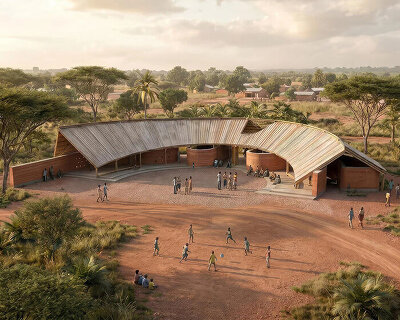
The individual unit accommodates a family of six and is proposed to be part of a larger village settlement, and part of a wider scheme that can be applied across other communities around Pakistan requiring similar disaster relief. The university’s design exercise sought to create an affordable and practical housing solution that combats or embraces flooding, while integrating within the local context and the psychological and physiological needs of the residents. ‘Stress was on the fact that as long as the function of the architecture persists and users can still navigate to and through the design, the solutions can be challenging and out of the box,’ notes professor Suneela Ahmed.
At the Indus Valley School of Art and Architecture, third and fourth year architecture students alongside their tutors and mentors were engaged to understand the context of flood-responsive housing and the Sindhi vernacular and climate. The third years then spent the course of the three-week exercise detailing the shortlisted design, carrying out material calculations, procuring the materials, and constructing the edifice. In the process, they learnt about and integrated climatic response, local vernacular materials, joinery details, mixing of various materials, working with labor on site, and various other construction details and practices.






project info:
name: Flood-responsive House Design
architecture: 3rd Year Students, Indus Valley School of Art and Architecture
designboom has received this project from our DIY submissions feature, where we welcome our readers to submit their own work for publication. see more project submissions from our readers here.
shop
your own online design shop — no sales commission collected