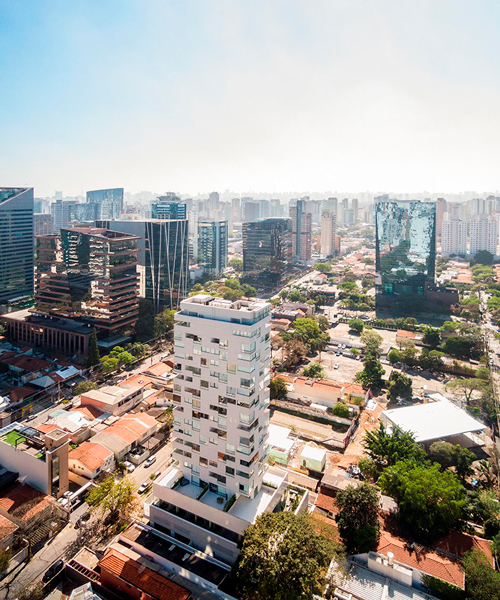
studio arthur casas pixelates apartment building facade in sao paulo
the innovative plan started from a module of 1.25m x 1.25m, which was then multiplied into a vertical field with a dynamic facade.
prefer designboom on google[FEATURED]
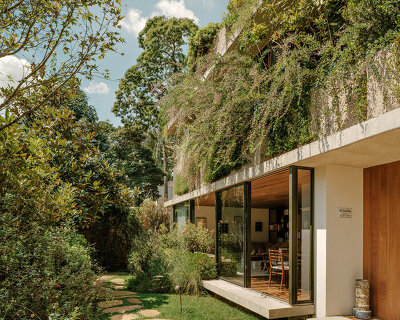
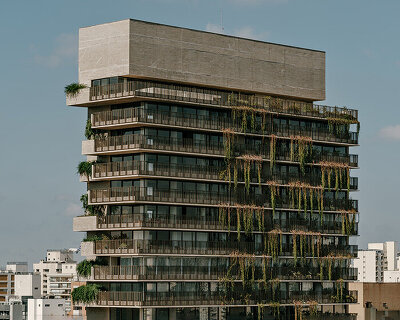
located amidst office towers and high-rises in sao paulo, the 16-story building by studio arthur casas features a pixelated facade, and includes a wide range of aparment typologies, with 88 units between 25 and 100 square meters. the client wanted a building that would break with the paradigms of the city’s real estate market, so the architect took to the simple solution of having more of smaller-sized units.
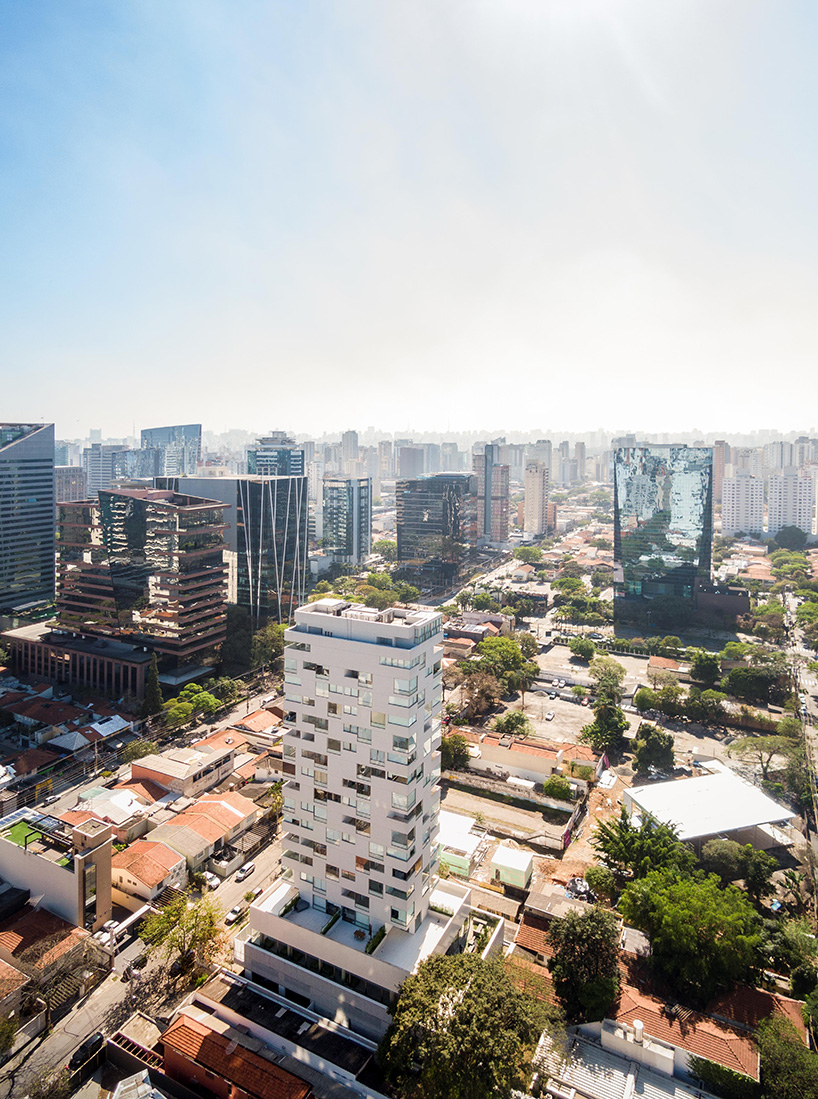
studio arthur casas’ innovative plan, an unprecedented exercise for the firm, was designed from a module of 1.25m x 1.25m, which was then multiplied to create a vertical field. vertical circulations and shafts were then intertwined between these modules, resulting in a funcitonal and efficient building. three apartment typologies were created, then mirrored and distributed according to the plan’s possibilities in its narrow sit.
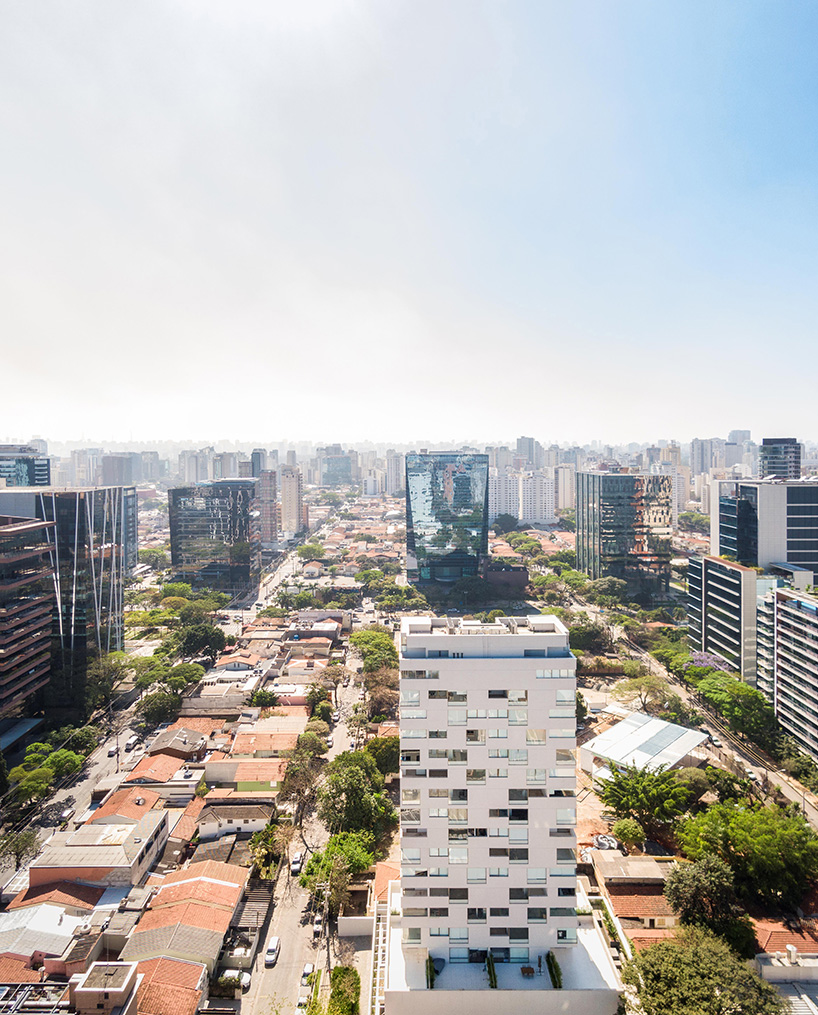
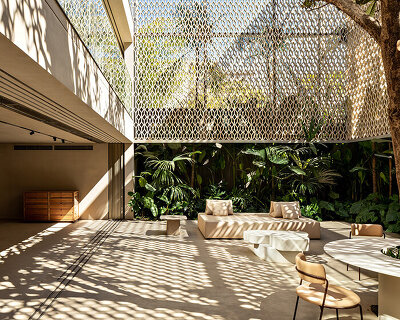
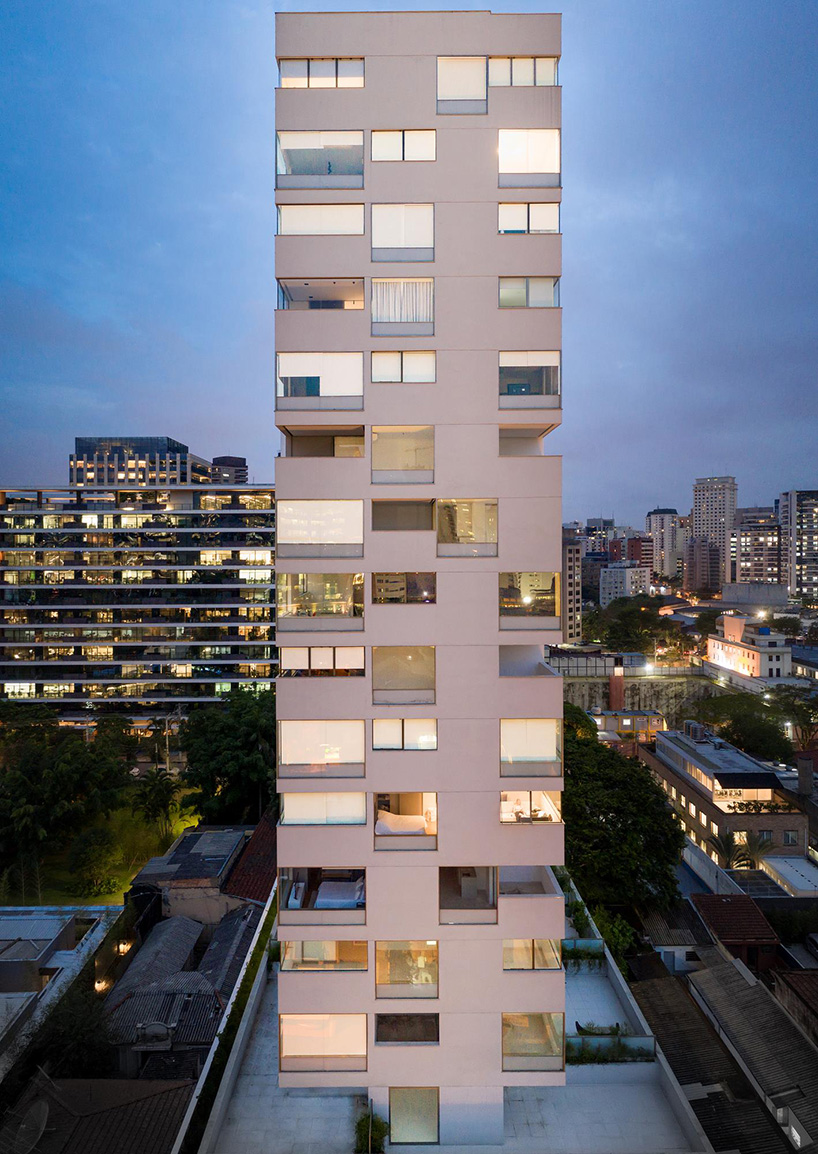
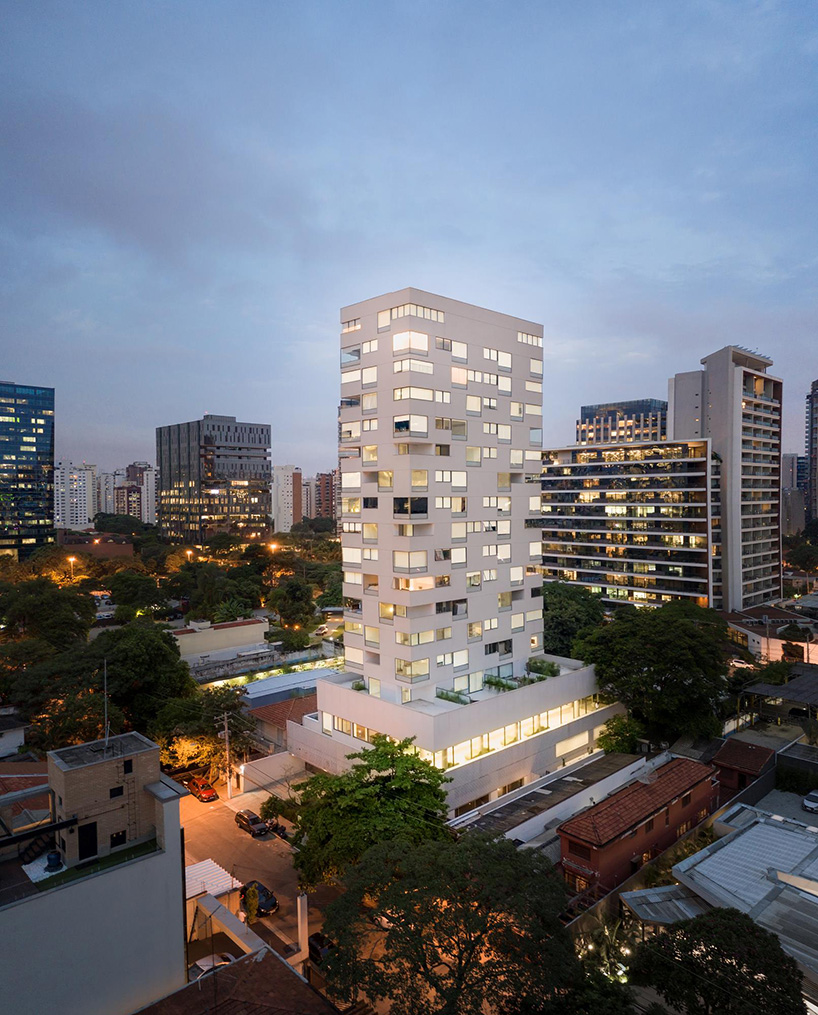
the result combines six modules in five unique floors, creating great dynamism at the facade. the monotony of small spaces encouraged the designers to adapt to the high-rise residential laws, with generous openings and creative layout solutions, giving priority to the feeling of fluidity and contact with the outside. integrated cabinets and spaces developed diagonally extend the limits of the apartments. as important as the design of the units themselves, the support areas extend the use of inhabitants to common spaces.

the pixelated facade is made of different sizes of white acm plates, and these emphasize the apparent randomness of the openings. it’s impossible to distinguish the units’s size, transforming the building into a dynamic set of indiscernible modules. the lead base contrasts with the light volume of the building, surrounded by the landscaping of alex hanazaki.

the result is an architecture that questions the monotony of the context in which it is inserted, integrating values of urban diversity from the few square meters of each unit. the apartment interiors of the vn ferreira lobo building, also by studio arthur casas, was thought to meet the profile of a couple or a young person. as a rental property, it needed to satisfy different possibilities of use, in addition to offer as much storage space as possible.

therefore, materials and solutions were chosen to value the environment, bringing a home comfort and escaping from the impersonal aspect of a hotel room. the challenge of the compact and narrow plan of 32m² was solved by eliminating the balcony, incorporating it to the apartment to gain more space and to create integration in a linear way. a continuous line of carpentry was designed to further optimize the spaces, with different uses – the surface of the dresser extends and transforms itself into a cabinet, desk and kitchen countertop.
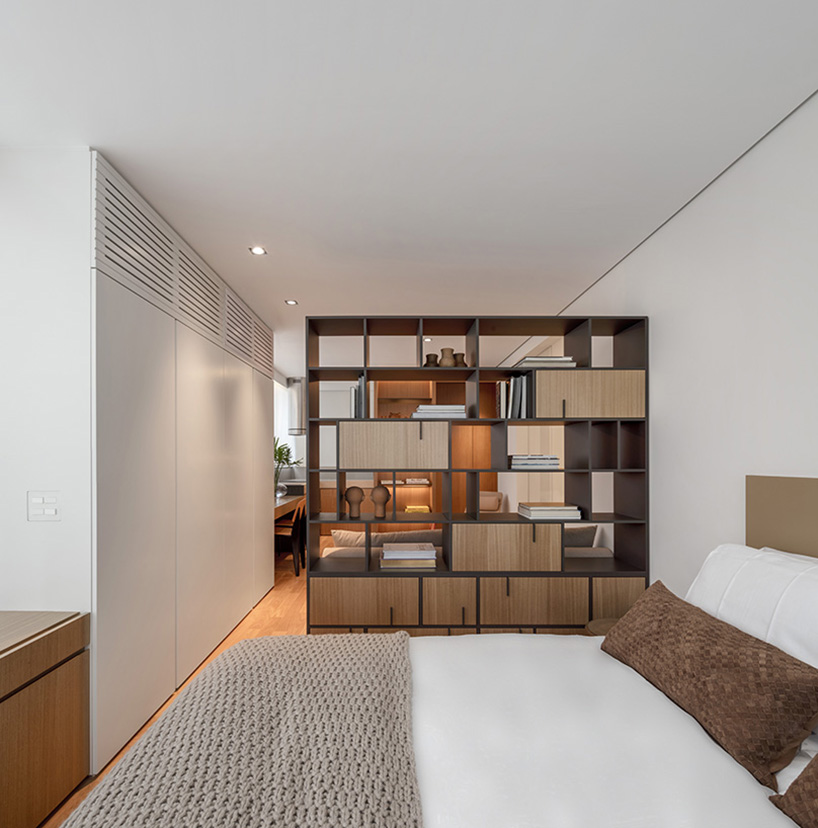
thus, it was possible to free up circulation area and bring more amplitude to the apartment, in addition to providing storage space. a metal-and-wood shelf separates the bedroom from the living room – which can also be used as an home office or dining room. in addition to ensure the bedroom’s privacy, the bookcase serves the living room (as a sofa support) and the bedroom (with drawers at the bottom). fully integrated the spaces, the kitchen was lined with light wood flooring.


project info:
designer: studio arthur casas
project name: vn ferreira lobo building
location: sao paulo, brazil
designboom has received this project from our ‘DIY submissions‘ feature, where we welcome our readers to submit their own work for publication. see more project submissions from our readers here.
shop
your own online design shop — no sales commission collected