frank havermans’ H3H biënnale pavilion links visitors to century-old monastery garden
an enclosed religious order, the monastery had never allowed public access to its private garden -- making this intervention a deeply meaningful one for havermans.
gate bridge pavilion by studio frank havermans
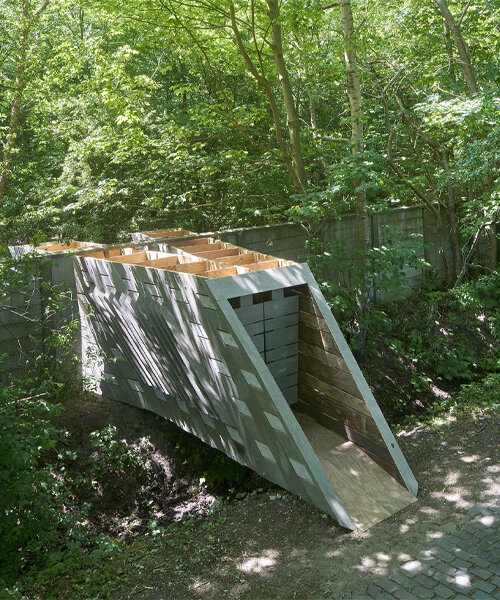
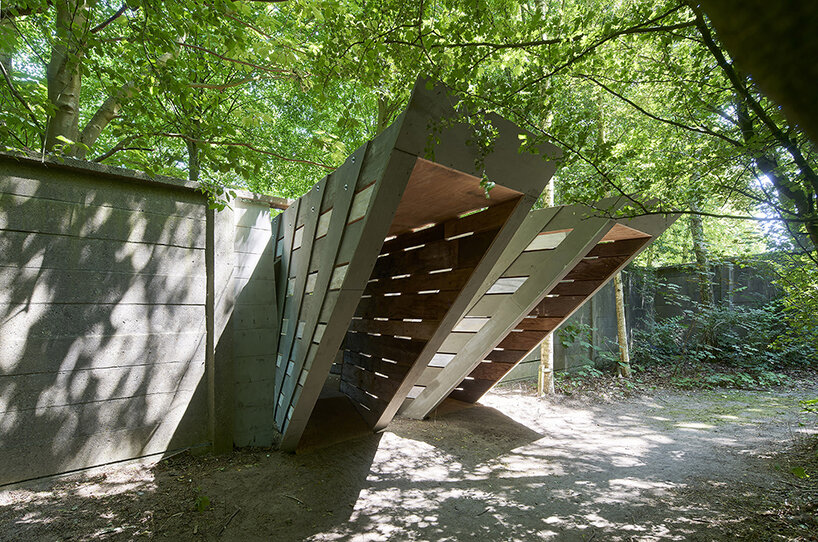
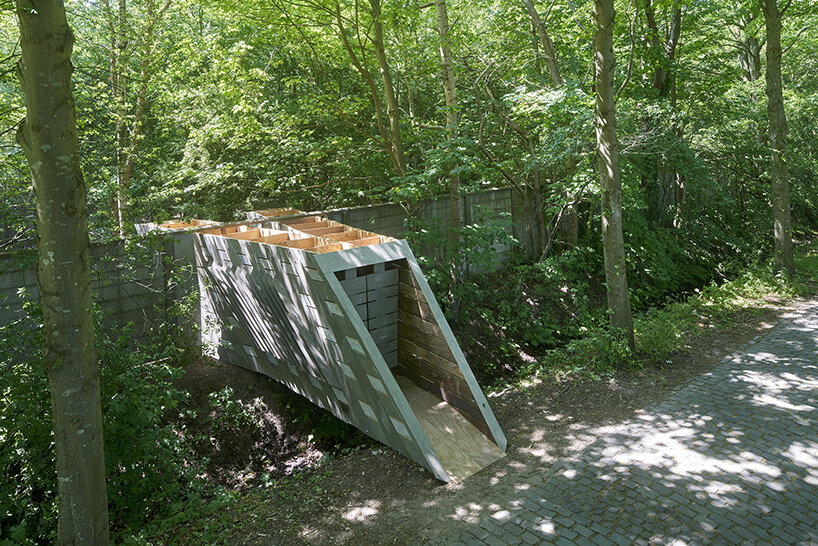
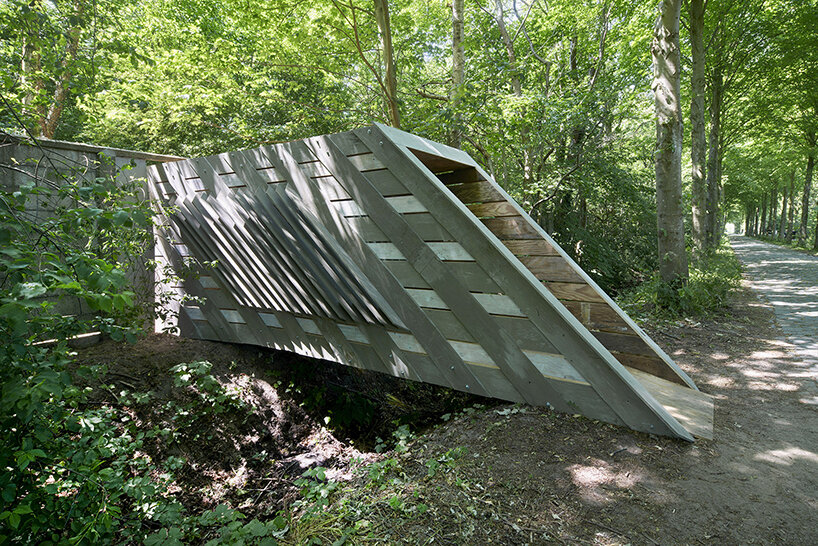
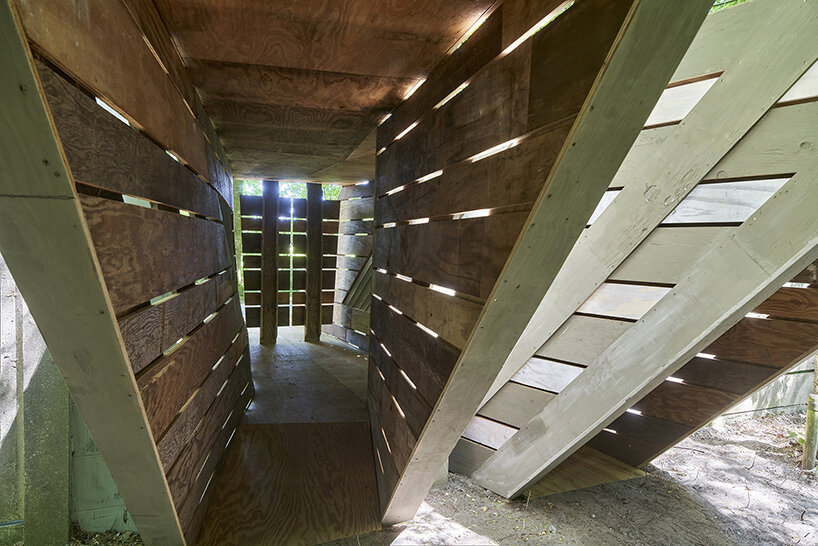
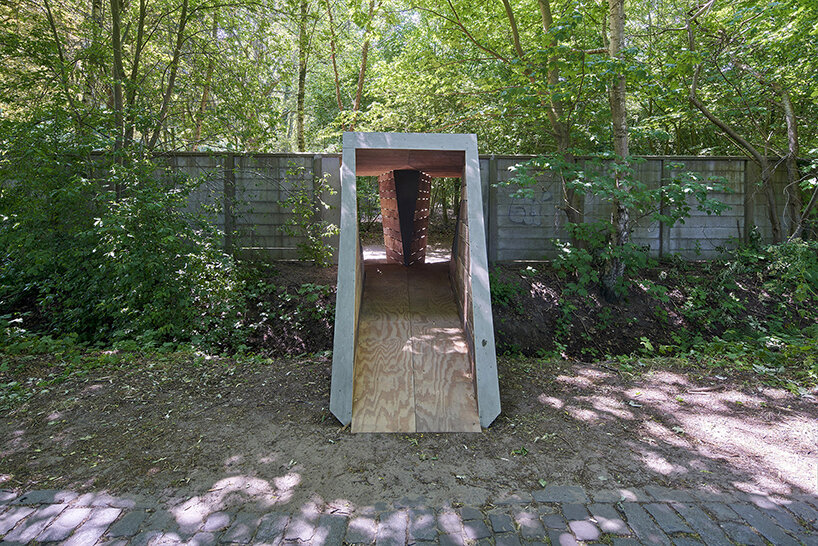
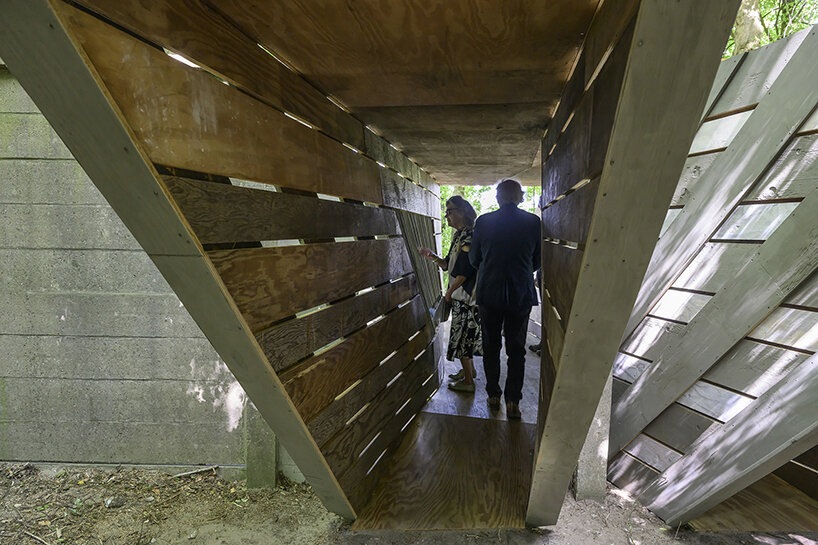
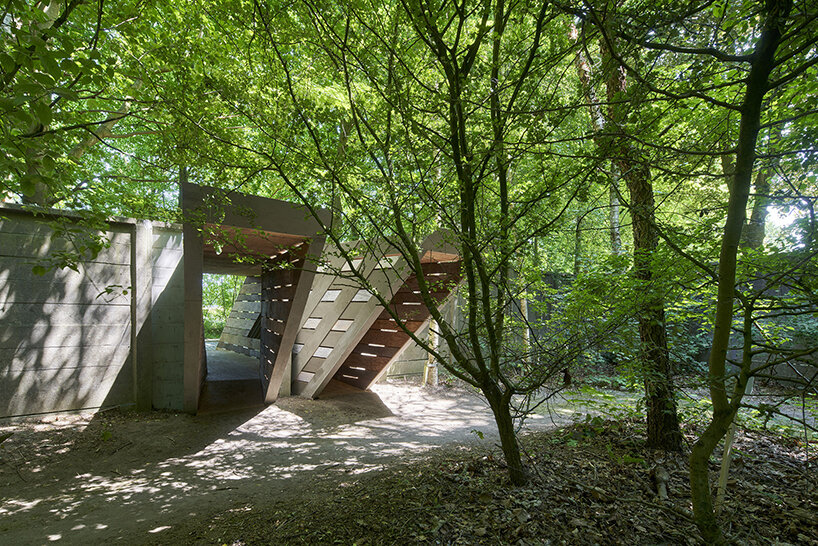
On the occasion of the six-week-long international H3H Biënnale in the Netherlands, Studio Frank Havermans was commissioned to connect, for the very first time, a 100-year-old enclosed monastery garden to the outside world and vice versa. Dubbed Gate Bridge Pavilion, the structure unfolds as a wooden passageway linking an adjacent cobblestone lane through the concrete wall of the Onze Lieve Vrouwe Abbey; this gives visitors access to its garden where an exhibition is being held. The intervention also crosses a deep ditch, making the journey much more immersive. As a strict religious order, the Catholic nun cloister has never allowed public access to their private garden before today — turning this pavilion intervention into a deeply meaningful one for Havermans. ‘Opening up a convent wall — even if it is temporary — is not only making an opening but also carefully opening a system out of trust,’ he says.
100% handbuilt wooden passageway reflecting monastery life
Frank Havermans (see more here) began the design process for the temporary H3H Biënnale pavilion by looking at the monastery’s iron entrance grille, which was built as a physical and symbolic separation in the old days. Coupled with the concrete wall, columns, and 25 cm high slabs, equally made as separators, the architect transformed these ‘barriers’ into a hybrid work, the Gate Bridge Pavilion that nudges visitors to the enclosed garden exhibition.
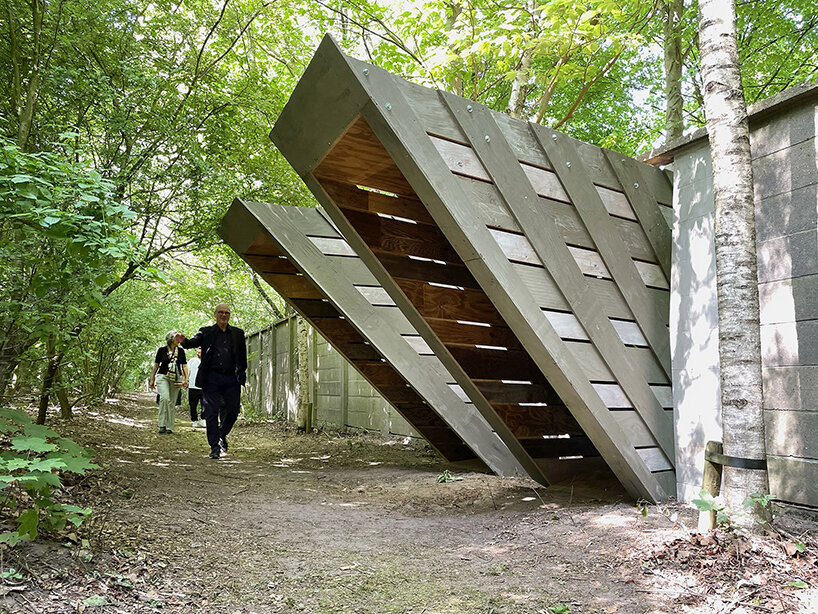
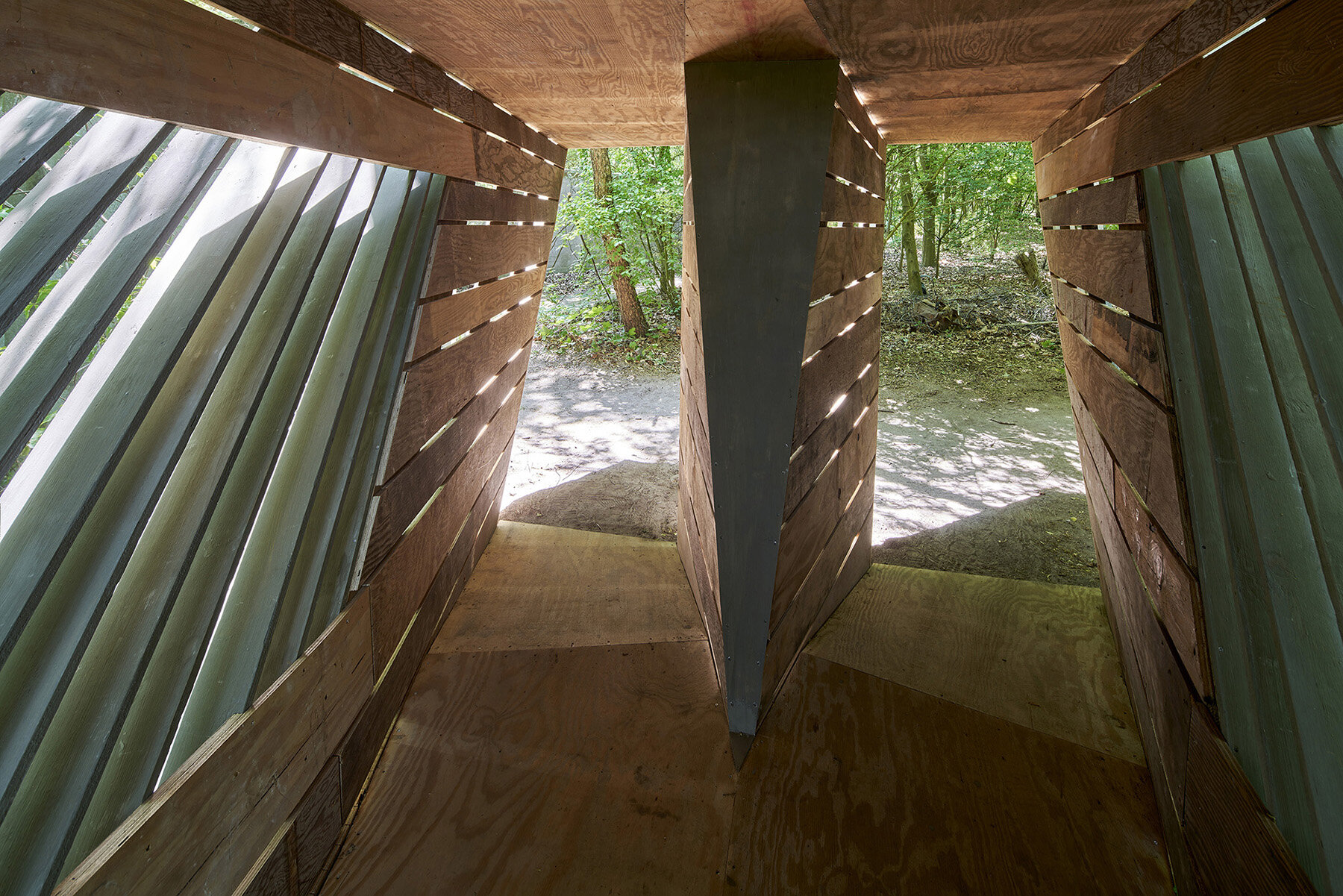
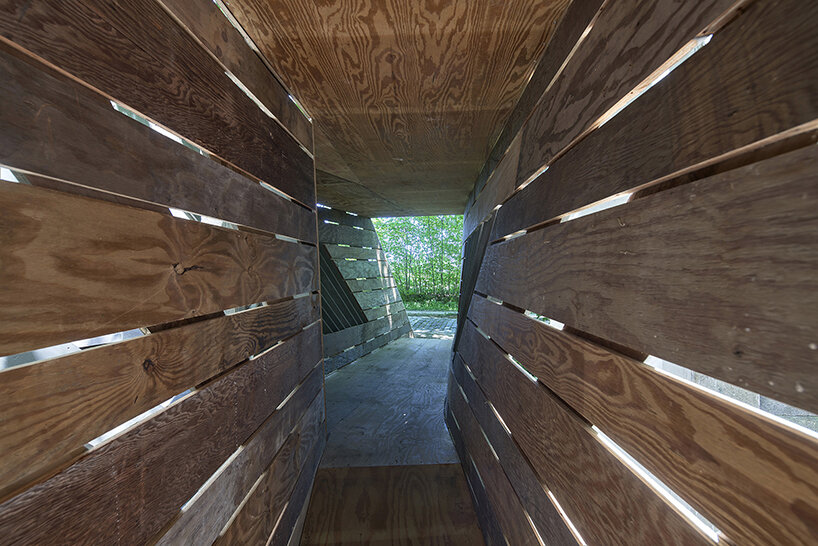
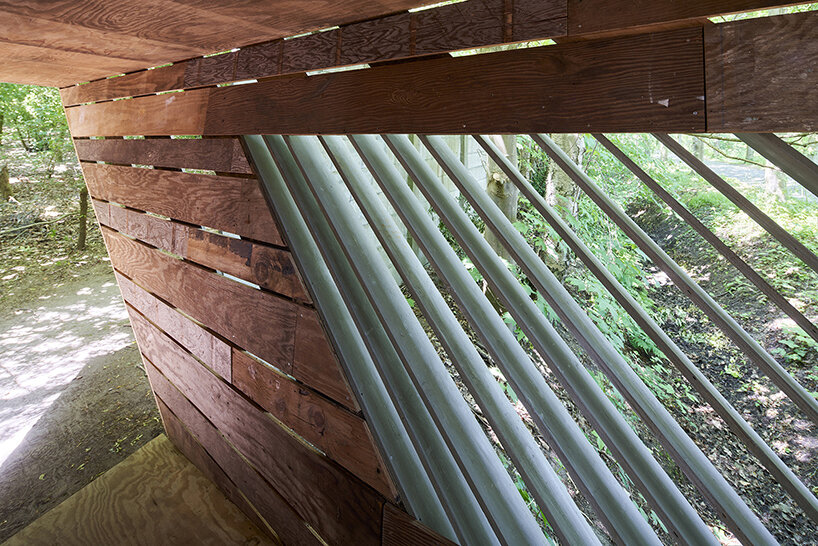
Structure-wise, the pavilion is 100% hand-built using a collection of old reused sheets of construction plywood. Its exterior, meanwhile, is coated in a thin cement layer to match the covent garden wall’s concrete wall. ‘It is a remarkable piece of small architecture that visually uses facts from the monastery life, location fact of the 100-year closed wall, atmosphere and the mental fact of doubt,’ explains Frank Havermans. ‘The rhythm of the horizontal cracks between the boards of the open structure of the wooden grille invites the sunlight into the interior space, accentuating the construction.’
an introspective journey for h3h biënnale visitors
Once H3H Biënnale visitors cross the ditch, the gate bridge splits around the concrete column, ending as two mirrored images of cantilevered exits. ‘To enter the garden, you have to choose which exit to take — left or right? In a moment of hesitation, one is led behind the walls into the world of faith. In fact, it makes no difference, but the mental space is changing once behind the convent wall. The next piece of art, visible on the left, gives you the direction where to go, and calmness takes over,’ concludes Frank Havermans.
1/3
project info:
name: Gate Bridge Pavilion
location: Onze Lieve Vrouwe Klooster, Oosterhout, Netherlands
architecture + manufacturing: Studio Frank Havermans
commissioned by: H3H Biënnale | @h3hbiennale
curators: Hendrik Driessen, Rebecca Nelemans
director: Monique Verhulst
supported by: Projectgrant Mondriannfonds, BPD Cultuurfonds, H3H Biënnale
installation: Frank Havermans, Mark van Veen, Stephan Valk, Stephan Valk,
Kees van der Ven, Bram Tassier, Dennis Oomen
photography: René de Wit, Peter Cox, Frank Havermans
completion year: 2023
materials: Reused construction plywood, cement
dimensions: 910 x 315 x 375 cm
shop
your own online design shop — no sales commission collected