
szovetseg’39 saves critical shorelines with caltrope system
in response to rising sea levels, the lace-like structure has won the grand prix award for a competition, organized by the jacques rougerie foundation.
prefer designboom on google[FEATURED]
szovetseg’39 saves critical shorelines with caltrope system
all images courtesy of szövetség’39
budapest-based szövetség’39 has won the grand prix award for their ‘caltrope’ project in an international architecture competition, organized by the jacques rougerie foundation. entered under the ’architecture and sea level rise’ category, the design consists of a lace-like structure that is able to collect river sediment with the help of mangrove plants. due to rising sea levels, the implementation of these modules aims to balance the natural dynamics and forces of the delta regions, working as a catalyst to provoke positive changes at the most critical shoreline points.
‘caltrope project’
video courtesy of szovetseg 39
blending a mixture of concrete, organic materials and local resources, the water depth defines the height of the system, which is variable from one to three levels. the containers serve as incubators for young mangrove saplings that eventually get stronger with time to become self-supporting, forming a natural dam. the caltrope lace is only visible at low tide, resulting in very little impact on the overall landscape – the structure mostly remains underwater, influencing the shape of tree groups. an organic pattern grows out of the modules, visualizing hydrodynamics, shoreline, and sea level rise.

the system aims to balance the natural dynamics and forces of the delta regions
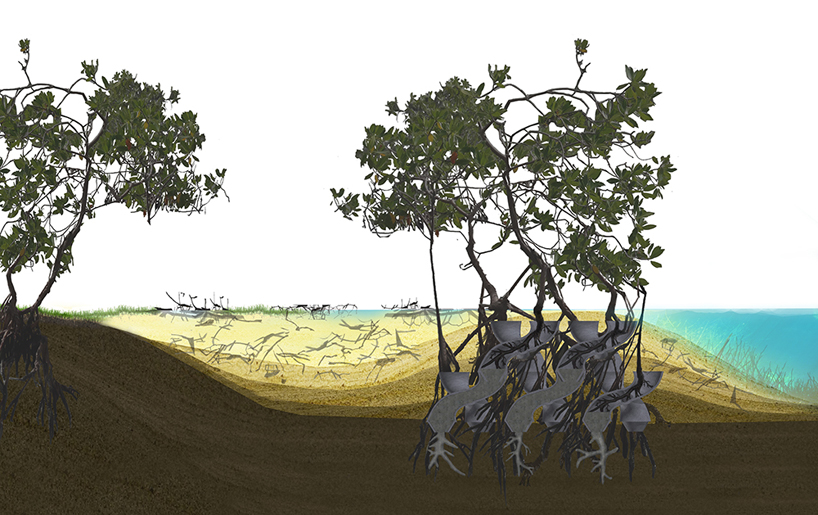
the lace-like structure is able to collect river sediment with the help of mangrove plants

the modules provoke positive changes at the most critical shoreline points
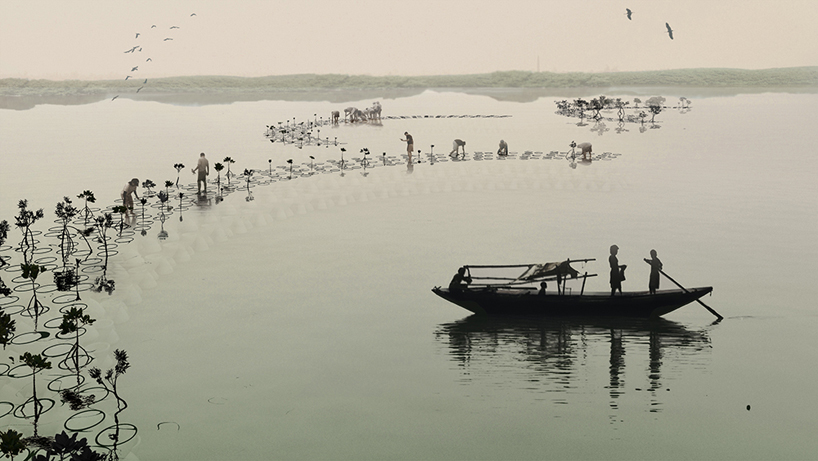
local crafting and fabrication skills are involved in the production process

the organic pattern grows out of the modules, visualizing hydrodynamics, the shoreline, and rising sea levels
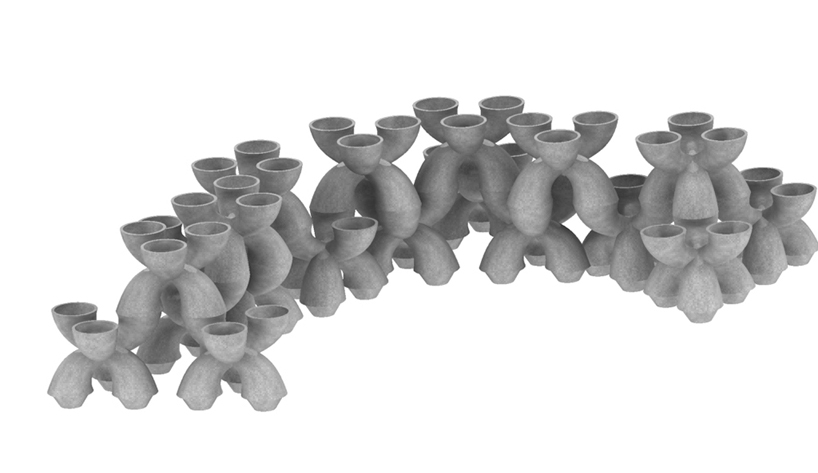
3D model of the system
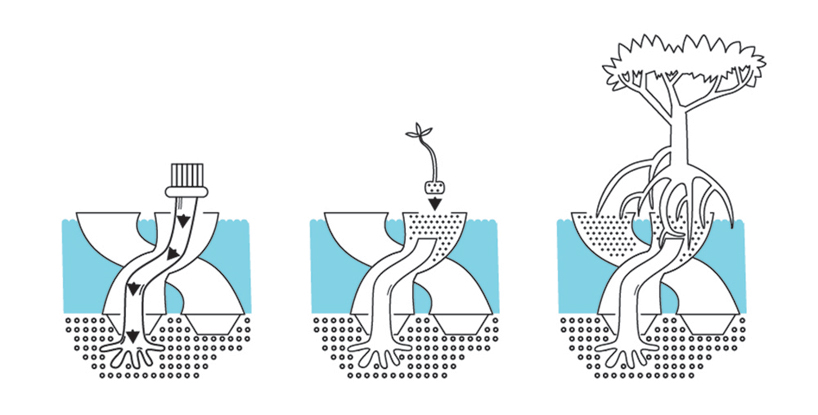
diagram
designboom has received this project from our ‘DIY submissions‘ feature, where we welcome our readers to submit their own work for publication. see more project submissions from our readers here.
shop
your own online design shop — no sales commission collected