tea house by qicang design embraces seasonal rhythms behind sliding doors in china
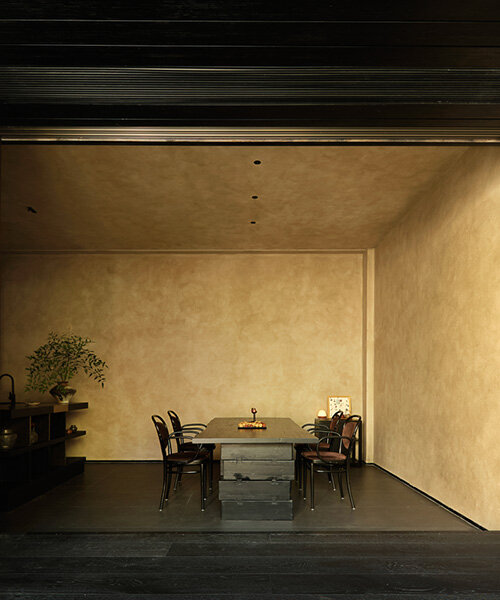
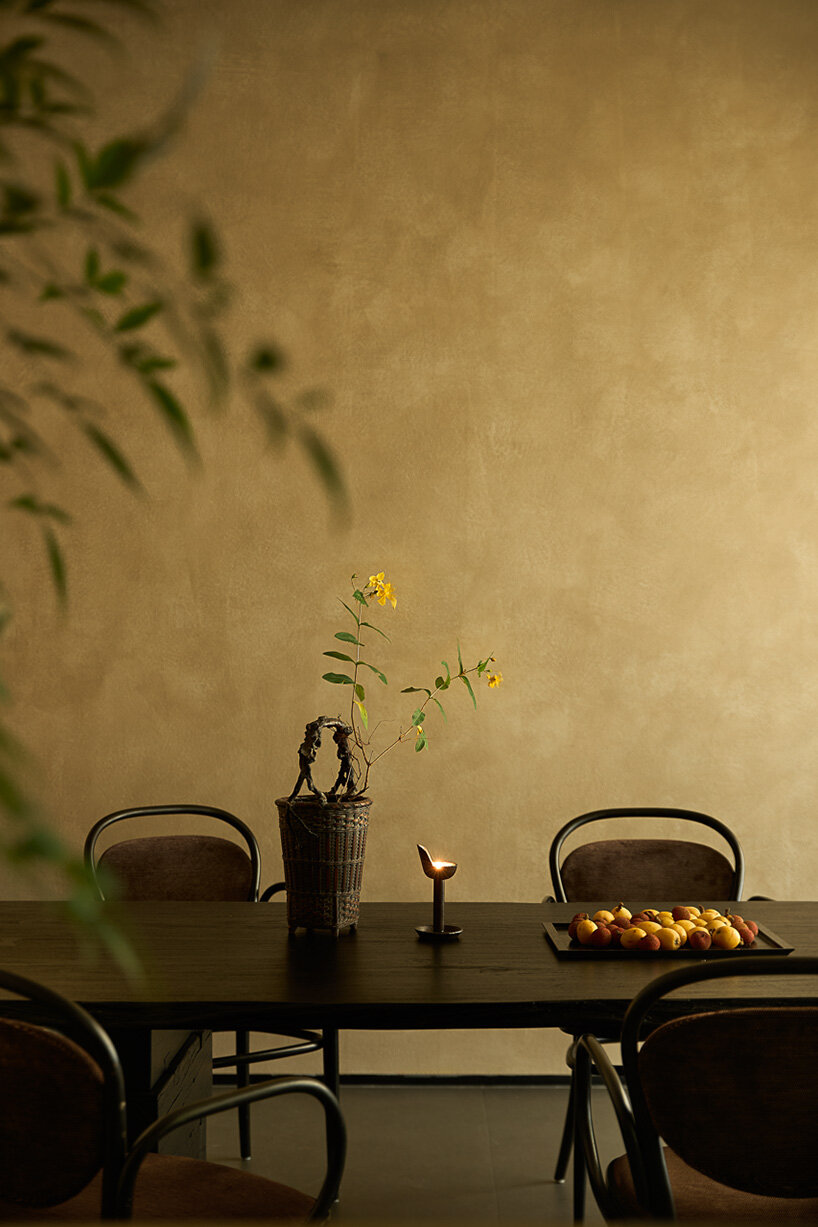
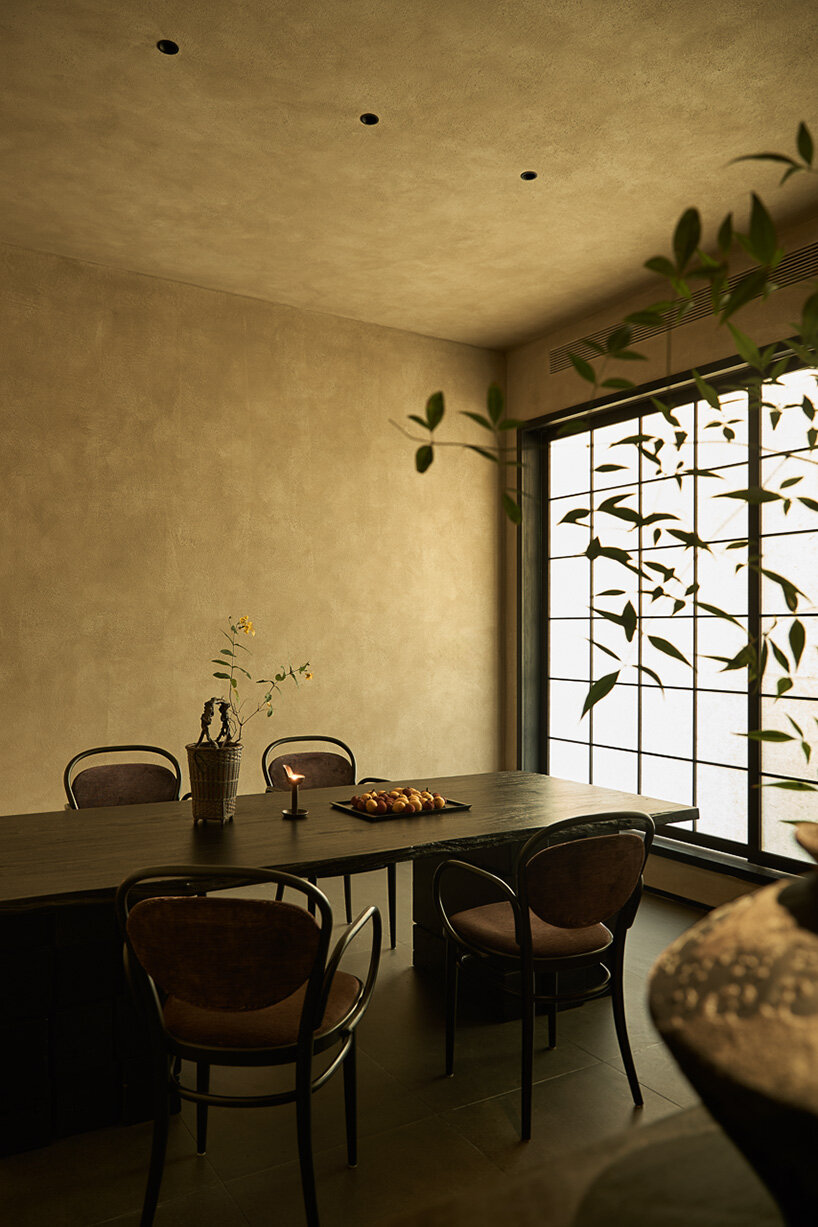
inside, earth-toned walls are paired with dark furniture, while olive and yellow accents unify the palette.
prefer designboom on google[FEATURED]
Qicang Design crafts tea House as tranquil escape in china
Nestled at the crossroads of bustling streets in the coastal city of Ningbo, China, the XinHeYe Tea House by Qicang Design offers a serene retreat from urban chaos. Inspired by the rituals of tea and the rhythm of the seasons, the 80-square-meter space embodies the essence of tranquility, balancing tradition, innovation, and nature.
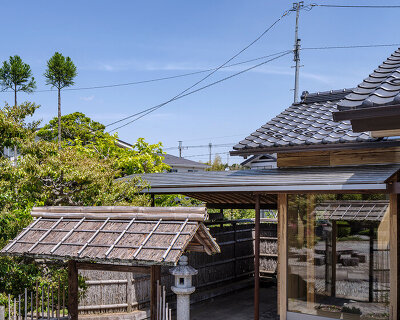
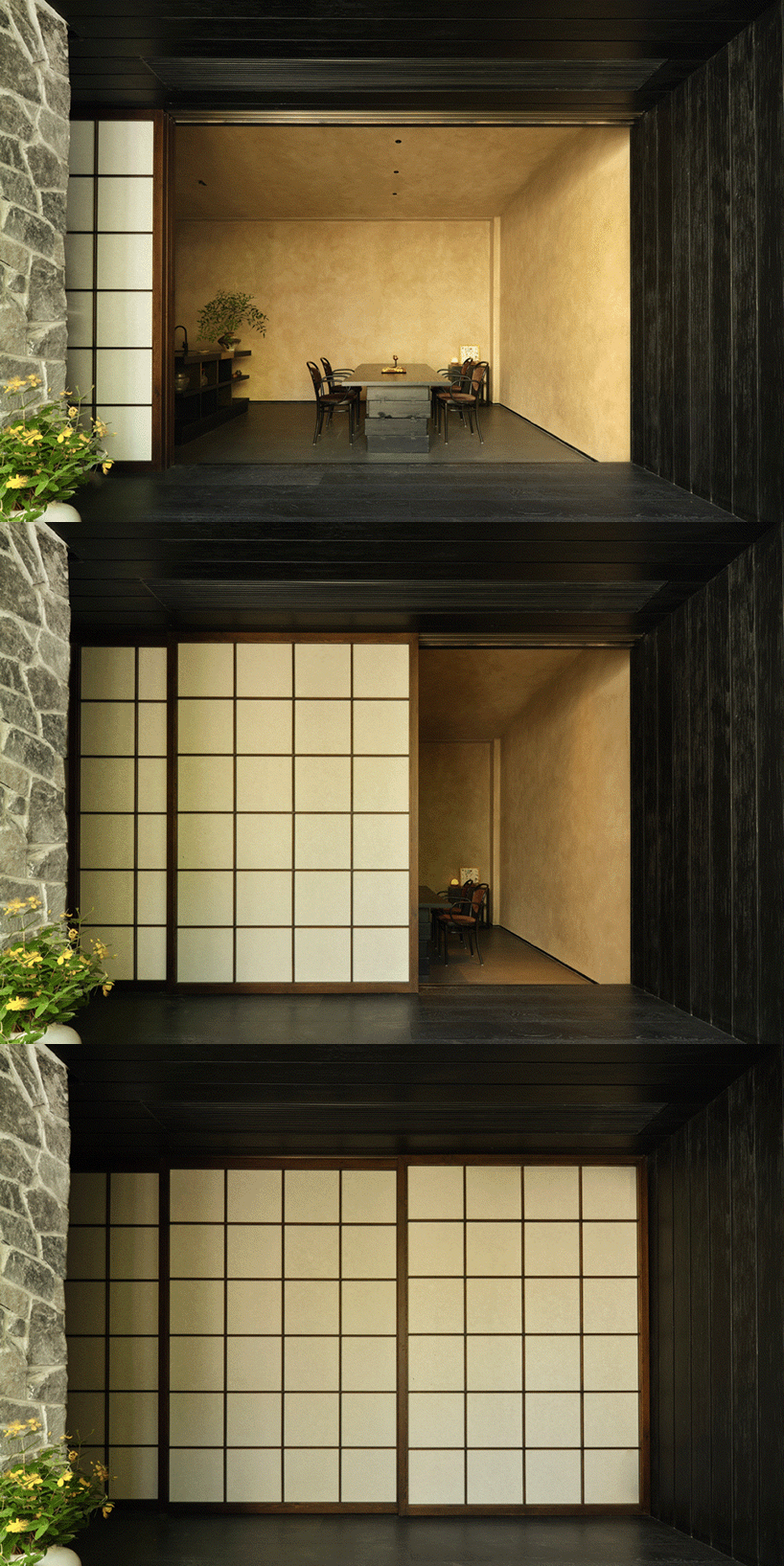
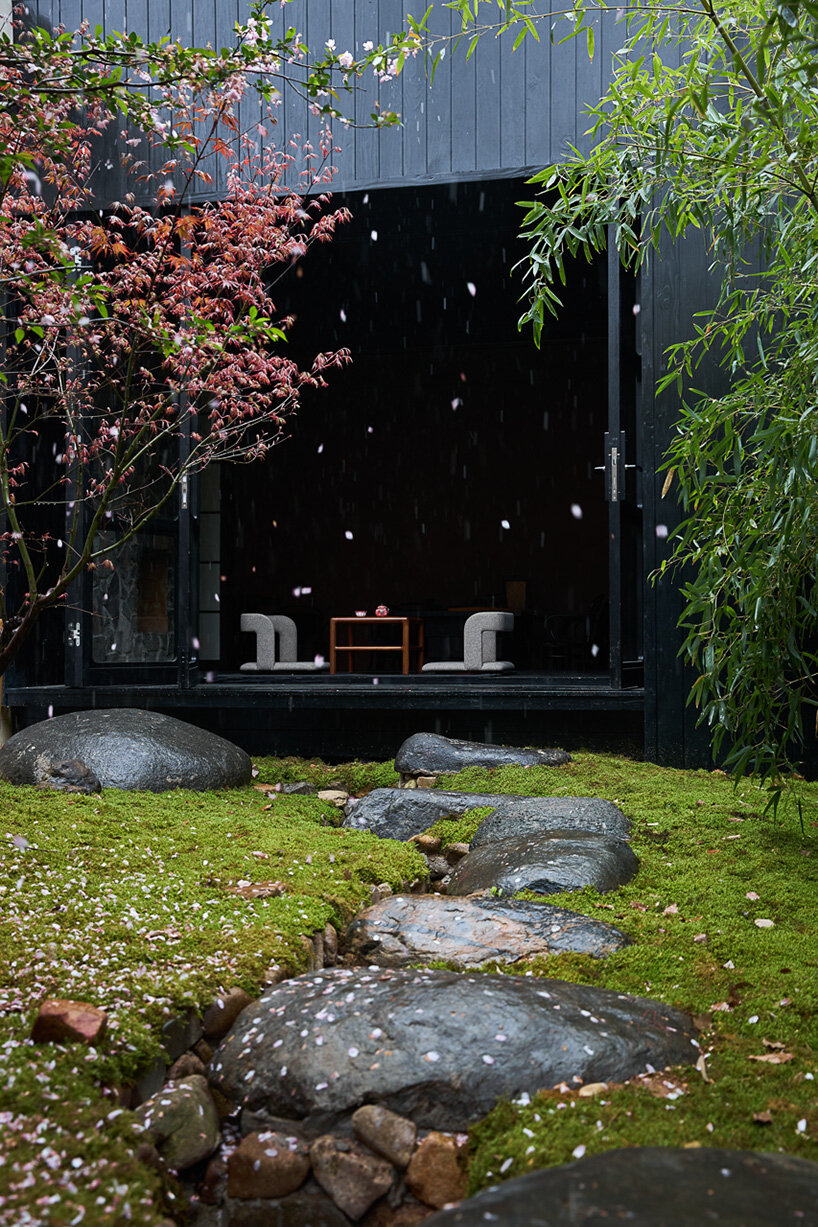
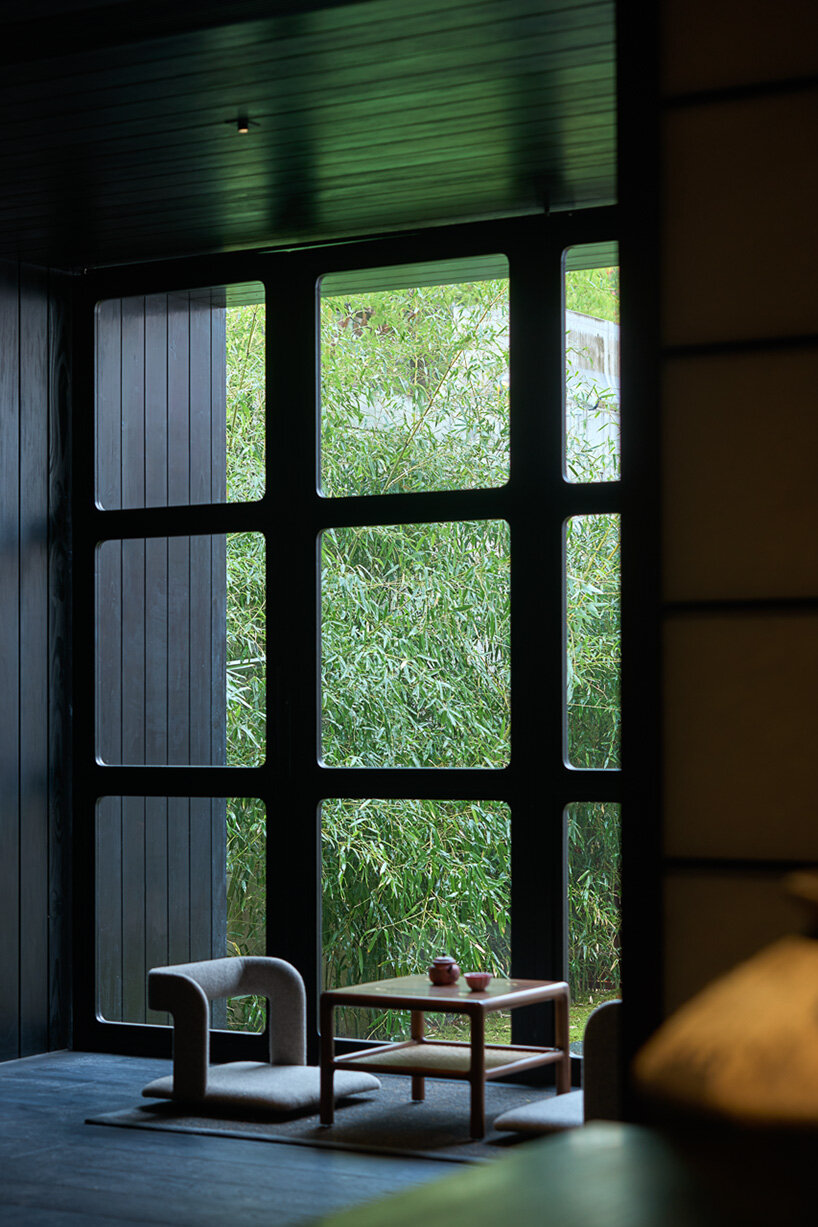
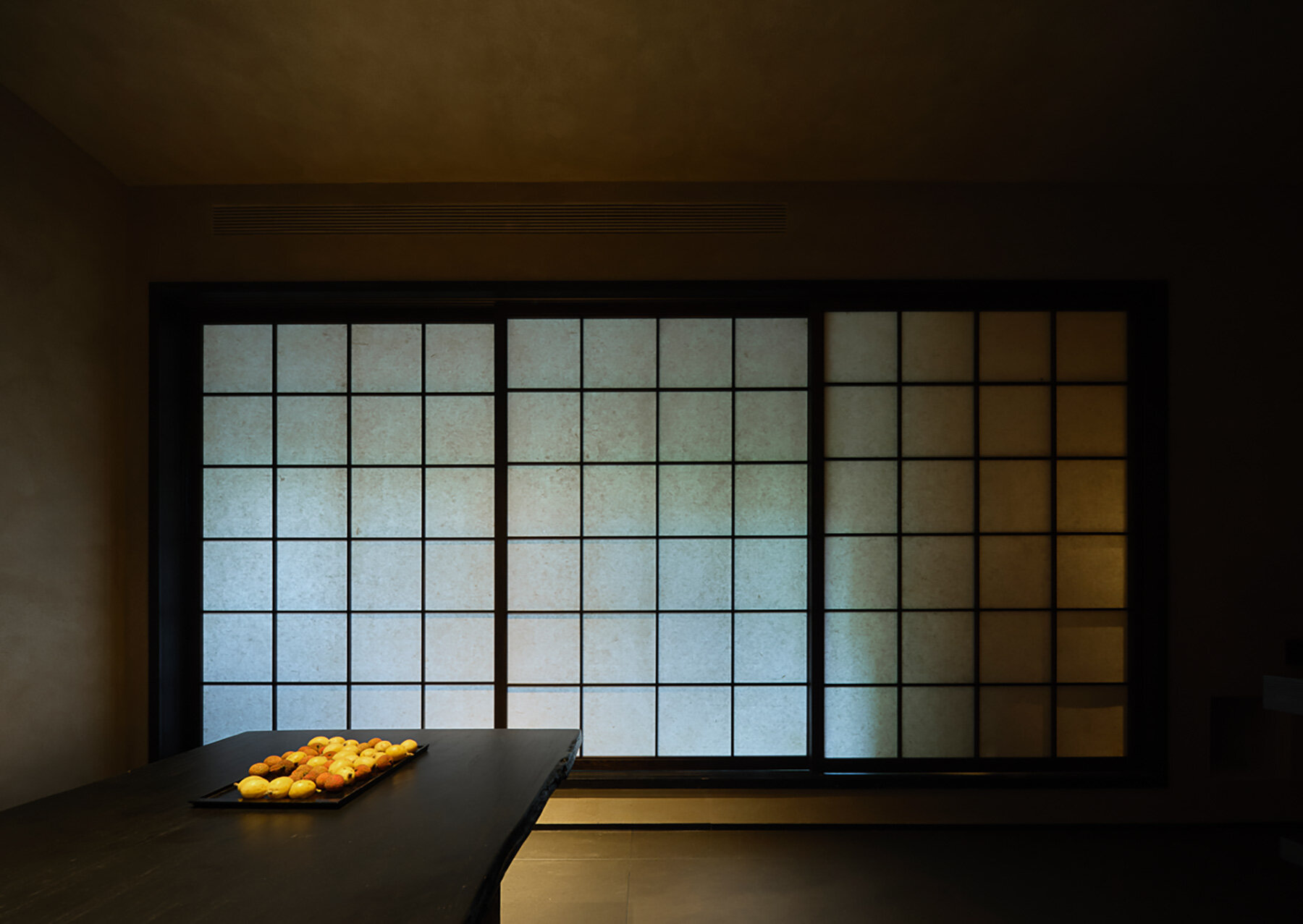
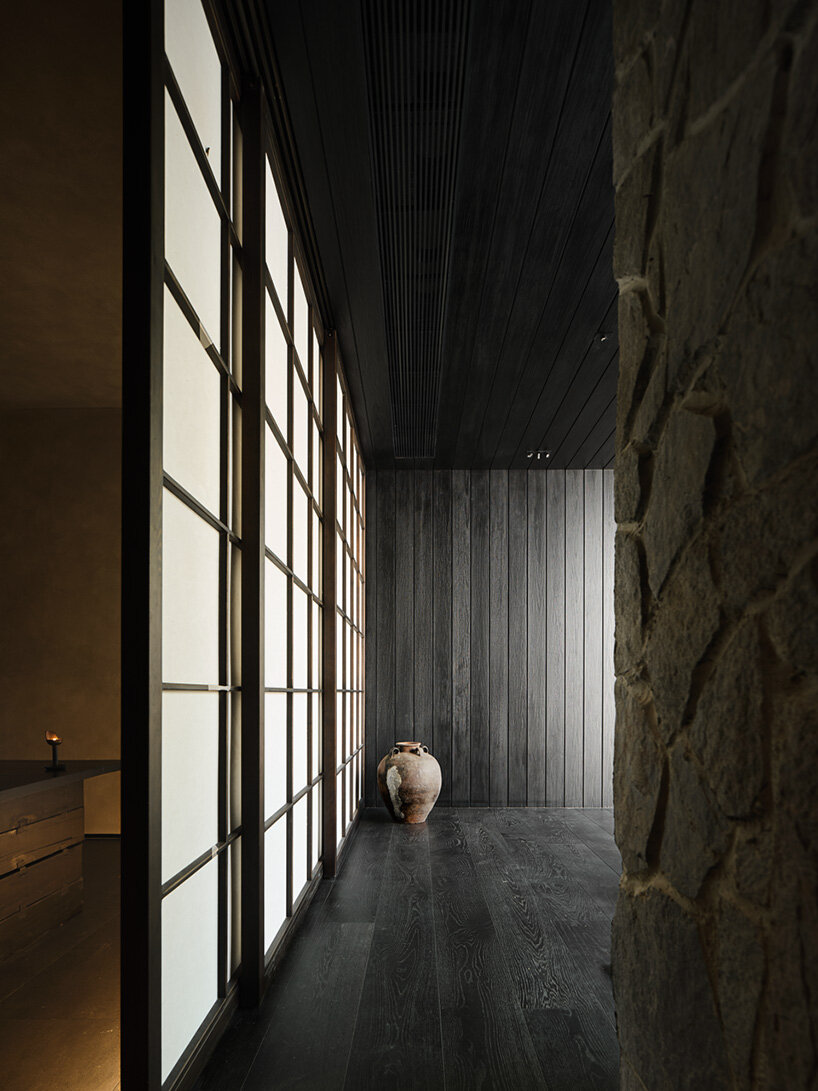
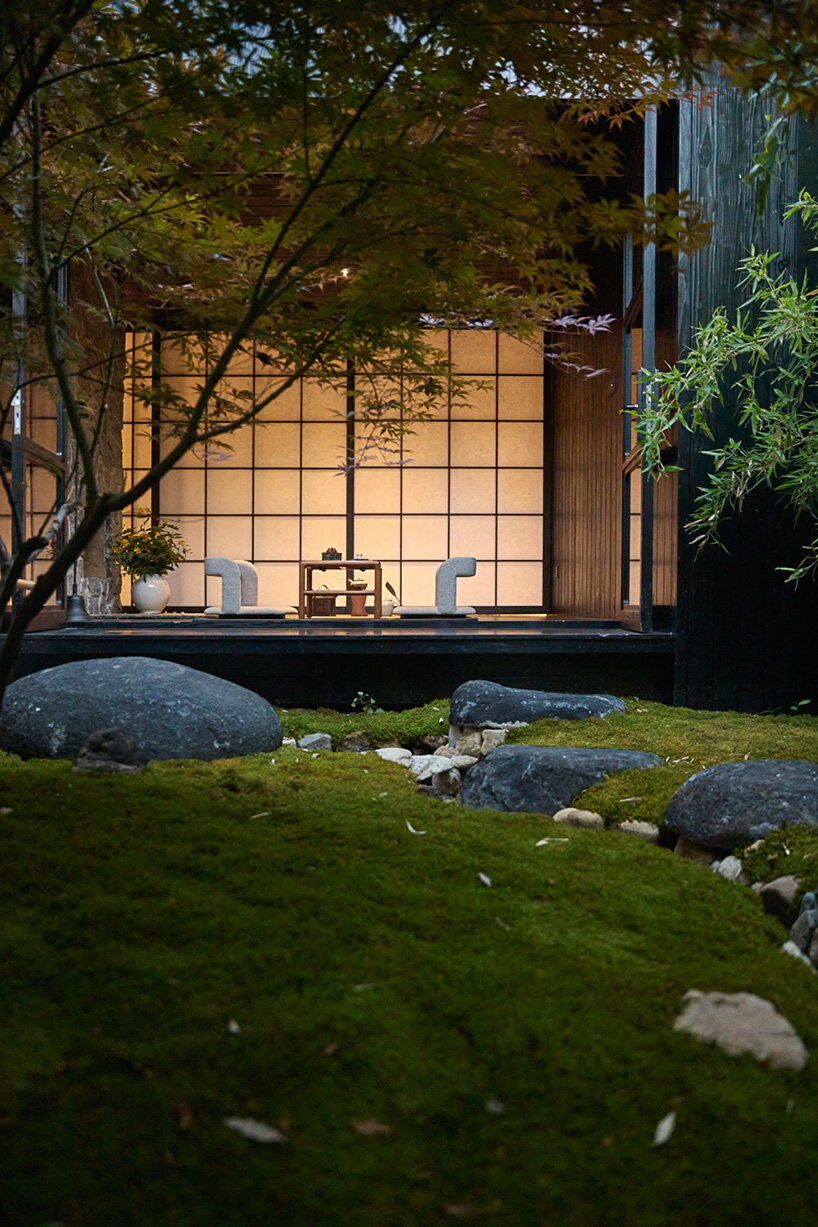
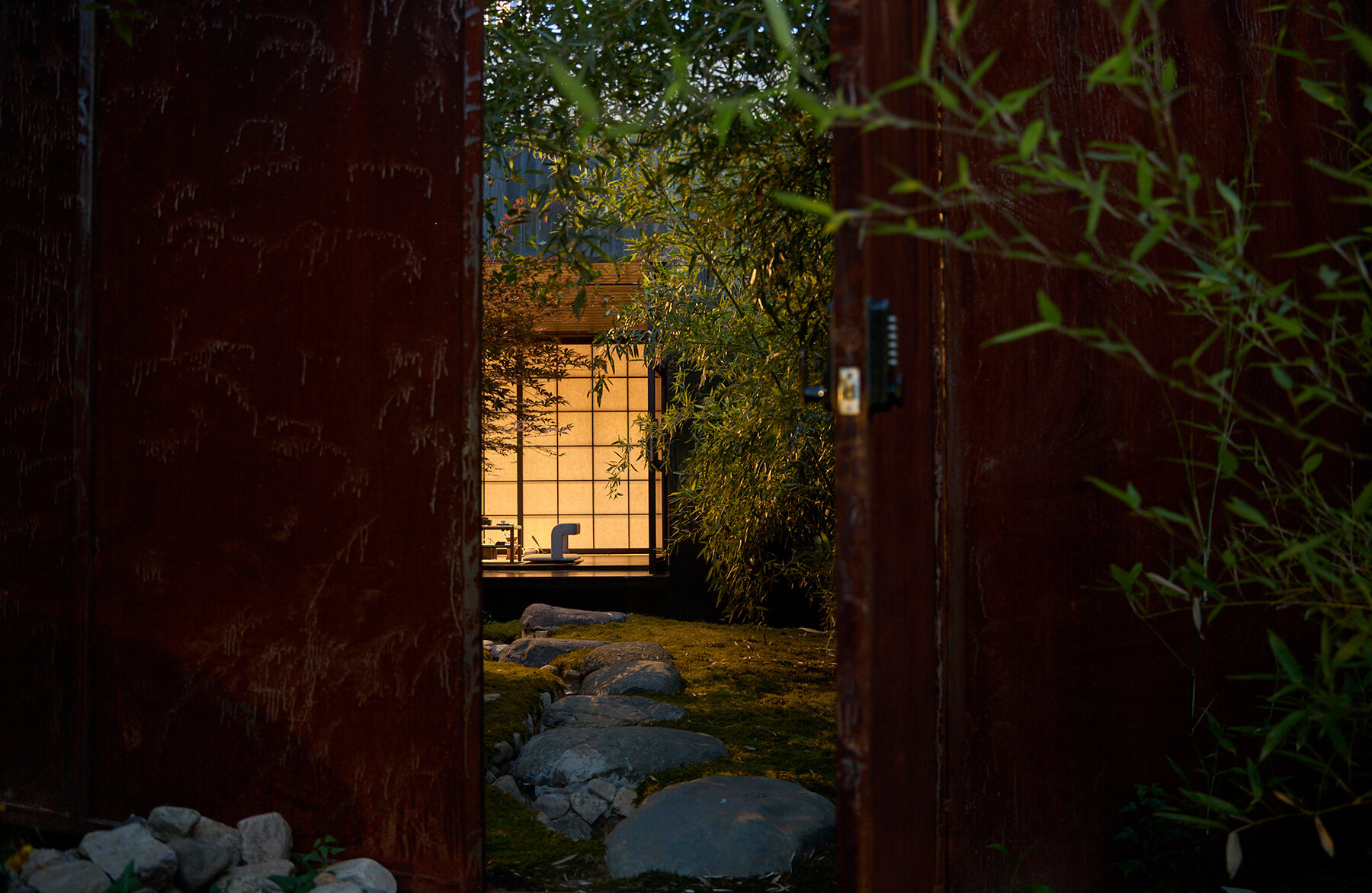
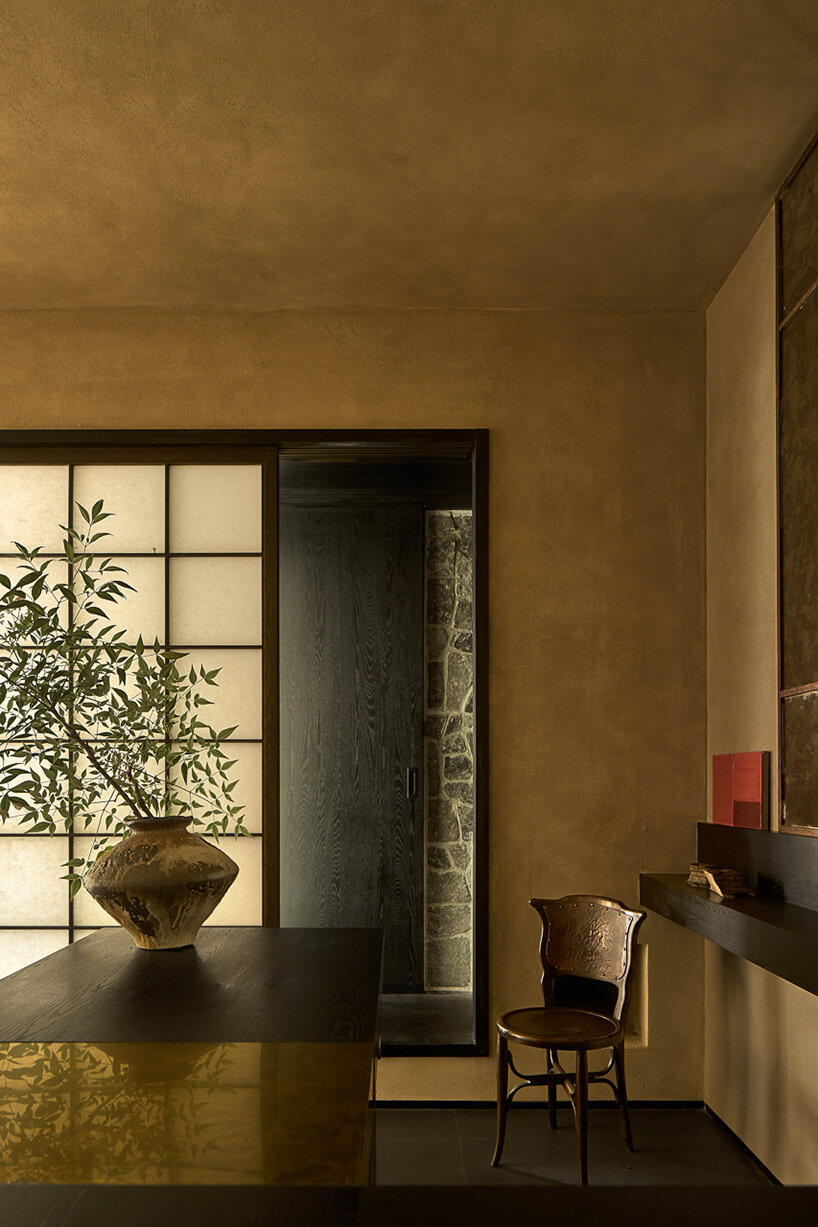
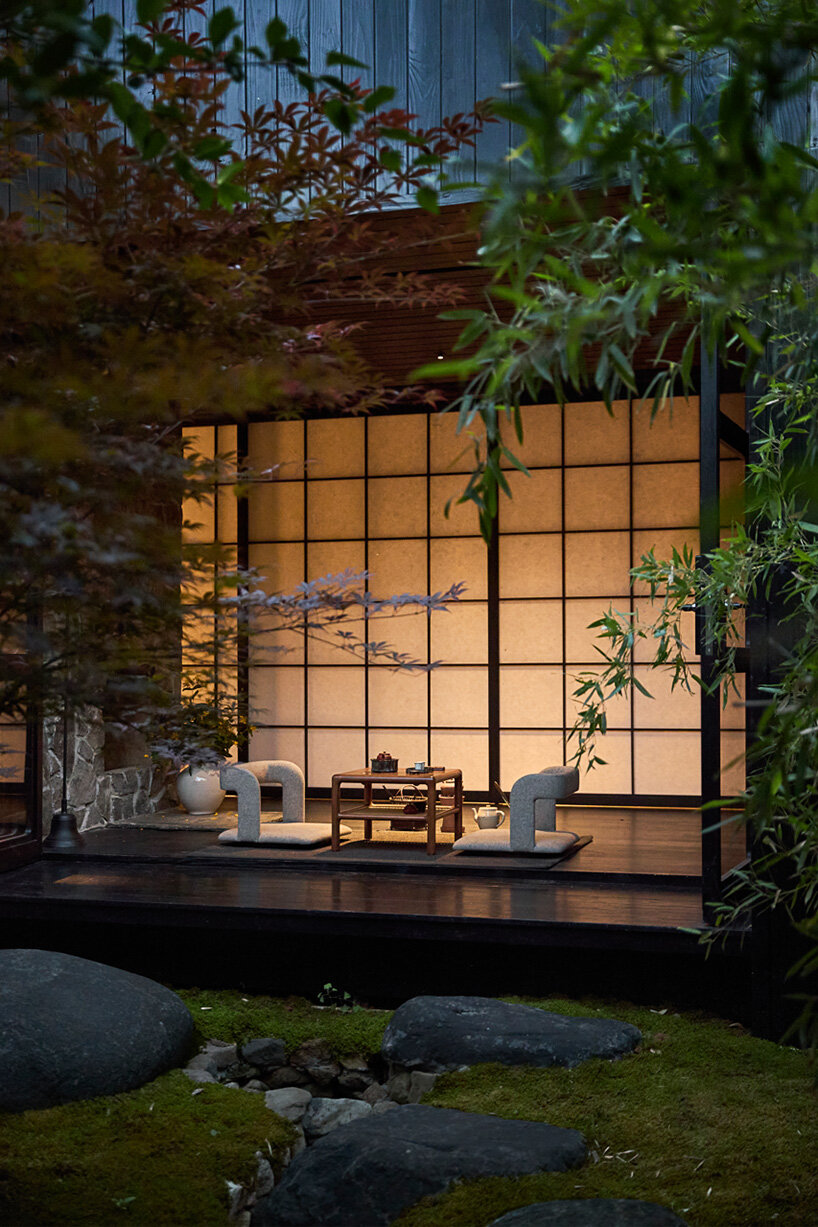
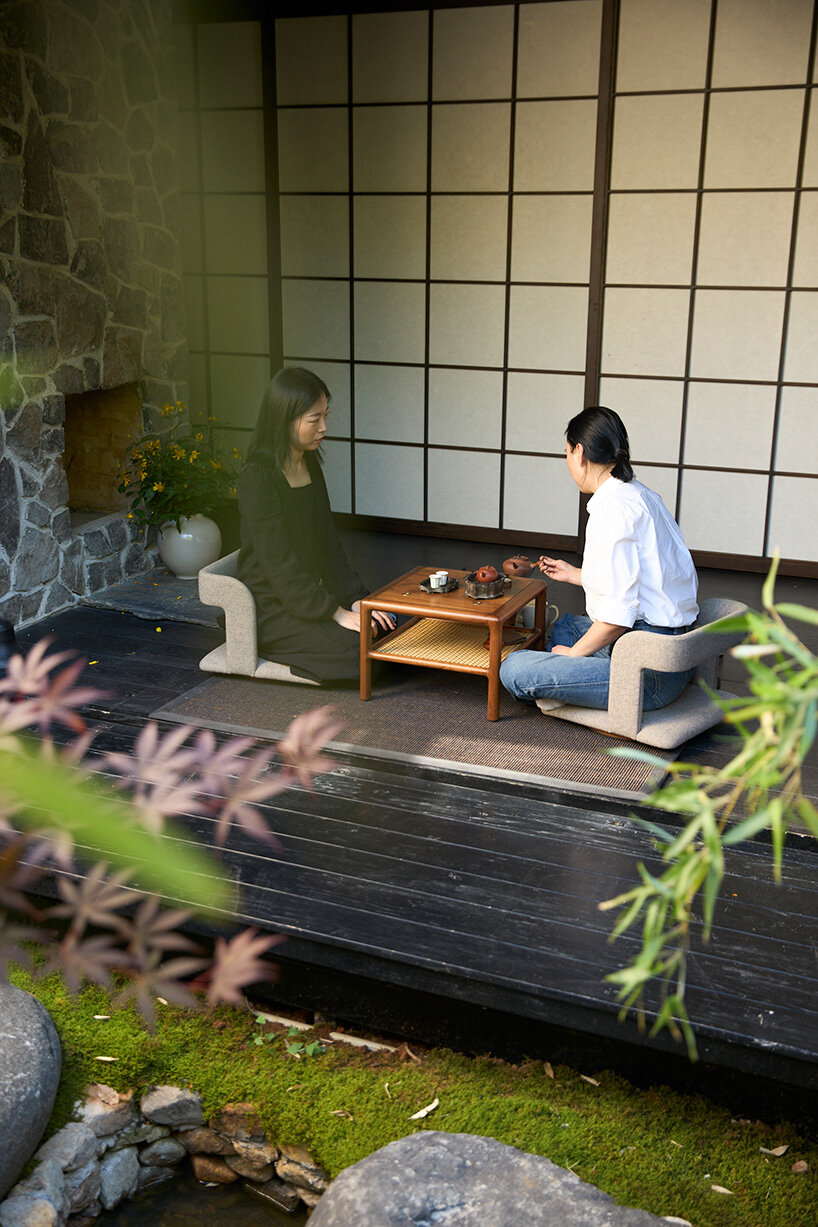
Visitors approach the tea house via a curated path, flanked by dome-shaped greenery. Two plots of land brimming with lush plants lead to the understated entrance, where stepping stones are arranged in irregular spacing over a pond. Upon entering, the structure reveals itself as a quiet sanctuary—a black timber facade that integrates with the verdant surroundings. Inside, the architectural team draws on arid landscapes, warm tones, and organic materials to create a calming ambiance. Earth-toned walls are paired with dark furniture crafted from wood and stone, while olive and yellow accents unify the palette. The spatial layout is intentionally uncluttered, allowing light patterns to form as sliding and folding doors connect the interiors to the outdoor greenery.
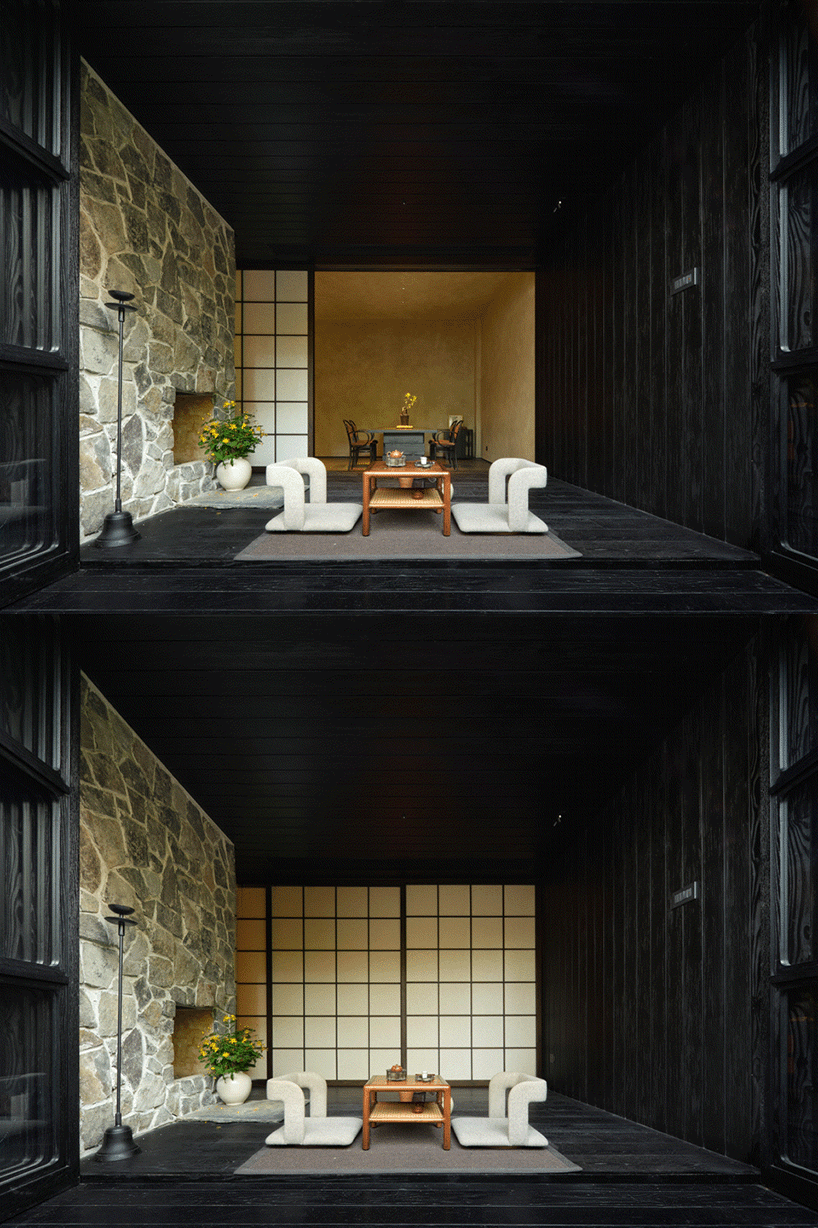
various textures compose the interior of XinHeYe Tea House
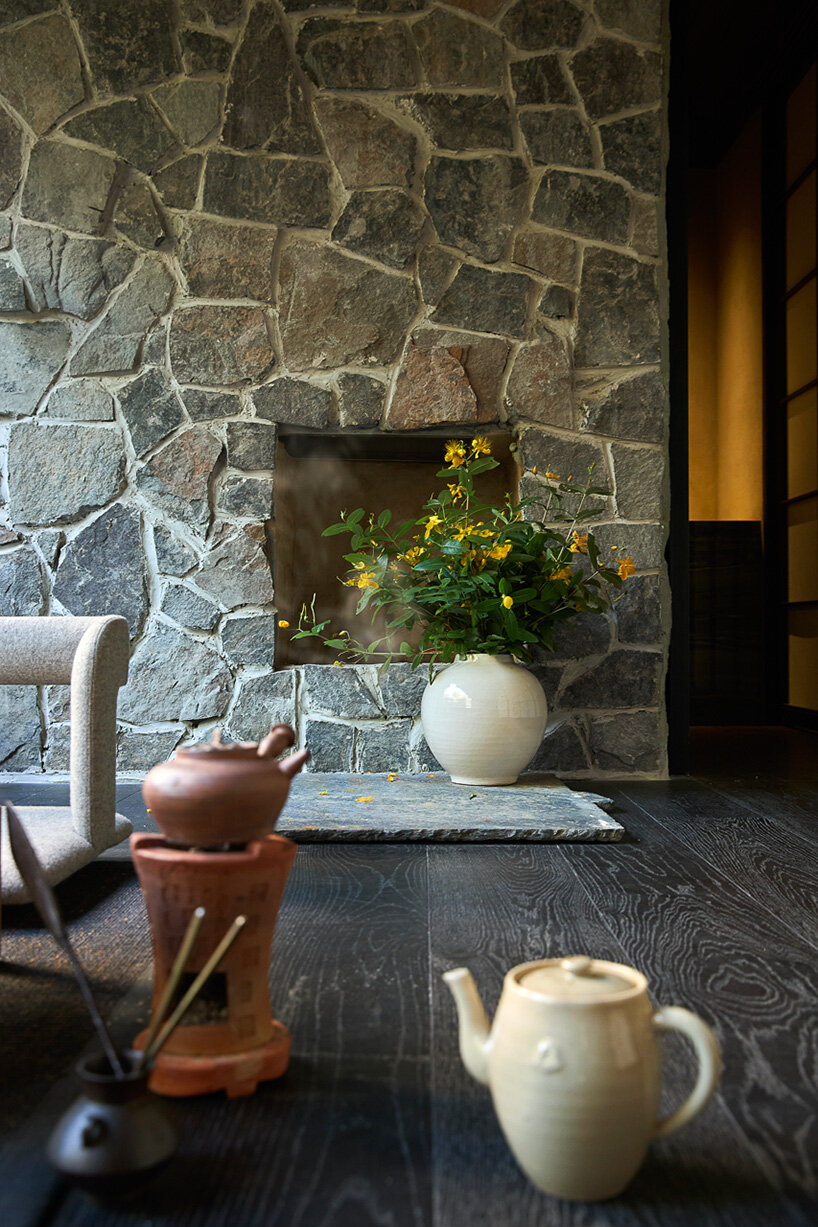
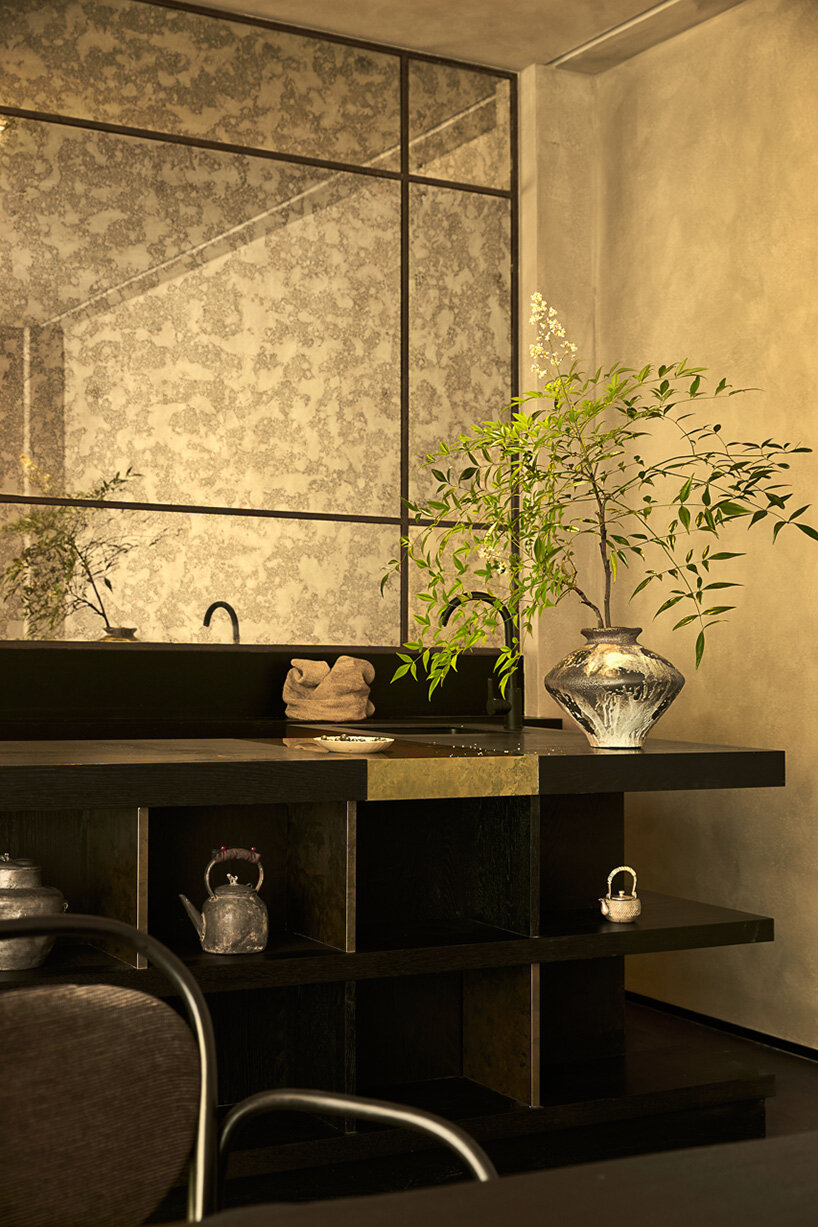
The interplay of light and shade transforms the Qicang Design’s XinHeYe Tea House throughout the day, enhancing its tranquil atmosphere. Two stone walls in the lobby introduce a tactile quality to the space. A sculptural niche in the stone provides a communal gathering point, with a fire feature whose flickering warmth evokes a sense of timeless ritual. At the heart of the tea house is a black wood and copper green metal bar counter, where tea and pastries are prepared. A five-meter-long mottled mirror visually expands the space, contrasting with the earthy textures of the shelving below.
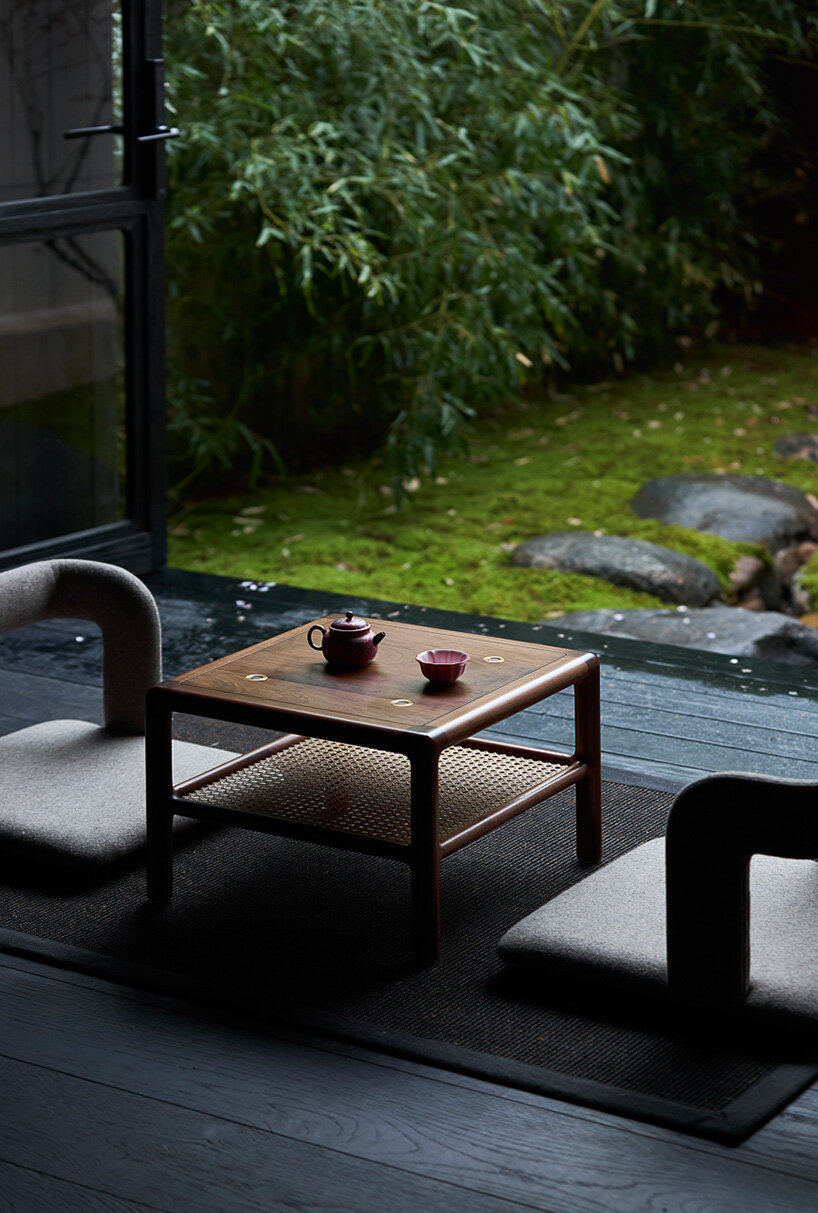
Furnishings and antiques, handpicked by the owner—from black lacquered fruit plates to European antique chairs—add layers and enhance the timelessness of the space while maintaining a central focus on practicality despite their theatrical placement. Seasonal changes are celebrated through floral installations and curated tea rituals, encapsulating the passage of time. From spring cherry blossoms to winter snow, the tea house reflects the natural cycles of life, creating an ever-evolving narrative.




1/10
project info:
name: XinHeYe Tea House
architect: Qicang Design
location: Ningbo, Zhejiang Province, China
area: 80 square meters
chief designer: Mao Yun
team members: Chen Beibei, Xue Liuqing
design management: Qicang-OTTTG Team
execution: Qicang-OTTTG Team
display design: Qicang-LINEI
floral art: Qicang-XinHeYe Floral
shop
your own online design shop — no sales commission collected