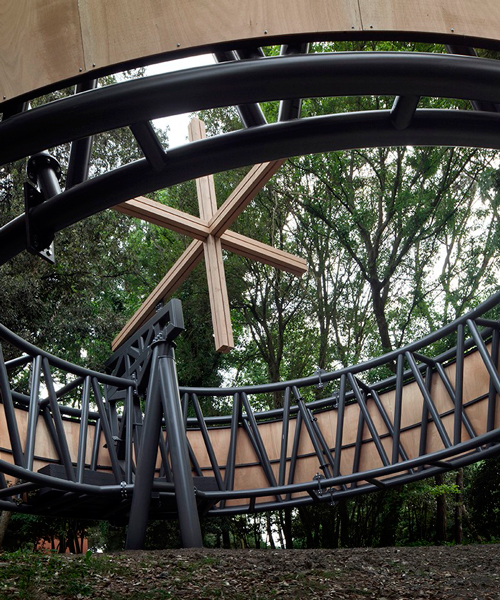
ten architects design chapels for the vatican’s first pavilion at the venice biennale
the holy see pavilion invites ten architects including norman foster, eduardo souto de moura and terunobu fujimori.
prefer designboom on google[FEATURED]
the vatican’s debut at the venice architecture biennale invited ten architects to design and build ten chapels in a wooded area at the venetian island of san giorgio maggiore. curated by francesco dal co and micol forti, the brief asked for places of shelter designed for orientation, encounter, mediation, and salutation. starting with francesco magnani and traudy pelzel’s ‘asplund chapel’, the exhibition includes ten other ‘temples of worship’ designed by norman foster, eduardo souto de moura, carla juaçaba, among others.
ricardo flores and eva prats with saint-gobain italia – the morning chapel 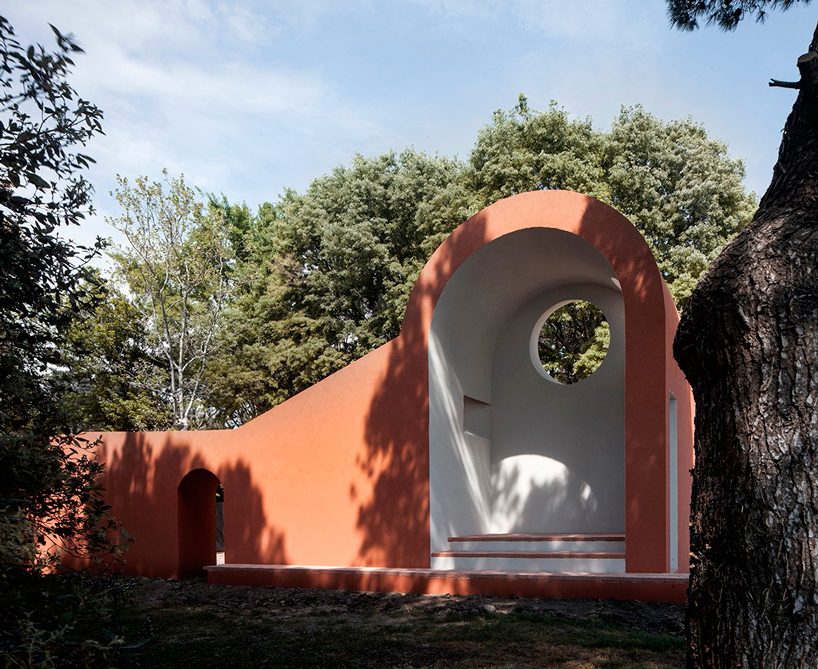 image by alessandra chemollo
ricardo flores and eva prats’ chapel is presented as a wall parallel to the path. on this wall, a door offers the option to step aside from the common route and move into the forest, abandoning the known destiny offered by the lineal paths in favor of the unknown.
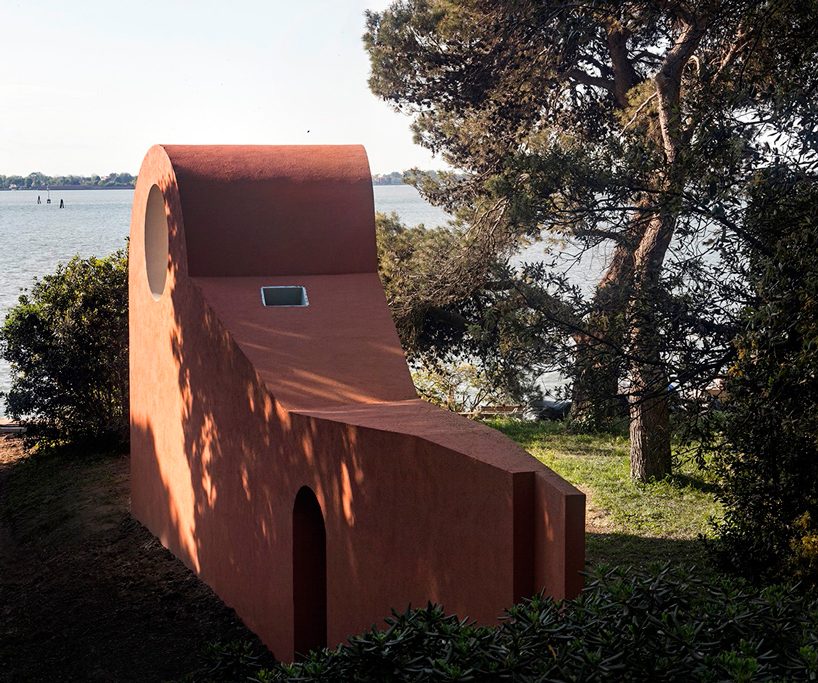 image by alessandra chemollo
edouardo souto de moura with laboratorio morseletto – no, it is not…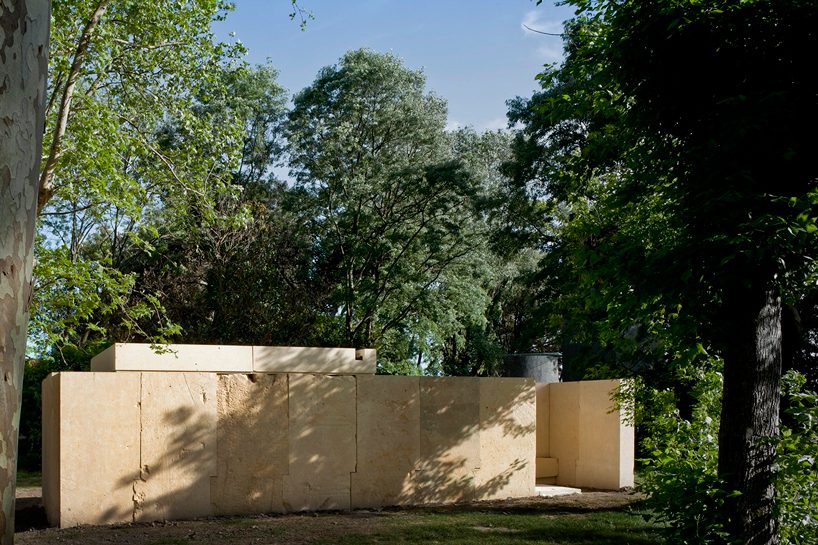 image by alessandra chemollo
edouardo souto de moura designs an enclosed space by four stone walls with another stone at the center that alludes to an altar. the entrance is screened by a tree while on the inside, the walls have a ledge on which visitors can sit and wait.
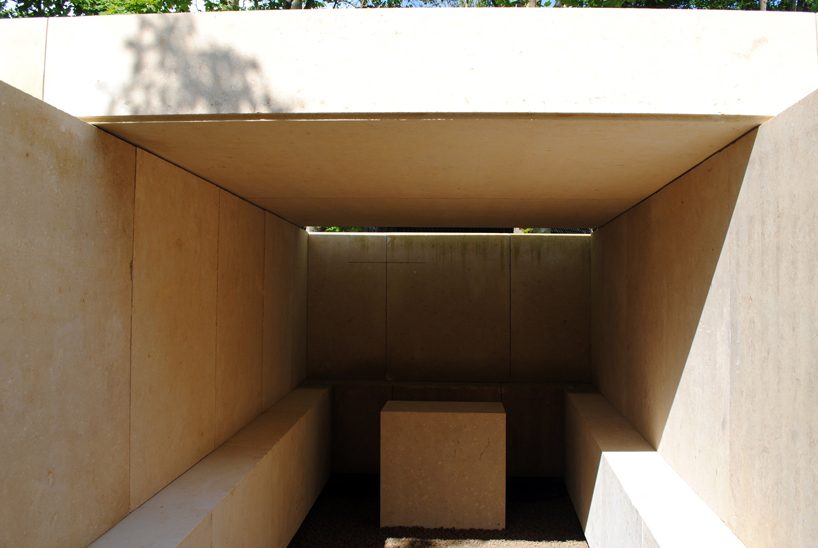 image © designboom
smiljan radic with moretti, saint-gobain italia – a chapel as a roadside shrine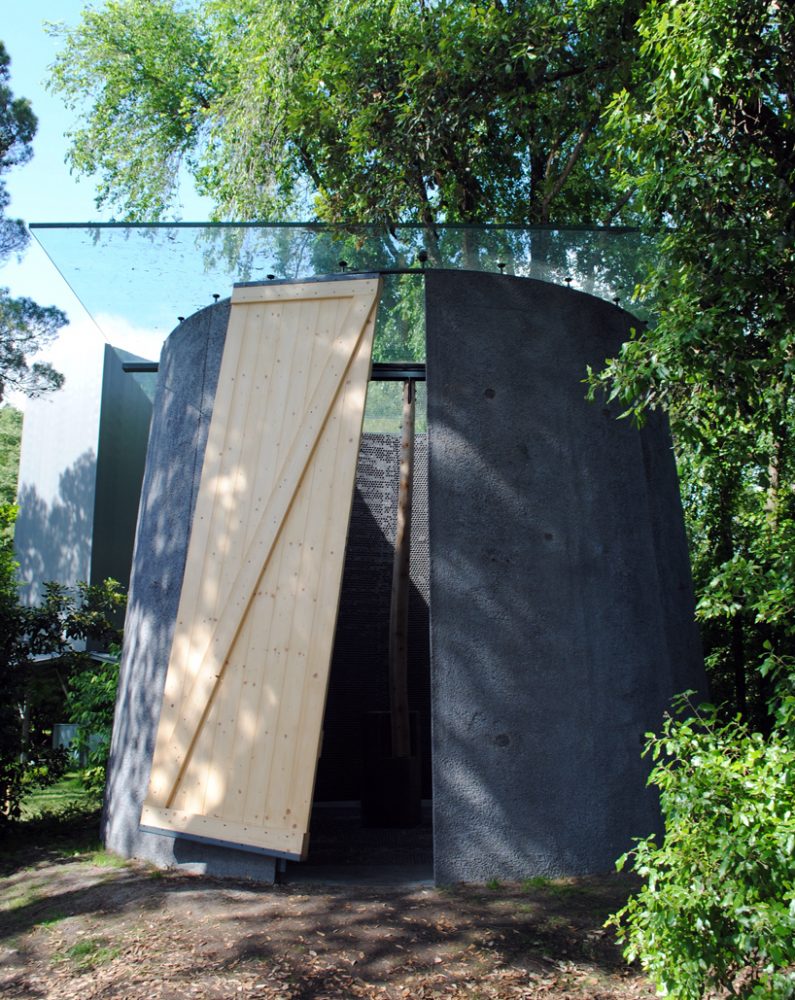 image © designboom
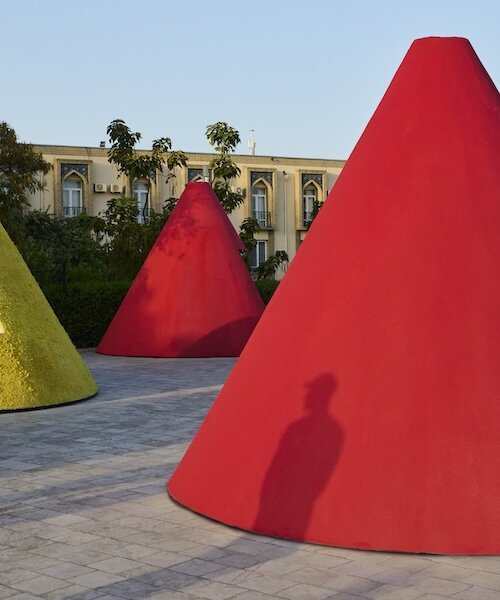
the conical chapel with its thin walls and open roof by smiljan radic brings together the domestic and the monumental. the chapel is equated to roadside shrines, which according to the architect are tribalized chapels where grieving people place flowers and candles.
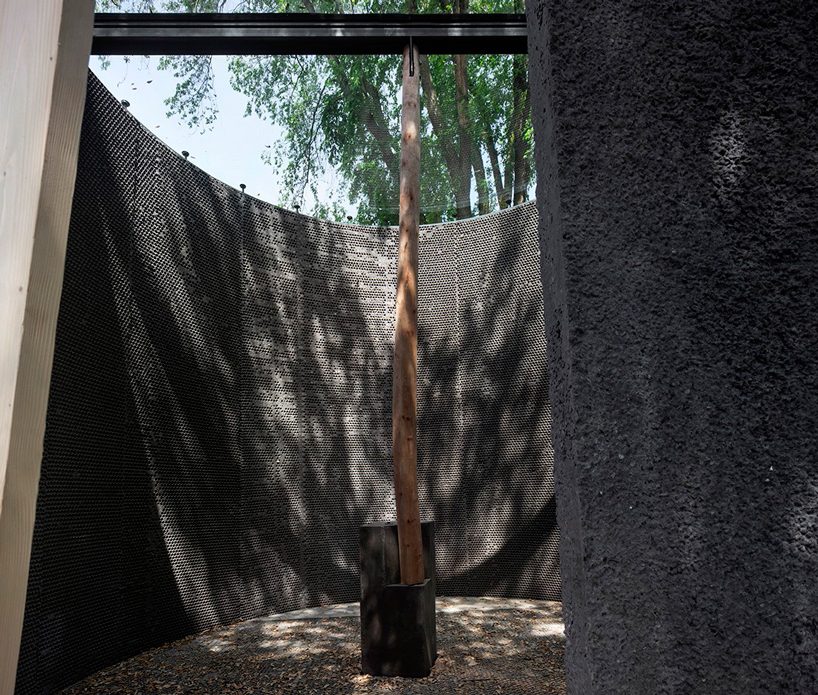 image by alessandra chemollo
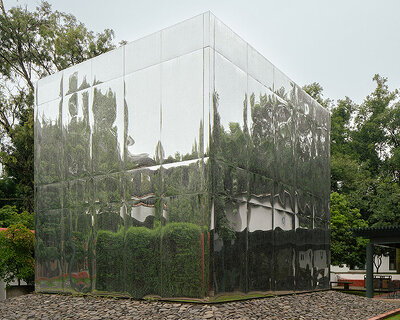
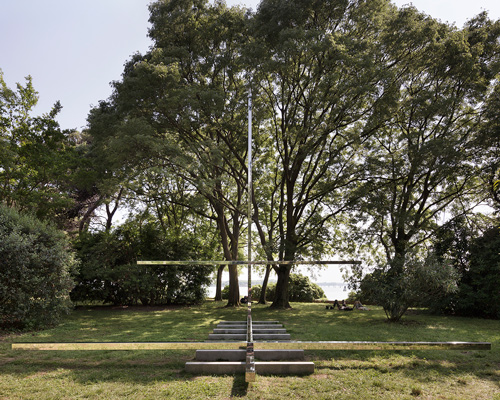
carla juaçaba with secco sistemi – a bench and a cross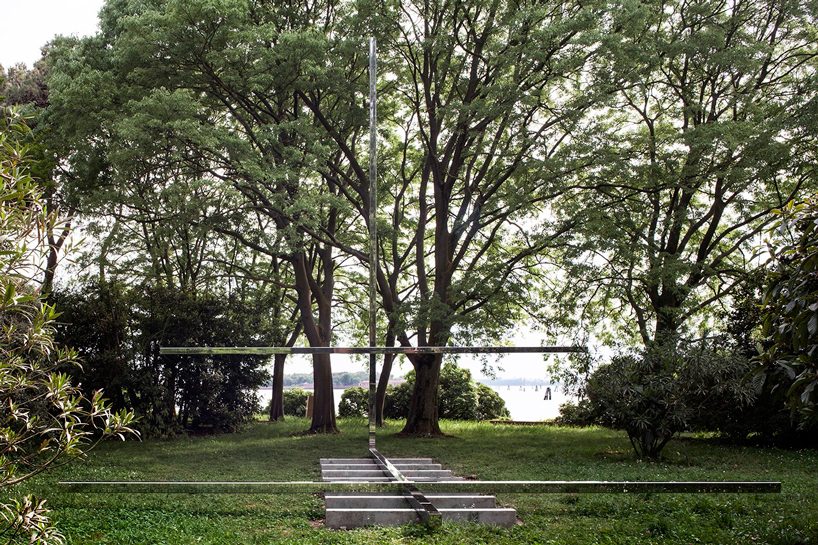 image by alessandra chemollo
carla juaçaba’s chapel is made of four steel beams of 8 meters-long, two of which compose a bench and the other two a cross. resting on seven pieces of concrete, the stainless steel beams reflect the surroundings, making the chapel almost disappear at any moment.
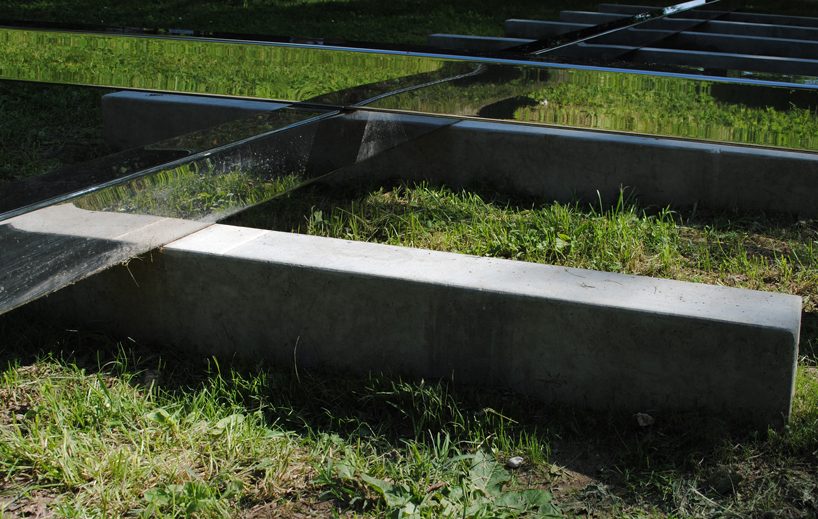 image © designboom
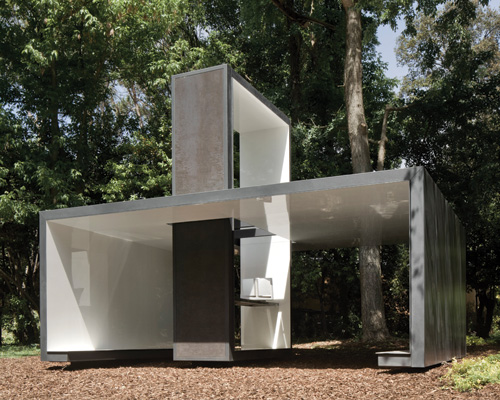
sean godsell with maeg, zintek – a dynamic entity capable of surviving thousands of kilometers away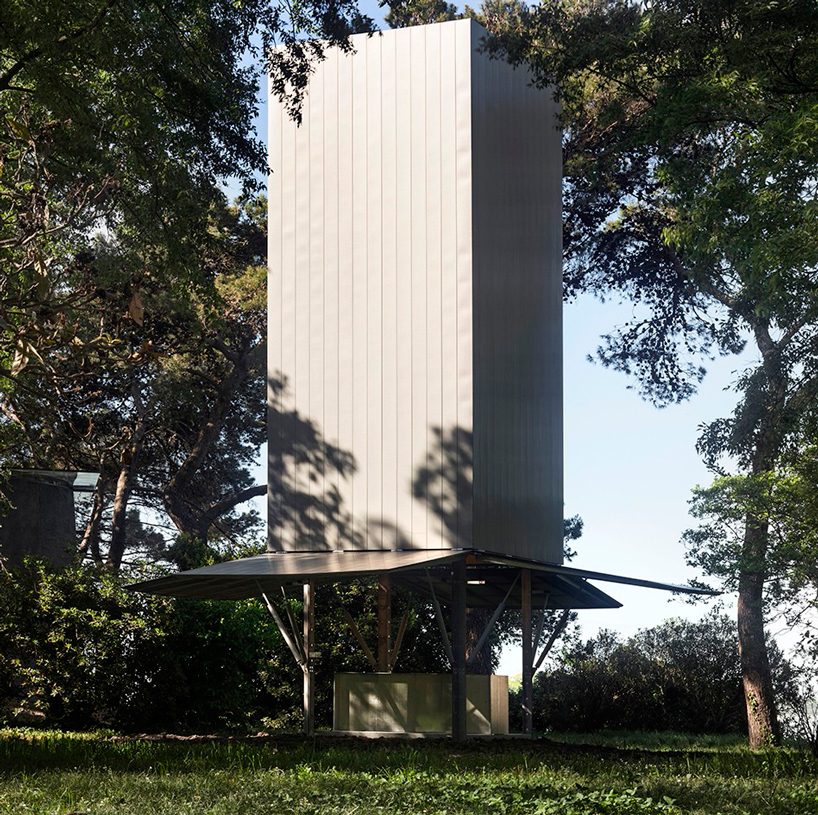 image by alessandra chemollo
sean godsell’s design extends the idea of the church as a resilient, dynamic entity capable of surviving thousands of kilometers away from rome. the relocatable chapel can be transported, erected, re-packed and transported and re-erected wherever the need exists.
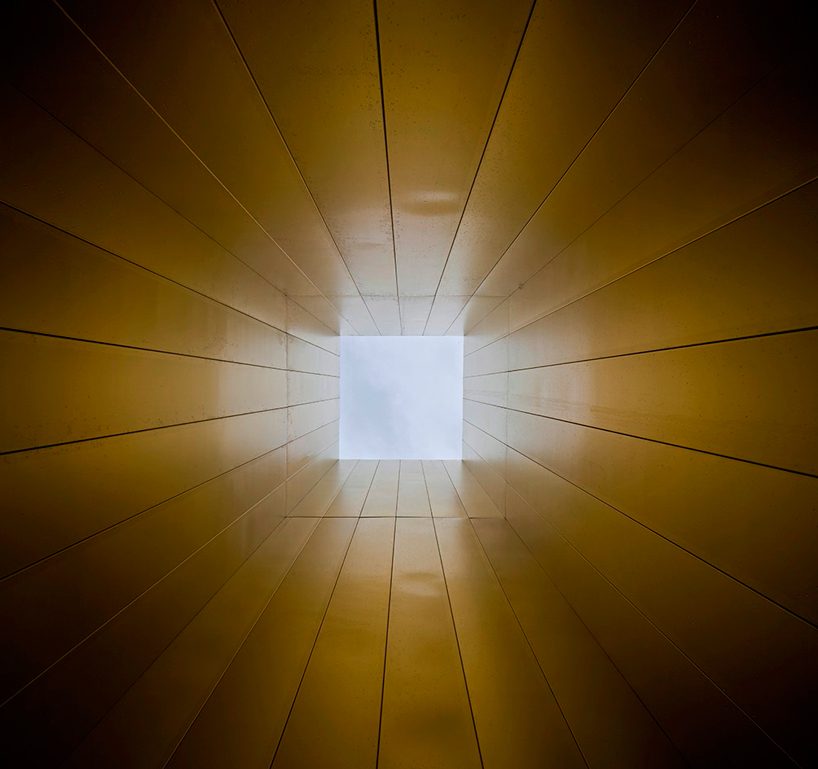 image by alessandra chemollo
terunobu fujimori with barth interni, lignoalp – cross chapel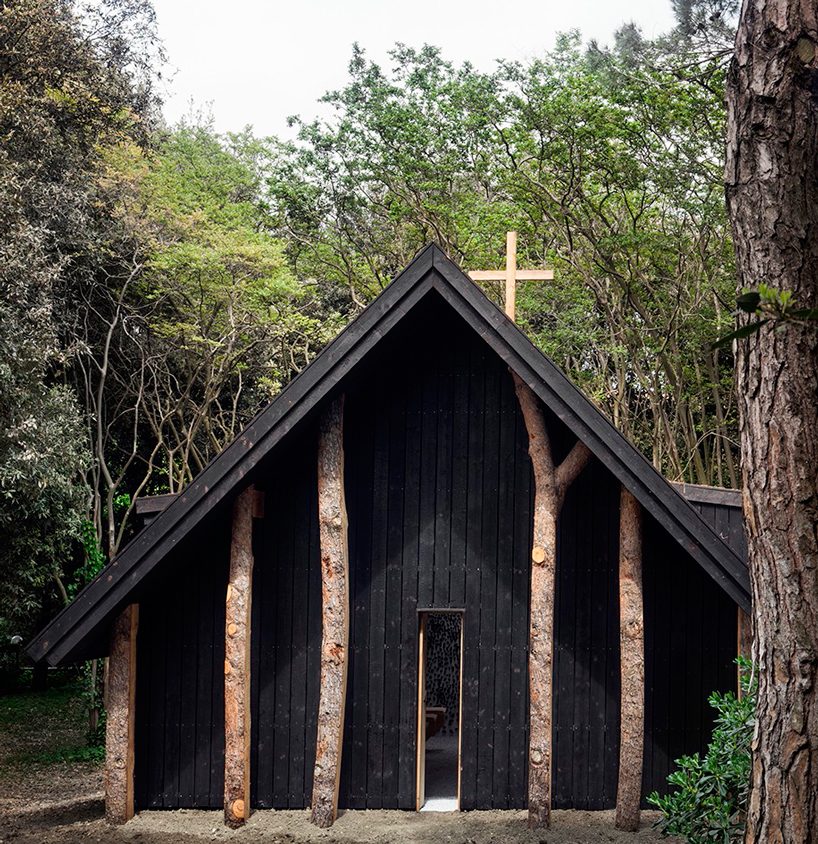 image by alessandra chemollo
the cross chapel by terunobu fujimori features an outer wall in black that suggests a place of quiet prayer. the inner wall is coated with plaster and embedded with pieces of charcoal but around the cross it remains pure white, emphasizing the gilded part. visitors can walk through a narrow passage to approach the ‘stable-like’ building, and ‘enter by the narrow gate’ to experience the sensation of the ascension of the son of god when they see the gross.
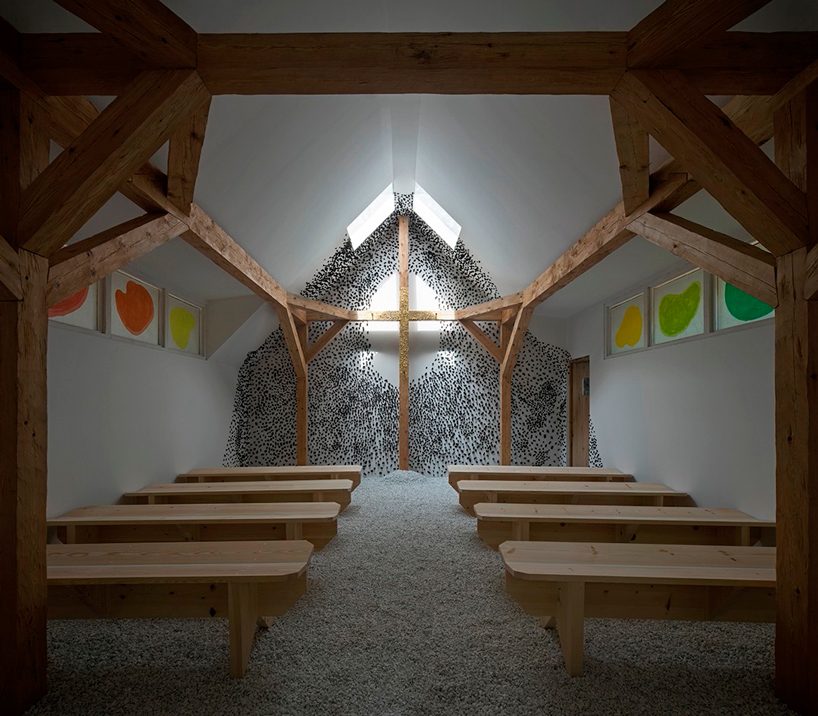 image by alessandra chemollo
norman foster with maeg, tecno, terna – crosses morphed into a tensegrity structure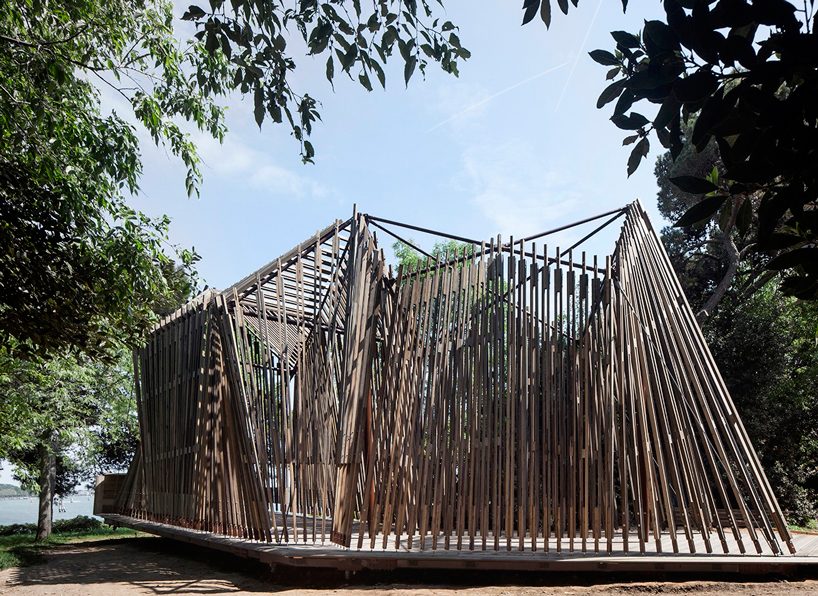 image by alessandra chemollo
norman foster aims to create a small sanctuary space diffused with dapple shade and removed from the normality of passers-by, focusing on the natural landscape instead. the design of the chapel started with a timber deck and three symbolic crosses that morphed into a tensegrity structure of cables and masts. read more about it here.
 image by alessandra chemollo
javier corvalán with simeon – a nomadic chapel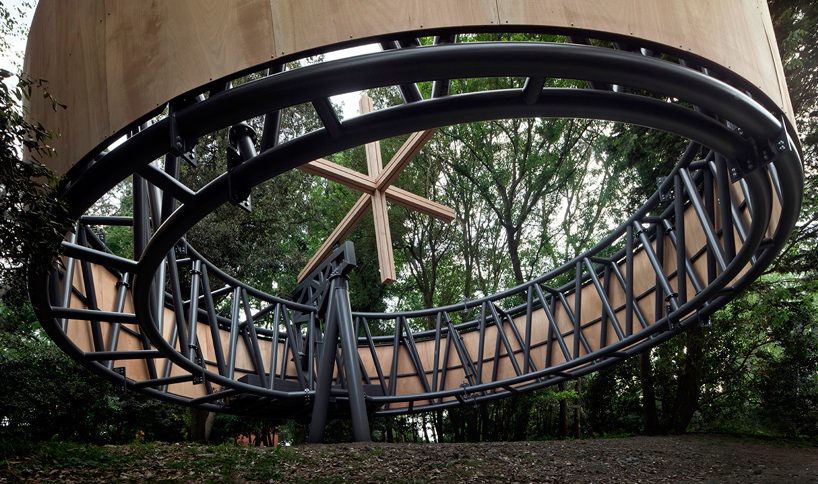 image by alessandra chemollo
for his chape, javier corvalán has liberated the circle, creating a cross-section of a cylinder placed in balance on a point of support. the entire structure is made out of steel while the cylinder does not touch the ground – if the earth shakes or the wind blows, the chapel moves.
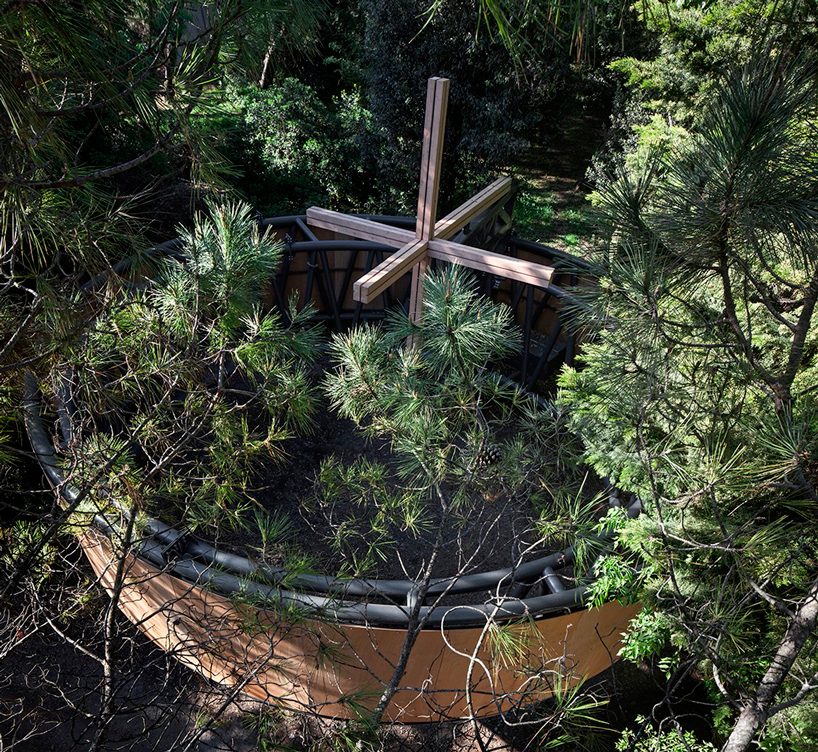 image by alessandra chemollo
francesco cellini with panariagroup – not a project; a reflection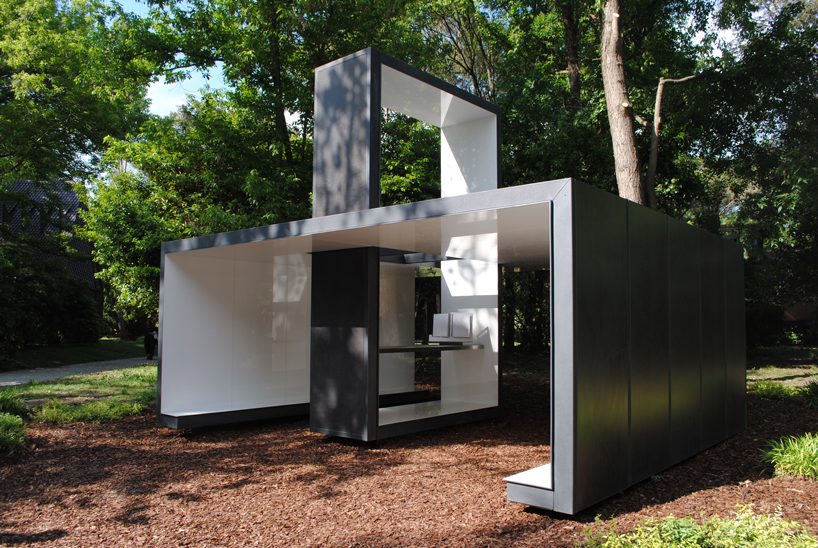 image © designboom
francesco cellini’s structure comprises two interlocking volumes that contain areas of seating as well as two key liturgical elements specified in the brief: a pulpit and an altar. the chapel abstains from exuberance of form, working with elementary and pared down spaces and materials that carry an abstract character.
andrew berman with moretti, terna – a precise form of anonymous origin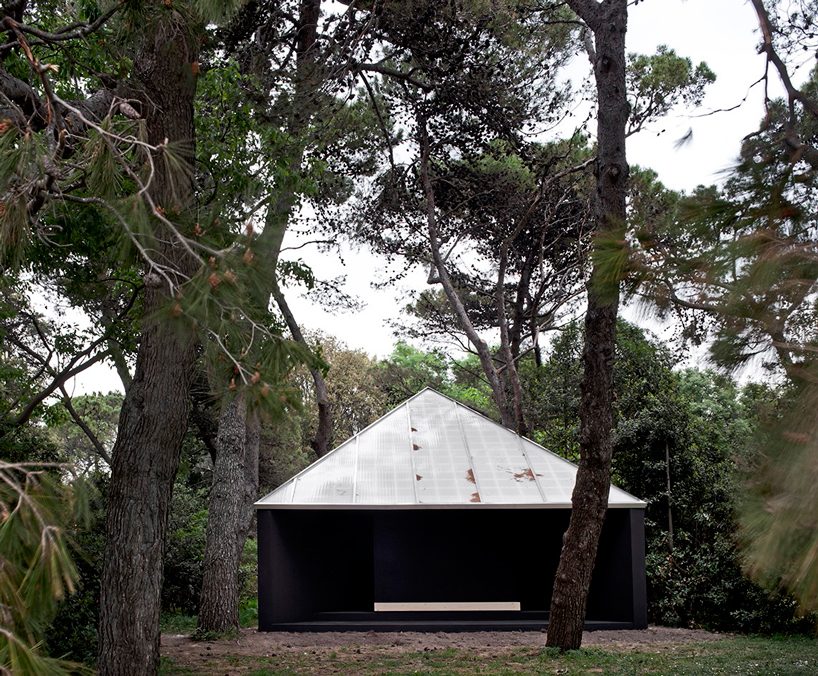 image by alessandra chemollo
the simple structure by andrew berman resembles sheds and buildings assembled of readily available materials for simple shelter or use. all exterior surfaces are clad in translucent polycarbonate sheets while the interior is lined in black painted plywood. the structure is a precise form of anonymous origin, an indeterminate presence in the landscape.
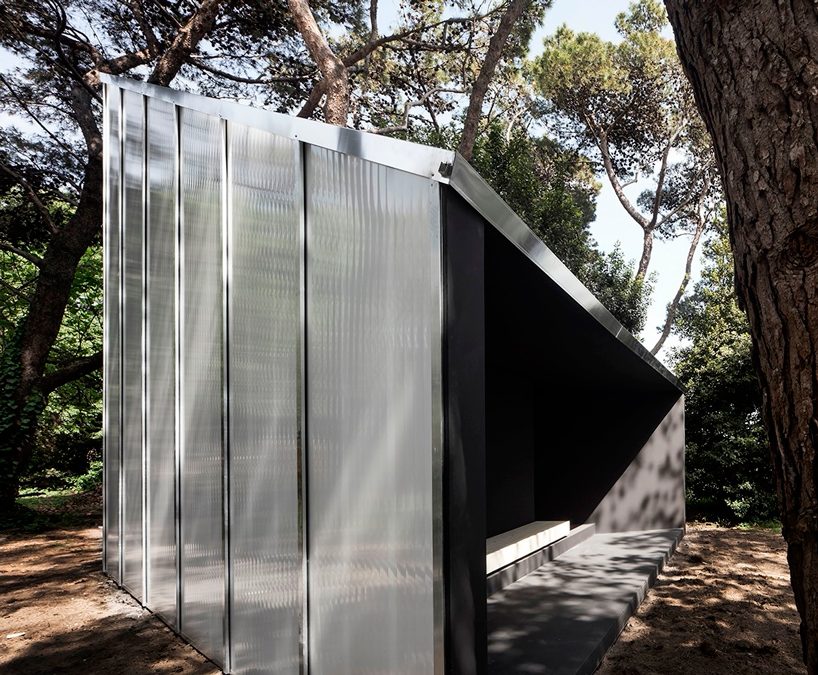 image by alessandra chemollo
francesco magnani and traudy pelzel with alpi – reconstruction of the woodland chapel by gunnar asplund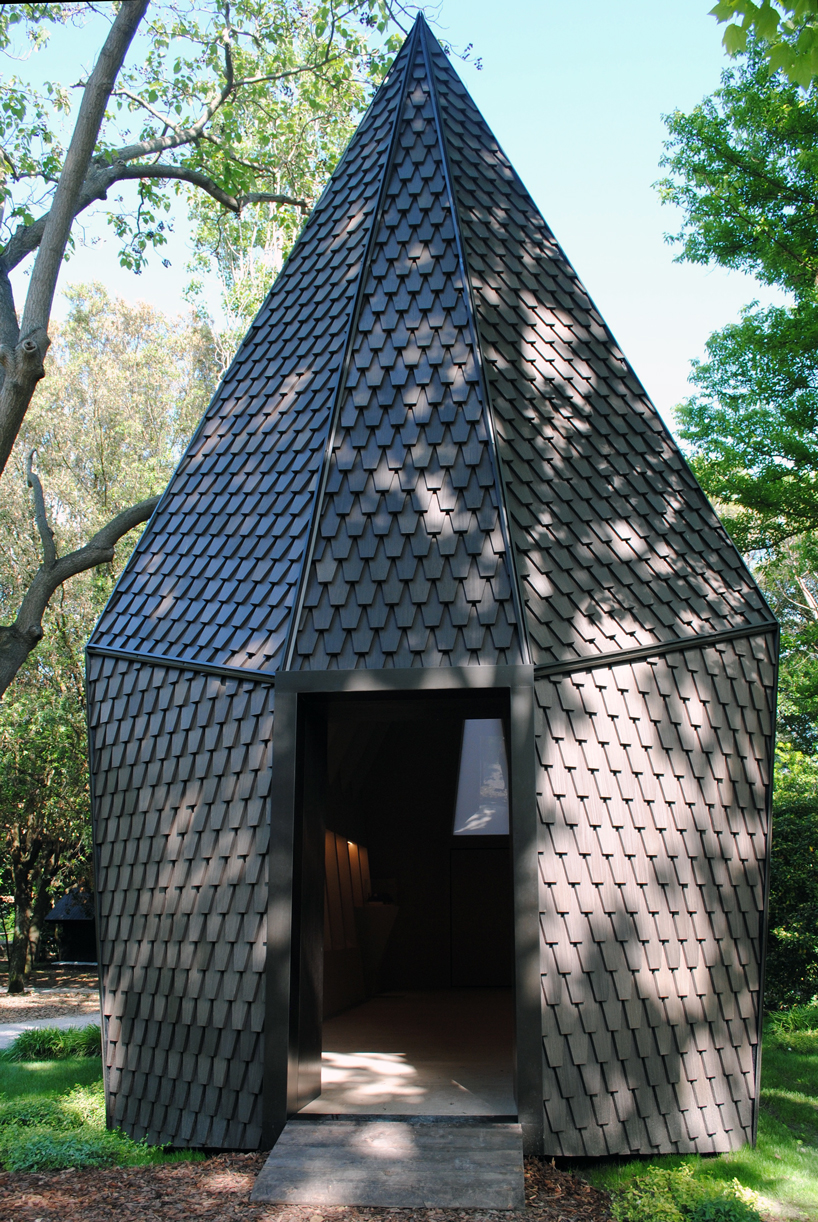 image © designboom
conceived as a prelude to the exhibition, the structure displays asplund’s architectural drawings for the original woodland chapel — located at skogskyrkogården cemetery in sweden. measuring just 33 square meters, the pavilion refers to both the architecture of the cemetery and the appearance of cabins in natural settings.

designboom’s coverage of the 2018 venice architecture biennale is in partnership with leading energy company edison. edison is taking part in the 16th international architecture exhibition of la biennale di venezia by initiating a path towards sustainability and the efficient use of resources. the collaboration between edison and la biennale is based on awareness that energy is one of the fundamental elements of architecture and of the places, spaces and cities of contemporary life.

shop
your own online design shop — no sales commission collected