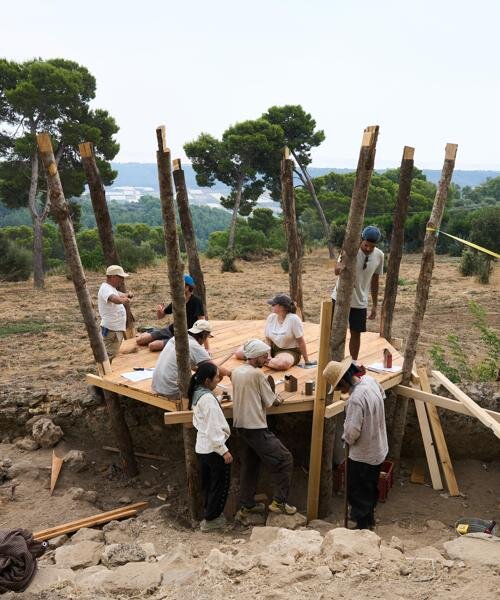
a terraced timber pavilion explores circular construction for austria’s gabonsa music festival
gabonsa pavilion was designed and built by students from kaiserslautern university of applied sciences.
prefer designboom on google[FEATURED]
students Design a Pavilion Around Reuse and Reversibility
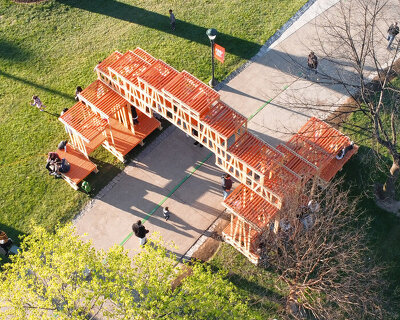
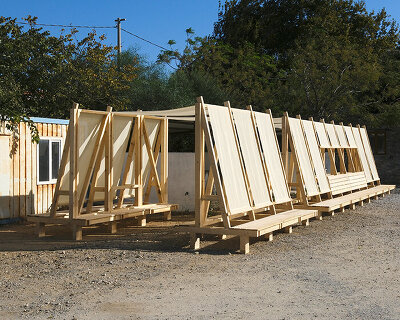
Developed and constructed by students from Kaiserslautern University of Applied Sciences in collaboration with the Innsbruck-based collectives Gans Anders and Bonanza, the Gabonsa Pavilion is a temporary structure created for the Gabonsa Music Festival at the Rossau Recreation Center in Innsbruck, Austria. Designed as an exploration of circular construction and material reuse, the pavilion combines simple timber elements, reversible connections, and standard construction materials to investigate how temporary architecture can generate adaptable public space with minimal resources.
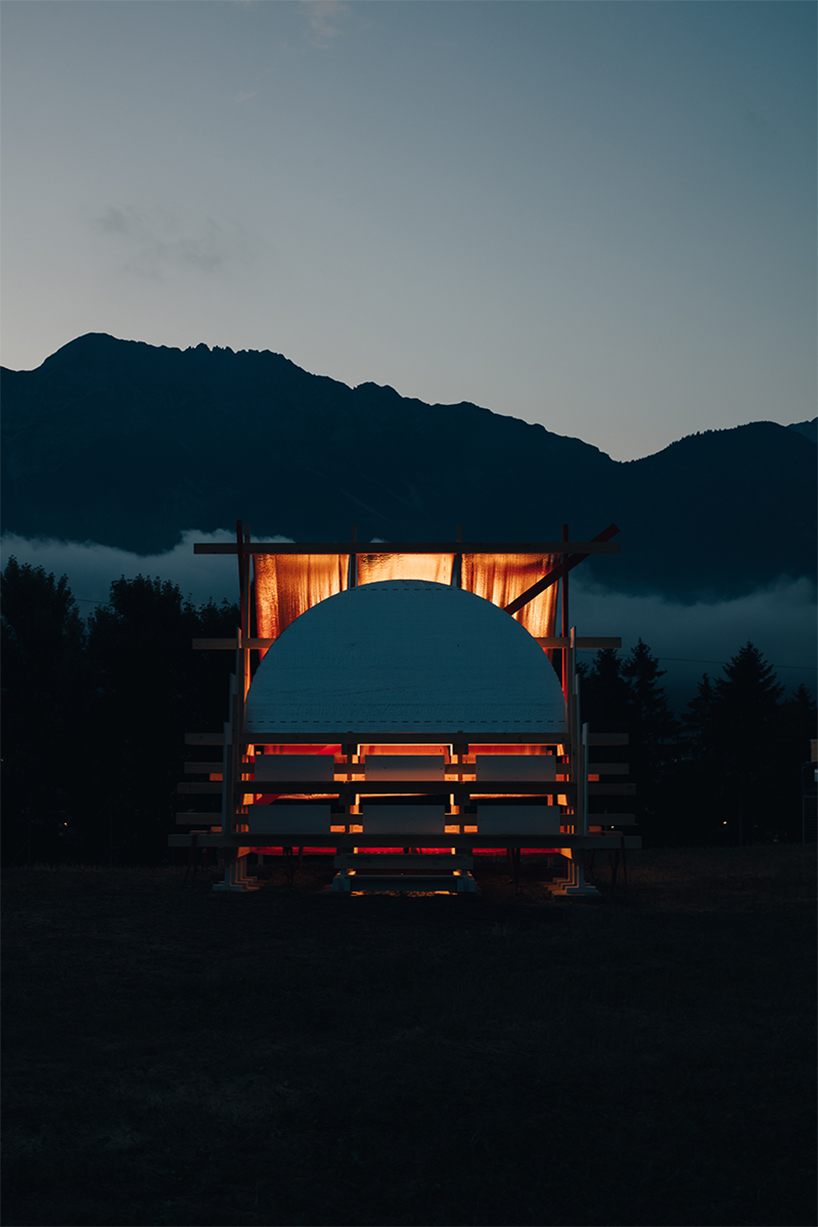
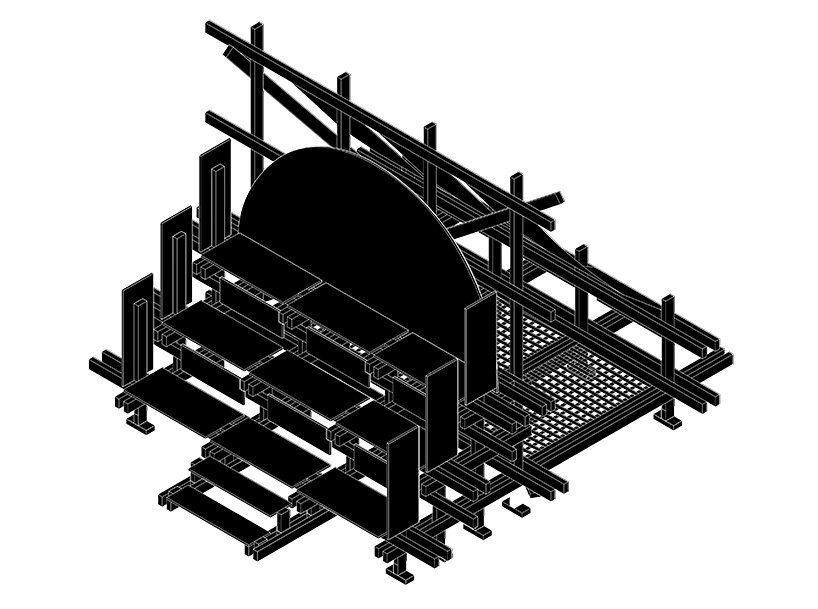
The project forms part of a broader initiative to reactivate the former municipal landfill site through cultural events. Positioned between the festival’s main stage and workshop area, the pavilion functions simultaneously as a seating landscape, viewing platform, meeting place, and landmark. Developed through collaboration with the festival organizers and in response to the site’s topography, the structure occupies a small hill, where its terraced form frames views across the surrounding landscape while providing a range of spaces for sitting, reclining, and gathering.
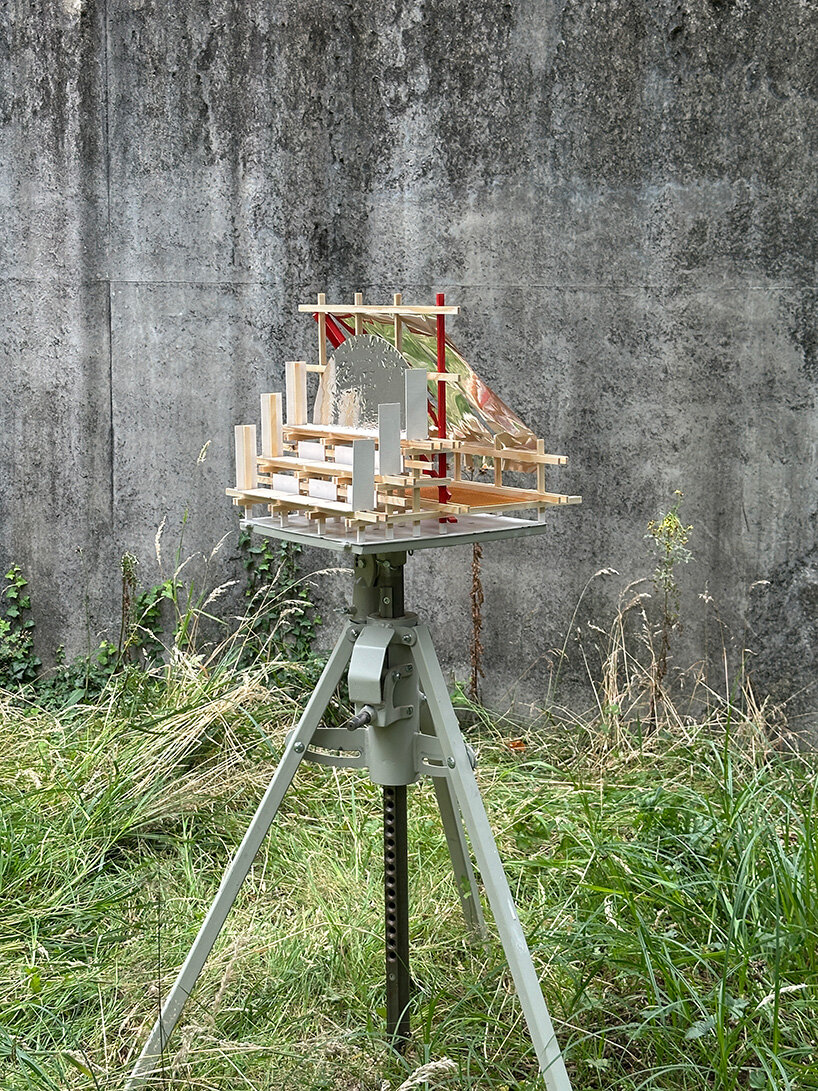
The construction follows principles of simplicity, reversibility, and resource efficiency. Built entirely from 4-meter timber beams connected with screw joints, the pavilion avoids adhesives and other permanent wet connections, allowing the structure to be fully dismantled after the festival. Timber members were cut only where structurally required, enabling most components to be reused in their original dimensions for future projects.

Reversible Construction System Supports Flexible Festival Use
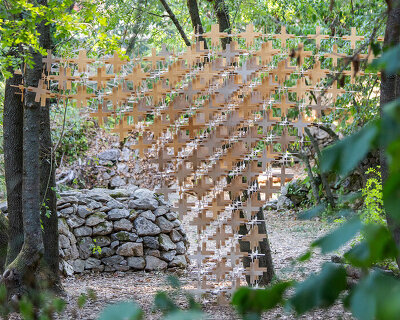
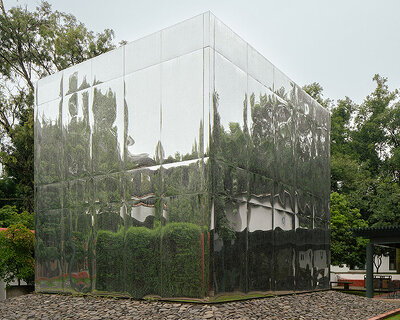
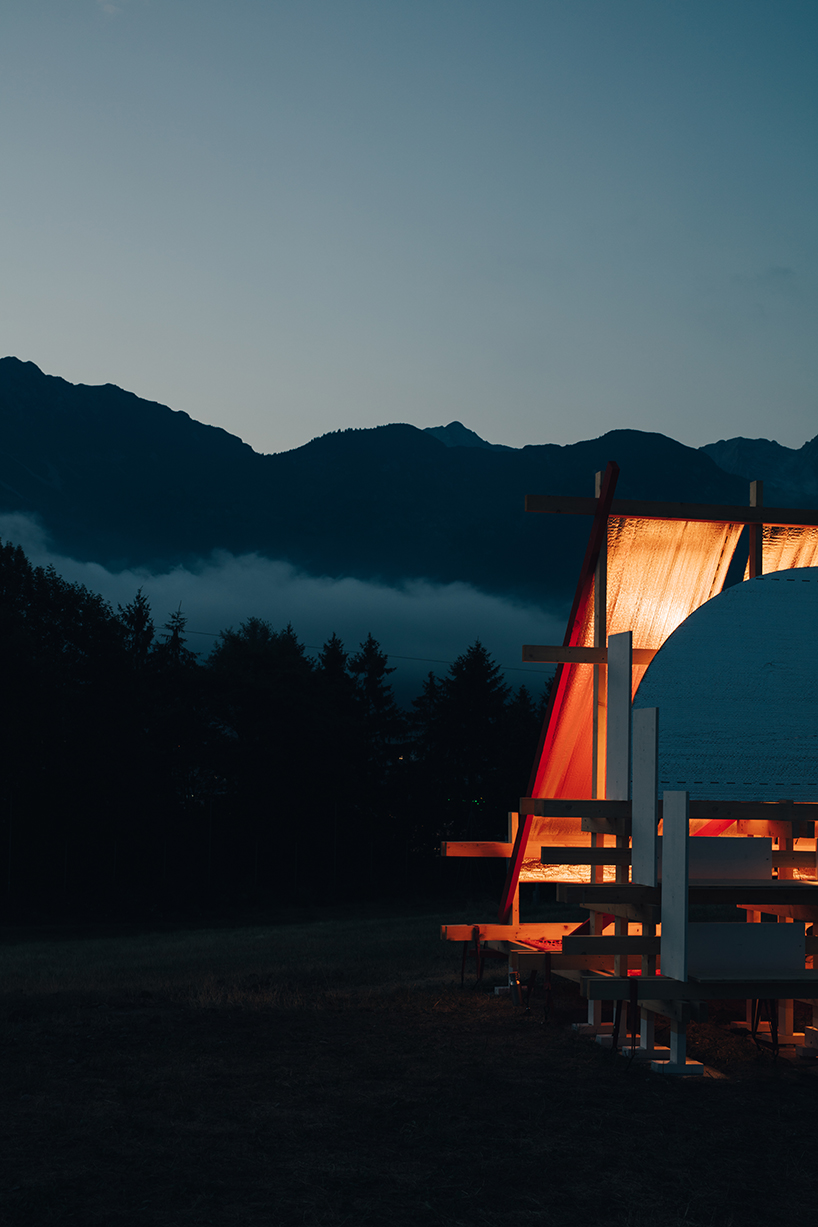
Alongside the timber structure, the project reinterprets standard construction materials as architectural elements. A semicircular volume clad in reflective construction foil mirrors the surrounding sky and mountain landscape, visually extending the site while establishing the pavilion as a recognizable feature within the festival grounds. An aluminum vapor barrier forms a lightweight canopy that provides shade, while an orange construction safety net suspended beneath it functions as a hammock, transforming a familiar building material into a place for rest. Red-painted bracing elements express the structural system, making the construction legible, while ground screws and red tension straps anchor the pavilion with minimal impact on the site and facilitate complete disassembly.
The pavilion, constructed by students from Kaiserslautern University of Applied Sciences, accommodates different patterns of use across the festival grounds. Facing the main stage, it forms a stepped grandstand for performances, while the opposite side transitions into a more sheltered environment adjacent to the workshop area. Rather than creating an enclosed building, the project establishes an open spatial framework that mediates between landscape, visitors, and festival activities through its adaptable structure, material economy, and reversible construction system.


View this post on Instagram

1/2
project info:
name: Gabonsa Pavilion
designer: students of Kaiserslautern University of Applied Sciences – INNENARCHITEKTUR | @hskl_innenarchitektur
educational program: Construction Course, Interior Architecture Department, Hochschule Kaiserslautern
design & build team: Lucy Hartmann, Stella Feuerstein, Rafal Basim Danial, Vladyslava Borzova, Leah Uhlmann, Luana Vilela Ferreira Teixeira
academic supervisors: Prof. Fabian Wagner, Louise Daussy, Antonio Winter-Schlaf, Nils Fischer
structural engineering: Prof. Dr.-Ing. Larissa Krieger
in collaboration with: Bonanza & Gans Anders
photographers: Toni Schade, Christoph Schwarz, Fabian Wagner
designboom has received this project from our DIY submissions feature, where we welcome our readers to submit their own work for publication. see more project submissions from our readers here.

shop
your own online design shop — no sales commission collected