‘the house that habitates’ by natura futura rethinks urban living in ecuador
bringing a house and educational space together under one roof, the combined program intends to stimulate social interaction in the city center.
prefer designboom on google[FEATURED]
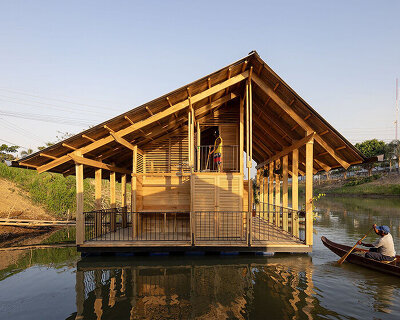
in the ecuadorian city of babahoyo, natura futura arquitectura has realized a project that proposes a new way of urban living. designed for a young couple, the house that habitates brings together both residential and educational functions under one roof. the combined program intends to stimulate social interaction and conserve the traditional notion of a meeting place for future generations.
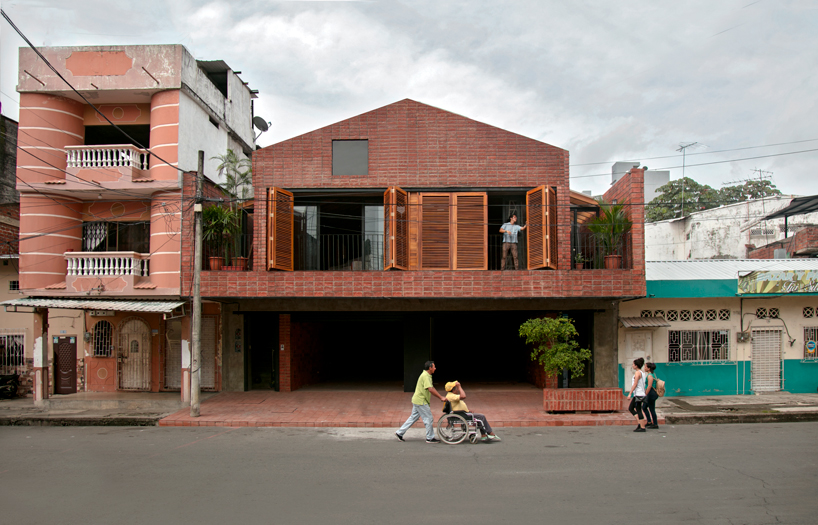
all images courtesy of natura futura arquitectura
in latin america, increased urbanization in recent years has led to innumerable changes, such as the loss of vitality in city centers. located in a coastal area of ecuador, babahoyo has a population of around 150,0000 inhabitants. the city has been developing commercially, but without adequate provision for housing, causing people to look for a place to live in the peripheries. considering these issues, this project by natura futura arquitectura is a manifesto that rethinks how architecture can act as a diversifier of urban centers
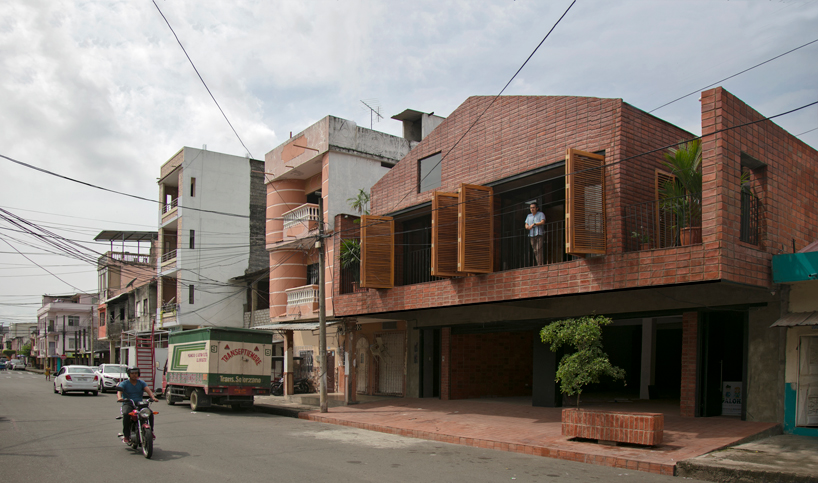
the clients, albita and juan, needed a new place to live that also incorporated the possibility of generating an income. the architect therefore established a program that combined a private residence with an after school academy. in this way, the building could forge a dialogue between living, educating and productive activities.
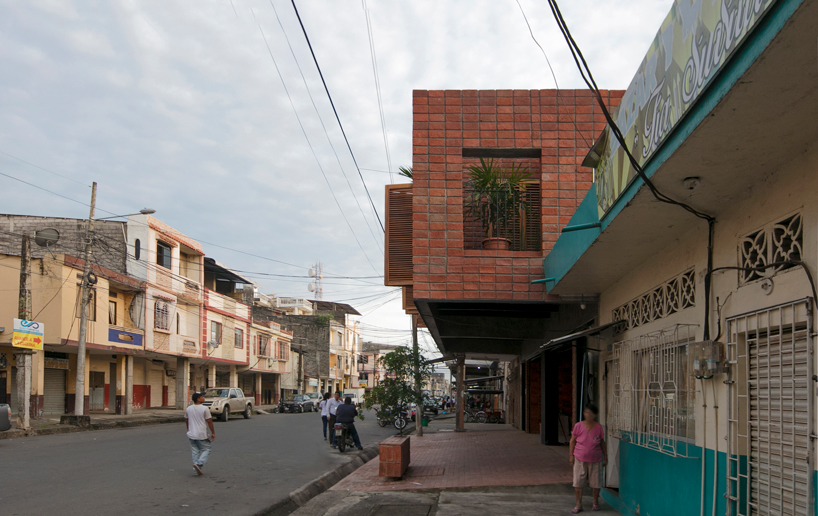
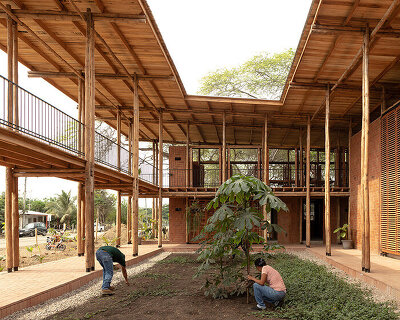
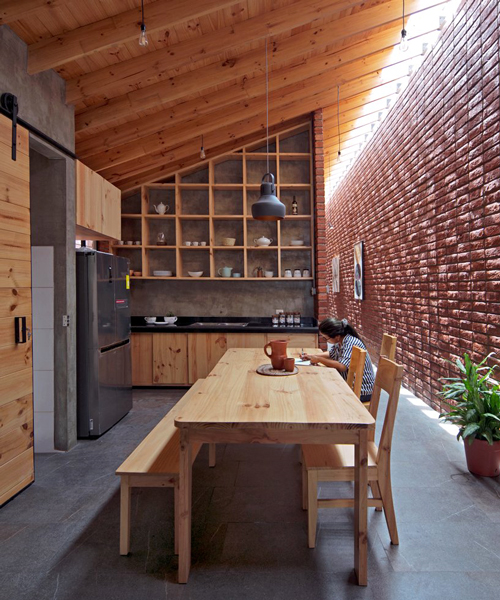
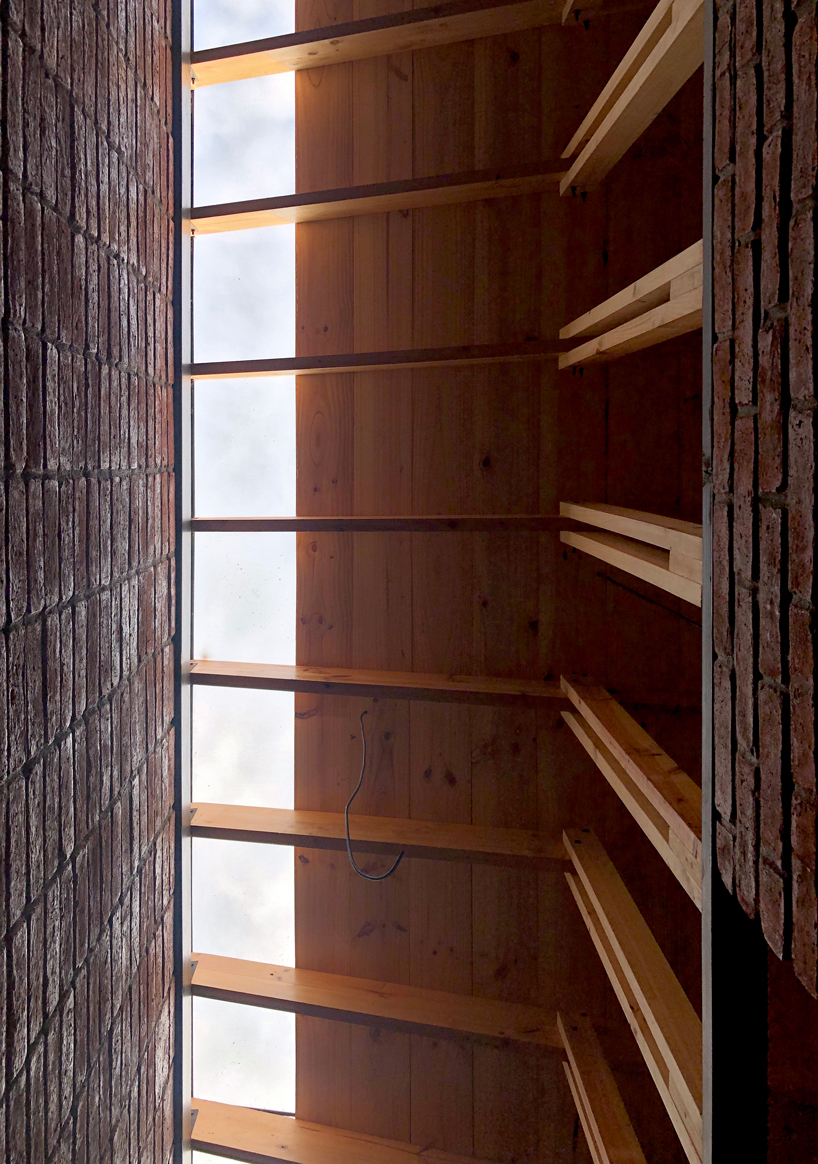
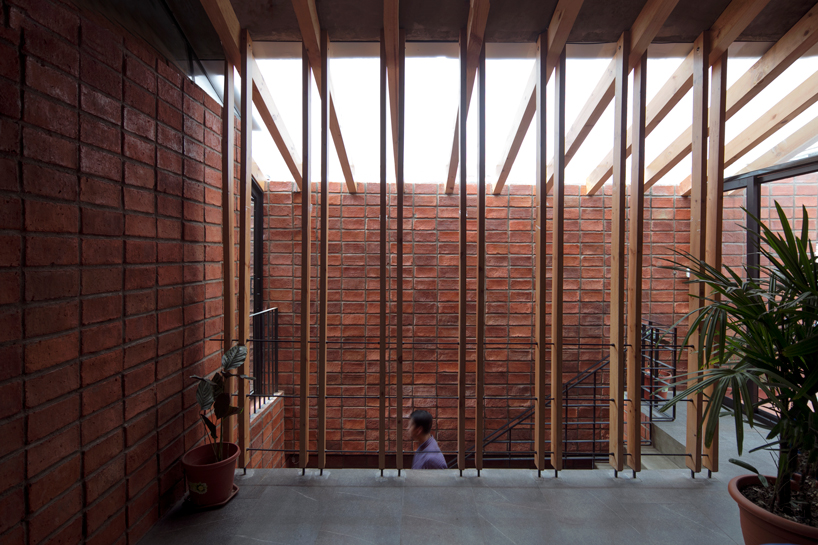
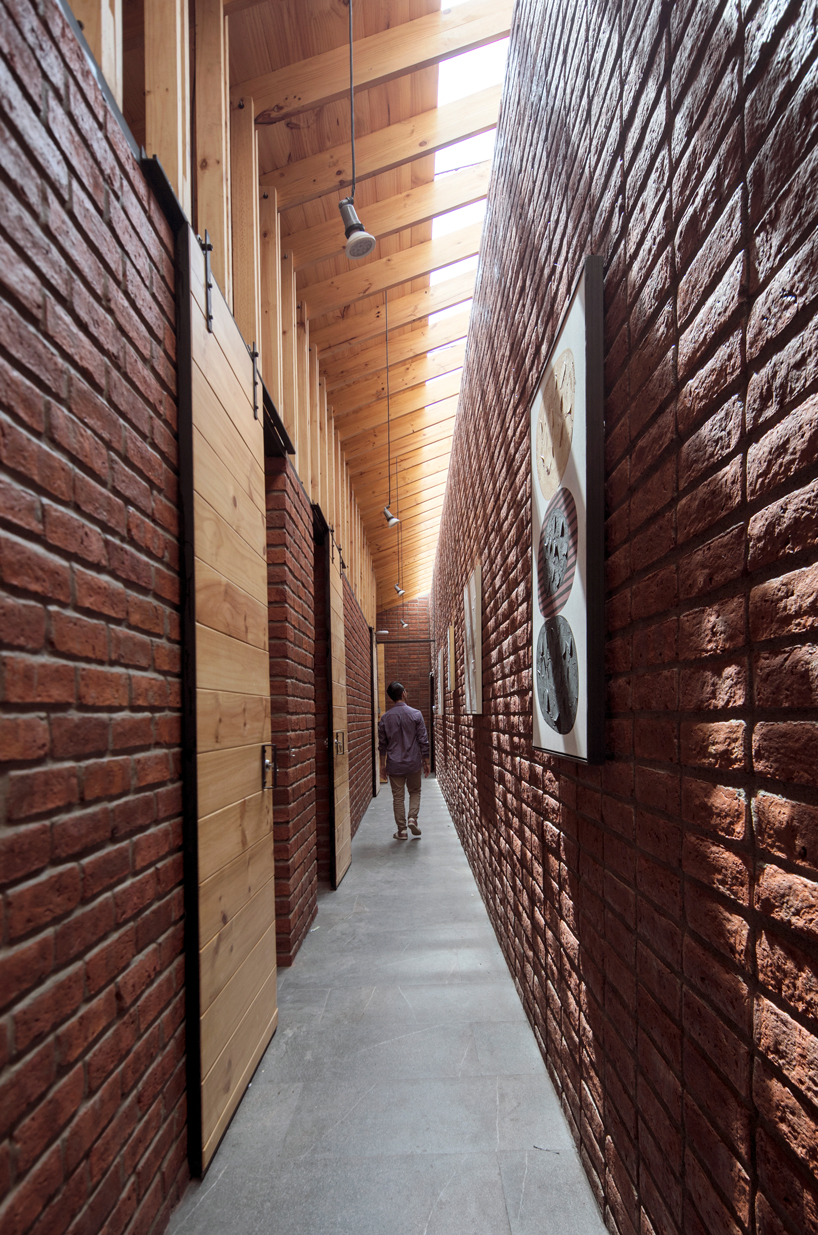
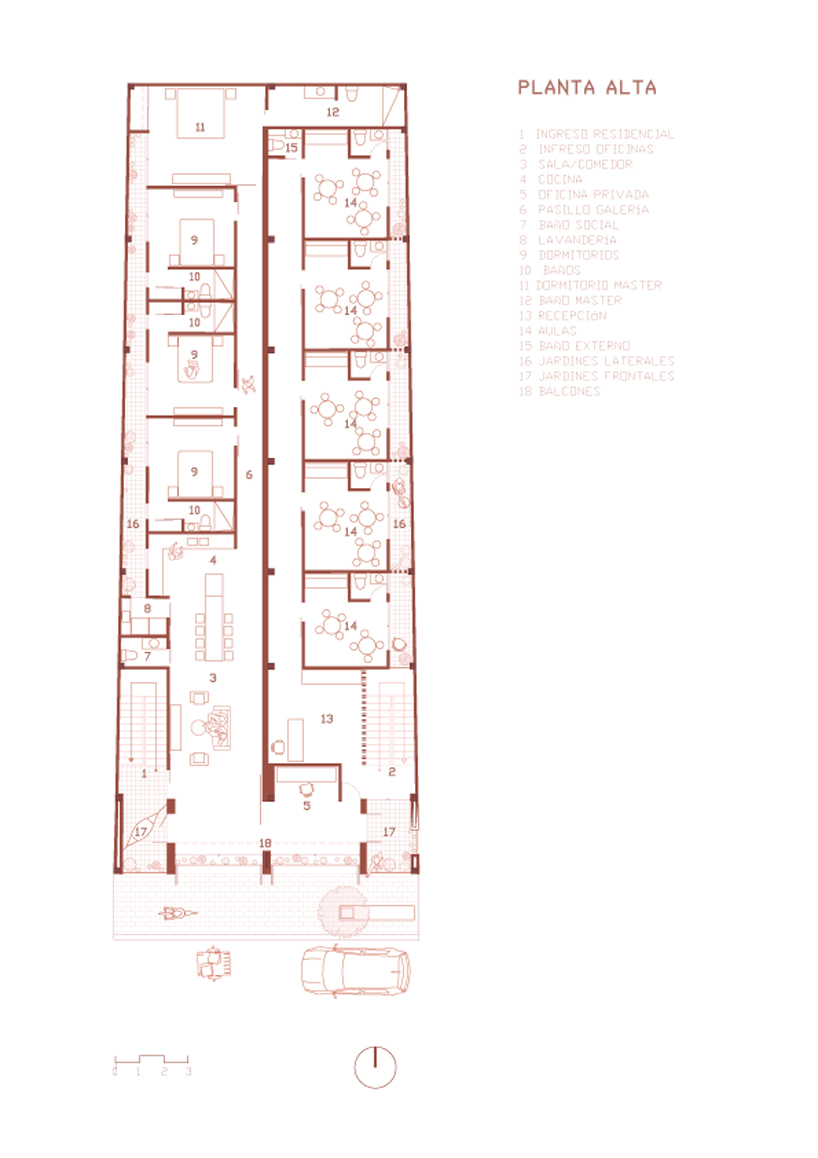
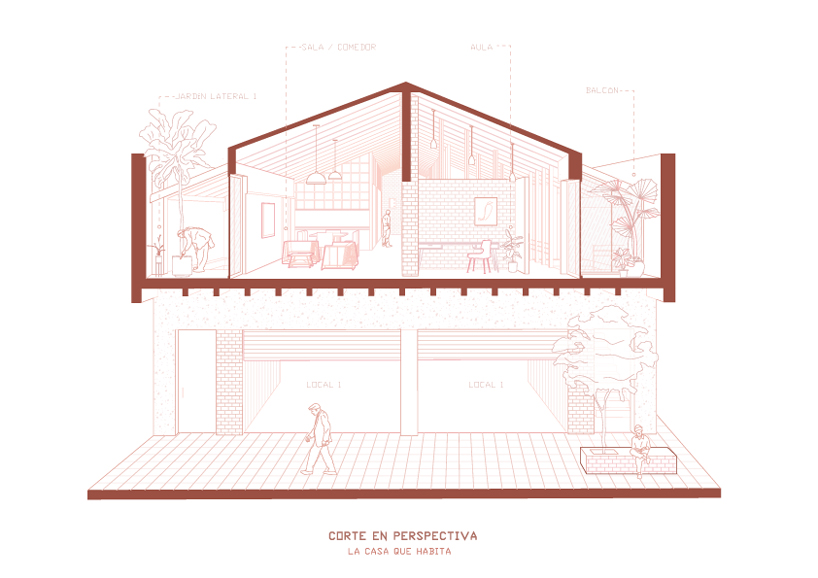
the house that habitates occupies a site measuring 12m x 30m. due to the lack of public construction policies, there is not space in between adjacent buildings. to remedy this, the architect contained the block of housing and educational activities between two side terraces, therefore achieving adequate lighting and natural ventilation. this strategy is supported by internal walls that do not reach the roof level, and are constructed from wood, cement and zinc, resulting in a central skylight.
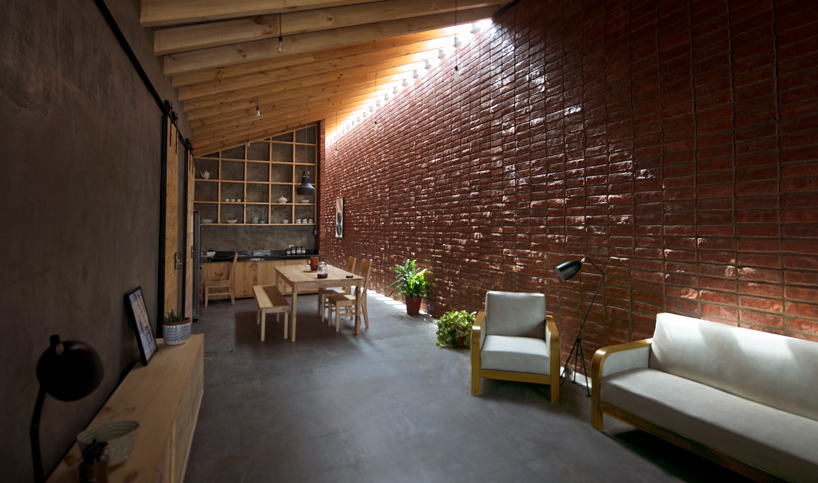
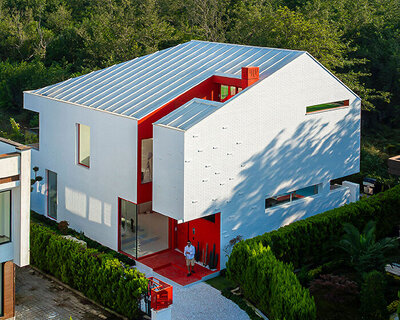
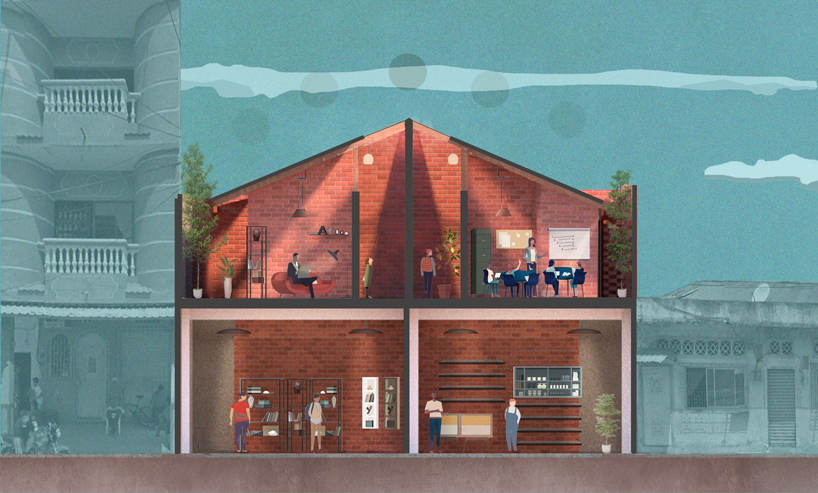
the design of the overall mass began with the form of a gable roof. in addition to affording space for thermal insulation and rainwater drainage, the sloping roofs also allows the plan to be organized in a more efficient manner. the front elevation opens up and connects with the street at two levels: by the openings on the ground floor, and by means of traditional folding wooden lattice shutters and windows on the first floor. both of these elements help to generate a link between the new intervention and passing pedestrians.
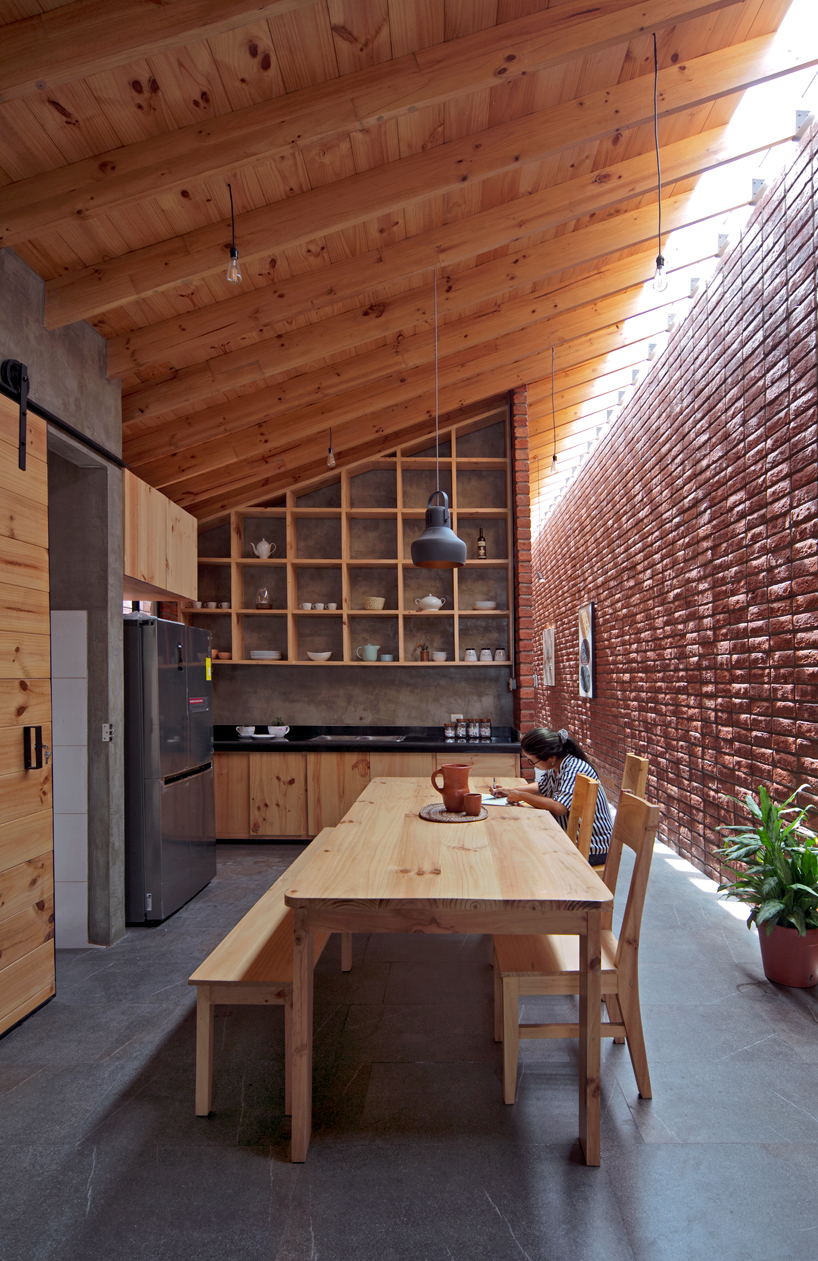
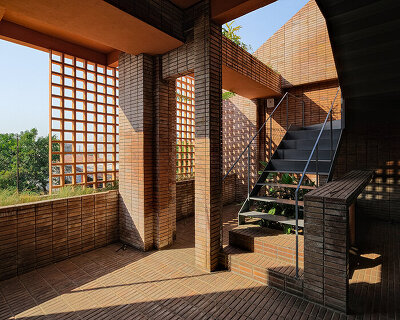
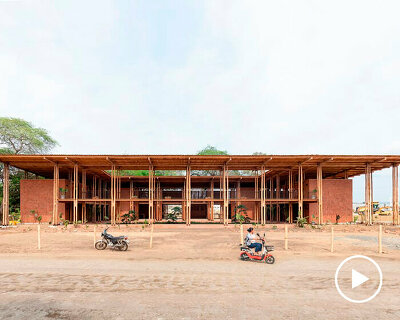
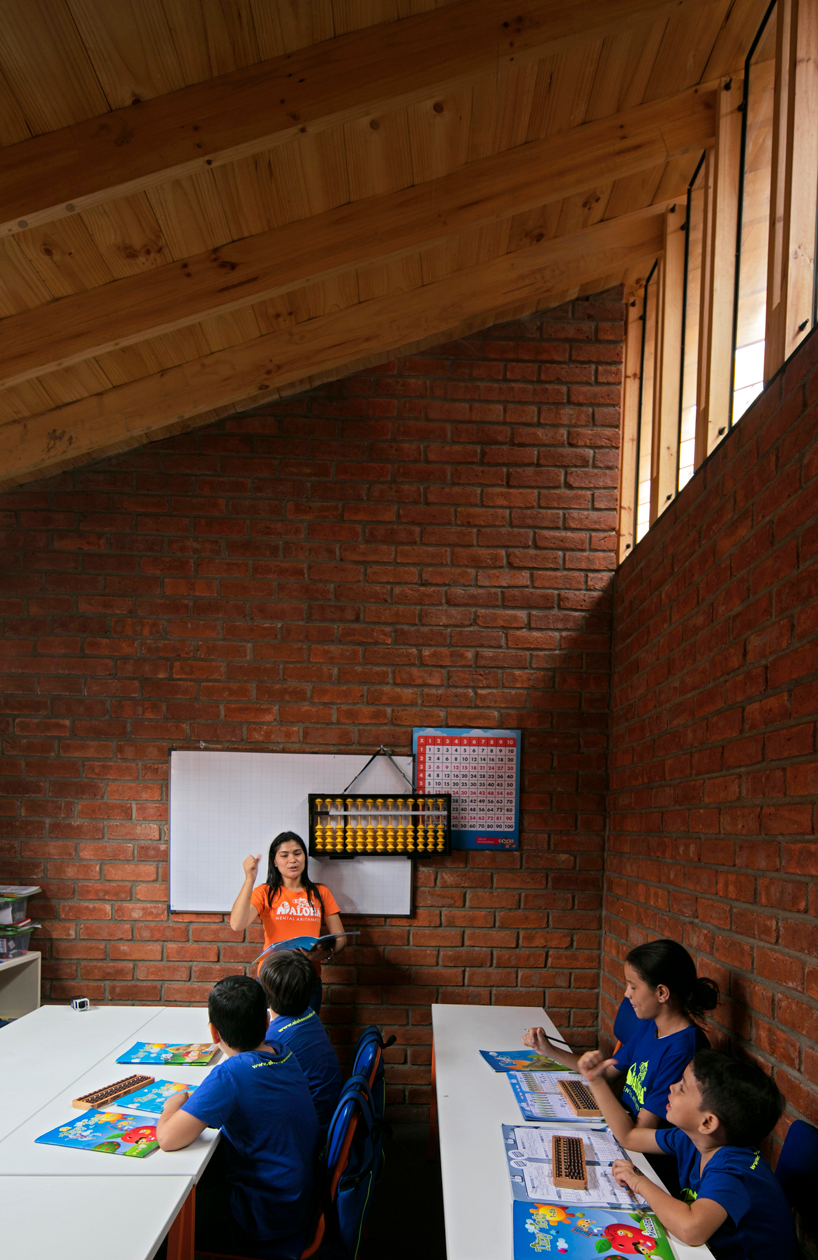
the levels are split with regard to function, with the commercial businesses located on the ground floor to create a more public space and establish a direct relationship with the urban activity. the top floor is divided by a central axis, with the private residence on one side and the after school academy on the other. the construction of the building is expressed from the outside to inside. defined by a palette of red brick, natural timber and ceramics, the project revalues these humble resources that have traditionally been interpreted as low-income materials.
project info:
project name: the house that habitates
location: babahoyo, los rios, ecuador
architects: natura futura arquitectura
year: 2020
designboom has received this project from our ‘DIY submissions‘ feature, where we welcome our readers to submit their own work for publication. see more project submissions from our readers here.
shop
your own online design shop — no sales commission collected