three ecological pavilions by HCCH studio craft unconventional follies on shanghai’s coast
lingang coast ecological pavilions blend architectural innovation with environmental consciousness.
prefer designboom on googleHCCH Studio’s Ecological Pavilions utilize Sustainable Materiality
Lingang Coast Ecological Pavilions, part of the Shanghai Lingang Ecological Restoration Project, dot the 17-kilometer coastline, serving as landmarks and educational hubs for citizens. Designed by HCCH Studio, each of the three pavilions boasts unique characteristics, offering a blend of architectural intrigue and environmental consciousness. The pavilions aim to fulfill three key objectives: creating distinctive features within site constraints and budget limitations, optimizing space utilization while adhering to floor area ratio restrictions, and integrating marine science themes into their form and materiality. Situated against the backdrop of Lingang’s expansive coastline, the pavilions engage with the landscape as architectural follies, employing unconventional volumes and materials to enhance the site’s otherworldly ambiance.
Designed as individual installations, the pavilions — ‘Membrane Sea Snail,’ ‘3D print Plastic Wave Breaker Splash,’ and ‘Recycled Brick Coral Reef’ — share common characteristics, including recognizable forms, porous structures, and educational exhibits. These distinctive features contribute to their unique identities while ensuring maximum visibility and impact.

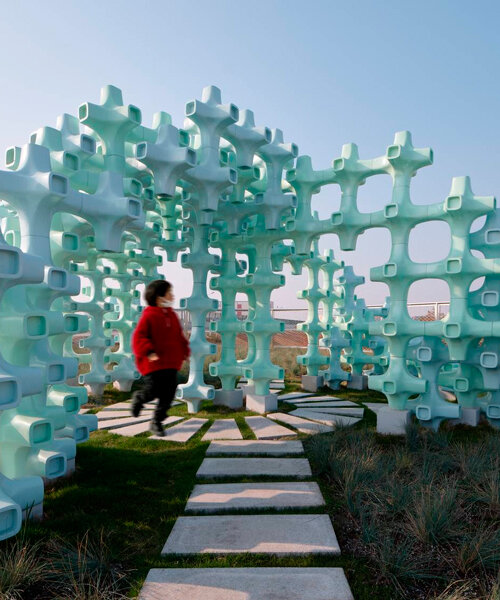
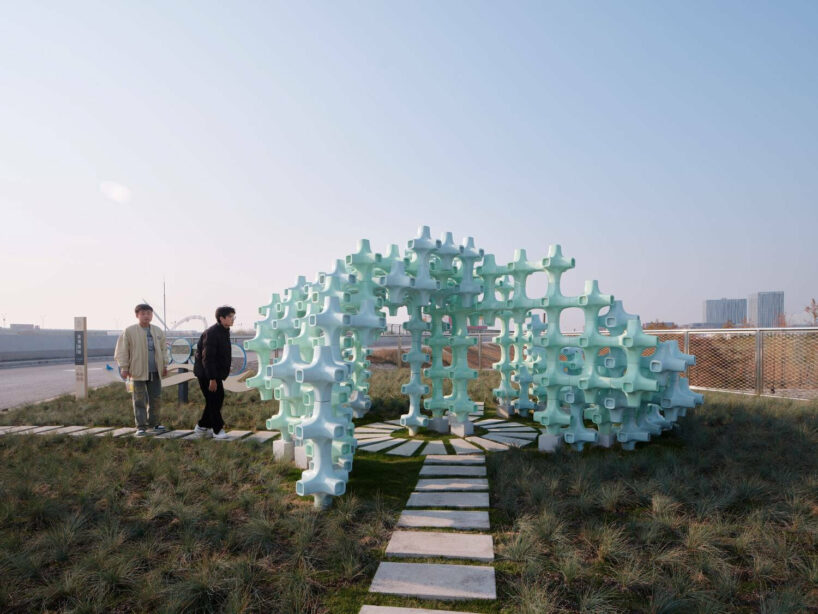
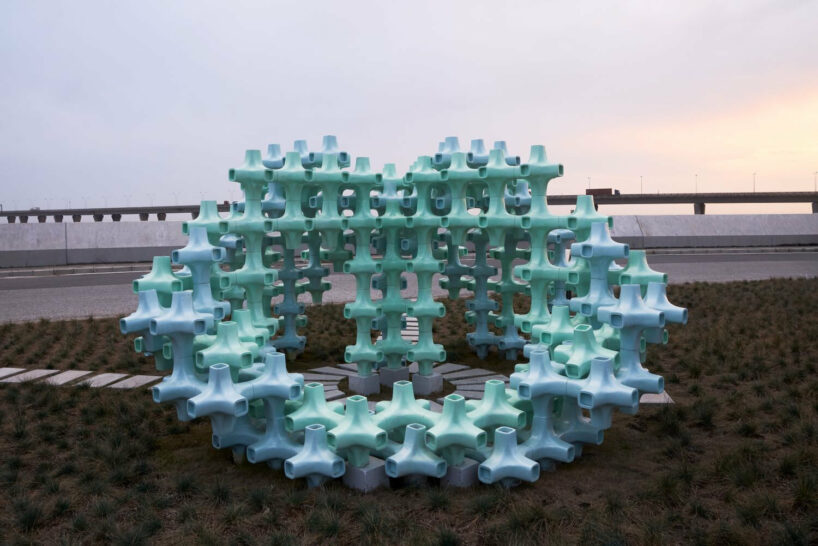
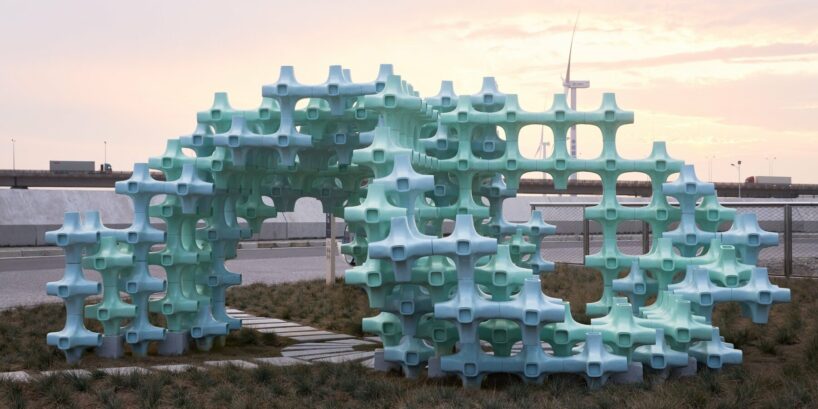
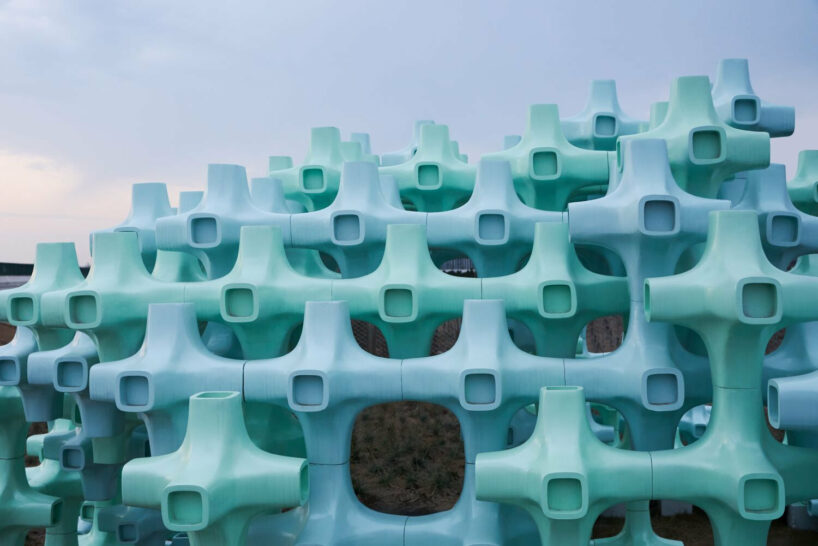
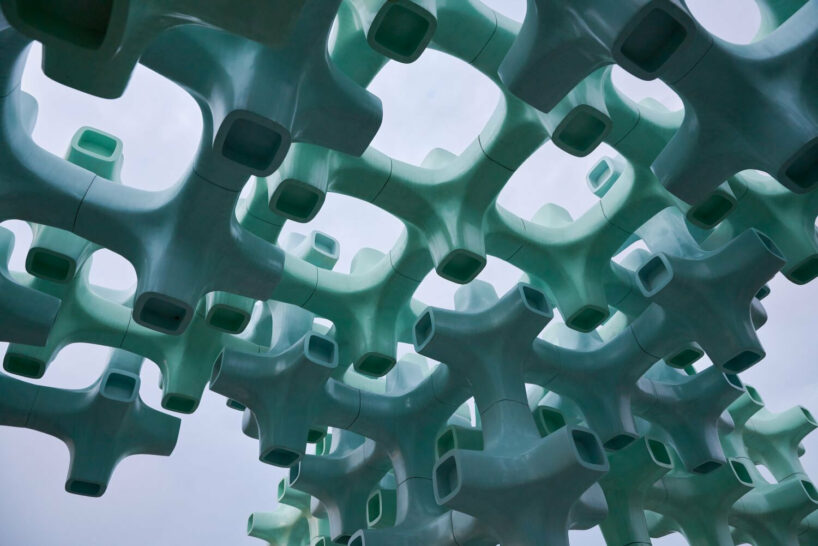
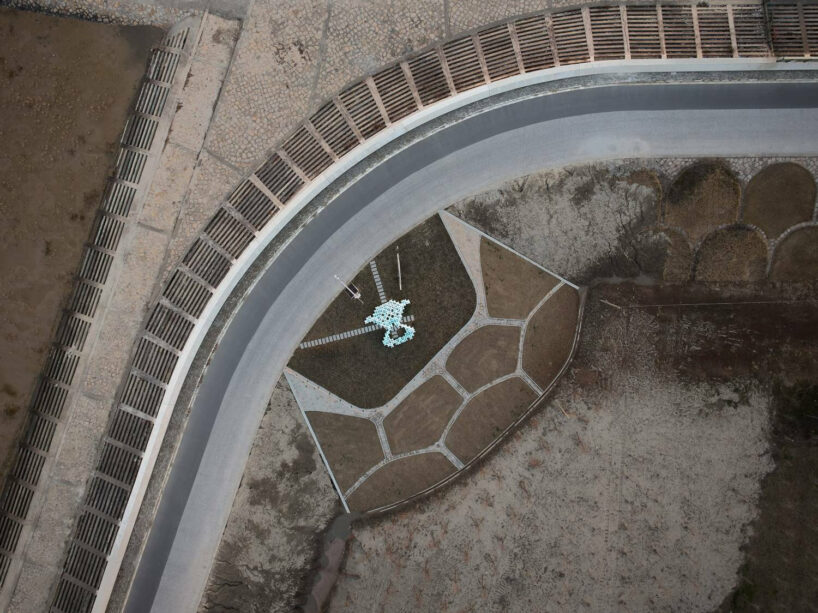
3D print Plastic Wave Breaker Splash forms artificial rock cave
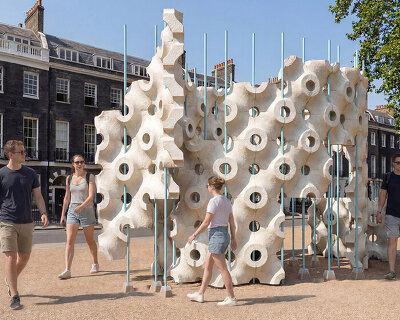
3D print Plastic Wave Breaker Splash pavilion, situated near the Donghai Bridge, mimics the porous nature of Chinese scholar stones, inviting visitors to explore wave-like artificial rock caves. Comprising 228 standardized 3D printed units, the installation by HCCH Studio provides a dynamic experience through modular design and high-strength materials, ensuring durability against coastal winds.

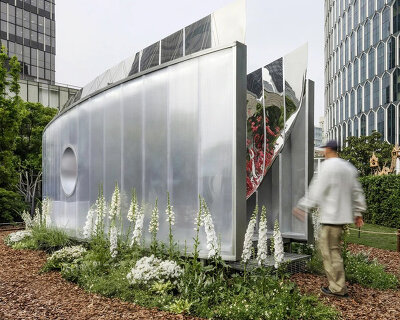
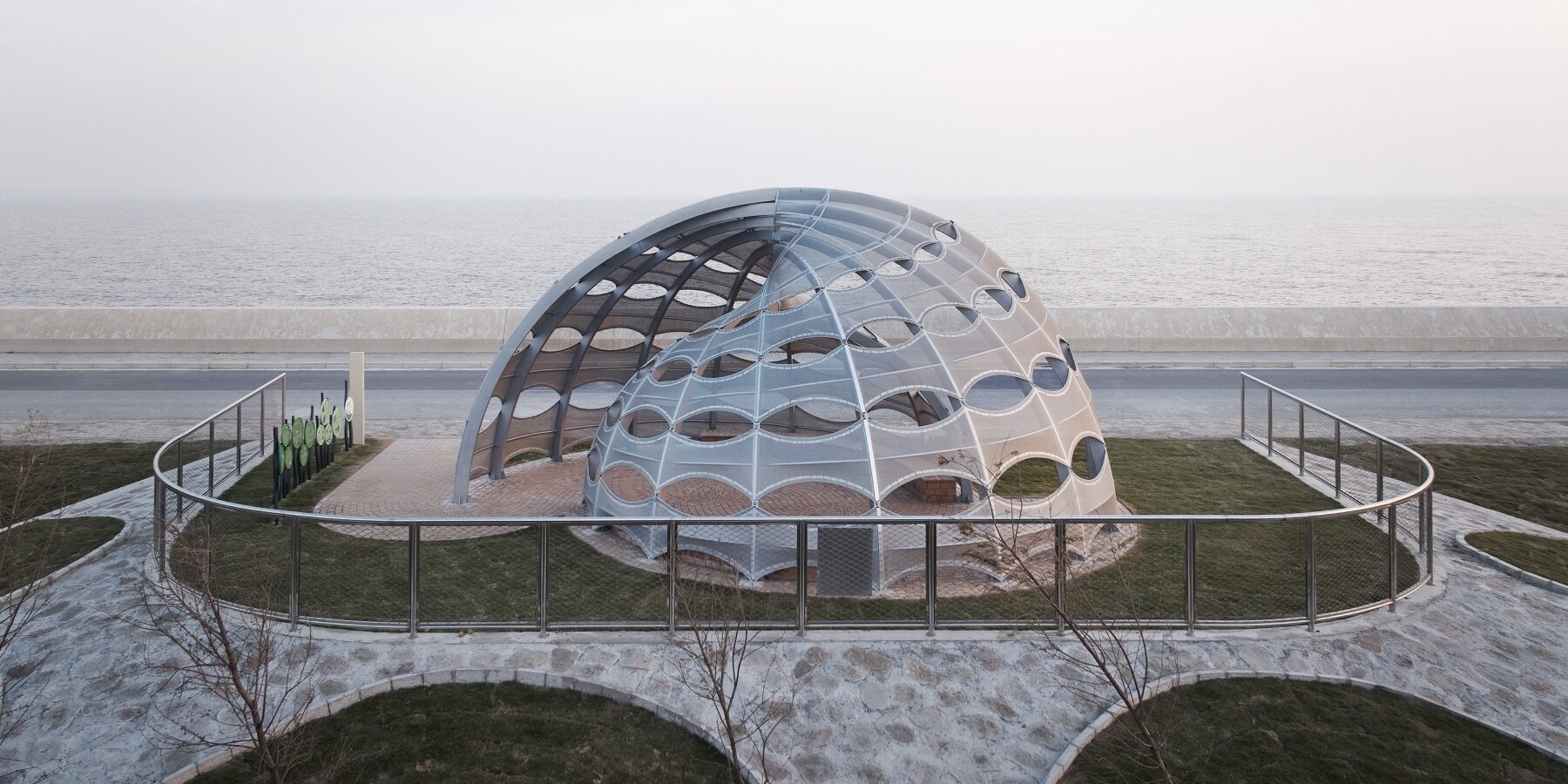
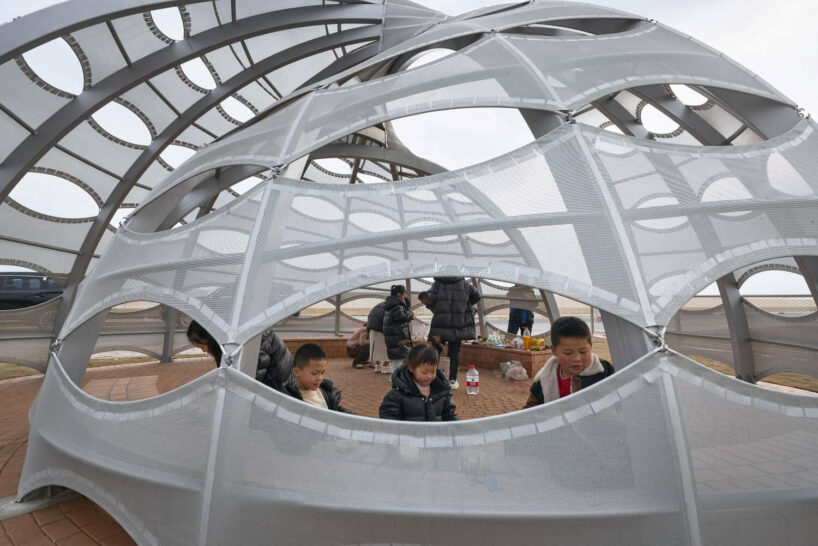
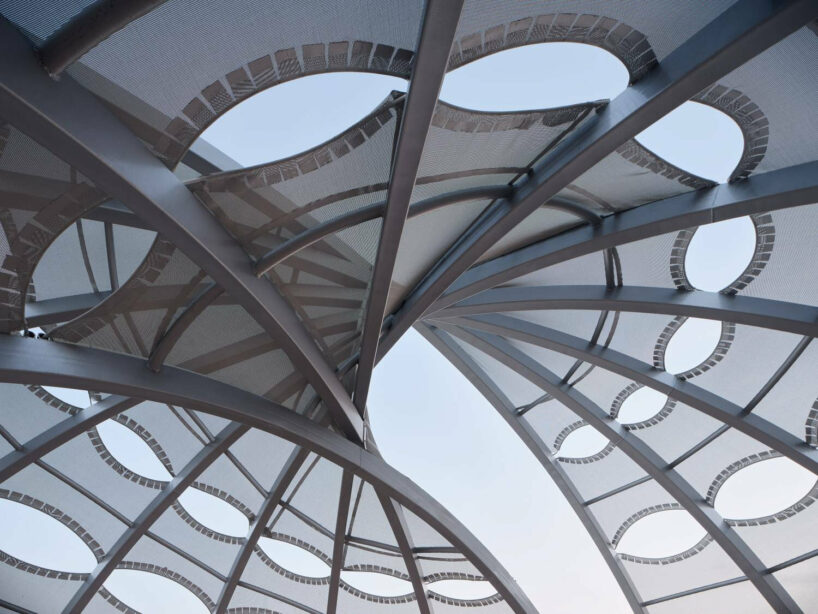
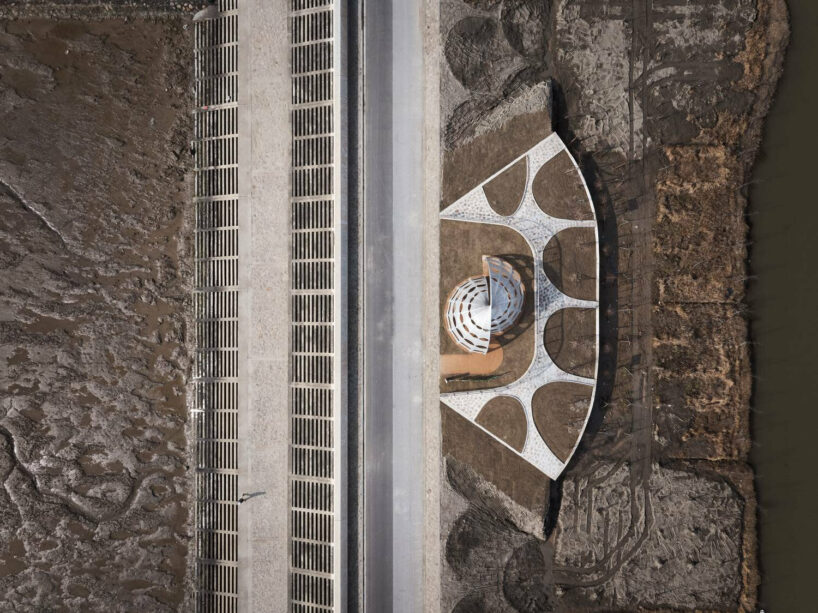
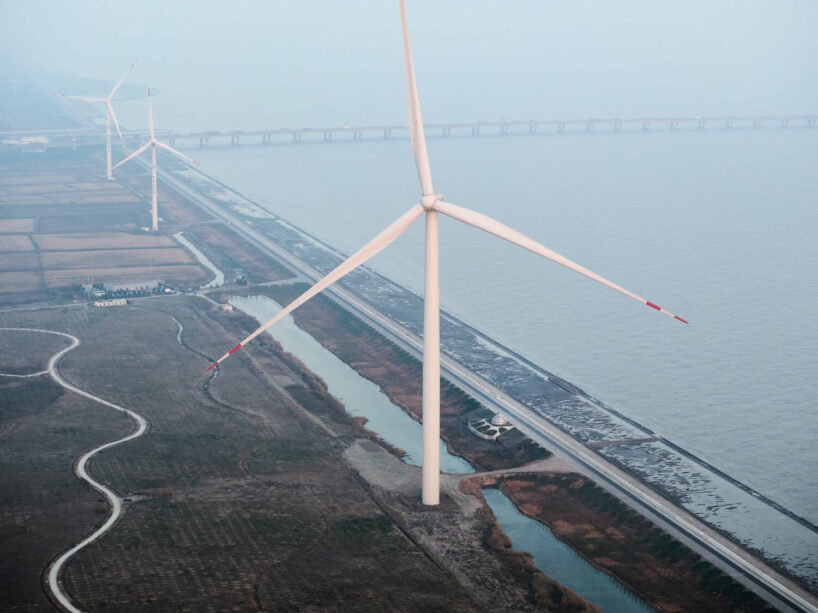
Membrane Sea Snail pavilion stands beneath wind turbine
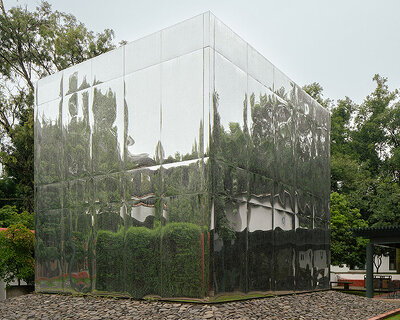
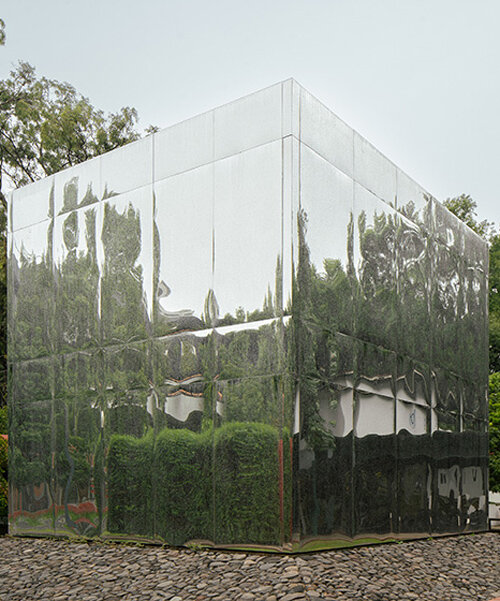
Membrane Sea Snail is nestled beneath a towering wind turbine. This pavilion features an inverted structure covered with a silver fabric membrane. Originally envisioned with a biomimetic sea urchin-like design, cost constraints led to a simplified yet futuristic appearance. Eye-shaped openings offer panoramic views of the sea, creating a serene dining spot for visitors.

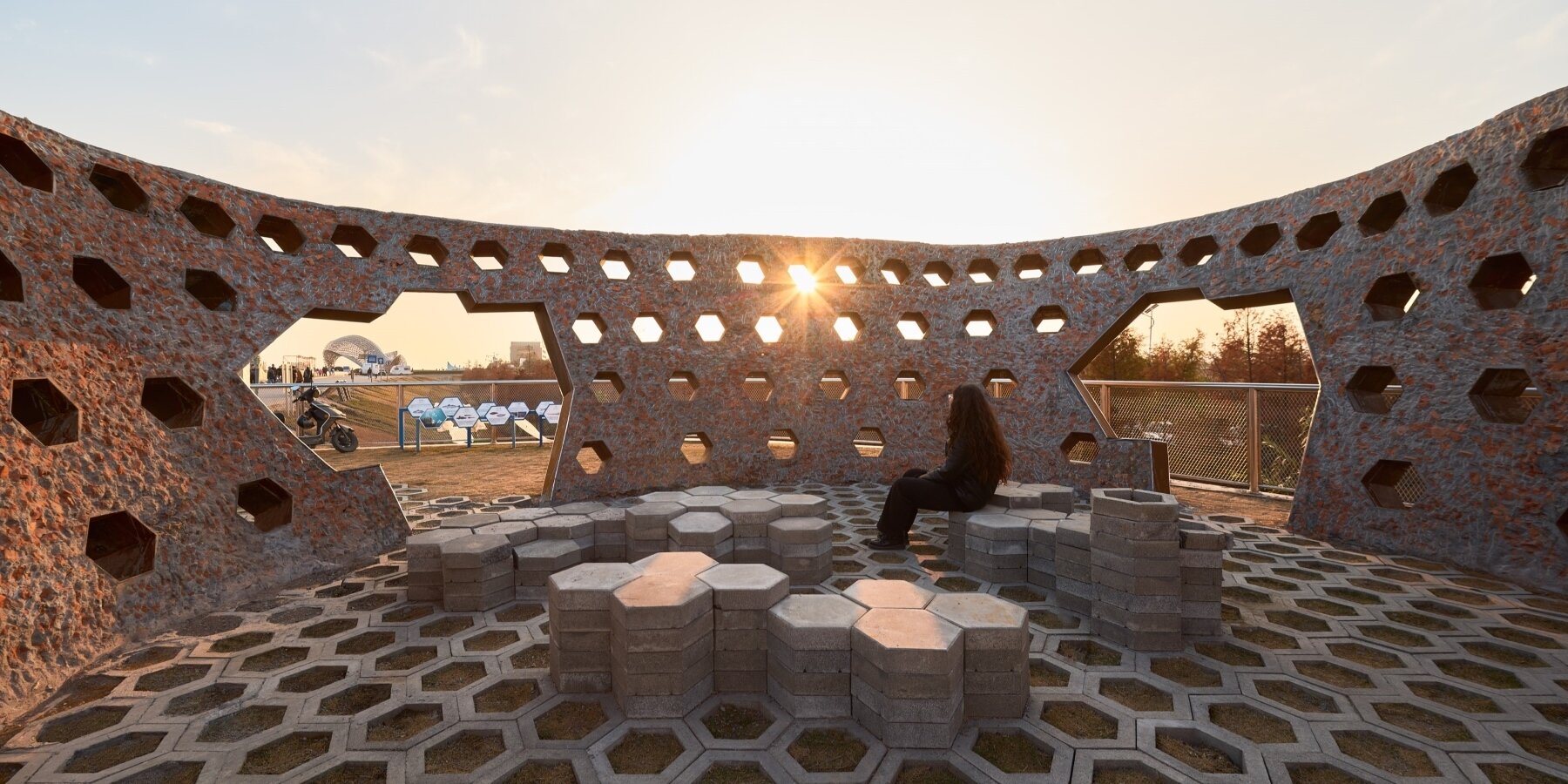
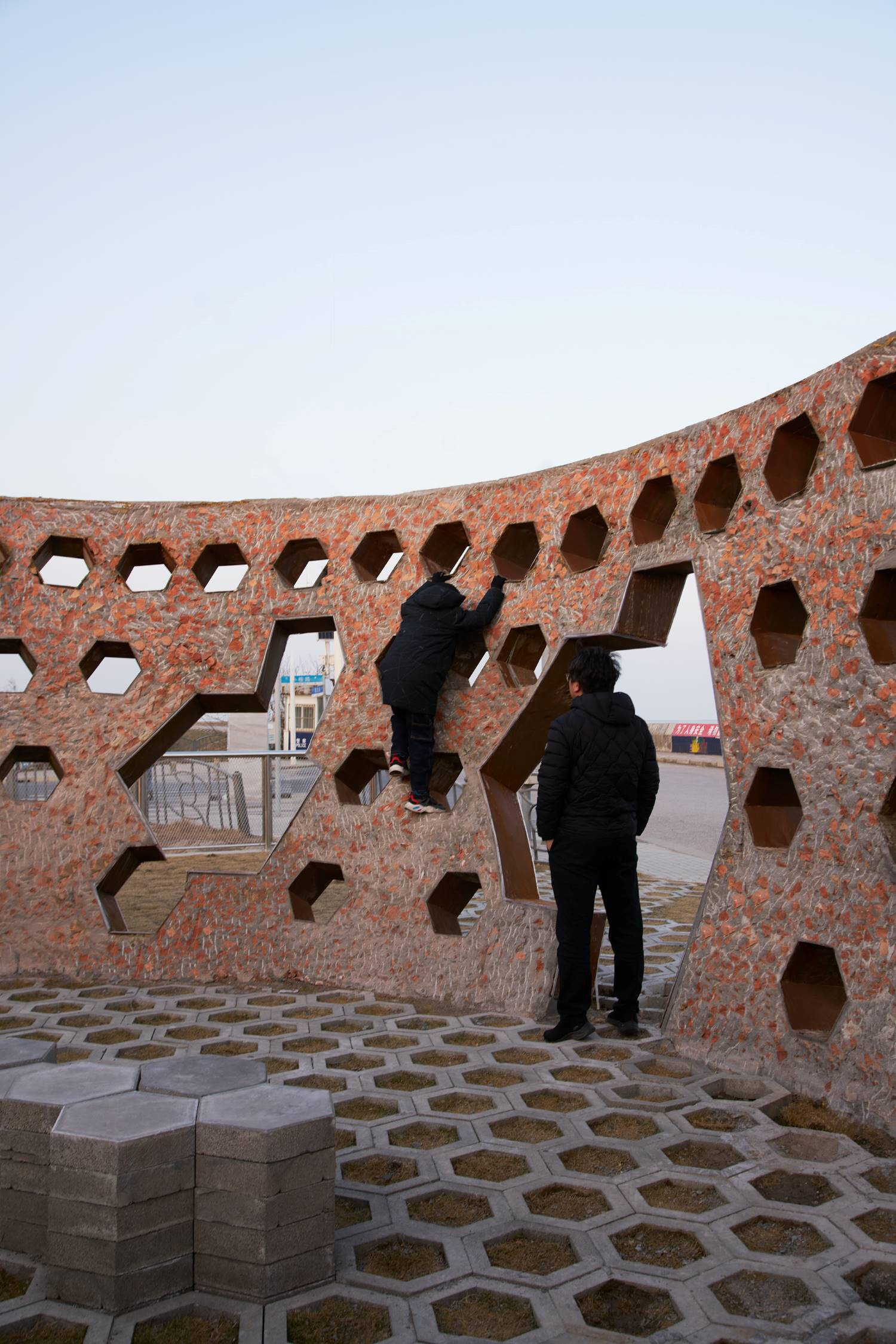
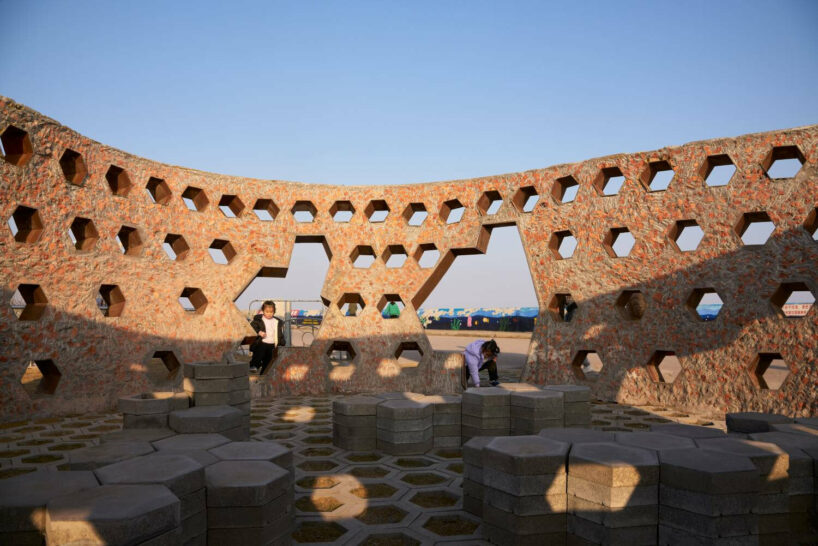
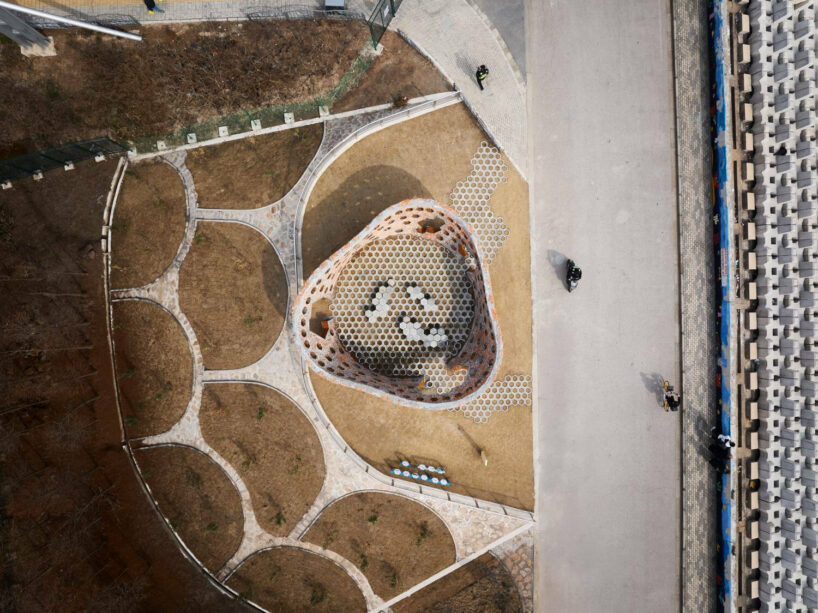
Recycled Brick Coral Reef sets up An organic porous form
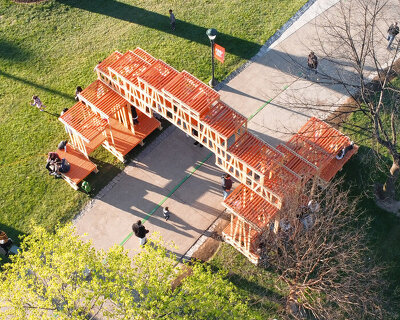
Recycled Brick Coral Reef is located at the eastern end of the coastline. This pavilion adopts an organic form reminiscent of concrete artificial coral reefs. Constructed from recycled red brick fragments and Corten steel plates, the porous wall doubles as a climbing surface, offering breathtaking sea views and recreational spaces for visitors.




1/13
project info:
name: The Possibilities of Pavilion, Three Ecological Pavilions by the Sea
architect: HCCH Studio | @hcchstudio
location: Lingang Coast, Shanghai, China
photography: Qingyan Zhu
Pavilion A:
name: Sea Snail, PES Membrane Pavilion
design team: Hao Chen, Chenchen Hu, Yu Xiao, Xi, Cai, Yida Hou
LDI: Shanghai Youwei Engineering Design Co.,Ltd.
PES membrane: Serge Ferrari Group
Pavilion B:
name: Wave Breaker, 3d-print Plastic Pavilion
design team: Hao Chen, Chenchen Hu, Ziyan Ge, Yida Hou, Yifan Zhu
LDI: Shanghai Youwei Engineering Design Co.,Ltd.
3d-print: Xuberance
Pavilion C:
name: Corel Reef, Recycled-brick Pavilion
design team: Hao Chen, Chenchen Hu, Ziyan Ge, Yida Hou, Wenxi Li
LDI: Shanghai Youwei Engineering Design Co.,Ltd.
recycled-brick supplier: Hongjie Xu
designboom has received this project from our DIY submissions feature, where we welcome our readers to submit their own work for publication. see more project submissions from our readers here.
shop
your own online design shop — no sales commission collected